The New Keiretsu
In 1989, I watched Japanese banks, insurers, and manufacturers lock themselves into elaborate cross-shareholding arrangements called keiretsu.
Each institution held the others' shares as a permanent signal of long-term alignment. Western analysts called it cronyism.
I called it the most effective anti-panic mechanism ever built into an equity market. It kept Japanese institutions from dumping each other's shares during every minor crisis for decades.
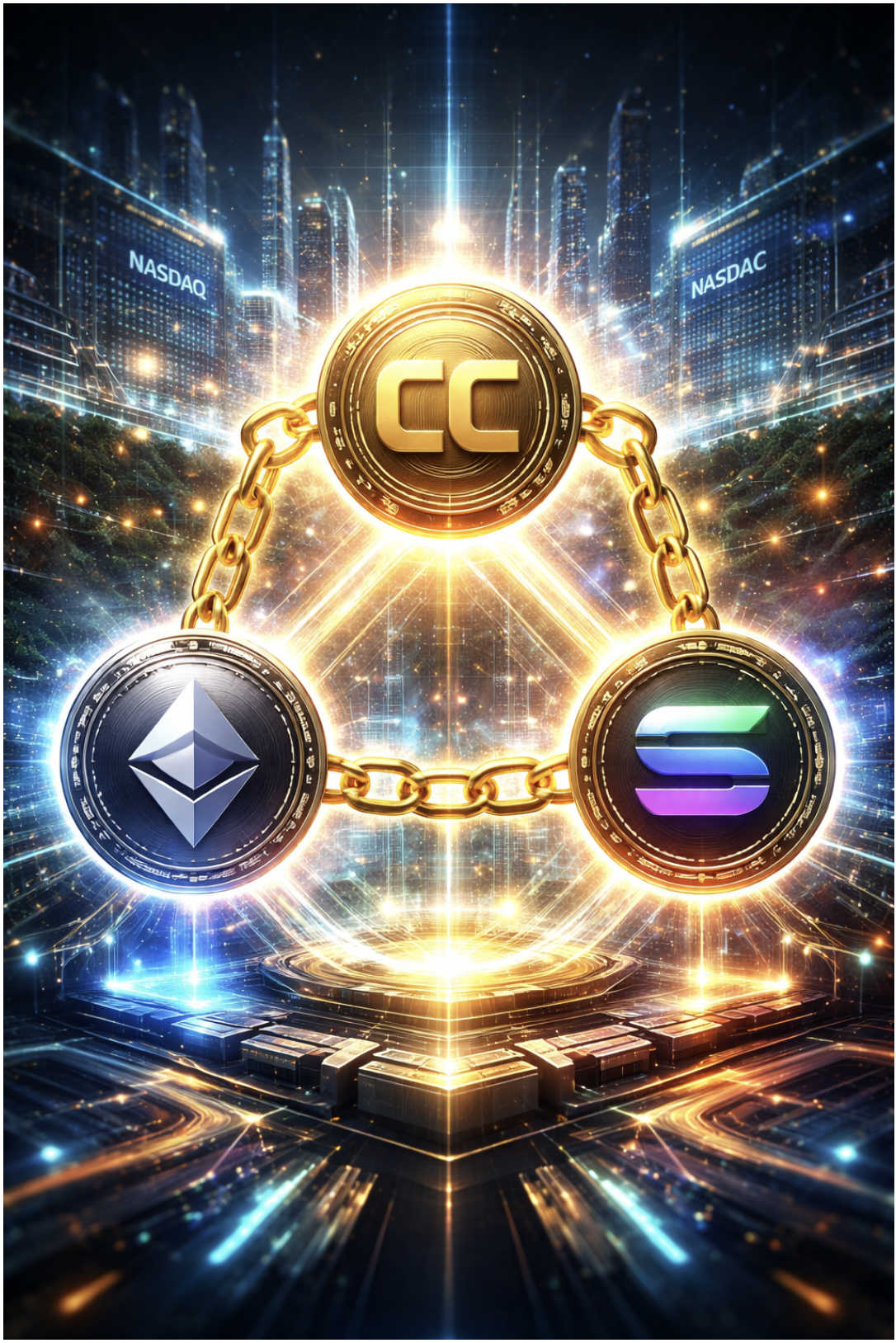
That same mechanism just showed up in crypto, and the institutions involved aren't obscure blockchain startups. They're Nasdaq, the DTCC, and the clearinghouses that settle every stock trade you've ever made.
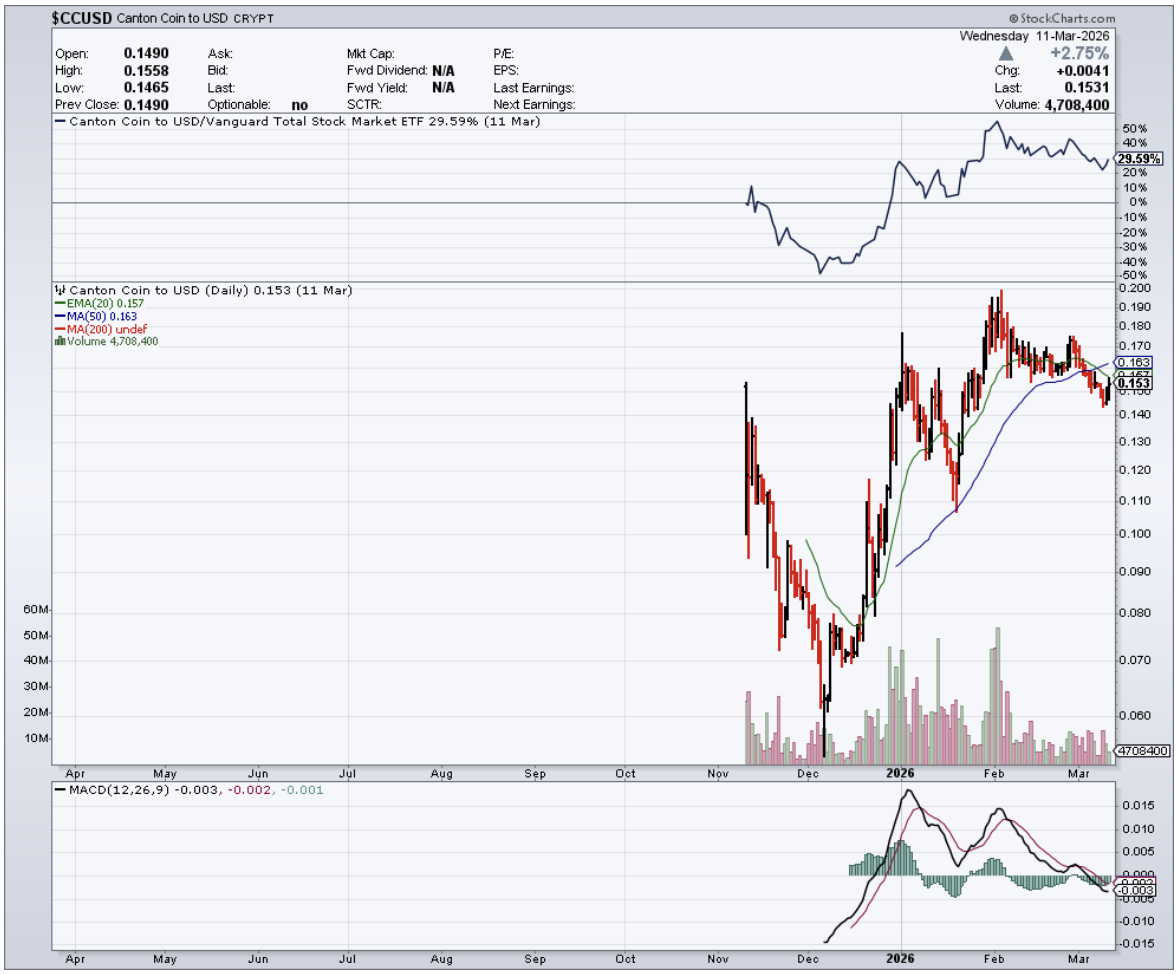
If you hold Canton Coin (CC-USD) or have been watching it from the sidelines, the network just changed in a way that directly affects your entry calculus.
The update is called CIP-0105. Canton Network's Super Validators must now lock between 35% and 55% of their past and future rewards to continue earning them.
Participation is technically voluntary, in the same way that declining a salary is technically voluntary. Walk away from the lock-up and you walk away from the rewards entirely.
If a Super Validator eventually wants out, only 1/365th of the requested amount becomes liquid per day. A full exit takes a full year.
The DTCC, whose board includes JP Morgan, Goldman Sachs, Morgan Stanley, Citibank, BNY, UBS, NYSE, and Bank of America, didn't stumble into this network.
They chose it deliberately, and CIP-0105 just asked them to put their coin where their conviction is.
The supply math is where this gets interesting. By Year 10 (we're currently in Year 2), 100 billion Canton Coins will have been minted, with 35 billion allocated to Super Validators.
Under CIP-0105, roughly 16 billion of those coins get removed from circulation.
Factor in the network's burn rate, currently consuming the equivalent of 30% to 65% of newly minted supply daily, and total circulating supply by year ten lands somewhere between 70 and 94 billion coins.
At the midpoint, those 16 billion locked coins represent roughly 20% of everything available to trade.
In a more aggressive burn scenario with maximum lock-up participation, that figure climbs toward 32%, making it comparable to the share of ETH currently staked on Ethereum, for a network that most institutional crypto desks haven't fully priced yet.
The fee story makes that valuation gap harder to ignore. Canton is already generating transaction fees orders of magnitude higher than Ethereum (ETH) and Solana (SOL), yet trades at a network valuation that is a fraction of either.
Roughly 90% of the total value of tokenized real-world assets, excluding stablecoins, currently resides on the Canton Network.
Daily transactions have grown from approximately 50,000 a year ago to over 1 million today.
When fees are real, growing, and the institutions processing them are now structurally locked in, the valuation disconnect tends to close. It just rarely announces when.
The risks remain genuine. Execution at scale is unproven, and competition among Layer-1 chains chasing institutional adoption is fierce.
History is unkind to early leaders in infrastructure races, and the winning protocol usually only looks inevitable in hindsight, well after the decisive window has closed.
Canton has spent years in controlled private testing, and controlled environments have a way of flattering protocols that later crack under real-world volume.
But the architecture of CIP-0105 is sound, and the roster of institutions now structurally incentivized to see this network succeed reads like the attendance list at a G7 finance ministers' dinner.
Decades ago in Tokyo, I watched cross-ownership hold an entire market together through decades of turbulence.
Canton just built its own version, and this time, the assets underneath it are actually worth something.
As commitment mechanisms go, this one has considerably better fundamentals than the Japanese model - and fewer golf courses.