Another Win for Bitcoin
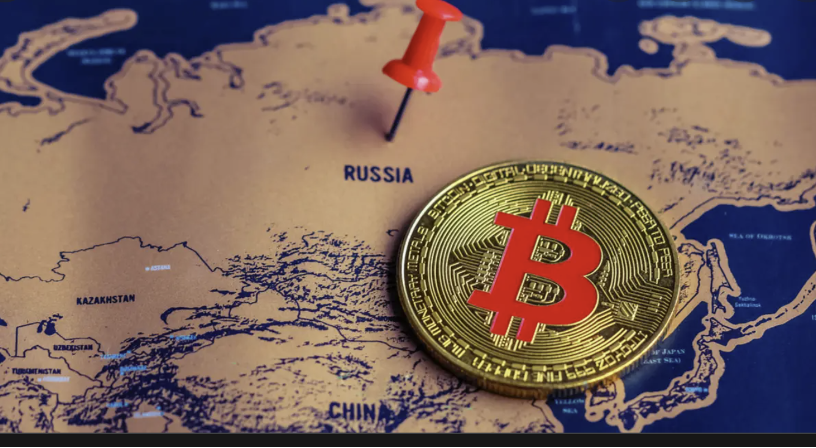
Bitcoin has periodically been pulled into geopolitical spotlights, and few moments generated as much reaction as comments made by Pavel Zavalny, chairman of the Russian State Duma Committee on Energy, suggesting that Russia was open to accepting Bitcoin (BTC) for oil and gas payments.
At the time, the statement landed like a bombshell for the “digital gold” narrative. Bitcoin had spent much of its early life as a financial outcast, shunned by governments and institutions alike. Now, suddenly, it was being mentioned in the same sentence as global energy trade and the world’s largest commodity exporter.
The symbolism was powerful. Russia, increasingly isolated in traditional financial channels, was exploring alternative settlement mechanisms. Bitcoin appeared, at least rhetorically, as one of several tools being discussed to navigate a fractured geopolitical landscape.
This mattered most in the context of the U.S. dollar and the euro, which had long dominated energy settlement with Russia. European buyers historically paid for Russian oil and gas almost exclusively in those currencies. That framework began to fracture once Western governments imposed sweeping financial sanctions on Moscow.
The freezing of Russian foreign reserves under U.S. President Joe Biden accelerated a reassessment among non-aligned and rival states about reliance on Western reserve currencies. Russia’s response was not limited to crypto. It demanded ruble payments from certain counterparties, expanded trade invoicing in non-Western currencies, and explored bilateral settlement arrangements with partners outside the U.S.-EU axis.
With hindsight, however, the idea that Bitcoin would become a primary settlement currency for Russian oil has not materialized. Energy trade at scale continues to rely on state-backed currencies, clearing arrangements, and intermediaries capable of handling massive volumes, compliance obligations, and price hedging. Bitcoin’s role has remained peripheral rather than structural.
That distinction matters when evaluating claims that this moment marked a permanent turning point for the dollar. While dollar dominance has undeniably been questioned and diversified against, it has not been displaced. China and Russia have expanded non-dollar trade, but global energy markets continue to clear overwhelmingly in traditional currencies.
Political fragmentation within Europe added further complexity. Leaders such as Viktor Orbán resisted full energy disengagement, arguing domestic economic stability took precedence. This underlined that sanctions, while impactful, were neither airtight nor universally enforced.
Crypto did play a role at the margins. Digital assets were used for cross-border transfers, capital mobility, and limited trade settlement where counterparties were willing to assume volatility and regulatory risk. But this fell short of the sweeping sanction bypass sometimes implied. Existing EU and U.S. sanctions frameworks explicitly extend to crypto, and large-scale energy buyers remain subject to compliance, custody, and reporting constraints.
The idea that simply holding Bitcoin balances indefinitely could nullify sanctions also proved impractical. State-level trade requires convertibility, accounting clarity, and fiscal predictability. Bitcoin’s volatility and regulatory exposure limit its usefulness as a sovereign settlement base, even for countries seeking alternatives to Western finance.
Russia’s broader economic resilience during the early sanction period owed more to elevated commodity prices, capital controls, redirected exports, and fiscal intervention than to cryptocurrency adoption. The ruble’s recovery reflected administrative measures and trade flows rather than market-driven confidence.
That said, the episode was not meaningless for Bitcoin. It reinforced a core narrative: Bitcoin exists outside the control of any single state and is considered, at least conceptually, when traditional systems become politically constrained. For crypto advocates, that alone represented validation of its censorship-resistant design.
Still, the core thesis that Russia’s energy trade would migrate meaningfully to Bitcoin, triggering a new global monetary order, has not held up. Bitcoin’s role has remained symbolic and tactical, not foundational. Energy markets continue to operate on scale, liquidity, and stability that decentralized assets have yet to provide.
The legacy of this moment is therefore more modest but still instructive. It demonstrated how geopolitical stress tests existing financial infrastructure and pushes states to explore alternatives. Bitcoin emerged as part of that conversation, not as a replacement for it.