• support@madhedgefundtrader.com
  • Member Login
Mad Hedge Fund Trader
  • Home
  • About
  • Store
  • Luncheons
  • Testimonials
  • Contact Us
  • Click to open the search input field Click to open the search input field Search
  • Menu Menu
Mad Hedge Fund Trader

Special Cancer Issue - Part II

Biotech Letter

The most groundbreaking biotechnology discoveries in this century have now reached the flashpoint between theoretical discussions and their realization. Billions of dollars have been poured into the research and development phases, with some companies already generating income. More impressively, potential cures for a number of fatal diseases are now in the pipeline. For early investors, this translates to massive earnings in the succeeding years.

Among the widely sought-after cures is for triple-negative breast cancer (TNBC), which is the most aggressive form of the disease. It also has a poorer prognosis compared to other types of breast cancer, so it’s crucial to offer treatments that can not only improve chances of survival but also improve the quality of life of the patients suffering from it.

Here are the three most promising developments in the search for the cure of TNBC.

Eli Lilly (LLY)

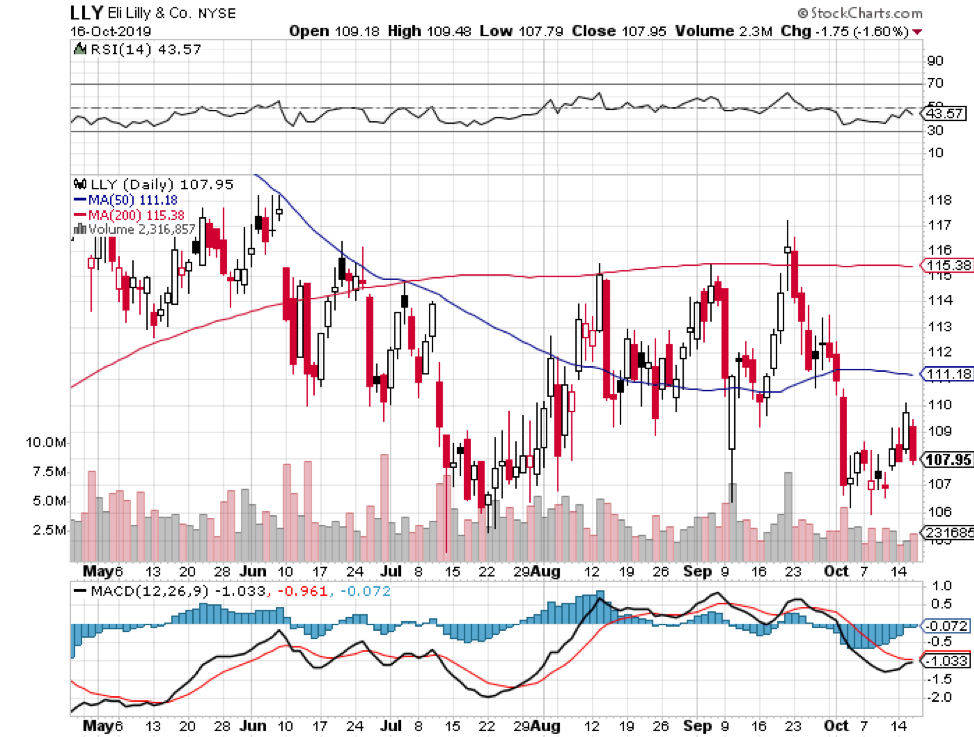
It’s always challenging to be a third-to-market treatment especially when you’re trailing a pioneering drug like Pfizer’s (PFE) groundbreaking drug Ibrance and Novartis’ blockbuster drug Kisqali. However, Eli Lilly (LLY) is hoping that its recent data on Verzenio would bolster its hold in the market.

While it remains to be seen if Verzenio can catch up with Ibrance’s success, the Eli Lilly drug has managed to surpass estimates by $19 million during the first quarter of 2019 following an underwhelming fourth quarter in 2018. As for the latest data on Verzenio, the company disclosed that a combination of the drug and hormone therapy improved the median to 46.7 months compared to the 37.3 months for those who solely underwent therapy.

The 9.4 survival advantage indicates a 25% decrease in mortality risk. Apart from that, patients also enjoyed a better quality of life as this combo allowed them to manage for 50 months -- or over four years -- without the need for follow-up chemotherapy. This is a huge advantage since hormone therapy alone only allowed 22 months before the next treatment.

The effects don’t end there though. Eli Lilly has another trick up its sleeve to make sure that it stands out from the drugs targeting similar diseases. According to the company, Verzenio is the only drug that can help patients with tough-to-treat diseases.

That is, the Eli Lilly drug took effect even on patients who were initially resistant to therapy as well as those who quickly relapsed after treatment. This resulted in a decrease in death risk by roughly 31%. While this aspect still requires additional tests, the results showed a promise that not even Pfizer’s Ibrance can deliver.

Merck & Co. (MRK)

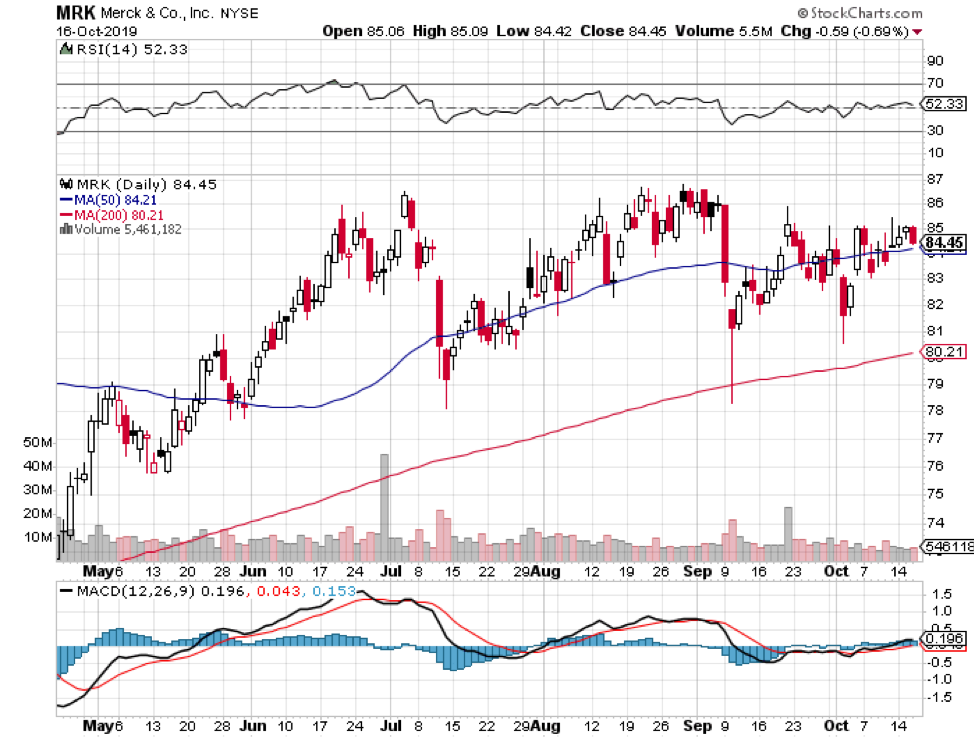
Merck & Co. (MRK) has rallied virtually the entire force of its research and development team behind ensuring that Keytruda remains on top -- way ahead of competitors like Bristol Myers Squibb’s (BMY) Opdivo. At the moment, Merck’s moneymaker has approximately 1,050 clinical trials queued to assess the possibilities of this drug further dominating clinical practice.

So as Bristol Myers Squibb attempts to woo investors with the promising results of Opdivo, Merck has been busy adding another notch in its belt with another landmark first for Keytruda. Aside from its current applications, this Merck cash cow is also pegged as a promising treatment for TNBC when combined with therapy.

Based on the data on its breakthrough therapy designation, this indication is likely on the fast track towards an FDA approval soon. To date, Keytruda has more than 20 oncology indications in the United States alone with the giant biopharma receiving the green light to market the drug in China as well.

If things move forward as planned, Keytruda may very well be on its way to topple AbbVie Inc.’s (ABBV) Humira from the top of the list of best-selling drugs worldwide in the next five years. After all, revenues from the drug are expected to hit anywhere between $17 billion and $24 billion in 2024.

G1 Therapeutics (GTHX)

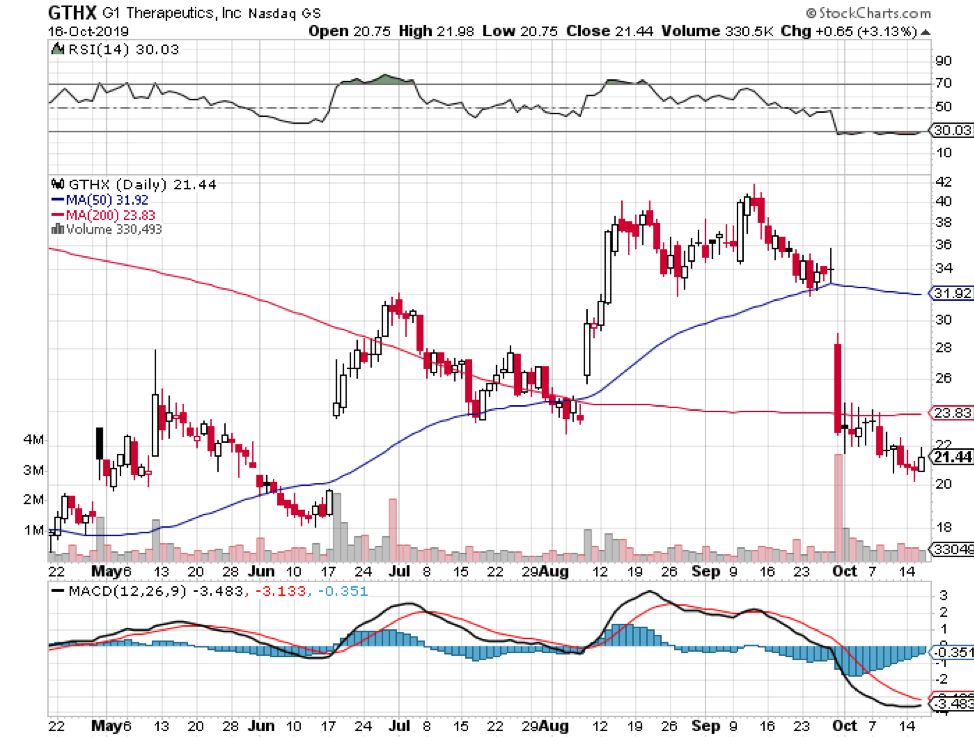
Joining the biopharma giants is newcomer G1 Therapeutics (GTHX). This up-and-coming firm has recently released its clinical data on oral selective estrogen receptor degrader (SERD) for metastatic TNBC. Called G1T48, this new treatment provided promising results when combined with the company’s own breakthrough therapy called trilaciclib.

For comparison, G1 Therapeutics’ combo is said to be more potent than AstraZeneca plc’s (AZN) Faslodex, which is currently the only FDA-approved SERD treatment in the market. Unlike Faslodex though, which requires intramuscular injection, G1 Therapeutics’ drug can be taken orally once a day. Needless to say, this mode of treatment offers an improved patient experience.

With such promising results, G1 Therapeutics plans to roll out new drug application submissions by the fourth quarter of 2019. If things move smoothly, then the treatment plan should be out in the market sometime in the second quarter of 2020.


https://madhedgefundtrader.com/wp-content/uploads/2019/05/cropped-mad-hedge-logo-transparent-192x192_f9578834168ba24df3eb53916a12c882.png 0 0 Mad Hedge Fund Trader https://madhedgefundtrader.com/wp-content/uploads/2019/05/cropped-mad-hedge-logo-transparent-192x192_f9578834168ba24df3eb53916a12c882.png Mad Hedge Fund Trader2019-10-24 04:00:592019-10-23 15:59:21Special Cancer Issue - Part II
Mad Hedge Fund Trader

October 22, 2019

Biotech Letter

Mad Hedge Biotech & Health Care Letter
October 22, 2019
Fiat Lux

Featured Trade:

(SPECIAL CANCER ISSUE - PART 1)
(BMY), (MRK), (CELG), (AMGN), (ROG), (MRTX), (INCY)

https://madhedgefundtrader.com/wp-content/uploads/2019/05/cropped-mad-hedge-logo-transparent-192x192_f9578834168ba24df3eb53916a12c882.png 0 0 Mad Hedge Fund Trader https://madhedgefundtrader.com/wp-content/uploads/2019/05/cropped-mad-hedge-logo-transparent-192x192_f9578834168ba24df3eb53916a12c882.png Mad Hedge Fund Trader2019-10-22 08:02:052019-10-22 07:53:55October 22, 2019
Mad Hedge Fund Trader

Special Cancer Issue - Part 1

Biotech Letter

Multiple times every year, leading oncology researchers gather to share and discuss the latest developments in the field. During these events, biotech companies actively seek ways to snatch top billing, hoping to amp up their value not only within the industry but also to the public.

Needless to say, company stock prices tend to fluctuate dramatically based on the data and whether or not the companies lived up to the hype of their studies. Hence, these events have turned into must-attend conferences among the healthcare industry leaders and even institutional investors.

For everyday investors though, it’s too impractical to even consider the possibility of attending these grand shindigs. This is why we’re sharing with you a list of companies that are currently making strides or are anticipated to dominate the cancer research and treatment market in 2019 and in the years to come.

Bristol-Myers Squibb (BMY)

As always, no other field has been watched more intensely than the lung cancer market -- an area considered as the most lucrative in the immuno-oncology circle. In the recently concluded European Society for Medical Oncology Congress in Barcelona, all eyes were on the up-and-coming Opdivo/Yervoy combo of Bristol-Myers Squibb (BMY).

In the recent data it presented, Bristol disclosed that the combination of its cancer drugs Opdivo and Yervoy provided promising results to melanoma patients. According to their study, over 50% of melanoma patients survived after five years which is a huge leap from the 5% survival rate recorded over the same period prior to the introduction of immunotherapies.

With the company’s recent moves to beef up its cancer portfolio, the Opdivo/Yervoy combo is anticipated to turn into a strong competitor of Roche Holding Ltd. Genussscheine’s (ROG) Tecentriq. This combo also reinvigorates the ongoing rivalry between Bristol and Merck & Co. (MRK), with Opdivo/Yervoy aiming to dethrone the latter’s major moneymaker Keytruda.

However, this isn’t exactly the first time Bristol showed interest in dominating the oncology market. Wielding the power of its $81.05 billion market value, Bristol has signified its aggressive stance in pushing for the expansion of its cancer department.

The most highly publicized news from this front came in January this year courtesy of its announcement involving a $74 billion merger with Celgene Corporation (CELG). Now, it appears that we’re seeing the first of Bristol’s efforts to bolster its cancer drug lineup.

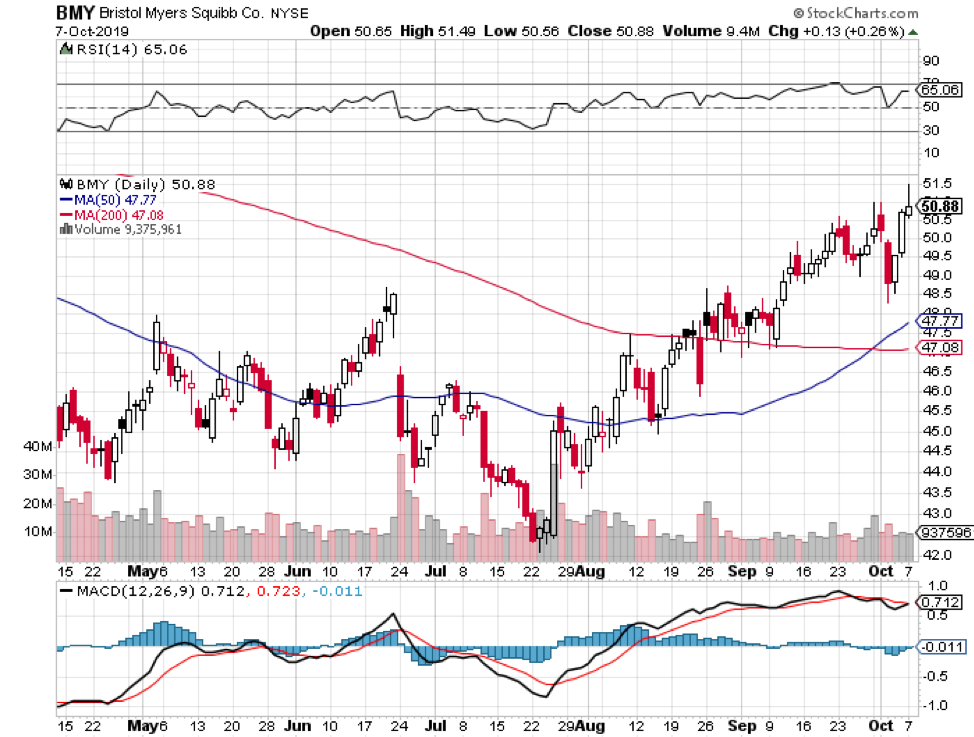
Although Bristol has been underperforming compared to its competitors for the majority of 2019, the stock has actually surpassed its rivals by roughly 5% in September. Following its 52-week low in July, the company has performed steadily higher to currently trading 6.5% below its 2019 high.

Hence, traders should be vigilant as a dip to a short-term trendline in the next weeks could offer a suitable entry point to eventually take advantage of the upside momentum.

Amgen (AMGN)

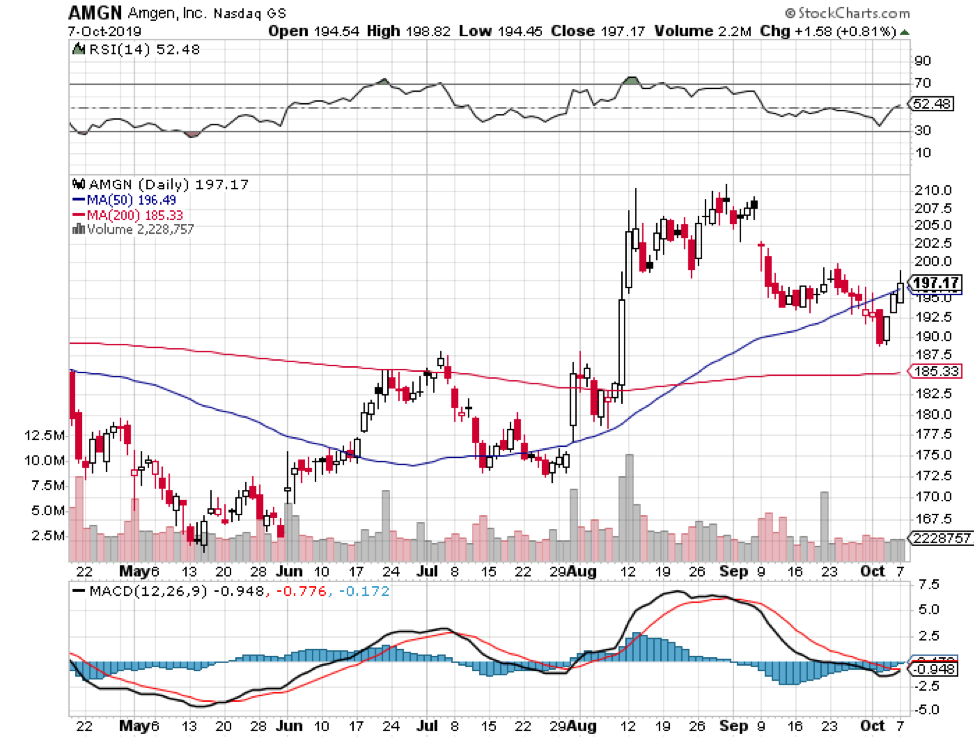
Another oncology frontrunner is Amgen (AMGN). The biotech giant recently presented its data on experimental treatments AMG 510 and AMG 160, which target some forms of colorectal cancer. So far, AMG 510 has provided higher response rates at 3% for patients across all levels of dosage.

These drugs form part of the rising trend of precision medicines, which zero in on particular gene mutations. This method is anticipated to be able to ward off cancer cells regardless of the organ where the disease originated.

In September, Amgen shared that the drug managed to shrink tumors by almost 50% during the trial period for advanced non-small lung cancer patients. Meanwhile, the drug’s disease control rate was recorded at 92%, with patients capable of tolerating AMG 510 without any dose-limiting toxicities.

These results prompted the FDA to send AMG 510 for “fast track” review. Aside from their own study, Amgen is also looking at a possible combination with Merck’s Keytruda in an effort to bolster its foothold in the lung cancer front.

If Amgen succeeds in the application of AMG 510 to colorectal cancer patients, the drug will be the first-ever approved treatment to target a mutated form of a gene commonly referred to as KRAS. This particular mutation called KRASG12C is prevalent in approximately 13% of non-small cell lung cancers, 3% to 5% of colorectal cancers, and almost 2% of solid tumor cancers.

In terms of revenue, the success of AMG 510 could lead to annual sales of $3 billion in the United States alone and $6.4 billion internationally. Aside from Amgen, Mirati Therapeutics Inc. (MRTX) has been actively pursuing treatments that aim to treat KRAS mutations as well.

Incyte Corporation (INCY)

At first blush, Incyte (INCY) is regarded as simply another young company striving to make a name for itself in the massive biotech market. Despite the success of bone marrow disorder drug Jakafi, a lot of investors still believe that the company only managed to stumble its way to growth. In fact, even those who actually started to invest in this biopharma firm still somehow see it as a company with an extremely limited potential. 

Unfortunately for these investors, they’re missing out on a crucial detail. Although Incyte’s trajectory isn’t exactly moving at a blistering pace, the steady revenue growth of the company in 2019 is a strong indicator of meaningful profits in the succeeding years.

This growth would eventually land the company in the watchlist of every biotech investor, with the company stock already gaining 18% this year alone to boost its $16.10 billion market value.

One of the most exciting developments from Incyte is its bile duct cancer research which led to a potential oncology blockbuster drug Pemigatinib. So far, 36% of its test patients saw their tumors shrink with a preliminary median overall survival of 21.1 months.

Despite the promising results though, the company cautions on the modesty of its projected revenue as Pemigatinib specifically targets cholangiocarcinoma, which is a rare type of bile duct cancer. Incyte plans to submit the drug for review to the FDA before the year ends.

For now, Incyte is focused on the commercialization and development of its existing moneymakers. Aside from Jakafi, the company is also making waves in the rheumatoid arthritis market with Olumiant. Its myeloid leukemia treatment Iclusig is another potential golden goose on the rise as well.

So far, Incyte’s share price has been trading at approximately $15 range since April. The past two months showed a pullback though, with the stock finding key support from the lower trendline of the trading range at $72. For investors who intend to open a long position within these levels, you should set your take-profit order somewhere near $88. However, simply cut your losses if Incyte stock fails to hold $72 support.


https://madhedgefundtrader.com/wp-content/uploads/2019/05/cropped-mad-hedge-logo-transparent-192x192_f9578834168ba24df3eb53916a12c882.png 0 0 Mad Hedge Fund Trader https://madhedgefundtrader.com/wp-content/uploads/2019/05/cropped-mad-hedge-logo-transparent-192x192_f9578834168ba24df3eb53916a12c882.png Mad Hedge Fund Trader2019-10-22 08:00:042019-10-22 07:55:20Special Cancer Issue - Part 1
Mad Hedge Fund Trader

October 17, 2019

Biotech Letter

Mad Hedge Biotech & Health Care Letter
October 17, 2019
Fiat Lux

Featured Trade:

(DUMPSTER-DIVING IN BIOTECH),
(ABBV)

https://madhedgefundtrader.com/wp-content/uploads/2019/05/cropped-mad-hedge-logo-transparent-192x192_f9578834168ba24df3eb53916a12c882.png 0 0 Mad Hedge Fund Trader https://madhedgefundtrader.com/wp-content/uploads/2019/05/cropped-mad-hedge-logo-transparent-192x192_f9578834168ba24df3eb53916a12c882.png Mad Hedge Fund Trader2019-10-17 12:52:412019-10-17 12:52:39October 17, 2019
Mad Hedge Fund Trader

Dumpster-Diving in Biotech

Biotech Letter

AbbVie Inc (ABBV) has transformed into one of the industry leaders in the biotech world, showing off a notable top-line growth and providing competitive dividends ever since its launch as an Abbott Laboratories (ABT) spinoff in 2013.

Despite its growth, AbbVie’s shares fell by a crushing 20% in the past year. This caused the company’s net value to trade at less than eight times forward earnings making it a blue-chip biopharma stock that could be bought for next to nothing!

What could be causing investors to sidestep this leading biotech?

The primary reason is the dwindling sales of AbbVie’s longstanding blockbuster drug, Humira. Despite its dominance in the market today, this arthritis medication is nearing its twilight years and is anticipated to eventually succumb to competition.

The threat to Humira’s dominance in the market is a huge deal for AbbVie particularly because of its heavy dependence on the drug’s revenue. In 2018 alone, the arthritis medication contributed approximately $20 billion to the $32.7 billion annual sales of the entire company.

Humira’s status in the United States is secure until its patent expires in 2023. Unfortunately, the drug doesn’t enjoy similar protection in international markets as biosimilar competition has already challenged its presence in the European Union. This has actually hit AbbVie’s performance as global sales showed a 28% decline in the past year.

Meanwhile, AbbVie’s blood cancer treatment Imbruvica is fighting off aggressive competitors in the market. At the moment though, investors remain optimistic about Imbruvica. The drug has been reported to achieve strong growth rates, generating roughly $4 billion in yearly revenue.

With this performance, Imbruvica is projected to hit a peak of $7 billion in sales. Although the medication is projected to perform well in the hematology space, the growing number of programs geared towards creating a similar treatment remains an ongoing threat to the company.

On a positive note, AbbVie has been active in beefing up its product portfolio. So far, three promising mega blockbusters are anticipated to boost the declining sales of the company, namely, psoriasis drug Skyrizi, uterine fibroids medication Orilissa, and rheumatoid arthritis treatment Rinvoq. All three have been recently approved and are expected to be the new growth products that could keep AbbVie on top of its game.

So far, Skyrizi has only contributed $48 million in sales. However, the psoriasis treatment is expected to reach $5 billion in profits in the coming years. Pitching in to boost AbbVie’s immunology assets is Upadacitinib, a drug that the company hopes to market as the next Humira and has been submitted for priority review. If all goes well, Upadacitinib is projected to rake in as much as $6 billion in peak sales.

While these treatments are pegged as promising additions to AbbVie drug portfolio, the biotech firm took another major step towards the expansion of its product line through its acquisition of Allergan (AGN) earlier this year. Although this move ensures that more products are queued to its pipeline, the deal with the Botox-maker could pose concerns for AbbVie’s balance sheet as the terms include the absorption of Allergan’s long-term debt worth $19.6 billion. 

Nonetheless, AbbVie is still an interesting stock for a lot of investors. Perhaps one of the reasons for the lingering interest in the biotech company is its current dividend yield of 6.51% -- an impressive number especially if you consider the fact that AbbVie is still in its growth phase. Since 2017, its dividend showed an increase from $0.64 quarterly to reach $1.07 quarterly in 2019.

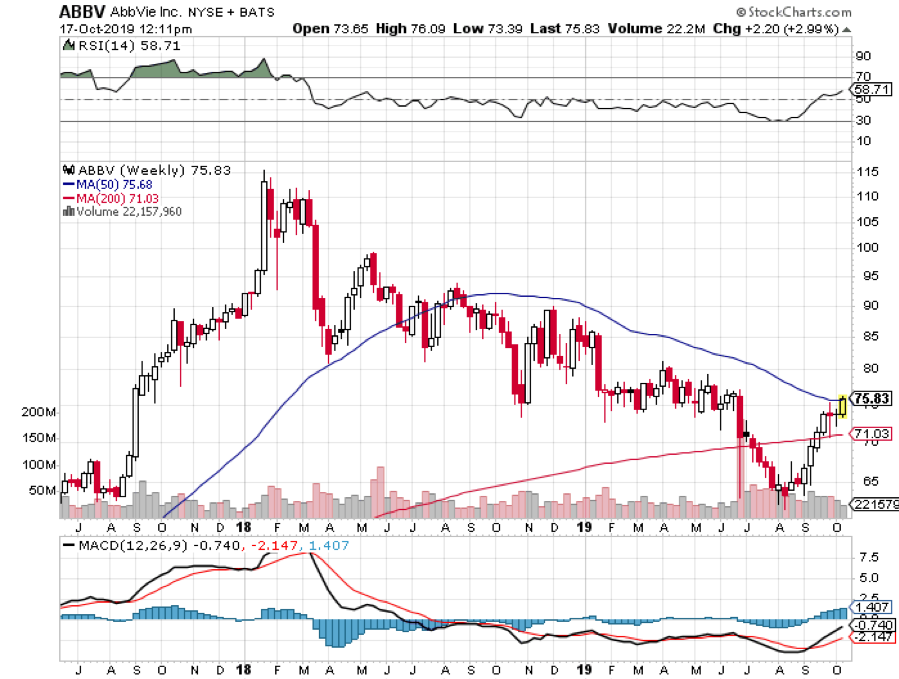
Another reason could be its valuation. As of this writing, the stock is trading at $75.83. Taking into account its adjusted earnings per share in 2018 of $7.91 and a P/E ratio of 8.2, this is already a pretty low price for any company that’s not experiencing a decline in revenue but extremely cheap for a company that has the potential to hit a 15% profit growth and 41% increase in adjusted earnings per share.

Overall, AbbVie is really a tempting stock for investors particularly dividend investors due to its high dividend yield and growth rates. However, the decline of Humira sales remains worrisome especially if you consider how dependent the company is on the drug.

Either way, AbbVie stock is really cheap at the moment and from a valuation perspective, there’s no substantial growth estimate priced in the stock to date. Basically, it all boils down to how much trust you want to put on a company with a proven track record but with high debt levels.


https://www.madhedgefundtrader.com/wp-content/uploads/2019/10/abbvie.png 295 525 Mad Hedge Fund Trader https://madhedgefundtrader.com/wp-content/uploads/2019/05/cropped-mad-hedge-logo-transparent-192x192_f9578834168ba24df3eb53916a12c882.png Mad Hedge Fund Trader2019-10-17 12:50:082019-10-17 12:52:08Dumpster-Diving in Biotech
Mad Hedge Fund Trader

October 15, 2019

Biotech Letter

Mad Hedge Biotech & Healthcare Letter
October 15, 2019
Fiat Lux

Featured Trade:

(CASHING IN ON ECONOMIES OF SCALE WITH CIGNA)
(CI), (ESRX), (AET)

https://madhedgefundtrader.com/wp-content/uploads/2019/05/cropped-mad-hedge-logo-transparent-192x192_f9578834168ba24df3eb53916a12c882.png 0 0 Mad Hedge Fund Trader https://madhedgefundtrader.com/wp-content/uploads/2019/05/cropped-mad-hedge-logo-transparent-192x192_f9578834168ba24df3eb53916a12c882.png Mad Hedge Fund Trader2019-10-15 06:02:222019-10-15 06:33:45October 15, 2019
Mad Hedge Fund Trader

Cashing in on Economies of Scale with Cigna

Biotech Letter

The future of health care will be no doubt driven by massive economies of scale that crush costs and balloon profit margins and there has been no better practitioner of that philosophy than Cigna Corp. (CI)

The company recently reported a robust quarterly blowout. The managed care service provider disclosed that it recorded $4.30 in earnings per share for the second quarter, crushing the Wall Street estimate of $3.74 per share. Total profits were recorded to be $34.4 billion, also topping previous estimates of $33.2 billion.

Among the revenue components of Cigna, pharmacy sales were identified as major pushers as it reached $26.3 billion -- a huge jump from the $750 million recorded during the same period in 2018. This is primarily due to the acquisition of pharmacy benefit manager Express Scripts for $67 billion in December last year. Cigna’s premiums also went up 8.9% year-over-year to reach $9.8 billion. Meanwhile, fees grew 76% to $2.39 billion. 

The move to merge with Express Scripts (ESRX) has allowed Cigna to secure long-term growth as the company transformed into a one-stop-shop for clients’ healthcare needs. It can now cater to demands ranging from drug sales up to insurance coverage. Since it brings together both medical services and pharmacy benefits under one roof, Cigna has become a more attractive option for its ability to provide better treatments and lower expenses.

With this deal, Cigna gained a competitive position to become one of the major movers in the healthcare insurance industry. So far, the combined company is projected to generate a minimum free cash flow of $6 billion by 2021.

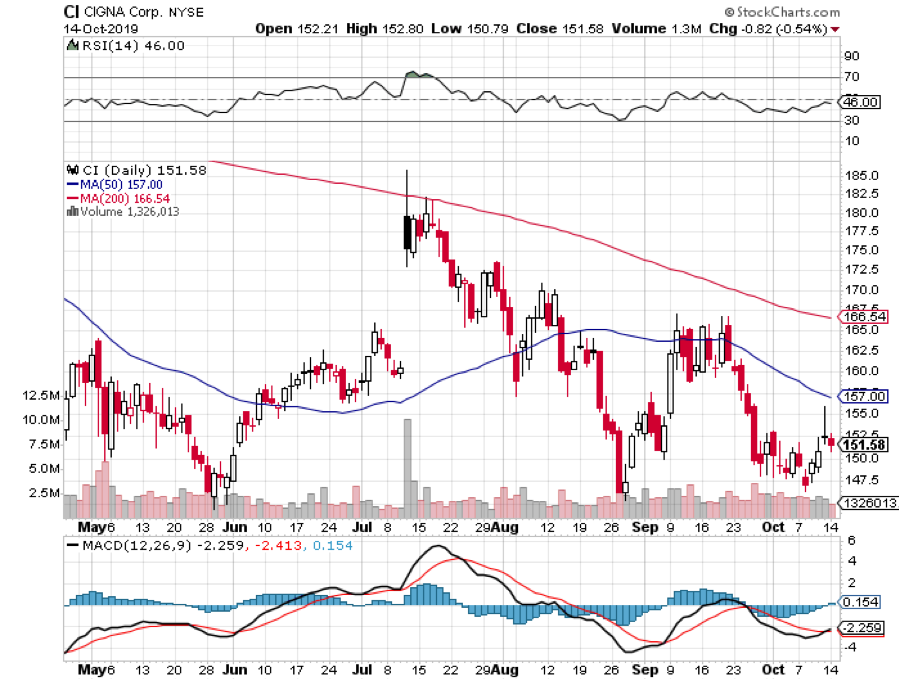
However, one major obstacle in Cigna’s growth is the uncertainty arising from the current political climate in the United States ahead of the 2020 election. Cigna’s share price almost perfectly inversely tracks with the polling numbers of Elisabeth Warren, who has essentially promised to nationalize the company. The better she does the worse Cigna does, and that has given us our entry point.

At the moment, health insurers remain uncertain of some aspects of their business due to potential regulatory changes that could plunge them into debt.

To address this, Cigna is following the footsteps of fellow healthcare giants like Aetna Inc (AET) which sold its group life and disability unit to Hartford Financial Services Group for $1.45 billion in 2017.

While Cigna hopes that the merger with Express Scripts could help mitigate the effects of future government policy changes, the company is still actively seeking other alternatives.

One of its plans is to sell its group benefits insurance unit, which has an estimated value of $6 billion, to other insurers with an already established division and are looking to scale. The sale could include the life and accidental death as well as dismemberment coverage clusters of Cigna. This move will allow the company to focus more on healthcare.

Given its revenue trajectory in the first half of 2019 though, the company’s outlook indicates a continuing momentum into year-end. In fact, Cigna’s total revenues this year are projected to rise somewhere between $136 and $137 billion compared to the $132.5 and $134.5 billion range predicted earlier. This indicates a 180% increase year-over-year.

Meanwhile, its earnings per share are expected to reach $16.90 compared to the earlier earnings guidance of $16.65, representing a 17% rise year-over-year. The company’s medical clients are estimated to increase by roughly 200,000 as well, achieving 97% to 98% customer retention in its health services sector in 2020.

Cigna’s expansion to establish an international presence is also a promising move towards diversification. In the first quarter of 2019, the company acquired OnePath Life Insurance from the ANZ Bank in New Zealand. This deal allows Cigna to gain access to an existing client base and offer an expanded set of services.

Aside from achieving international operations expansion, this acquisition also reassures Cigna’s investors of the company’s capacity to effectively deploy capital to drive long-term growth.

So far, Cigna has provided strong reasons for it to be a “BUY.” In terms of its growth rate, the company’s revenues showed a CAGR of 11% from the year 2010 up to 2018. However, it rose by 194% in the first half of this year, courtesy of its Express Scripts merger. Its recent acquisitions also demonstrated consistent top-line growth and the ability to effectively distribute its products and services.

Apart from its top-line growth, Cigna has also managed to maintain its bottom-line profitability. This is clear in the annual earnings growth it recorded since 2009 and its efforts to maintain operating profitability via controlled medical care and other operating costs.


https://www.madhedgefundtrader.com/wp-content/uploads/2019/10/cigna.png 391 364 Mad Hedge Fund Trader https://madhedgefundtrader.com/wp-content/uploads/2019/05/cropped-mad-hedge-logo-transparent-192x192_f9578834168ba24df3eb53916a12c882.png Mad Hedge Fund Trader2019-10-15 06:00:182019-10-15 06:27:49Cashing in on Economies of Scale with Cigna
Mad Hedge Fund Trader

October 10, 2019

Biotech Letter

Mad Hedge Biotech & Health Care Letter
October 10, 2019
Fiat Lux

Featured Trade:

(THE GREAT PLAY IN ANIMAL HEALTH CARE)
(ZTS)

https://madhedgefundtrader.com/wp-content/uploads/2019/05/cropped-mad-hedge-logo-transparent-192x192_f9578834168ba24df3eb53916a12c882.png 0 0 Mad Hedge Fund Trader https://madhedgefundtrader.com/wp-content/uploads/2019/05/cropped-mad-hedge-logo-transparent-192x192_f9578834168ba24df3eb53916a12c882.png Mad Hedge Fund Trader2019-10-10 06:02:312019-10-10 06:12:02October 10, 2019
Mad Hedge Fund Trader

The Great Play in Animal Health Care

Biotech Letter

When I first heard about this industry, I thought it was a joke. I was wrong. The harsh truth is that many animals in the US get better health care than at least half of the humans. Animal health care is in fact a gigantic and hugely profitable business.

Recession or not, the animal healthcare industry seems to thrive as people continue to go to great lengths to provide the best options for their furry friends.

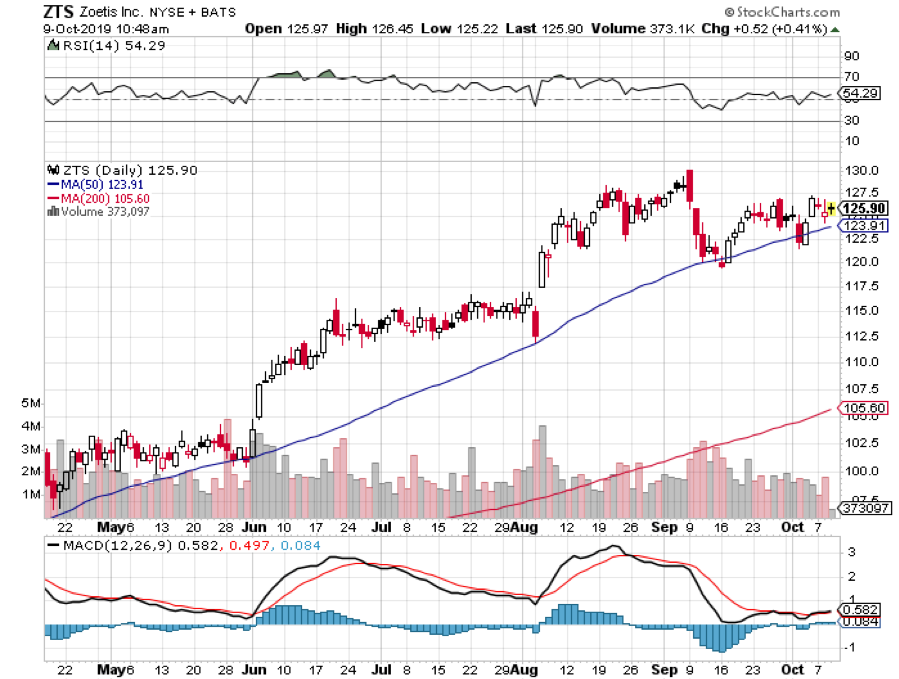
Unfortunately, the undeniable effects of economic downturns have forced not only ranchers and farmers to downsize their operations but domestic pet owners to cut their budgets for their beloved animal companions. Despite the threat of the next market crash, a number of investors believe that Zoetis (ZTS) is a good stock to hold.

The $48 billion global animal health company develops, sells, and distributes pet medications for ticks, allergies, and fleas. Zoetis also manufactures vaccines along with animal feed additives, veterinary diagnostics, and even anti-infectives. Aside from treatments for your plain vanilla cats and dogs, the animal health leader also offers products for poultry, horses, cattle, pigs, and fish.

The latest news to bolster the confidence of Zoetis investors is the highly anticipated regulatory approval of oral canine drug Simparica Trio. This chewable tablet for dogs is currently under review not only in the United States but also in Japan, Brazil, Canada, and Australia. Once approved, this drug will be marketed as an all-in-one treatment for heartworm disease, ticks, and internal parasites.

If approved, Simparica Trio is expected to become the next blockbuster product of the company by 2020. Sales of the drug is estimated to reach $1.36 billion in 2022, with $1.14 of incremental earnings per share.

With Zoetis’ move to focus on high-margin animal items, it’s no question that the Pfizer spinoff will remain on top of the game even with the recession. In fact, the company derived 41% of its 2018 total revenue from items for cats and dogs alone compared to the 31% competitor Eli Lilly spinoff Elanco (ELAN) raked that year for similar products.

In terms of total revenue, Zoetis reported $5.8 billion for last year’s work while Elanco raked in $3.1 billion. That allowed Zoetis to convert 24% of profits into income during the said period. Zoetis’ blockbuster items, such as Simparica, Clavamox, and ProHeat, also didn’t disappoint this year.

However, there’s no such thing as a risk-free investment.

One reason for Zoetis’ consistent reports of high margins is the fact that veterinarians remain the main distribution channel for animal products. While its 24% net margins obviously provide an adequate elbow room, the company could be pressured if owners decide to purchase from third-party channels like retail stores or online shops.

Taking into account the 2019 revenue guidance from the company that indicates at least 5% of year-over-year growth, Zoetis’ dominance in the market appears to remain firmly on solid ground.

Throughout the years, the leader in animal healthcare has consistently grown its revenue and maintained a solid gross margin. It has stayed ahead of the pack by snapping up value-creating acquisitions and developing new products.

A good example of Zoetis’ ability to spot promising mergers is its $2 billion acquisition of veterinary diagnostics firm Abaxis (ABAX) in July 2018. This deal is estimated to deliver at least $200 million in revenues this year, indicating its massive contribution to the $270 million year-over-year growth in the company’s profits in the first half of 2019.

Another exciting acquisition is nutrition solutions developer Platinum Performance, a deal which is expected to be wrapped up by the third quarter of 2019. While this deal is not anticipated to provide a major financial impact to Zoetis’ performance this year, it’s expected to give the company’s equine and pet care portfolio a substantial boost in the years to come.

Zoetis has been hailed as one of the most promising companies in the animal healthcare industry today. Since its IPO in 2013, the shares of this Pfizer (PFE) spinoff has reached a total return of 242% -- lightyears ahead of the 137% total return of the S&P 500 within the same period.

Buy Zoetis on the dip.


https://madhedgefundtrader.com/wp-content/uploads/2019/05/cropped-mad-hedge-logo-transparent-192x192_f9578834168ba24df3eb53916a12c882.png 0 0 Mad Hedge Fund Trader https://madhedgefundtrader.com/wp-content/uploads/2019/05/cropped-mad-hedge-logo-transparent-192x192_f9578834168ba24df3eb53916a12c882.png Mad Hedge Fund Trader2019-10-10 06:00:172019-10-10 06:10:36The Great Play in Animal Health Care
Mad Hedge Fund Trader

October 8, 2019

Biotech Letter

Mad Hedge Biotech & Healthcare Letter
October 8, 2019
Fiat Lux

Featured Trade:

(GET ON THE CELGENE BANDWAGON),
(CELG), (BMY), (GSK), (AMGN), (RHHBY), (ROG), (GMAB), (MOR)

https://madhedgefundtrader.com/wp-content/uploads/2019/05/cropped-mad-hedge-logo-transparent-192x192_f9578834168ba24df3eb53916a12c882.png 0 0 Mad Hedge Fund Trader https://madhedgefundtrader.com/wp-content/uploads/2019/05/cropped-mad-hedge-logo-transparent-192x192_f9578834168ba24df3eb53916a12c882.png Mad Hedge Fund Trader2019-10-08 03:02:362019-10-08 04:01:27October 8, 2019
Page 114 of 115«‹112113114115›

Legal Disclaimer

There is a very high degree of risk involved in trading. Past results are not indicative of future returns. MadHedgeFundTrader.com and all individuals affiliated with this site assume no responsibilities for your trading and investment results. The indicators, strategies, columns, articles and all other features are for educational purposes only and should not be construed as investment advice. Information for futures trading observations are obtained from sources believed to be reliable, but we do not warrant its completeness or accuracy, or warrant any results from the use of the information. Your use of the trading observations is entirely at your own risk and it is your sole responsibility to evaluate the accuracy, completeness and usefulness of the information. You must assess the risk of any trade with your broker and make your own independent decisions regarding any securities mentioned herein. Affiliates of MadHedgeFundTrader.com may have a position or effect transactions in the securities described herein (or options thereon) and/or otherwise employ trading strategies that may be consistent or inconsistent with the provided strategies.

Copyright © 2026. Mad Hedge Fund Trader. All Rights Reserved. support@madhedgefundtrader.com
Scroll to top