• support@madhedgefundtrader.com
  • Member Login
Mad Hedge Fund Trader
  • Home
  • About
  • Store
  • Luncheons
  • Testimonials
  • Contact Us
  • Click to open the search input field Click to open the search input field Search
  • Menu Menu
april@madhedgefundtrader.com

Unleashing The Underdogs

Biotech Letter

Grab your notebooks because class is in session, and today's topic is radiopharmaceuticals.

Yes, you heard it right - radiopharmaceuticals. It’s not your everyday cocktail party topic, but it's certainly the buzzword in the biotech investing world. And let me tell you, the numbers are sizzling.

Venture capital deals in this sector have shot up by an eye-watering 550% to $408 million this year. Back in 2017, this figure was a mere $63 million. Talk about going from zero to hero.

The global market for these radioactive wonders zoomed past $5.2 billion in 2022 and is now racing towards an estimated $13.67 billion by 2032. That's a CAGR of 10.2% for the statisticians among us.

So, what's cooking in the radiopharmaceutical kitchen? Well, a lot, apparently.

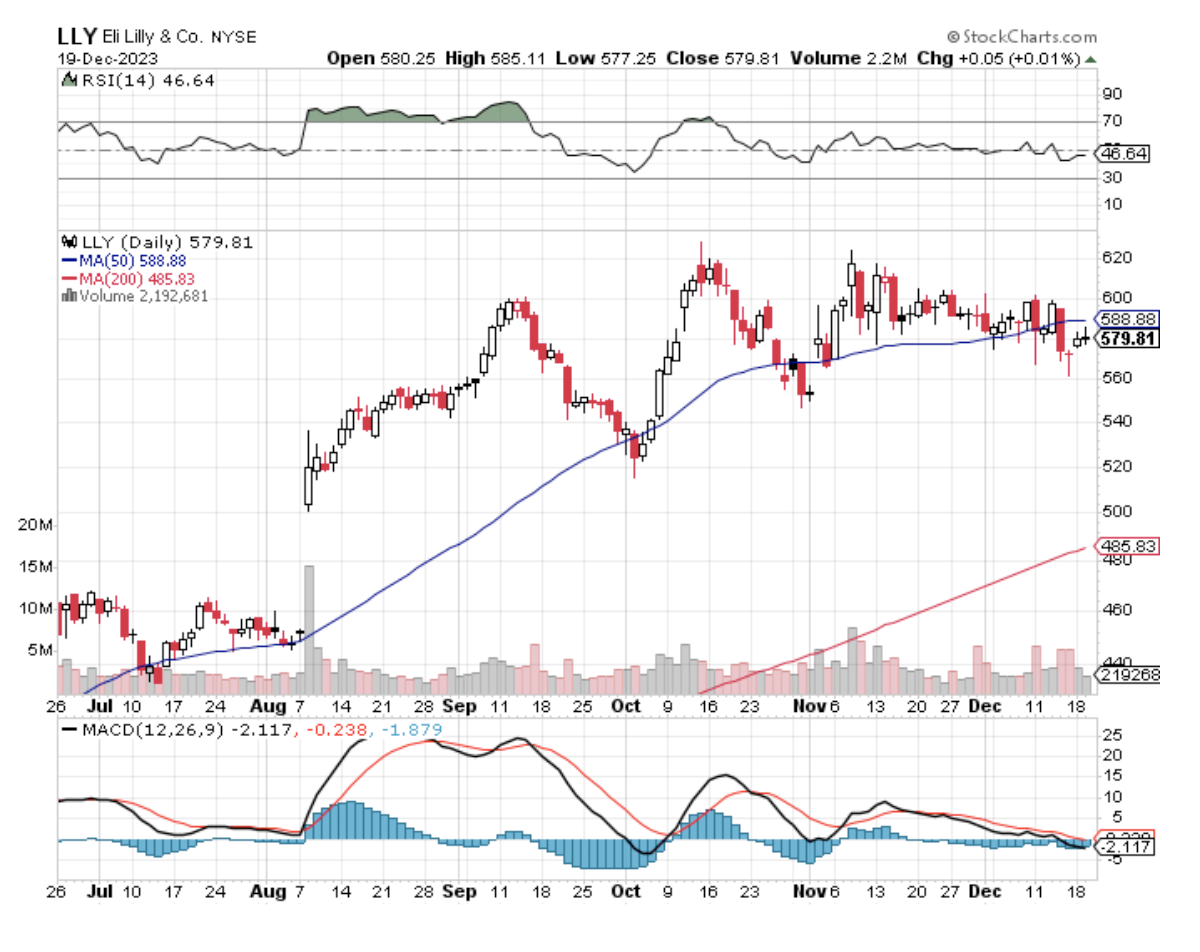
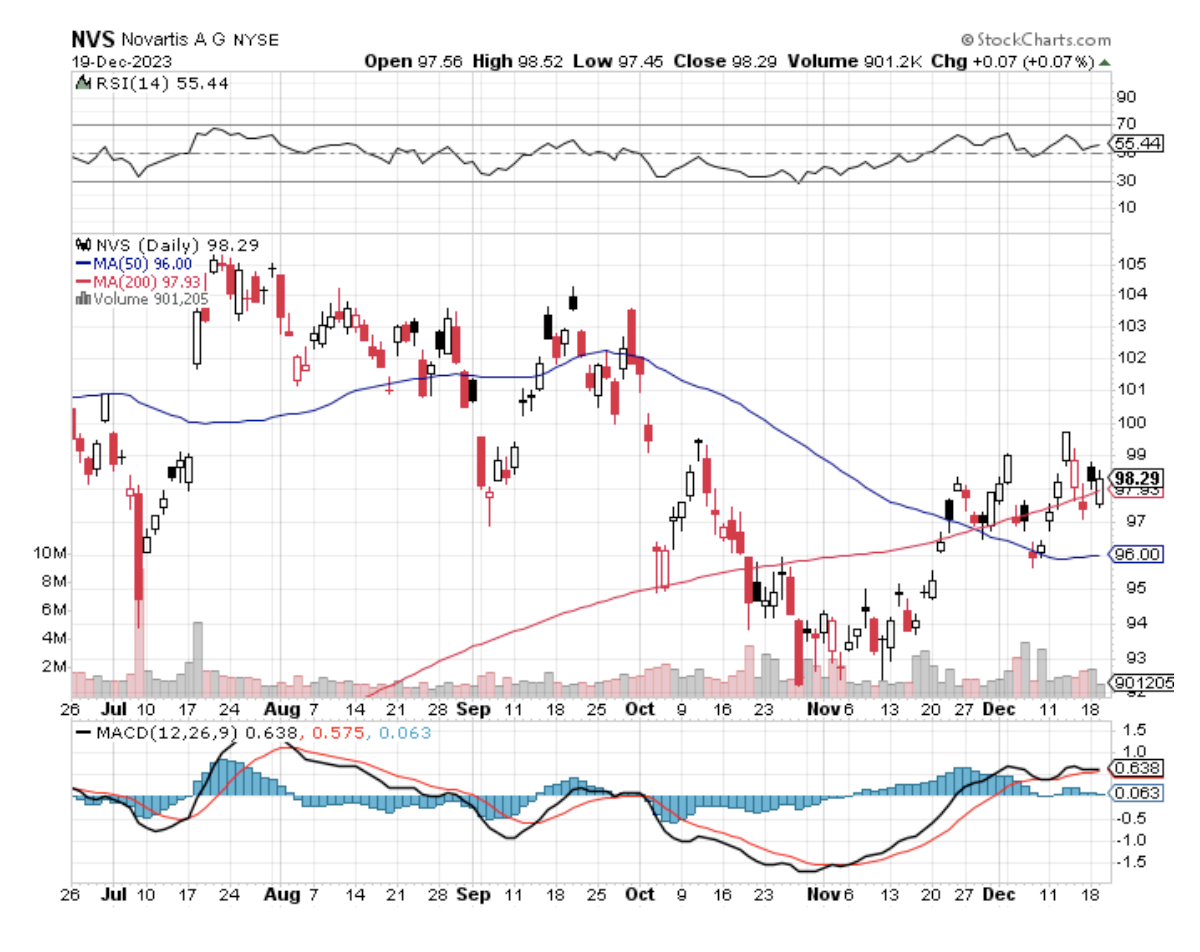
Leading the pack are the heavyweights – Novartis (NVS) and Eli Lilly (LLY). Novartis has thrown its hat into the ring, making radiopharmaceuticals a showstopper in its oncology lineup. With stars like Lutathera and Pluvicto, they're not just playing; they're here to dominate.

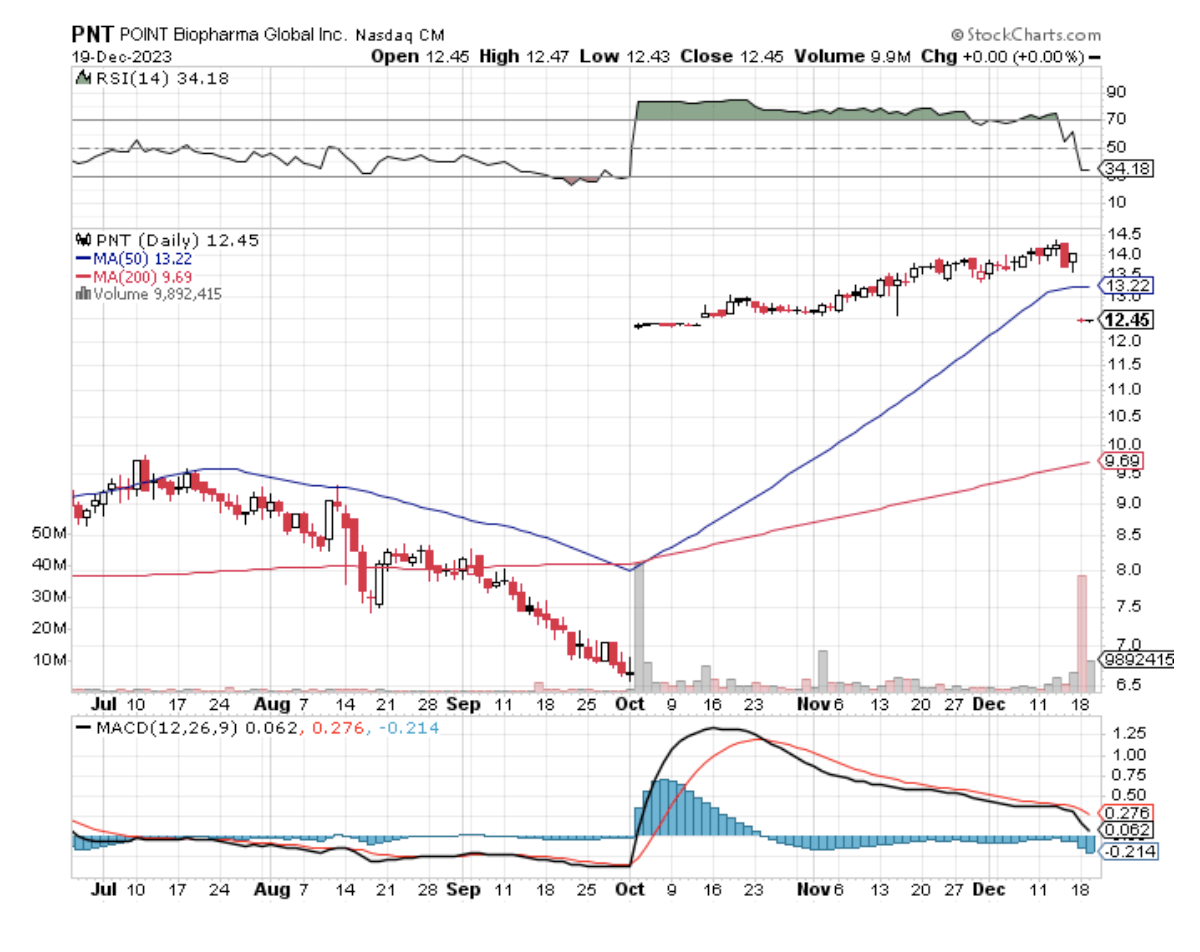
As for Eli Lilly, they're playing catch-up but with style. They laid down a cool $1.4 billion for Point Biopharma Global — a biotech gem focusing on radioligand therapies. Notably, Point investors are playing hardball, waiting for a Phase 3 reveal.

Meanwhile, Eli Lilly's also buddied up with Mariana Oncology and its $175 million Series B – these guys are eyeing small cell lung cancer with a glint in their eye.

So, what does this mean for the investor universe? Well, in a nutshell, it's party time. Early-stage companies, especially those with their lab coats on in discovery and preclinical stages, are like magnets to investors right now.

There’s POINT Biopharma, which hails from Indianapolis, that went public on Nasdaq as of July 1, 2021. Remember the ticker symbol “PNT”? That's them, and they currently have roughly $1.33 billion in market cap.

Another promising option is Mallinckrodt Pharmaceuticals. These folks are into everything from specialty pharmaceuticals to, you guessed it, radiopharmaceuticals—an American-Irish charm, if I may say so.

Abdera Therapeutics, a Canadian startup (eh!), is also in the running. This company is all about precision radiotherapeutics. They're eyeing small-cell lung cancer, and they've got the funds to back it up.

And then there’s ARTBIO, with an impressive $90 million Series A six months post-launch.

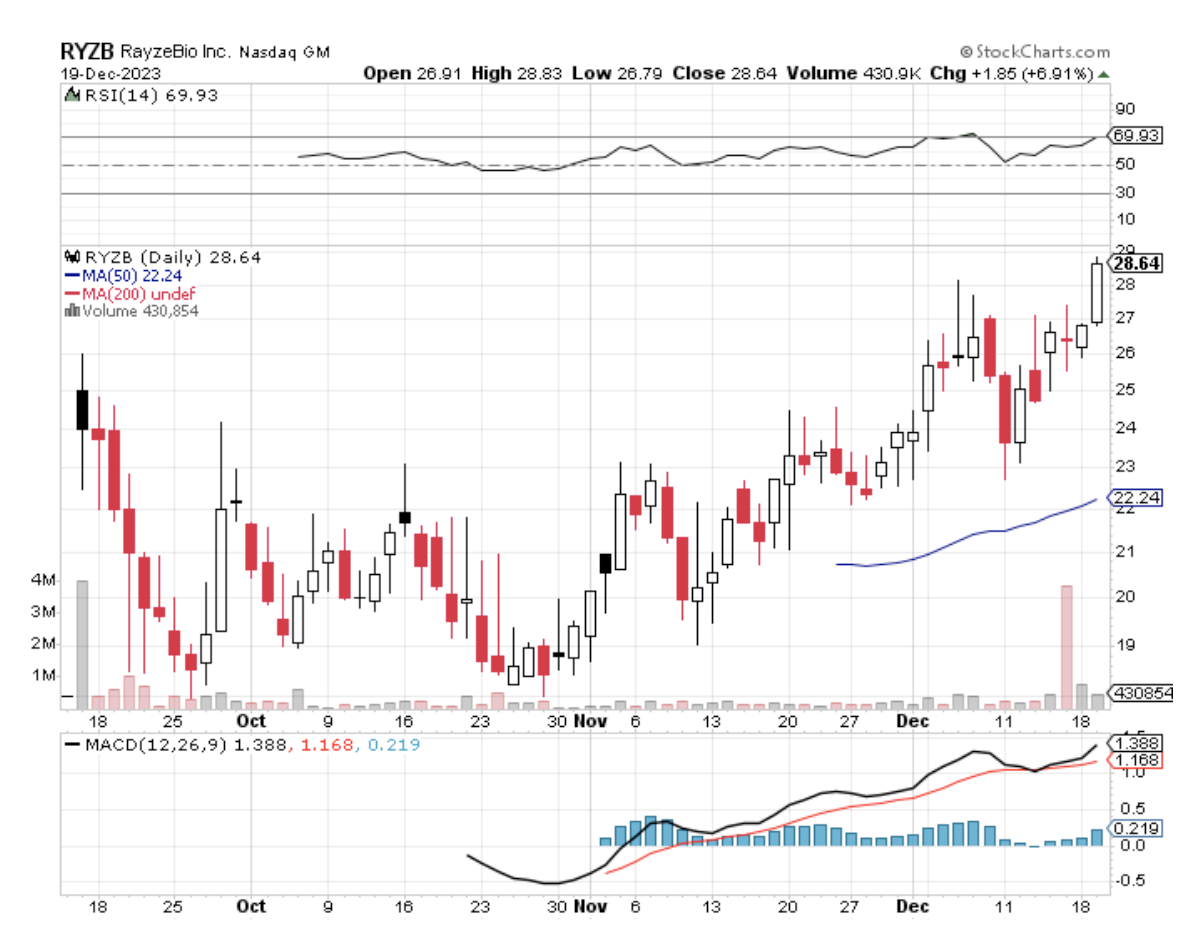
There’s also RayzeBio (RYZB), which is based in sunny California. They're not just turning heads; they're opening wallets. This company raised a whopping $160 million in Series D last year and then sprinted towards a dazzling $311 million IPO just last September.

Between 2018 and 2023, US-based radiopharmaceutical companies attracted a hefty $1.2 billion in venture financing. The peak? A cool $262 million in 2021. And guess what? Most of this dough was for preclinical and discovery shenanigans.

But let's not forget the hurdles, particularly the supply challenges and overwhelming demand. Yet, despite these hiccups, the sector remains hotter than a summer in the Sahara.

Prior to this, ADCs (Antibody Drug Conjugates) dominated the conversation.

We witnessed Merck (MRK) confidently investing $4 billion in Daiichi Sankyo for their ADC prospects. Lilly was busy forming a cozy partnership with Mablink Bioscience. And let's not forget AbbVie (ABBV), which generously splurged $10.1 billion on ImmunoGen's Elahere.

To this day, ADCs are still the talk of the town. But here's the thing: radiotherapeutics might be the underdog next to ADCs, but they're catching up. Fast.

This sector is bubbling with potential, simmering with innovation. For investors and pharma bigwigs, radiopharmaceuticals are more than just a fad. They're the future.

So, what's the takeaway? Radiotherapeutics might not be grabbing the spotlight like ADCs, but they’re like that quiet kid in class who ends up acing the test.

Mark my words. This is one space in oncology that's set to make some serious noise in the coming years.


https://madhedgefundtrader.com/wp-content/uploads/2019/05/cropped-mad-hedge-logo-transparent-192x192_f9578834168ba24df3eb53916a12c882.png 0 0 april@madhedgefundtrader.com https://madhedgefundtrader.com/wp-content/uploads/2019/05/cropped-mad-hedge-logo-transparent-192x192_f9578834168ba24df3eb53916a12c882.png april@madhedgefundtrader.com2023-12-21 12:00:042023-12-21 11:21:59Unleashing The Underdogs
april@madhedgefundtrader.com

December 19, 2023

Biotech Letter

Mad Hedge Biotech and Healthcare Letter
December 19, 2023
Fiat Lux

Featured Trade:

(HIDDEN IN PLAIN SIGHT)

(VRTX), (CRSP), (NVDA), (GOOGL), (AMZN), (AAPL), (META), (MSFT), (TSLA)

https://madhedgefundtrader.com/wp-content/uploads/2019/05/cropped-mad-hedge-logo-transparent-192x192_f9578834168ba24df3eb53916a12c882.png 0 0 april@madhedgefundtrader.com https://madhedgefundtrader.com/wp-content/uploads/2019/05/cropped-mad-hedge-logo-transparent-192x192_f9578834168ba24df3eb53916a12c882.png april@madhedgefundtrader.com2023-12-19 12:02:552023-12-19 10:27:47December 19, 2023
april@madhedgefundtrader.com

Hidden In Plain Sight

Biotech Letter

In the high-pressure game of stock market investments, where volatility is the norm and certainty a luxury, the Nasdaq Composite’s 36% uptick this year is nothing short of remarkable.

The credit largely goes to the “Magnificent Seven” – a septet of tech behemoths comprising Nvidia (NVDA), Alphabet (GOOGL), Amazon (AMZN), Apple (AAPL), Meta Platforms (META), Microsoft (MSFT), and Tesla (TSLA). These giants have not just captured the market’s imagination; they've powered its ascent.

However, while these tech titans have been capturing the spotlight, there's been a different kind of giant, hidden in plain sight, quietly making significant strides in a sector just as crucial as technology – biotechnology and healthcare.

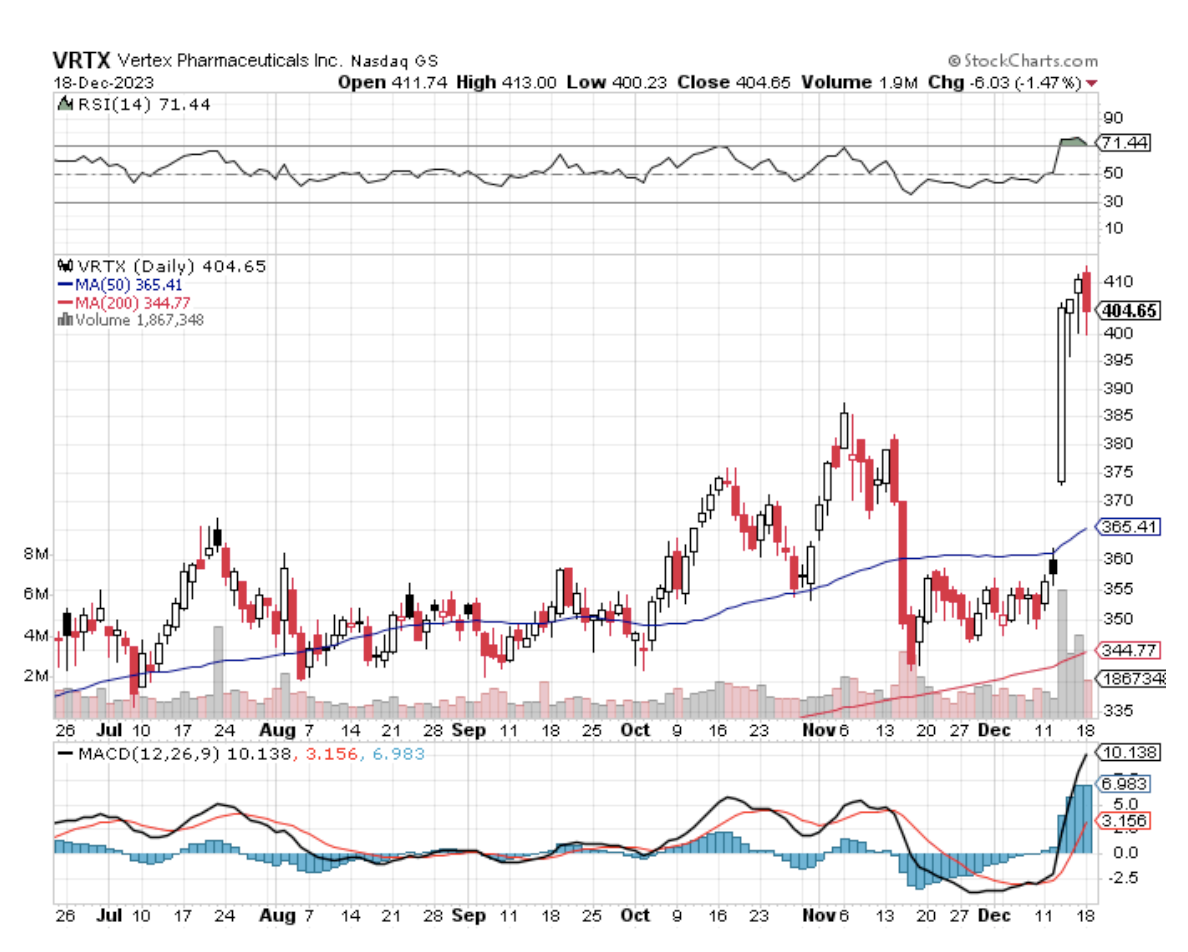
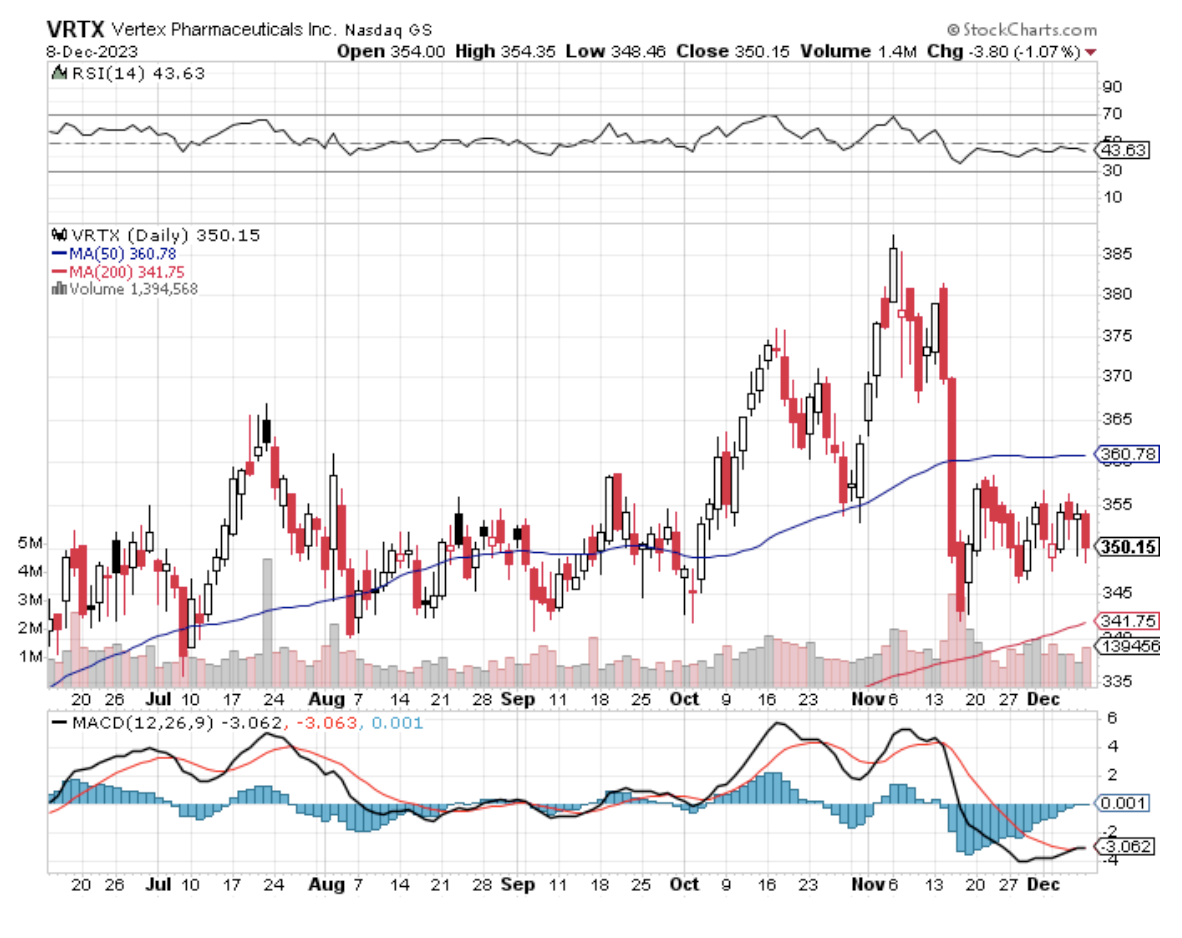
This is where Vertex Pharmaceuticals (VRTX) emerges, a standout performer in the industry, demonstrating that groundbreaking innovation and solid investment opportunities aren't exclusive to the tech world.

The tech sector's rebound this year, following a tumultuous 2022, wasn't just luck. It was a confluence of a resilient economy and consumer spending that stayed robust.

This buoyancy proved a boon for the Magnificent Seven, whose fortunes often mirror economic trends. Apple's case is illustrative. Its iPhones, a blend of luxury and necessity, see fluctuating demand based on economic health.

But Vertex operates on a different plane.

Vertex specializes in life-saving drugs for cystic fibrosis (CF). This isn't a market swayed by economic tides. CF patients depend on the company’s drugs, literally, for survival.

What's more, Vertex is the only game in town for these medications. This unique position grants Vertex significant pricing power, ensuring stable financial performance, come rain or shine.

Now, let’s zoom in on Trikafta, Vertex’s CF superstar.

This is not just another drug; it’s a lifeline, a revenue juggernaut with 13 years of patent protection left.

While rivals scramble to find footholds in CF therapy, Vertex is already eyeing the next big thing: a once-daily treatment, promising more convenience than Trikafta’s twice-daily regimen.

In short, Vertex isn’t just leading the CF market; it's redefining it.

Vertex's ambition doesn't end with CF. The company is making bold strides in pain management with VX-548, a potential opioid alternative. This pill is a beacon of hope in a field littered with failed attempts at non-opioid pain solutions. The recent Phase 2 study results? Encouraging. The study revealed significant pain reduction in patients with chronic neuropathic pain.

But there's more. Vertex is also pioneering gene-editing therapies. Its latest triumph is Casgevy, developed with CRISPR Therapeutics (CRSP).

This treatment, a potential cure for sickle cell disease (SCD) and transfusion-dependent beta-thalassemia (TDT), recently received UK approval. It’s a complex treatment, not a simple pill. This complexity translates to both a high price and a shield against generic competition. With an initial target market of 32,000 patients, Vertex is looking at a potential goldmine.

Contrast this with the struggles of smaller gene-editing firms. Vertex stands out with its deep pockets and negotiation expertise. It's not just about developing groundbreaking therapies; it's about successfully bringing them to market. As it has shown over the years, Vertex’s prowess in this arena is unrivaled.

Of course, biotech is a realm of high risks and high rewards.

Vertex is no stranger to setbacks. Remember October 2020? The company saw its shares plummet by over 15% in a day after discontinuing a promising program. But it's the rebound that tells the story. Since then, Vertex’s shares have soared, making that drop a mere blip in its upward trajectory.

In the pantheon of biotech, Vertex Pharmaceuticals is a rare breed. It's a company that has not only conquered the CF domain but is also making significant inroads in pain management and gene editing. The financials are solid, the pipeline robust, and the market potential vast. Its collaboration with CRISPR Therapeutics on Casgevy is just one example of its strategic foresight.

So while the Magnificent Seven continue to dominate headlines, Vertex Pharmaceuticals emerges as a compelling, if quieter, story. It’s a narrative of a company not content with leading just one market but expanding its prowess into new, uncharted territories. I suggest you buy the dip.


https://madhedgefundtrader.com/wp-content/uploads/2019/05/cropped-mad-hedge-logo-transparent-192x192_f9578834168ba24df3eb53916a12c882.png 0 0 april@madhedgefundtrader.com https://madhedgefundtrader.com/wp-content/uploads/2019/05/cropped-mad-hedge-logo-transparent-192x192_f9578834168ba24df3eb53916a12c882.png april@madhedgefundtrader.com2023-12-19 12:00:532023-12-19 10:27:35Hidden In Plain Sight
april@madhedgefundtrader.com

December 14, 2023

Biotech Letter

Mad Hedge Biotech and Healthcare Letter
December 14, 2023
Fiat Lux

Featured Trade:

(EDITING YOUR PORTFOLIO)

(CRSP), (VRTX), (BLUE), (BEAM), (CRBU), (EDIT), (NTLA), (PRME), (VERV), (LLY), (REGN)

https://madhedgefundtrader.com/wp-content/uploads/2019/05/cropped-mad-hedge-logo-transparent-192x192_f9578834168ba24df3eb53916a12c882.png 0 0 april@madhedgefundtrader.com https://madhedgefundtrader.com/wp-content/uploads/2019/05/cropped-mad-hedge-logo-transparent-192x192_f9578834168ba24df3eb53916a12c882.png april@madhedgefundtrader.com2023-12-14 12:02:022023-12-14 11:56:02December 14, 2023
april@madhedgefundtrader.com

Editing Your Portfolio

Biotech Letter

In the world of biotechnology, the buzz these days is all about gene editing – a frontier that’s moving at warp speed.

While the journey from sequencing the first human genome took a staggering 13 years, companies like CRISPR Therapeutics (CRSP) have sped up the process, bringing their revolutionary "molecular scissors" concept to market in a mere decade.

It's a thrilling time for investors, with the potential for staggering returns, but the path is littered with clinical and regulatory landmines. This turns choosing the best stocks to put your money into a tricky challenge.

Recently, the FDA gave the green light to two groundbreaking gene therapies for sickle cell disease, developed by Vertex Pharmaceuticals (VRTX) in collaboration with CRISPR Therapeutics and by Bluebird Bio (BLUE).

This disease, predominantly affecting African-American communities in the U.S., has been a target for medical advancement for years.

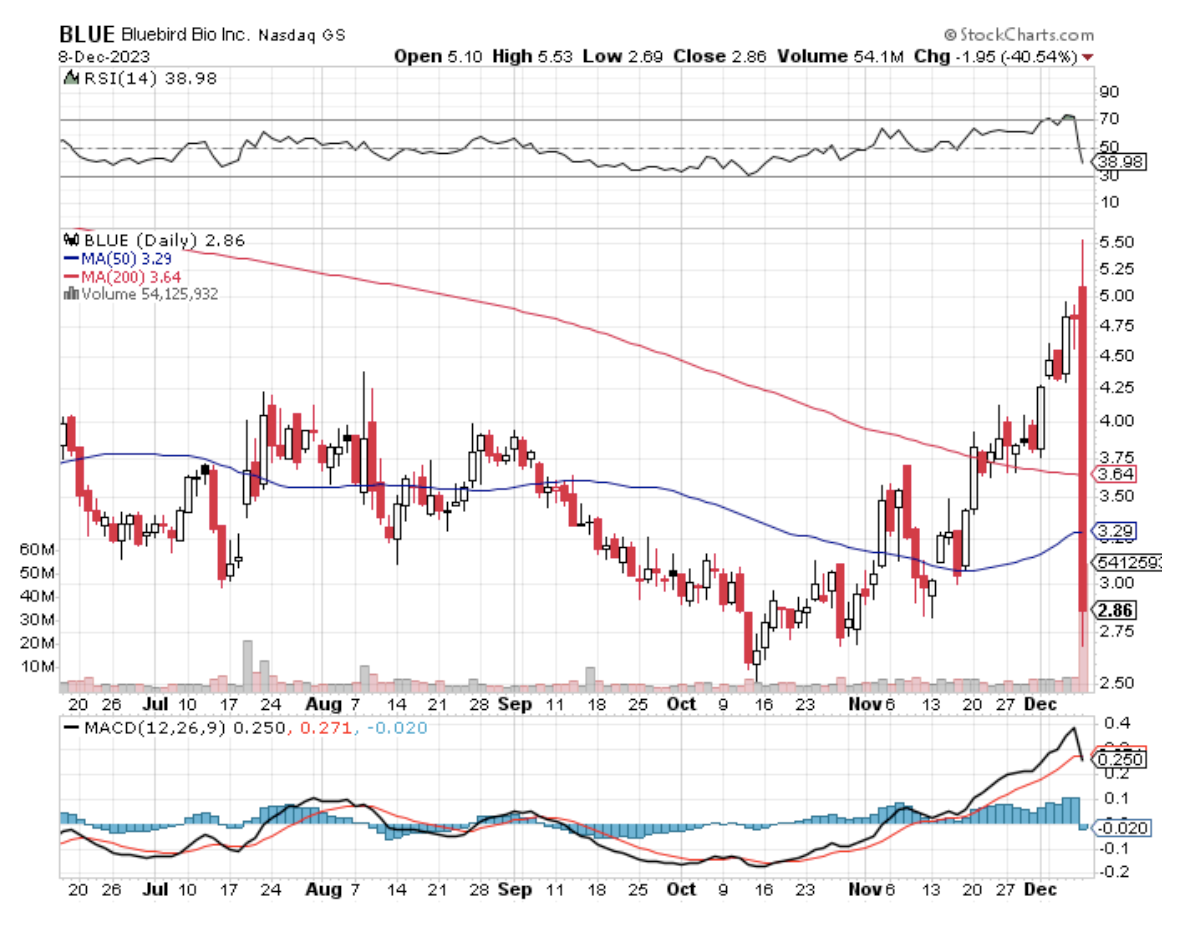
While the approval is a landmark, it's not without its tremors. Bluebird Bio's stock took a nosedive by 33.9%, triggered by the FDA’s warning label about potential cancer risks linked to their treatment.

In contrast, the treatment by Vertex and CRISPR dodged such warnings, possibly giving it an edge in the eyes of prescribing doctors.

And then there’s the money side of things. Bluebird Bio missed out on a priority review voucher from the FDA, which they were hoping to sell to Novartis for a cool $103 million. That's a tough break.

Meanwhile, the Vertex and CRISPR therapy, now known as Casgevy, boasts the honor of being the first FDA-approved drug using the trailblazing Crispr/Cas9 technology. It's a Nobel Prize-winning innovation that's finally reaching the patients it promises to help.

The approvals of Casgevy and Bluebird Bio’s Lyfgenia, which arrived earlier than expected, mark a significant moment for patients with sickle cell disease.

Although priced in the millions, these treatments offer a potential one-time cure, replacing the traditional, complex regimens. Unfortunately, they are not without their challenges, involving intensive procedures, lengthy hospital stays, and chemotherapy.

This brings us to the investment side of things.

The gene-editing arena is brimming with potential, but it's akin to navigating a labyrinth. With no specific exchange-traded funds (ETFs) focusing solely on gene editing stocks, investors might feel like they're trying to find their way in the dark.

However, a diversified approach could be the lantern in this darkness.

Companies like Beam Therapeutics (BEAM), Caribou Biosciences (CRBU), Editas Medicine (EDIT), Intellia Therapeutics (NTLA), Prime Medicine (PRME), and Verve Therapeutics (VERV) are some of the key players in this space, each with its unique technological platform.

But it's not just the pure-play gene editors that are worth your attention. Giants like Eli Lilly (LLY), Regeneron Pharmaceuticals (REGN), and Vertex Pharmaceuticals have thrown their hats into the ring, making substantial investments in gene editing.

So, how should you play this? If it were my money, I'd spread it around.

Put a chunk in leaders like CRISPR and Intellia. Then, combine these with established players like Eli Lilly, Regeneron, and Vertex to provide a safety net, balancing out the inherent risks of this high-stakes biotech game.

On the other hand, companies like Beam and Verve, representing the next wave of this technology, should not be overlooked, though perhaps with a more conservative stake.

And here's a little hedge for you: keep an eye on smaller players like Caribou Biosciences and Editas Medicine. In this high-stakes game, they could be your ace in the hole.

The gene-editing industry is a roller coaster of innovation, risk, and potential. It's a sector where fortunes can be made and lost in the blink of an eye.

For the savvy investor, a diversified, strategic approach, blending the bold with the stable, could be the key to unlocking the vast potential of this exciting field.

Remember, as with any investment, the key is not just in choosing the right horses but knowing how to spread your bets across the race.


https://madhedgefundtrader.com/wp-content/uploads/2019/05/cropped-mad-hedge-logo-transparent-192x192_f9578834168ba24df3eb53916a12c882.png 0 0 april@madhedgefundtrader.com https://madhedgefundtrader.com/wp-content/uploads/2019/05/cropped-mad-hedge-logo-transparent-192x192_f9578834168ba24df3eb53916a12c882.png april@madhedgefundtrader.com2023-12-14 12:00:042023-12-14 11:55:49Editing Your Portfolio
april@madhedgefundtrader.com

December 12, 2023

Biotech Letter

Mad Hedge Biotech and Healthcare Letter
December 12, 2023
Fiat Lux

Featured Trade:

(A REBOUNDING BLUE CHIP)

(PFE), (LLY), (NVO), (RHHBY), (AZN), (SGEN), (VKTX), (TERN), (GPCR), (ALT)

https://madhedgefundtrader.com/wp-content/uploads/2019/05/cropped-mad-hedge-logo-transparent-192x192_f9578834168ba24df3eb53916a12c882.png 0 0 april@madhedgefundtrader.com https://madhedgefundtrader.com/wp-content/uploads/2019/05/cropped-mad-hedge-logo-transparent-192x192_f9578834168ba24df3eb53916a12c882.png april@madhedgefundtrader.com2023-12-12 12:02:312023-12-12 12:03:49December 12, 2023
april@madhedgefundtrader.com

A Rebounding Blue Chip

Biotech Letter

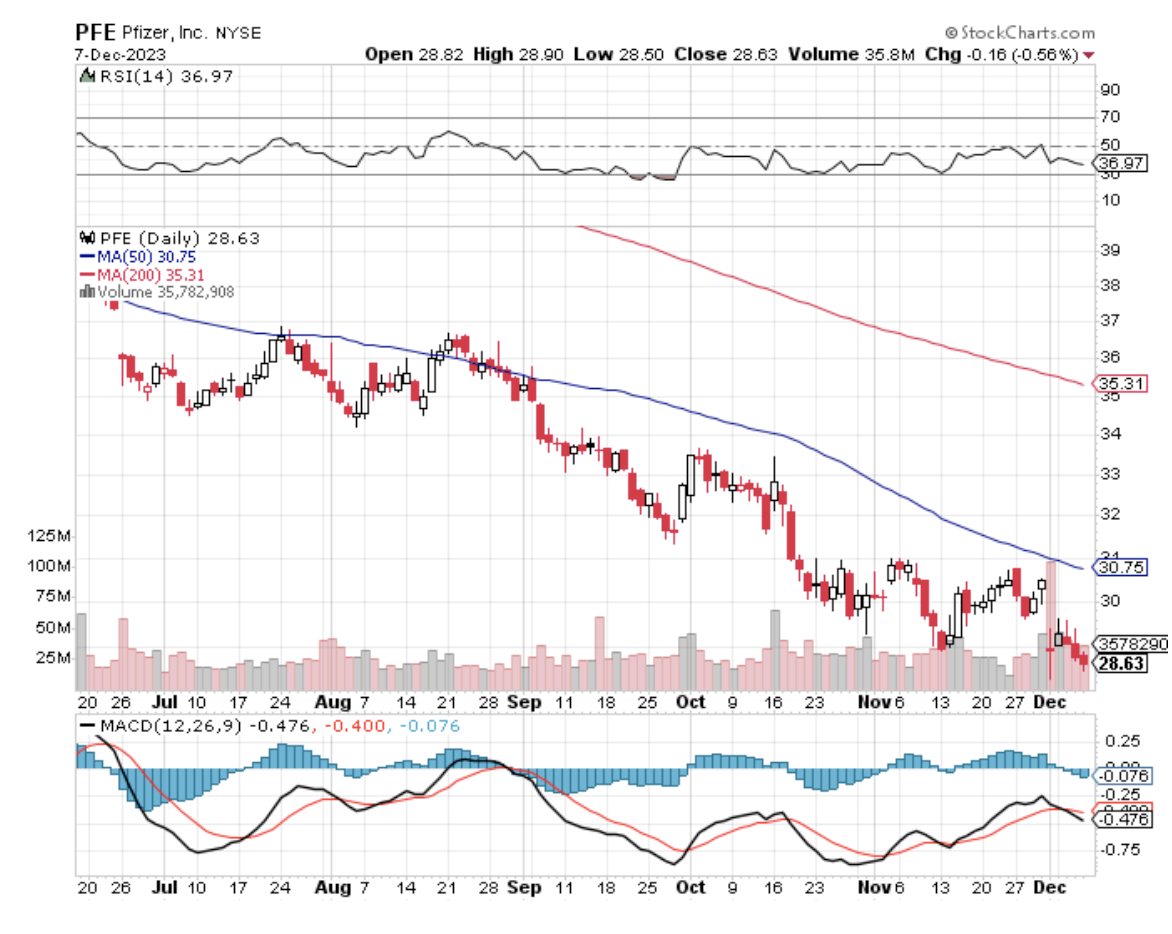
In the maelstrom of 2023, Pfizer (PFE) found itself navigating through a tempest, much to the dismay of shareholders. The aftermath? A harrowing -40% total return loss, leaving shareholders reeling.

This downturn followed Pfizer's COVID-19 vaccine triumph, a success story that lost its sheen as global government demand for the vaccine and Paxlovid antiviral dwindled.

Looking back, Pfizer's narrative in 2023 could rival a Shakespearean tragedy. The demand dip for its COVID arsenal was just the beginning; a cascade of other factors compounded the company's misfortunes.

Take, for instance, the controversial $43 billion acquisition of Seagen (SGEN) in March. While this move aimed for cancer treatment breakthroughs, it was widely seen as a Hail Mary, signaling gaps in Pfizer's drug pipeline.

I estimate this strategy might have slashed shareholder value by at least 10%, given the immediate financial aftermath of the merger.

Then, adding to the woes, Pfizer's Nash County production facility in North Carolina faced devastation by a tornado in July.

It seemed as though, for Pfizer in 2023, trouble came not just in droves but in torrents.

The final blow? The discontinuation of the twice-daily dose development for Danuglipron, Pfizer's weight-loss drug candidate.

This decision casts a shadow over the prospects of its once-a-day dosage, still in trials, and simultaneously cracks open the door for other biotech players in the oral weight-loss drug arena.

Meanwhile, the company also aimed to join the race for obesity treatment innovation. In this arena, injectable weight-loss drugs from Eli Lilly (LLY) and Novo Nordisk (NVO) have set the stage, and now, the demand for oral solutions is burgeoning.

Pfizer once pegged this market's potential at an eye-watering $90 billion a year — a target that has not gone unnoticed by keen biotechs.

Yet, with Pfizer stepping back from its Danuglipron project due to adverse side effects, it finds itself trailing in this race. In comparison, Lilly and Novo are forging ahead with their products, turning Pfizer's stumble into a potential windfall for other biotech firms.

Notably, the biotech sector is witnessing a flurry of activity in response to Pfizer’s failed attempt.

Firms like Viking Therapeutics (VKTX), Terns Pharmaceuticals (TERN), Structure Therapeutics (GPCR), and Altimmune (ALT) have seen their share prices soar following their own positive trial results or strategic announcements.

The diverse approaches these biotechs are employing in their anti-obesity drug development have piqued investors’ interest.

In effect, speculation is rife about which one might emerge as a desirable acquisition target for Pfizer — and this speculation isn't without basis.

I previously shared that Roche Holding (RHHBY) recently acquired Carmot Therapeutics for $2.7 billion, and AstraZeneca (AZN) entered a licensing agreement with Eccogene.

With a history of significant acquisitions, Pfizer might well consider a similar path to address its challenges in the weight-loss pill sector.

Pfizer's journey through 2023 was a series of unfortunate events, to say the least. As we look to the future, questions about potential challenges in 2024 loom.

While major acquisitions seem unlikely in the wake of the Seagen deal, shareholder sentiment is fragile. The immediate risks for Pfizer include the possibility of a 2024 recession impacting sales and a generally bearish stock market, potentially keeping share prices around the $30 mark.

Historically, however, Pfizer has stood as a bastion of strength during recessions and bear markets.

Looking longer term, the specter of Medicare drug price negotiations looms large, threatening to dampen growth investor sentiment.

This challenge isn't unique to Pfizer; it's a cloud hovering over all of Big Pharma.

Yet, despite these formidable challenges, there's a sense that Pfizer's tumultuous 2023 journey might be approaching a pivotal turning point. Investor sentiment is at a nadir, marred by negative press and shareholder dissatisfaction, painting Pfizer as a stock currently out of favor.

As we look ahead into 2024, a cautious optimism emerges. Should Pfizer return to operational normalcy and continue to reduce its reliance on COVID-related sales — now a smaller part of its business — the company could reassert itself as a prime value and dividend player in the Big Pharma space.

For the resilient investor willing to delve into a bruised yet potentially rebounding blue-chip, Pfizer merits a closer examination. After a year where Murphy's Law seemed the only law, Pfizer stands as a beacon of resilience and a potential phoenix in the biotech and healthcare sector.


https://madhedgefundtrader.com/wp-content/uploads/2019/05/cropped-mad-hedge-logo-transparent-192x192_f9578834168ba24df3eb53916a12c882.png 0 0 april@madhedgefundtrader.com https://madhedgefundtrader.com/wp-content/uploads/2019/05/cropped-mad-hedge-logo-transparent-192x192_f9578834168ba24df3eb53916a12c882.png april@madhedgefundtrader.com2023-12-12 12:00:392023-12-12 12:02:59A Rebounding Blue Chip
april@madhedgefundtrader.com

December 7, 2023

Biotech Letter

Mad Hedge Biotech and Healthcare Letter
December 7, 2023
Fiat Lux

Featured Trade:

(CHALLENGING THE MAGNIFICENT SEVEN)

(LLY), (NVO), (RHHBY), (AZN), (AMGN), (VKTX), (MSFT), (NVDA)

https://madhedgefundtrader.com/wp-content/uploads/2019/05/cropped-mad-hedge-logo-transparent-192x192_f9578834168ba24df3eb53916a12c882.png 0 0 april@madhedgefundtrader.com https://madhedgefundtrader.com/wp-content/uploads/2019/05/cropped-mad-hedge-logo-transparent-192x192_f9578834168ba24df3eb53916a12c882.png april@madhedgefundtrader.com2023-12-07 12:02:542023-12-07 13:02:19December 7, 2023
april@madhedgefundtrader.com

Challenging The Magnificent Seven

Biotech Letter

If you thought the S&P 500’s dance floor was exclusively reserved for tech's Magnificent Seven, including the likes of Microsoft (MSFT) and Nvidia (NVDA), think again.

Galloping up from behind, with the confidence of a new sheriff in town, are Eli Lilly (LLY) and Novo Nordisk (NVO), blazing trails in the obesity drug market.

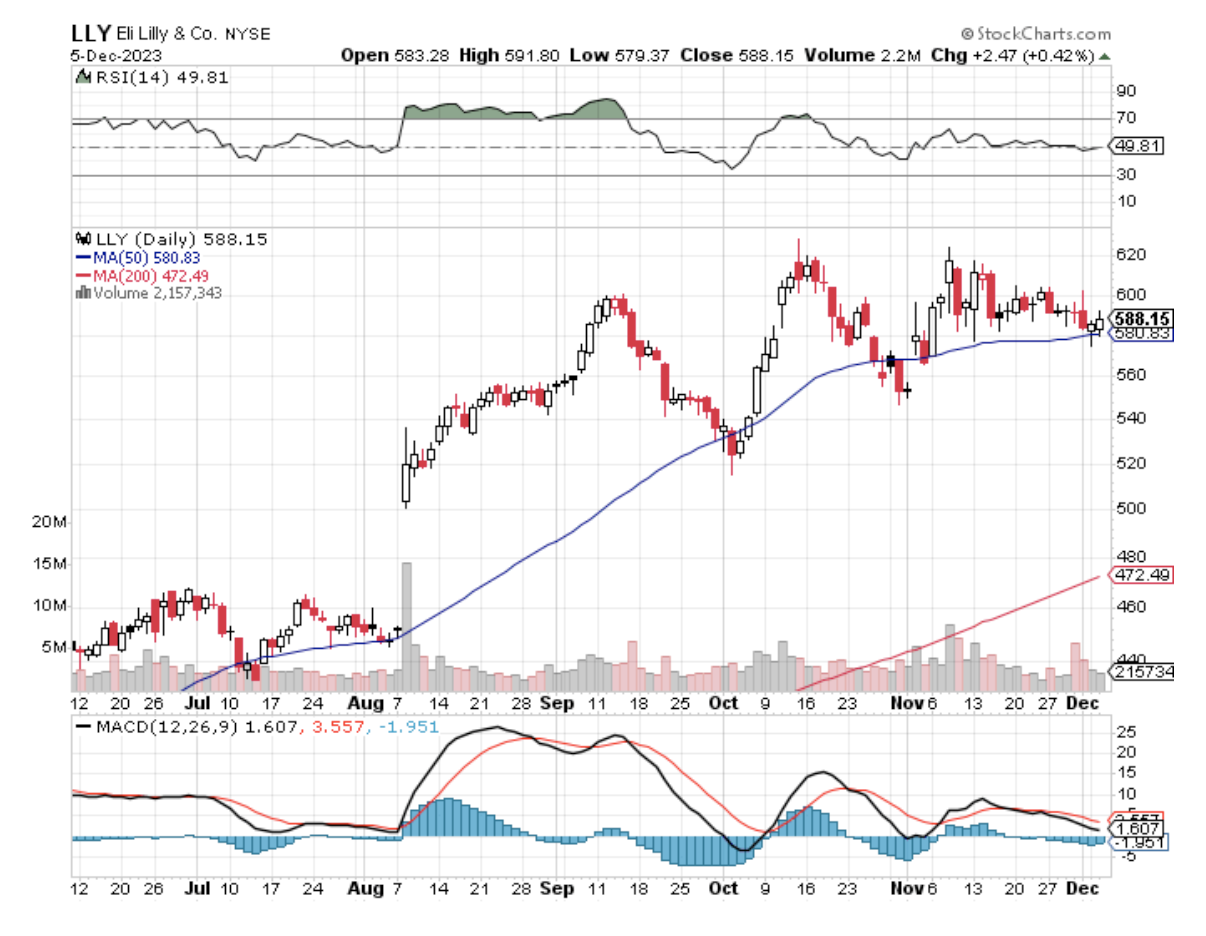
Eli Lilly, with its freshly minted weight-loss drug, has catapulted to an eye-watering market value of nearly $600 billion. That's a leap from less than $100 billion in just over five years – talk about a growth spurt!

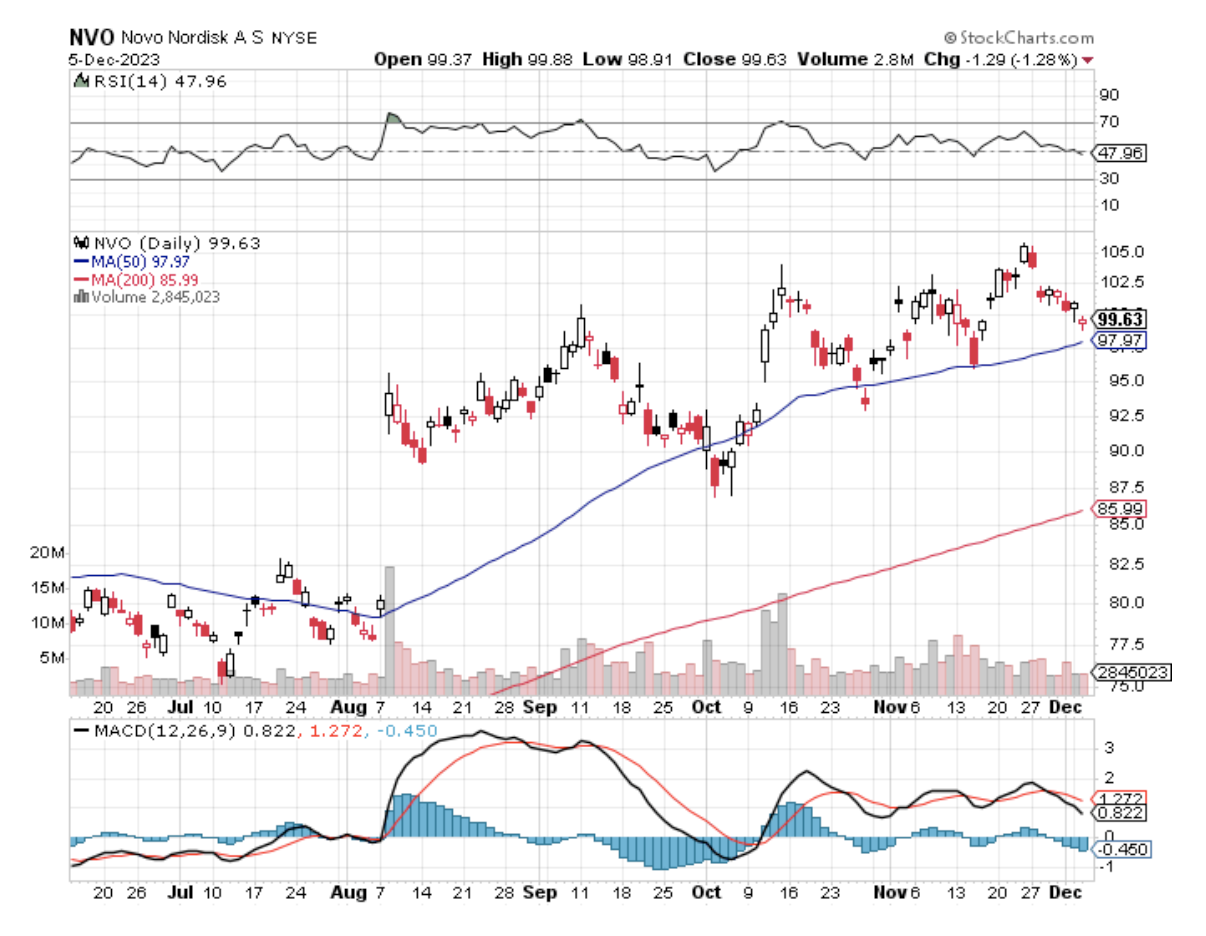
On the other side, we have Novo Nordisk, hailing from Denmark and thus not a part of the S&P club. Nevertheless, they're no slouches, sporting a hefty $450 billion market cap, quadrupling in value over five years.

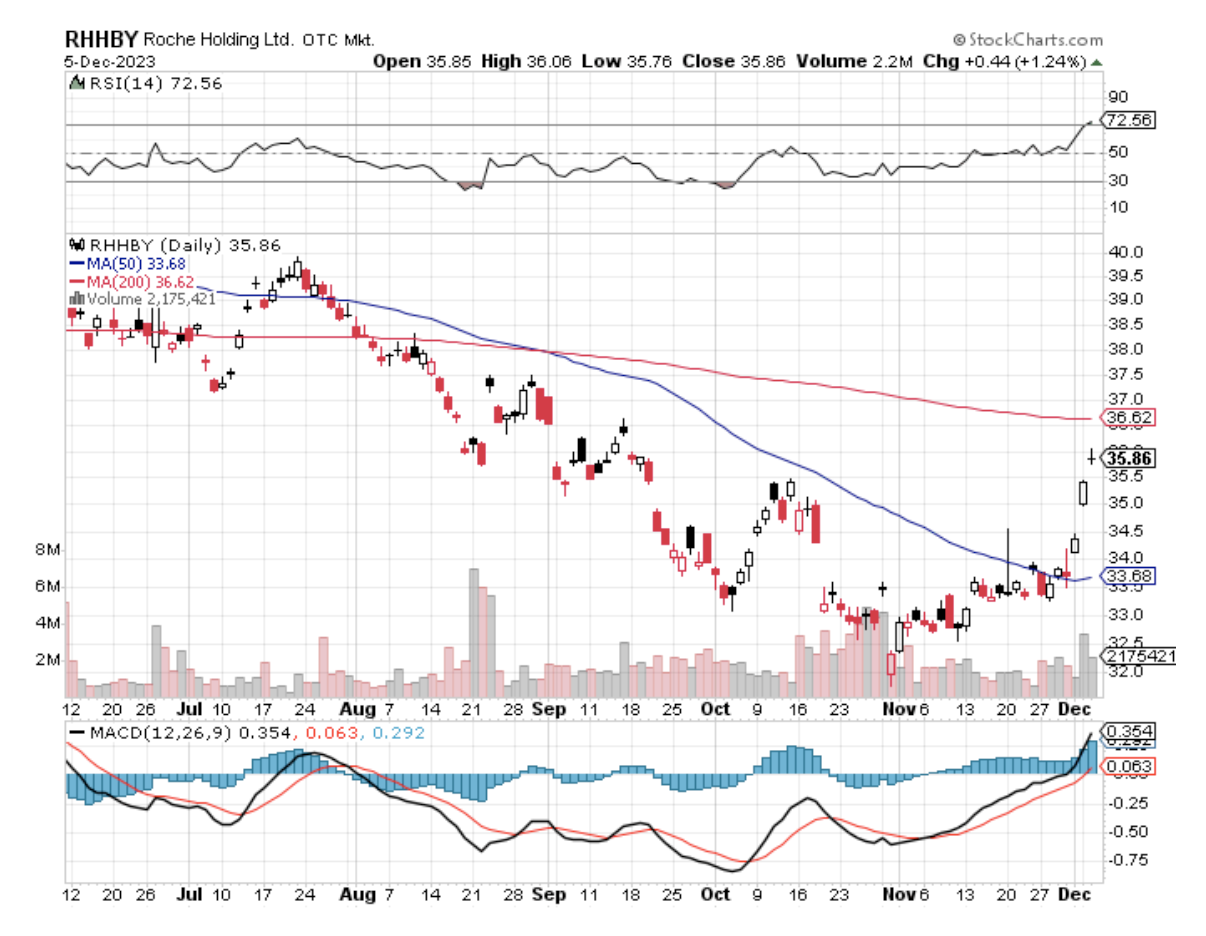
The latest to throw their hat into this lucrative ring is Roche Holdings (RHHBY). They've just penned a $3.1 billion deal to acquire Carmot Therapeutics. This isn't just pocket change – it's a clear signal Roche wants a piece of the weight-loss pie, currently dominated by Eli Lilly and Novo Nordisk.

Carmot Therapeutics, a U.S.-based outfit, is cooking up something special in the GLP-1 receptor agonists segment, a class of drugs stirring up both the market and cultural scene.

Roche, by acquiring Carmot, gains exclusive dibs on three promising drugs, all at different stages of trial.

Now, let's talk numbers.

Roche is shelling out $2.7 billion upfront with another $400 million on the line, based on performance milestones. Analysts reckon Roche is gunning for phase III trials to crash the Eli Lilly and Novo party.

But let's not kid ourselves – it's an uphill battle for market share, considering the head start the other two have.

As for the market's reaction? Roche's stock perked up by 2.5% in Switzerland, although it's still trailing by 15% this year. Eli Lilly and Novo Nordisk, meanwhile, saw a bit of a dip in early trading, despite a strong showing this year.

Ultimately, Roche’s goal isn’t just to focus on the drugs. Instead, the company is eyeing an integrated approach, combining pharmaceuticals, diagnostics, and expertise in cardiovascular and metabolic diseases. It's like putting together a high-stakes puzzle where every piece matters.

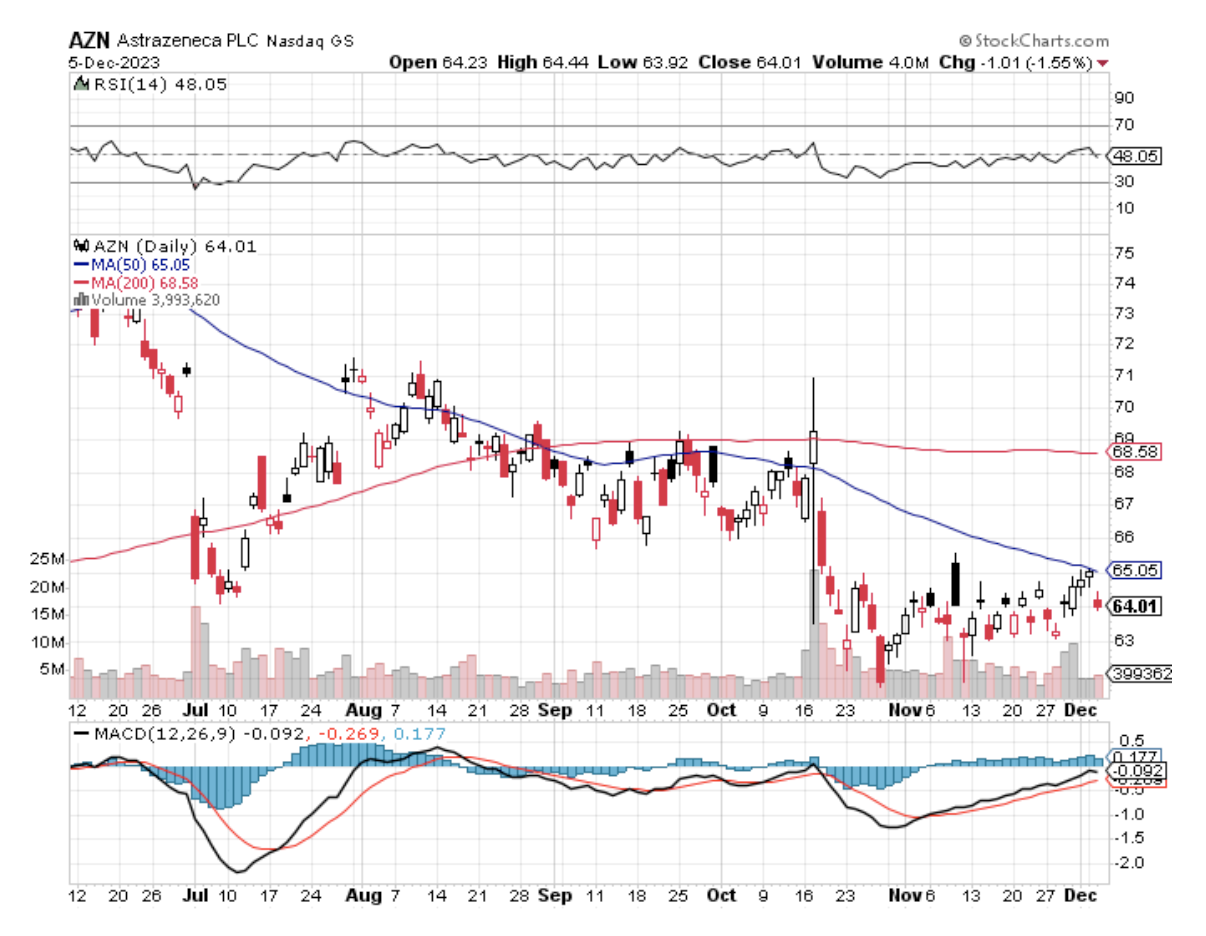
Furthermore, other pharma giants are joining the fray. For example, AstraZeneca recently entered a $2 billion deal with China’s Eccogene for a nascent obesity and Type 2 diabetes drug.

But here's the million-dollar question: Are we seeing a bubble in these slimming stocks? It's hard to pin down.

What we do know is that the global obesity epidemic isn't slowing down, and these drugs are showing results.

Take Lilly’s tirzepatide, for instance – it's making waves as both diabetes and obesity treatment, with trial participants shedding an average of 52 pounds.

The financial forecasts are staggering, projecting potential annual sales of $67 billion by 2032, and possibly $100 billion by 2030.

This means obesity drugs might outshine immuno-oncology treatments, another sector with sky-high prices and a vast patient pool.

But this prosperity brings a dilemma.

Eli Lilly's trading at a whopping 90 times this year's earnings forecast. Novo? They're at 39 times. These figures could spell an opportunity for the patient investor, or they could be a harbinger of overestimated growth.

To better navigate this, let’s consider the situation from a different angle. I suggest looking at the broader picture – the intersection of obesity with other conditions like heart disease and NASH. It's a fresh perspective, focusing on specific patient subgroups.

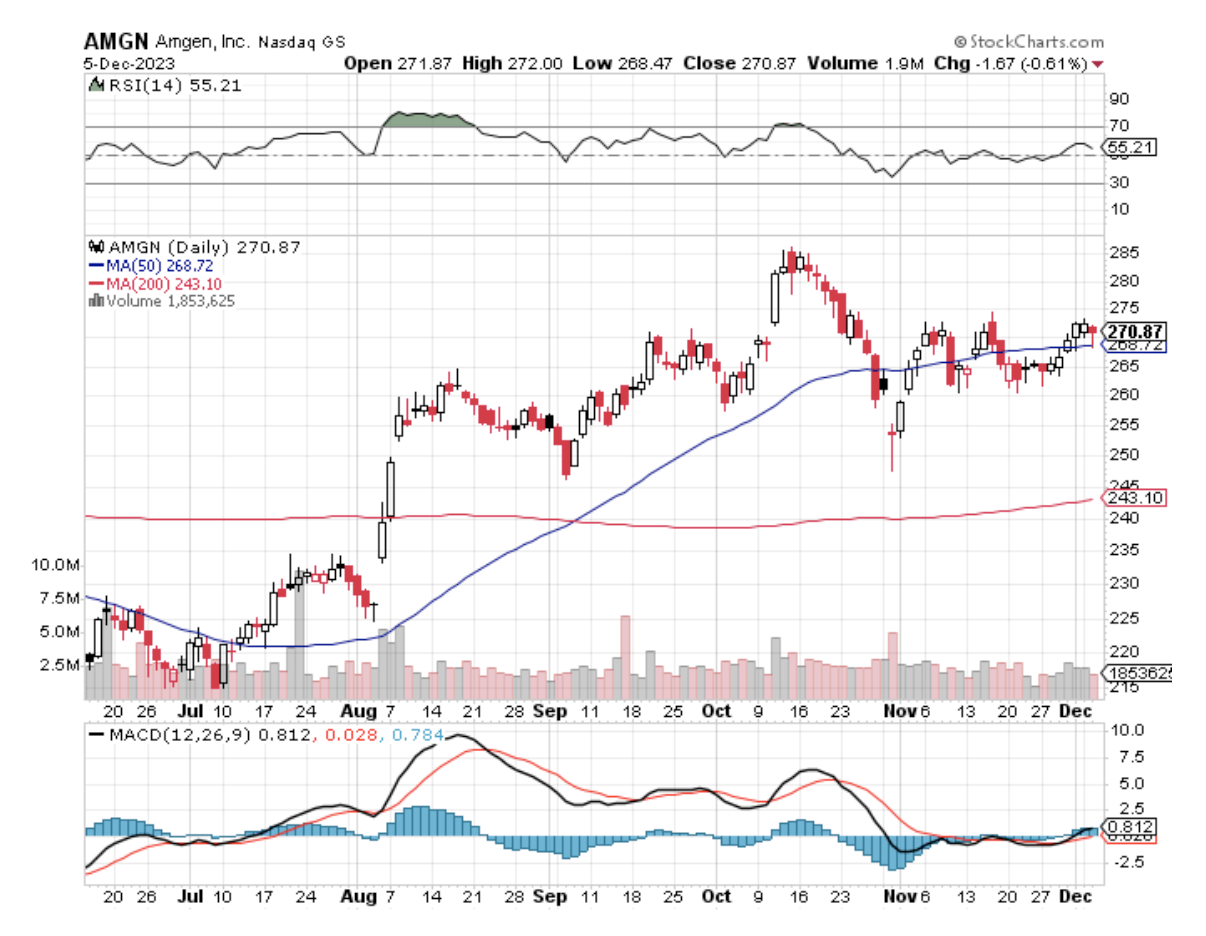
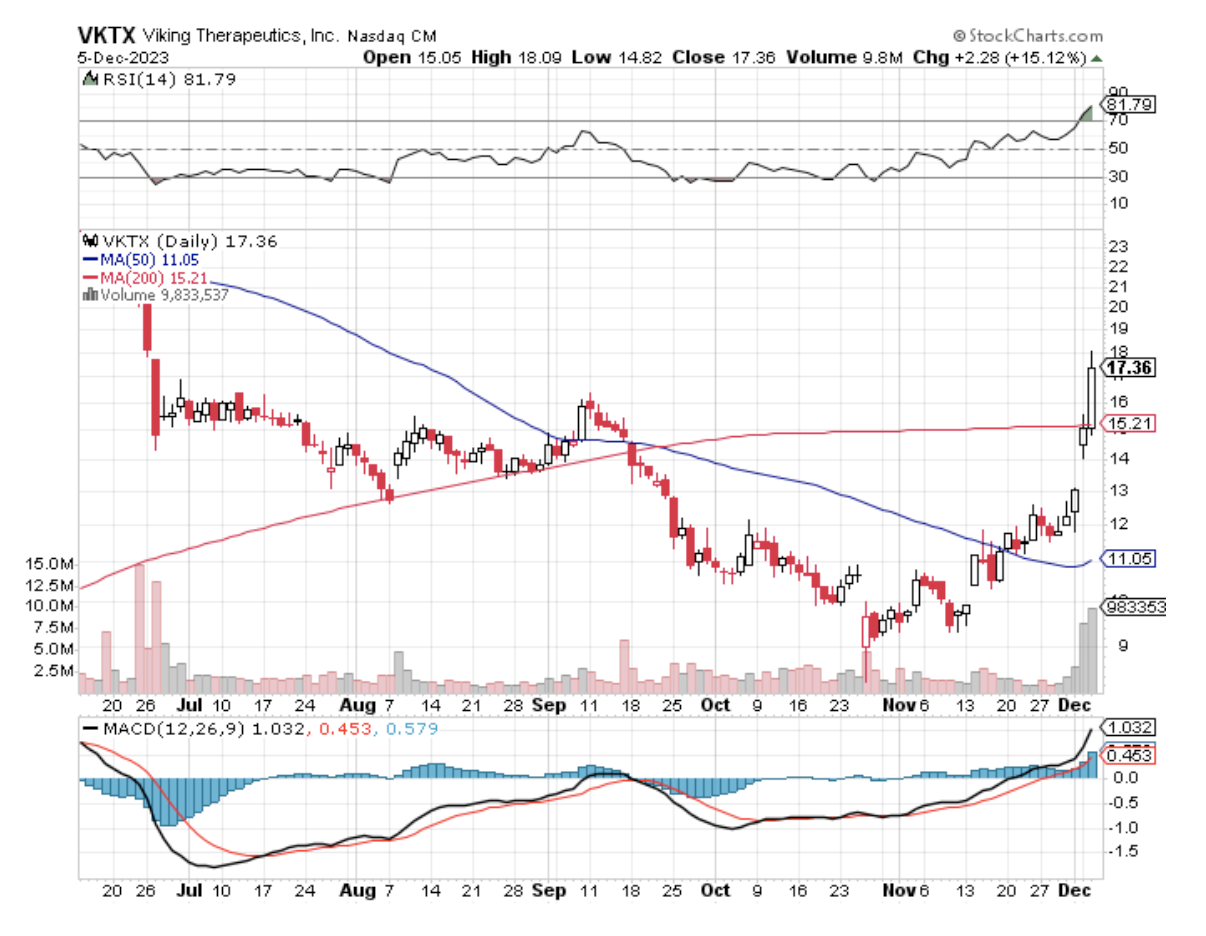
Taking this approach leads us to companies like Amgen (AMGN) and Viking Therapeutics (VKTX), each targeting a different slice of the obesity pie.

Amgen's got its eyes on obesity and heart disease, while Viking is tackling obesity and NASH. Early trials have shown promise, and these companies are exploring novel delivery methods like monthly injections and pill formulations.

It's worth noting that Amgen is more than just a one-trick pony – they've got Repatha for high cholesterol, which could be a game-changer if combined with their obesity treatment.

Viking, although smaller and riskier, is making waves with a drug that's shown significant liver fat reduction in trials.

So, what's the takeaway here?

Well, the obesity sector is ripe with opportunity, but it's also fraught with speculation and risk. Amgen, a solid bet with a 3.2% dividend yield, and Viking, a more speculative choice, are just two examples of the diverse strategies in play.

One thing's for sure: As competition heats up, prices for obesity meds are likely to drop, mirroring the trajectory seen with other high-priced drugs.

The obesity drug market is a complex, rapidly evolving beast. It offers a blend of incredible potential coupled with considerable risk.

For investors willing to ride out the storm, the rewards could be substantial. Meanwhile, for those seeking exposure to the growing sector without the associated risks, a diversified investment strategy could be key.


https://madhedgefundtrader.com/wp-content/uploads/2019/05/cropped-mad-hedge-logo-transparent-192x192_f9578834168ba24df3eb53916a12c882.png 0 0 april@madhedgefundtrader.com https://madhedgefundtrader.com/wp-content/uploads/2019/05/cropped-mad-hedge-logo-transparent-192x192_f9578834168ba24df3eb53916a12c882.png april@madhedgefundtrader.com2023-12-07 12:00:562023-12-07 13:02:07Challenging The Magnificent Seven
april@madhedgefundtrader.com

December 5, 2023

Biotech Letter

Mad Hedge Biotech and Healthcare Letter
December 5, 2023
Fiat Lux

Featured Trade:

(A UNION IN THE MAKING?)

(HUM), (CI), (CVS), (AET), (UNH)

https://madhedgefundtrader.com/wp-content/uploads/2019/05/cropped-mad-hedge-logo-transparent-192x192_f9578834168ba24df3eb53916a12c882.png 0 0 april@madhedgefundtrader.com https://madhedgefundtrader.com/wp-content/uploads/2019/05/cropped-mad-hedge-logo-transparent-192x192_f9578834168ba24df3eb53916a12c882.png april@madhedgefundtrader.com2023-12-05 12:02:072023-12-05 12:07:33December 5, 2023
Page 30 of 115«‹2829303132›»

Legal Disclaimer

There is a very high degree of risk involved in trading. Past results are not indicative of future returns. MadHedgeFundTrader.com and all individuals affiliated with this site assume no responsibilities for your trading and investment results. The indicators, strategies, columns, articles and all other features are for educational purposes only and should not be construed as investment advice. Information for futures trading observations are obtained from sources believed to be reliable, but we do not warrant its completeness or accuracy, or warrant any results from the use of the information. Your use of the trading observations is entirely at your own risk and it is your sole responsibility to evaluate the accuracy, completeness and usefulness of the information. You must assess the risk of any trade with your broker and make your own independent decisions regarding any securities mentioned herein. Affiliates of MadHedgeFundTrader.com may have a position or effect transactions in the securities described herein (or options thereon) and/or otherwise employ trading strategies that may be consistent or inconsistent with the provided strategies.

Copyright © 2026. Mad Hedge Fund Trader. All Rights Reserved. support@madhedgefundtrader.com
Scroll to top