• support@madhedgefundtrader.com
  • Member Login
Mad Hedge Fund Trader
  • Home
  • About
  • Store
  • Luncheons
  • Testimonials
  • Contact Us
  • Click to open the search input field Click to open the search input field Search
  • Menu Menu
Mad Hedge Fund Trader

A Selloff Survivor Ready for More Gains

Biotech Letter

The broader market hasn’t been putting that much faith in drugmakers these days, and this could very well be a mistake.

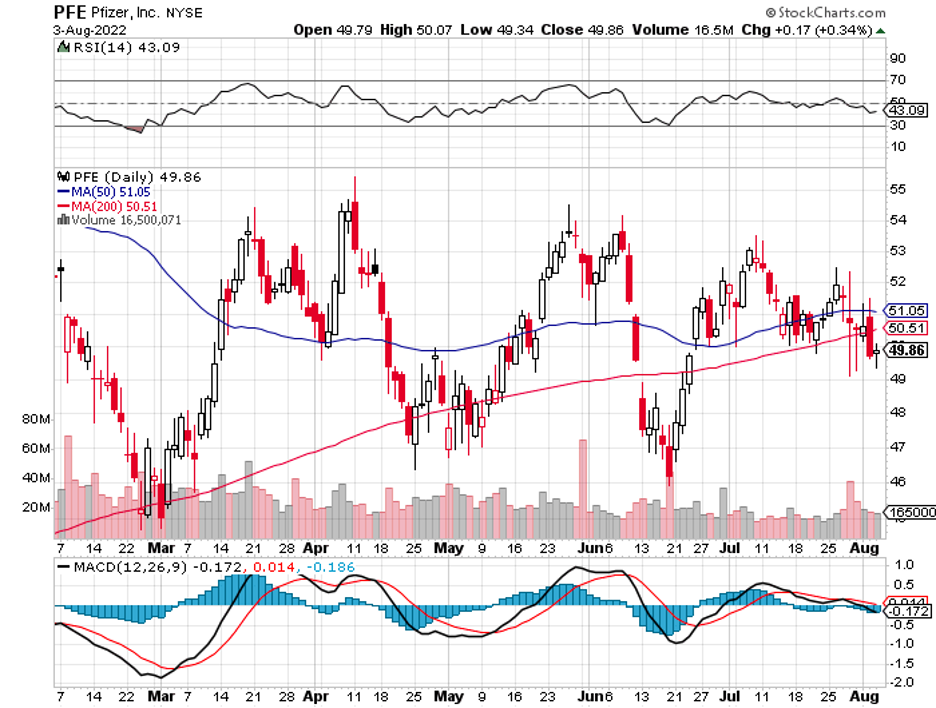
While 2022 has not been particularly kind to equities recently, several names in the biotechnology and healthcare sector still managed to keep themselves safe from the selloff.

Pfizer (PFE), with its COVID vaccine sales, is one of them. Admittedly, this pharmaceutical giant has not shown substantial growth in the past monthS. Nonetheless, its quarterly updates and, more importantly, pipeline have exhibited notably encouraging signals.

As a massive underperformed in the past 20 years, Pfizer has taken aggressive steps to transform its strategy. The most obvious way to shake up the business is to eliminate the bulk of its noncore products.

However, it’s not advisable to buy a company just because it has been underperforming and would then be sold at lower prices. Instead, it is critical to determine whether there’s a catalyst.

For Pfizer, the catalyst was clear: COVID.

The company was and still is at the heart of the coronavirus vaccine drives and treatments—a position that’s projected to be sustained for years to come.

The company has made a fortune from this program, and it’s still reaping the rewards in a massive way.

In the second quarter of 2022, Pfizer’s revenue climbed by 53% year-over-year to reach $27.7 billion. Based on the company’s record, this is the most significant quarterly sales during this period to date.

For context, its COVID vaccine, Comirnaty, raised $8.8 billion in sales. This is 20% higher than its reported sales in 2021 over the same period.

Meanwhile, Pfizer’s new COVID therapy, Paxlovid, recorded $8.1 billion in sales. Taken together, Paxlovid and Comirnaty comprise over half of the company’s total revenue for the second quarter.

Leveraging these growth opportunities, Pfizer has been steadily expanding its pipeline.

To date, the company has roughly 96 drugs in its pipeline. Of these, 6 drugs are in registration, while 29 candidates are queued for Phase 3 trials. There are 31 drugs in Phase 2 and 30 more in Phase 1.

Pfizer’s candidates range from treatments for inflammation, immunology, oncology, vaccines, and internal medicine to rare disease therapies.

Among the treatments in its Phase 3 study, two have been identified to bring in billions of dollars for Pfizer potentially.

One is PF-06939926, which is a treatment for Duchenne syndrome. The other is PF-06928316, which is for Respiratory Syncytial Virus (RSV).

Globally, 1 in 3,500 to 5,000 males suffer from Duchenne syndrome. This puts the number of patients at roughly 250,000, with about 10,000 to 15,000 found in the US. While it generally affects males, it can sometimes affect females as well.

In terms of market size, the Duchenne syndrome market is expected to be worth $4 billion in 2023 and $7 billion by 2027.

Currently, the major approved treatments for this condition are Sarepta's (SRPT) Exondys 51, Vyondys, and Amondys, as well as PTC Therapeutics (PTCT) Emflaza and Translarna.

PTC recorded $236 million in sales for Translarna, which is approved in Europe, and $187 million for Emflaza, approved in the US, for a total of $423 million in sales in 2021. Meanwhile, Sarepta’s overall sales reached $612 million for that same period.

Adding the rest of the minor competitors for Duchenne syndrome treatments, only $1.5 billion of the projected market value is held by the existing drugs. Clearly, there’s a lot of room for more companies to join the fray.

Meanwhile, RSV presents another lucrative market. According to the Centers for Disease Control and Prevention, this condition causes approximately 58,000 hospitalizations annually in the US.

Of these, 100 to 500 deaths are children under 5 years old and 14,000 are adults aged 65 and above. The average expense in managing adult patients alone has reached roughly $3 billion every year.

In terms of market value, the RSV market is projected to reach $4 billion by 2027. So far, the biggest competitors in this space are GlaxoSmithKline (GSK), Johnson & Johnson (JNJ), and Moderna (MRNA).

While its rivals are challenging, Pfizer still estimates sales for its RSV vaccine to reach at least $1.5 billion annually.

Thanks to its COVID programs, Pfizer has been hailed as the undisputed leader of the pack in terms of reputation and credibility in research.

Needless to say, these factors would serve as a valuable growth lever for the healthcare giant for decades.

As one of the largest biopharmas in the world, Pfizer has established a reputation for outstanding innovation. Over the years, the company has delivered several revolutionary treatments to the market like Viagra or Lyrica.

Simultaneously, it developed Lipitor, reaching $14.5 billion in sales over 14.5 years.

Since then, it has become a highly reputable industry name. Its diverse and extensive pipeline demonstrates that it remains a company highly capable of innovating and maintaining its dominance.


https://madhedgefundtrader.com/wp-content/uploads/2019/05/cropped-mad-hedge-logo-transparent-192x192_f9578834168ba24df3eb53916a12c882.png 0 0 Mad Hedge Fund Trader https://madhedgefundtrader.com/wp-content/uploads/2019/05/cropped-mad-hedge-logo-transparent-192x192_f9578834168ba24df3eb53916a12c882.png Mad Hedge Fund Trader2022-08-04 17:00:432022-08-05 00:20:20A Selloff Survivor Ready for More Gains
Mad Hedge Fund Trader

August 2, 2022

Biotech Letter

Mad Hedge Biotech and Healthcare Letter
August 2, 2022
Fiat Lux

Featured Trade:

(A RISING TIDE LIFTS ALL BOATS)
(MRNA), (PFE), (NVAX), (SNY), (BNTX)

https://madhedgefundtrader.com/wp-content/uploads/2019/05/cropped-mad-hedge-logo-transparent-192x192_f9578834168ba24df3eb53916a12c882.png 0 0 Mad Hedge Fund Trader https://madhedgefundtrader.com/wp-content/uploads/2019/05/cropped-mad-hedge-logo-transparent-192x192_f9578834168ba24df3eb53916a12c882.png Mad Hedge Fund Trader2022-08-02 17:02:222022-08-03 10:50:58August 2, 2022
Mad Hedge Fund Trader

A Rising Tide Lifts All Boats

Biotech Letter

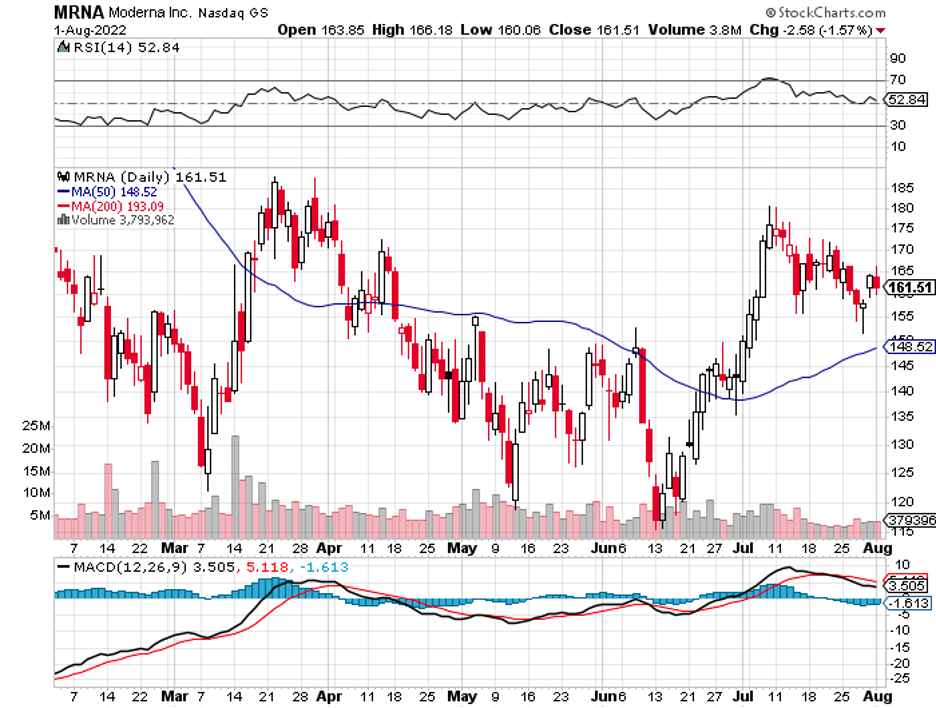
Moderna (MRNA) shareholders have one major worry in recent months: that the biotech company’s billion-dollar COVID-19 vaccine sales will eventually dry up.

After all, roughly 67% of the US population has already been fully vaccinated. Hence, it’s not surprising for investors to wonder whether the company’s glory days are over.

As a result, Moderna’s share price has taken a hit. The stock has slipped by over 35% so far in 2022. However, this looks more like an overreaction rather than a response to anything the company has done.

If anything, it seems that investors have read the situation wrong since Moderna recently received a billion-dollar vaccine dollar from the US.

The deal isn’t for the original version of its COVID-19 vaccine though. Instead, it’s for an updated booster candidate that targets the original coronavirus and the emerging omicron BA.4 and BA.5 strains.

Moderna will receive $1.74 billion to supply the US with 66 million doses of the updated booster. This means the price per dose would be $26.36.

This pricing is lower than the deal with Pfizer (PFE) for a similar booster, which had an implied price per dose of $30.48. In total, Pfizer is set to receive $3.2 billion for 105 million doses.

Nevertheless, this new Moderna contract shows a substantially higher price compared to the previous deal wherein the US paid $3.3 billion for 200 million doses.

That particular deal implied that the price per dose of the vaccine was at $16.50. in comparison, Pfizer’s vaccine was priced at $24 per dose.

A probable explanation for this disparity in pricing is the fact that Moderna received approximately $1 billion in funding from the US government courtesy of its Operation Warp Speed program. Meanwhile, Pfizer refused to participate in such a scheme.

Taken together, Moderna and Pfizer are slated to deliver 171 million doses of the updated booster by fall and winter.

Admittedly, those won’t be sufficient to cover the entire US population. This is why both contracts have options that would allow the government to add 300 million doses each as needed.

In terms of delivery, Moderna announced that its candidate should be ready for the fall vaccination campaign by the end of August.

Outside its coronavirus vaccine efforts, Moderna has a promising pipeline of candidates. To date, the company has 46 programs under development including personalized cancer vaccines.

Of these, Moderna has three candidates queued for Phase 3 trials. All of them are investigational vaccines. One is for the flu, another is for the respiratory syncytial virus (RSV), and the third targets the cytomegalovirus (CMV).

The flu vaccine has competition in Sanofi (SNY) and possibly Novavax (NVAX). However, there are no CMV and RSV vaccine candidates in existence.

Needless to say, getting the green light from the FDA for one or both of these vaccine candidates would be a massive win for Moderna.

More importantly, the company would hold the precious first-to-market competitive edge.

Another exciting candidate is Moderna’s collaboration with Vertex Pharmaceuticals (VRTX). The two are working on an inhaled candidate treatment for patients with cystic fibrosis.

Considering that Vertex is practically a monopoly in this space, its partnership with Moderna could mean a potential game changer in the industry.

Overall, Moderna’s lucrative deal with the US government could be indicative of another exciting period for coronavirus vaccine stocks.

After all, a rising tide lifts all boats.

Moreover, this group had the best performers on the market in the past years. Novavax skyrocketed by 2,700% in 2020 following the announcement of its COVID-19 program. BioNTech (BNTX) jumped by 600%, while Moderna climbed by an impressive 1,200%. Even Pfizer reaped rewards from its coronavirus candidate as it rose by 59% during the same period.

While these vaccine stocks won’t likely repeat their stellar performances, there are still several investment opportunities involving these companies.

The key is to choose a business that does not simply depend on its coronavirus vaccine gains but also leverages the opportunities to expand and diversify its portfolio.

This is what Moderna has been doing. With numerous programs in its pipeline, the company has turned itself into a multi product business that offers stability and growth. Investors eager to add a vaccine stock in their portfolio should buy the dip.


https://madhedgefundtrader.com/wp-content/uploads/2019/05/cropped-mad-hedge-logo-transparent-192x192_f9578834168ba24df3eb53916a12c882.png 0 0 Mad Hedge Fund Trader https://madhedgefundtrader.com/wp-content/uploads/2019/05/cropped-mad-hedge-logo-transparent-192x192_f9578834168ba24df3eb53916a12c882.png Mad Hedge Fund Trader2022-08-02 17:00:192022-08-03 10:51:16A Rising Tide Lifts All Boats
Mad Hedge Fund Trader

July 28, 2022

Biotech Letter

Mad Hedge Biotech and Healthcare Letter
July 28, 2022
Fiat Lux

Featured Trade:

(IS THIS THE NEXT MODERNA?)
(BVNRY), (SIGA), (EBS), (INO), (MRNA), (BNTX)

https://madhedgefundtrader.com/wp-content/uploads/2019/05/cropped-mad-hedge-logo-transparent-192x192_f9578834168ba24df3eb53916a12c882.png 0 0 Mad Hedge Fund Trader https://madhedgefundtrader.com/wp-content/uploads/2019/05/cropped-mad-hedge-logo-transparent-192x192_f9578834168ba24df3eb53916a12c882.png Mad Hedge Fund Trader2022-07-28 17:02:322022-07-28 17:25:29July 28, 2022
Mad Hedge Fund Trader

Is This The Next Moderna?

Biotech Letter

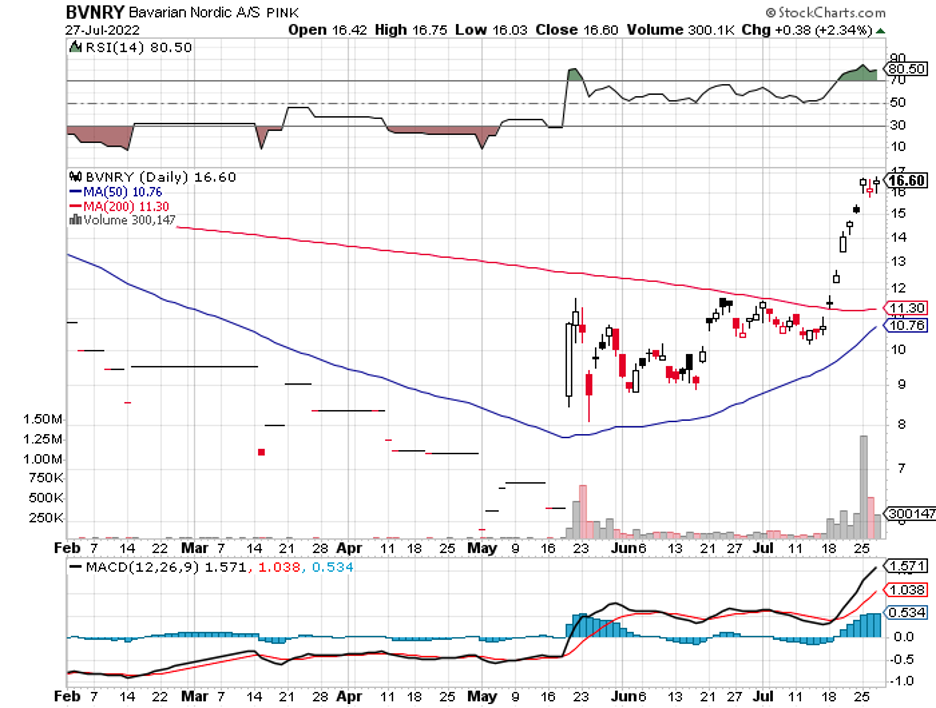
The growing concern for a potential global outbreak of monkeypox has sent shares of the biotechnology company behind the only approved vaccine soaring.

From a market value of $1.2 billion in May, Bavarian Nordic (BVNRY) has now reached $3.4 billion.

More than that, this figure is expected to climb higher as the World Health Organization (WHO) recently declared monkeypox a “public health emergency of international concern.”

Bavarian Nordic wasn’t the only vaccine maker that benefitted from this announcement. Shares of other developers, notably Siga Technologies (SIGA), Emergent Biosolutions (EBS), and Inovio Pharmaceuticals (INO), were also buoyed.

To date, there are roughly more than 16,000 recorded cases of monkeypox worldwide and 5 deaths. Most regions are categorized as moderate risk, while Europe is placed at high risk due to the number of infections in the area.

Siga Technologies rose 26% following WHO’s announcement. This company develops an antiviral named TPOXX, which is approved by the EU to use against monkeypox. The US has also stockpiled this drug despite not yet being approved by the FDA.

Meanwhile, Emergent Biosolutions climbed 11% after the news came out. While it’s also not yet marketed commercially for this particular outbreak, this biotech has developed a smallpox vaccine that could be applied as a preventive measure for monkeypox.

As for Inovio Pharmaceuticals, which rose 6%, the company does not have a monkeypox-centered product in its pipeline or portfolio. However, the biotech worked on an experimental vaccine against smallpox in 2010. This candidate is reportedly able to provide protection against monkeypox.

Despite all these candidates, Bavarian Nordic’s monkeypox vaccine, called Jynneos, is expected to remain the dominant vaccine. Apart from the US, it was also approved as a monkeypox vaccine in the EU and Canada.

Jynneos, which is administered in two doses, works as a non-replication live virus vaccine. It uses a modified or altered version of a virus that came from the same family as the monkeypox. The goal is to train the immune system to fight off monkeypox and smallpox infections.

Essentially, Jynneos is an advanced version of Emergent Biosolutions’ smallpox vaccine.

Considering the potency and safety of Jynneos, experts believe that no other smallpox or monkeypox candidate could rival Bavarian Nordic’s vaccine in the next 10 to 20 years.

Aside from the difficulties of developing a new and better vaccine, gathering data to prove the efficacy of the candidates would be highly challenging. Large-scale clinical trials involving humans might not be possible, both from an ethical and practical point of view.

Since it’s the only vaccine authorized so far, Bavarian Nordic is arguably the best bet for investors looking to capitalize on this demand.

Moreover, the biotech company has a strong balance sheet and can produce at least 30 million doses of its product. It also has several candidates in its pipeline, making it a safe play in this space.

In terms of competitors, the closest would most likely be Siga Technologies, which has a market capitalization of $1.3 billion. This biotech has a similar profile to Bavarian Nordic.

Meanwhile, its vaccine, TPOXX, showed little to no side effects. More than these, Siga recently received approval from the EU. That means gaining FDA approval in the US could very well be on the way as well.

Overall, there’s an apparent demand for the monkeypox vaccine. Right now, it’s only offered to individuals suffering from monkeypox or with significant exposure to infected people.

While it may not reach the heights of Moderna (MRNA) and BioNTech (BNTX) in terms of skyrocketing share prices, Bavarian Nordic’s vaccine is a great stepping stone for the company.

After all, Jynneos is basically a cousin to the smallpox vaccine that practically saved humanity.

So, if someone gets it, they would probably get the vaccine, just like you would rush to the hospital for a tetanus shot if you stepped on a rusty nail. Without these vaccines, life and the economy as we know them today would not be possible.


bavarian nordic

https://madhedgefundtrader.com/wp-content/uploads/2019/05/cropped-mad-hedge-logo-transparent-192x192_f9578834168ba24df3eb53916a12c882.png 0 0 Mad Hedge Fund Trader https://madhedgefundtrader.com/wp-content/uploads/2019/05/cropped-mad-hedge-logo-transparent-192x192_f9578834168ba24df3eb53916a12c882.png Mad Hedge Fund Trader2022-07-28 17:00:462022-08-02 17:31:48Is This The Next Moderna?
Mad Hedge Fund Trader

July 26, 2022

Biotech Letter

Mad Hedge Biotech and Healthcare Letter
July 26, 2022
Fiat Lux

Featured Trade:

(ANOTHER TECH AND HEALTHCARE CROSSOVER)
(ONEM), (AMZN), (TDOC), (AMWL), (GOOGL), (AAPL), (MSFT), (CVS), (WBA), (UNH)

https://madhedgefundtrader.com/wp-content/uploads/2019/05/cropped-mad-hedge-logo-transparent-192x192_f9578834168ba24df3eb53916a12c882.png 0 0 Mad Hedge Fund Trader https://madhedgefundtrader.com/wp-content/uploads/2019/05/cropped-mad-hedge-logo-transparent-192x192_f9578834168ba24df3eb53916a12c882.png Mad Hedge Fund Trader2022-07-26 17:02:162022-08-03 10:52:47July 26, 2022
Mad Hedge Fund Trader

Another Tech and Healthcare Crossover

Biotech Letter

The battle for telemedicine dominance might have just ended before it even began.

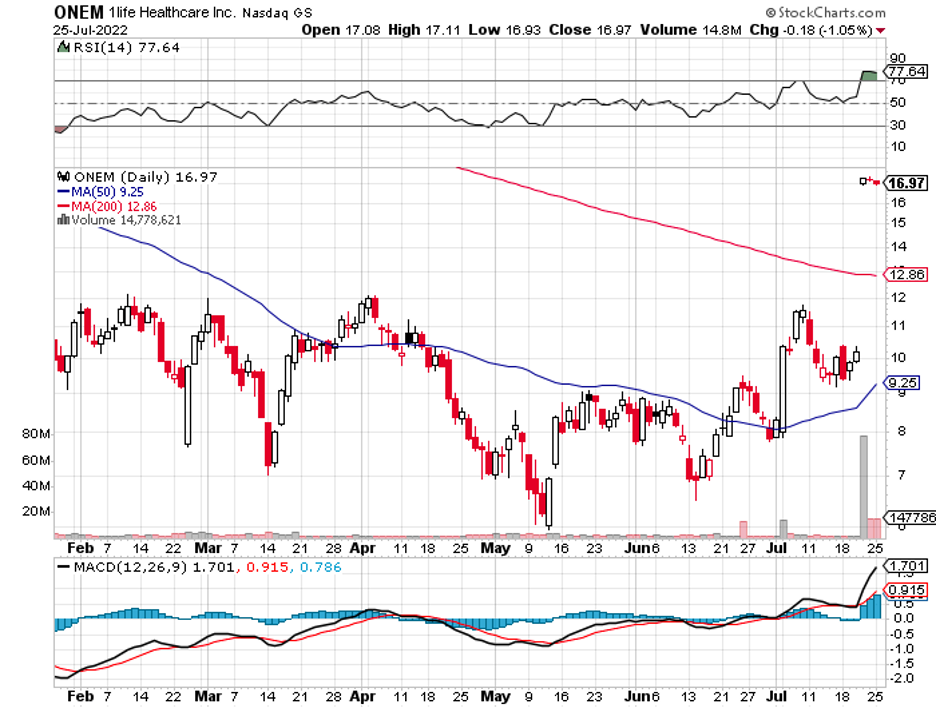
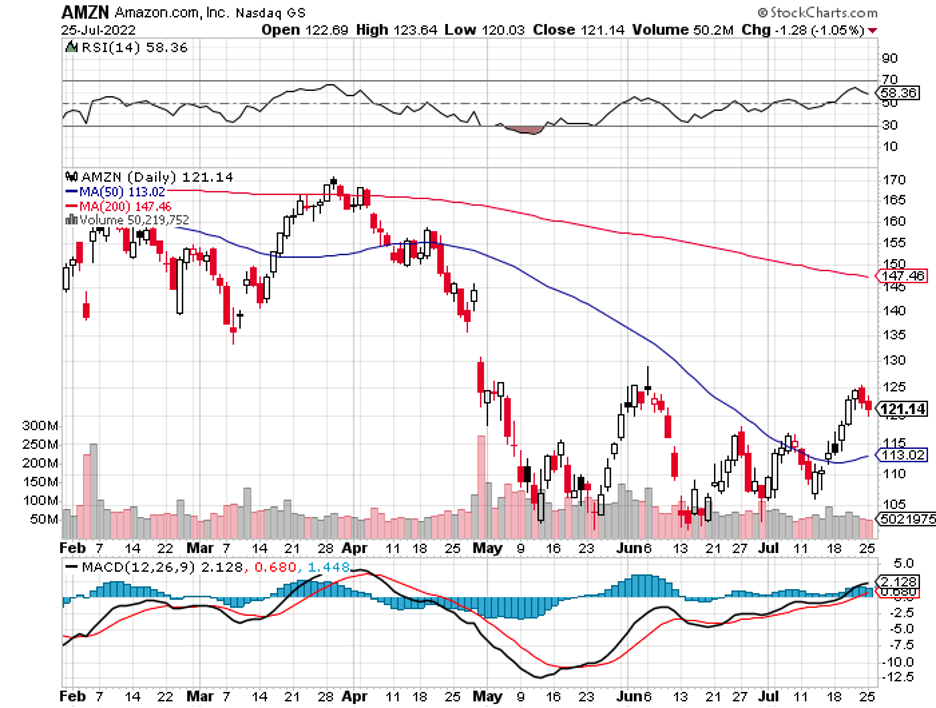
Amazon (AMZN) just announced its all-cash plan to acquire One Medical (ONEM) for $3.9 billion, paying $18 per share.

To date, this will be Amazon’s biggest step toward the healthcare world.

With the entry of Amazon into this telehealth segment, companies like Teladoc (TDOC) and Amwell (AMWL) would need to work overtime to match the resources of the e-commerce giant.

However, Amazon’s move isn’t exactly novel considering that other FAANG companies like Google (GOOGL), Apple (AAPL), and Microsoft (MSFT) have already acquired healthcare companies.

What this move simply indicates is that Amazon has finally turned serious in its bid for a bigger piece of the healthcare market.

This isn’t even the first time Amazon decided to go beyond its retail business. It has a pretty diverse portfolio including Amazon Web Services, a cloud infrastructure service, and even Whole Foods.

However, the decision to aggressively pursue the $800 billion healthcare industry might just be what Amazon needs to really move the needle.

In 2018, Amazon shelled out roughly $1 billion to buy an online pharmacy called PillPack which led to the launch of virtual Amazon Care clinics.

On that same year, the e-commerce company also pursued a joint venture, dubbed Haven, with Berkshire Hathaway and JPMorgan Chase. Unfortunately, that plan didn’t pan out and was eventually shut down.

Buying One Medical at a premium of 77%, Amazon beat other interested bidders including CVS (CVS), Walgreens (WBA), and UnitedHealth (UNH).

It’s still unclear what Amazon plans with One Medical. The e-commerce giant might add it to its Amazon Care brand or let it operate independently.

One Medical is a membership-based platform, which is backed by the Carlyle Group (CG) and managed under 1Life Healthcare.

Like most telehealth companies, it offers virtual healthcare services like virtual visits. What makes it different is that it also provides in-person checkups in accredited medical offices within the US.

One Medical’s app enables clients to schedule appointments, talk with their healthcare provider, and ask for prescriptions.

A key selling point is that the company guarantees that all the appointments start on time. Another notable feature is that users can gift a yearlong subscription to someone for $199.

Like Teladoc and Amwell, the company isn’t profitable yet. This case isn’t shocking for a relatively new field.

However, One Medical’s strategy has led to impressive revenue and membership growth.

The company’s revenue has consistently increased since its 2020 IPO. In 2021, its membership count climbed by 34% to reach 736,000.

In the first quarter of 2022, One Medical’s membership grew again by 28% and revenue jumped 109% to record over $254 million. So far, more than 8,000 companies provide One Medical services to their staff.

For 2022, One Medical projects its revenue to be between $831 million and $853 million.

Admittedly, these figures seem inconsequential when you compare them to the other sectors of Amazon’s business. For example, Amazon Web Services raked in $18.4 billion in sales in the first quarter of 2022.

Actually, One Medical’s revenue and membership growth might even look small and unimpressive compared to Teladoc, which recorded $565 million in the first quarter and has more than 54 million members in the US alone.

Undoubtedly, the healthcare market offers a mouthwatering opportunity for the likes of Amazon. It’s a lucrative industry, one of the handful that can truly make a difference in an already thriving business. Moreover, it has been highly profitable over the years.

Nonetheless, the acquisition of One Medical isn’t a foolproof plan for Amazon’s dominance in healthcare. So far, the e-commerce giant’s track record has been mixed. That doesn’t mean that the deal is a bad move. In fact, it indicates Amazon’s seriousness in making a play for the healthcare market.

Either way, the clear winner would be One Medical. Since the announcement, the stock has risen 70%.

Moreover, even if Amazon falls victim to politicization or anti-trust issues involving the deal, One Medical still has a number of suitors lined up.

Basically, it’s a win-win for this emerging telehealth company.


one medical


https://madhedgefundtrader.com/wp-content/uploads/2019/05/cropped-mad-hedge-logo-transparent-192x192_f9578834168ba24df3eb53916a12c882.png 0 0 Mad Hedge Fund Trader https://madhedgefundtrader.com/wp-content/uploads/2019/05/cropped-mad-hedge-logo-transparent-192x192_f9578834168ba24df3eb53916a12c882.png Mad Hedge Fund Trader2022-07-26 17:00:102022-08-03 10:53:59Another Tech and Healthcare Crossover
Mad Hedge Fund Trader

July 21, 2022

Biotech Letter

Mad Hedge Biotech and Healthcare Letter
July 21, 2022
Fiat Lux

Featured Trade:

(A BAD NEWS BUY HYPE)
(BIIB), (SAGE), (REGN)

https://madhedgefundtrader.com/wp-content/uploads/2019/05/cropped-mad-hedge-logo-transparent-192x192_f9578834168ba24df3eb53916a12c882.png 0 0 Mad Hedge Fund Trader https://madhedgefundtrader.com/wp-content/uploads/2019/05/cropped-mad-hedge-logo-transparent-192x192_f9578834168ba24df3eb53916a12c882.png Mad Hedge Fund Trader2022-07-21 16:02:212022-07-21 21:34:57July 21, 2022
Mad Hedge Fund Trader

A Bad News Buy Hype

Biotech Letter

Even when they’re on the dip, there are some stocks you should avoid. In a bear market, it’s always challenging to determine which stocks are good buys and which ones you should steer clear of at the moment.

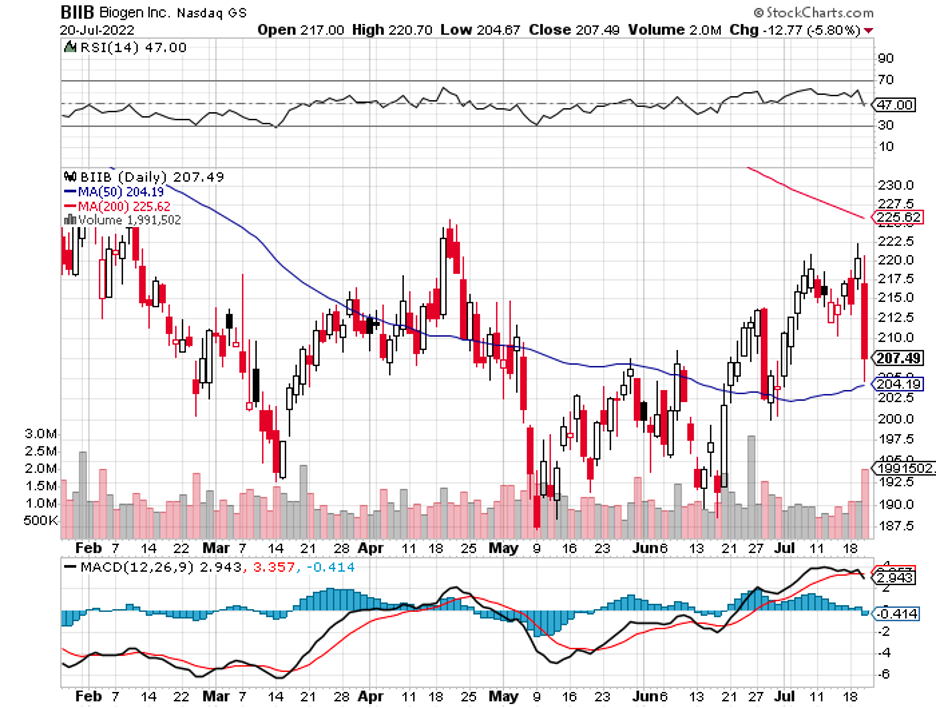
Shares of biotechnology giant Biogen (BIIB) have plummeted by 40% in the past 12 months, clearly underperforming the broader market over the same period. While there are a lot of factors to consider, the drugmaker’s decline could be attributed to the controversial Alzheimer’s treatment Aduhelm.

Although Biogen’s shares are currently on sale, it doesn’t necessarily follow that the stock is a buy. So far, the company’s future still looks quite grim.

Admittedly, Aduhelm’s approval was an incredible milestone for the biotechnology industry. It was the first-ever FDA-approved Alzheimer’s disease therapy since 2003.

Unfortunately, it failed to live up to its potential. Actually, it didn’t even get close to fulfilling its promise.

Recapping the whole Aduhelm saga would take up more space than necessary, so here’s a quick rundown of the key events involving the controversial drug.

In June 2021, the FDA approved Biogen’s Aduhelm as an Alzheimer’s treatment.

The green light was a shock, especially since the FDA’s committee of experts adamantly voted against the drug, and the agency typically adheres to the group’s recommendations.

To appease the public, FDA required the biotech company to perform a post-approval study to re-confirm Aduhelm’s efficacy and safety. If the treatment fails, it must be taken off the market.

While Aduhelm became available commercially across the US by the second quarter of 2021, the drug failed to deliver on sales expectations. It only racked up a disappointing $3 million in revenue then.

By April 2022, the US Centers for Medicare and Medicaid Services (CMS) disclosed its coverage plan involving Aduhelm. It was limited to Alzheimer’s patients with mild cognitive impairment enrolled in clinical trials approved by CMS.

Biogen announced in May 2022 that it would drastically reduce its spending on commercial infrastructure focused on Aduhelm, owing in part to the CMS' limited coverage and possibly as a cost-cutting strategy. This move, which saved the biotech approximately $1 billion, reflects the company's loss of faith in Aduhelm and potential plans to abandon the project entirely.

Despite the Aduhelm fiasco, Biogen is still looking for Alzheimer's treatments.

The biotech completed a rolling submission to the for lecanemab in the same month it announced its decision to cut costs on Aduhelm infrastructures.

Lecanemab, which Biogen is developing alongside Esai (ESALY), is another Alzheimer’s therapy.

Lecanemab also works by getting rid of the beta-amyloid plaques in the brain. Understandably, it’s difficult to be too optimistic since it essentially has the same concept as Aduhelm.

Hence, Biogen needs a strong candidate to pull the company from this slump. Its revenue fell 6% year-over-year to $2.5 billion in the first quarter of 2022.

Biogen’s net income for the same period was $303.8 million, down from the $410.2 million it raked in the first quarter of 2021.

Most of Biogen’s revenue comes from its multiple sclerosis (MS) treatments. However, Tecfidera’s loss of exclusivity has allowed generic competition to chip away at their market share.

For context, the company’s total revenue from this segment in 2021 was $6.1 billion, which is 29% lower from 2020.

Meanwhile, Spinraza, another MS drug, hasn't experienced much growth either. In 2021, Spinraza recorded $1.9 billion in sales, falling by 9% from the $2.1 billion it reported in 2020.

Aside from its efforts in the Alzheimer’s and MS segments, Biogen also has other programs. It currently has 9 treatments queued for Phase 3 trials and several candidates for early-stage studies.

One promising prospect is its collaboration with Sage Therapeutics (SAGE). The two are working on zuranolone, which is a major depressive disorder treatment. The goal is to file for an NDA before 2022 ends and another NDA for postpartum depression by 2023.

Another prospect is its work on a biosimilar for Regeneron’s (REGN) top-selling macular degeneration therapy Eylea. This could lead to a lucrative market for Biogen since Eylea rakes in an average of $2.5 billion in revenues.

Needless to say, Biogen has so much riding on its pipeline programs. After all, it could no longer afford another spectacle like the Aduhelm episode. This is a critical reason that the stock is not looking attractively valued, particularly given the headwinds it’s facing.

Therefore, investors would be better off looking elsewhere right now. Declining revenues and earnings, exclusivity losses, growing competition, and no feasible catalyst on top of a struggling new product do not make any company—no matter how tumultuous the market—very attractive. Biogen may look cheap compared to other biotech and healthcare stocks, but it appears to have all the makings of a value trap.


aduhelm biogen

https://madhedgefundtrader.com/wp-content/uploads/2019/05/cropped-mad-hedge-logo-transparent-192x192_f9578834168ba24df3eb53916a12c882.png 0 0 Mad Hedge Fund Trader https://madhedgefundtrader.com/wp-content/uploads/2019/05/cropped-mad-hedge-logo-transparent-192x192_f9578834168ba24df3eb53916a12c882.png Mad Hedge Fund Trader2022-07-21 16:00:172022-07-29 02:17:54A Bad News Buy Hype
Mad Hedge Fund Trader

July 19, 2022

Biotech Letter

Mad Hedge Biotech and Healthcare Letter
July 19, 2022
Fiat Lux

Featured Trade:

(A RECESSION-PROOF STOCK)
(UNH), (CVS), (LHCG)

https://madhedgefundtrader.com/wp-content/uploads/2019/05/cropped-mad-hedge-logo-transparent-192x192_f9578834168ba24df3eb53916a12c882.png 0 0 Mad Hedge Fund Trader https://madhedgefundtrader.com/wp-content/uploads/2019/05/cropped-mad-hedge-logo-transparent-192x192_f9578834168ba24df3eb53916a12c882.png Mad Hedge Fund Trader2022-07-19 18:02:552022-07-19 20:20:32July 19, 2022
Page 58 of 115«‹5657585960›»

Legal Disclaimer

There is a very high degree of risk involved in trading. Past results are not indicative of future returns. MadHedgeFundTrader.com and all individuals affiliated with this site assume no responsibilities for your trading and investment results. The indicators, strategies, columns, articles and all other features are for educational purposes only and should not be construed as investment advice. Information for futures trading observations are obtained from sources believed to be reliable, but we do not warrant its completeness or accuracy, or warrant any results from the use of the information. Your use of the trading observations is entirely at your own risk and it is your sole responsibility to evaluate the accuracy, completeness and usefulness of the information. You must assess the risk of any trade with your broker and make your own independent decisions regarding any securities mentioned herein. Affiliates of MadHedgeFundTrader.com may have a position or effect transactions in the securities described herein (or options thereon) and/or otherwise employ trading strategies that may be consistent or inconsistent with the provided strategies.

Copyright © 2026. Mad Hedge Fund Trader. All Rights Reserved. support@madhedgefundtrader.com
Scroll to top