• support@madhedgefundtrader.com
  • Member Login
Mad Hedge Fund Trader
  • Home
  • About
  • Store
  • Luncheons
  • Testimonials
  • Contact Us
  • Click to open the search input field Click to open the search input field Search
  • Menu Menu
Mad Hedge Fund Trader

Gilead is the Chosen One

Biotech Letter

The fight against the coronavirus reached a major milestone when the US Food and Drug Administration (FDA) approved the first ever treatment for this deadly disease.

Unsurprisingly, the chosen leader for COVID-19 treatment to cross the full approval finish line is the same company that has been supplying the medication since the pandemic started: Gilead Sciences (GILD).

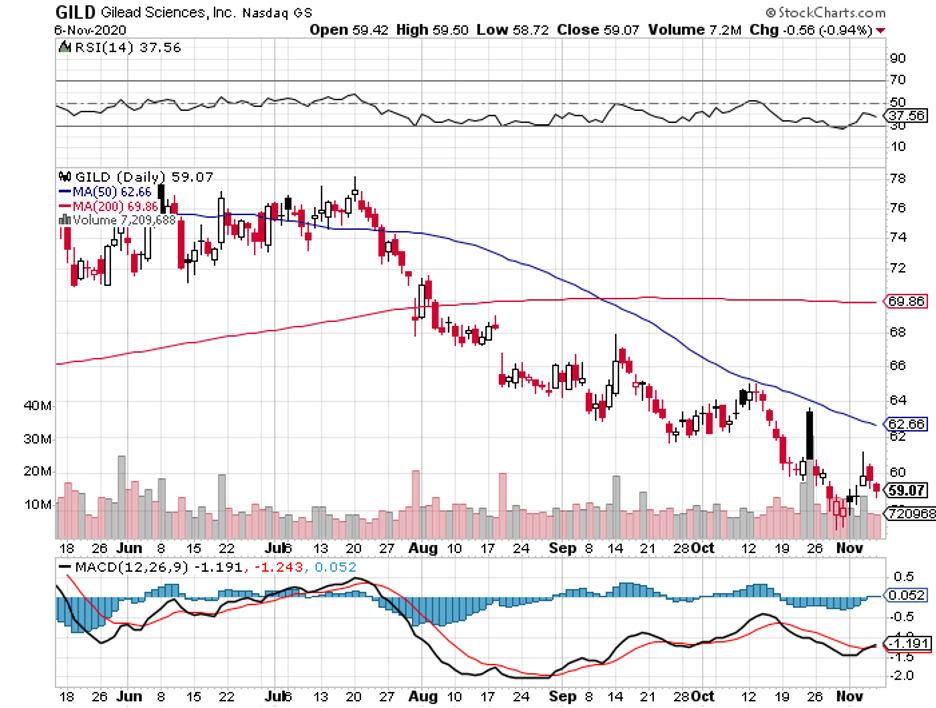
While Gilead’s Remdesivir has been widely used since January to treat severe cases of COVID-19, this FDA approval makes it official—a welcome piece of good news that pushed the stock up by 4% upon announcement.

Now, Gilead can broadly market Remdesivir under its official drug name, Veklury, to doctors and patients.

That means that other than the elderly and severe cases, Veklury can be marketed to COVID-19 patients as young as 12 years old.

Since Veklury gained approval, the drug has generated roughly $873 million in revenues.

Despite its limited market, this COVID-19 treatment actually ranked as Gilead’s second highest-selling drug in the third quarter of 2020—only behind the blockbuster HIV medication Biktarvy, which rose by 8% to contribute $4.55 billion.

As expected, Veklury’s popularity boosted Gilead’s 2020 performance.

Gilead’s total sales for the third quarter alone reached $6.5 billion, with $873 million coming from its brand new just-approved COVID-19 treatment Veklury.

For context, the company’s sales for the third quarter was only projected to grow by 2%. Veklury sales boosted this number to generate an 18% jump in revenue instead.

Clearly, Veklury injects a ray of hope in the declining sales for some of previous Gilead’s money makers like its hepatitis lineup, which saw a $210 million slide in revenue this quarter.

With this approval, Gilead is expected to pocket billions in Veklury sales as the company announced its plan to ramp up production to meet the global demand.

After all, governments are expected to stockpile the drug to be ready for future outbreaks.

In terms of its sustainability, Gilead is estimated to enjoy Veklury’s lucrative profits for a year or two until a COVID-19 vaccine gets fully approved or when herd immunity eventually kicks in.

Apart from Gilead, there are also other companies looking to cash in on this demand.

One of them is Regeneron Pharmaceuticals (REGN), which gained popularity after being used to fast track the COVID-19 recovery of Donald Trump during the campaign period. Another is Eli Lilly, which also applied for an emergency authorization for its antibody cocktail.

Most importantly, Veklury sets a promising precedent for other COVID-19 programs, particularly the vaccines.

If the ongoing trials yield positive results, then the vaccines of Pfizer (PFE), AstraZeneca (AZN), Moderna (MRNA), and BioNTech (BNTX) could quickly receive emergency authorizations.

Meanwhile, Veklury is not the only pandemic-defying achievement of Gilead this year.

Even before the pandemic broke, Gilead’s strategy has consistently centered on acquisitions.

This plan was kickstarted with its $12 billion acquisition of Kite Pharma in 2017.

This investment has been paying off as the company continues growth in Asia, specifically in China.

By 2022, Gilead is projected to generate over $1 billion in sales from its Hepatitis B lineup in this region alone.

While 2020 has not been the best year for mergers and even acquisitions particularly in the biopharmaceutical sector, Gilead seems to not be letting the pandemic ruin its plans.

In March, Gilead completed its $4.9 billion acquisition of Forty-Seven in an effort to own the rights to a blockbuster cancer drug called Magrolimab. This product is anticipated to bring more than $3 billion in annual sales. 

Recently, the company announced yet another massive $21 billion deal to acquire Immunomedics (IMMU)—a value that is nearly 30% of Gilead’s $70.4 billion market capitalization.

Gilead’s deal with Immunomedics adds another potential blockbuster drug in its oncology lineup: Trodelvy.

Once approved, Trodelvy is expected to rake in $4 billion annually—a profit that would eventually pay off the $21 billion that Gilead shelled out to acquire Immunomedics.

Looking at profits from its recent acquisitions, Gilead can rake in roughly $2 billion in quarterly revenue just for Trodelvy and Magrolimab alone.

Overall, Gilead’s product lineup has clearly shown significant growth.

Its core portfolio has been consistently strong, and the full FDA approval of Remdesivir offered the company a short-term boost.

In terms of long-term growth, Gilead maintains the capacity to provide significant cash flow for its shareholders.
veklury

https://madhedgefundtrader.com/wp-content/uploads/2019/05/cropped-mad-hedge-logo-transparent-192x192_f9578834168ba24df3eb53916a12c882.png 0 0 Mad Hedge Fund Trader https://madhedgefundtrader.com/wp-content/uploads/2019/05/cropped-mad-hedge-logo-transparent-192x192_f9578834168ba24df3eb53916a12c882.png Mad Hedge Fund Trader2020-11-12 10:00:102020-11-15 15:57:44Gilead is the Chosen One
Mad Hedge Fund Trader

November 10, 2020

Biotech Letter

Mad Hedge Biotech & Healthcare Letter
November 10, 2020
Fiat Lux

FEATURED TRADE:

(PFIZER ADDS EXCLAMATION POINT TO ITS DECLARATION OF INDEPENDENCE)
(PFE). (MRNA), (AZN), (JNJ), (MCK), (GSK), (MYL). (MRK), (BMY)

https://madhedgefundtrader.com/wp-content/uploads/2019/05/cropped-mad-hedge-logo-transparent-192x192_f9578834168ba24df3eb53916a12c882.png 0 0 Mad Hedge Fund Trader https://madhedgefundtrader.com/wp-content/uploads/2019/05/cropped-mad-hedge-logo-transparent-192x192_f9578834168ba24df3eb53916a12c882.png Mad Hedge Fund Trader2020-11-10 11:02:012020-11-10 17:00:07November 10, 2020
Mad Hedge Fund Trader

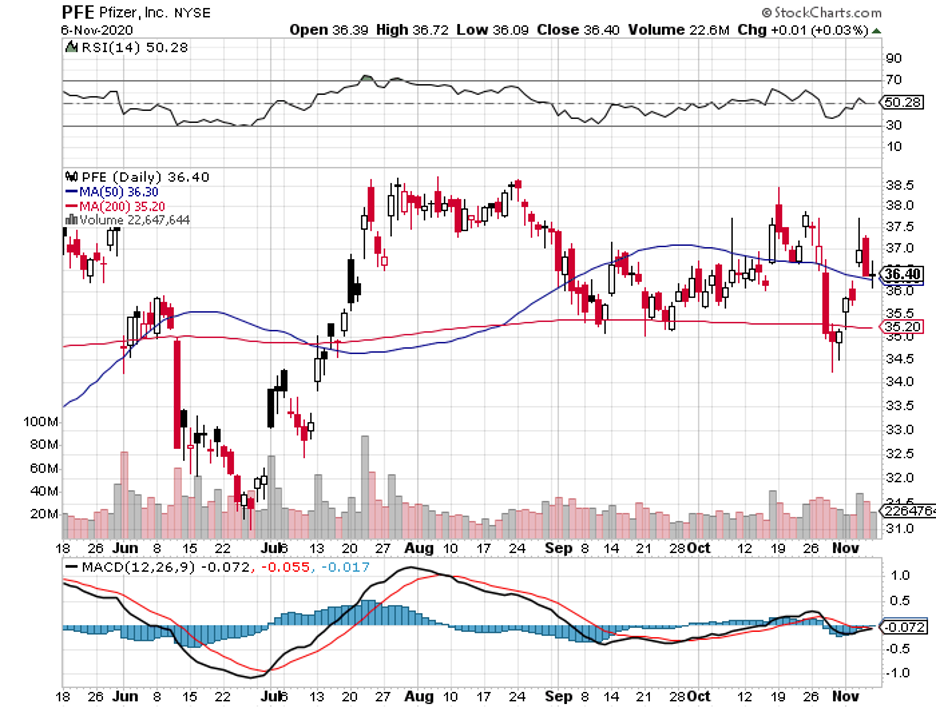
Pfizer Adds Exclamation Point to its Declaration of Independence

Biotech Letter

When Operation Warp Speed was launched, the US government handpicked the most promising COVID-19 vaccine programs and offered them funding—an offer that was welcomed by all those selected except for one: Pfizer (PFE).

While COVID-19 vaccine frontrunners like Moderna (MRNA), AstraZeneca (AZN), and even Johnson & Johnson (JNJ) accepted financial assistance from the US government, Pfizer insisted on funding its own coronavirus program.

Now, Pfizer has taken another step to make it clear that it does not need any help.

In what could only be described as adding an exclamation point to its “declaration of independence” from the US government, Pfizer announced that it won’t use the country’s chosen distribution partner in delivering its COVID-19 vaccine.

For years, the US government has been using McKesson (MCK) to deliver drugs and other treatments.

In fact, this was the same company used by the Obama administration in 2009, when it distributed the H1N1 vaccine and medications.

This won’t be the case for Pfizer’s COVID-19 vaccine though.

According to the company, it has designed its own delivery system to ensure the proper and safe distribution of its product.

In October, Pfizer disclosed its distribution plans that centered on select sites in Michigan, Belgium, Wisconsin, and Germany.

Other than its goal to operate as independently from the US government as possible, one of the concerns of Pfizer is the sensitive nature of its COVID-19 vaccine.

The vaccine has to be kept at an ultra-cold temperature of minus 94 degrees Fahrenheit, which means that the shipments would require close monitoring.

What we know so far is that Pfizer has designed shipping containers that can maintain the temperature of the vaccine for 10 days.

In terms of monitoring, the company has developed a real-time GPS tracking system that will report any deviations in the set conditions.

All these are implemented to ensure that the COVID-19 vaccine does not lose potency before it reaches patients.

Looking at the other vaccine candidates, Moderna might also resort to this kind of distribution arrangement since its vaccine needs to be stored at negative 4 degrees Fahrenheit.

Outside its COVID-19 efforts, Pfizer has been aggressive in pruning its business divisions.

Since late 2019, Pfizer has been implementing strategies to eliminate its underperforming segments.

In August last year, the company forged a partnership with GlaxoSmithKline (GSK) to combine their consumer healthcare sectors.

This led to the formation of the GSK Consumer Healthcare, where Pfizer holds a 32% stake.

This year, Pfizer has been working on offloading its off-patent drug unit, Upjohn, and merging it with Mylan (MYL).

This deal should be finalized by the fourth quarter of 2020, with the merger offering Pfizer’s shareholders with roughly 57% of the new company, Viatris.

When this is completed, Pfizer would become a smaller and more focused biopharmaceutical company.

This means that the company can leverage its $202.27 billion market capitalization to move the needle more substantially in terms of its long-term prospects.

One of the key areas that Pfizer has been working towards becoming a powerhouse is oncology—a sector that has served as a major growth driver for the company for years.

Pfizer has a deep oncology portfolio comprising over 20 approved drugs marketed to different areas including breast cancer, lung cancer, and blood cancer. 

However, none of its cancer drugs have managed to breach the $10 billion annual sales mark in this sector.

This is because Pfizer has no absolute mega-blockbuster in the oncology space like its competitors Merck (MRK) with Keytruda and Bristol-Myers Squibb (BMY) with Opdivo.

With the growing number of pipeline candidates in its cancer portfolio, Pfizer is expected to come up with a blockbuster by the fourth quarter this year or before the first half of 2021 ends.

Looking at Pfizer’s pipeline, there are 14 approvals anticipated from today through 2025 in the oncology segment alone.

One contender is its prostate cancer drug Xtandi. Another is a non-small cell lung cancer medication called Lorbrena.

In terms of its current product lineup, Pfizer’s biopharmaceutical operations continue to impress investors.

Despite not having a mega-blockbuster, it still has several top-selling drugs like Eliquis and Ibrance. Both showed 9% increase each in sales for the third quarter of 2020.

Taking all these into consideration, Pfizer is estimated to deliver solid growth in the next few years primarily thanks to its fast-developing oncology segment. This market is forecasted to experience an increase of $240 billion every year by 2023.

Overall, a successful COVID-19 program could provide a one-time earnings boost for Pfizer and a substantial earnings accretion in fiscal 2021.

However, this giant biopharmaceutical company’s extensive lineup of commercialized products and promising oncology pipeline mean that its revenue and share performance do not heavily depend on its coronavirus vaccine.

If Pfizer’s COVID-19 vaccine candidate fails, it won’t be a disaster for its shareholders, especially since the company’s shares do not seem to consider this program in its pricing.

In fact, Pfizer shares are looking inexpensive even without a successful COVID-19 vaccine candidate.

If it does turn out to be a success though, then Pfizer investors could enjoy some COVID-19 vaccine call option for free.


pfizer covid vaccine

https://madhedgefundtrader.com/wp-content/uploads/2019/05/cropped-mad-hedge-logo-transparent-192x192_f9578834168ba24df3eb53916a12c882.png 0 0 Mad Hedge Fund Trader https://madhedgefundtrader.com/wp-content/uploads/2019/05/cropped-mad-hedge-logo-transparent-192x192_f9578834168ba24df3eb53916a12c882.png Mad Hedge Fund Trader2020-11-10 11:00:302020-11-10 22:55:19Pfizer Adds Exclamation Point to its Declaration of Independence
Mad Hedge Fund Trader

November 5, 2020

Biotech Letter

Mad Hedge Biotech & Healthcare Letter
November 5, 2020
Fiat Lux

FEATURED TRADE:

(IT’S GO TIME FOR BIOGEN’S ALZHEIMER’S DRUG)
(BIIB), (LLY), (AXSM), (MYL)

https://madhedgefundtrader.com/wp-content/uploads/2019/05/cropped-mad-hedge-logo-transparent-192x192_f9578834168ba24df3eb53916a12c882.png 0 0 Mad Hedge Fund Trader https://madhedgefundtrader.com/wp-content/uploads/2019/05/cropped-mad-hedge-logo-transparent-192x192_f9578834168ba24df3eb53916a12c882.png Mad Hedge Fund Trader2020-11-05 13:02:142020-11-05 13:30:49November 5, 2020
Mad Hedge Fund Trader

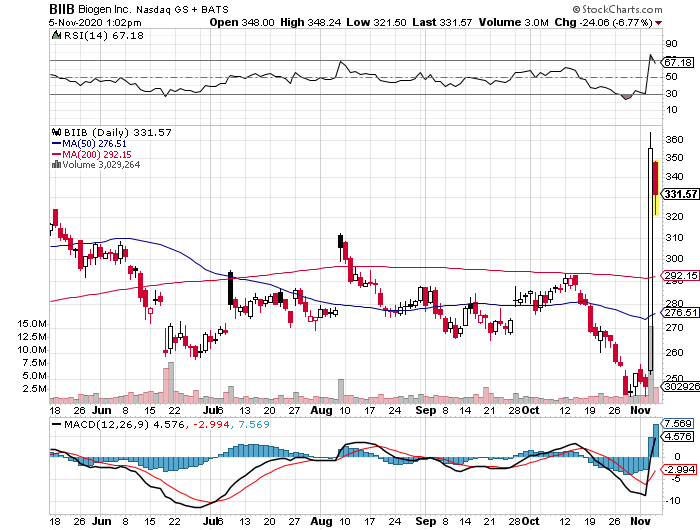
It’s Go Time for Biogen's Alzheimer's Drug

Biotech Letter

Investing in beaten-up stocks in this period of uncertainty demands nerves of steel.

In fact, some biotechnology and healthcare stocks have been left for dead in recent months. Meanwhile, there are others that continue to deliver amidst the ongoing pandemic.

One of them is Biogen (BIIB).

Biogen has been consistently tagged as a high-risk-high-reward stock even before the COVID-19 pandemic started.

However, people seem to miss the fact that the company has relatively low debt and a surprisingly positive free cash flow in the past years.

Since 2019, the banner headline for Biogen has been its experimental Alzheimer’s disease treatment Aducanumab.

Recently, Biogen released promising progress following its decision to submit the Alzheimer’s candidate for a priority review to the FDA. It has also been accepted for review by European health regulators. 

Although this move appears risky, the goal is to accelerate FDA’s timeline for Aducanumab.

That is, Biogen’s decision to submit the drug for approval earlier than expected also pushes the decision to an earlier date, which is March 7, 2021.

If approved, then Aducanumab will be the first-ever approved drug for Alzheimer’s disease.

The road to this point was not easy though. Biogen went through a series of failed trials and even a brief period of giving up on the project before the company gave the effort another chance.

Looking at the market opportunity for this sector, Biogen’s about-face no longer comes as a surprise.

For decades now, companies have been looking into ways to at least slow the progress of the condition, treat the symptoms, and offer faster ways to diagnose it.

There is currently no cure for this disease, which is ranked as the sixth leading cause of death in the country and accounts for approximately 2 million deaths globally.

Given that this disease takes years to progress, it means tens of millions of patients live with the condition on a daily basis -- and this sector comprise the target niche for Aducanumab.

In the United States alone, over 5 million people are diagnosed with Alzheimer’s disease annually and this number is projected to increase to nearly triple by 2050.

With all the treatments geared towards Alzheimer’s disease, sales for these products were estimated at $3.5 billion in 2018. This cost is expected to hit a 7.2% compound growth rate yearly until 2030.

If successful, Aducanumab can reach peak sales somewhere between $10 billion and $20 billion.

For context, the annual sales of Biogen today is only under $15 billion.

This underscores the significance of Aducanumab for the company as the drug can more than double its total earnings and even its market capitalization. It can also offer a 3x to 4x jump in Biogen’s share price.

Apart from Biogen, other big names working on an Alzheimer’s treatment are Eli Lilly (LLY) and Axsome Therapeutics (AXSM).

Outside Biogen’s work on Aducanumab, the company also has an impressive asset portfolio.

Its second quarter earnings results for 2020 showed that revenues from its multiple sclerosis drug segment contributed significantly to the company’s profits, with Ocrevus raking in $2.3 billion for the period.

The newly acquired rare spinal muscular atrophy disease drug Spinraza also performed well, reporting approximately $2 billion in annual sales.

Even its embattled multiple sclerosis treatment Tecfidera, which has been facing patent exclusivity issues with generic companies like Mylan (MYL), reported an increase from its notable $1 billion in revenue for the first quarter of the year to $1.2 billion in the second quarter.

Finally, Biogen has been working on expanding its biosimilar segment to increase its competitive advantage particularly for its drugs that are nearing the end of their patent exclusivity.

Amid the pandemic, Biogen’s revenue was up by 1% to hit $3.5 billion in the first quarter of 2020 and increased by 2% to reach $3.7 billion in the second quarter.

The company’s financial results also rose by approximately $100 million in the first three months of this challenging year.

However, a widely known caveat not only for Biogen but also for a number of biotechnology companies is the volatility of the stocks.

There is no one-size-fits-all formula for investing in beaten-up stocks. It comes with zero guarantees that their past performances would make a repeat either.

The strategy for these things though is quite basic. Make sure to look at businesses that offer sufficient bandwidth to bounce back once things normalize and the effects of the pandemic start to ease.

Looking at its overall performance, Biogen has achieved an impressively strong financial position despite the setbacks along the way. The company even offers room for growth regardless of the performance of its much-awaited Aducanumab.

biogen alzheimer's

https://madhedgefundtrader.com/wp-content/uploads/2019/05/cropped-mad-hedge-logo-transparent-192x192_f9578834168ba24df3eb53916a12c882.png 0 0 Mad Hedge Fund Trader https://madhedgefundtrader.com/wp-content/uploads/2019/05/cropped-mad-hedge-logo-transparent-192x192_f9578834168ba24df3eb53916a12c882.png Mad Hedge Fund Trader2020-11-05 13:00:132020-11-06 00:06:31It’s Go Time for Biogen's Alzheimer's Drug
Mad Hedge Fund Trader

November 3, 2020

Biotech Letter

Mad Hedge Biotech & Healthcare Letter
November 3, 2020
Fiat Lux

FEATURED TRADE:

(TESTED AND PROVEN COVID-19 STOCK FOR THESE UNCERTAIN TIMES)
(ABT), (PFE), (AZN), (MRNA)

https://madhedgefundtrader.com/wp-content/uploads/2019/05/cropped-mad-hedge-logo-transparent-192x192_f9578834168ba24df3eb53916a12c882.png 0 0 Mad Hedge Fund Trader https://madhedgefundtrader.com/wp-content/uploads/2019/05/cropped-mad-hedge-logo-transparent-192x192_f9578834168ba24df3eb53916a12c882.png Mad Hedge Fund Trader2020-11-03 12:02:102020-11-03 12:25:31November 3, 2020
Mad Hedge Fund Trader

Tested and Proven COVID-19 Stock for These Uncertain Times

Biotech Letter

As we hold our breath for the results of the presidential election, it’s no surprise that investors are wondering how their portfolios will be impacted.

That’s why now is the right time to pick a stock or two that can thrive regardless of who emerges as the victor.

To do this, it’s wise to look at a company that has already experienced a boost under Trump’s presidency and could continue to enjoy the rewards even with a Joe Biden administration.

The obvious common denominator is Trump and Biden’s goal to be aggressive in COVID-19 testing for as long as the virus is around.

Pfizer (PFE), AstraZeneca (AZN), and Moderna (MRNA) are undoubtedly three of the most widely reported coronavirus stocks in the past months.

These companies were the first to launch their COVID-19 vaccine candidates in human trials and are the leaders in the race towards the finish line.

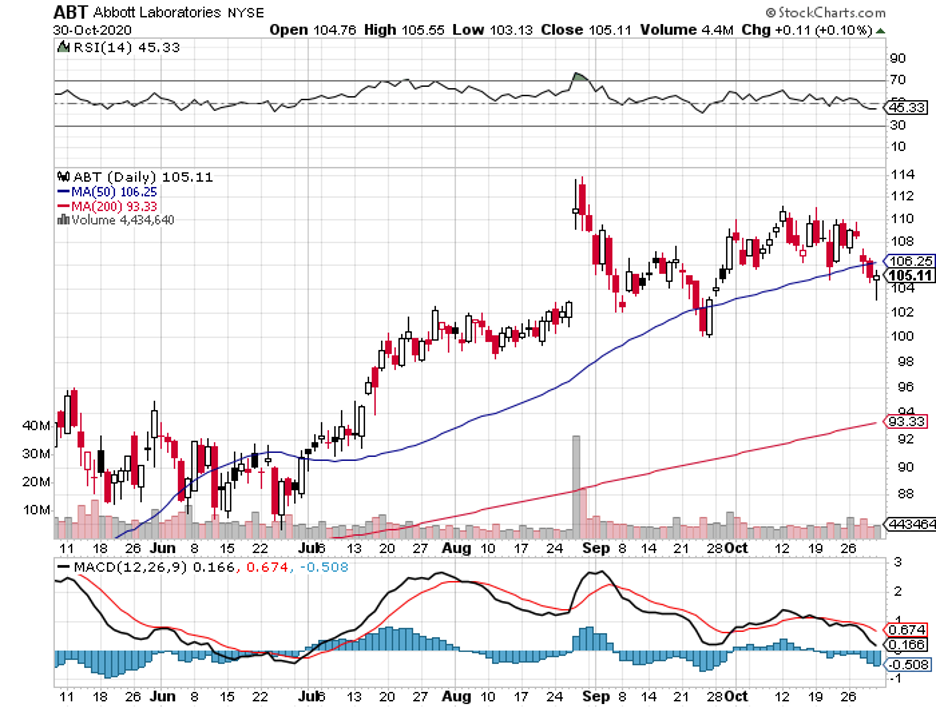
However, long-term investors may find more value betting on one of my preferred COVID-19 stocks: the $188 billion healthcare behemoth Abbott Laboratories (ABT).

Let me tell you why.

In either Trump’s or Biden’s presidency, Abbott stands to benefit.

Regardless of the winner of the 2020 election, Abbott remains a winner for as long as COVID-19 continues to threaten the world.

While the majority of COVID-19 vaccine companies have yet to generate income from their coronavirus programs due to pending FDA approvals, Abbott has been leveraging its pipeline to boost its growth even with the pandemic.

Since the early days of this health crisis, Abbott has been working to stay ahead of the pack.

To date, the company has at least seven COVID-19 tests with emergency use authorization from the FDA and are available in the market.

These tests, which boosted Abbott’s diagnostics sales by 39% in the third quarter, range from detecting active cases to identifying whether a person has been infected with the virus in the past.

The latest swab test to join Abbott’s growing lineup of COVID-19 products is called the antigen test and is designed to deliver results in as fast as 15 minutes and costs only $5.

To add convenience, this test is connected to a mobile to allow users to access their results right away.

Prior to the antigen test, Abbott launched a rapid detection test called BinaxNOW. This test can also return results on-site within 15 minutes. It has a free digital app, which sends users with negative results a “digital health pass” right on their phones.

When BinaxNOW was launched in August, the Trump administration spent $760 million for 150 million tests. 

This company has supplied over 100 million COVID-19 tests and generated roughly $881 million in sales in the third quarter, up from the $615 million it reported in the second quarter.

Abbott is one of the safer stocks to own in the healthcare sector, with sales estimates for this company expected to grow by 14% in 2021 and 2022.

So far, Abbott shares have climbed 22% this year. Even amidst the pandemic, Abbott raised its full-year guidance for its earnings per share from $3.25 to $3.55.

While the company has been focused on its COVID-19 programs, this strategy is not a one-time deal.

On the contrary, the popularity of its COVID-19 testing kits serves as the much-needed door-opener for Abbott to expand its medical venues—an effort that generally takes years to develop.

For instance, its diabetes care segment alone managed to achieve a 26.9% year-over-year jump in sales to reach $843 million in the third quarter.

On top of that, Abbott has an incredibly diverse pipeline with over 100 new products across its different business units.

Abbott is a widely known dividend aristocrat, paying quarterly dividends consistently since 1924. It has a proven track record of solid performance and a carefully curated suite of businesses that promises future rewards.

At the rate the company is growing and the future projects it has in its pipeline, this dividend aristocrat would no doubt continue with this proud tradition of rewarding its investors generously.

covid-19 test

https://madhedgefundtrader.com/wp-content/uploads/2019/05/cropped-mad-hedge-logo-transparent-192x192_f9578834168ba24df3eb53916a12c882.png 0 0 Mad Hedge Fund Trader https://madhedgefundtrader.com/wp-content/uploads/2019/05/cropped-mad-hedge-logo-transparent-192x192_f9578834168ba24df3eb53916a12c882.png Mad Hedge Fund Trader2020-11-03 12:00:102020-11-03 22:10:00Tested and Proven COVID-19 Stock for These Uncertain Times
Mad Hedge Fund Trader

October 29, 2020

Biotech Letter

Mad Hedge Biotech & Healthcare Letter
October 29, 2020
Fiat Lux

FEATURED TRADE:

ROCHE ENTERS COVID-19 FIGHT IN STYLE
(RHHBY), (REGN), (GILD), (MRK), (ALNY), (IONS)

https://madhedgefundtrader.com/wp-content/uploads/2019/05/cropped-mad-hedge-logo-transparent-192x192_f9578834168ba24df3eb53916a12c882.png 0 0 Mad Hedge Fund Trader https://madhedgefundtrader.com/wp-content/uploads/2019/05/cropped-mad-hedge-logo-transparent-192x192_f9578834168ba24df3eb53916a12c882.png Mad Hedge Fund Trader2020-10-29 08:32:252020-10-29 07:30:01October 29, 2020
Mad Hedge Fund Trader

Roche Enters COVID-19 Fight in Style

Biotech Letter

Roche (RHHBY) is making quite an entrance in the COVID-19 antiviral treatment race, forking out $350 million in cash to gain rest-of-the-world rights to a promising new drug created by Massachusetts-based biotech company Atea Pharmaceuticals.

This is an exciting development because the partnership between the two companies holds incredible promise in the search for a COVID-19 cure.

In May, Atea Pharmaceuticals essentially dropped all its projects and rebranded itself as a COVID-19 fighter, attracting a stunning $215 million in its venture round.

Among the marquee names that invested in this 7-year-old biotechnology company are Bain Capital and RA Capital.

Going back to its work with Roche, the $350 million cash is expected to fund the ongoing clinical trials of Atea’s very own COVID-19 antiviral treatment called AT-527.

So far, the candidate is in its Phase 2 trial and slated to start global trials or Phase 3 by early 2021.

Apart from being a potential COVID-19 treatment, AT-527 is also under development as a Hepatitis C medication.

In terms of where AT-527 stands in the COVID-19 treatment race, this drug belongs to the same class as Gilead Sciences’ (GILD) Remdesivir and Merck’s experimental candidate with Ridgeback Biotherapeutics called MK-4482.

Like Remdesivir and MK-4482, Roche’s AT-527 is designed to inhibit the replication of SARS-CoV-2, the virus that causes COVID-19.

Unlike Remdesivir though, which is only available through intravenous infusion, AT-527 is an oral drug, making it a more convenient option.

This isn’t the first time that Roche’s COVID-19 efforts came under the spotlight.

Earlier this month, its COVID-19 work with Regeneron (REGN), called REGN-COV2, has been dubbed as a leading candidate in the race because of the high-profile patient who used it: President Donald Trump.

This partnership with Regeneron is expected to ramp up the manufacturing process by at least 3 and a half times compared to their individual capacities.

Outside its COVID-19 efforts, Roche has proven to be a good long-term investment.

Admittedly, the company’s third-quarter report missed the mark by 4% due to aggressive biosimilar competition. However, Roche’s pipeline of newer products has been growing nicely.

Because of biosimilar competition, sales of cancer and immuno-oncology treatments like Avastin fell by 30%, Rituxan slipped by 33%, and Herceptin dropped by 38%.

However, the performance of Roche’s new drug lineup showed promising results, with sales of these products showing off a 32% growth in the third quarter of 2020.

For example, sales of multiple sclerosis drug Ocrevus rose by 37%, while revenue from cancer treatments like Perjeta climbed 17%, Kadycla rose by 33%, and Tecentriq jumped by 49%. Meanwhile, sales of hemophilia medication Hemlibra increased by 57% .

All in all, the hits and misses cancelled out each other this quarter.

Despite the disappointment in these results, Roche stood by its full fiscal year guidance.

This is a strong indicator that the company sees a brighter fourth quarter. Overall, Roche remains in good shape.

 Tecentriq has been expanding to cater to other indications such as liver cancer and even some immuno-oncology applications.

Hemlibra continues to outperform its peers, holding on to 25% of the US market share for Hemophilia-A. Even Ocrevus has been outperforming others.

Regarding pipeline developments, Roche has been pouring resources for the trials of NASH drug candidate Crovalimab, which is now in Phase 3.

The acquisition of Inflazome in September and Enterprise Therapeutics in October indicate that Roche is looking to expand in the cystic fibrosis space as well.

Its recently inked agreement with Dyno Therapeutics also signals its plans to work on gene therapies, making itself a potential threat to the likes of biotechnology companies Alnylam (ALNY) and Ionis (IONS).

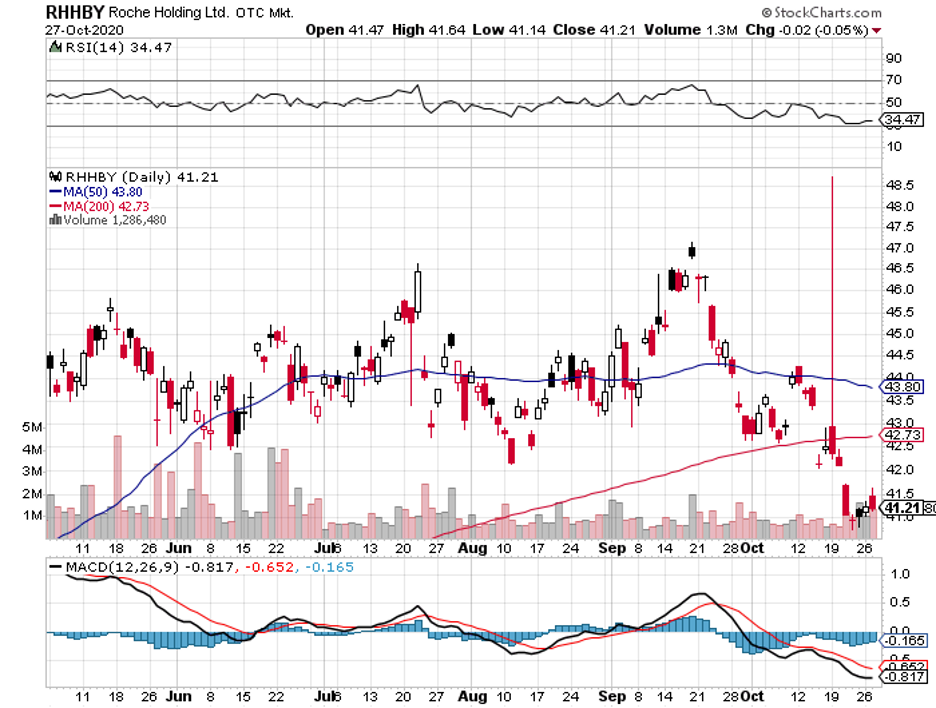
Looking at everything it has done and has yet to offer, I believe that Roche shares are undervalued at below the high $40s.

This company has a healthy lineup and promising R&D strategies combined with the capacity to buy high-potential assets.

I can see the company generating mid-single-digit cash flow growth on a long-term basis, and I even expect additional improvements to the dividend.

Given the returns you can get from Roche, I can say that this stock is very much worth consideration for any investor interested in quality growth.

roche covid-19

https://madhedgefundtrader.com/wp-content/uploads/2019/05/cropped-mad-hedge-logo-transparent-192x192_f9578834168ba24df3eb53916a12c882.png 0 0 Mad Hedge Fund Trader https://madhedgefundtrader.com/wp-content/uploads/2019/05/cropped-mad-hedge-logo-transparent-192x192_f9578834168ba24df3eb53916a12c882.png Mad Hedge Fund Trader2020-10-29 08:30:142020-10-29 21:12:12Roche Enters COVID-19 Fight in Style
Mad Hedge Fund Trader

October 27, 2020

Biotech Letter

Mad Hedge Biotech & Healthcare Letter
October 27, 2020
Fiat Lux

FEATURED TRADE:

(HOW VERTEX IS CURING THE INCURABLE)
(VRTX), (PTI), (GLPG), (CRSP)

https://madhedgefundtrader.com/wp-content/uploads/2019/05/cropped-mad-hedge-logo-transparent-192x192_f9578834168ba24df3eb53916a12c882.png 0 0 Mad Hedge Fund Trader https://madhedgefundtrader.com/wp-content/uploads/2019/05/cropped-mad-hedge-logo-transparent-192x192_f9578834168ba24df3eb53916a12c882.png Mad Hedge Fund Trader2020-10-27 11:02:092020-10-27 11:31:38October 27, 2020
Page 93 of 115«‹9192939495›»

Legal Disclaimer

There is a very high degree of risk involved in trading. Past results are not indicative of future returns. MadHedgeFundTrader.com and all individuals affiliated with this site assume no responsibilities for your trading and investment results. The indicators, strategies, columns, articles and all other features are for educational purposes only and should not be construed as investment advice. Information for futures trading observations are obtained from sources believed to be reliable, but we do not warrant its completeness or accuracy, or warrant any results from the use of the information. Your use of the trading observations is entirely at your own risk and it is your sole responsibility to evaluate the accuracy, completeness and usefulness of the information. You must assess the risk of any trade with your broker and make your own independent decisions regarding any securities mentioned herein. Affiliates of MadHedgeFundTrader.com may have a position or effect transactions in the securities described herein (or options thereon) and/or otherwise employ trading strategies that may be consistent or inconsistent with the provided strategies.

Copyright © 2026. Mad Hedge Fund Trader. All Rights Reserved. support@madhedgefundtrader.com
Scroll to top