• support@madhedgefundtrader.com
  • Member Login
Mad Hedge Fund Trader
  • Home
  • About
  • Store
  • Luncheons
  • Testimonials
  • Contact Us
  • Click to open the search input field Click to open the search input field Search
  • Menu Menu
Mad Hedge Fund Trader

Another Slip-Up

Bitcoin Letter

It’s here - rules, and a mountain of them.

They didn’t stop until they got their cut.

Blame the industry for attracting the ire of the all-mighty rule makers.

This means that growth in this sector won’t be as gangbusters moving forward, if ever.

It’s a net negative for the original vision of crypto because the industry relies on that extra supercharger growth to attract incremental investors, and all in one poof, it's gone, like the wind.

What exactly happened?

The Financial Stability Oversight Council (FSOC), the U.S. regulatory panel comprising top financial regulators, successfully pushed Congress to enact legislation addressing risks digital assets pose to the financial system, including strict oversight of crypto spot markets and stablecoins.

Anything that Congress touches turns to higher costs and more red tape.

The FSOC's current enforcement regime follows a slate of directives that were released throughout the mid-2020s. The administration’s mandate effectively forced U.S. government agencies to double down on digital asset sector enforcement and close holes in regulation.

Legislative clarity has largely replaced the ambiguity of the past, with bills now codified to address stablecoins and digital commodities regulation.

Federal financial regulators now possess explicit rulemaking authority over the spot market for cryptocurrencies that are not securities, addressing conflicts of interest and abusive trading practices.

It’s not a joke that regulation has raced to the front and center of the crypto narrative as the defining constraint on the industry.

It has been relentless.

Just as we thought the worst had passed, the industry was forced to reckon with the consequences of the trust-toppling scandals that induced this heavy-handed regulation.

The poster child for this era remains reality TV star and influencer Kim Kardashian.

She is the Hollywood socialite who pushed Ethereum Max, a digital coin that aptly borrowed its name from the second biggest crypto, Ethereum.

What were the results?

Ethereum Max is effectively dead, prompting investors to sue Kardashian, who initially failed to disclaim that her marketing was being paid for by the company that owned the token.

Kardashian’s legal battles became a landmark case for influencer liability, even as her lawyers argued there was insufficient evidence that her endorsements led to the plaintiffs buying EMAX.

She paid a settlement of $1.26 million.

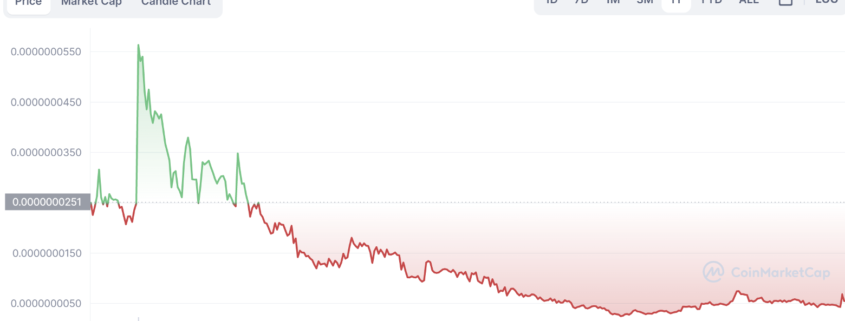
EMAX's value was based on the greater fool theory because it had no utility whatsoever.

As investors and promoters like Kardashian talked up such coins, more people invested, and the price went up, allowing the investors at the beginning to cash out.

Kardashian was paid $250,000 by Ethereum Max for her marketing efforts.

Altcoins like EMAX lack the stability of established assets like Bitcoin and Ether.

And EMAX never returned to meteoric highs, meaning the greater fool theory in this coin only reached so high for the previous investors to cash out.

EMAX remains a cautionary tale because investing in such assets is akin to pouring money down a black hole, with the asset depreciating rapidly.

While the exact number of people who invested based on celebrity endorsements is history, data from that period found that Kardashian's advertisement reached about one in five US adults and roughly 30% of crypto owners.

This was a public relations disaster that permanently damaged the crypto industry.

It’s bad enough that the industry impoverished many of its participants during the purge, but it also involved the lowest level of brain activity on the human planet.

One might conclude that the Kardashian fiasco marked the bottom of the industry's reputation, because how much lower and pitiful could crypto get?

The one silver lining in the market's survival is that the big holders haven’t sold out, which bodes well for crypto now that capital markets have stabilized.

That appears to be the last leg crypto is standing on, which could be either scary or a sanctuary, depending on how you look at it.

Lastly, steer away from anything other than Bitcoin if you are going to invest.


https://www.madhedgefundtrader.com/wp-content/uploads/2022/10/ethe-max.png 840 1560 Mad Hedge Fund Trader https://madhedgefundtrader.com/wp-content/uploads/2019/05/cropped-mad-hedge-logo-transparent-192x192_f9578834168ba24df3eb53916a12c882.png Mad Hedge Fund Trader2026-02-13 13:08:142026-02-17 12:14:35Another Slip-Up
Mad Hedge Fund Trader

An Industry on the Ropes

Bitcoin Letter

Crypto and Terraform Labs co-founder Do Kwon is no longer on the run.

Yes, that’s right – he’s a convict.

The Interpol red list that once alerted 195 countries to his status as a wanted fugitive has been retired, replaced by a federal prison number. We now know that his desperate transfer of 33,131 Bitcoins right after being added to that list was the final act of a man who knew the walls were closing in.

Kwon was the golden boy for stablecoins for quite some time as the native South Korean’s brash attitude led him to billions in wealth.

His “fake it ‘til you make it” attitude got him into deep water, and the quickly escalating investigations have now concluded with a definitive thud.

Why?

His brainchild, Terra’s UST stablecoin, lost its parity to the dollar in May 2022 in a $70 billion collapse, and today is nothing more than a digital tombstone.

Kwon and Terraform Labs fled South Korea for Singapore ahead of Terra’s meltdown, and then he fled Singapore, sparking a global manhunt that ended in Montenegro.

South Korean authorities finally got their answers regarding the violations of capital markets law that resulted in a slew of local suicides by investors who lost everything.

Investigators also confirmed what many suspected: his company misled investors in labeling UST as a stablecoin.

The courts have ruled that his stablecoin achieved the definition of a Ponzi scheme.

It feels like a lifetime ago when Terraform Labs successfully rallied an audience of fans that called themselves the “Lunatics,” praising Kwon as the project’s outspoken hero, as the price of its LUNA token rallied.

Kwon’s unique case set off US regulators with the intent of regulating stablecoins more rigidly, a goal that was realized with the passage of the GENIUS Act last year.

The South Korean sullied the stablecoin industry, and while the manhunt is over, the reputational stain remains.

U.S. lawmakers successfully passed the bill that introduced a ban on UST-like algorithmic stablecoins, safeguarding other decentralized dollar alternatives like MakerDAO’s DAI by forcing them to adhere to strict backing requirements.

Cryptocurrencies have been littered with non-stop streaming of negative headlines over the last few years.

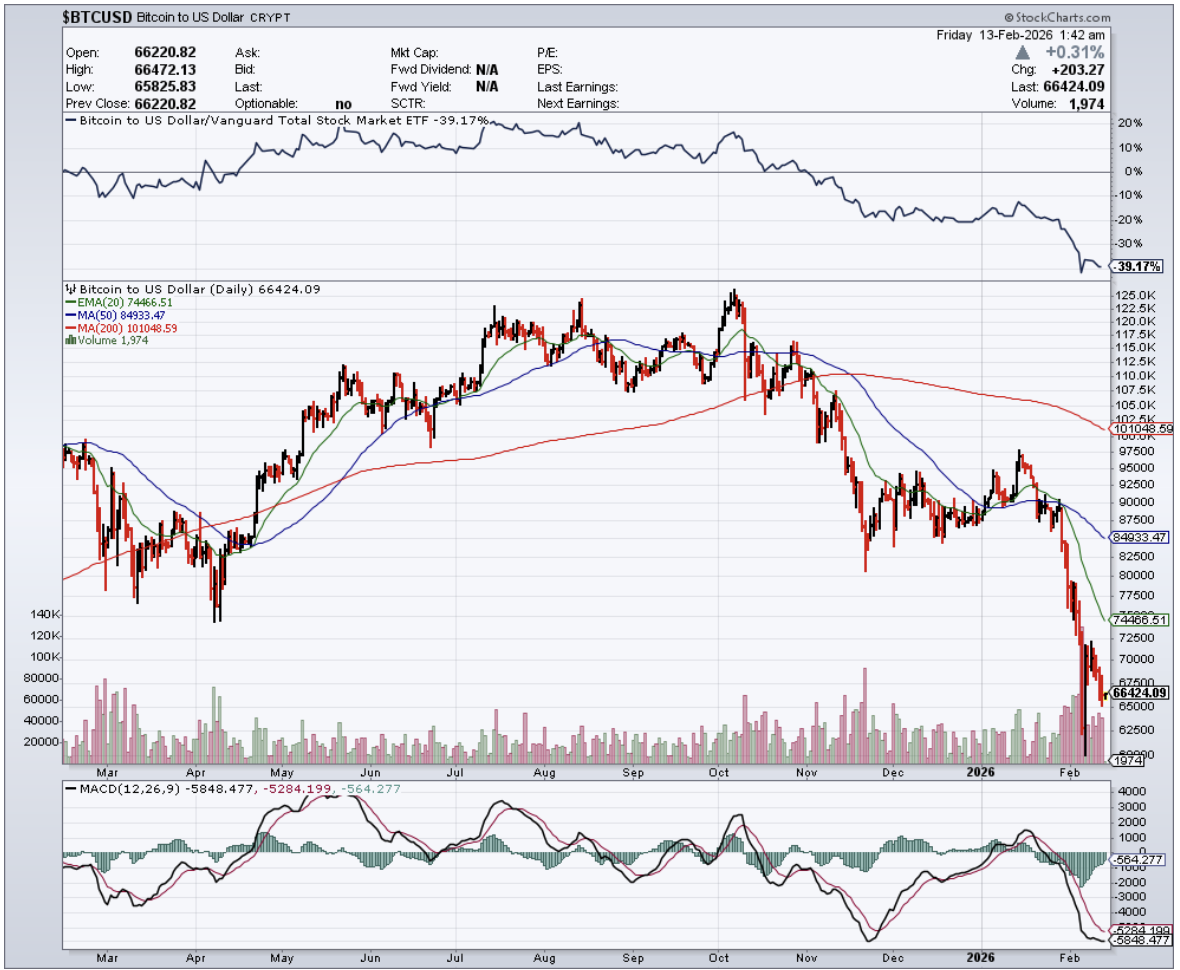
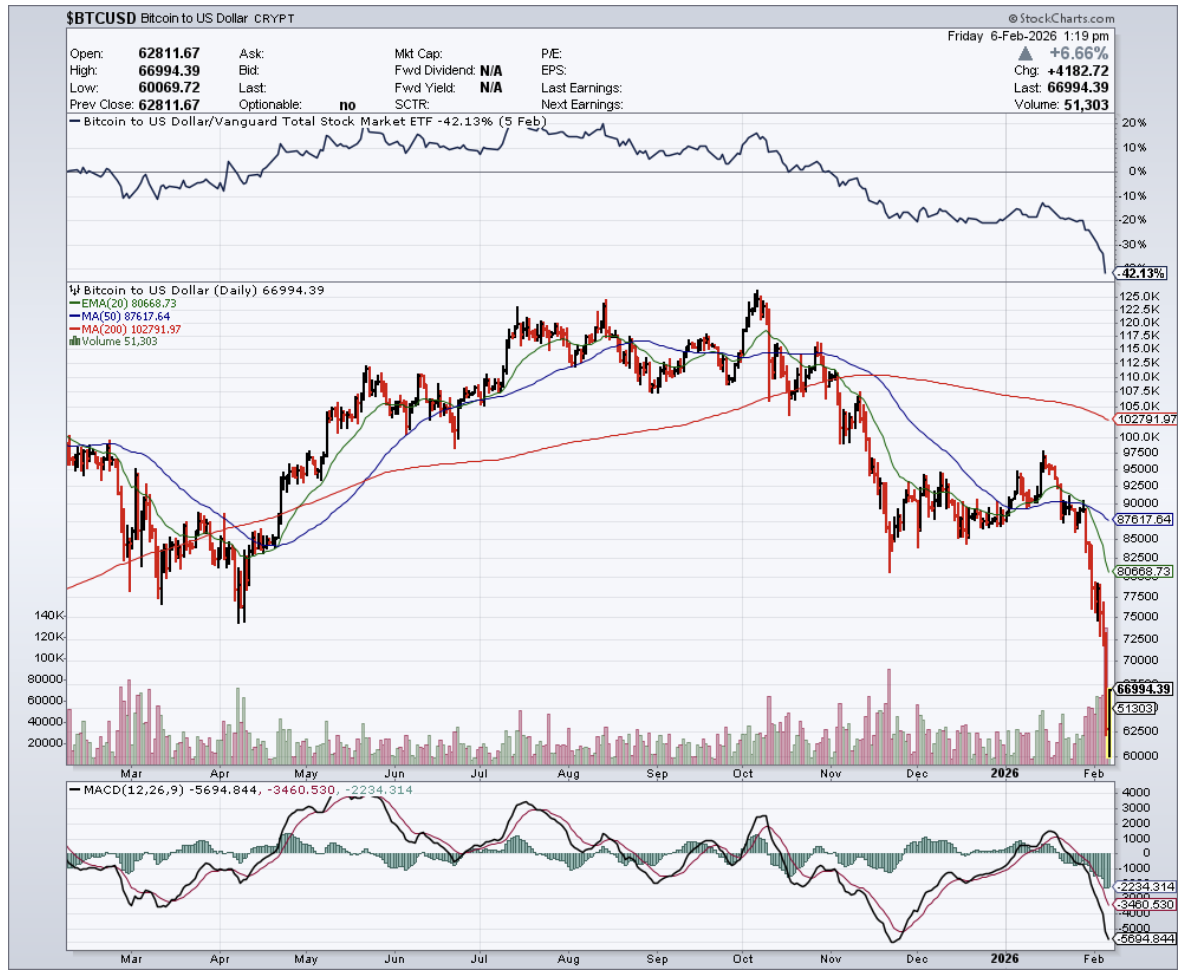
Bitcoin reaching $65,000 back then wasn’t in fact a celebration, but the calm before the storm, before a myriad of structural problems were revealed as the price of Bitcoin collapsed.

Kwon's incarceration has stopped his attempt at fixing LUNA, and the price levels remain a fraction of what they were before the collapse.

The conclusion of this international police case has heaped more fuel on the fire for incremental investors, signaling them to stay away from speculative cryptocurrencies, and rightly so.

Kwon is now serving a 15-year sentence, though legal experts believe he may still face additional time in his native homeland of South Korea.

Financial fraud and running a Ponzi scheme are serious matters in South Korea, which is infamous as a place where Korean oligarchs regularly flout the law, but Kwon was not spared.

Delaying the inevitable stirred up even more unrest for crypto, but at least one of its big-time CEOs can no longer evade the law.

The longer he hid internationally, the longer the damage to the reputation of crypto lasted.

The problem I have is that even with justice served, the lack of cash flow dispensing from these assets keeps them in a gray area of whether they are sustainable or not.

Even more worrisome, the strict regulations born from Kwon’s actions have wiped out the wild-west infrastructure that once fueled the industry's growth.

It caused manhunts for crypto CEOs and the bankruptcy of the masses.

These events remain highly bearish for the cryptocurrency industry's legacy, and I advise readers to continue heading for higher water.


https://madhedgefundtrader.com/wp-content/uploads/2019/05/cropped-mad-hedge-logo-transparent-192x192_f9578834168ba24df3eb53916a12c882.png 0 0 Mad Hedge Fund Trader https://madhedgefundtrader.com/wp-content/uploads/2019/05/cropped-mad-hedge-logo-transparent-192x192_f9578834168ba24df3eb53916a12c882.png Mad Hedge Fund Trader2026-02-13 13:06:002026-02-17 12:11:34An Industry on the Ropes
Mad Hedge Fund Trader

Where Does the Utility Come From

Bitcoin Letter

Crypto insider Mike Novogratz has long maintained an upbeat tone, even as crypto remains one of the most frustrating asset classes of the last few years.

His words are mostly silver linings and an optimistic view of the future.

His argument for structural appreciation in Bitcoin centers on the premise that the next phase must differ from historical cryptocurrency rallies in terms of story and utility.

Compared to previous cycles, the thesis is that any future Bitcoin rally will be more focused on utility and less on the story.

An asset can only go so far based on the fear of missing out hype.

The structural issue remains the lack of buyers, and it is no surprise.

Every liquidity event serves as a great exit point for holders to dump more coins.

In my analysis over the years, I chronicle how structural shifts make it less attractive for incremental investors to bite at crypto.

The data backs me up as new buyers have largely exited this speculative industry and sought assets that pay an annuity-like premium.

According to Novogratz, the 2017 era was mostly about the story of people not trusting the government and wanting more privacy and decentralization.

The blockchain narrative has stagnated, and few institutions have integrated the technology into daily tasks.

I do not see where the utility comes from.

The era when speculative investors bought digital real estate in the metaverse in hopes of accruing rental digital revenue defies belief.

I do not see the utility there either.

It is all good to use buzz words like scalable and user-friendly, yet I see no actual development.

I do not believe crypto is the inherent successor to fiat either, and I do believe that, at best, it acts as a nice compliment, and that is if miracle after miracle happens from here on out.

With governments regulating the sector heavily, its value proposition diminishes greatly.

Novogratz needs to stop pushing the inevitable theme like a real estate agent advising buyers to buy the most expensive mansion at the top of the market.

Hilariously enough, one of the knocks on crypto was the elevated volatility, which has dampened significantly.

Why?

The lack of volatility stems from the lack of new buyers and sellers. There are still owners who have not sold and are holding until infinity, so the price does not get pushed down further, but investors are so turned off by the charlatans and dangers in the industry that they would rather put their money in something more real.

Crypto executives need to stop pushing the Bitcoin to $1 million theme, as every headwind imaginable crushes the price of crypto.

Even worse, the industry is still metabolizing billions of dollars in regulatory actions, and I believe it is more responsible to talk about the persistent existential crisis that Bitcoin faces.

If Bitcoin fails, then crypto is finished, so it will be interesting to see what the last big holders do with their coin.

Do they sell out the rest and crash the market? Or wait for a bull run that may never come?

The likely outcome is that the price of Bitcoin remains rangebound for the foreseeable future.


https://madhedgefundtrader.com/wp-content/uploads/2019/05/cropped-mad-hedge-logo-transparent-192x192_f9578834168ba24df3eb53916a12c882.png 0 0 Mad Hedge Fund Trader https://madhedgefundtrader.com/wp-content/uploads/2019/05/cropped-mad-hedge-logo-transparent-192x192_f9578834168ba24df3eb53916a12c882.png Mad Hedge Fund Trader2026-02-13 13:00:552026-02-13 15:05:05Where Does the Utility Come From
Mad Hedge Fund Trader

Another Win for Bitcoin

Bitcoin Letter

Bitcoin has periodically been pulled into geopolitical spotlights, and few moments generated as much reaction as comments made by Pavel Zavalny, chairman of the Russian State Duma Committee on Energy, suggesting that Russia was open to accepting Bitcoin (BTC) for oil and gas payments.

At the time, the statement landed like a bombshell for the “digital gold” narrative. Bitcoin had spent much of its early life as a financial outcast, shunned by governments and institutions alike. Now, suddenly, it was being mentioned in the same sentence as global energy trade and the world’s largest commodity exporter.

The symbolism was powerful. Russia, increasingly isolated in traditional financial channels, was exploring alternative settlement mechanisms. Bitcoin appeared, at least rhetorically, as one of several tools being discussed to navigate a fractured geopolitical landscape.

This mattered most in the context of the U.S. dollar and the euro, which had long dominated energy settlement with Russia. European buyers historically paid for Russian oil and gas almost exclusively in those currencies. That framework began to fracture once Western governments imposed sweeping financial sanctions on Moscow.

The freezing of Russian foreign reserves under U.S. President Joe Biden accelerated a reassessment among non-aligned and rival states about reliance on Western reserve currencies. Russia’s response was not limited to crypto. It demanded ruble payments from certain counterparties, expanded trade invoicing in non-Western currencies, and explored bilateral settlement arrangements with partners outside the U.S.-EU axis.

With hindsight, however, the idea that Bitcoin would become a primary settlement currency for Russian oil has not materialized. Energy trade at scale continues to rely on state-backed currencies, clearing arrangements, and intermediaries capable of handling massive volumes, compliance obligations, and price hedging. Bitcoin’s role has remained peripheral rather than structural.

That distinction matters when evaluating claims that this moment marked a permanent turning point for the dollar. While dollar dominance has undeniably been questioned and diversified against, it has not been displaced. China and Russia have expanded non-dollar trade, but global energy markets continue to clear overwhelmingly in traditional currencies.

Political fragmentation within Europe added further complexity. Leaders such as Viktor Orbán resisted full energy disengagement, arguing domestic economic stability took precedence. This underlined that sanctions, while impactful, were neither airtight nor universally enforced.

Crypto did play a role at the margins. Digital assets were used for cross-border transfers, capital mobility, and limited trade settlement where counterparties were willing to assume volatility and regulatory risk. But this fell short of the sweeping sanction bypass sometimes implied. Existing EU and U.S. sanctions frameworks explicitly extend to crypto, and large-scale energy buyers remain subject to compliance, custody, and reporting constraints.

The idea that simply holding Bitcoin balances indefinitely could nullify sanctions also proved impractical. State-level trade requires convertibility, accounting clarity, and fiscal predictability. Bitcoin’s volatility and regulatory exposure limit its usefulness as a sovereign settlement base, even for countries seeking alternatives to Western finance.

Russia’s broader economic resilience during the early sanction period owed more to elevated commodity prices, capital controls, redirected exports, and fiscal intervention than to cryptocurrency adoption. The ruble’s recovery reflected administrative measures and trade flows rather than market-driven confidence.

That said, the episode was not meaningless for Bitcoin. It reinforced a core narrative: Bitcoin exists outside the control of any single state and is considered, at least conceptually, when traditional systems become politically constrained. For crypto advocates, that alone represented validation of its censorship-resistant design.

Still, the core thesis that Russia’s energy trade would migrate meaningfully to Bitcoin, triggering a new global monetary order, has not held up. Bitcoin’s role has remained symbolic and tactical, not foundational. Energy markets continue to operate on scale, liquidity, and stability that decentralized assets have yet to provide.

The legacy of this moment is therefore more modest but still instructive. It demonstrated how geopolitical stress tests existing financial infrastructure and pushes states to explore alternatives. Bitcoin emerged as part of that conversation, not as a replacement for it.


https://www.madhedgefundtrader.com/wp-content/uploads/2022/03/bitcoin-in-russian-map.png 448 816 Mad Hedge Fund Trader https://madhedgefundtrader.com/wp-content/uploads/2019/05/cropped-mad-hedge-logo-transparent-192x192_f9578834168ba24df3eb53916a12c882.png Mad Hedge Fund Trader2026-02-06 13:06:102026-02-20 12:46:22Another Win for Bitcoin
Mad Hedge Fund Trader

Another Sovereign Country Considers Bitcoin

Bitcoin Letter

Another sovereign country once appeared ready to consider Bitcoin, and for a moment, it looked like the experiment launched in Central America might quickly spread north. By 2026, however, the reality is more restrained. Bitcoin adoption has entered a slower, more selective phase across Latin America, shaped less by ideological enthusiasm and more by political limits, regulatory pressure, and hard economic trade-offs.

The early narrative was built on frustration with local currencies. Across parts of the region, long histories of inflation and devaluation created fertile ground for alternative monetary ideas. But broad claims of collapse have not held evenly. Mexico’s peso, for example, did not spiral into oblivion. After years of volatility, it proved comparatively resilient through the mid-2020s, supported by strong remittance inflows, nearshoring investment, and orthodox central bank policy. For most households, holding pesos in a bank did not become the nightmare scenario once implied.

That context matters when revisiting political calls to adopt Bitcoin as legal tender. Indira Kempis, a senator from Nuevo León, did publicly advocate for Bitcoin adoption and framed it as a tool for financial inclusion. She emphasized Bitcoin’s potential to serve the unbanked and said she was consulting with people knowledgeable about the asset. Those statements were real, but the effort never translated into national policy. Mexico did not move toward making Bitcoin legal tender, and no broad legislative coalition formed around the idea.

The argument that Bitcoin could bank the unbanked continues to resonate rhetorically. Millions of Mexicans remain outside the formal financial system, and digital wallets can lower barriers to entry. But by 2026, policymakers largely treat crypto as a complementary payment rail rather than a replacement for sovereign currency. Bitcoin is tolerated, regulated, and sometimes encouraged for innovation, but not elevated to the status of national money.

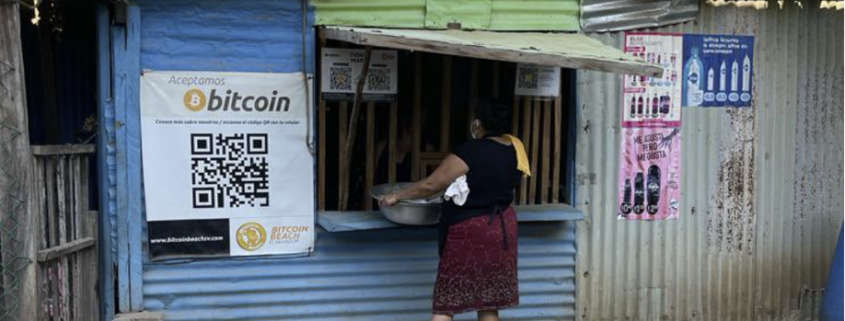
The experience of El Salvador has also tempered regional enthusiasm. President Nayib Bukele made history by adopting Bitcoin as legal tender, but the long-term outcome was more nuanced than early boosters expected. By 2024, El Salvador amended its Bitcoin law as part of negotiations with international lenders, removing mandatory acceptance and scaling back the legal tender framework. Bitcoin remained on the balance sheet and in official rhetoric, but its role shifted from revolutionary currency to an optional instrument.

That recalibration mattered across the region. Rather than triggering a domino effect, El Salvador’s path became a cautionary reference point. Legislators elsewhere continued to study crypto, but few were willing to stake monetary sovereignty on it.

Where Bitcoin has made steadier inroads is in payments and remittances. Crypto rails proved useful for cross-border transfers, particularly in corridors with high fees and slow settlement. Coinbase Global expanded services in Mexico by enabling recipients to cash out crypto into pesos at tens of thousands of retail locations. This targeted the remittance market directly, offering speed and cost advantages without requiring users to abandon fiat entirely.

That approach was more durable than legal-tender experiments. It allowed crypto to compete with incumbents like Western Union on efficiency rather than ideology. Over time, crypto remittances became another option in a crowded payments landscape rather than a wholesale disruption of national currencies.

Prominent business figures also continued to promote Bitcoin. Ricardo Salinas Pliego, founder and chairman of Grupo Salinas, remained one of Bitcoin’s most vocal advocates in Mexico, urging long-term holding and criticizing fiat debasement. His support kept Bitcoin in the public conversation, but it did not translate into official monetary reform.

By 2026, the tone around Bitcoin in Latin America is more pragmatic. Grand predictions of immediate legal tender adoption have faded. Volatility remains, and while Bitcoin has matured relative to its early years, governments are reluctant to tie fiscal stability to an asset they do not control. The idea that entire regions would balance their budgets through Bitcoin has not materialized.

Instead, Bitcoin occupies a narrower but more realistic role: a speculative asset, a hedge for some individuals, and a payment and remittance tool where it offers clear advantages. Sovereign adoption, where it exists at all, is partial and reversible. The era of sweeping declarations has given way to incremental integration, and that slower path now defines Bitcoin’s relationship with Latin American states.


https://www.madhedgefundtrader.com/wp-content/uploads/2022/03/bitcoin-e1646340136884.png 300 450 Mad Hedge Fund Trader https://madhedgefundtrader.com/wp-content/uploads/2019/05/cropped-mad-hedge-logo-transparent-192x192_f9578834168ba24df3eb53916a12c882.png Mad Hedge Fund Trader2026-02-06 13:00:272026-02-06 11:26:52Another Sovereign Country Considers Bitcoin
Mad Hedge Fund Trader

The Strong Breadth of Crypto

Bitcoin Letter

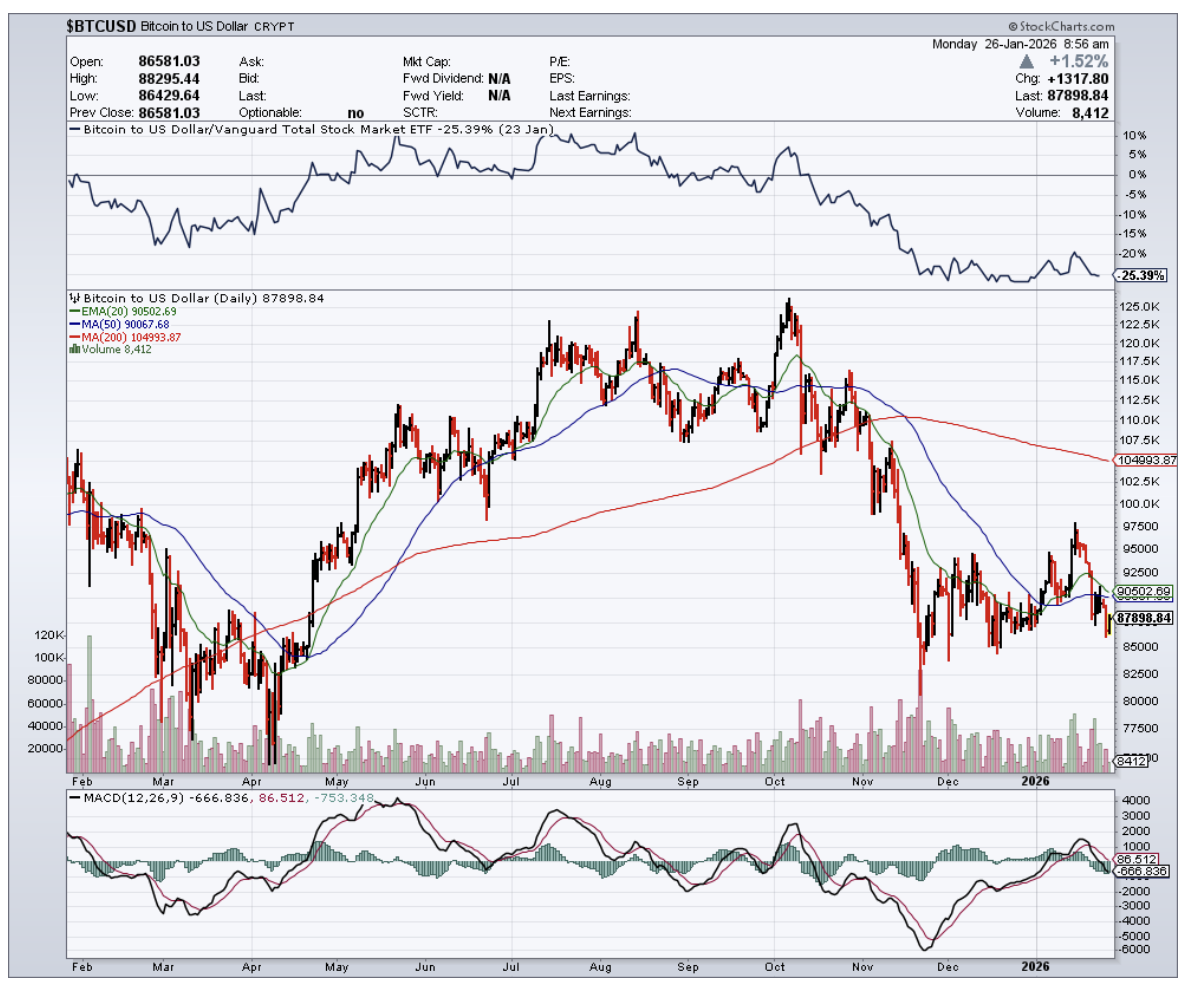
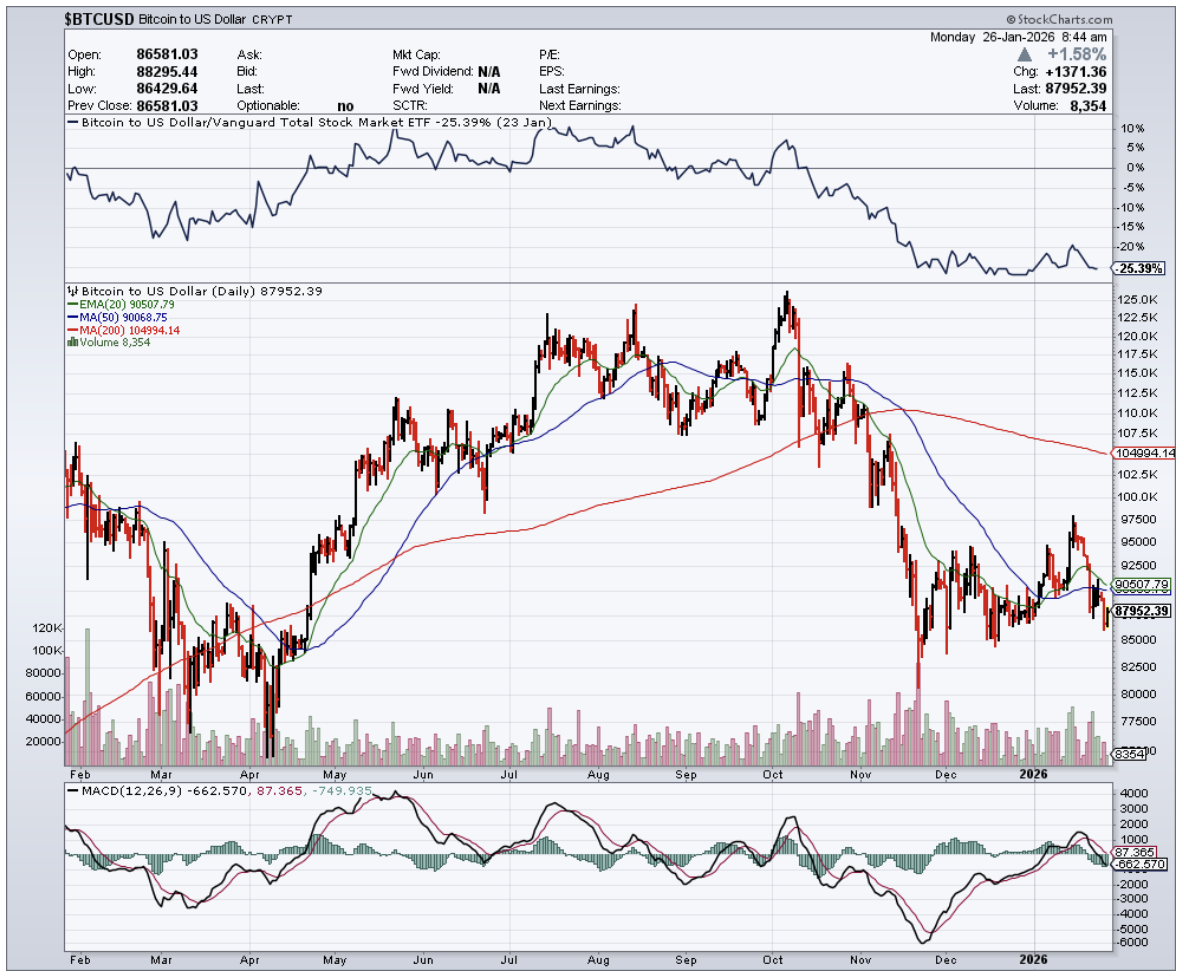
Periods of weakness in Bitcoin price action often reflect positioning and profit-taking rather than a breakdown in the asset’s underlying structure.

Bitcoin remains a volatile asset by design, and retracements have historically occurred even during sustained growth phases. Sharp pullbacks, while uncomfortable, have repeatedly functioned as resets rather than trend reversals.

From a structural perspective, Bitcoin’s price behavior continues to reflect cyclical volatility rather than instability.

Corrections are a feature, not a flaw.

Bitcoin does not move in a straight line, and expectations that it should do so tend to form near local extremes rather than durable inflection points.

What has been more notable during periods of Bitcoin consolidation is the behavior of the broader digital asset market.

Even when Bitcoin has struggled to make near-term progress, capital rotation into alternative crypto assets has often remained active, signaling broader participation rather than capital flight.

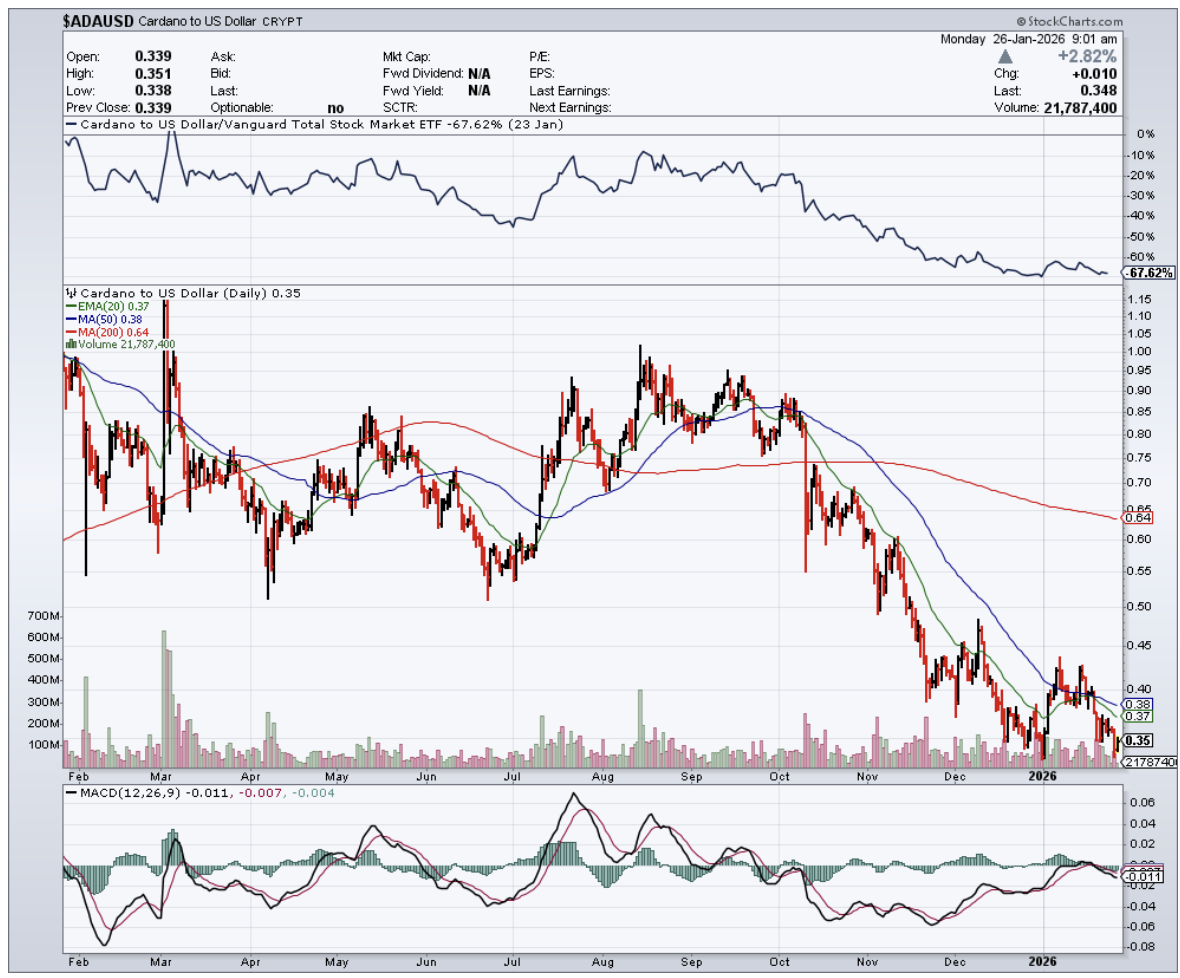
Assets such as Ethereum, Solana, and Cardano have each experienced phases of outsized growth across multiple market cycles, alongside many smaller projects that have captured speculative and developmental interest.

This breadth reflects a market that has expanded beyond a single-asset thesis.

Bitcoin has begun to exhibit characteristics of a more mature asset, even while remaining volatile by traditional standards.

At the same time, much of the altcoin market remains earlier in its development curve, where experimentation, speculation, and rapid growth are more common.

As a result, capital that once flowed almost exclusively into Bitcoin increasingly disperses across a wider set of digital assets, particularly those perceived to offer higher upside at earlier stages.

A few years ago, broad-based participation across dozens of crypto assets would have seemed implausible.

The expansion of liquidity beyond Bitcoin reflects both increased risk tolerance and a growing belief that multiple blockchain networks can coexist with differentiated use cases.

That dispersion does not weaken Bitcoin’s role, but it does change how capital cycles through the ecosystem.

Macro conditions also continue to influence crypto markets.

Strength in the US dollar and shifts in global liquidity have periodically pressured risk assets, including digital currencies. While Bitcoin is often framed as an alternative monetary asset, it still competes for capital within the same global financial system.

During periods of dollar strength or tightening financial conditions, it is common for investors to reduce exposure, lock in gains, or rebalance toward perceived safety.

Currency volatility in emerging and developed markets alike has reinforced this dynamic, reminding investors that crypto does not exist in isolation from global macro forces.

Another recurring source of market anxiety has been the distribution of long-dormant bitcoin holdings from early industry failures.

The long-running resolution of the Mt. Gox bankruptcy has periodically resurfaced as a sentiment overhang, driven by concerns that large distributions could temporarily pressure prices.

Historically, however, such events have tended to influence short-term behavior rather than long-term market structure.

Even when additional supply enters the market, it does not alter Bitcoin’s fixed issuance schedule or long-term scarcity.

If selling pressure emerges, it typically delays recovery rather than defining a new secular trend.

Despite these intermittent headwinds, the broader direction of crypto adoption has remained constructive.

Bitcoin continues to attract institutional interest, corporate balance-sheet allocation, and sovereign-level experimentation, while alternative networks push forward with development, scaling, and application design.

That combination has reinforced the idea that crypto markets are no longer driven by a single narrative or participant class.

Breadth across assets, use cases, and geographies has become one of the defining characteristics of the ecosystem.

Volatility remains, cycles persist, and corrections are unavoidable.

But the widening participation across digital assets suggests that crypto has moved beyond its earliest phase, even if it remains far from mature.

That breadth continues to be one of the strongest signals underpinning the asset class.


https://madhedgefundtrader.com/wp-content/uploads/2019/05/cropped-mad-hedge-logo-transparent-192x192_f9578834168ba24df3eb53916a12c882.png 0 0 Mad Hedge Fund Trader https://madhedgefundtrader.com/wp-content/uploads/2019/05/cropped-mad-hedge-logo-transparent-192x192_f9578834168ba24df3eb53916a12c882.png Mad Hedge Fund Trader2026-01-26 13:08:442026-02-05 13:54:59The Strong Breadth of Crypto
Mad Hedge Fund Trader

A Levered Bet on Bitcoin

Bitcoin Letter

Like gold and gold miners, bitcoin miners are also a levered play on the price of bitcoin.

In layman’s terms, when the price of bitcoin goes up, the miners go up more.

The largest-scale Bitcoin miner in the US is Marathon Digital Holdings (MARA), and readers should take notice.

The stock is up over 1,100% in the past 365 days as the miner has ridden the elevator up with the price of Bitcoin.

Marathon has legs and doesn’t live in fear of them if you are a believer of Bitcoin like I am.

Deploying resources in this stock has some weight, especially after we received a 27% discount when the stock dropped after they announced a $650 million convertible senior notes offering to fund their purchases of additional Bitcoin miners.

Almost as important, they disclosed a Securities and Exchange Commission (SEC) subpoena that requested documents related to its data center contracts in Hardin, Montana.

Last year, Marathon reorganized itself as a Bitcoin mining company and placed a long-term order for more than 100,000 high-end ASIC miners from Bitmain.

At the end of 2020, Marathon only held 126 Bitcoins. But in March, it purchased an additional 4,813 Bitcoins for $150 million at an average price of $31,168.

This brilliant move in hindsight means they are playing with house money now.

Marathon operated 27,280 miners at the end of October, and it expects to expand its fleet to 133,000 miners by mid-2022.

But those miners cost more than $10,000 per unit each, and Marathon expects to remain unprofitable as it takes on more debt to fund those purchases.

Last year, Marathon only generated $4.4 million in revenue and posted a net loss of $10.4 million.

Marathon's $650 million senior convertible debt offering gives a chance for the company to grow out of its loss-making model.

It’s hard to run away from the exorbitant costs to expand its mining fleet, but once the scale is realized, it will be able to focus on earnings growth.

As for the SEC subpoena, it's related to Marathon's deals with Beowulf Energy and other parties to build a data center in Hardin last October.

In particular, the agency is investigating Marathon's issuance of six million shares of restricted common stock to fund those deals and might trigger problems for Marathon, since it relies on Beowulf's lower energy prices to mine Bitcoin at cost-efficient rates.

Even if something were to come from this, I doubt it will be a deal-breaker and maybe even a possible fine.

The silver lining is that Bitcoin must drop significantly for Marathon to become unprofitable.

They are doing everything they can to scale their business as fast as possible.

Taking on more leverage to corner the bitcoin miner supply market is scary for some people, but after the pandemic, much of this activity is normalized.

After factoring in energy and hosting costs, the breakeven rate on Bitcoin for Marathon is around $6,500.

Even though the company is levered, they are insulated by its unit economics.

Certainly, it’s expensive to scale in a fragmented market, and it’s not a guarantee that energy costs will be advantageous for Marathon in the long term.

As many have read, there are various breakdowns in the global energy market that could reverberate on Marathon’s balance sheet even if not yet.

The breakeven estimate serves as a reminder of how this is just a numbers game, and reducing the cost of energy makes it almost unfair to compete against.

Daily miner revenue is hovering near record highs, and Marathon has among the lowest mining costs per coin.

The stock has iron-clad support around $37, and I would be buying MARA stock incrementally all the way down to $37 if we ever get there.

I have a hunch that we will never dip below the low $40s.


https://www.madhedgefundtrader.com/wp-content/uploads/2021/11/bitcoin-mining.png 410 936 Mad Hedge Fund Trader https://madhedgefundtrader.com/wp-content/uploads/2019/05/cropped-mad-hedge-logo-transparent-192x192_f9578834168ba24df3eb53916a12c882.png Mad Hedge Fund Trader2026-01-26 13:06:152026-02-02 11:20:41A Levered Bet on Bitcoin
Mad Hedge Fund Trader

Traders Take Taproot Profits

Bitcoin Letter

Bitcoin operates with Taproot, a protocol upgrade that refined how transactions and spending conditions are expressed on the network.

At a technical level, the change is best understood as a structural improvement rather than a headline event, as protocol refinements tend to quietly enhance efficiency and transaction handling over time.

At the investor level, major upgrades often function as liquidity events. Market participants tend to accumulate bitcoin into periods of anticipation and rebalance positions once the change is fully absorbed, removing the speculative premium attached to the upgrade itself.

Removing that anticipation can weigh on short-term price behavior, but it does no damage to Bitcoin’s long-term value narrative.

Taproot’s core cryptographic improvement is the adoption of Schnorr signatures.

These signatures improve transaction security, efficiency, and data handling.

Most importantly, the upgrade expands Bitcoin’s ability to express more complex spending conditions directly on-chain.

A critical change enabled by Taproot is the broader use of conditional transaction logic that resembles smart contracts.

Smart contracts are digital agreements written in code and enforced by the blockchain.

They are essential in powering decentralized finance applications and tokenized digital assets on programmable blockchains.

Compared to Ethereum, Bitcoin has historically been far more constrained in accommodating smart contracts by design.

Taproot does not change that design philosophy, but it allows Bitcoin to support a wider range of constrained contract structures.

Taprooted Bitcoin also improves privacy by allowing multi-signature transactions, or transactions involving multiple conditions, to appear on-chain as standard single-signature transactions.

Multi-signature transactions are commonly used in custody arrangements, payment channels, and advanced contract constructions.

As a result, these transactions become indistinguishable from simple transfers, improving fungibility and reducing information leakage.

Schnorr signatures also limit the amount of data required for these transactions, which are more complex to process than standard ones.

With less data involved, transactions become more resource-efficient in both verification and block space usage.

Consequently, transactions can be processed more efficiently, supporting lower average fees during periods of normal network activity.

Taproot makes Bitcoin a more efficient and flexible settlement network while preserving its conservative security model.

The last major protocol upgrade cycle, beginning in 201,7 enabled layered scaling solutions that facilitate faster and cheaper payments without altering the base layer.

Those developments helped expand Bitcoin’s utility while maintaining its role as a secure settlement network.

Adoption of new protocol features occurs gradually, and Taproot’s practical usage has increased steadily rather than immediately.

At a broader level, Bitcoin remains in an evolutionary phase, but its development path has been consistent since its inception.

Making Bitcoin more accommodating for developers building constrained, security-focused applications clarifies its role alongside other blockchain ecosystems rather than positioning it as a direct replacement.

On the negative side of the ledger, the limitations of Taproot are primarily structural.

Taproot does not transform Bitcoin into a generalized application platform, and expectations that it would do so were misplaced.

It also remains uncertain how some higher-level application designs will mature, as adoption depends on wallet support, tooling, and layered infrastructure.

Not all upgrades are immediately reflected in user-facing changes, and some benefits take time to surface.

In a broader competitive landscape, digital assets continue to pursue different approaches to payments, settlement, and virtual economies.

Protocol upgrades like Taproot are necessary to ensure that foundational networks remain efficient, secure, and adaptable.

The ability to build layered applications on top of a stable monetary base remains central to Bitcoin’s long-term thesis.

That future continues to develop incrementally rather than dramatically.

Taproot represents another step in that direction, strengthening Bitcoin’s technical foundation while leaving its core identity unchanged.


https://www.madhedgefundtrader.com/wp-content/uploads/2021/11/btc.png 576 936 Mad Hedge Fund Trader https://madhedgefundtrader.com/wp-content/uploads/2019/05/cropped-mad-hedge-logo-transparent-192x192_f9578834168ba24df3eb53916a12c882.png Mad Hedge Fund Trader2026-01-26 13:02:092026-01-29 12:50:09Traders Take Taproot Profits
Mad Hedge Fund Trader

Bitcoin Hoarders Aren't Selling

Bitcoin Letter

Bitcoin lately has been resting, and the good thing is, it hasn’t been overly choppy.

After reaching prior cycle highs, it retraced into a broad consolidation range that reflects digestion rather than exhaustion, and that is a sign of things to come.

We are well past the era of large-scale asset purchase programs, and many outsiders expected the transition away from ultra-loose monetary policy to be disorderly.

That has not been the case.

Orderly normalization matters for an inherently volatile asset like Bitcoin, and so far, that is largely what markets have experienced.

Inflation readings have established a clear upper bound relative to earlier peaks, and as subsequent data settled into a lower but still elevated range, Bitcoin’s long-term narrative remained intact rather than impaired.

As the price of Bitcoin has persistently maintained levels well above prior-cycle ranges, the talking heads and diva hedge fund managers have largely stopped questioning its legitimacy.

It’s about time.

That shift represents a meaningful validation milestone for the asset class.

At a broader level, the Federal Reserve remains constrained.

Each policy path carries trade-offs, and most of them are structurally favorable to scarce, non-sovereign assets. The primary risk remains a loss of confidence driven by uncontrolled inflation, which would destabilize the U.S. dollar itself.

Conversely, periods of renewed liquidity support or slower-than-expected tightening continue to reinforce Bitcoin’s role as a hedge against monetary debasement.

Inflation ultimately proved more persistent than initially described, and that persistence has gradually eroded confidence in central banks’ ability to fine-tune outcomes. That erosion continues to benefit Bitcoin’s positioning as a long-duration alternative asset.

Liquidity-driven moves in Bitcoin have increasingly followed a familiar pattern of anticipation followed by consolidation rather than violent reversals.

High inflation surprises that once would have caused panic selling now tend to reinforce Bitcoin’s perceived store-of-value characteristics over longer horizons.

Sometimes markets still need to take one step back to move two steps forward.

Risk-off reactions driven by currency strength and macro uncertainty continue to weigh on speculative assets in the short term, but those reactions have become more contained than in earlier cycles.

Doubts about inflation being temporary have long since faded, and the market has broadly accepted that a structural shift in the global economic backdrop is underway.

Another knock-on effect has been recurring concerns about stagnating growth paired with elevated inflation, a combination that complicates capital deployment across traditional assets.

That environment makes it psychologically harder for investors to commit aggressively to large alternative investments, including real estate, during periods of uncertainty.

This helps explain extended consolidation phases rather than decisive breakouts in either direction.

On a constructive note, the supply of bitcoin held on exchanges remains structurally lower than in prior cycles, suggesting a continued preference among investors to self-custody rather than keep coins readily available for sale.

That behavior aligns with a market in observation mode rather than distribution.

Long-term holders continue to represent a dominant share of total supply, and their reluctance to sell has become a defining feature of Bitcoin’s maturity.

Short-term consolidation phases have repeatedly given way to renewed trend moves once macro uncertainty clears or stabilizes.

At the household level, the case for holding Bitcoin has strengthened rather than weakened.

Living costs remain elevated across energy, housing, food, transportation, and other essentials, reinforcing awareness of currency debasement among everyday consumers.

Against that backdrop, Bitcoin continues to be viewed by many as a hedge against long-term monetary erosion rather than a short-term trading vehicle.

Interest-rate expectations now shift incrementally rather than violently, and markets have adapted to a world where higher rates do not automatically invalidate the Bitcoin thesis.

A measured approach to policy normalization has reduced the shock factor that once triggered sharp selloffs.

A move of this magnitude would have produced far deeper drawdowns in earlier years. Instead, Bitcoin has increasingly absorbed macro stress while maintaining structural support.

That resilience remains one of the strongest signals that Bitcoin has evolved beyond a purely speculative asset and into a durable component of the global financial landscape.


https://www.madhedgefundtrader.com/wp-content/uploads/2021/11/bitcoin-activity.png 740 898 Mad Hedge Fund Trader https://madhedgefundtrader.com/wp-content/uploads/2019/05/cropped-mad-hedge-logo-transparent-192x192_f9578834168ba24df3eb53916a12c882.png Mad Hedge Fund Trader2026-01-23 13:00:032026-01-23 13:01:09Bitcoin Hoarders Aren't Selling
Mad Hedge Fund Trader

Welcome the Concierge Banker to the Crypto Industry

Bitcoin Letter

If you want to insulate yourself from the daily gyrations of cryptocurrency but still gain exposure to the economic infrastructure that supports it, there is a clear historical lesson in the rise and collapse of Silvergate Capital Corporation (SICPQ).

You never needed to open a cold wallet or custody a digital asset to participate in what Silvergate represented. The company, through Silvergate Bank, operated as a regulated U.S. bank providing fiat services to cryptocurrency exchanges, brokers, and institutional investors. It held a full bank charter and positioned itself not as a speculative crypto participant, but as financial plumbing for the digital asset economy.

For several years, that positioning appeared durable. Digital assets embedded themselves into global markets, and demand for compliant fiat on-ramps and off-ramps expanded alongside them. Silvergate built its franchise around this demand, offering real-time U.S. dollar settlement between crypto exchanges and institutional counterparties through its proprietary payments network. As participation increased, liquidity clustered inside the system, reinforcing customer dependence and operational stickiness.

Deposit growth followed industry expansion. Institutional crypto firms maintained large, non-interest-bearing balances to support trading, custody, and settlement activity. Those deposits funded securities portfolios and lending activity tied to crypto markets, producing strong net interest income during periods of market stability. The model worked as long as confidence held and liquidity remained abundant.

The vulnerability emerged from concentration. Silvergate’s funding base was overwhelmingly composed of crypto-related deposits that were uninsured, institutional, and highly sensitive to market stress. When confidence in centralized crypto intermediaries weakened, deposit outflows accelerated. Meeting those withdrawals required selling securities into unfavorable market conditions, eroding capital, and compressing liquidity in a self-reinforcing cycle.

The bank’s exposure was compounded by leverage products secured by digital asset collateral. While structurally conservative by traditional banking standards, these products intensified balance sheet sensitivity during periods of volatility. The same mechanisms that once amplified growth compressed margins and capital when market conditions reversed.

Competition did not arrive in the form many anticipated. Large financial institutions such as JPMorgan Chase (JPM) and Morgan Stanley (MS) did not need to aggressively fund crypto markets to exert pressure. Their diversified funding, deep liquidity, and regulatory insulation allowed them to wait while specialists absorbed sector-specific risk.

At its peak, Silvergate serviced a broad network of crypto-native and institutional firms, including Binance.US, Coinbase (COIN), Fidelity Digital Assets, PayPal (PYPL), and CME Group (CME). These relationships reflected genuine demand for crypto-aligned banking infrastructure, but they did not immunize the institution from systemic liquidity risk.

Silvergate ultimately exited the banking system through voluntary liquidation, ending its role as a crypto-focused financial intermediary. The broader digital asset market persisted. Banking services reallocated. Infrastructure adapted.

As of 2026, the lesson is not that crypto banking lacks demand, but that demand alone does not confer durability. Financial institutions whose balance sheets are tightly coupled to a single volatile sector must manage liquidity, concentration, and confidence with exceptional discipline. When those elements fail to align, network effects reverse as efficiently as they once compounded.

Silvergate’s legacy now sits as a structural case study in how regulated finance intersects with digital asset markets, and where that intersection can fracture under stress.


https://www.madhedgefundtrader.com/wp-content/uploads/2021/11/deposits.png 518 936 Mad Hedge Fund Trader https://madhedgefundtrader.com/wp-content/uploads/2019/05/cropped-mad-hedge-logo-transparent-192x192_f9578834168ba24df3eb53916a12c882.png Mad Hedge Fund Trader2026-01-22 13:02:122026-02-20 12:57:37Welcome the Concierge Banker to the Crypto Industry
Page 2 of 36‹1234›»

Legal Disclaimer

There is a very high degree of risk involved in trading. Past results are not indicative of future returns. MadHedgeFundTrader.com and all individuals affiliated with this site assume no responsibilities for your trading and investment results. The indicators, strategies, columns, articles and all other features are for educational purposes only and should not be construed as investment advice. Information for futures trading observations are obtained from sources believed to be reliable, but we do not warrant its completeness or accuracy, or warrant any results from the use of the information. Your use of the trading observations is entirely at your own risk and it is your sole responsibility to evaluate the accuracy, completeness and usefulness of the information. You must assess the risk of any trade with your broker and make your own independent decisions regarding any securities mentioned herein. Affiliates of MadHedgeFundTrader.com may have a position or effect transactions in the securities described herein (or options thereon) and/or otherwise employ trading strategies that may be consistent or inconsistent with the provided strategies.

Copyright © 2026. Mad Hedge Fund Trader. All Rights Reserved. support@madhedgefundtrader.com
Scroll to top