

“Bitcoin is like anything else: it's worth what people are willing to pay for it.” – Said Hedge Fund Manager Stanley Druckenmiller


“Bitcoin is like anything else: it's worth what people are willing to pay for it.” – Said Hedge Fund Manager Stanley Druckenmiller
Mad Hedge Bitcoin Letter
September 14, 2021
Fiat Lux
Featured Trade:
(CRYPTO IS LEGIT)
(HOOD), (BTC), (FINRA), (SEC), (CFTC)
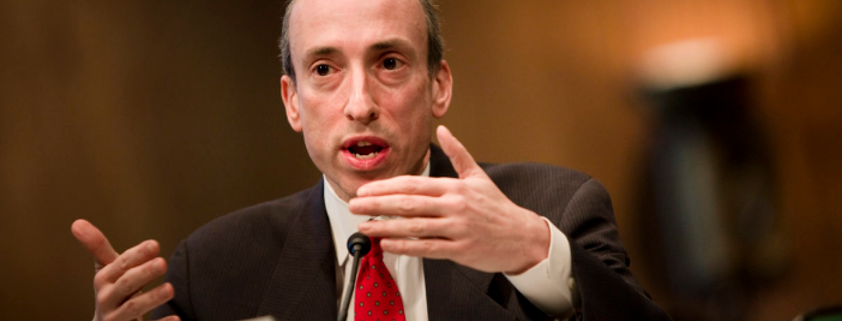
There was a fresh wave of optimism that swept across Washington when SEC Chair Paul Atkins spoke to Congress about making the United States a global hub for digital-asset innovation. Headlines painted him as the opposite of Gary Gensler - friendlier, more flexible, and eager to strike a “balanced” approach.
But anyone who has lived through a regulatory cycle knows better. The pendulum swings, but the incentives at the center never change.
Atkins now gestures to the Senate committee that overly harsh enforcement may have stifled innovation - and that perhaps it is time to bring crypto into a more cooperative regulatory framework. These developments suggest the industry has grown too large and systemically relevant to operate outside the official perimeter of federal oversight.
Don’t blame me for being cynical, but whether the rhetoric is friendly or hostile, boiling this down to money and power still cuts through many adjacent industries.
It’s just the way of life.
Crypto has become lucrative, and every administration - no matter how innovation-forward their branding - still wants a slice of this golden goose.
Why do I say that?
The SEC’s core revenue mechanics have not changed. Every movement on regulated exchanges, from buying to selling, generates the fees that fuel its operations. The language used to justify them may evolve, but the incentive remains untouched.
Investing with retail brokerages is marketed as commission-free, now and forever. They do not charge fees to open or maintain accounts. Yet the fee structure underneath always finds its way back to the same place.
Self-regulatory organizations (SROs) such as the Financial Industry Regulatory Authority (FINRA) impose small fees for sell orders. These fees apply across brokerages. Firms pass them to customers, who indirectly fund regulatory bodies. FINRA is required by law to forward certain fees to the Securities and Exchange Commission.
The numbers shift with time, but the mechanism stays the same: fees ultimately cover the government’s cost of supervising markets and securities professionals.
There are numerous layers of cost embedded into participating on exchanges regulated by the SEC. The result is a well-oiled system of fee collection and institutional reinforcement.
So when Atkins offers his stamp of legitimacy to the crypto sector, the underlying exchange is simple: innovation-friendly messaging in return for bringing digital assets into the fee-generating ecosystem.
For lack of a better word, these fees allow regulators like FINRA and the SEC to rake in the cash, and as we know in this business, money is power.
I only see it as a matter of time before the SEC, FINRA, and Commodity Futures Trading Commission (CFTC) expand their reach further into crypto infrastructure - not just through enforcement, but through officially sanctioned pathways that look friendly on paper yet consolidate control.
And I’m not blaming them. Everyone is in the business of adding to their nest eggs, and the SEC, FINRA, and CFTC are no different.
However, ultimately this is what it’s about: a cash grab dressed up in innovation-forward language. The legitimization of crypto is merely the collateral benefit - one any asset class would be ecstatic to receive.
Take sports as an example. Football leagues scramble for the NFL’s approval, but the NFL rarely offers its blessing. They don’t care if college football and startup leagues battle it out away from the confines of professional football. The cost of lacking an NFL stamp of approval has been devastating for newcomers.
If the SEC once again vouches for large elements of the crypto ecosystem - this time through cooperative rulemaking under Atkins - this will start a chain reaction. It offers an olive branch to wealthy investors who have waited for a friendlier regulator.
Consequently, they would come pouring in, guns blazing, with the heft of their capital and the strength of their financial connections.
Atkins announcing that cryptocurrency exchanges may receive a clearer path to registration, as opposed to the adversarial gridlock of the Gensler era, makes this one step closer to reality.
During his early remarks, Atkins stated that recent regulatory battles left both investors and innovators without adequate clarity. His angle appears the inverse of Gensler’s warnings, but the subtext is the same: the SEC cannot effectively shape a market from which it remains partially excluded.
I want to remind readers that any SEC chair has the choice to allow crypto to operate in a vacuum, but doing so risks letting it grow too big to regulate - and too large to fold into traditional fee structures. They all know that.
Atkins highlights crypto as an asset class with enormous potential, yet one that requires consistent regulatory engagement.
The moral high ground is still shaky.
The SEC continues to permit the listing of foreign firms under structures that allow significant opacity, yet remains eager to frame crypto as the primary risk vector in modern markets.
Atkins acknowledges that Congress must ultimately define jurisdiction, just as Gensler once did. He may sound more cooperative, but the underlying tension is the same.
Regulation would be a huge win for the crypto universe, but it invariably infringes on the decentralized ideals that first drew people to digital assets.
Regulators love to preach about safety, but they preside over a system that endlessly erodes the purchasing power of fiat currency through policy choices far outside the crypto world.
Thus, does anyone sitting in the SEC chair truly believe that preserving the dollar’s value - or crypto’s future - is something they can call safe?

“Mortality is the single best invention in life.” – Said Co-Founder of Apple Steve Jobs

Mad Hedge Bitcoin Letter
September 9, 2021
Fiat Lux
Featured Trade:
(BEST WAY TO EARN PASSIVE INCOME IN CRYPTO)
(CELSIUS NETWORK), (BTC), (ETH), (SNX), (CEL), (LINK), (UNI), (AAVE)
So global yields are in the toilet today?
Savings accounts don’t do what they used to do, do they?
How about we try out a certificate of deposit (CD) to harvest some cash?
Are there simply no other interest-bearing vehicles one can park capital in and gain a healthy return?
I would say you are right, but then I would be the fool here and I am certainly not in that line of work. But there is an elixir to the anathema.
Enter the world of crypto-based yield, the place you end up when you realize the banks stopped trying years ago. There are no logos to worship and no slick pitches to fall for, only the tools that actually make your money move.
This is a landscape of financial mechanisms built on collateralized lending, decentralized liquidity pools, and blockchain driven demand, designed to offer yields traditional banks would not dare whisper about.
Back in the early 2020s, centralized crypto lenders promised stable, high-yield returns by lending digital assets to traders and institutions.
The model was clear on paper: depositors supplied assets, borrowers posted collateral, and interest payments cycled back to the depositors.
The appeal was obvious, too. Floating rates far above bank offerings, over-collateralized loans that ostensibly reduced default risk, and automated liquidation engines that protected lenders from sharp drawdowns.
But those years also revealed something deeper: crypto yield wasn’t magic; it was mechanics. And mechanics depend entirely on transparency.
Several major lenders that once rode parabolic growth arcs ultimately shut down or restructured following liquidity stress and market drawdowns.
These events carved a permanent lesson into the industry: when yields come from undisclosed leverage, black-box rehypothecation, or concentrated risk, the music eventually stops.
Today’s more mature landscape emphasizes mechanisms rather than miracles:
These systems function best when transparency is verifiable, incentives are aligned, and custody risks are minimized.
They fail when promised APYs float on wishful thinking, opaque balance sheets, or dependence on perpetual bull markets.
For years, the traditional banking business has conditioned us naive folk to accept steep fees and no yield earnings on holdings as the status quo.
I will tell you right now that it’s a load of garbage and nobody should accept these pitiful offers from dinosaur banks.
There is so much more out there that we can access now because of crypto.
But as of 2025, the responsible path isn’t chasing a single platform but understanding the underlying engine.
Evaluating any crypto yield opportunity now requires asking questions like:
You’re not dreaming, crypto yield does exist. But in 2025, the real deal isn’t a single star player but in an entire ecosystem’s hard-earned maturity.
Wake up to a clearer understanding of how crypto yield works, easily convertible into better financial decisions.
Participate not by trusting a brand name, but by understanding the mechanics that make the entire machine run.
If the early 2020s were defined by explosive growth and painful lessons, the mid-2020s are defined by something far more sustainable: clarity.
These days, crypto yield is no longer a deal of a lifetime but a financial primitive. And like any powerful tool, it rewards those who learn how to use it responsibly.

Mad Hedge Bitcoin Letter
September 7, 2021
Fiat Lux
Featured Trade:
(RECORD-BREAKING INFLOWS)
($BTCUSD), ($ETHUSD), (GLD)

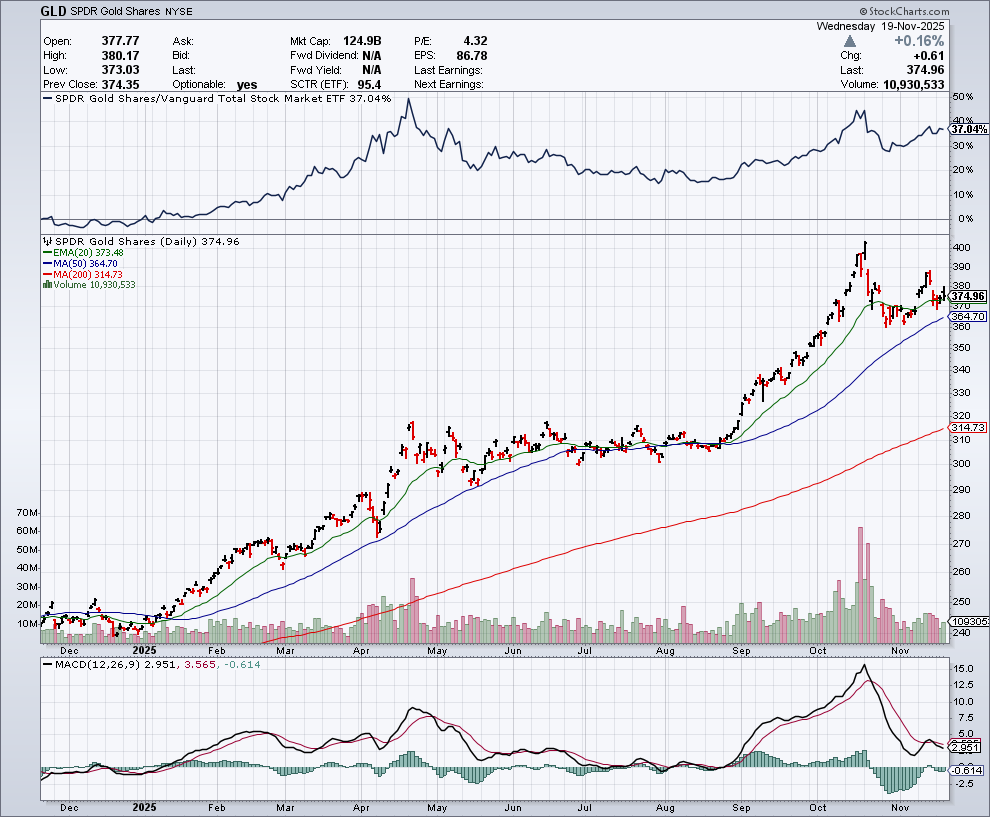
When an investor like John Paulson buys gold and throws shade on Bitcoin, you know they know that Bitcoin is in the process of disrupting gold and overtaking the store of value mantle.
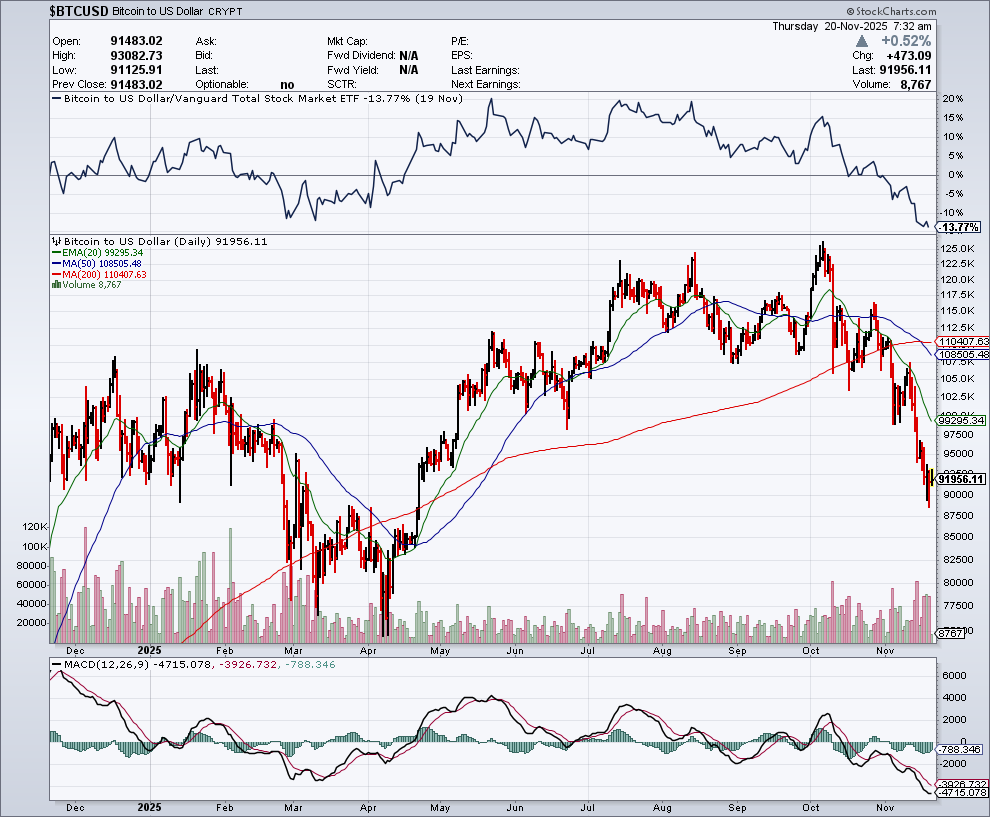
Paulson made his most famous anti-crypto comments back in 2021, claiming cryptocurrencies would eventually “go to zero.” Now that Bitcoin has surged above $125,000 in 2025, those remarks have aged about as well as unrefrigerated milk.
And now, just last week, Bitcoin did not breach $50,000 like it did in the early days. It powered through $120,000 and held it, showing the resilience of a wild mongoose that simply refuses to die.
At what lengths will the old guard go to downplay this legitimate asset class?
Hedge fund manager John Paulson made $20 billion predicting the downfall of the U.S. housing market in 2008. So when he predicted years ago that cryptocurrencies would “go to zero,” the question becomes whether he will look foolish if Bitcoin goes to $200,000.
Talk is talk, nothing more than that.
He said back in 2021, “Cryptocurrencies, regardless of where they are trading today, will eventually prove to be worthless. Once the exuberance wears off, or liquidity dries up, they will go to zero. I would not recommend anyone invest in cryptocurrencies.”
Bitcoin launched on January 3, 2009, and he spoke like he had no idea. So did he mean the “exuberance” had already been happening for 12 years at the time, and now 16 years later he is still waiting for it to wear off?
Despite Paulson’s less than ideal stance on crypto, he admitted even then that the short-term volatility of the digital asset made it too risky for him to short or place bets against.
Paulson continued to say, “Ultimately the price fluctuation has to do more with the relative supply of the coins.”
I would correct Paulson by noting that the supply situation is only one of many drivers of higher Bitcoin prices.
The more “experts” who chime in shouting down crypto assets, the worse they look, as new sets of millionaires and billionaires get minted daily.
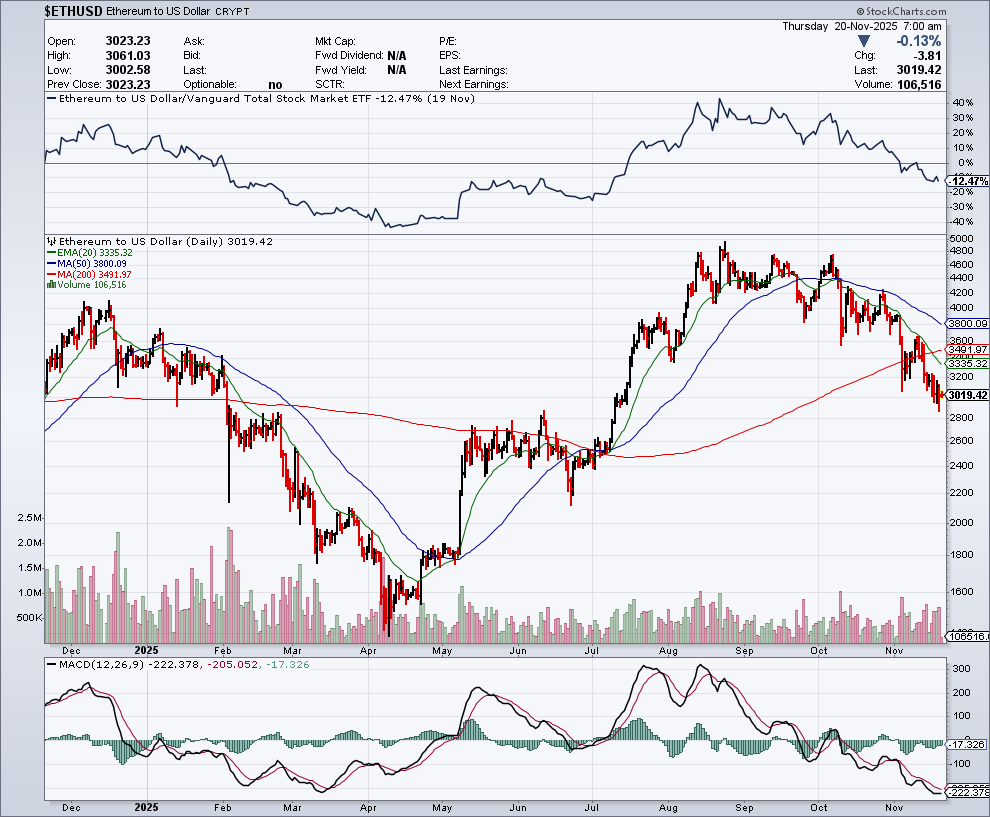
Retail buyers are thirsting for percentage growth while Bitcoin reigns supreme. It has relatively stable growth, while there is exponential growth happening in Ethereum.
That is what really hooks their eyeballs.
Paulson also neglected to say where retail traders could find yield in this world. He might even recommend loss-making gold trades since he has gotten it completely wrong for more than a decade now.
Paulson’s hard line against crypto stands in stark contrast to many of his hedge fund bros who have embraced Bitcoin and shelved their relentless criticism of it.
The biggest takeaway from Paulson is that he never deployed capital against Bitcoin, meaning he acknowledged that it could go up significantly from where it was back then, and he was scared to lose money by shorting the asset.
I would not advocate holding this asset until death, and even the early adopters trim their Bitcoin positions on huge spikes. This is prudent risk management.
Readers need to remember that these “pros” like Warren Buffet and Paulson missed the boat on Bitcoin, so they are incentivized to criticize the asset by delegitimizing its very existence.
This is a simple and garden variety manipulation tactic that is easy to call out.
Who knows, maybe in 10 years all the crypto trillionaires will start to peddle out the reverse theory that stocks and fixed income are not assets as well. I have seen crazier things in my life.
For some top trading shops, the volatility in the price of crypto is seen as a godsend in order to make a fortune from price arbitrage.
Steve Cohen’s Point72 Asset Management is working on launching crypto-focused trading funds. Israel Englander’s Millennium Management has begun trading crypto derivatives. Traders like Paul Tudor Jones and Alan Howard have also taken stakes in cryptocurrencies.
Including Paulson, all of these traders made fortunes betting on other asset classes. Therefore, it is really not certain if they have spent more than two seconds looking into what crypto is about.
Since then, the avalanche of data points has been snowballing at the right time. Bitcoin broke $125,000, gold’s market value hit roughly $30 trillion, and institutional adoption is at the highest level in Bitcoin’s history.
It has been in the price action that the gyrations of Bitcoin have been smoother lately, and we are not seeing 10 % drawdowns in a day like we did before.
The longer the price action shows continuity, the more investors will feel comfortable placing large amounts into different coins as well as the bellwether Bitcoin.
An avalanche of data points shows more efficacy, higher volume, and broad based adoption as Bitcoin now trades above $120,000.
Granted, it will not be the last time that crypto is talked down, but the problem is every time these guys do it, they look more out of touch by the day.
Paulson made his fortune betting against subprime mortgages at the peak of the 2007 credit bubble, and the evidence is out there that he simply does not understand cryptocurrencies. And that is ok, because after his great call on subprime housing, he rapidly lost a large amount launching a gold fund in 2009.
Since that year, crypto has revealed itself as a better alternative to physical gold, and Paulson simply does not like that. Paulson is hellbent on making this gold trade work. It almost seems like it is a fetish at this point.
People of that stature usually do not like being wrong and throw money at the problem until the variables and price turn in their favor.
But honestly, sour grapes because missing the crypto boat will not make the price of gold go up 10×, 100×, or 1,000×, and that is what crypto is about in the early innings of a 9 inning game.

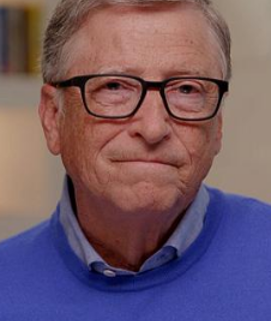
“Bitcoin is a technological tour de force.” – Said Co-Founder of Microsoft Bill Gates
Mad Hedge Bitcoin Letter
September 2, 2021
Fiat Lux
Featured Trade:
(THE TRUTH ABOUT CRYPTOCURRENCIES AS AN ASSET CLASS)
(BLOK), (MSTR), (HUT)