When John identifies a strategic exit point, he will send you an alert with specific trade information as to what security to sell, when to sell it, and at what price. Most often, it will be to TAKE PROFITS, but, on rare occasions, it will be to exercise a STOP LOSS at a predetermined price to adhere to strict risk management discipline.Read more
https://www.madhedgefundtrader.com/wp-content/uploads/2016/02/Alert-e1457452190575.jpg135150april@madhedgefundtrader.comhttps://madhedgefundtrader.com/wp-content/uploads/2019/05/cropped-mad-hedge-logo-transparent-192x192_f9578834168ba24df3eb53916a12c882.pngapril@madhedgefundtrader.com2024-04-16 10:05:062024-04-16 10:05:06Trade Alert - (TSLA) April 16, 2024 - STOP LOSS - SELL
Investing trends come and go faster than your wives or girlfriends can change their minds about dinner plans. But every once in a while, a trend comes along that's got some serious staying power. I'm talking about the kind of trend that makes investors filthy rich and leaves the rest of us kicking ourselves for not jumping on the bandwagon sooner.
Just look at the cloud computing craze. Amazon (AMZN), Microsoft (MSFT), and Google (GOOGL) have been raking in the dough with their fancy cloud services, to the tune of $64 billion in just the last quarter.
But before the cloud, it was the internet that had everyone buzzing. And let's not forget about the automobile – that baby dominated the 20th century like a boss. The common thread? Efficiency and practicality. We humans just can't resist anything that makes our lives easier and more productive.
And that brings us to the latest and greatest enduring trend: artificial intelligence (AI).
Now, I know you're probably thinking, "Hey, isn't everyone and their mother investing in AI these days?" And you'd be right.
But here's the thing – not all AI stocks are created equal. You need to be smart about where you put your money, or you'll end up with a portfolio full of duds.
As the legendary investor Peter Lynch once said, "Know what you own and why you own it." In other words, before you jump on the AI bandwagon, make sure you understand the companies you're investing in and the reasons behind their potential for success.
It's not just about chasing the hottest trends or getting caught up in the hype. It's about doing your due diligence, looking under the hood, and identifying the businesses with the right ingredients for long-term growth and profitability.
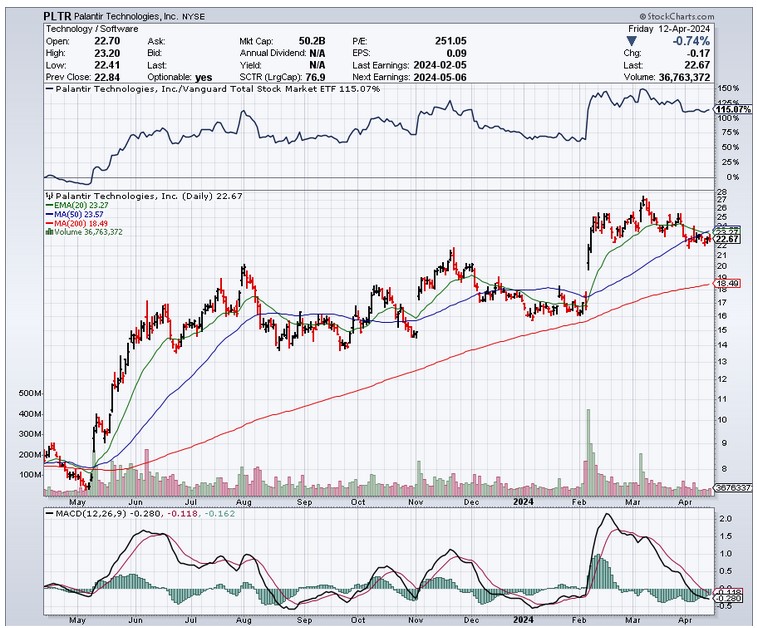
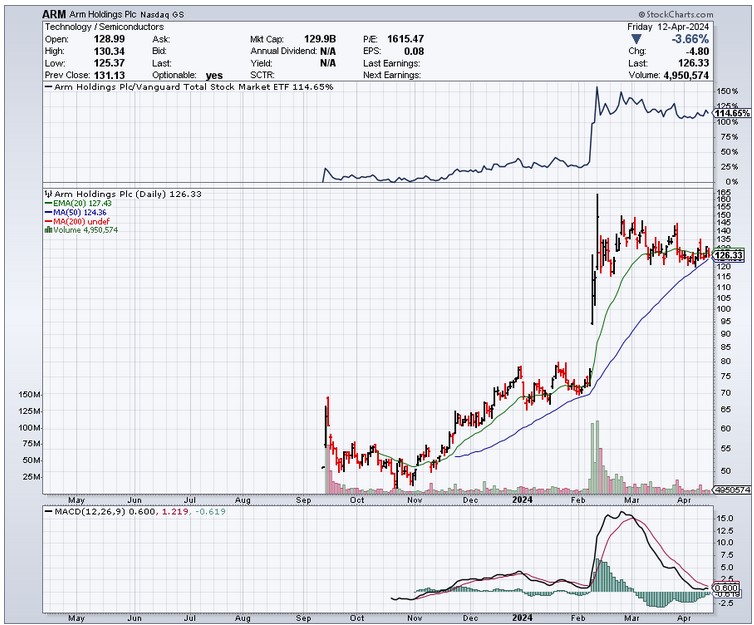
And that's exactly why I'm excited about companies like Palantir Technologies (PLTR) and Arm Holdings (ARM). These aren't just any old AI stocks – they're well-established players with unique strengths and a proven ability to innovate and execute in this fast-moving field.
Let's start with Palantir. Now, I know their stock might seem a bit pricey, but trust me, they're proving the naysayers wrong.
The knock on Palantir was that they couldn't turn a profit to save their lives. Well, guess what? They just reported their fifth straight profitable quarter. And don't even get me started on their commercial business – it's growing like a weed on steroids.
At its core, Palantir's software is all about helping businesses and governments make sense of their data. It's like having a super-smart assistant who can crunch numbers, spot patterns, and give you the insights you need to make better decisions. And with their new Artificial Intelligence Platform (AIP), they're taking things to a whole new level.
Next, let's talk about Arm Holdings.
Back in 2020, Nvidia (NVDA) was so hot to trot for Arm Holdings back, to the tune of $40 billion. Do you know why? It's simple, really – Arm is the backbone of the semiconductor industry, and without them, the AI revolution would be running on fumes.
You see, for AI to work its magic, you need some seriously powerful chips that can crunch through massive amounts of data at breakneck speeds, all while sipping power like a Tesla (TSLA). And that's where Arm comes in.
But, here's the thing – Arm doesn't actually make the chips themselves. They're more like the brains behind the operation, designing the blueprints (or "architecture," as they like to call it) that other companies use to bring these high-tech wonders to life.
And every time someone uses an Arm design, ka-ching! Arm gets a nice little payday in the form of royalties and license fees.
In fact, 99% of smartphones out there already have Arm's technology inside. That's right, you're probably using Arm's tech every single day without even realizing it.
We're talking about a massive market here. To date, a whopping $280 billion worth of chips built on Arm's designs have been shipped worldwide. That's a lot of zeros, and it just goes to show how critical Arm is to the future of AI and the semiconductor industry as a whole.
And with the AI race heating up, demand for Arm's designs is going through the roof. Their revenue might not be mind-blowing yet, but the backlog of orders tells a different story – it's up a whopping 38% to $2.4 billion.
Now, I know what you're thinking – these stocks aren't exactly cheap. But, the reality is, sometimes you've got to pay up for quality. And when it comes to AI, Palantir and Arm Holdings are the cream of the crop.
My advice? Don't go all-in on one stock. Spread your bets, buy a little at a time, and be ready to pounce when the market gives you a discount. AI is the future, and these two companies are leading the charge.
https://madhedgefundtrader.com/wp-content/uploads/2019/05/cropped-mad-hedge-logo-transparent-192x192_f9578834168ba24df3eb53916a12c882.png00Douglas Davenporthttps://madhedgefundtrader.com/wp-content/uploads/2019/05/cropped-mad-hedge-logo-transparent-192x192_f9578834168ba24df3eb53916a12c882.pngDouglas Davenport2024-04-15 16:55:142024-04-15 16:55:14THE BRAINS AND BRAWN OF THE AI BOOM
Apple, the titan of consumer technology renowned for its sleek designs and user-friendly experiences, is poised to embark on a groundbreaking transformation of its Mac lineup. Recent reports and industry insights strongly indicate that Apple is gearing up to inject potent artificial intelligence (AI) capabilities into the very heart of its future Macs. This strategic shift promises to elevate Macs beyond mere computing devices, transforming them into intelligent companions that proactively assist, enhance, and streamline users' workflows and creative endeavors.
The AI Imperative
Apple's commitment to AI integration comes at a pivotal moment in technological evolution. AI is rapidly permeating virtually every aspect of our digital lives. From sophisticated language models like ChatGPT to image-generating AIs like DALL-E 2, these technologies are reshaping how we interact with computers.
In the personal computer market, Apple's key rivals, Microsoft and Google, have been aggressively investing in AI. Microsoft's partnership with OpenAI has opened doors to weaving AI into core Office applications and the Windows operating system. Google, the undisputed leader in AI research, has been infusing AI into its Chromebooks and cloud-based services for years. Recognizing this intensifying AI competition, Apple is strategically positioning itself to not only keep pace but to potentially redefine the AI-powered computer paradigm.
Custom-Designed AI Silicon: The M4 Chip
At the core of Apple's AI-focused Mac revolution, whispers suggest the development of a new generation of in-house processors: the M4 chip. Building upon the remarkable success of its M-series chips, which prioritized power and energy efficiency, the M4 is set to distinguish itself further with specialized AI processing power.
Rumors point towards multiple iterations of the M4 chip tailored for different Mac models. The entry-level "Donan" version is speculated to grace the MacBook Air and a new low-end Mac mini, while the more powerful "Brava" could power high-end MacBook Pros and a premium Mac mini variant. An even more potent version, potentially named “Hidra”, might unleash its AI prowess in specialized, high-performance applications.
This multi-tiered approach suggests Apple's keen awareness that a one-size-fits-all solution won't suffice in the diverse world of AI. By offering variations of the M4, Apple aims to strike a balance between delivering powerful AI features for demanding professionals and ensuring mainstream consumer devices remain accessible and energy-efficient.
AI in Action: Speculated Potential Applications
While the specific applications of AI in the new Macs remain a subject of intense speculation, informed analysis provides fascinating glimpses into the possibilities:
Intelligent Automation: The Macs of the future could learn user patterns and anticipate actions. Routine tasks like scheduling appointments, organizing files, or responding to predictable emails might be seamlessly automated, freeing up valuable time and focus.
Enhanced Image and Video Editing: Imagine AI algorithms in photo and video editing software that intelligently suggest adjustments, remove blemishes, or generate alternative compositions within seconds. Creative professionals could experience unprecedented workflow acceleration.
AI-Powered Coding: Software development could see substantial productivity gains with Macs suggesting code snippets, identifying potential bugs, or even autonomously writing basic functions based on natural language descriptions from the developer.
Supercharged Search: System-wide search functionality could be elevated to new heights. The AI-powered Macs might understand the context of queries, locate relevant files even if not explicitly named, and provide summarized answers drawn from multiple sources.
Adaptive User Interface: Macs might dynamically adapt the interface to individual user needs. Infrequently used icons could fade out, critical tools could gain prominence based on workflow, and notifications could be filtered with unmatched accuracy.
Personalized Security: AI could underpin enhanced security systems. Macs might masterfully detect anomalous behavior patterns, identify potential threats before they materialize, and proactively suggest countermeasures with greater reliability than traditional rule-based systems.
Beyond the Hardware: Integration with macOS
The true magic of Apple's AI strategy lies not solely in the M4 chip but in its deep integration with macOS, Apple's desktop operating system. Apple is expected to introduce substantial new AI-focused features and frameworks at its annual Worldwide Developers Conference (WWDC) in June.
Siri's Evolution: From Assistant to Intelligent Agent While Siri has long been a staple on Apple devices, the transition to powerful on-device AI could herald its transformation into a knowledgeable agent. Imagine a Siri that not only responds to basic commands but actively engages with the context of your work. It could summarize complex documents upon request, provide insights from research papers, or even serve as a brainstorming partner while generating creative ideas.
The Emergence of Apple GPT? Speculation is rife about a potential contender to the now-famous ChatGPT – Apple's large language model (LLM), tentatively dubbed "Apple GPT." While Apple is notoriously secretive about in-development projects, the company's commitment to AI and sizable investments in the field make this a distinct possibility. An Apple GPT could be seamlessly woven into the fabric of macOS, bringing unparalleled natural language understanding to a multitude of tasks:
Conversational Email: Apple GPT could empower your email application to draft nuanced replies, provide summaries, and even translate messages across languages in real time.
Intelligent Writing: Writing tools could offer a quantum leap in sophistication – suggesting stylistic improvements, identifying biases, ensuring consistency, and even generating entire passages based on supplied prompts.
Universal Search with Insights: Imagine searching your Mac or files and receiving not just lists of matching documents but curated answers and insights fueled by a powerful language model.
Challenges and Considerations
As with any cutting-edge technological endeavor, Apple's AI transformation will undoubtedly face challenges:
Computing Power vs. Energy Efficiency: Power-hungry AI algorithms can strain battery life, a key selling point of MacBooks. Apple will need to find innovative solutions to balance processing demands with its commitment to energy efficiency.
Data Privacy: Apple's reputation for strong data privacy policies is a point of distinction. Integrating widespread AI into Macs will require careful design to ensure the secure and ethical use of potentially sensitive information gleaned from user behavior.
The Human Factor: Reliance on AI-powered automation carries the risk of reducing human control and critical thinking skills over time. Apple will need to find a way to harness AI for enhancement without leading to digital complacency.
Apple's Long-Term AI Vision
While the immediate focus is on the next generation of Macs, Apple's AI ambitions likely extend far beyond. The advancements achieved in building AI-centric silicon and software for computers will inevitably find their applications across Apple's broader ecosystem.
One could envision:
Enhanced iPhone Experiences: iPhones could boast AI features that surpass those on the Macs, thanks to their always-connected nature and rich array of sensors.
Smarter Home Devices: Apple's HomePod and future smart home products might gain unmatched intelligence in contextual understanding, enabling them to anticipate needs and proactively offer solutions.
The Rise of Wearable AI: Apple Watches and potential future augmented reality glasses could benefit from potent AI, providing real-time insights, health monitoring, and immersive interactions like never before.
The AI-Powered Mac: A Catalyst for Transformation
The advent of AI-driven Macs promises to transform the personal computer as we know it. With its emphasis on design and seamless user experiences, Apple is uniquely positioned to usher in an era of intelligent computing. While the full extent of AI's integration into the Mac remains to be seen, one thing is clear: the future of computing is set to become a whole lot smarter.
Ah, the burning question on every savvy investor's mind: What's catapulting the stock market to such dizzying heights? Look no further than artificial intelligence (AI).
It's the secret sauce, the magic ingredient, the... well, you get the picture.
The current euphoria in the stock market owes a considerable debt to the AI revolution sweeping through industries far and wide.
Enter the "Magnificent Seven" – Microsoft (MSFT), Amazon (AMZN), Nvidia (NVDA), Meta Platforms (META), Apple (AAPL), Alphabet (GOOGL), and Tesla (TSLA). These stocks are leading the charge in the AI revolution.
Yet, lurking in the shadows, beyond this illustrious ensemble, is a behemoth not often sung in the AI choruses.
Valued at a staggering $496 billion, this giant is weaving AI into its fabric in ways not immediately apparent to the untrained eye.
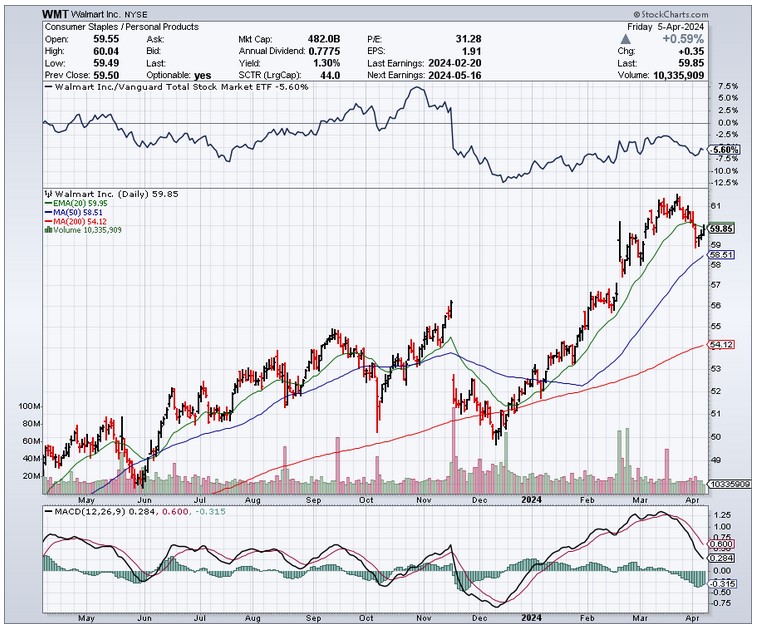
Cue the drumroll for Walmart (WMT), the unlikely AI contender.
Now, before you cry foul, claiming Walmart is anything but an AI pioneer. The reality is far more nuanced and, dare I say, fascinating.
Long before ChatGPT became a household name, sparking an inferno of interest in large language models, Walmart was quietly laying its AI foundations. The retail titan has been leveraging AI to fine-tune its supply chain, ensuring that sales demand predictions are spot-on and its fulfillment centers are models of high-tech efficiency.
But wait, there's more. Walmart has recently embraced generative AI, adding an advanced layer to its online shopping experience.
Imagine typing, "Help me gather supplies for a new baby," and voilà, you're presented with a curated list of everything you need, courtesy of Walmart's generative AI shopping assistant.
Impressive, right?
Moreover, Walmart's customer service has been revolutionized by AI, with chatbots equipped with natural language understanding capabilities addressing millions of customer queries since 2020, significantly reducing the need for human intervention.
The retailer's "Ask Sam" voice assistant further aids employees in locating products, checking prices, and more, all with a simple voice command.
The clincher? Walmart is not just utilizing AI internally; it's commercializing its AI route optimization technology, offering other businesses a slice of its AI pie. This technology promises to streamline driving routes, ensure trailers are packed efficiently, and minimize miles traveled.
The question then begs, what do you call a company that develops and markets its own AI technology? An unequivocal AI stock, in my book.
While Walmart may not rub shoulders with the "Magnificent Seven," its splendor lies elsewhere. With a revenue haul of $648 billion last year, Walmart outpaced all members of this elite group, showcasing its sheer scale and financial muscle.
Admittedly, Walmart's profit margins don't quite match up to those of its mega-cap growth stock counterparts, but it still outperformed Tesla in terms of profits in 2023.
And how has Walmart's stock fared, you ask? With a rally of over 30% in the past year, it has left behemoths like Tesla and Apple in its wake, making a compelling case for its financial robustness.
Even when it comes to valuation, Walmart presents a more tempting proposition than most of the "Magnificent Seven," trading at 26 times forward earnings, a bargain in comparison to the lofty valuations of Amazon, Apple, Microsoft, Nvidia, and Tesla.
So, is Walmart the AI stock you should be betting on?
If you're looking for a quick trip down the stock market aisle, Walmart might not be the flashiest pick. But for marathon investors with an eye on long-term value, Walmart deserves a spot on your shopping list.
Walmart isn't just a staple in the ever-expanding grocery list of AI investments; it's a key ingredient driving the future of retail and beyond. For those looking to check out the future, Walmart offers a unique blend of innovation, stability, and long-term growth potential that's worth adding to your cart.
https://madhedgefundtrader.com/wp-content/uploads/2019/05/cropped-mad-hedge-logo-transparent-192x192_f9578834168ba24df3eb53916a12c882.png00Douglas Davenporthttps://madhedgefundtrader.com/wp-content/uploads/2019/05/cropped-mad-hedge-logo-transparent-192x192_f9578834168ba24df3eb53916a12c882.pngDouglas Davenport2024-04-10 15:53:102024-04-10 15:53:10CHECKOUT THE FUTURE
Silicon Valley's buzzing with all things AI these days, but hold on a sec – venture capitalists are keeping their checkbooks under lock and key. This quarter, they tossed $36.6 billion at startups, which sounds like a lot of cash. But here's the shocker: that's a near 30% dive compared to last year.
Remember, 2023 was already a funding desert for startups, and it seems 2024 might be even tougher. So, what's going on here?
Well, the economy's a dumpster fire right now, leading investors to get cold feet about IPOs. Everyone's counting their pennies like we're back in the Depression Era. Even those venture capitalists are guarding their cash like it's gold bullion.
With stubborn inflation hanging around like a bad smell, a recession seems more likely than a Tesla (TSLA) stock split.
It's a rough climate for companies across the board – from old-timers like DocuSign (DOCU), who are probably kicking themselves for not selling out during the boom, to those crypto enthusiasts at Coinbase (COIN)...let's just say the party's winding down.
Meanwhile, those lucky founders, the ones who cashed out before everything went south, are hunkering down like they're preparing for a blizzard. No way they're going back for more investment right now – those valuations are going to be brutal.
In fact, companies like Robinhood (HOOD), the guys who cater to those meme-stock-loving investors, are probably feeling the heat as the cash dries up. This is definitely not a great time to be in that business.
But hey, they're not alone – the entire startup world is feeling the squeeze. In fact, things aren't just tough, they're downright catastrophic. It's like we're all on the Titanic, and the band just keeps playing.
Sure, Reddit (RDDT) and a few others (who even are Astera Labs (ALAB)?) barely got their lifeboats launched, but the rest of the year is looking grimmer than a Silicon Valley winter. Honestly, I can count the potential IPOs on two hands. It makes sense – those venture firms haven't seen a decent payout in ages. Nobody's throwing good money after bad in this climate
But hold on, there's a flicker of hope.
Global venture funding isn't a total disaster zone – yet. While the numbers look similar to last year, that $96 billion went to wayyyy fewer companies.
There's a clear divide happening: those hot AI startups are swimming in cash, while the rest are scrambling for change just to stay afloat.
The startup world might be on life support, but AI companies are living their best lives. Just ask Cohere – those guys scored a mind-blowing $5 billion. Their insane funding round proves that investors are going all-in on AI, even as they slam the brakes on everything else.
Cohere's success isn't a fluke. Tons of AI startups are pulling in major funding.
Anthropic scored a cool $580 million in 2023, with big names like Spark Capital and Google Ventures backing them. That put their valuation at a sweet $4.1 billion – not bad for an AI startup.
Adept AI Labs, the ones focused on AI that can learn on the fly, landed $350 million in early 2024, led by Sequoia Capital. Those Andreessen Horowitz guys are in on the action, too.
Meanwhile, fancy language processing is Inflection AI's game, and they convinced investors to toss them $225 million in late 2023. Tiger Global Management clearly thinks they're onto something big.
As for healthcare + AI? That's a recipe for serious cash. Hearth.AI pulled in $180 million in 2024 – Khosla Ventures is leading the charge, with Founders Fund and Bessemer Venture Partners also betting big.
This unique position also means tech giants like Nvidia (NVDA), Microsoft (MSFT), Alphabet (GOOGL), and Amazon (AMZN) are driving the AI boom.
Nvidia continues to be the king of those fancy GPUs that make all those AI models tick.
Microsoft's not about to be left in the dust – they're sneaking AI into everything they own, from their cloud stuff to that boring old Office suite.
Alphabet (aka Google) likes to think they practically invented AI, and their fancy lab, DeepMind, is constantly churning out the next big thing.
And let's not forget Amazon – those guys are obsessed with staying ahead, pushing AI hard with their cloud business, AWS. Want robot helpers? They've probably got an option for that — maybe one that cleans your house while you're at the golf course.
More importantly, these giants have the money and the brainpower, fueling the hot little startups lucky enough to catch their eye. That means the money well for these AI startups won’t dry up anytime soon.
What do these mean for us? Well, I think this mess is a wake-up call: it's time to get picky. Ditch those sinking ships and take a look at the AI companies that are making all the headlines (and all the money). The rest of the startup world might be going up in flames, but AI has proven that it is in its own little oasis, a bubble bursting with opportunity. Don’t get left behind.
The staid world of lending is undergoing a seismic shift. Artificial intelligence (AI) is rapidly transforming the loan process for banks and lenders, promising a future of faster approvals, more informed decisions, and a fairer playing field for borrowers.
This article delves into the impact of AI on the loan process, exploring its potential benefits for both financial institutions and loan seekers. We'll examine how AI is streamlining workflows, enhancing risk assessment, and even promoting financial inclusion. However, the ethical considerations and potential pitfalls of AI-powered lending will also be addressed.
Faster Approvals, Streamlined Workflows
One of the most significant changes brought about by AI is the dramatic reduction in loan processing times. Traditionally, loan applications underwent a rigorous manual review, involving document verification, credit score analysis, and income verification. This time-consuming process often left borrowers waiting for weeks, even months, to receive a decision.
AI-powered tools are automating these tedious tasks. Machine learning algorithms can analyze vast amounts of data, including bank statements, tax returns, and alternative data sources like social media activity (with user consent), to create a comprehensive picture of a borrower's financial health. This not only expedites the process but also frees up loan officers to focus on complex cases requiring human expertise.
Beyond the Credit Score: A More Nuanced Risk Assessment
Traditionally, credit scores have been the cornerstone of loan approvals. However, this single metric often fails to capture a borrower's full financial profile. AI offers a more nuanced approach by analyzing a broader range of data points. This includes a borrower's cash flow, employment history, and even their spending habits.
By creating a more holistic risk assessment, AI can identify creditworthy borrowers who may have been overlooked by traditional methods. This can lead to increased loan approvals, particularly for those who are new to the credit system or have limited credit history.
Democratizing Lending: Reaching the Underserved
The traditional lending system often excludes individuals and small businesses with limited access to traditional credit sources. AI has the potential to bridge this gap by facilitating alternative lending models.
For example, AI-powered platforms can assess a borrower's creditworthiness based on alternative data sources like utility bills or rental payments. This can open doors for those who have been traditionally underserved by banks, promoting greater financial inclusion.
AI and the Human Touch: A Collaborative Approach
While AI automates many aspects of the loan process, it's important to remember that human expertise will remain crucial. Loan officers will continue to play a vital role in building relationships with borrowers, understanding their specific needs, and structuring loan products that are tailored to their financial goals.
The ideal scenario involves a collaborative approach, where AI complements human judgment. AI can handle the heavy lifting of data analysis and preliminary approval, while loan officers step in to provide personalized guidance and navigate complex situations.
Ethical Considerations: Bias and Explainability
The power of AI comes with a responsibility to ensure fairness and transparency. AI models trained on historical data can inadvertently perpetuate biases that were present in the past.
For example, if a lending algorithm has been trained on a dataset where women were historically denied loans more often than men, it may continue this bias in its future decisions. It's crucial for lenders to develop and implement AI models that are rigorously tested for fairness and can explain their reasoning in a clear and understandable way.
Conclusion: The Future of Lending
The integration of AI into loan processes represents a significant leap forward for the financial services industry. The potential benefits are vast, offering faster approvals, more informed decisions, and the opportunity to reach a wider pool of borrowers. However, it's vital to navigate this transformation responsibly by addressing potential biases and ensuring transparency. As AI continues to evolve, one thing is certain: the loan process will never be the same.
Further Considerations
This article provides a foundational understanding of AI's impact on loan processes. Here are some additional areas we’ll be paying attention to in the near future:
The rise of challenger banks and fintech startups leveraging AI to disrupt the traditional lending landscape.
The security considerations of handling sensitive financial data within AI-powered platforms.
The potential impact of AI on loan pricing and the evolution of risk-based interest rates.
The regulatory landscape surrounding AI-powered lending and the need for ethical frameworks.
https://madhedgefundtrader.com/wp-content/uploads/2019/05/cropped-mad-hedge-logo-transparent-192x192_f9578834168ba24df3eb53916a12c882.png00Douglas Davenporthttps://madhedgefundtrader.com/wp-content/uploads/2019/05/cropped-mad-hedge-logo-transparent-192x192_f9578834168ba24df3eb53916a12c882.pngDouglas Davenport2024-04-03 15:47:362024-04-03 15:47:36The Loan Revolution: How AI is Reshaping the Banking Landscape
BigBear.ai (BBAI), a leading provider of artificial intelligence solutions for defense and national security, has experienced significant stock volatility in recent times. After a promising start following its IPO, the company's shares have witnessed a decline. However, a closer analysis of BigBear.ai's fundamentals, market opportunities, and recent developments suggests there may be substantial potential for the stock to rise again.
This article will explore the factors that could propel BigBear.ai's stock back to higher valuations, offering insights for investors considering the AI sector.
Understanding BigBear.ai's Core Strengths
Innovation Leader: BigBear.ai stands out in the AI space for its focus on decision dominance – the ability to make informed, timely decisions driven by predictive analytics and machine learning. It positions the company as a valuable asset within the defense and intelligence sectors, both of which rely heavily on data-driven insights.
Mission-Critical Solutions: BigBear.ai's offerings, including predictive maintenance, cyber defense, and real-time analytics, are designed to address critical pain points within government agencies. This translates to robust demand for its services, bolstering its long-term revenue prospects.
Strong Contract Backlog: The company boasts a substantial contract backlog, providing revenue visibility for the foreseeable future. This backlog offers stability and reduces volatility often associated with emerging technology companies.
Market Opportunities: The Rise of AI in Defense and Beyond
Government Spending on AI: Spending on AI-driven technologies by the U.S. government is expected to surge in the coming years. The focus on data analysis, predictive capabilities, and enhanced decision-making aligns perfectly with BigBear.ai's solutions.
Expansion into Commercial Spaces: While BigBear.ai's core competency lies within the government sector, the company is actively venturing into commercial markets like healthcare, energy, and logistics. This diversification could open up new revenue streams and reduce reliance on government contracts.
Factors Behind BBAI Stock's Previous Decline
To fully understand the potential for a rebound, it's essential to consider the reasons behind BBAI's previous decline:
Sector-wide Correction: The recent dip in the stock isn't unique to BigBear.ai. Many AI and tech stocks faced a correction period due to macroeconomic headwinds, changing investor sentiment, and valuation adjustments.
Uncertainty in Revenue Growth: While the company saw significant growth early on, recent quarters have shown fluctuations in revenue, leading to some market uncertainty.
Short Selling Pressure: BBAI has faced pressure from short sellers, which can exacerbate volatility and impact investor confidence.
Reasons to Believe in a Stock Price Rebound
Compelling Valuation: The current price of BBAI stock could be considered undervalued compared to its peers and growth potential, creating an attractive entry point for long-term investors.
Expanding Contract Wins: BigBear.ai continues to announce significant contract wins, demonstrating its growing reach within the government and commercial sectors. These wins reinforce confidence in the company's ability to drive revenue.
Strategic Partnerships: Collaborations with major tech players like Palantir enhance BigBear.ai's capabilities and potential client base.
Focus on Profitability: The company is now emphasizing a path toward achieving positive EBITDA, signaling its commitment to long-term financial stability.
Technical Analysis and Analyst Ratings
While fundamental analysis provides a strong foundation, technical analysis can offer additional signals about the direction of BBAI stock. Recent technical indicators suggest a potential shift in momentum, with the stock possibly forming a base for a new upward trend.
Moreover, several Wall Street analysts maintain a bullish outlook on BigBear.ai, setting price targets significantly higher than the current share price. While these targets shouldn't be taken as guarantees, they indicate expert optimism about the company's future prospects.
Important Considerations
Before investing in BigBear.ai, it's crucial to acknowledge the inherent risks associated with any stock, particularly those in the volatile technology sector. Here are some factors to consider:
Dependence on Government Contracts: A considerable portion of BigBear.ai's revenue stems from government work, which can be subject to budgetary constraints or shifts in political priorities.
Competition: The AI market is crowded with established players and fast-emerging startups. BigBear.ai will need to maintain its innovation edge to stay ahead.
Execution Risk: Even with a compelling vision and strong potential, BigBear.ai must demonstrate consistent execution in delivering projects and achieving its financial targets.
Conclusion BigBear.ai, while not without inherent risks, possesses the potential for substantial growth and a stock price resurgence. Its unique focus on decision dominance, strong government ties, and expanding market opportunities make it a compelling player in the AI sector. Investors with a long-term perspective and a tolerance for some volatility may find BBAI stock to be a worthwhile addition to their portfolios.
https://www.madhedgefundtrader.com/wp-content/uploads/2024/04/Screenshot-2024-04-01-160748.jpg6961042Douglas Davenporthttps://madhedgefundtrader.com/wp-content/uploads/2019/05/cropped-mad-hedge-logo-transparent-192x192_f9578834168ba24df3eb53916a12c882.pngDouglas Davenport2024-04-01 16:15:582024-04-01 16:18:27BigBear.ai: A Potential Comeback in the Artificial Intelligence Market
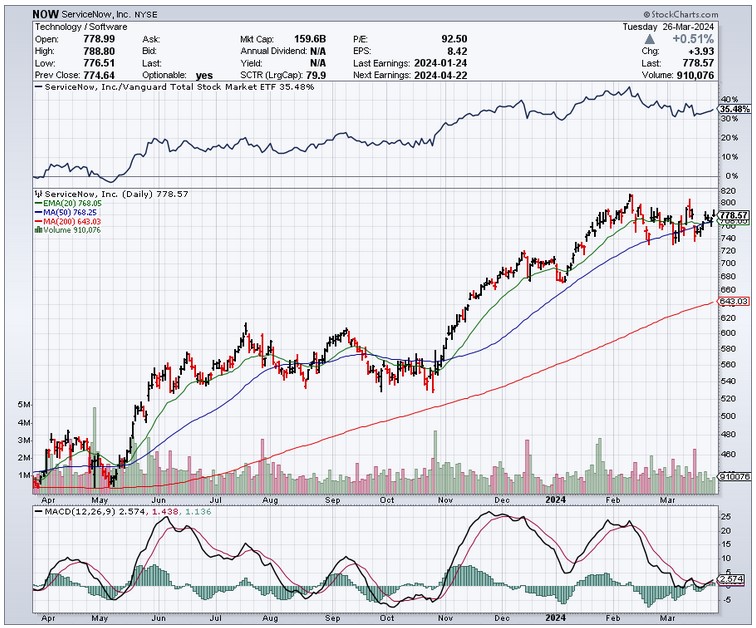
Ah, ServiceNow – not exactly the first name that pops into your head when you think "disrupting the tech landscape," right? Still, this unassuming company specializing in streamlining the nitty-gritty of IT has been quietly building an AI empire.
Think of them as the ninja of automation, taking care of tech snafus, customer woes, and even app building while you focus on the big picture.
But, ServiceNow knows that building its tech empire takes more than just brains. They've been busy making friends in high places and forging strategic partnerships. Let's talk about some of the heavy hitters on their roster.
Microsoft (MSFT) is onboard, making for a dream integration for IT departments. ServiceNow plays beautifully with Microsoft 365, Teams, and all that good Azure cloud stuff, simplifying your workflow like never before.
Then there's the Google (GOOGL) Cloud partnership, which was like dropping a machine learning bomb on the industry. This collaboration gives ServiceNow users access to Google's insane AI and analytics tools, making everything they do on the platform even smarter.
Further enhancing its ecosystem, there are the consulting giants. Names like Deloitte and Accenture (ACN) aren't just mentioned in passing when it comes to ServiceNow. These companies are ServiceNow's go-to squad for deployment and making the magic happen for businesses of all sizes.
ServiceNow isn't stopping there. They've also teamed up with DXC Technology (DXC), a leading IT services company, to ensure that their implementations go smoothly for customers around the globe.
Meanwhile, the collaboration with IBM (IBM) taps into the power of AI and Watson technology to push the boundaries of automation.
Then there's Salesforce (CRM), integrating their customer relationship management expertise with ServiceNow's workflow automation – it's a win-win for businesses looking to streamline everything from sales to support.
ServiceNow also partners with Nvidia (NVDA) to sprinkle some AI magic for the telecom industry. It’s like they’re on a mission to prove that automation can be your best friend, not just a buzzword.
Lastly, AWS (Amazon Web Services) brings the reliability and scale of their cloud platform, ensuring ServiceNow applications can handle anything you throw at them.
Interestingly, for a name only a handful has probably heard before, ServiceNow hasn't been playing catch-up. They've been quietly building an AI arsenal within their products.
Virtual agents that could put fortune tellers out of business, predictive insights that would make Wall Street analysts drool – they've been adding these features for years.
But when generative AI hit the headlines, ServiceNow wasn't satisfied to just join the hype. They bulldozed onto the stage with Now Assist, a digital copilot that's turning the heads of everyone from IT departments to HR.
Think of it as the magic wand that makes tech tasks so easy, that your grandma could do it (and maybe bake a pie on the side).
Actually, ServiceNow's investment in automation shows they're serious about offering next-level features their competitors can only dream of. Their Intelligent Automation Engine is like a robot brain for streamlining those mind-numbing IT tasks, using the power of machine learning to understand what you need before you even ask.
As expected, they also have an AI-powered Virtual Agent: it's your own digital assistant, ready to guide you through the platform or sort out those pesky tech issues faster than you can say "password reset.”
Want to find information buried somewhere in ServiceNow's depths? Their AI Search is like a digital bloodhound, sniffing out anything you need with scary precision.
Now, let’s talk numbers, because, at the end of the day, that’s what sings. ServiceNow wrapped up FY23 with a 23.5% organic revenue growth and a 28% adjusted operating margin.
With $8 billion in cash and a record $2.7 billion free cash flow, they're not just surviving; they're thriving. And they’ve been sharing the love, repurchasing $538 million of their own shares. Talk about confidence.
Why are they killing it, you ask? Simple. The world’s hungry for automation to slash those ballooning IT expenses, and ServiceNow's platform is like an all-you-can-eat buffet.
From IT service management to cybersecurity, they’re expanding faster than my waistline during the holidays. And with AI getting woven into the fabric of their solutions, they’re not just keeping up with trends; they’re setting them.
Looking ahead, ServiceNow shows no signs of slowing down. With a projected 21.5% subscription revenue growth in FY24, they're laser-focused on the future. Their secret weapon? A relentless push into AI – even their Virtual Agent is getting a major upgrade every day.
So, forget watching ServiceNow from the sidelines; they're the lighthouse guiding the way in digital transformation. With AI embedded in their DNA, they're proving that the future of business isn't just digital, it's intelligent.
If you’ve been sleeping on ServiceNow, it might be time to hit the snooze button on that nap and smell the opportunity brewing. I suggest you buy the dip.
https://madhedgefundtrader.com/wp-content/uploads/2019/05/cropped-mad-hedge-logo-transparent-192x192_f9578834168ba24df3eb53916a12c882.png00Douglas Davenporthttps://madhedgefundtrader.com/wp-content/uploads/2019/05/cropped-mad-hedge-logo-transparent-192x192_f9578834168ba24df3eb53916a12c882.pngDouglas Davenport2024-03-27 17:12:132024-03-27 17:12:13THE QUIET GENIUS OF AI
When John identifies a strategic exit point, he will send you an alert with specific trade information as to what security to sell, when to sell it, and at what price. Most often, it will be to TAKE PROFITS, but, on rare occasions, it will be to exercise a STOP LOSS at a predetermined price to adhere to strict risk management discipline.Read more
The world of news and information is rapidly evolving, and the Financial Times (FT) is at the forefront of innovation with its AI-powered question-and-answer tool, Ask FT. This exclusive service for FT subscribers demonstrates how the renowned publication is harnessing artificial intelligence to deliver deeper insights and a more personalized experience for its readers.
Understanding Ask FT
At its core, Ask FT is a sophisticated AI tool trained on the extensive archives of the Financial Times. This means it has access to decades of high-quality reporting, analysis, and expert commentary on business, finance, economics, and global affairs. Subscribers can pose questions about current events, historical trends, or complex financial concepts, and Ask FT will generate concise, informative answers.
The technology behind Ask FT leverages a form of artificial intelligence called a large language model (LLM). This model, known as Claude, excels at understanding natural language, processing complex queries, and synthesizing relevant information from vast data sources.
How Ask FT Benefits FT Subscribers
Ask FT presents several key advantages to Financial Times subscribers:
Personalized Research Assistant: The tool acts as a dedicated research assistant, saving subscribers precious time. Instead of sifting through countless articles, users can directly ask focused questions and get precise answers tailored to their needs.
Deeper Understanding: Ask FT helps subscribers delve deeper into complex topics. It can break down intricate financial jargon, explain the implications of economic events, and provide historical context for current trends.
Uncovering Connections: The AI can identify patterns and connections that might be difficult for an individual to see. This can lead to valuable insights about market dynamics, investment opportunities, and geopolitical risks.
Staying Informed in a Fast-Paced World: The news cycle moves at lightning speed, making it difficult to keep track of every development. Ask FT allows subscribers to quickly get up-to-date on specific topics and understand their wider significance.
The Evolution of News Consumption
The launch of Ask FT reflects a broader shift in how people consume news and information. Readers are no longer content to be passive recipients; they desire a more interactive and personalized experience. Tools like Ask FT cater to this trend by empowering users to actively seek the specific knowledge they need.
This shift has significant implications for journalism. Publications like the Financial Times must move beyond simply reporting the news to providing the tools and context that help readers understand its complexities. AI is an essential component of this evolution, enabling news organizations to deliver insights more efficiently and effectively.
Example Scenarios
To illustrate how Ask FT works in practice, let's consider some example questions:
Investor: "What are the potential risks and opportunities associated with investing in artificial intelligence companies?"
Business Executive: "How is the ongoing semiconductor shortage affecting global supply chains?"
Student: "Can you explain the economic principles behind inflation and how central banks try to control it?"
In each case, Ask FT would process the query, identify the key concepts, and search through the FT archives to find the most relevant material. It would then synthesize this information into a clear, informative answer, potentially even including links to specific articles for further reading.
The Future of AI-Powered News Tools
Ask FT is still in its early stages, but it has the potential to become even more powerful and versatile in the future. Here are some possible directions for development:
Enhanced Personalization: Ask FT could learn about a subscriber's interests and tailor its answers accordingly. For example, an investor focused on tech stocks would receive more specific information about that sector.
Proactive Insights: Instead of just responding to questions, the AI could proactively suggest articles and analysis based on a subscriber's reading history and current market events.
Multimedia Integration: Ask FT could incorporate graphs, charts, and videos into its answers, providing a richer and more engaging user experience.
Voice Interface: Allowing subscribers to ask questions verbally would further enhance the tool's accessibility and convenience.
We’ll have to see how clients and subscribers end up using Ask FT and whether it has started a trend in custom AI chatbots set to serve the financial world.
https://madhedgefundtrader.com/wp-content/uploads/2019/05/cropped-mad-hedge-logo-transparent-192x192_f9578834168ba24df3eb53916a12c882.png00Douglas Davenporthttps://madhedgefundtrader.com/wp-content/uploads/2019/05/cropped-mad-hedge-logo-transparent-192x192_f9578834168ba24df3eb53916a12c882.pngDouglas Davenport2024-03-25 17:11:242024-03-25 17:11:24Ask FT: The Financial Times Leverages AI to Power Subscriber Insights
Legal Disclaimer
There is a very high degree of risk involved in trading. Past results are not indicative of future returns. MadHedgeFundTrader.com and all individuals affiliated with this site assume no responsibilities for your trading and investment results. The indicators, strategies, columns, articles and all other features are for educational purposes only and should not be construed as investment advice. Information for futures trading observations are obtained from sources believed to be reliable, but we do not warrant its completeness or accuracy, or warrant any results from the use of the information. Your use of the trading observations is entirely at your own risk and it is your sole responsibility to evaluate the accuracy, completeness and usefulness of the information. You must assess the risk of any trade with your broker and make your own independent decisions regarding any securities mentioned herein. Affiliates of MadHedgeFundTrader.com may have a position or effect transactions in the securities described herein (or options thereon) and/or otherwise employ trading strategies that may be consistent or inconsistent with the provided strategies.