• support@madhedgefundtrader.com
  • Member Login
Mad Hedge Fund Trader
  • Home
  • About
  • Store
  • Luncheons
  • Testimonials
  • Contact Us
  • Click to open the search input field Click to open the search input field Search
  • Menu Menu

Tag Archive for: (ABBV)

Mad Hedge Fund Trader

Dumpster-Diving in Biotech

Biotech Letter

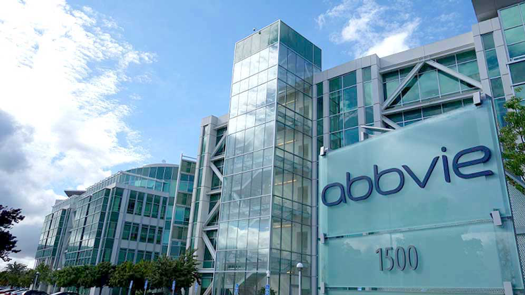
AbbVie Inc (ABBV) has transformed into one of the industry leaders in the biotech world, showing off a notable top-line growth and providing competitive dividends ever since its launch as an Abbott Laboratories (ABT) spinoff in 2013.

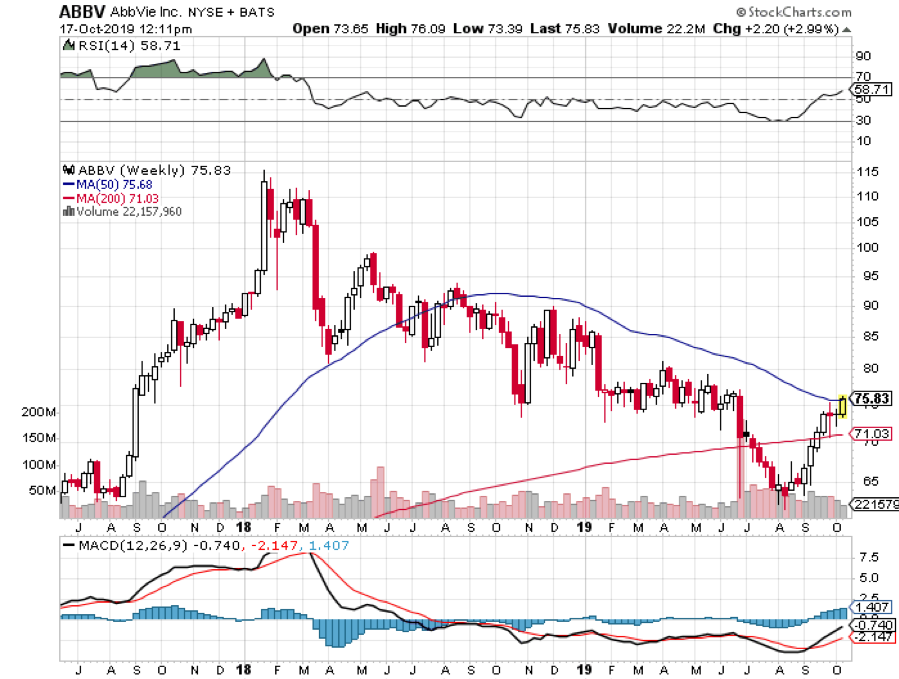
Despite its growth, AbbVie’s shares fell by a crushing 20% in the past year. This caused the company’s net value to trade at less than eight times forward earnings making it a blue-chip biopharma stock that could be bought for next to nothing!

What could be causing investors to sidestep this leading biotech?

The primary reason is the dwindling sales of AbbVie’s longstanding blockbuster drug, Humira. Despite its dominance in the market today, this arthritis medication is nearing its twilight years and is anticipated to eventually succumb to competition.

The threat to Humira’s dominance in the market is a huge deal for AbbVie particularly because of its heavy dependence on the drug’s revenue. In 2018 alone, the arthritis medication contributed approximately $20 billion to the $32.7 billion annual sales of the entire company.

Humira’s status in the United States is secure until its patent expires in 2023. Unfortunately, the drug doesn’t enjoy similar protection in international markets as biosimilar competition has already challenged its presence in the European Union. This has actually hit AbbVie’s performance as global sales showed a 28% decline in the past year.

Meanwhile, AbbVie’s blood cancer treatment Imbruvica is fighting off aggressive competitors in the market. At the moment though, investors remain optimistic about Imbruvica. The drug has been reported to achieve strong growth rates, generating roughly $4 billion in yearly revenue.

With this performance, Imbruvica is projected to hit a peak of $7 billion in sales. Although the medication is projected to perform well in the hematology space, the growing number of programs geared towards creating a similar treatment remains an ongoing threat to the company.

On a positive note, AbbVie has been active in beefing up its product portfolio. So far, three promising mega blockbusters are anticipated to boost the declining sales of the company, namely, psoriasis drug Skyrizi, uterine fibroids medication Orilissa, and rheumatoid arthritis treatment Rinvoq. All three have been recently approved and are expected to be the new growth products that could keep AbbVie on top of its game.

So far, Skyrizi has only contributed $48 million in sales. However, the psoriasis treatment is expected to reach $5 billion in profits in the coming years. Pitching in to boost AbbVie’s immunology assets is Upadacitinib, a drug that the company hopes to market as the next Humira and has been submitted for priority review. If all goes well, Upadacitinib is projected to rake in as much as $6 billion in peak sales.

While these treatments are pegged as promising additions to AbbVie drug portfolio, the biotech firm took another major step towards the expansion of its product line through its acquisition of Allergan (AGN) earlier this year. Although this move ensures that more products are queued to its pipeline, the deal with the Botox-maker could pose concerns for AbbVie’s balance sheet as the terms include the absorption of Allergan’s long-term debt worth $19.6 billion. 

Nonetheless, AbbVie is still an interesting stock for a lot of investors. Perhaps one of the reasons for the lingering interest in the biotech company is its current dividend yield of 6.51% -- an impressive number especially if you consider the fact that AbbVie is still in its growth phase. Since 2017, its dividend showed an increase from $0.64 quarterly to reach $1.07 quarterly in 2019.

Another reason could be its valuation. As of this writing, the stock is trading at $75.83. Taking into account its adjusted earnings per share in 2018 of $7.91 and a P/E ratio of 8.2, this is already a pretty low price for any company that’s not experiencing a decline in revenue but extremely cheap for a company that has the potential to hit a 15% profit growth and 41% increase in adjusted earnings per share.

Overall, AbbVie is really a tempting stock for investors particularly dividend investors due to its high dividend yield and growth rates. However, the decline of Humira sales remains worrisome especially if you consider how dependent the company is on the drug.

Either way, AbbVie stock is really cheap at the moment and from a valuation perspective, there’s no substantial growth estimate priced in the stock to date. Basically, it all boils down to how much trust you want to put on a company with a proven track record but with high debt levels.
 

https://www.madhedgefundtrader.com/wp-content/uploads/2019/10/abbvie.png 295 525 Mad Hedge Fund Trader https://madhedgefundtrader.com/wp-content/uploads/2019/05/cropped-mad-hedge-logo-transparent-192x192_f9578834168ba24df3eb53916a12c882.png Mad Hedge Fund Trader2019-10-17 12:50:082019-10-17 12:52:08Dumpster-Diving in Biotech
Mad Hedge Fund Trader

October 1, 2019

Biotech Letter

Mad Hedge Biotech & Healthcare Letter
October 1, 2019
Fiat Lux

Featured Trade:

(THE PLAYERS GUIDE TO BIOTECH INVESTING)
(AMGN), (PFE), (NOVN), (ABBV), (ABT),
(AGN), (ROG), (GSK), (CELG), (JNJ), (BMY)

https://madhedgefundtrader.com/wp-content/uploads/2019/05/cropped-mad-hedge-logo-transparent-192x192_f9578834168ba24df3eb53916a12c882.png 0 0 Mad Hedge Fund Trader https://madhedgefundtrader.com/wp-content/uploads/2019/05/cropped-mad-hedge-logo-transparent-192x192_f9578834168ba24df3eb53916a12c882.png Mad Hedge Fund Trader2019-10-01 07:02:552019-10-01 06:52:25October 1, 2019
Mad Hedge Fund Trader

The Players Guide to Biotech Investing

Biotech Letter

You can’t watch a game without a program, and the lineup for biotech and healthcare is truly astonishing. No surprise then that the fields account for more or less than 17% of US GPD.

Here is a listing of the biggest $100 billion plus products you have never heard of. The good news is that you have just stumbled across a sector that will generate no less than a staggering $1.4 trillion in sales over the next five years.

That means it’s certainly worth your time getting to know this field. With this amount at stake, it’s no wonder companies manufacturing these blockbuster drugs are sparing no expense to fight off patent vultures.

A good example is Amgen (AMGN), which recently won its case to extend the patent life of rheumatoid arthritis biological Enbrel against Novartis AG’s (NOVN) biosimilar arm Sandoz. Since each extra hour added to patent life means millions of dollars (and sometimes billions) in sales, the additional 10 years of exclusivity for Enbrel is a massive victory for Amgen.

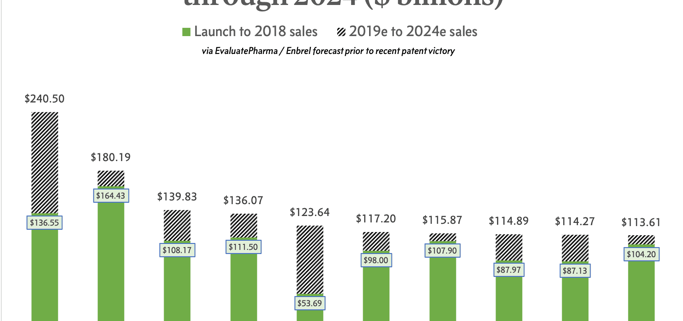
In a recent study released by Evaluate Pharma, Enbrel was ranked third in the top 10 biggest sellers up to 2024. The forward-looking consensus projection anticipates Amgen’s golden goose to hit roughly $140 billion in total revenues in five years – a truly impressive performance particularly for a drug that has been around for more than 20 years. However, Enbrel’s longevity pales in comparison to the other behemoths in the biopharma realm.

Up until 2018, Pfizer’s (PFE) Lipitor held the title of earning the highest lifetime sales in the industry. Since its launch in 1997, the cholesterol drug has raked in $164.4 billion in revenues so far with the number estimated to reach $180 billion by 2024. Lipitor’s success is highlighted more by the fact that it's under a small molecule status and holds approval for a very narrow indication.

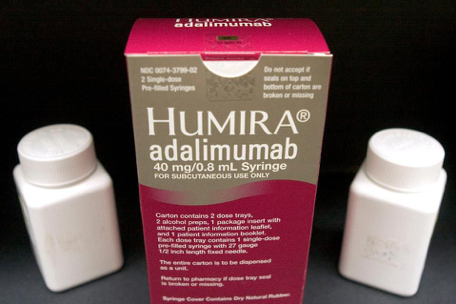
Overtaking Lipitor to take the top spot is AbbVie’s (ABBV) rheumatoid arthritis treatment Humira, which closed with $20 billion in sales in 2018 alone. While some AbbVie investors frown upon the over-reliance of the company on Humira, it appears that the efforts to protect the drug has paid off big time.

With patent protection (132 approved patents!) safeguarding its exclusivity in the market, Humira is projected to reach a total of $240 billion in revenues by 2024. Clearly, the rewards they’ve been reaping show no signs of abating anytime soon.

More importantly, Humira’s robust sales, which makes up almost 70% of the company’s profits, has provided AbbVie with the financial capacity to finally get out of the shadow of parent company Abbott Laboratories (ABT) and come up with its own pipeline. As it happens, AbbVie’s efforts towards this direction have already started with the massive purchase of Allergan (AGN) for $63 billion this year.

Apart from Lipitor, Humira, and Enbrel, there are three more blockbuster products with sales that hit the $100 billion mark as of 2018 -- a figure that would make Ecuador proud to claim as their annual GDP. These are Roche Holding Ltd. Genussscheine’s (ROG) chemotherapy drug Rituxan, Amgen’s anemia treatment Epogen, and GlaxoSmithKline’s (GSK) asthma medication Advair.

One biopharma bestseller that leapfrogged a lot of other drugs in the market is multiple myeloma medication Revlimid -- aka the drug that built Celgene (CELG). With an entry date of 2008, this drug is the newest one on the list. While Revlimid’s sales are impressive, what’s actually quite exciting is the fact that its projected revenues easily outstrip its already notable sales of $53.69 billion.

By 2024, this Celgene blockbuster is estimated to reach $123.64 billion in sales. There’s a caveat to this though as Revlimid’s success in the years to come is dependent on how Celgene plans to deal with generic competition chomping at the bit and ready to attack once the drug reaches its 2022 patent expiration date.

Another big-ticket drug that might see a bit of a decline in sales soon is from Johnson & Johnson (JNJ). While the company has always been aggressive when it comes to dominating the market for its Crohn's Disease drug Remicade, an investigation by the Federal Trade Commission (FTC) might put a damper on things soon. According to recent reports, JNJ has been suspected of contracting payers to ensure market control and stave off competitors.

Meanwhile, the three horsemen of Roche, namely, Rituxan, cancer and eye disease medication Avastin, and breast cancer treatment Herceptin, reached a collective amount of $365 billion in total sales. These three are anticipated to stay put on top of the industry in the next five years as well, thanks to their competitive pricing and aggressive strategies to protect their patents.

Rounding out the list is Amgen’s Epogen, which is expected to add $107.90 billion to the already astounding $115.87 billion it generated for the company. Meanwhile, GSK’s Advair, which brought in $113.61 billion, is expected to pour in an additional $104.20 billion by 2024.

Interestingly, the majority of the top 10 franchise drugs are biologics except for Sanofi’s (SAN) ulcer treatment Zantac, Bristol-Myers Squibb Co’s (BMY) heart medication Plavix, Advair, and of course, Lipitor. In fact, this is considered as the primary reason for their capability to fight off potential copycats for years.

In some cases, their monopoly of the market has allowed them to expand to include various other indications in their coverage. The massive sales of biologics are also rooted in their ability to demand big-ticket reimbursements. Unlike their generic competitors, brand recognition alone makes it more convenient for patients to ask for compensation.

Needless to say, the success stories of these drugs make it quite obvious why these biopharma companies employ a battalion of legal experts to fend off the rise of generics. While the onslaught of biosimilars cannot be helped, these lawyers ensure that patients opting for these versions of the medication would find it incredibly difficult to ask for biosimilar reimbursements.


The Winner So Far

https://www.madhedgefundtrader.com/wp-content/uploads/2019/10/biopharma-biggest-sellers.png 460 683 Mad Hedge Fund Trader https://madhedgefundtrader.com/wp-content/uploads/2019/05/cropped-mad-hedge-logo-transparent-192x192_f9578834168ba24df3eb53916a12c882.png Mad Hedge Fund Trader2019-10-01 07:00:322019-10-01 06:52:08The Players Guide to Biotech Investing
Page 20 of 20«‹181920

tastytrade, Inc. (“tastytrade”) has entered into a Marketing Agreement with Mad Hedge Fund Trader (“Marketing Agent”) whereby tastytrade pays compensation to Marketing Agent to recommend tastytrade’s brokerage services. The existence of this Marketing Agreement should not be deemed as an endorsement or recommendation of Marketing Agent by tastytrade and/or any of its affiliated companies. Neither tastytrade nor any of its affiliated companies is responsible for the privacy practices of Marketing Agent or this website. tastytrade does not warrant the accuracy or content of the products or services offered by Marketing Agent or this website. Marketing Agent is independent and is not an affiliate of tastytrade. 

Legal Disclaimer

There is a very high degree of risk involved in trading. Past results are not indicative of future returns. MadHedgeFundTrader.com and all individuals affiliated with this site assume no responsibilities for your trading and investment results. The indicators, strategies, columns, articles and all other features are for educational purposes only and should not be construed as investment advice. Information for futures trading observations are obtained from sources believed to be reliable, but we do not warrant its completeness or accuracy, or warrant any results from the use of the information. Your use of the trading observations is entirely at your own risk and it is your sole responsibility to evaluate the accuracy, completeness and usefulness of the information. You must assess the risk of any trade with your broker and make your own independent decisions regarding any securities mentioned herein. Affiliates of MadHedgeFundTrader.com may have a position or effect transactions in the securities described herein (or options thereon) and/or otherwise employ trading strategies that may be consistent or inconsistent with the provided strategies.

Copyright © 2026. Mad Hedge Fund Trader. All Rights Reserved. support@madhedgefundtrader.com
Scroll to top