Mad Hedge Bitcoin Letter
July 26, 2022
Fiat Lux
Featured Trade:
(THE ART OF BITCOIN MINING)
(BTC), (ASIC), (GPU)


Mad Hedge Bitcoin Letter
July 26, 2022
Fiat Lux
Featured Trade:
(THE ART OF BITCOIN MINING)
(BTC), (ASIC), (GPU)
What Is Bitcoin Mining?
Bitcoin mining is the way in which new coins are added to the existing supply of the cryptocurrency known as Bitcoin (BTC).
These transactions are confirmed by the network and represent a critical component of the maintenance and development of the blockchain ledger.
Cryptocurrency mining is attractive to many investors interested in cryptocurrency and the most profitable are able to do it on a large scale incorporating an industrial mindset.
Granted, the units of economics of crypto mining have suffered in the short term because of spiraling energy costs.
But Crypto always ebbs and flows from crypto winters to crypto summers.
How Do I Mine Bitcoin?
Mining Bitcoin is not for the faint of heart.
Your computer must solve complicated math problems that verify transactions in the currency.
When a bitcoin is successfully mined — the miner receives a bitcoin.
One can use a normal computer that has a CPU, motherboard, RAM, and storage to mine bitcoin.
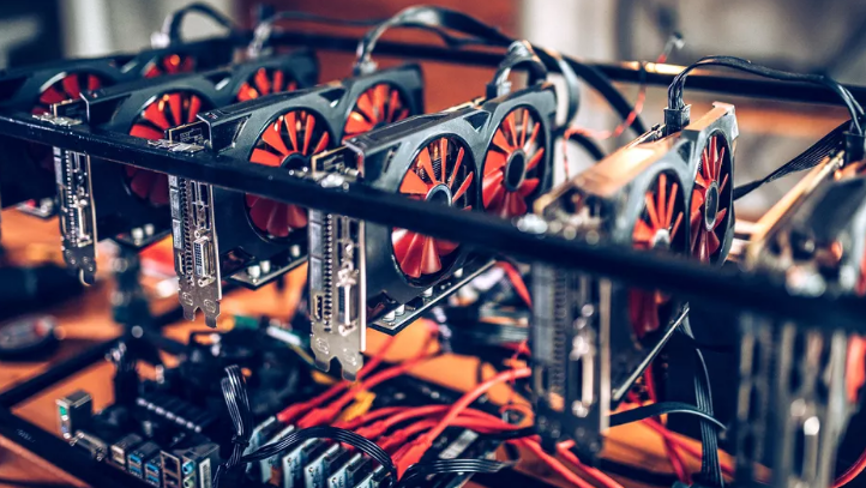
The only difference and the most important requirement here is the graphics processing unit (GPU) or the video card.
A high-performance GPU is a must if a person wants to mine Bitcoin.
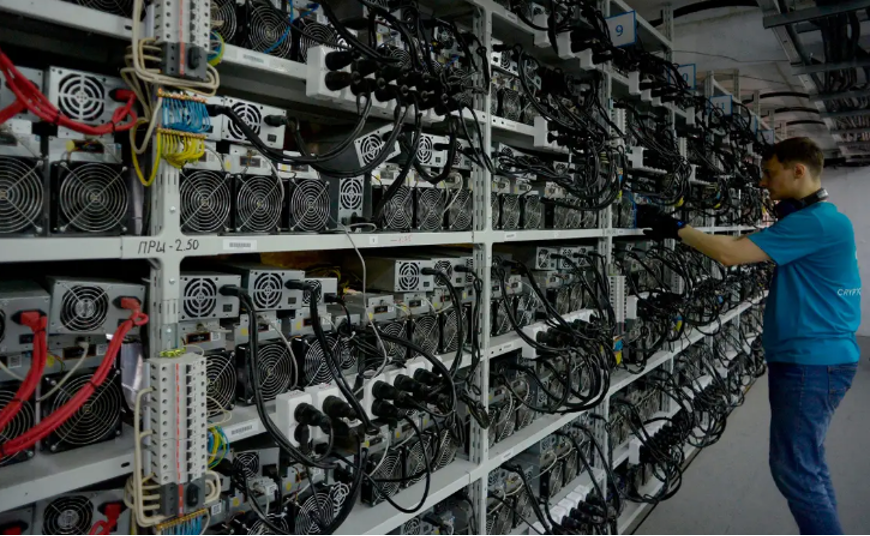
Bitcoin mining is done using hardware called ASICs that is short for Application-Specific Integrated Circuits.
Another obligatory requirement is electricity for mining machines.
The largest bitcoin miners are usually found in countries with low-cost electricity.
Miners need robust infrastructure to mine mainly energy and equipment.
How do I do it at home?
A company called Compass Mining is betting that individuals will want to partake in bitcoin mining.
There’s a lucrative payout — if you’re lucky enough to mine a coin.
But the hassle of operating a mining rig can certainly cut into profits.
Compass’ new retail program will allow the purchase of a single application-specific integrated circuit (ASIC) mining rig that they can set up at home.
Mining corporations usually buy in bulk — this finally gives the little guy a chance.
Brands include top-of-the-line ASICs WhatsMiner series from MicroBT and the Antminer series from Bitmain, offering 78 to 95 Tera hashes per second and ranging in price from $8,100 to $10,400.
Profitability calculators can help you estimate your potential ROI.
Rigs are noisy and hot so it’s not for everyone.
Potential miners really need to do their due diligence if they want that sort of environment in their house.
About the size of a desktop computer tower, they can emit between 50 and 75 decibels of noise, which is roughly the same level as a vacuum cleaner or a hairdryer.
Just like the work-from-home paradigm was borne out of the pandemic, many who want to mine bitcoin, wish to do it from the confines of their couch and man cave.
The demand for mining hosting sites in North America has been outstripping supply. Encouraging bitcoin enthusiasts to set up their own operations at home is one way to relieve the pressure on existing hosting infrastructures.
China has shown us their cards by initiating a blanket ban on cryptocurrencies opening up opportunities for alternative miners.
The crackdown nearly halved the mining difficulty for the entire Bitcoin network. Miners outside China have been able to mine more bitcoin given the record low mining difficulty, raking in high revenue.
Corporate self-mining companies, such as Marathon and Riot, as well as third-party hosting sites, are facing a shortage in infrastructure to support more mining operations.
Once crypto comes back, we will all laugh at how 2022 was an aberration for the crypto world.
Mad Hedge Bitcoin Letter
July 21, 2022
Fiat Lux
Featured Trade:
(HOW TO SET UP A CRYPTO TRADING ACCOUNT)
(BTC), (COIN)

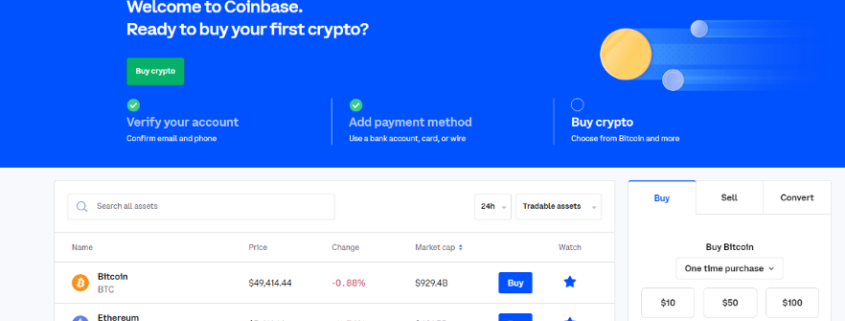
I get many inquiries asking me how to set up an account to buy Bitcoin (BTC) and so it’s gotten to the point where I will walk new readers through the process of setting up a cryptocurrency account at Coinbase (COIN).
The signup process is actually highly straightforward and only takes minutes.
Why sign up for Coinbase?
This is an exchange that is highly popular and already has a large customer base.
Investors who can’t stomach the higher risk of exposing capital to an unregulated exchange should just dabble in bitcoin-connected ETFs which is completely reasonable.
Due to a spate of recent crypto exchange bankruptcies, some might be hesitant to get their capital tied up in bankruptcy hearings, but it’s my job to let readers know this option is out there.
COIN is still a major part of the crypto infrastructure.
Readers just only invest as much as they are willing to lose in crypto due to its higher than median volatility and underperformance the past 10 months.
Let’s get this party started.
1)
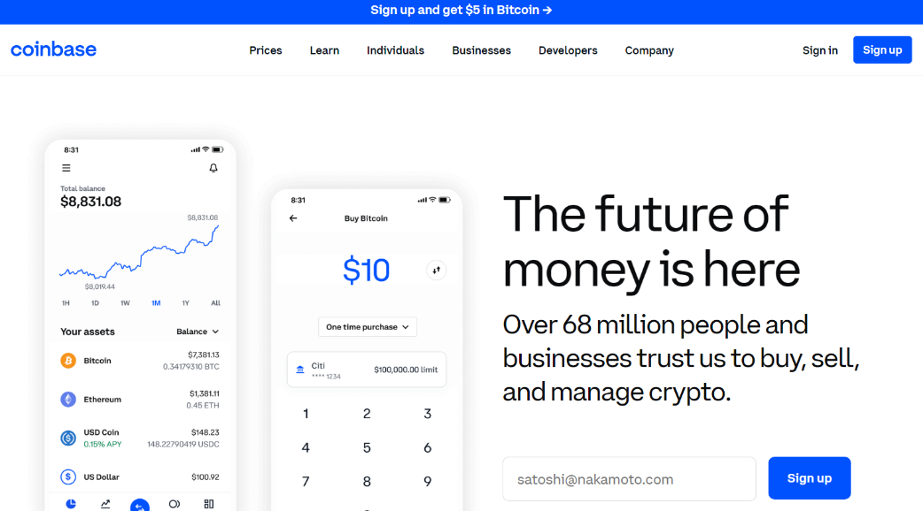
As many might assume, one must open their browser and head to www.coinbase.com to kick off the process. Once there — you’ll be greeted by an interface where the right choice is to click “sign up” in the upper right corner.
2)
A screen box pops up requiring personal information which is basically a full name, email address, password, and state. I am also assuming the user is from the United States. After clicking the agreement that the user is 18 years or older and consenting to the user agreement, click “Create account.”

3)
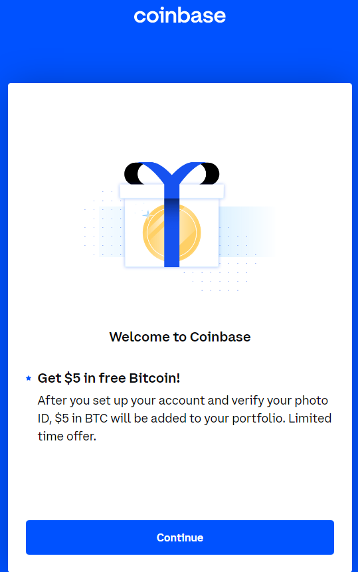
Technically, an account has now been created and a screen pops up offering $5 of Bitcoin if one verifies a photo ID which is completely optional. The screen let me know that it was a “limited time offer” so this offer might be gone when others sign up or it might still be there. Either way, click “Continue.”
4)
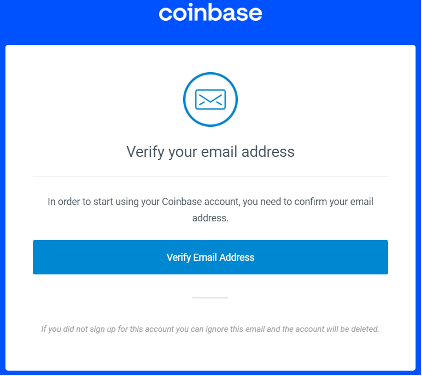
After the creation of the account, the next step is to click the verification link in the email that was provided. Simply go into the email inbox given, open the email, and click “Verify your email address.”

5)
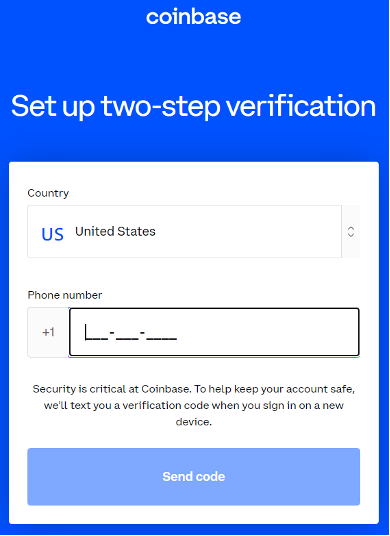
The next step is to provide a phone number for a two-step verification. This added level of security, makes it so it’s difficult to use your account without your phone number. Select the country, enter the phone number, then click “Send code.”
6)
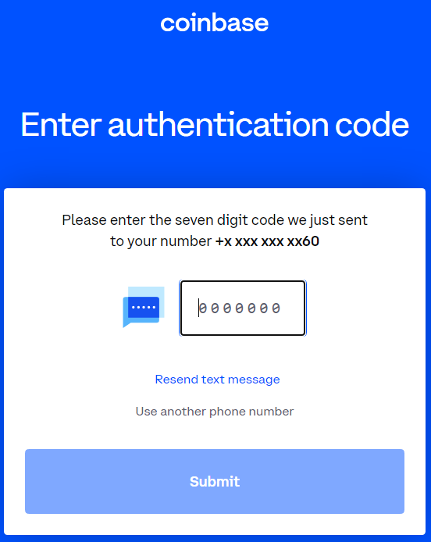
Enter correct authentication code sent to the phone number provided then click “Submit.”
7)
Select citizenship of the account holder then click “Submit.”

8)
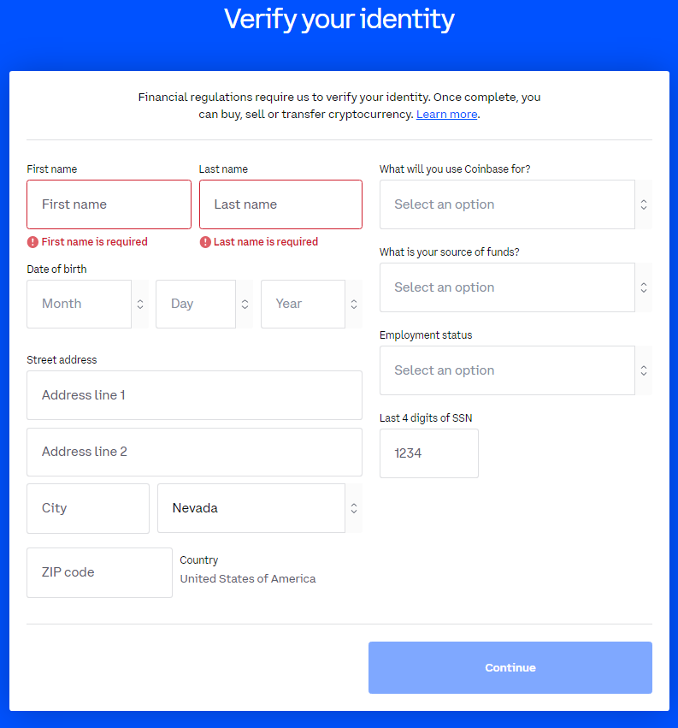
Verify identity by filling in personal information including full name, date of birth, street address, city, last 4 digits of social security’s number, and zip code. Then answer a few more questions about what you will use Coinbase for, source of funds, and employment status then you’re good to go.
9)
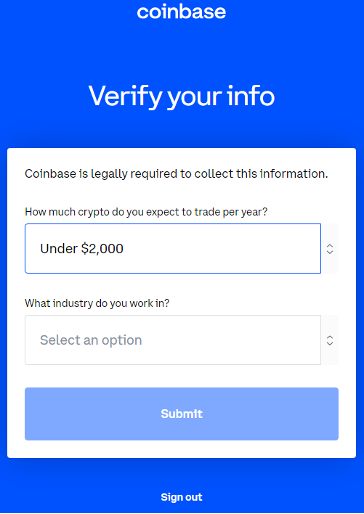
The last step of verifying your info are two questions asking the user “How much do you expect to trade per year?” and “What industry do you work in?”
After you answer these two, then click “Submit.”
10)
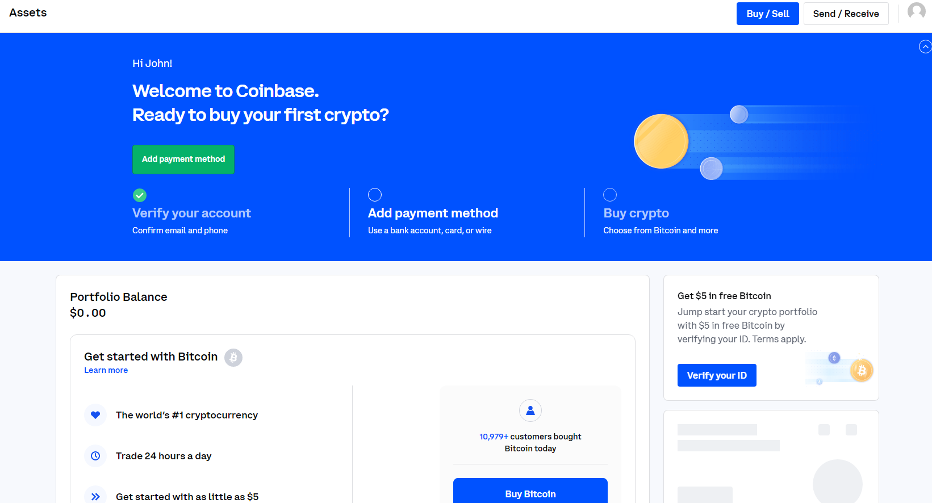
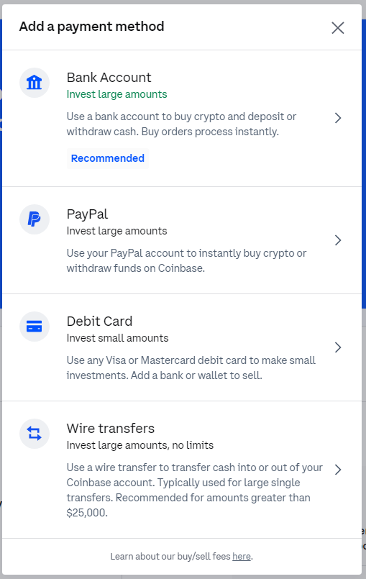
That was the last of the personal questions and after clicking submit, the new user is directed to the trading interface showing a portfolio balance of $0.00. The next step is to click “Add payment method” in order to divert some fiat currency into the Coinbase account.
11)
There are different options available, and I personally chose “Bank Account” for its ease of use and free fees.
12)
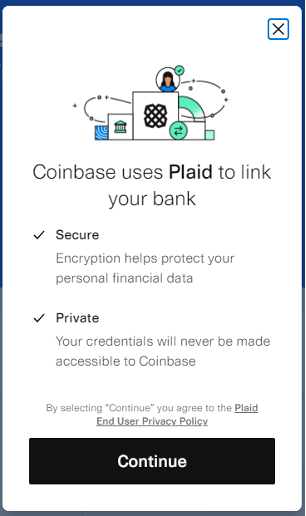
A box pops up asking me to agree to the Plaid End User Privacy Policy. This is software that links Coinbase to your bank account.
For anyone who doesn’t want that linked, I would advise using one of the other three options.
Click “Continue” to proceed.
13)
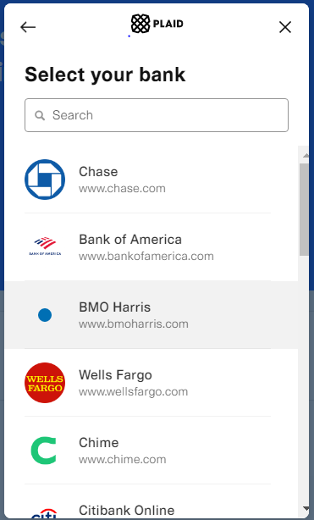
Select your bank — provide your bank information.
14)
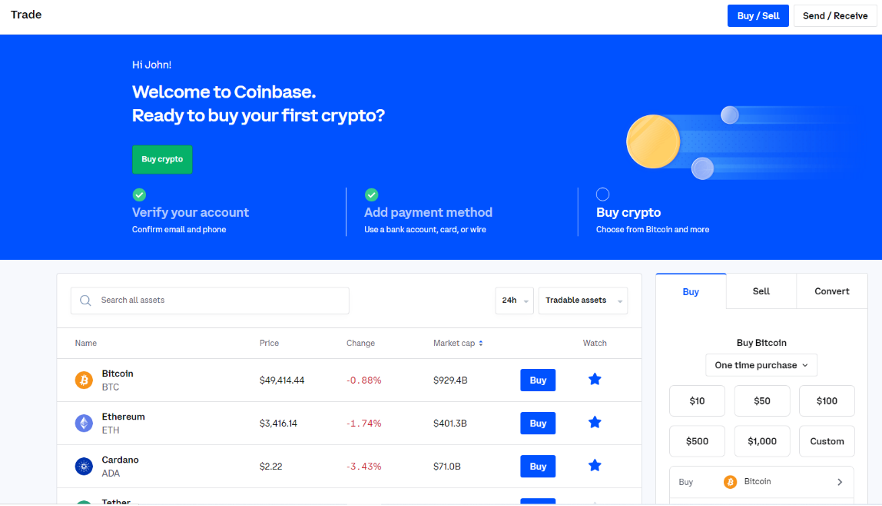
Bank Account is now linked — immediately buy any cryptocurrency available on Coinbase. Pat yourself on the back for a job well done!
Mad Hedge Bitcoin Letter
July 14, 2022
Fiat Lux
Featured Trade:
(BITCOIN OR ETHEREUM)
(BTC), (ETH)

In the crypto community, investors fiercely defend why Bitcoin (BTC) will be more valuable than Ethereum (ETH) or vice versa in the future.
It was only just last year, we were presented with a situation where both were going up, and primarily because of the law of numbers, the growth rates for ETH were higher because the coin was priced in the low thousands.
When the pronounced equity selloff started to really accelerate at the beginning of this year, it offered a snapshot into which currency is best suited to endure heavy systemic stress.
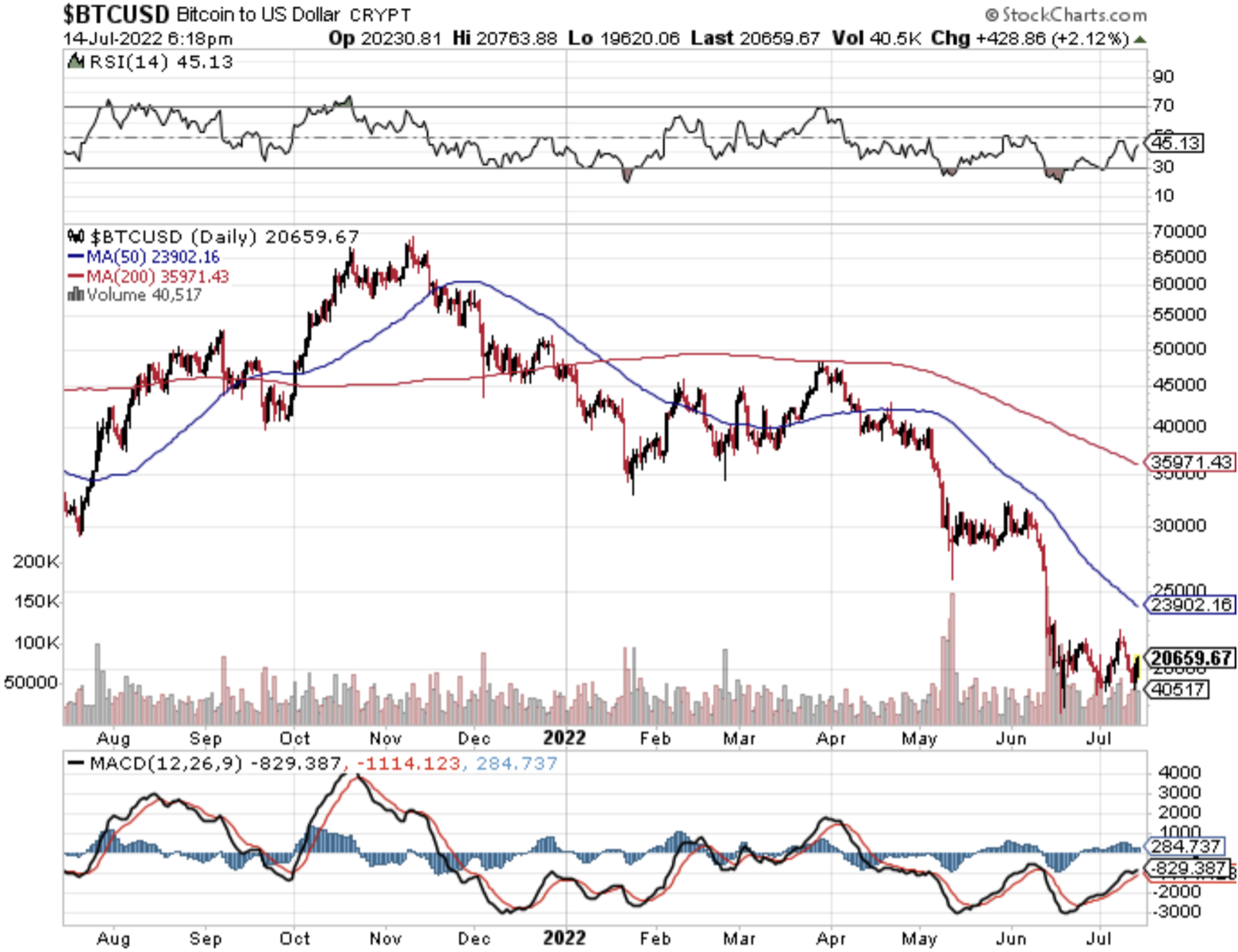
The winner, and not even close I might add, was and still is Bitcoin.
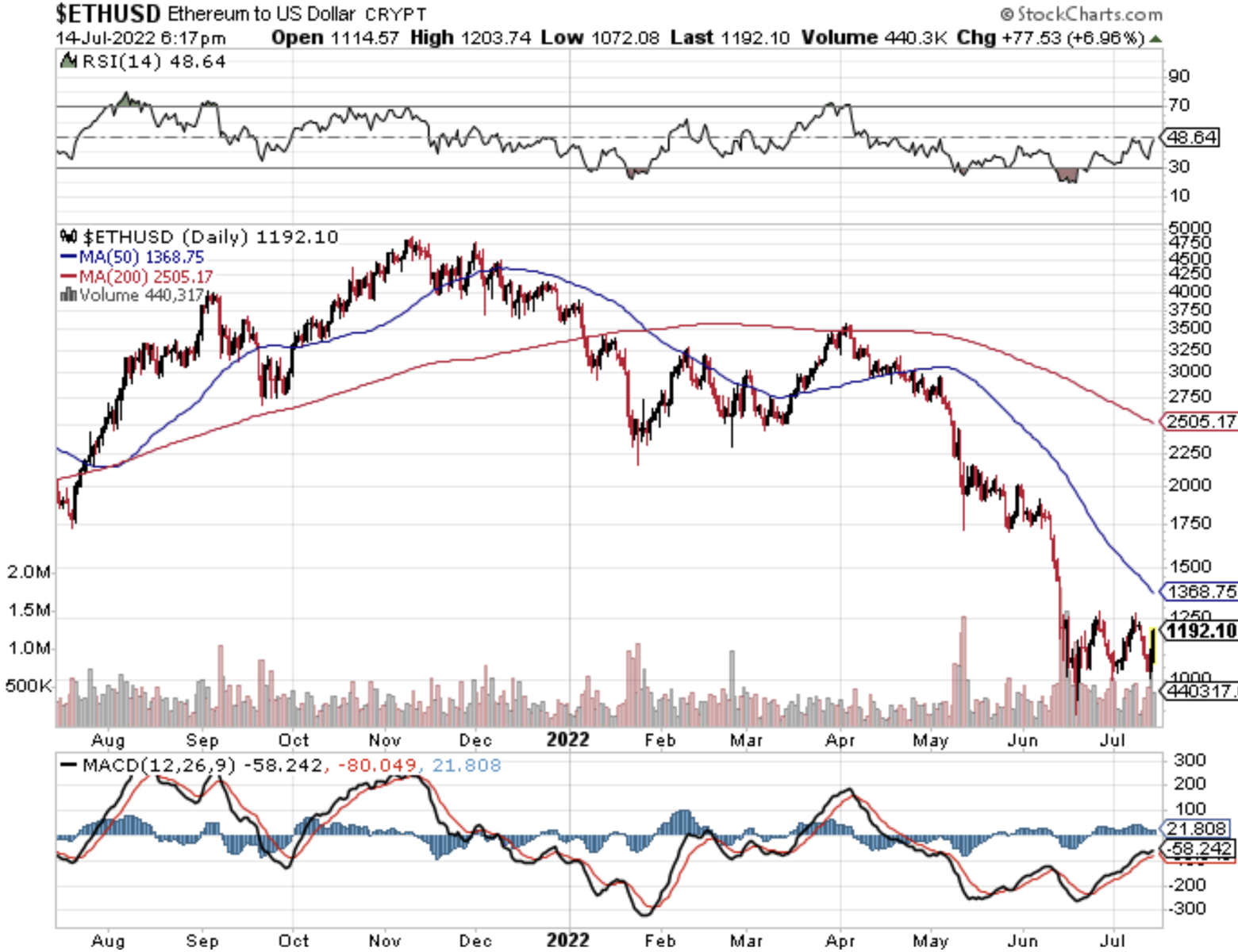
Saying Ethereum has been having a hard time is an understatement, it has sunk from a peak of $4,800 to $1,000 today.
In relative terms, BTC has outperformed ETH by around 40% during this equity turmoil showing itself as still the best in show and the only reasonable crypto to invest in.
I am on record for saying ETH would be higher than BTC in the future earlier last year because of the accelerated growth input of the asset in a growth industry.
That all changed once the dynamics reversed and tailwinds became headwinds, and now, we are really witnessing ETH’s true colors.
It simply isn’t as good as BTC period.
I have heard of some pundits pushing back the timeline of when ETH will surpass BTC to 2030.
I would respond by saying what is that based on?
Hope?
I do believe the upcoming system shift to proof-of-stake (PoS) will take absolutely no part in ETH usurping the crypto throne ten years from now.
Investors don’t care if the coin is produced using hydrocarbon energy or windmills.
It’s not really a big deal to them.
I would probably say it will never happen, pointing out that BTC is digital gold while ETH is the second iteration of the internet.
I have seen nothing that suggests that ETH's software or code is so much superior to that of BTC so much so that we are about to experience a revolutionary shift.
It’s not that at all.
To say that “there’s plenty of room for both” is also something I don’t agree with because I believe this is a winner take all type of proposition which is an inherent dynamic embedded in technology.
There are over 20,000 crypto coins and most of them are scams.
Even if ETH reduces hydrocarbon energy and increases its security, that doesn’t mean that BTC will have less security advances relative to ETH over time.
Even more ironic is the PoS switch means that the system will need to run a validator as the backbone of the network.
The validator is expected to maintain sufficient hardware and connectivity to participate in block validation and proposal.
In return, the validator is paid in ETH (their staked balance increases).
Validators miss out on ether rewards if they fail to participate when called upon, and their existing stake can be destroyed if they behave dishonestly.
Once activated, validators receive new blocks from peers on the Ethereum network.
No offense, this sounds like a centralized version of ETH and not a decentralized coin.
Proof-of-work is when any random guy can hook up to a power grid and produce a BTC which he can take proceeds from. He has no control over the system and nobody knows who he is.
The validators being held by a code of conduct and penalized or rewarded by that is absolutely what I consider centralization.
Ultimately, I don’t believe ETH has any special advantage over BTC and the PoS switch is a lot of marketing chutzpah.
The fact is that BTC has outperformed ETH when the equity sushi hit the fan and honestly, who cares about PoS.
Investors care about preserving the value of their portfolios.
If a choice between one, invest in BTC and avoid ETH.
Mad Hedge Bitcoin Letter
July 12, 2022
Fiat Lux
Featured Trade:
(MT. GOX BACK FROM THE DUSTBIN OF HISTORY)
(BTC), (MTGOX)


We could shortly experience a supply dump of Bitcoin that would suppress the price of the digital gold even further.
Let me explain.
137,000 bitcoins could be dumped back onto the open market from the notorious Mt. Gox crypto exchange hack which happened 8 years ago.
This is bad news for crypto lovers who have already gone through the gauntlet this year.
Crypto has failed basically every inflection point and the infrastructure is crumbling around us as we speak.
This could be another “Lehman moment” after the numerous crypto exchanges that have already gone bankrupt.
Mt. Gox was originally founded in 2006 by Jed McCaleb as an exchange to trade Magic: The Gathering Online cards (hence the acronym MTGOX).
The card site only operated for a few months before Jed moved on to other ventures.
Then in 2010, Jed started to develop an interest in you guessed it, cryptocurrencies!
He exploited an inefficiency in the market as there wasn't an easy way for users to exchange bitcoin at that moment.
He still had the mtgox.com domain lying around and used it to officially launch a crypto exchange.
After 10 months, Jed sold the exchange to Mark Karpelès at a valuation of 6 months' revenue.
After just a few months with Mark steering the ship, Mt. Gox doubled its trading volume to 20,000 transactions a day.
At the time, it was by far the biggest crypto exchange, handling 70% of all bitcoin trades.
In December 2013, Mt. Gox was doing all-time high revenue and bitcoin had recently breached $1,000 for the first time.
Happy days in 2013 for Mt. Gox or so we thought.
Then a hammer dropped out of nowhere.
By February 2014, customer complaints exploded as user accounts became inoperable. Sounds like now, doesn’t it?
On the 7th, Mt. Gox officially froze withdrawals, citing they needed a "clear technical view of the currency processes."
On the 10th, they admitted to finding a "bug in the Bitcoin software", leading to altered transaction details.
This effectively meant bitcoin could be resent as transactions were labeled as invalid.
After promising to resolve the issue, Mark and the board disappeared, and their website went offline.
On February 24th, a 'crisis management' document was leaked, revealing that Mt. Gox was insolvent after losing an estimated 850,000 bitcoin.
This represents 4% of the 21 million total bitcoin that would eventually be in circulation.
4 days later, Mt. Gox officially filed for bankruptcy.
Here’s where the story really gets twisted.
Mt. Gox released a statement on their website on 20 March 2014, stating that they had located 200,000 of the 850,000 missing bitcoin.
In 2015, Nobuaki Kobayashi was appointed as the rehabilitation trustee by the Tokyo District Court.
His role is to oversee the reconciliation of creditors.
As Kobayashi starts to repay creditors the 200,000 coins of bitcoin of crypto, it could flood the open market with liquidity at a time when bitcoin prices are struggling.
This could potentially knock crypto from $20,000 per coin to $15,000 in one day.
Bitcoin has been madly exposed this year as an asset class that hasn’t been able to stand on its own 2 feet.
What started out with so much promise in November 2021 that many cheered Bitcoin higher, expectations have been left largely unmet.
This is why here at the Mad Hedge Bitcoin Letter, we only recommended investing just a small fraction of one’s net wealth into this speculative asset class.
We were validated with that recommendation and anyone betting the ranch has no understanding of responsible risk control.

Mad Hedge Bitcoin Letter
July 7, 2022
Fiat Lux
Featured Trade:
(ANOTHER ONE BITES THE DUST)
(BTC), (VYGVF), (FTX)

FTX cryptocurrency exchange CEO Sam Bankman-Fried said he has more than $2 billion to backstop crypto industry if needed.
That’s a scary statement to issue that most likely assumes the worst scenarios are coming true for his beloved digital gold.
By the way, $2 billion is peanuts considering this industry used to be worth over $1 trillion just a little bit ago.
Not sure if his token $2 billion would make a dent at all, however, it might save a company or 2 if that is what Bankman-Fried is aiming for.
This small sum will do nothing if systemic risk goes from bad to worse and the industry falls apart which would happen if bitcoin dropped to $2,000 per coin.
Perhaps if he could scrounge up an extra $1 trillion or so to buy out the whole crypto industry then we would be in business – literally.
We need to look at the situation with more critical thinking than wishful.
The FTX CEO also said the worst appears to be over for the liquidity crunch in the cryptocurrency industry.
That could possibly be a sneaky way to say that the worst is yet to come.
Why would Bankman-Fried think the liquidity crunch will stop on a dime?
Isn’t that odd?
Well, of course, he has skin in the game, so his words are empty. It’s like a real estate agent telling someone they should buy a house.
Last time I checked, crypto was supposed to be a great hedge to hyperinflation and that has failed miserably.
Little did he know, Central Bank Governor Jerome Powell, in the Fed minutes revealed yesterday, say that the Fed is prepared to act more aggressively to tame inflation with bold rate rises.
If there are more rate rises which the Fed forecast implies, the Fed Fund’s rate is going to 3.75% by 2023, then crypto will be worth even less than it is today if the same dynamics and price behavior hold true.
The dynamics that were working for crypto during the bull cycle and are now working against them.
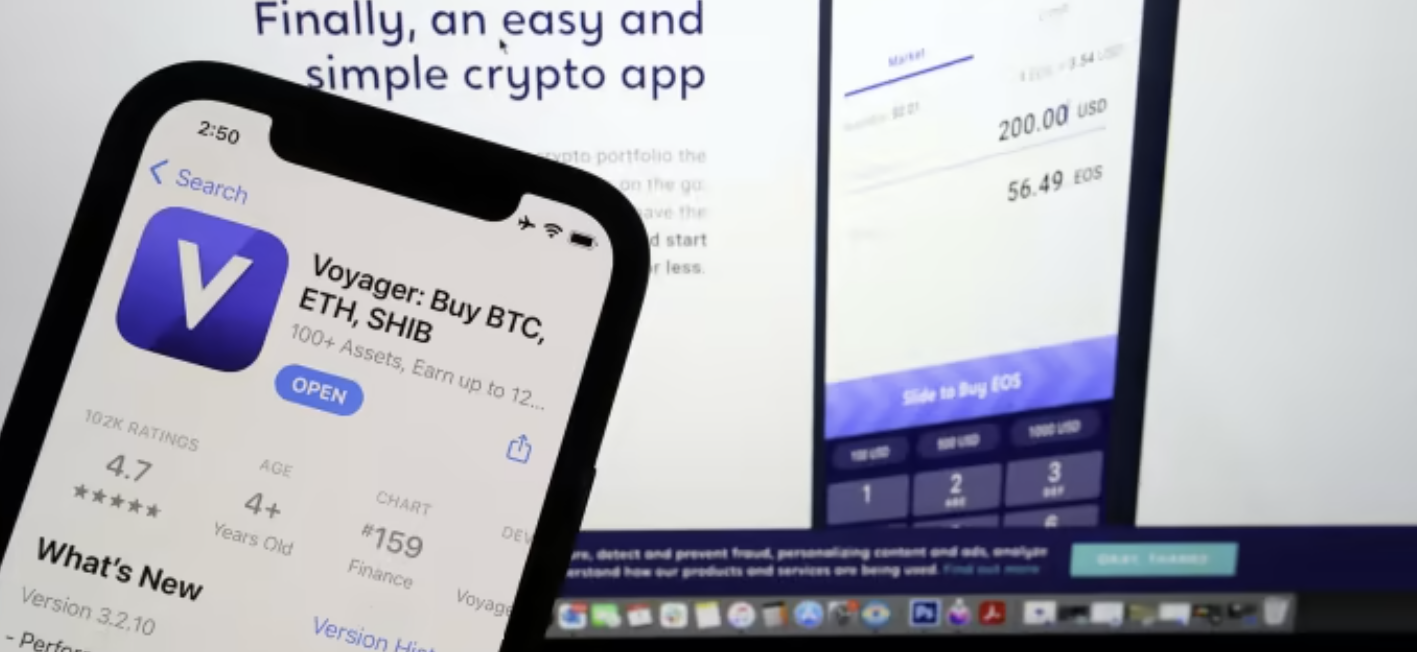
No doubt Bankman-Fried’s comments had to do with the timing of the newest bankruptcy in the industry of crypto brokerage Voyager Digital (VYGVF).
The trust in crypto infrastructure sinks yet again.
Account holders at now-bankrupt Voyager Digital shouldn’t expect to get all their crypto back as the company restructures.
The crypto brokerage and lender filed for Chapter 11 bankruptcy, creating unresolved legal questions about how digital assets will interact with US insolvency law.
Voyager appears to plan to just walk away from their obligation to return capital to account users.
The company’s plan to exit bankruptcy plainly says it expects account holders to be “impaired” by the Chapter 11 process, meaning they won’t be getting back exactly what they’re owed.
This could be the straw that breaks the camel’s back.
Legally, decentralization could be a farce and if Voyager is able to walk, it means Voyager and its platform is even more centralized than crypto industry’s criticism of fiat currency.
At least fiat currency on exchanges is insured and account holders get their money back in full upon bankruptcy.
Sure, the price of bitcoin is up incrementally today, but the industries’ health couldn’t be at a lower ebb.
There is a high probability that bitcoin will touch $12,000 first before it goes back to $30,000.