Mad Hedge Bitcoin Letter
June 7, 2022
Fiat Lux
Featured Trade:
OVERSIGHT IS HERE)
(BTC), (FINRA), (CFTC), (DMO), (SEC)

Mad Hedge Bitcoin Letter
June 7, 2022
Fiat Lux
Featured Trade:
OVERSIGHT IS HERE)
(BTC), (FINRA), (CFTC), (DMO), (SEC)
Responsible Financial Innovation Act – that’s what they will call it.
Yeh, the Federal Government has seen enough of the sloppiness that masquerades as crypto infrastructure and they pulled the rug.
As many might know, there has been nothing responsible or innovative about fiscal matters at all lately with the Fed asleep at the wheel with hyperinflation.
Many of the talking heads like Transportation Secretary Pete Buttigieg continue to argue that more government spending doesn’t result in higher inflation.
So just imagine right now that crypto is about to go through the twilight zone of federal regulation where I am sure regulators will argue that layers upon layers of regulation are required to keep this asset safe and secure.
In short, this means higher costs and not just a few pennies.
Let’s get more into the weeds of the proposed crypto bill.
The bill is cornered by oversight from the Commodity Futures Trading Commission (CFTC).
The CFTC is overseen by The Division of Market Oversight (DMO) and I could easily see both of these regulators slapping two sets of their own unique fees for any crypto trade or account.
Next, it also gives “needed legal clarity” in how to handle customer holdings after the recent furor over customers’ tokens getting roped in with an exchange’s assets in the event the company goes bankrupt.
The administration has signaled it wants better custody arrangements in any crypto bills moving through Congress.
This won’t be free either.
Some sort of mechanism or escrow account will need to exist to make sure investors (in an uninsured asset class) doesn’t get dragged into a bankruptcy claim if an unregulated exchange goes under.
Also inserted, is language from a bill last year from Rep. Patrick Henry and others that sought to clarify the meaning of a crypto broker, especially hoping to protect wallet providers, software developers, and others from being snagged by certain tax reporting requirements.
This is the first step that will ultimately give regulatory access to the Financial Industry Regulatory Authority (FINRA) who forces all brokers to pass a series of tests to become licensed brokers.
It usually costs a few thousand dollars to go through these courses and these licenses must be issued by an official bank member and not some random LLC in the Cayman Islands.
There is specific language regarding oversight fees that would incur if the CFTC would monitor this asset class.
It’s anybody’s guess how exploitive these fees will be.
Lastly, comes the “innovation” part of the bill which to the Federal Government specifically means disclosure innovation.
Certain disclosures will be required to the SEC from companies raising funds through digital asset sales.
The approach also specifically gives SEC their chunk of change and a path to levy an SEC fee on the crypto industry.
As one might surmise, in totality, this will cost a lot and these proposals will need to meander through the congressional committees before it coagulates in its final form.
I will honestly say that the aggregation of debacles lately in crypto has shone a bright light on the gaps in the crypto industry.
They didn’t help themselves when they really needed to.
Crypto needs time the most, the time to develop itself as they see fit without 3rd party oversight. That chance has evaporated.
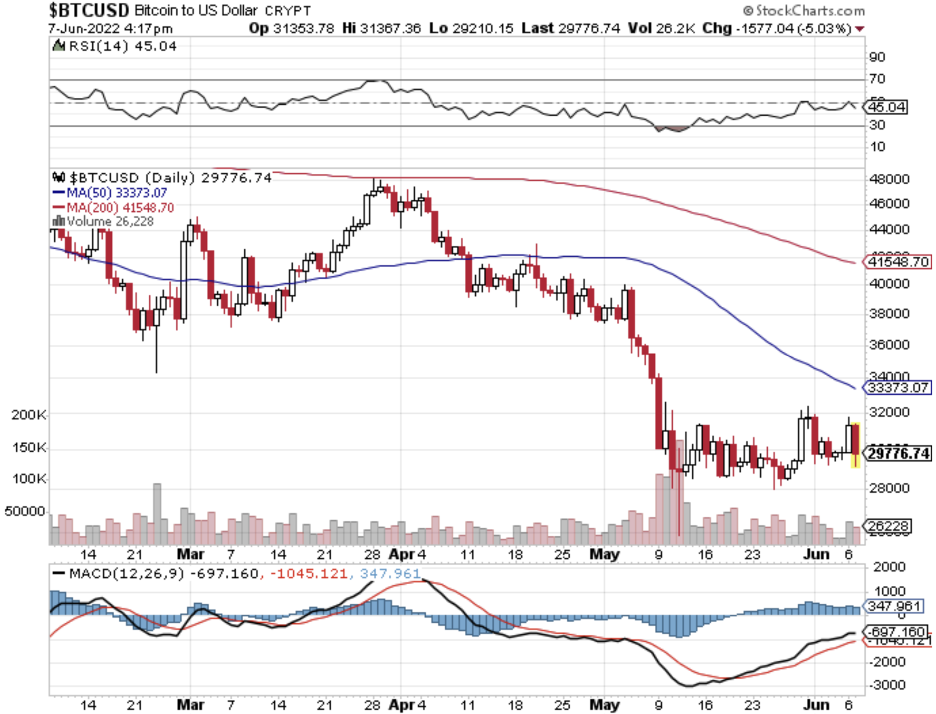
Just as disappointing, crypto has not participated in this latest bear market rally with high growth tech stocks and is down 5% this morning.
Disappointing all around for the crypto industry and this doesn’t help that we are staring at a crypto winter if crypto prices start to decouple with tech stocks.
There is a legitimate chance they might be left out of the recovery stage.
Mad Hedge Bitcoin Letter
September 14, 2021
Fiat Lux
Featured Trade:
(CRYPTO IS LEGIT)
(HOOD), (BTC), (FINRA), (SEC), (CFTC)
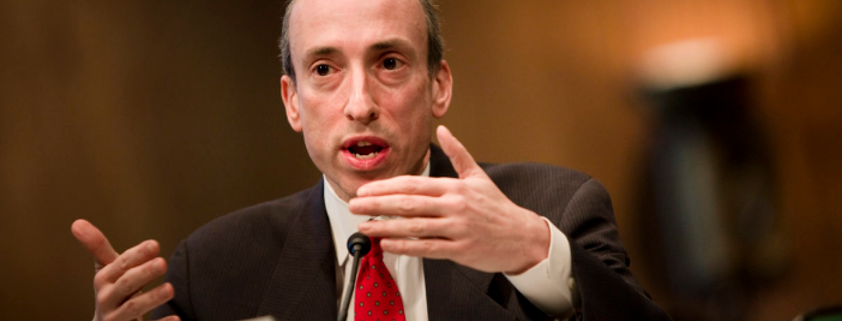
There was a fresh wave of optimism that swept across Washington when SEC Chair Paul Atkins spoke to Congress about making the United States a global hub for digital-asset innovation. Headlines painted him as the opposite of Gary Gensler - friendlier, more flexible, and eager to strike a “balanced” approach.
But anyone who has lived through a regulatory cycle knows better. The pendulum swings, but the incentives at the center never change.
Atkins now gestures to the Senate committee that overly harsh enforcement may have stifled innovation - and that perhaps it is time to bring crypto into a more cooperative regulatory framework. These developments suggest the industry has grown too large and systemically relevant to operate outside the official perimeter of federal oversight.
Don’t blame me for being cynical, but whether the rhetoric is friendly or hostile, boiling this down to money and power still cuts through many adjacent industries.
It’s just the way of life.
Crypto has become lucrative, and every administration - no matter how innovation-forward their branding - still wants a slice of this golden goose.
Why do I say that?
The SEC’s core revenue mechanics have not changed. Every movement on regulated exchanges, from buying to selling, generates the fees that fuel its operations. The language used to justify them may evolve, but the incentive remains untouched.
Investing with retail brokerages is marketed as commission-free, now and forever. They do not charge fees to open or maintain accounts. Yet the fee structure underneath always finds its way back to the same place.
Self-regulatory organizations (SROs) such as the Financial Industry Regulatory Authority (FINRA) impose small fees for sell orders. These fees apply across brokerages. Firms pass them to customers, who indirectly fund regulatory bodies. FINRA is required by law to forward certain fees to the Securities and Exchange Commission.
The numbers shift with time, but the mechanism stays the same: fees ultimately cover the government’s cost of supervising markets and securities professionals.
There are numerous layers of cost embedded into participating on exchanges regulated by the SEC. The result is a well-oiled system of fee collection and institutional reinforcement.
So when Atkins offers his stamp of legitimacy to the crypto sector, the underlying exchange is simple: innovation-friendly messaging in return for bringing digital assets into the fee-generating ecosystem.
For lack of a better word, these fees allow regulators like FINRA and the SEC to rake in the cash, and as we know in this business, money is power.
I only see it as a matter of time before the SEC, FINRA, and Commodity Futures Trading Commission (CFTC) expand their reach further into crypto infrastructure - not just through enforcement, but through officially sanctioned pathways that look friendly on paper yet consolidate control.
And I’m not blaming them. Everyone is in the business of adding to their nest eggs, and the SEC, FINRA, and CFTC are no different.
However, ultimately this is what it’s about: a cash grab dressed up in innovation-forward language. The legitimization of crypto is merely the collateral benefit - one any asset class would be ecstatic to receive.
Take sports as an example. Football leagues scramble for the NFL’s approval, but the NFL rarely offers its blessing. They don’t care if college football and startup leagues battle it out away from the confines of professional football. The cost of lacking an NFL stamp of approval has been devastating for newcomers.
If the SEC once again vouches for large elements of the crypto ecosystem - this time through cooperative rulemaking under Atkins - this will start a chain reaction. It offers an olive branch to wealthy investors who have waited for a friendlier regulator.
Consequently, they would come pouring in, guns blazing, with the heft of their capital and the strength of their financial connections.
Atkins announcing that cryptocurrency exchanges may receive a clearer path to registration, as opposed to the adversarial gridlock of the Gensler era, makes this one step closer to reality.
During his early remarks, Atkins stated that recent regulatory battles left both investors and innovators without adequate clarity. His angle appears the inverse of Gensler’s warnings, but the subtext is the same: the SEC cannot effectively shape a market from which it remains partially excluded.
I want to remind readers that any SEC chair has the choice to allow crypto to operate in a vacuum, but doing so risks letting it grow too big to regulate - and too large to fold into traditional fee structures. They all know that.
Atkins highlights crypto as an asset class with enormous potential, yet one that requires consistent regulatory engagement.
The moral high ground is still shaky.
The SEC continues to permit the listing of foreign firms under structures that allow significant opacity, yet remains eager to frame crypto as the primary risk vector in modern markets.
Atkins acknowledges that Congress must ultimately define jurisdiction, just as Gensler once did. He may sound more cooperative, but the underlying tension is the same.
Regulation would be a huge win for the crypto universe, but it invariably infringes on the decentralized ideals that first drew people to digital assets.
Regulators love to preach about safety, but they preside over a system that endlessly erodes the purchasing power of fiat currency through policy choices far outside the crypto world.
Thus, does anyone sitting in the SEC chair truly believe that preserving the dollar’s value - or crypto’s future - is something they can call safe?