Mad Hedge Biotech and Healthcare Letter
July 27, 2023
Fiat Lux
Featured Trade:
(INVESTING IN NECESSITIES)
(KVUE), (JNJ), (HLN), (GSK), (KO)

Mad Hedge Biotech and Healthcare Letter
July 27, 2023
Fiat Lux
Featured Trade:
(INVESTING IN NECESSITIES)
(KVUE), (JNJ), (HLN), (GSK), (KO)
Everyone knows that Warren Buffett was schooled by the one and only Benjamin Graham. His game was easy-peasy early on — he hunted for dirt-cheap companies in relation to their assets, snagged them, and played the waiting game until the market woke up and realized their true worth. This was the good old 'cigar butt' investing.
It took Charlie Munger, Buffett's partner-in-crime, to shake things up. Munger nudged Buffett to eye high-quality companies with a thick competitive buffer that could weather long stretches of time.
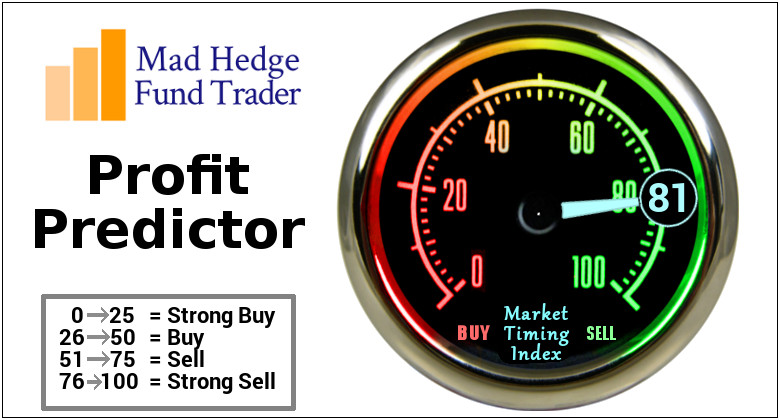
Now with Johnson & Johnson's (JNJ) recent spinoff of Kenvue (KVUE), it seems the investment gods have dished up just the kind of opportunity Munger and Buffett would drool over.
JNJ is rolling out a red carpet, enticing its investors to trade their shares for most of its stake in Kenvue, the consumer division it made public in May.
If you're invested in JNJ, consider looking into this proposition. We're talking about a potential $35 billion transaction. Actually, JNJ is practically dangling a carrot, offering its holders $107 in Kenvue stock for every $100 in JNJ stock, capped, of course.
Basically, the JNJ deal lets holders swap all, some, or zip of their shares for Kenvue. It's a limited-time offer, expiring on August 18, with the price nailed down between August 14 to 16.
Interestingly, the Big Pharma company opted to play the game of 'voluntary exchange offer,' or 'split-off' in Wall Street jargon. A bit more elusive than your garden-variety spinoff, but trust me, it has its charm.
Why, you ask? This method tends to tighten the share count, beefing up the earnings per share.
And here's the sweetener: split-offs usually come with perks. The parent company tends to sprinkle a little discount magic for investors who decide to trade their old shares for the shiny new spinoff ones.
So, what could investors expect from Kenvue?
When it comes to its financial muscle, Kenvue's flexing a robust $20 billion in equity. The balance sheet displays a formidable $35 billion in assets squaring off against a $15 billion debt.
The first quarter has set the pace, projecting an annual revenue run rate of a cool $15.2 billion, and the operating cash flow isn't too shabby either, clocking in at $3.2 billion.
Kenvue's market valuation stands around 18 times its forecasted earnings for 2023, yielding a sweet 3.4%. That's a smidge more than J&J's yield of 2.8%.
Sure, Kenvue may not be sprinting in the high-growth lane — with earnings growth likely to pace in the mid-single digits post-2023 — but it holds a rock-solid portfolio of consumer health brands we've all grown to trust. Bonus? It trades at a discount compared to its closest peer, Haleon (HLN), GlaxoSmithKline’s (GSK) spinoff company.
Kenvue boasts a roster of brand-name products that people can't live without, and this constant demand spells nothing but growth. This spinoff is the proud holder of household names like Tylenol, Listerine, and Band-Aid.
In essence, Kenvue comes off as a Warren Buffett-type business that's up for grabs at a seemingly bargain price.
Consider for a moment why Buffett is so cozy with his long-standing stake in Coca-Cola (KO). Coke quenches the world's thirst with its myriad beverages, winning over brand loyalty and securing repeat purchases like it's a walk in the park.
My investment angle on Kenvue draws a parallel here, with a twist: Kenvue's products are absolute necessities, not just something you treat yourself to. That fact alone makes it even more appealing to me.
The company also disclosed a promising earnings range of $1.26 to $1.31 per share, with sales growth itching to hit a respectable 5%. The cherry on top? They're starting a quarterly dividend at 20 cents a share.
Now, you might be wary of growth prospects stagnating – let's face it, there's a limit to how many Band-Aids and Tylenol a household will need, right?
But here's where the plot thickens: the fine folks over at healthcare firm IQVIA (IQV) made quite the compelling argument that the over-the-counter drug market is expected to grow by a hearty 6.1% until 2025.
With a product lineup that's nothing short of a hit with consumers, a sturdy financial standing, and a rosy outlook for growth in the market it caters to, Kenvue is shaping up to be quite the catch for investors.
Of course, there are possible risks, such as a looming recession prompting even the most brand-loyal customers to opt for generic alternatives or management falling short on growth plans. That said, these potential drawbacks are dwarfed by the massive upsides of investing in Kenvue.
I think it's about time you give Kenvue some serious thought.
Mad Hedge Biotech and Healthcare Letter
August 24, 2022
Fiat Lux
Featured Trade:
(A NEW KID ON THE BLOCK)
(GSK), (HLN), (UL), (PG), (JNJ), (PRGO), (PBH)
GlaxoSmithKline (GSK) started 2022 by turning down a $60 billion offer from Unilever (UL) for its consumer healthcare division, describing the price as too low.
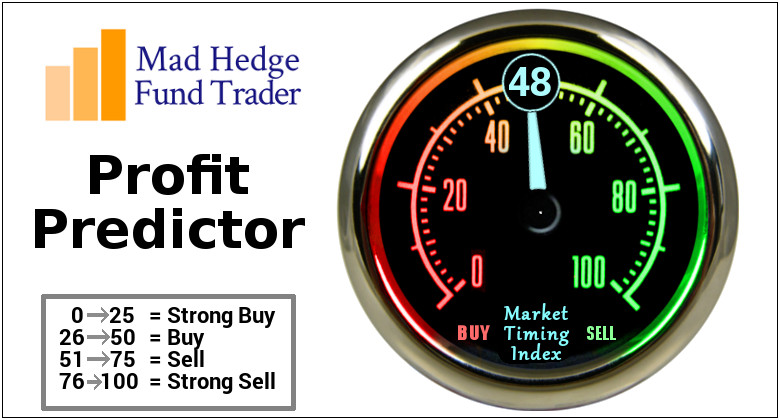
By June, this same division became a standalone company named Haleon (HLN), with a market value of $29 billion—less than half the amount Unilever wanted to pay.
This means investors looking to buy shares of this spinoff still have a chance to take advantage of the bargain price.
Haleon is so far valued at roughly 13.5 times the consensus average for 2023 earnings, making it a lower multiple compared to competitors selling consumer healthcare items like Unilever, which roughly trades at 17 times its projected 2023 profits, and Procter & Gamble (PG), which trades at about 24 times its estimated earnings.
Compared to Procter and Gamble and Unilever, though, Haleon is a large-cap company that’s considered a pure-play consumer healthcare company.
It started trading as a standalone company by July, with a portfolio that included oral health items such as Aquafresh and Sensodyne, some OTC drugs like Advil and Theraflu, and several supplements including the best-selling multivitamin brand Centrum.
Keep in mind that the majority of Haleon’s core products have been practically unchanged for years. This spinoff only allotted roughly $300 million for R&D in 2021.
That comprises a mere 2.7% of its turnover. Meanwhile, GSK spent over 20% of its turnover on R&D initiatives within the same period excluding Haleon.
So far, the only notable pure-play consumer healthcare competitors are Perrigo (PRGO) and Prestige Consumer Healthcare (PBH). However, these two operate at a far smaller scale, with market capitalizations of less than $6 billion.
The absence of a competitive peer group and the limited track record of Haleon as a solo company makes this GSK spinoff more speculative compared to other consumer healthcare firms.
Haleon’s future would become clearer by the end of 2022, with more earnings reports under its belt, alongside the completed deal with Johnson & Johnson (JNJ).
JNJ also plans to create a standalone company for its consumer healthcare division in 2023. Haleon will be combined with this particular spinoff to form a new category.
Based on its current portfolio, brand recognition, and years of experience under Big Pharma’s, Haleon is projected to grow by 3.3% annually from 2023 through 2026.
At this point, Haleon is already considered a dominant player in the field. In the 2021 earnings report, this division brought $11.5 billion to GSK. That’s lower than JNJ’s own consumer healthcare division, which raked in $14.6 billion, but higher than Procter & Gamble’s $10 billion.
A standalone consumer healthcare company has the capacity to attract additional investor attention and gain higher valuations for those looking for steady—albeit not jaw-dropping—growth while earning consistent income from dividends.
Haleon announced that it intends to start paying out in the first half of 2023 “at the lower end” of the 30% to 50% range of its earnings. Looking at the company’s recent price, its 2023 dividend yield is estimated to be at 2.3%.
The consumer healthcare sector is a lucrative segment. The size of this market is estimated to reach $301.4 billion by 2027, with a 7.2% growth in CAGR throughout that period.
The demand for products in this segment tends to be unaffected by economic issues like recessions. Moreover, established brands, particularly those under Big Pharma names like JNJ and GSK, can easily set a very high barrier for competitors to overcome.
Overall, Haleon presents an opportunity for investors to bag a bargain.
It has a solid lineup of strong brands, which have shown their capacity to drum up consistent sales and demand low R&D expenses. These factors make Haleon a potential cash cow that could steadily deliver rising dividends for years to come.
Haleon is a good bet on an excellent emerging market—not to mention a virtually recession-proof—market.