• support@madhedgefundtrader.com
  • Member Login
Mad Hedge Fund Trader
  • Home
  • About
  • Store
  • Luncheons
  • Testimonials
  • Contact Us
  • Click to open the search input field Click to open the search input field Search
  • Menu Menu
Mad Hedge Fund Trader

A Pioneering Leader in the Healthcare World

Biotech Letter

The United States allocates a jaw-dropping 18% of its GDP on healthcare alone. That comprises twice the amount spent by other industrialized nations. Despite that, the US has the shortest life expectancy among the rest of the developed countries and the highest number of recorded maternal deaths.

A potential reason for this disappointing report is that a considerable sum of the capital gets invested in administrative expenses, including insurance companies, defensive care (aka protection for doctors against litigation), and the maintenance of a majorly disconnected system that involves an unparalleled number of varying payers, and a long list of billing staff and specialists. As a result, the healthcare system is plagued with frustrating inefficiencies and an astounding absence of coordination.

In fact, the administrative expenses of America’s National Health Expenditure (NHE) reach a total of about $1 trillion annually. That is roughly 30% of its overall spending.

This staggering amount has paved the way for artificial intelligence (AI) to enter the fray. If AI can offer tangible solutions to administrative issues, the US could save a quarter of its yearly spending on healthcare.

While that is promising, the benefits of AI won’t end there.

The convergence of AI, robotics, and surgery is an exciting area of technological advancement that will likely shape the future of medicine in the coming decade. AI and robotics are already being used in surgery to improve the accuracy and precision of procedures, reduce the risk of human error, and enhance patient outcomes.

In the case of surgeries, a critical question to ask your surgeons is, “How many times have you performed this specific procedure?”

Undoubtedly, surgeons who have done the surgery more times are considered the best options. They have presumably witnessed every potential variation and gained valuable experience when things go awry and, of course, how to remedy the situation. Typically, an experienced surgeon will perform hundreds of procedures every year.

But how would you feel if you discovered that your surgeon is an “AI-robotic platform” that has performed millions of operations yearly?

This AI-robot system would offer a multitude of benefits. First, it can assess the surgical field via infrared and ultraviolet, as well as conduct any procedure with incredible precision and dexterity. Second, the robot won’t be a victim of “human factors” like taking too much coffee, not getting sufficient rest or sleep, or arguing with their spouse hours before the surgery. Third, the platform could offer ways to eventually demonetize and democratize the procedure, enabling thousands of hospitals across the globe to access the technology.

So far, though, there’s no AI capable of performing 100% autonomous procedures. The closest we’ve gotten to date was in 2022 when a group of researchers at Johns Hopkins successfully created STAR or “Smart Tissue Autonomous Robot.”

STAR could perforce a laparoscopic surgery on a pig without any assistance from a human operator or surgeon. This makes the system not only unique but also extremely promising because it needs minimal to no human guidance.

Meanwhile, until this technology becomes completely available, the only company closest to this advancement is Intuitive Surgical (ISRG).

Intuitive’s platform, an “Avatar Robotic System” called da Vinci, allows an experienced surgeon to perform the surgery remotely in what they call “tele-operation mode.” Thus far, more than 60,000 surgeons have completed over 10 million surgical procedures via the da Vinci platform.

Another promising product in Intuitive’s portfolio is called the Ion Endoluminal System.

Intuitive's Ion Endoluminal System is a robotic-assisted platform designed for minimally invasive lung biopsy. It is intended to provide a minimally invasive method for obtaining lung tissue samples that can be used to diagnose lung diseases such as lung cancer.

Basically, the Ion Endoluminal System is made up of a flexible robotic catheter inserted through the patient's mouth or nose and guided to the target area of the lung via real-time imaging. A small needle on the catheter can be used to collect tissue samples from the lung without the need for a surgical incision.

The system guides the catheter to the precise location where the tissue sample is required using advanced imaging technologies such as ultrasound and electromagnetic navigation. The system also includes a workstation, allowing the physician to control the catheter and view the imaging results in real-time.

The Ion Endoluminal System has several advantages over traditional biopsy methods, including less trauma to the patient, shorter recovery times, and the ability to obtain tissue samples from difficult-to-reach areas of the lung. Overall, the Ion system is a significant advancement in the field of minimally invasive lung biopsy, with the potential to improve lung disease diagnosis and treatment.

Robot-assisted medical procedures beat the shaky hands of human surgeons. That thesis has not been proven wrong since Intuitive went public in 2005. The company has emerged as the apparent market leader with its “razors and blades” model that ensures it generates a recurring revenue stream as its platforms are used to perform surgeries.

At this point, Intuitive controls about 805 of this multi-billion-dollar market worldwide. In 2022, the surgical robotics market was valued at $8.5 billion, with this sector projected to exhibit tremendous growth to reach over double its valuation to $18 billion by 2027.

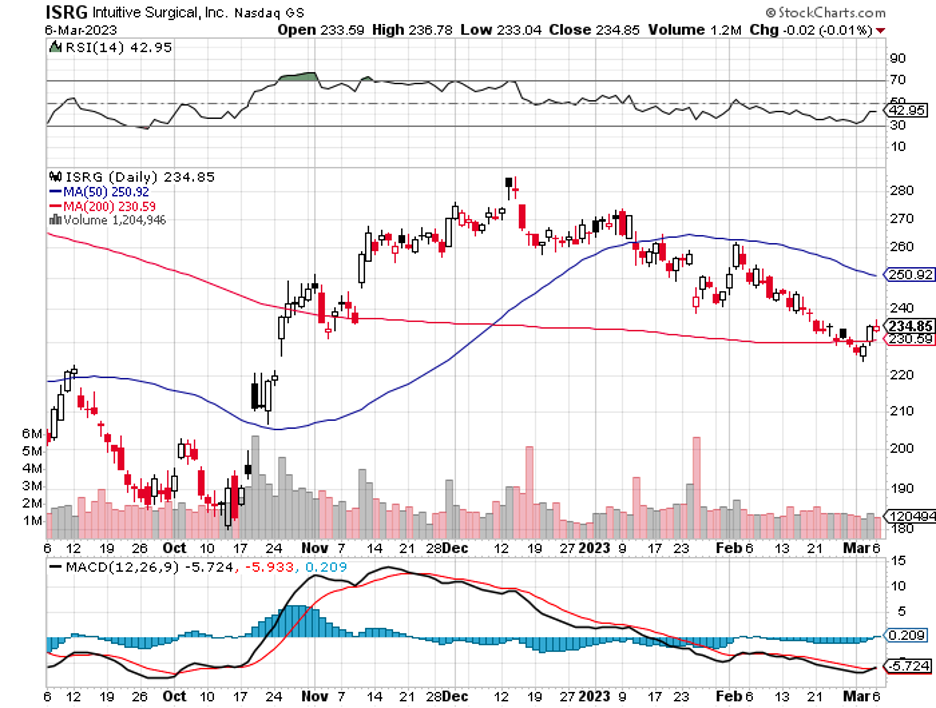
If you’re searching for a profitable business in a booming healthcare industry segment, Intuitive appears to be a no-brainer stock to add to your portfolio and hold for the long term. I suggest you buy the dip.
 

intuitive


https://madhedgefundtrader.com/wp-content/uploads/2019/05/cropped-mad-hedge-logo-transparent-192x192_f9578834168ba24df3eb53916a12c882.png 0 0 Mad Hedge Fund Trader https://madhedgefundtrader.com/wp-content/uploads/2019/05/cropped-mad-hedge-logo-transparent-192x192_f9578834168ba24df3eb53916a12c882.png Mad Hedge Fund Trader2023-03-07 18:00:132023-03-28 15:08:08A Pioneering Leader in the Healthcare World
Mad Hedge Fund Trader

March 2, 2023

Biotech Letter

Mad Hedge Biotech and Healthcare Letter
March 2, 2023
Fiat Lux

Featured Trade:

(AN UNBEATABLE STOCK REFORMING THE SECTOR)
(LLY), (JNJ), (SNY), (NVO)

https://madhedgefundtrader.com/wp-content/uploads/2019/05/cropped-mad-hedge-logo-transparent-192x192_f9578834168ba24df3eb53916a12c882.png 0 0 Mad Hedge Fund Trader https://madhedgefundtrader.com/wp-content/uploads/2019/05/cropped-mad-hedge-logo-transparent-192x192_f9578834168ba24df3eb53916a12c882.png Mad Hedge Fund Trader2023-03-02 15:02:072023-03-02 16:56:40March 2, 2023
Mad Hedge Fund Trader

An Unbeatable Stock Reforming The Sector

Biotech Letter

After starting 2023 with such great promise, practically all major stock indexes in the United States fell last month. Stocks dipped because of the unrelentingly rising inflation, which economists anticipate to lead to another round of seemingly unstoppable interest rate hikes later in the year.

What can stock investors do in this climate?

The ideal stocks in this situation are those defensive in nature because they tend to be less reactive or sensitive to macroeconomic conditions. As a result, defensive stocks deliver relatively solid price performance in bear and bull markets.

Defensive stocks are companies whose products or services are considered essential or necessary, regardless of economic conditions. These companies typically provide products or services that people and businesses cannot easily do without, such as healthcare, utilities, and consumer staples. Because these companies are less susceptible to fluctuations in the economy, they are often viewed as a safe investment option during times of market uncertainty.

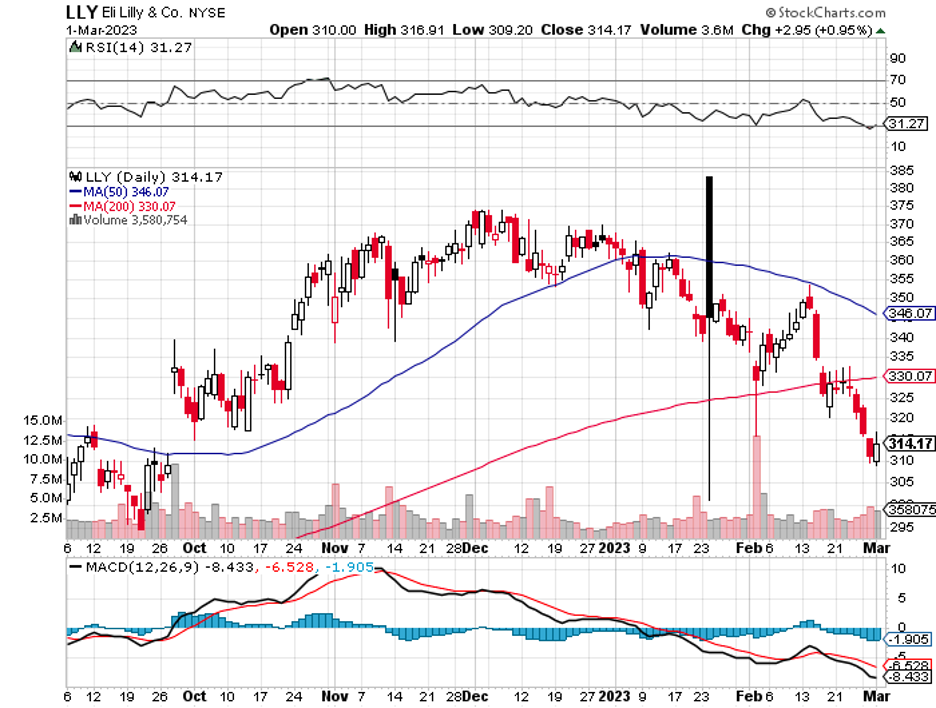
Eli Lilly (LLY) stands out as one of the best defensive stocks in the biotechnology and healthcare sector today.

With over 38,000 employees across the globe and products commercially available in at least 120 countries, the company is no doubt a dominant presence in the industry. It is a global pharmaceutical organization that develops, manufactures, and markets drugs for a wide range of medical conditions, including diabetes, cancer, and autoimmune disorders.

The company has been in operation for over 140 years and has a strong reputation for innovation and research. Apart from Johnson & Johnson (JNJ), Eli Lilly’s market capitalization of roughly $327 billion makes it the most prominent pharmaceutical business worldwide.

Meanwhile, Eli Lilly pays out a dividend that yields around 1.1%. Over the trailing decade, this giant drugmaker’s dividend has experienced a consistent increase of about 130%.

Given that Eli Lilly is a healthcare company that produces medicines for life-threatening and chronic conditions, it can be considered a defensive stock.

In 2022, the company’s shares gained approximately 32.4% thanks to its solid organic growth and deep and diverse new treatments and drugs pipeline. Considering its history and track record combined with the market's volatility, Eli Lilly also benefited from its image of being a “safe” stock.

Despite the uncertainties, Eli Lilly looks to be poised for another healthy run in 2023. In terms of growth, the company is projected to climb higher courtesy of its newly approved diabetes and obesity drug, Mounjaro, which shows impressive potential. The company also has a promising pipeline, with several high-value candidates in the immunology and dermatology segments expected to gain approval this year.

Recently, Eli Lilly announced that it would put a cap on the out-of-pocket expenses for insulin at $35 per month for uninsured patients and those covered by commercial insurance. The company also surprised the public by announcing its plan to lower the price of this highly controversial drug by 70%.

After drugmakers jacked up the price of insulin in the past years, this drug became the symbol of out-of-control healthcare costs.

In the US alone, over 30 million people suffer from diabetes. Of these patients, more than 7 million need to take insulin every day. The alarming part of this situation is that 1 in 7 patients who require insulin daily find their budget affected at “catastrophic” levels because of the medication’s cost. These patients allot a minimum of 40% of their disposable income to the treatment alone.

This is why Eli Lilly’s announcement marked a significant development in the sector after months of aggressive lobbying to lower the price of the drug. With the company’s decision, the pressure became more intense for other drugmakers to follow suit. Specifically, major insulin distributors like Sanofi (SNY) and Novo Nordisk (NVO) are urged to apply the same rule.

All in all, Eli Lilly has a virtually recession-proof model and a positive long-term outlook. I suggest you buy the dip.


eli lilly defensive

https://madhedgefundtrader.com/wp-content/uploads/2019/05/cropped-mad-hedge-logo-transparent-192x192_f9578834168ba24df3eb53916a12c882.png 0 0 Mad Hedge Fund Trader https://madhedgefundtrader.com/wp-content/uploads/2019/05/cropped-mad-hedge-logo-transparent-192x192_f9578834168ba24df3eb53916a12c882.png Mad Hedge Fund Trader2023-03-02 15:00:042023-03-27 17:04:08An Unbeatable Stock Reforming The Sector
Mad Hedge Fund Trader

February 28, 2023

Biotech Letter

Mad Hedge Biotech and Healthcare Letter
February 28, 2023
Fiat Lux

Featured Trade:

(NO REST FOR THE WEARY)
(PFE), (BNTX), (SGEN), (MRK)

https://madhedgefundtrader.com/wp-content/uploads/2019/05/cropped-mad-hedge-logo-transparent-192x192_f9578834168ba24df3eb53916a12c882.png 0 0 Mad Hedge Fund Trader https://madhedgefundtrader.com/wp-content/uploads/2019/05/cropped-mad-hedge-logo-transparent-192x192_f9578834168ba24df3eb53916a12c882.png Mad Hedge Fund Trader2023-02-28 15:02:412023-02-28 20:37:56February 28, 2023
Mad Hedge Fund Trader

No Rest for the Weary

Biotech Letter

Pfizer (PFE), along with its partner BioNTech (BNTX), developed one of the first COVID-19 vaccines to receive emergency use authorization from regulatory bodies worldwide. The Pfizer-BioNTech vaccine has been highly effective in preventing COVID-19 infection and has played a significant role in the global effort to curb the pandemic.

In addition to its vaccine, Pfizer also developed a COVID-19 treatment called Xeljanz, which has shown promising results in clinical trials. Xeljanz, originally developed to treat rheumatoid arthritis, is an oral medication that works by blocking a molecule involved in the immune response, which can reduce the risk of severe illness and death in some COVID-19 patients.

The Pfizer-BioNTech vaccine and Xeljanz have contributed to the company's financial success during the COVID-19 pandemic. In fact, this lineup made up the bulk of Pfizer’s operational growth of an impressive 30% year over year, pushing the company’s sales in 2022 to a whopping $100 billion.

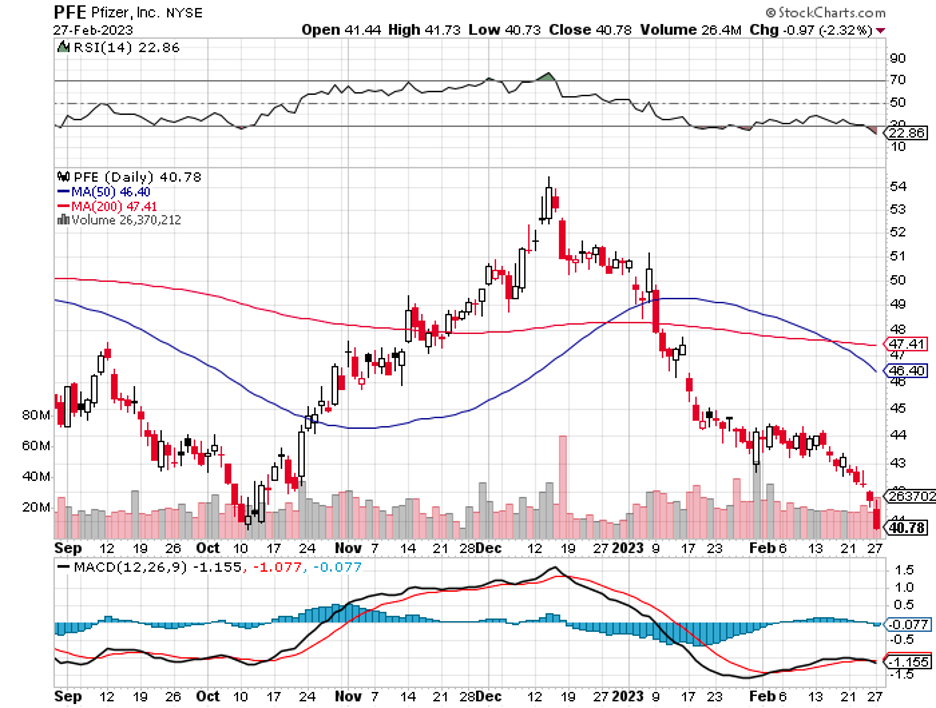
But now that the pandemic has come to an end, Pfizer faces a massive revenue hit. With its boatload of cash, however, the company is in excellent shape and position to make an acquisition.

The latest name under Pfizer’s radar is Seagen (SGEN).

This is the second time Seagen has found itself the center of acquisition reports. In 2022, the biotech was said to be in serious discussion with Merck (MRK). At one point, Merck reportedly offered $200 per share, but the talks fell apart because neither party was happy with the final price.

Now it’s Pfizer’s turn to pitch its offer. The Big Pharma company is said to be in discussions to buy the cancer-focused biotech for a deal worth more than $30 billion.

This deal could prove to be a boon for Pfizer as the company sustains its momentum and continue to boost its portfolio and late-stage programs. Aside from the waning sales of its COVID products, it also faces a patent cliff as some of its blockbuster drugs will soon lose their exclusivity.

Seagen focuses on a group of cancer therapies called antibody-drug conjugates, or ADCs.

Basically, ADCs are a type of cancer treatment that combines the specificity of antibodies with the potency of chemotherapy. ADCs consist of three components: an antibody that targets a specific cancer cell marker, a cytotoxic drug that kills the cancer cell, and a linker that connects the two components.

Once the ADC is administered to the patient, the antibody portion of the ADC selectively binds to the cancer cell surface marker. Then the entire ADC is internalized into the cancer cell. Once inside the cancer cell, the linker is degraded, and the cytotoxic drug is released, killing the cancer cell.

The advantage of ADCs over traditional chemotherapy is that they are more selective and can target cancer cells more precisely while minimizing damage to healthy cells. ADCs have shown promising results in clinical trials and are currently approved for the treatment of several types of cancer.

In 2019, Seagen received FDA approval for its ADC named Padcev. The treatment raked in $451 million in 2022, but sales are projected to reach $2.4 billion in 2027.

Since Merck has been working on its own ADCs, a Pfizer acquisition of the sought-after Seagen seems likely as it would not attract anti-trust investigations.

One of the main reasons Big Pharma names are fighting over Seagen is the biotech’s revenue forecasts. By 2026, Seagen is projected to rake in $5 billion in revenue and peak at $9 billion by 2030.

Aside from Padcev’s current indication, Seagen has been working on how it could be used as a combo treatment alongside Merck’s top-selling Keytruda to target bladder cancer. The company also queued the drug for several trials. These would boost the company’s $2 billion annual revenue and $30.1 billion market value if approved.

Pfizer has been sitting on a massive war chest thanks to the success of its COVID programs. Despite its impressive cash flow, the company has no time to rest as it scrambles to ride the momentum and ensure that all its progress doesn’t go to waste.

Since then, the company has been aggressive in striking deals, including its $11.6 billion purchase of Biohaven Pharmaceuticals, which came with a top-selling migraine treatment, and its $5.4 billion agreement with Global Blood Therapeutics, which brought with its rare hematological therapies.

If Pfizer buys Seagen, it will mark the most significant deal since the Big Pharma’s acquisition of Wyeth for $68 billion back in 2009.

Pfizer disclosed that it plans to add $25 billion to its annual revenue via business development agreements at the end of the decade as it aims to mitigate the projected $17 billion loss from its products going off-patent. Considering that the company would buy Seagen shares at a premium, the deal would be a win-win for both parties.


pfizer seagen

https://madhedgefundtrader.com/wp-content/uploads/2019/05/cropped-mad-hedge-logo-transparent-192x192_f9578834168ba24df3eb53916a12c882.png 0 0 Mad Hedge Fund Trader https://madhedgefundtrader.com/wp-content/uploads/2019/05/cropped-mad-hedge-logo-transparent-192x192_f9578834168ba24df3eb53916a12c882.png Mad Hedge Fund Trader2023-02-28 15:00:442023-03-24 22:35:11No Rest for the Weary
Mad Hedge Fund Trader

February 23, 2023

Biotech Letter

Mad Hedge Biotech and Healthcare Letter
February 23, 2023
Fiat Lux

Featured Trade:

(BATTLE FOR GENE THERAPY SUPREMACY)
(CRSP), (NVS), (BIIB), (BLUE), (VYGR), (GBIO), (SIOX), (NTLA), (EDIT), (VRTX), (PRIME), (BEAM)

https://madhedgefundtrader.com/wp-content/uploads/2019/05/cropped-mad-hedge-logo-transparent-192x192_f9578834168ba24df3eb53916a12c882.png 0 0 Mad Hedge Fund Trader https://madhedgefundtrader.com/wp-content/uploads/2019/05/cropped-mad-hedge-logo-transparent-192x192_f9578834168ba24df3eb53916a12c882.png Mad Hedge Fund Trader2023-02-23 17:02:202023-02-23 21:44:14February 23, 2023
Mad Hedge Fund Trader

Battle for Gene Therapy Supremacy

Biotech Letter

Gene therapy is arguably one of the most fascinating and revolutionary fields in the healthcare and biotechnology industry.

A significant reason for the excitement behind gene therapy is that it provides the possibility of “functional cures,” such as “one-and-done treatments,” for patients. It’s also why these therapies are some of the most costly on the market.

For example, Zolgensma from Novartis (NVS), which focuses on treating spinal muscular atrophy in infants, has a whopping $2 million-plus price tag. Despite that, it’s considered the best option.

For context, its counterpart, Spinraza from Biogen (BIIB), costs roughly $750,000 in the first year of treatment. Unlike Zolgensma, Spinraza needs to be administered four times each year. After the first treatment, patients would need to pay $350,000 per annum. By the fifth year, Spinraza has surpassed the treatment cost of Zolgensma.

Despite its incredible potential, gene therapy is one of the riskiest bets.

Take Bluebird Bio (BLUE) into consideration. This biotech has won not only one but two regulatory approvals for its innovative gene therapies. One is for Skysona, which targets a rare cerebral condition called adrenoleukodystrophy; the other, Zynteglo, is for the blood disorder beta-thalassemia. Unfortunately, this biotech’s price has slid by more than 90% in the past five years.

Working on gene therapies is filled with complicated and challenging obstacles. Most companies in this segment ended up burning through their cash without successfully launching a marketable product. Some examples of these are Voyager Therapeutics (VYGR), Generation Bio (GBIO), and Sio Gene Therapies (SIOX).

However, there is a field in the gene therapy world that has substantially rewarded investors: CRISPR gene editing.

CRISPR means Clustered, Regularly Interspaced Short Palindromic Repeats, which was discovered by Jenifer Doudna and Emannualle Charpentier. Their discovery won the Nobel Prize for Chemistry in 2020.

Basically, CRISPR is utilized by bacteria to recognize genetic sequences that belong to dangerous or harmful viruses and cleave them via specialized enzymes like CAS-9. Eventually, Doudna and Charpentier discovered that the system could be modified to target and remove, destroy, or even edit damaging genetic sequences in human beings.

This discovery gave birth to many biotech companies. Intellia Therapeutics (NTLA) was the brainchild of Doudna, while Charpentier co-founded CRISPR Therapeutics (CRSP).

Over the past five years, NTLA's share price has risen by 146% while CRISPR skyrocketed by 210%. In comparison, the S&P 500 recorded a 53% gain within the same timeframe.

Given the volatility of the field and market volatility, other CRISPR-centered companies failed to replicate this success.

The share price of Editas Medicine (EDIT) fell by 55% over the past five years. Caribou Biosciences (CRBU) also failed to ride the momentum and slid by 44%.

Still, there are positive updates amid the struggles of the sector.

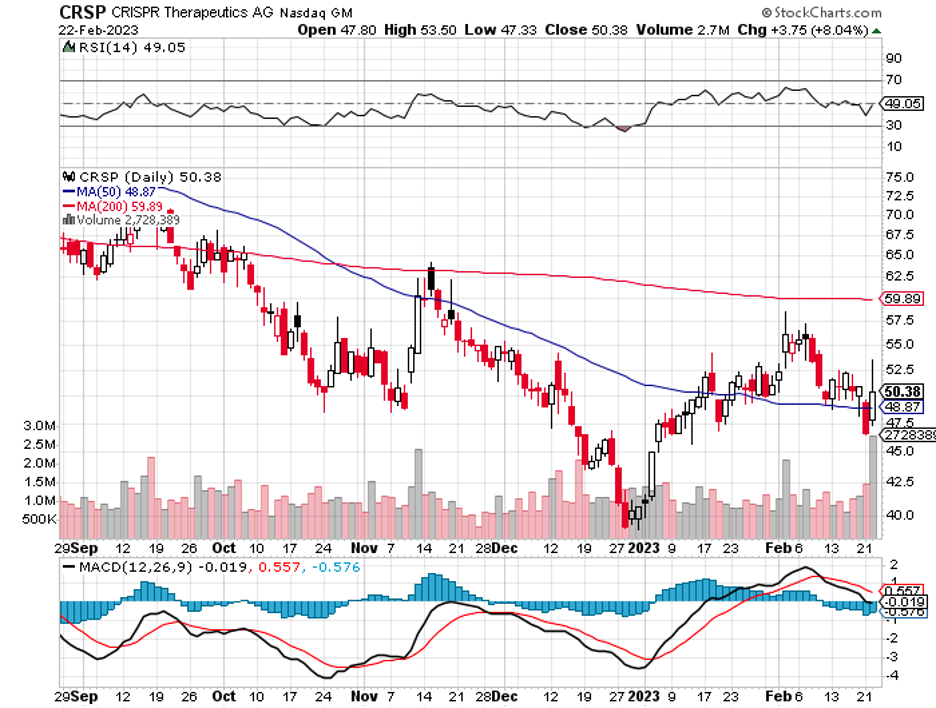
The latest news is from CRISPR Therapeutics, which expects several catalysts in 2023 thanks to its promising pipeline of candidates and clinical trials. So far, one of the most anticipated catalysts is its biologics license application for its sickle cell disease candidate, which the company aims to file by March 2023.

CRISPR Therapeutics developed this candidate, called exa-cel, alongside Vertex Pharmaceuticals (VRTX). It would be the first-ever Crispr-based therapy to edit or rewrite faulty genes if approved. Based on the company’s data, patients who underwent this one-time treatment have continued to be free of sickle cell disease symptoms.

Every year, 100,000 patients in the US are reported to suffer from sickle cell disease. Many companies have offered treatments for this condition for years but no cure. Hence, CRISPR and Vertex’s one-and-done therapy has received a fast-tracked designation. Consequently, this would give the developers sought-after market exclusivity.

As anticipated, CRISPR Therapeutics’ competitors are hot on its heels with sickle cell disease treatments of their own. To date, Prime Medicine (PRME), Beam Therapeutics (BEAM), Editas, and Intellia have candidates queued for clinical trials.

Overall, the gene editing sector continues to be an exciting and interesting field. Investors looking to take part of the action in this segment should consider buying and holding CRISPR Therapeutics stock for at least five years because the company has a reasonable chance of becoming the most dominant name in the business soon.


gene therapy

https://madhedgefundtrader.com/wp-content/uploads/2019/05/cropped-mad-hedge-logo-transparent-192x192_f9578834168ba24df3eb53916a12c882.png 0 0 Mad Hedge Fund Trader https://madhedgefundtrader.com/wp-content/uploads/2019/05/cropped-mad-hedge-logo-transparent-192x192_f9578834168ba24df3eb53916a12c882.png Mad Hedge Fund Trader2023-02-23 17:00:182023-02-28 18:45:46Battle for Gene Therapy Supremacy
Mad Hedge Fund Trader

February 21, 2023

Biotech Letter

Mad Hedge Biotech and Healthcare Letter
February 21, 2023
Fiat Lux

Featured Trade:

(AN UNFAILING STOCK FOR YOUR WATCHLIST)
(UNH)

https://madhedgefundtrader.com/wp-content/uploads/2019/05/cropped-mad-hedge-logo-transparent-192x192_f9578834168ba24df3eb53916a12c882.png 0 0 Mad Hedge Fund Trader https://madhedgefundtrader.com/wp-content/uploads/2019/05/cropped-mad-hedge-logo-transparent-192x192_f9578834168ba24df3eb53916a12c882.png Mad Hedge Fund Trader2023-02-21 15:02:482023-02-21 15:44:43February 21, 2023
Mad Hedge Fund Trader

An Unfailing Stock for Your Watchlist

Biotech Letter

After a grueling year, investors are desperate for high-quality stocks that can push their portfolios toward a robust recovery. Besides, the stock market is still expected to suffer from volatility because of skyrocketing interest rates and concerns over a possible recession.

This is why it’s critical to look for stocks with long-term potential regardless of the short-term uncertainties.

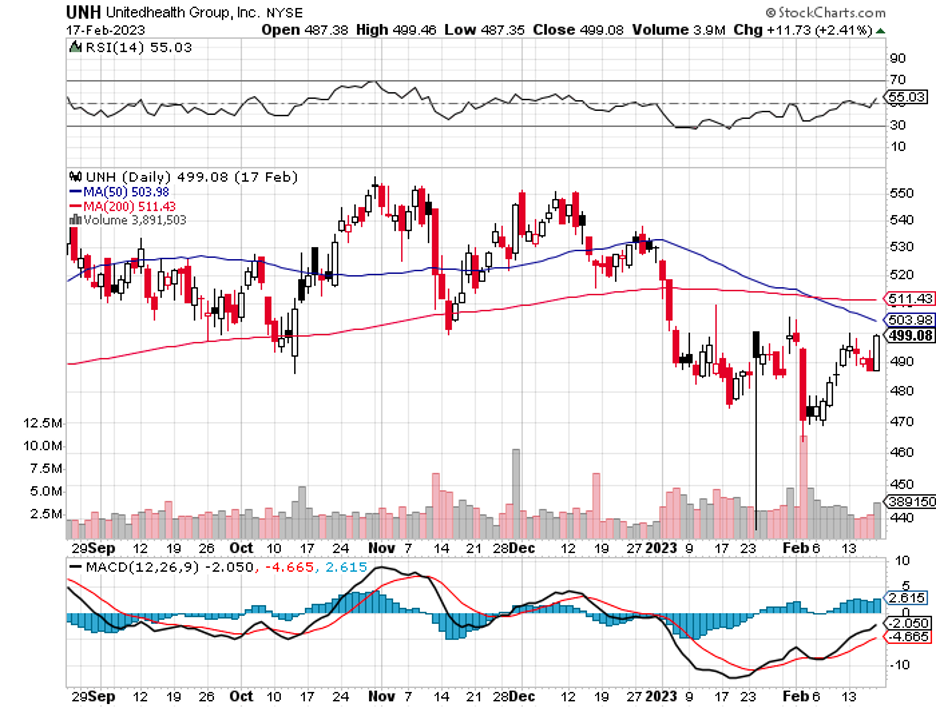
One of the stocks that fall under this category is UnitedHealth Group (UNH).

United is the second biggest health insurance plan provider in the United States. It handles over 45 million individuals domestically and more than 5 million customers across the globe. On top of these, United has over 100 million clients via its Optum Health subsidiary.

United shares have catapulted by 115% over the past 5 years and 748% in the last decade. This shows the company’s stability and solid leadership. After all, these incredible gains didn’t occur by accident.

The company has reported positive year-over-year growth in its bottom line in 19 out of 20 years, with the Great Recession in 2008 being the only exception.

The company provides an extensive range of services, including medical and commercial insurance, prescription, Medicare Part D plans, Medicare Advantage, Medicaid, and Medicare Supplement. Its sheer size and diverse portfolio easily set United apart from its counterparts in the sector. More importantly, the company is consistent in its performance and frequently surpasses its rivals in terms of profitability.

It also boasts of higher margins that consequently lead to better efficiency ratios like return on equity and return on assets. This indicates United’s superior way of handling its financial resources to ensure it delivers good returns for its shareholders.

These factors all result in a notably solid company that delivers stable cash flows throughout the different economic cycles. Admittedly, though, United will never become a transformative stock. Instead, it should be regarded as one of the most reliable dividend stocks in anyone’s portfolio.

Over the last 10 years, United’s shareholder distributions have regularly grown, with the stock offering a 1.3% dividend yield. While this is notably lower than the S&P 500’s current average yield at 1.7%, the company has been aggressive in boosting its payouts every quarter.

For context, its $1.65 per share payment in the current quarter is almost eight times the $0.2125 it paid its shareholders 10 years ago.

Remarkably, the company only took 7 years to triple its payout in 2015, which was at $0.50 per share.

All in all, these average out to a compound annual growth rate of 18.6%.

That’s an impressive rate of growth, and this performance could very well be sustained thanks to United’s strong earnings.

With the business showing no signs of slowing down anytime soon and the continuous expansion of its Medicare segment, United’s bottom line is projected to climb between 13% and 16% every year over the long term.

Currently, United trades at 23 times earnings, making it reasonably priced albeit a bit more costly than the S&P 500’s average of 20. Still, this type of growth and such a solid dividend make the healthcare stock worth a premium.

To date, United has a payout ratio of 29%, demonstrating that the company is capable of producing more than enough earnings to sustain and boost its dividends.

It also has a forward P/E ratio under 20, indicating that investors can buy United shares sans the risk brought by too much volatility. Hence, this is an excellent stock for income investors and retirees. I suggest you put it on your current watchlist and be ready to buy the dip.


united

https://madhedgefundtrader.com/wp-content/uploads/2019/05/cropped-mad-hedge-logo-transparent-192x192_f9578834168ba24df3eb53916a12c882.png 0 0 Mad Hedge Fund Trader https://madhedgefundtrader.com/wp-content/uploads/2019/05/cropped-mad-hedge-logo-transparent-192x192_f9578834168ba24df3eb53916a12c882.png Mad Hedge Fund Trader2023-02-21 15:00:442023-03-01 18:51:42An Unfailing Stock for Your Watchlist
Mad Hedge Fund Trader

February 16, 2023

Biotech Letter

Mad Hedge Biotech and Healthcare Letter
February 16, 2023
Fiat Lux

Featured Trade:

(AN INFALLIBLE GROWTH STOCK IN BIOTECH)
(VRTX), (CRSP), (MRNA)

https://madhedgefundtrader.com/wp-content/uploads/2019/05/cropped-mad-hedge-logo-transparent-192x192_f9578834168ba24df3eb53916a12c882.png 0 0 Mad Hedge Fund Trader https://madhedgefundtrader.com/wp-content/uploads/2019/05/cropped-mad-hedge-logo-transparent-192x192_f9578834168ba24df3eb53916a12c882.png Mad Hedge Fund Trader2023-02-16 16:02:022023-02-16 22:58:51February 16, 2023
Page 46 of 115«‹4445464748›»

Legal Disclaimer

There is a very high degree of risk involved in trading. Past results are not indicative of future returns. MadHedgeFundTrader.com and all individuals affiliated with this site assume no responsibilities for your trading and investment results. The indicators, strategies, columns, articles and all other features are for educational purposes only and should not be construed as investment advice. Information for futures trading observations are obtained from sources believed to be reliable, but we do not warrant its completeness or accuracy, or warrant any results from the use of the information. Your use of the trading observations is entirely at your own risk and it is your sole responsibility to evaluate the accuracy, completeness and usefulness of the information. You must assess the risk of any trade with your broker and make your own independent decisions regarding any securities mentioned herein. Affiliates of MadHedgeFundTrader.com may have a position or effect transactions in the securities described herein (or options thereon) and/or otherwise employ trading strategies that may be consistent or inconsistent with the provided strategies.

Copyright © 2026. Mad Hedge Fund Trader. All Rights Reserved. support@madhedgefundtrader.com
Scroll to top