• support@madhedgefundtrader.com
  • Member Login
Mad Hedge Fund Trader
  • Home
  • About
  • Store
  • Luncheons
  • Testimonials
  • Contact Us
  • Click to open the search input field Click to open the search input field Search
  • Menu Menu
Mad Hedge Fund Trader

An Underrated Yet Overachieving Stock

Biotech Letter

As we brace ourselves for another uncertain year, large-cap biotechnology and healthcare companies continue to be viewed as attractive options for a defensive play. These businesses offer a chance at insulating some capital from the slippery slope many investors still anticipate in 2023.

That perspective boosted the stock prices of several names in the healthcare industry in 2022. Some of the biggest companies in this sector are up, including UnitedHealth (UNH), Eli Lilly (LLY), and Johnson & Johnson (JNJ). In fact, the Health Care Select Sector SDPR fund (XLV) is only down by 4.6% compared to the S&P 500, which slid by roughly 20%.

With 2022 coming to a close, it’s reasonable to expect the trend to continue next year. Looking at the industry, there are still many names with a lot of room to grow.

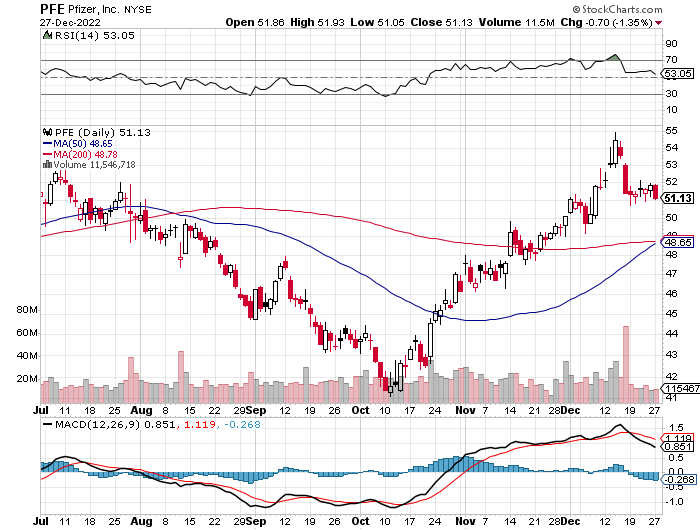
One of them is Pfizer (PFE).

Given its performance and plans, Pfizer stands out as one of the best risk-adjusted options to own in this sector. Actually, this stock could give the likes of AbbVie (ABBV) and Bristol-Myers Squibb (BMY) a run for their money.

While its minimal gains have not kept pace with other Big Pharma names, Pfizer still easily bested the -14% recorded by the S&P 500. This is because investors remain anxious over the company’s future post-COVID. However, Pfizer has aggressively developed its pipeline and leveraged its COVID-19 profits to create more blockbusters.

One promising project is its migraine franchise, which Pfizer received following its $11.6 billion acquisition of Biohaven. The company estimates $6 billion in peak sales yearly from this program.

Another asset that Pfizer added via acquisitions is ulcerative colitis treatment etrasimod, which the company received following its $6.7 billion deal with Arena Pharmaceuticals. Given the decent-sized market for this condition, the candidate is expected to rake in $1 billion to $2 billion in peak sales.

Multiple myeloma treatment Elranatamab is projected to turn into a blockbuster as well. Although this market is already a bit crowded, with Legend Biotech (LEGN) and Johnson & Johnson leading the charge, Pfizer’s candidate can still attract its own share. So far, Elranatamab is projected to rake in $4 billion in peak sales.

The company is also leveraging its established reputation in the vaccine world. Pfizer’s vaccine candidate for the respiratory syncytial virus (RSV) is anticipated to become another blockbuster, with estimated annual sales to reach more than $2 billion.

Aside from these, there are 13 more candidates in the company’s pipeline. All these short-term catalysts are expected to deliver a compounded annual revenue growth rate of roughly 6% from 2020 up until 2025. Notably, this projection does not include the profits from its COVID-19 franchise.

Meanwhile, there are several longer-term catalysts queued in Pfizer’s R&D plans.

One is the expansion of its mRNA vaccine dominance, which is projected to become a $10 billion to $15 billion yearly business in the long run. While sales for its COVID-19 vaccines and boosters are expected to decline, the combination vaccine targeting the flu and COVID-19 could realistically be the primary driving force for this program. Even the shingles vaccine looks promising, with peak sales projected to reach $6 billion by 2030.

Its sickle cell disease program, which Pfizer received via its acquisition of Global Blood Therapeutics, is anticipated to rake in $3 billion in peak sales. If approved, this could go head-to-head against Vertex (VRTX) and CRISPR Therapeutics’ (CRSP) much-awaited candidate.

Overall, Pfizer is an excellent defensive player in this tumultuous period. Its resilience and ability to withstand recessions and bear markets are clearly top-notch. Its core business and pipeline look promising. Plus, despite its strong financial resources and incredible track record, its low valuation makes it an underrated stock with a value notably stronger than the average investor can appreciate.
 

pfizer

https://madhedgefundtrader.com/wp-content/uploads/2019/05/cropped-mad-hedge-logo-transparent-192x192_f9578834168ba24df3eb53916a12c882.png 0 0 Mad Hedge Fund Trader https://madhedgefundtrader.com/wp-content/uploads/2019/05/cropped-mad-hedge-logo-transparent-192x192_f9578834168ba24df3eb53916a12c882.png Mad Hedge Fund Trader2022-12-27 16:00:002023-01-02 22:02:07An Underrated Yet Overachieving Stock
Mad Hedge Fund Trader

December 22, 2022

Biotech Letter

Mad Hedge Biotech and Healthcare Letter
December 22, 2022
Fiat Lux

Featured Trade:

(AN INVINCIBLE STOCK THAT CAN WEATHER ANY STORM)
(MRK), (MRNA)

https://madhedgefundtrader.com/wp-content/uploads/2019/05/cropped-mad-hedge-logo-transparent-192x192_f9578834168ba24df3eb53916a12c882.png 0 0 Mad Hedge Fund Trader https://madhedgefundtrader.com/wp-content/uploads/2019/05/cropped-mad-hedge-logo-transparent-192x192_f9578834168ba24df3eb53916a12c882.png Mad Hedge Fund Trader2022-12-22 18:02:542022-12-22 18:26:35December 22, 2022
Mad Hedge Fund Trader

An Invincible Stock That Can Weather Any Storm

Biotech Letter

Given the volatility of today’s market, anxious investors look into dividend stocks for safety and security. After all, dividends are excellent sources of passive income—something that would definitely be handy when facing a 40-year-high inflation and seemingly never-ending market losses.

However, not all companies that pay out dividends are created equal. With the current economic climate and financial turmoil, choosing businesses that would less likely lower or suspend their payouts becomes even more crucial.

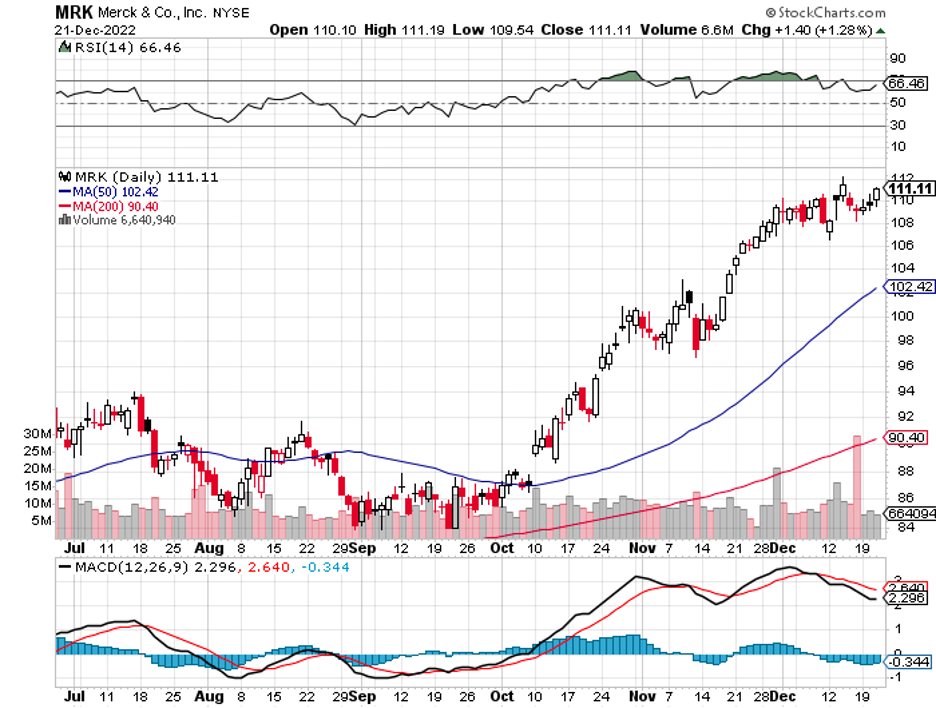
One of the companies that meet these qualities in the biotechnology and healthcare sector is Merck (MRK).

Merck is one of the biggest biopharmaceutical companies across the globe, with a remarkable portfolio of drugs and treatments.

Merck’s resiliency at a period when so many companies have been struggling to keep afloat has indubitably attracted investors’ attention. One of its recent accomplishments is the promising results of its personalized cancer vaccine project with Moderna (MRNA). Needless to say, this will be a massive game-changer if the two companies manage to successfully launch the product.

However, none is more widely known among its products than Keytruda, with the drugmaker continuously raking more indications for its crown jewel with no signs of stopping anytime soon.

Keytruda contributes a considerable share of the company’s total revenue. This cancer therapy is also the fastest-growing treatment when it comes to sales. In the third quarter alone, Keytruda generated $5.4 billion, growing by an impressive 20% year over year. This accounts for more than 33% of Merck’s top line, which showed off a 14% jump year over year to reach $15 billion in the third quarter.

On top of expanding the application of Keytruda to cover new indications, the company has been developing a version of the treatment that can be given subcutaneously rather than the current intravenous delivery method.

Offering Keytruda as a subcutaneous injection or a shot administered into the fatty tissues just beneath the skin would notably reduce the future damage that biosimilars could inflict on the top-selling treatment in 2028. This is because patents protecting this particular formulation of Keytruda could be extended until the late 2040s.

Apart from that, Keytruda’s subcutaneous version would be able to provide several advantages over the current intravenous delivery method. For one, the time needed to administer the drug would be substantially reduced from the current 30 minutes since patients can easily self-inject in their own homes. This will also decrease their dependency on hospitals.

This version would also ease the discomfort of patients and significantly lower their expenses, which will consequently motivate more insurance companies to opt to prescribe this branded product instead of the biosimilar alternatives.

Other critical products in Merck’s portfolio include its HPV vaccines Gardasil and Gardasil 9. The two managed to deliver combined sales of $2.3 billion in the third quarter, which recorded a 15% jump from their performance in the same period in 2021. Meanwhile, cancer treatment Lynparza racked up $284 million, which was up by 16% year over year.

Overall, Merck has a solid lineup of products and treatments and an extremely promising pipeline of candidates, which would allow the company to develop additional blockbuster drugs to beef up its portfolio. Moreover, its stable business will undoubtedly help to sustain its dividend.

To date, Merck shares offer a 2.68% yield. This surpasses the average of S&P 500, which is 1.82%. More impressively, the company has boosted its dividend payouts by roughly 20% in the last three years despite the pandemic and severe financial and economic turbulence. Looking at its history and trajectory, Merck will most likely continue to reward its investors with dividend boosts in 2023 and beyond, regardless of what the market throws at it next.


merck porfolio

https://madhedgefundtrader.com/wp-content/uploads/2019/05/cropped-mad-hedge-logo-transparent-192x192_f9578834168ba24df3eb53916a12c882.png 0 0 Mad Hedge Fund Trader https://madhedgefundtrader.com/wp-content/uploads/2019/05/cropped-mad-hedge-logo-transparent-192x192_f9578834168ba24df3eb53916a12c882.png Mad Hedge Fund Trader2022-12-22 18:00:522023-01-02 21:21:57An Invincible Stock That Can Weather Any Storm
Mad Hedge Fund Trader

December 20, 2022

Biotech Letter

Mad Hedge Biotech and Healthcare Letter
December 20, 2022
Fiat Lux

Featured Trade:

(PATIENCE IS KEY FOR THIS BIOTECH)
(VRTX), (MRNA), (CRSP)

https://madhedgefundtrader.com/wp-content/uploads/2019/05/cropped-mad-hedge-logo-transparent-192x192_f9578834168ba24df3eb53916a12c882.png 0 0 Mad Hedge Fund Trader https://madhedgefundtrader.com/wp-content/uploads/2019/05/cropped-mad-hedge-logo-transparent-192x192_f9578834168ba24df3eb53916a12c882.png Mad Hedge Fund Trader2022-12-20 15:02:112022-12-20 21:16:11December 20, 2022
Mad Hedge Fund Trader

Patience Is Key For This Biotech

Biotech Letter

This year has been challenging for the majority of the stocks, with even the strongest and most dominant names struggling to keep up. The three major indexes all slipped into bear territory while economic issues such as rising inflation brought turbulent earnings seasons across virtually every industry.

Still, 2022 has revealed a handful of exceptions. Some businesses delivered good news and, against all odds, solid stock performance. Some investors lined up to buy shares of these companies. While some have soared to unreasonable prices, it’s not too late to invest in other players sold at modest prices.

A particularly promising stock that meets these criteria is Vertex (VRTX).

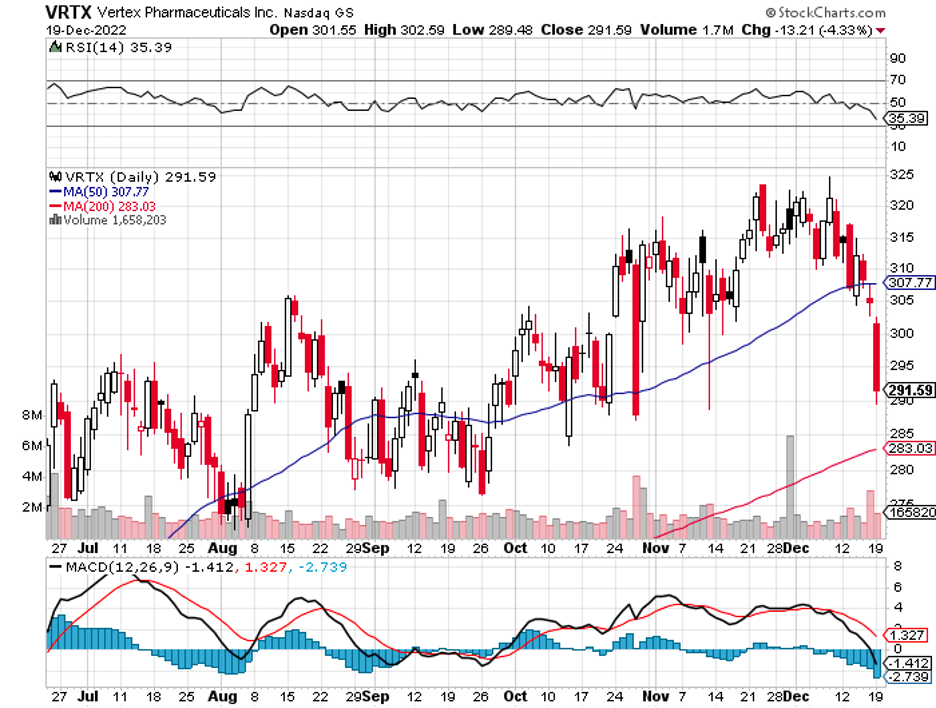
Vertex has risen notably this year, recording a 38% boost to date. However, it’s trading at roughly 20 times its forward earnings predictions. Hence, buying this stock could very well guarantee solid investment in the long run. After all, the following years are expected to be filled with significant turning points.

An excellent starting point in reviewing Vertex’s potential is its portfolio. Right now, the company has six drugs sold commercially, reporting $7.5 billion in revenue last year. All six focus on cystic fibrosis (CF).

Vertex has been hailed as the worldwide leader in the CF market for years. On an even more promising note, the company is projected to sustain this momentum until the late 2030s.

Specifically, Vertex’s most recent CF treatment, Trikafta, has presented plenty of room for revenue growth in the years to come, courtesy of anticipated additional approvals in more countries and younger age brackets.

Vertex is also reviewing another CF candidate, which is now in Phase 3 trials. Based on previously released data, this new product has the potential to become even better than Trikafta.

Another CF candidate queued for review is the drug Vertex has been working on in collaboration with Moderna (MRNA). If approved, this product will cover patients not eligible for the current CF roster of Vertex.

Surprisingly, however, the potential catalyst for Vertex’s share price in the coming years has absolutely nothing to do with its highly successful and established CF program.

Rather, it has something to do with the company’s new venture on blood disorders: Exa-cel. This is a one-time cure developed by Vertex and Crispr Therapeutics (CRSP), which targets two blood orders. To this day, there remain minimal options for patients with these diseases.

For two key reasons, gaining approval for Exa-cel could be a massive game changer for Vertex. One is that it can provide definitive proof that the company can expand beyond its CF programs.

The second is that it would provide an additional revenue stream for Vertex, and that’s always a desired outcome regardless of the billions of dollars the company is already generating.

CF sales have clearly powered Vertex’s net income, which increased by about 1,140% in the past five years. With exa-cel, though, it’s evident that the company has been working to diversify its market to cover other diseases.

Reviewing its pipeline, Vertex has 18 programs with excellent chances of getting commercialized in the next 10 years. These run the gamut of treatments and therapies, including promising results for sickle cell disease, type 1 diabetes, kidney disease, and acute pain relief.

While it’s impossible to accurately determine the amount of money these drugs could make by 2032, it’s not that hyperbolic to believe that they can at least contribute several billions to the company.

Overall, Vertex stock offers a bright and solid future. In the next 10 years, the business would evolve into a much bigger, more entrenched, and more diversified entity. That means it would be a less risky investment compared to today.

Vertex would be an excellent choice for patient investors seeking to start a position in some biotechnology and healthcare companies.


vertex stock

https://madhedgefundtrader.com/wp-content/uploads/2019/05/cropped-mad-hedge-logo-transparent-192x192_f9578834168ba24df3eb53916a12c882.png 0 0 Mad Hedge Fund Trader https://madhedgefundtrader.com/wp-content/uploads/2019/05/cropped-mad-hedge-logo-transparent-192x192_f9578834168ba24df3eb53916a12c882.png Mad Hedge Fund Trader2022-12-20 15:00:262023-01-02 17:49:19Patience Is Key For This Biotech
Mad Hedge Fund Trader

December 15, 2022

Biotech Letter

Mad Hedge Biotech and Healthcare Letter
December 15, 2022
Fiat Lux

Featured Trade:

(HASTE MAKES WASTE)
(MRNA), (MRK)

https://madhedgefundtrader.com/wp-content/uploads/2019/05/cropped-mad-hedge-logo-transparent-192x192_f9578834168ba24df3eb53916a12c882.png 0 0 Mad Hedge Fund Trader https://madhedgefundtrader.com/wp-content/uploads/2019/05/cropped-mad-hedge-logo-transparent-192x192_f9578834168ba24df3eb53916a12c882.png Mad Hedge Fund Trader2022-12-15 15:02:202022-12-15 16:01:57December 15, 2022
Mad Hedge Fund Trader

Haste Makes Waste

Biotech Letter

Many quality stocks are experiencing annual declines. The bear market has heavily and negatively affected investor sentiment and, of course, the economic climate, which hurt earnings. Nonetheless, some stocks still managed to show signs of a rebound this year.

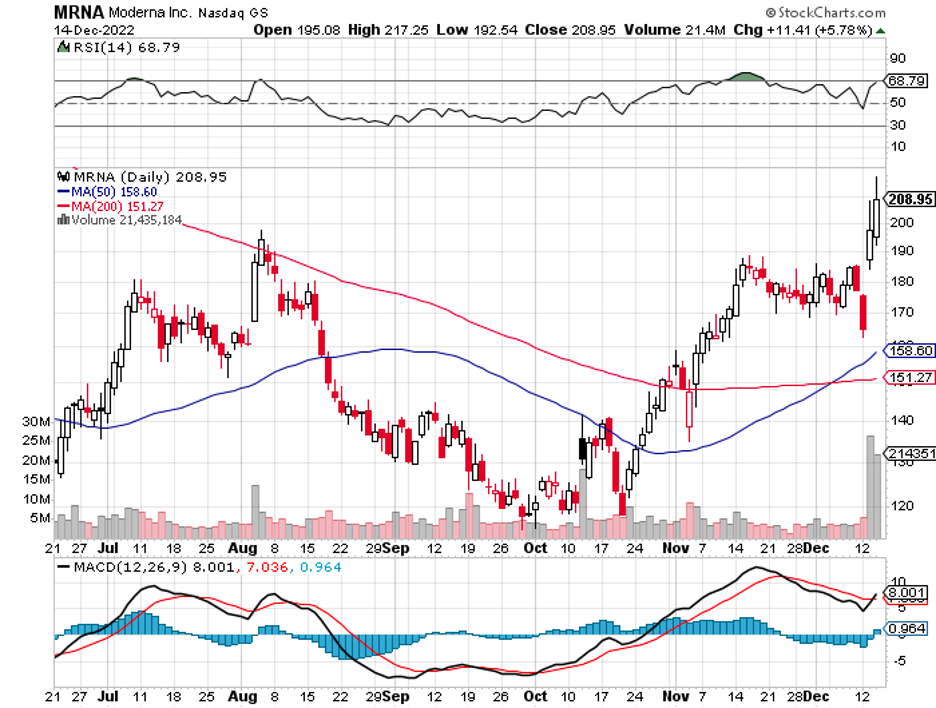
In the biotechnology and healthcare market, Moderna (MRNA) is putting up a pretty impressive fight to bounce back. In fact, it has posted a double-digit increase over the last three months. As this biotech gains more traction, it’s reasonable to wonder if it’s time to get in on it before 2023.

The latest update that pushed the stock higher was about the company’s cancer vaccine, which it has been working on with Merck (MRK).

Based on Phase 2 trial results, adding the experimental messenger RNA-based cancer vaccine of Moderna, called mRNA-4157, to the standard Keytruda treatment of Merck and administering the combination to high-risk melanoma patients lowered the risk of death or the recurrence of cancer by 44%.

Suppose this momentum is sustained until Phase 3 in the same category of patients, as well as in similar trials expected in other indications. In that case, this could signify the beginning of a monumental shift in cancer therapies. That is, it would create a market for mRNA-based personalized cancer vaccines that can be administered in combination with readily available treatments like Keytruda.

The results, which showed a decrease in the risk of relapse or death by almost half, also demonstrate a notable vindication for Moderna and represent a significant step towards realizing its ambitions to expand and diversify its profile as a COVID-19 vaccine maker.

This collaboration between Moderna and Merck on personalized cancer vaccines dates back to 2016, with the latter exercising its option to co-develop mRNA-4157 in October 2022.

Basically, mRNA-4157 is a tailored approach based on every patient’s specific tumor. According to Moderna, the procedure typically only takes a few weeks to complete. The idea behind adding Keytruda is rooted in boosting the immune response of the patient’s T-cells, while mRNA-4157 guides the T-cells to the specific tumor.

Apart from the proteins included in the personalized cancer vaccine, mRNA-4157 is actually identical to the COVID-19 vaccine distributed by Moderna across the globe. Both have the same mRNA chemistry, same lipid, same intramuscular route, and same manufacturing process.

If this treatment shows conclusive evidence that it can work on melanoma patients, then Moderna and Merck can expand their application to other indications. After all, Keytruda has several approvals under its belt, making it convenient for both companies to keep testing the combination.

To date, Moderna has fallen by roughly 30%. However, it has managed to bounce back by over 20% in the past three months. While the broader market downturn definitely hurt Moderna shares, another primary reason for its decline is the concern over its post-pandemic performance.

Realistically speaking, vaccine sales will likely not surpass the approximately $18 billion that Moderna recorded in 2021 and expects this year. Still, revenue will probably remain within the blockbuster territory.

Looking at the demand, the coronavirus booster market is projected to follow in the footsteps of the flu vaccine sector.

For context, the flu market worldwide reaches 500 million to 600 million doses yearly. Depending on the pricing, this demand could rake in somewhere between $12 billion to $24 billion.

On top of these, Moderna has been working on two additional candidates in Phase 3 trials: vaccines for the flu and respiratory syncytial virus. Both are anticipated to hit commercialization by 2024 and 2025.

Overall, Moderna could become an overwhelming success with its mRNA candidates in the years to come. However, the most challenging question is still estimating the company’s earnings for the next five years or more.

There remain notable uncertainties surrounding its pipeline. While I could always take a stab at estimating its profits, that’s just guesswork at this point. So despite Moderna’s impressive results over its personalized cancer vaccine program, I don’t think it’s a safe bet—for now.


mrna

https://madhedgefundtrader.com/wp-content/uploads/2019/05/cropped-mad-hedge-logo-transparent-192x192_f9578834168ba24df3eb53916a12c882.png 0 0 Mad Hedge Fund Trader https://madhedgefundtrader.com/wp-content/uploads/2019/05/cropped-mad-hedge-logo-transparent-192x192_f9578834168ba24df3eb53916a12c882.png Mad Hedge Fund Trader2022-12-15 15:00:182023-01-02 16:29:12Haste Makes Waste
Mad Hedge Fund Trader

December 13, 2022

Biotech Letter

Mad Hedge Biotech and Healthcare Letter
December 13, 2022
Fiat Lux

Featured Trade:

(A LONGER-TERM INVESTMENT FOR PATIENT BIOTECH HOLDERS)
(AMGN), (HZNP), (JNJ), (SNY), (ABBV)

https://madhedgefundtrader.com/wp-content/uploads/2019/05/cropped-mad-hedge-logo-transparent-192x192_f9578834168ba24df3eb53916a12c882.png 0 0 Mad Hedge Fund Trader https://madhedgefundtrader.com/wp-content/uploads/2019/05/cropped-mad-hedge-logo-transparent-192x192_f9578834168ba24df3eb53916a12c882.png Mad Hedge Fund Trader2022-12-13 17:02:532022-12-13 17:45:19December 13, 2022
Mad Hedge Fund Trader

A Longer-Term Investment for Patient Biotech Holders

Biotech Letter

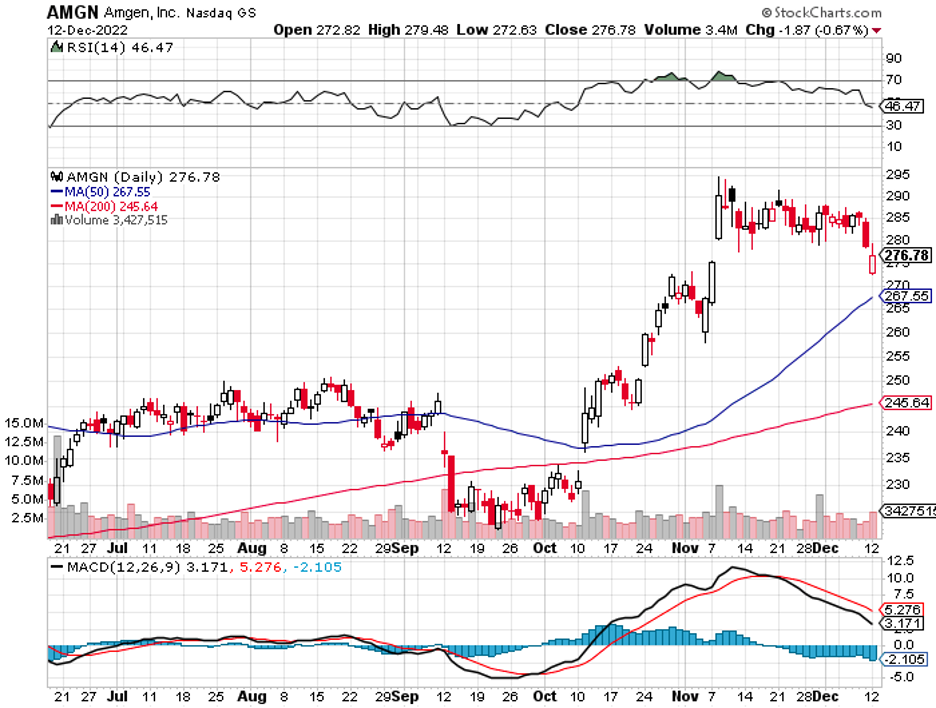
Amgen (AMGN) announced what could be the biggest M&A deal in the biotechnology world this 2022.

The giant biotech disclosed its deal to acquire Horizon Therapeutics (HZNP) for $27.8 billion in cash, amounting to roughly $116.50 per share which is quite a move for Amgen. Prior to this, Amgen was engaged in an aggressive bidding war against fellow bigwigs Johnson & Johnson (JNJ) and Sanofi (SNY).

While they is a massive company with a market capitalization of $140 billion, shelling out $27.8 billion is still a significant risk.

Aside from that, Horizon is based in Ireland; Irish takeover rules Amgen and its competitors needed to comply with repeated disclosure of its key documents throughout the course of the negotiations.

This begs the question: Why was Horizon so sought-after by some of the biggest names in the biotechnology and healthcare world?

One reason is that all companies, regardless of size, need a blockbuster—and this doesn’t spare Amgen and its peers.

Actually, Amgen has been preparing for patent expirations of some of its top-selling drugs for years. By 2030, the company would be dealing with the threat of a very serious decline in revenue of key products Otezla and Enbrel. When that comes, these two blockbusters would need to battle it out with the slew of generics and biosimilars raring to compete with their market share.

Meanwhile, Enbrel, which is projected to rake in $4.1 billion in revenue in 2022, will face biosimilar competition as early as 2023. Its main and biggest rival, AbbVie’s (ABBV) Humira, will lose patent exclusivity next year. That opens the floodgates for biosimilars and generics, pushing back against Enbrel’s share of the market while attempting to take over Humira’s.

Looking at how much these blockbusters contribute to Amgen, it’s projected that $10 billion or approximately 40% of the company’s revenue could be lost by the end of the decade.

This is where Horizon comes in.

The most crucial among Horizon’s products is Tepezza, which targets a rare condition know as thyroid eye disease. Based on its performance since getting launched in 2020, this drug is estimated to rake in roughly $2 billion in 2022.

Another potential blockbuster from Horizon is Krytexxa, which was developed for uncontrolled gout, and is projected to record $706 million in sales this year.

The third potential blockbuster is Uplinza, which targets an autoimmune disease called neuromyelitis optics spectrum disorder. This product is anticipated to reach $159 million in sales in 2022.

These three could bring in roughly $3.3 billion in revenue for 2023.

Based on the company’s pipeline and portfolio, it can add $2 to $5 billion of new product sales from 2024 to 2030. Needless to say, this would offset the patent cliffs faced by Amgen.

In terms of pipeline, Horizon has several of promising candidates as well. In 2021, the company acquired a biotech named Viela Bio. At that time, the smaller company’s candidates focused on inflammatory diseases and are valued at $3.1 billion.

On top of these, Horizon’s pipeline has candidates targeting rare diseases like myasthenia gravis, lupus, and Sjogren’s Syndrome. With Amgen’s size, experience, and resources, the development of these products would most likely be accelerated.

Originally, Horizon’s strategy was to keep buying clinical-stage treatments from smaller biotechs then pushing them through to commercial approval. Since then, it has transformed into a company that develops its own candidates targeting rare diseases and lucrative markets. Given its portfolio and pipeline, Horizon seamlessly fits with Amgen’s strategy.

Overall, this acquisition is an excellent deal for both companies.

While Amgen shareholders shouldn’t expect any significant increase in dividends any time soon or substantial share buybacks, it’s reasonable to believe that the company is poised for more growth in the coming years.

This makes Amgen a worthwhile buy for longer-term investors who are committed to staying with the company until 2030 or longer.


amgen horizon

https://madhedgefundtrader.com/wp-content/uploads/2019/05/cropped-mad-hedge-logo-transparent-192x192_f9578834168ba24df3eb53916a12c882.png 0 0 Mad Hedge Fund Trader https://madhedgefundtrader.com/wp-content/uploads/2019/05/cropped-mad-hedge-logo-transparent-192x192_f9578834168ba24df3eb53916a12c882.png Mad Hedge Fund Trader2022-12-13 17:00:522022-12-28 19:51:55A Longer-Term Investment for Patient Biotech Holders
Mad Hedge Fund Trader

December 8, 2022

Biotech Letter

Mad Hedge Biotech and Healthcare Letter
December 8, 2022
Fiat Lux

Featured Trade:

(THE MASTODON OF HEALTHCARE)
(UNH), (HUM), (CI), (ELV), (CVS)

https://madhedgefundtrader.com/wp-content/uploads/2019/05/cropped-mad-hedge-logo-transparent-192x192_f9578834168ba24df3eb53916a12c882.png 0 0 Mad Hedge Fund Trader https://madhedgefundtrader.com/wp-content/uploads/2019/05/cropped-mad-hedge-logo-transparent-192x192_f9578834168ba24df3eb53916a12c882.png Mad Hedge Fund Trader2022-12-08 15:02:132022-12-09 10:20:49December 8, 2022
Page 50 of 115«‹4849505152›»

Legal Disclaimer

There is a very high degree of risk involved in trading. Past results are not indicative of future returns. MadHedgeFundTrader.com and all individuals affiliated with this site assume no responsibilities for your trading and investment results. The indicators, strategies, columns, articles and all other features are for educational purposes only and should not be construed as investment advice. Information for futures trading observations are obtained from sources believed to be reliable, but we do not warrant its completeness or accuracy, or warrant any results from the use of the information. Your use of the trading observations is entirely at your own risk and it is your sole responsibility to evaluate the accuracy, completeness and usefulness of the information. You must assess the risk of any trade with your broker and make your own independent decisions regarding any securities mentioned herein. Affiliates of MadHedgeFundTrader.com may have a position or effect transactions in the securities described herein (or options thereon) and/or otherwise employ trading strategies that may be consistent or inconsistent with the provided strategies.

Copyright © 2026. Mad Hedge Fund Trader. All Rights Reserved. support@madhedgefundtrader.com
Scroll to top