• support@madhedgefundtrader.com
  • Member Login
Mad Hedge Fund Trader
  • Home
  • About
  • Store
  • Luncheons
  • Testimonials
  • Contact Us
  • Click to open the search input field Click to open the search input field Search
  • Menu Menu
Mad Hedge Fund Trader

The Mastodon of Healthcare

Biotech Letter

Most earnings reports across all industries recently include the terms “inflationary pressures,” “short-term macroeconomic conditions,” “labor shortages,” and, of course, “supply chain issues” to justify why revenues are down or flat. The S&P 50 index has declined by over 20% to date, with signs of sliding further.

Clearly, the economy cannot be described as recession-proof. It typically follows a relatively predictable, albeit irregular, path commonly called the economic cycle. Needless to say, recessionary periods can be heartbreaking and brutal for the market and its investors.

However, some sectors are somewhat immune to the ups and downs of the economy. These industries provide investors with recession-proof stocks that can be held onto during these challenging periods. One of them is the healthcare industry.

Healthcare stocks, particularly high-quality businesses, tend to be viewed as recession-proof. Despite the economic turbulence, companies in this sector still enjoy relatively solid and steady demand. That’s not entirely shocking since people can’t exactly just cancel their healthcare needs.

No matter what’s happening in the world, when you’re unwell, you have no other option but to see a doctor and get medicine.

Within the healthcare sector, not all businesses are created equal. Some still felt the recession's nasty consequences, while others managed to thrive.

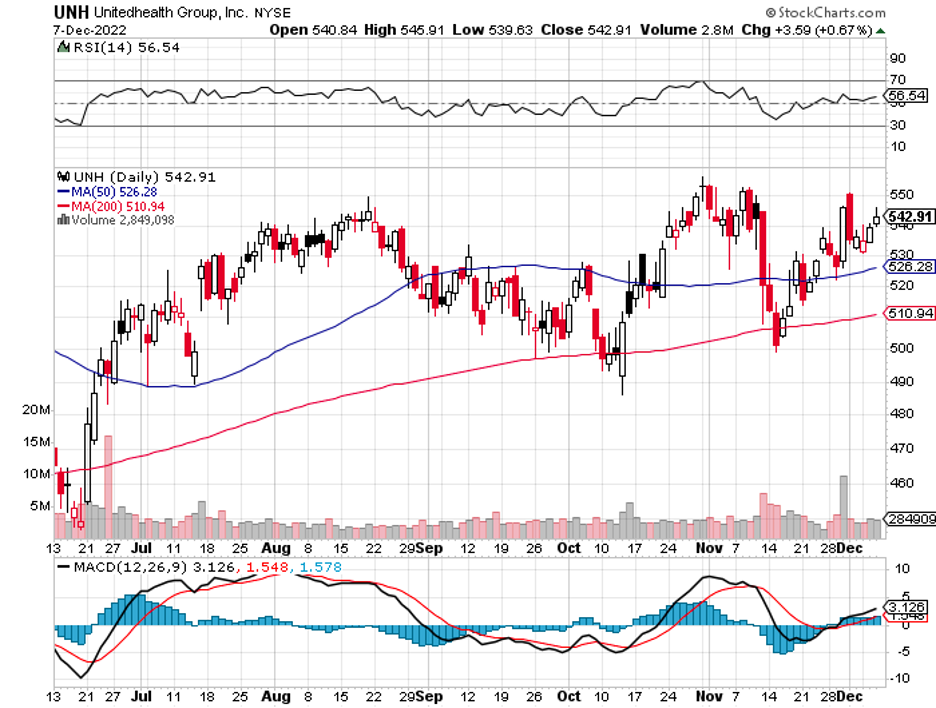
One name that continues to impress amid the economic turmoil is UnitedHealth Group (UNH).

Basically, UNH operates 2 main segments.

One is UnitedHealthcare, which offers a complete range of healthcare insurance. The other is Optum Health, which provides data-driven healthcare gathered from partner surgery centers. It also obtains information from OptumRx, UNH’s pharmacy management arm.

Both UnitedHealthcare and Optus Health delivered excellent results to date, boosting the company’s full-year guidance from $20.85 to $2105 in terms of EPS. In comparison, UNH recorded an annual EPS of $18.08 back in 2021.

In the first 9 months of 2022, UNH raked in $192.5 billion in revenue. This shows a 14% increase year over year. Meanwhile, its earnings per share climbed to $16.15 compared to the $13.82 it reported during the same period in 2021.

One of the key drivers for these results is the boost in the number of subscribers to UNH’s services, which rose by 850,000 in 2022. Apart from these, the company has an attractive dividend that keeps investors satisfied. For the 13th consecutive year, UNH has raised its dividend, announcing a quarterly boost of 14% to reach $1.65.

Keep in mind that the health insurance industry climbs higher each year, and COVID-19 has forced everyone to reconsider and review their perspectives towards healthcare.

On top of these, UNH’s long-term growth is supported by the inevitable: the continuous and increasingly expensive demands of an aging population. That is, the company has a massive addressable market that keeps on expanding year after year.

Looking at the trajectory of this industry, it is estimated that 73.5 million individuals will be enrolled in Medicare by 2027. This represents a 28.5% boost from the 57.2 million reported in 2017.

Due to the increasing demands in healthcare in the coming years, particularly among the aging population, spending in this segment is also anticipated to rise rapidly. In fact, healthcare spending is projected to hit $6 trillion annually by 2028.

Thus far, UNH is hailed as the leading company in healthcare. The company’s hegemony looks and feels incomparable, and none of its competitors appear to be strong enough to dethrone it. For context, the leading rivals of UNH in the US include Humana (HUM), Cigna (CI), Elevance (ELV), and CVS Health (CVS).

For these competitors to stand a chance at beating or at least competing with its on equal grounds, they would need to merge—a move they’ve all attempted in the past but were blocked by regulators.

Overall, UNH remains a solid choice, especially during these trying times. This company is a widely respected mastodon in the insurance market worldwide, showing off substantial growth in revenue and profit practically every year. Buy the dip.
 

healthcare

https://madhedgefundtrader.com/wp-content/uploads/2019/05/cropped-mad-hedge-logo-transparent-192x192_f9578834168ba24df3eb53916a12c882.png 0 0 Mad Hedge Fund Trader https://madhedgefundtrader.com/wp-content/uploads/2019/05/cropped-mad-hedge-logo-transparent-192x192_f9578834168ba24df3eb53916a12c882.png Mad Hedge Fund Trader2022-12-08 15:00:542022-12-27 21:23:45The Mastodon of Healthcare
Mad Hedge Fund Trader

December 6, 2022

Biotech Letter

Mad Hedge Biotech and Healthcare Letter
December 6, 2022
Fiat Lux

Featured Trade:

(A DISCOUNTED MISUNDERSTOOD STOCK)
(ABBV)

https://madhedgefundtrader.com/wp-content/uploads/2019/05/cropped-mad-hedge-logo-transparent-192x192_f9578834168ba24df3eb53916a12c882.png 0 0 Mad Hedge Fund Trader https://madhedgefundtrader.com/wp-content/uploads/2019/05/cropped-mad-hedge-logo-transparent-192x192_f9578834168ba24df3eb53916a12c882.png Mad Hedge Fund Trader2022-12-06 12:02:572022-12-07 12:09:29December 6, 2022
Mad Hedge Fund Trader

A Discounted Misunderstood Stock

Biotech Letter

At times, a single stressful scenario triggers such wide-ranging panic among already anxious investors that it blocks out all the positive things occurring simultaneously.

This is what’s currently happening with AbbVie (ABBV), which is struggling to keep investors’ fears at bay as its mega-blockbuster Humira reaches patent expirations.

Humira is a treatment for various diseases such as rheumatoid arthritis, psoriatic arthritis, any losing spondylitis, and Crohn's disease. Since its approval and commercial launch in 2002, this immunosuppressive has managed to rake in a whopping $200 billion in sales.

For 2022, this drug is projected to account for 36%, or roughly $21.2 billion, of the company’s sales. Needless to say, it’s one of AbbVie’s top-selling treatments.

While AbbVie fought extremely hard to extend its patent protection, Humira has already lost exclusivity in Europe.

It is also gearing up to battle an increasing number of eager competitors in the form of biosimilars in the United States, which would all be allowed to market their versions of Humira by 2023.

AbbVie is more than just Humira, though. This giant biopharmaceutical company has actually developed treatments with the capacity to fill the anticipated revenue gap following Humira’s decline.

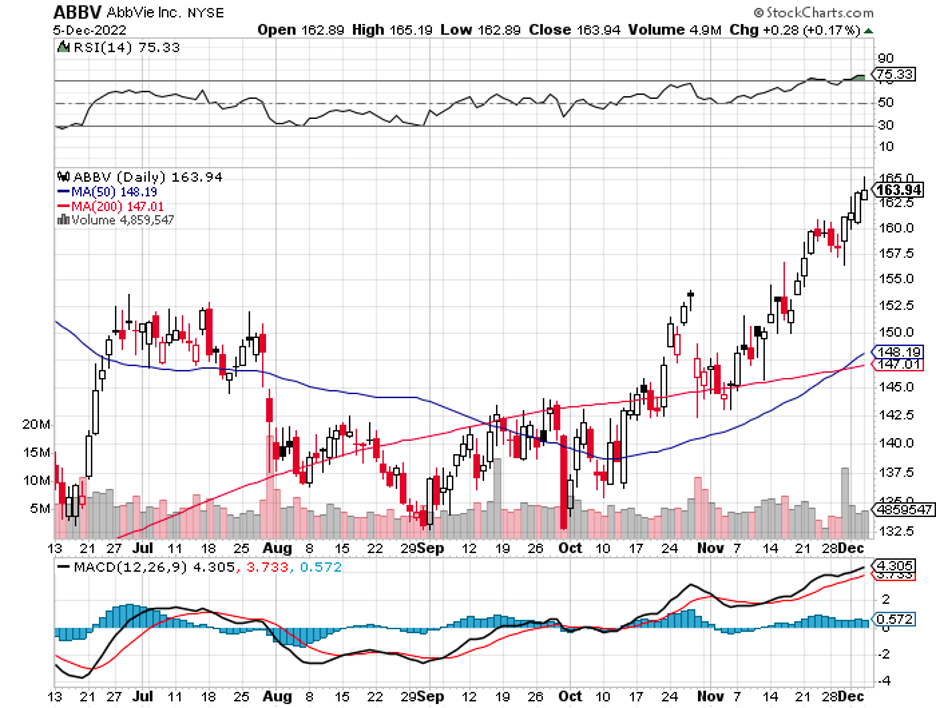
In fact, shareholders who opted to wait and hold until AbbVie reaches the transition point from Humira to the new products may have erred. After all, the company’s stock is up by over 19% thus far in 2022.

Besides that, AbbVie stock appears cheap and has an attractive dividend yield. Hence, it’s worth owning, especially in these challenging times.

To date, the company has been hard at work in developing its blood cancer or hematologic oncology program. This franchise is estimated to bring in $7.6 billion in sales by 2025, which is up from the $6.8 billion expected this year.

AbbVie is also experiencing increasing sales from two newly released drugs, Skyrizi and Rinvoq, which target psoriasis and arthritis, respectively. Both are estimated to account for $7.7 billion in the 2022 revenue of the company or 13% of the total.

Moreover, these treatments should be exclusively owned by AbbVie for a while. The company won’t be facing another patent loss on any essential product until 2029.

Looking at the trajectory of Skyrizi and Rinvoq, the two can become the next big stars and eventually offset the losses from Humira’s decline.

Not only those, but AbbVie also bought Allergan in 2020, building an ironclad plan to ensure it won’t sink after Humira’s patent expiration. The aesthetics franchise, which covers Botox, cool sculpting, and Juvederm, now contributes 10% to the total sales of the company.

This implies that AbbVie’s earnings, despite the Humira issue, are anticipated to hold up better than projected.

Moreover, AbbVie has a $22 billion free cash flow from 2021, while its dividend yield is currently at 3.7%.

These factors make AbbVie look even more lucrative as interest rates continue to hike and a potential recession is on its way.

At this point, it’s prudent to keep defensive stocks, particularly businesses without massive debt maturities, in the near future. In such a volatile market, AbbVie is one of the safest and most attractive stocks to invest in.

Overall, AbbVie is a well-positioned stock. Its tactical acquisitions, such as its aggressive move to buy Allergan, have all but guaranteed that it won’t be heavily relying on a drug with an expiring patent.

More importantly, this giant biopharmaceutical company developed potentially blockbuster successors of Humira in the form of Rinvoq and Skyrizi, ensuring that its future remains bright even without its decades-long top-selling product.

AbbVie has proven itself to be a solid stock and an excellent buy for long-term investors. It’s highly advisable to buy the dip.


abbvie humira

https://madhedgefundtrader.com/wp-content/uploads/2019/05/cropped-mad-hedge-logo-transparent-192x192_f9578834168ba24df3eb53916a12c882.png 0 0 Mad Hedge Fund Trader https://madhedgefundtrader.com/wp-content/uploads/2019/05/cropped-mad-hedge-logo-transparent-192x192_f9578834168ba24df3eb53916a12c882.png Mad Hedge Fund Trader2022-12-06 12:00:542022-12-26 22:13:55A Discounted Misunderstood Stock
Mad Hedge Fund Trader

December 1, 2022

Biotech Letter

Mad Hedge Biotech and Healthcare Letter
December 1, 2022
Fiat Lux

Featured Trade:

(A RECESSION-PROOF STOCK)
(LLY), (ESALY), (BIIB), (JNJ)

https://madhedgefundtrader.com/wp-content/uploads/2019/05/cropped-mad-hedge-logo-transparent-192x192_f9578834168ba24df3eb53916a12c882.png 0 0 Mad Hedge Fund Trader https://madhedgefundtrader.com/wp-content/uploads/2019/05/cropped-mad-hedge-logo-transparent-192x192_f9578834168ba24df3eb53916a12c882.png Mad Hedge Fund Trader2022-12-01 16:02:252022-12-01 17:19:39December 1, 2022
Mad Hedge Fund Trader

A Recession-Proof Stock

Biotech Letter

Whispers of a recession in 2023 plague virtually every corner of the world. Nowadays, fund managers and Wall Street leaders are developing strategies to brace themselves for what’s to come next.

Inflation continues to be a cause of alarm, and a more unstable growth backdrop not only in the United States but also across the globe could drag down earnings in almost all industries. That means tactics to play defense are all the rage these days.

With the market meltdown this year, several names in the biotechnology and healthcare industry managed to buck the trend and even rise significantly. One of them is Eli Lilly (LLY).

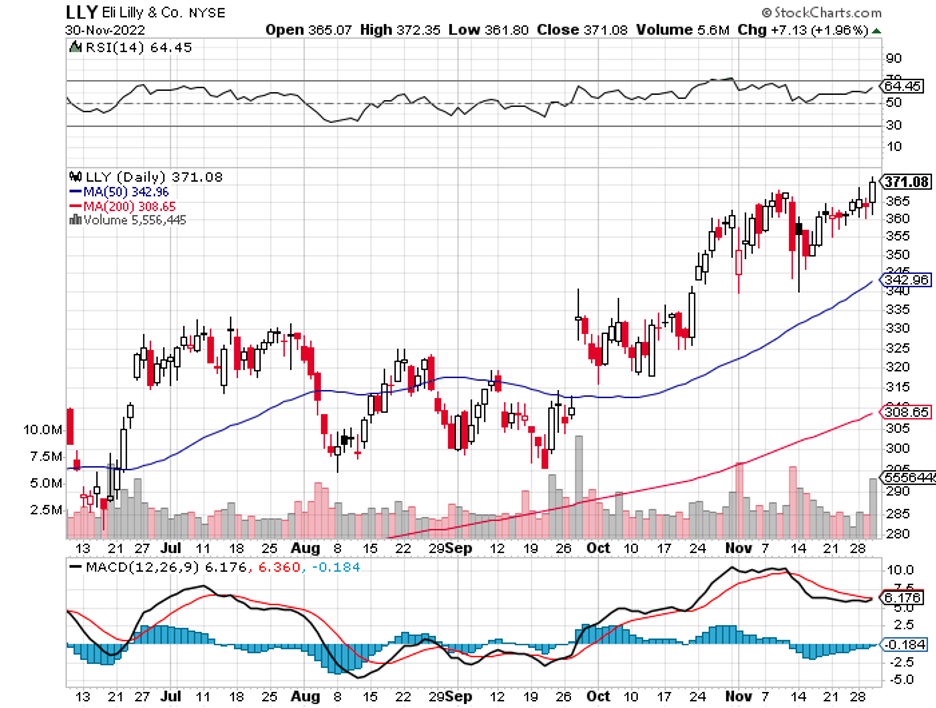
Eli Lilly has surged by 33% in 2022 and continues to outperform the market amid the economic turmoils and financial crises; let’s check out what’s under its hood and see if it’s a good stock to add to a recession-proof portfolio.

Although it wasn’t the major player in the recent updates on Alzheimer’s disease treatments, Eli Lilly shares rose following the announcement from Eisai (ESALY) and Biogen (BIIB) earlier this week.

The full results of their Phase 3 trials showed promising data, which strengthened the underlying theory that Alzheimer’s symptoms are linked to the beta-amyloid plaques that build up in the patient’s brain.

While this theory has been floating around for roughly 30 years, Biogen’s study marks the first time it received any confirmation. The results convincingly illustrated the link between eliminating the amyloid and the slowdown in cognitive decline among Alzheimer’s patients.

Biogen and Eisai may be the first to prove this, but their work provided Eli Lilly’s Alzheimer’s program the much-needed boost since the latter’s candidates are also based on the same theory.

In terms of revenue, Eli Lilly and Biogen could compete for a market opportunity worth more than $20 billion.

Outside this Alzheimer’s program, Eli Lilly offers investors a top-notch and diverse portfolio.

Founded way back in 1876, the company has grown into the second-biggest pharmaceutical business across the globe. It has a market capitalization of $343 billion, which is next only to Johnson & Johnson, with $459 billion.

The leading candidate in Eli Lilly’s portfolio is its Type 2 diabetes drug, Trulicity, which rakes in over $5 billion in sales annually. On top of that, it has 6 more blockbusters contributing more than $1 billion in annual revenue. These include the cancer drug Verzenio, insulin treatments Humalog and Humulin, and heart failure medication Jardiance.

These products, along with 9 other drugs in Eli Lilly’s portfolio, all contributed to boosting its revenue by 2.5% year-over-year to reach $6.9 billion in the third quarter of 2022. It also helps that the company has an expansive presence worldwide, with its treatments and products available in 120 countries.

There are also approximately 70 more projects queued for clinical development, while others are awaiting regulatory review.

Meanwhile, the most significant catalyst for Eli Lilly this year has been its Type 2 diabetes drug Mounjaro, which was approved last May.

The recently concluded third quarter marked the first complete quarter since the drug was launched in the US. Raking in an impressive $97.3 million in revenue for this period alone, Mounjaro is definitely off to a promising start.

The figures are projected to climb as Eli Lilly receives regulatory approvals from Japan and the European Union.

Actually, Mounjaro is anticipated to become a mega-blockbuster drug for Eli Lilly. It’s estimated to reach annual peak sales of $25 billion. For context, this amount is almost as much as the total revenue of the company in 2022, which is $28.6 billion.

Overall, they have consistently proved as one of the best-managed biopharmaceutical companies in the world. Its innovative strategies and initiatives have been top-notch. Eli Lilly is a stock worthy of a spot in a recession-proof portfolio. Make sure to buy the dip.


eli lilly recession

https://madhedgefundtrader.com/wp-content/uploads/2019/05/cropped-mad-hedge-logo-transparent-192x192_f9578834168ba24df3eb53916a12c882.png 0 0 Mad Hedge Fund Trader https://madhedgefundtrader.com/wp-content/uploads/2019/05/cropped-mad-hedge-logo-transparent-192x192_f9578834168ba24df3eb53916a12c882.png Mad Hedge Fund Trader2022-12-01 16:00:192022-12-02 01:17:06A Recession-Proof Stock
Mad Hedge Fund Trader

November 29, 2022

Biotech Letter

Mad Hedge Biotech and Healthcare Letter
November 29, 2022
Fiat Lux

Featured Trade:

(DO OR DIE FOR THIS BIOTECH)
(BIIB), (ESALY)

https://madhedgefundtrader.com/wp-content/uploads/2019/05/cropped-mad-hedge-logo-transparent-192x192_f9578834168ba24df3eb53916a12c882.png 0 0 Mad Hedge Fund Trader https://madhedgefundtrader.com/wp-content/uploads/2019/05/cropped-mad-hedge-logo-transparent-192x192_f9578834168ba24df3eb53916a12c882.png Mad Hedge Fund Trader2022-11-29 16:02:372022-11-29 16:29:07November 29, 2022
Mad Hedge Fund Trader

Do or Die for This Biotech

Biotech Letter

Investors are about to discover whether Biogen’s (BIIB) latest Alzheimer’s drug, which it developed in collaboration with Eisai (ESALY), is truly as effective as they claim.

A few months ago, the partners disclosed that the drug, called Lecanemab, exceeded their expectations in the Phase 3 study. Results should be out anytime this week.

Reports show that the drug offered a statistically significant decrease in the cognitive decline of the 1,800 participants included in the trial. Biogen anticipates a FED decision for its application for accelerated approval by January 6, 2023.

Meanwhile, traditional regulatory approval in the United States, Japan, and Europe is expected by March 2023.

Basically, Biogen and Eisai believe that Alzheimer’s symptoms are linked to particular plaques that accumulate in a patient’s brain.

Despite the expectations over the results for Lecanemab’s Phase 3 trial results, the enthusiasm for the scientific hypothesis on which the treatment is based had dwindled after years of underwhelming results.

Apart from that, Biogen’s previous failure remains fresh in the minds of investors. Back in June 2021, shares of both Biogen and Eisai climbed exponentially when the Food and Drug Administration suddenly gave the green light for their previous Alzheimer’s drug, Aduhelm.

Unfortunately, this momentum wasn’t sustained because Aduhelm’s commercial promise failed to be realized. This is because there are so many factors that could quickly derail the success of a product.

Equally crucial to receiving approval from the FDA is whether the drugmakers can persuade the Centers for Medicare and Medicaid Services, which is behind the widely used Medicare program, to cover the expenses of patients needing the drug.

At that time, the CMS decided to refuse reimbursements for Aduhelm. This move effectively sunk any chances of Biogen and Eisai to salvage that Alzheimer’s candidate.

Considering the budget allocated for Aduhelm from the time of its inception to commercialization, Biogen shares practically went on a free fall when the drug was eventually scrapped and development was shut down. Needless to say, this makes Lecanemab a do-or-die candidate for Biogen’s Alzheimer’s program.

Although the broader market is focused on its Alzheimer’s candidates, Biogen has an extensively diverse pipeline. The biotech is aggressively pursuing treatments for some of the most challenging to crack older-age conditions, with substantial sales and income potential.

This covers segments including depression, amyotrophic lateral sclerosis (ALS) or Lou Gehrig’s disease, Parkinson’s, lupus, cancer, and even multiple sclerosis. To date, it has 12 solid programs expected to go through Phase 3 trials or queued for regulatory approvals in the following months.

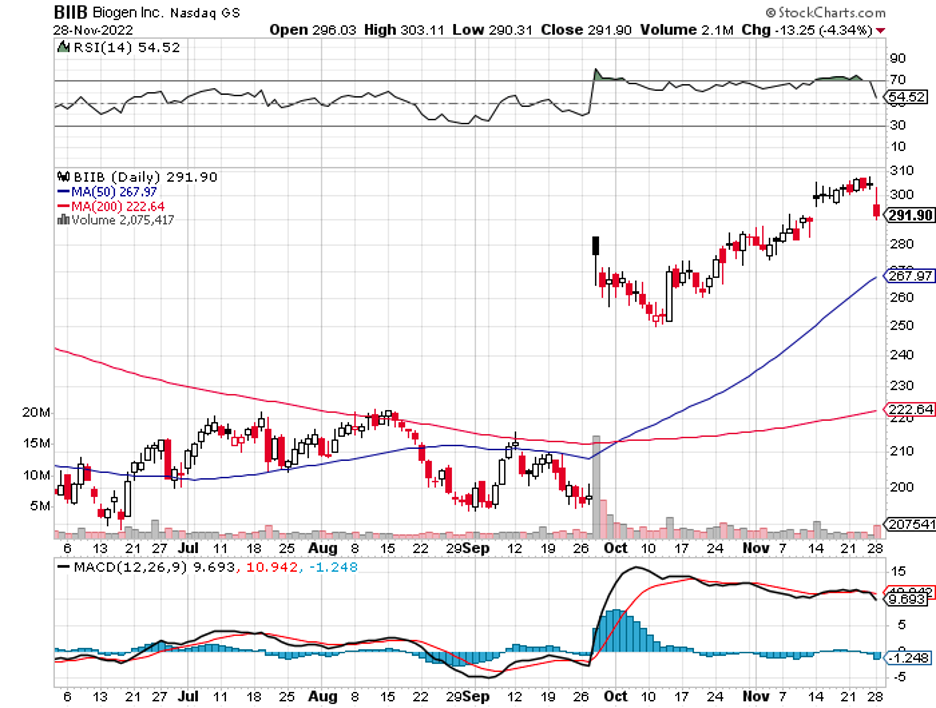
The promise that the success of Lecanemab holds is what keeps Biogen on the radar of many investors. These days, the stock is trading somewhere between $280 and $290.

If the biotech’s latest candidate for Alzheimer’s disease actually manages to meet (or exceed) expectations and hit the market, then the price could reach $370 or more.

Meanwhile, peak sales for Lecanemab are projected to be $14 billion—a figure substantially higher than Biogen’s recent revenue base.

However, there are risks to this investment.

Obviously, any investor buying Biogen stock must deal with the risk of a repeat of the Aduhelm drug debacle. That means the biotech, which regularly trades somewhere in the $200s, could face a minimum of $80 dip or roughly 30% loss.

Overall, Biogen can be considered cheap if we base it on the potential approval of Lecanemab. But, this biotech faces a binary situation where any disappointing result or a failure to gain regulatory approval could send the stock spiraling to new lows.

Meanwhile, an outlier scenario for investors to consider is that Biogen remains an immensely attractive target for a takeover by a bigger and more successful biopharmaceutical company. It offers a one-of-a-kind and solid growth pipeline with a reasonably sound valuation on trailing results that are rare in this economic condition.


biogen lecanemab

https://madhedgefundtrader.com/wp-content/uploads/2019/05/cropped-mad-hedge-logo-transparent-192x192_f9578834168ba24df3eb53916a12c882.png 0 0 Mad Hedge Fund Trader https://madhedgefundtrader.com/wp-content/uploads/2019/05/cropped-mad-hedge-logo-transparent-192x192_f9578834168ba24df3eb53916a12c882.png Mad Hedge Fund Trader2022-11-29 16:00:352022-12-02 01:28:37Do or Die for This Biotech
Mad Hedge Fund Trader

November 22, 2022

Biotech Letter

Mad Hedge Biotech and Healthcare Letter
November 22, 2022
Fiat Lux

Featured Trade:

(THE STOCK THAT KEEPS ON GIVING)
(MRK), (JNJ), (PFE), (IMG), (ABBV), (AZN)

https://madhedgefundtrader.com/wp-content/uploads/2019/05/cropped-mad-hedge-logo-transparent-192x192_f9578834168ba24df3eb53916a12c882.png 0 0 Mad Hedge Fund Trader https://madhedgefundtrader.com/wp-content/uploads/2019/05/cropped-mad-hedge-logo-transparent-192x192_f9578834168ba24df3eb53916a12c882.png Mad Hedge Fund Trader2022-11-22 15:02:522022-11-23 13:07:53November 22, 2022
Mad Hedge Fund Trader

The Stock That Keeps on Giving

Biotech Letter

Although the broader market has been experiencing the worst year in a very long time, some businesses still manage to deliver excellent results.

One of them is Merck (MRK).

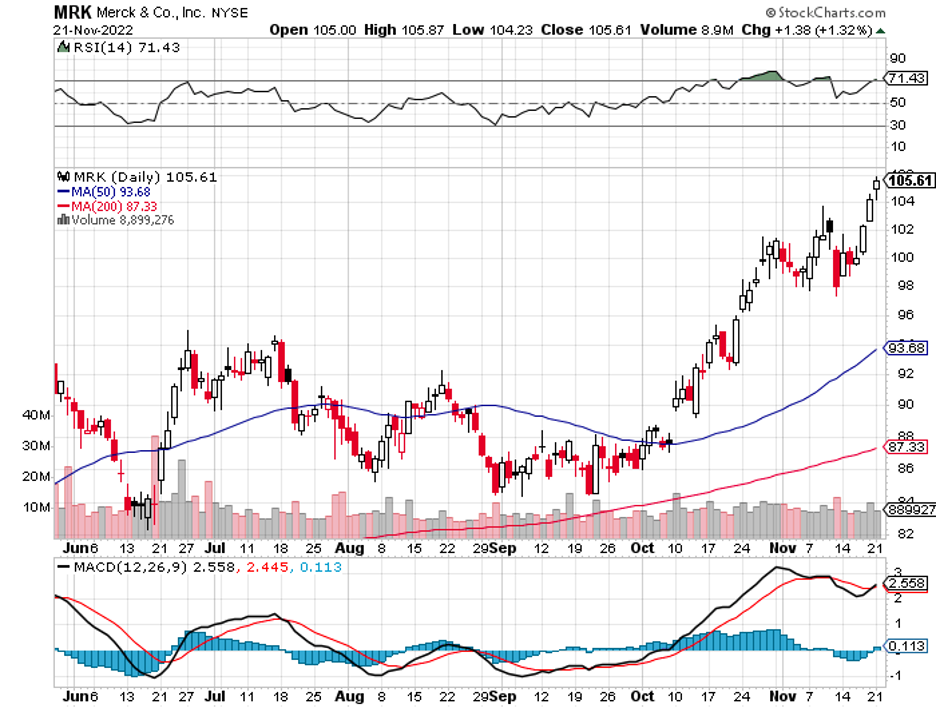
This biotechnology and healthcare giant has been defying gravity this 2022. While the Health Care Select Sector SPDR (XLV) has slid by quite a substantial margin this year, with the likes of Johnson & Johnson (JNJ) and Pfizer (PFE) succumbing to the pressure, Merck bucked the trend. Its shares have been up by 31% since early January.

Amid the economic and financial crises, Merck remains a promising stock with a number of factors going its way. More importantly, there is a high probability that it can sustain its momentum regardless of what happens to the broader market or the economy.

Merck’s determination to keep this momentum has once again become apparent in its recent announcement.

Earlier this week, the biotech giant disclosed that it would acquire a biopharmaceutical company called Imago BioSciences (IMG) for $1.35 billion.

This would translate to $36 in cash for every share of Imago, which is about twice its recent closing price of $17.40. The deal is anticipated to be completed by March 2023.

Like its large competitors, Merck also has a portfolio of treatments that continue to aid in the growth of its top and bottom lines.

In the third quarter of this year, the biotech’s revenue climbed by 14% year-over-year to reach roughly $15 billion. Meanwhile, its adjusted net income was $4.7 billion, showing a 4% increase compared to the same period in 2021.

Among its products, Merck has been most closely associated with the cancer drug Keytruda. So far, this treatment is on track to rake in $20 billion in net sales this year alone.

In fact, it’s expected to surpass AbbVie’s (ABBV) Humira as the top-selling drug by 2026.

With Keytruda’s patent exclusivity lasting until 2028, Merck has more than sufficient time to prepare for it. Moreover, that means the company can still rely on Keytruda as a strong growth driver for at least five more years.

However, astute investors would point out Merck’s reliance on Keytruda and the risks that come with this arrangement. With the mega-blockbuster’s $5.4 billion net sales, which comprised 36.3% of Merck’s $15 billion total sales in the third quarter, this is a legitimate concern.

It should be noted that Keytruda isn’t the only promising moneymaking treatment in Merck’s portfolio.

One of its promising treatments is its collaboration with AstraZeneca (AZN), which resulted in another cancer medicine called Lynparza. Another is Merck’s HPV vaccines, which continue to rise at a good pace. Finally, the company’s vaccine portfolio has been expanding, with its pneumococcal vaccine recently gaining approval.

Most of its therapies and even its vaccine franchises are on pace to surpass at least $1 billion in net sales this 2022. Needless to say, Merck has been successful in its quest to become more than just a cancer therapy leader.

On top of these, another good reason to take Merck into consideration is its dividend yield.

Merck’s current dividend yield is at 2.8%, which outpaces the 1.6% average yield of the S&P 500. Aside from its top-selling products and robust pipeline that easily support this payout, the company’s dividend is well-covered as well.

Overall, Merck is one of the handful of companies across all industries that has been breaking the norm of poor stock performance in this highly challenging year.

The company can offer a strong shield for wary investors as we deal with the onset of yet another recession. Not only is this biotechnology and healthcare company part of a naturally defensive sector, but its outlook also remains positive amid the issues plaguing the world.


merck keytruda

https://madhedgefundtrader.com/wp-content/uploads/2019/05/cropped-mad-hedge-logo-transparent-192x192_f9578834168ba24df3eb53916a12c882.png 0 0 Mad Hedge Fund Trader https://madhedgefundtrader.com/wp-content/uploads/2019/05/cropped-mad-hedge-logo-transparent-192x192_f9578834168ba24df3eb53916a12c882.png Mad Hedge Fund Trader2022-11-22 15:00:572022-12-02 01:54:07The Stock That Keeps on Giving
Mad Hedge Fund Trader

November 17, 2022

Biotech Letter

Mad Hedge Biotech and Healthcare Letter
November 17, 2022
Fiat Lux

Featured Trade:

(A QUALITY BEATEN-DOWN STOCK)
(ZTS), (ELAN)

https://madhedgefundtrader.com/wp-content/uploads/2019/05/cropped-mad-hedge-logo-transparent-192x192_f9578834168ba24df3eb53916a12c882.png 0 0 Mad Hedge Fund Trader https://madhedgefundtrader.com/wp-content/uploads/2019/05/cropped-mad-hedge-logo-transparent-192x192_f9578834168ba24df3eb53916a12c882.png Mad Hedge Fund Trader2022-11-17 16:02:062022-11-17 16:42:30November 17, 2022
Page 51 of 115«‹4950515253›»

Legal Disclaimer

There is a very high degree of risk involved in trading. Past results are not indicative of future returns. MadHedgeFundTrader.com and all individuals affiliated with this site assume no responsibilities for your trading and investment results. The indicators, strategies, columns, articles and all other features are for educational purposes only and should not be construed as investment advice. Information for futures trading observations are obtained from sources believed to be reliable, but we do not warrant its completeness or accuracy, or warrant any results from the use of the information. Your use of the trading observations is entirely at your own risk and it is your sole responsibility to evaluate the accuracy, completeness and usefulness of the information. You must assess the risk of any trade with your broker and make your own independent decisions regarding any securities mentioned herein. Affiliates of MadHedgeFundTrader.com may have a position or effect transactions in the securities described herein (or options thereon) and/or otherwise employ trading strategies that may be consistent or inconsistent with the provided strategies.

Copyright © 2026. Mad Hedge Fund Trader. All Rights Reserved. support@madhedgefundtrader.com
Scroll to top