• support@madhedgefundtrader.com
  • Member Login
Mad Hedge Fund Trader
  • Home
  • About
  • Store
  • Luncheons
  • Testimonials
  • Contact Us
  • Click to open the search input field Click to open the search input field Search
  • Menu Menu
Mad Hedge Fund Trader

A Budding Underdog to Dominate the Alzheimer's Battle

Biotech Letter

One of the most significant unmet medical needs worldwide is the treatment of Alzheimer’s Disease (AD).

With over 6 million people affected in the US alone and roughly 40 million globally, this number is projected to double by 2050 as the population ages and more individuals live longer lives.

That’s why it comes as no surprise that even though the Centers for Medicare & Medicaid Services decided to limit the coverage of Biogen’s (BIIB) AD drug, Aduhelm, more and more drugmakers continue to move forward with their own candidates.

Eli Lilly (LLY) continues to work on Donanemab, which could be available for review by mid-2023. Meanwhile, Roche (RHHBY) is anticipated to release data on Gantenerumab by the end of 2022.

Among the drugmakers pursuing this field, one name continues to rake in positive reports: Cassava Sciences (SAVA).

Cassava’s lead AD drug candidate is Simufilam, a small oral pill. Thus far, this has shown no safety issues and even released the best clinical AD data.

Notably, this is the only treatment that demonstrated tangible cognitive improvement for longer than 6 months in the clinical studies for AD.

The fact that Cassava’s candidate bested Donanemab and Gantenerumab, which both received breakthrough designations, and Aduhelm, which got an accelerated approval, indicates its candidate’s strong potential.

Between their promising results, convenient storage of the pill, easy dosing method, impressive safety data, and the vast unmet medical market, Simufilam could very well be hailed as the best-selling AD treatment the moment it gains approval.

Another indicator of Simufilam’s promise is the lack—or even absence—of insider trading within Cassava in the past years.

Typically, company insiders know more about the projects than anyone else. Strong insider selling is generally followed by a fall in a company’s stock price.

This has not been spotted anywhere in Cassava, with multiple insiders taking on very big stakes in the company.

However, the strongest indicator for Cassava’s impending win is Simufilam being in clinical progression. In fact, it’s already dosing in Phase 3 trials.

While other drugmakers working on an AD treatment may have promising options, the earlier a candidate is in the clinical trials, the higher the risk of failure and the longer it’ll take to be commercialized.

Each step forward in clinical trials is basically a way to “de-risk” the candidates, which leads to an increased value of the company.

Naturally, one of the questions raised when dealing with a biotech not as large as AbbVie (ABBV) or even Amgen (AMGN) concerns financial health.

Cassava’s recent financial filings showed that the company has roughly $240 million in cash and $0 debt.

Looking at their workflow, Cassava typically burns about $9 million every quarter.

As they ramp up their Simufilam trials, this is obviously expected to change.

After all, Phase 3 trials tend to cost more. So, the company anticipates a bump in spending to reach $12.5 million to $15 million per quarter this 2022.

While this is a substantial increase in capital expenditure, the jump remains within reasonable projections of the price of Phase 3 trials.

Taking into consideration the higher burn rate of roughly $15 million every quarter, Cassava would still have sufficient cash to operate for 16 quarters or 4 years without the need to resort to any additional financing rounds—at least for Simufilam.

If it fails, investors would already know whether Simufilam was a success.

That means if Cassava does pursue financing efforts, it would be for new projects and not for this particular AD treatment.

The market has not been kind to the biotechnology sector lately. It’s because the market tends to overreact to negative news.

Farsighted investors who recognize the enduring potential of a company—even at its vulnerable periods—can sometimes reap outsized returns if they turn out correct.

However, a successful strategy for some investors is to bet on companies that other investors are afraid to touch.

Nevertheless, it’s still prudent to keep in mind that investing in a roller coaster like Cassava means preparing yourself for an unexpected and possibly wild ride.

 

https://madhedgefundtrader.com/wp-content/uploads/2019/05/cropped-mad-hedge-logo-transparent-192x192_f9578834168ba24df3eb53916a12c882.png 0 0 Mad Hedge Fund Trader https://madhedgefundtrader.com/wp-content/uploads/2019/05/cropped-mad-hedge-logo-transparent-192x192_f9578834168ba24df3eb53916a12c882.png Mad Hedge Fund Trader2022-04-19 16:00:522022-04-19 22:22:03A Budding Underdog to Dominate the Alzheimer's Battle
Mad Hedge Fund Trader

April 14, 2022

Biotech Letter

Mad Hedge Biotech and Healthcare Letter
April 14, 2022
Fiat Lux

Featured Trade:

(A BIOPHARMA STOCK BENT ON REDEMPTION)
(MRK), (BMY), (ABBV), (ORGN), (PFE), (VTRS), (MRNA), (BNTX), (CRSP), (VRTX), (BLUE), (BIIB)

https://madhedgefundtrader.com/wp-content/uploads/2019/05/cropped-mad-hedge-logo-transparent-192x192_f9578834168ba24df3eb53916a12c882.png 0 0 Mad Hedge Fund Trader https://madhedgefundtrader.com/wp-content/uploads/2019/05/cropped-mad-hedge-logo-transparent-192x192_f9578834168ba24df3eb53916a12c882.png Mad Hedge Fund Trader2022-04-14 17:02:442022-04-14 16:42:49April 14, 2022
Mad Hedge Fund Trader

A Biopharma Stock Bent on Redemption

Biotech Letter

It looks like we’re about to bear witness to a redemption journey.

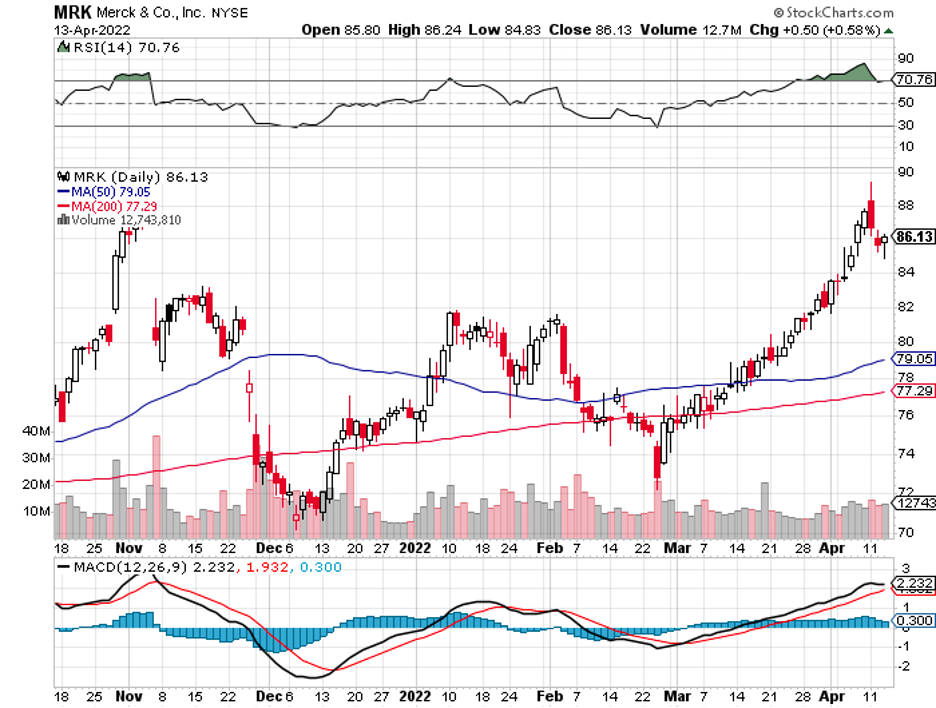
Once upon a time, Merck (MRK) was a major player in the cardiovascular sector. Over the years, it has gradually diminished to a minor league name.

However, Merck has plans to reverse this fortune and reclaim its dominance in the cardio market. To date, it has eight new drug approvals and a slew of expanded labels queued in the next couple of years.

This decision is evident in Merck’s move to outbid Bristol Myers Squibb (BMY) in the auction for Acceleron Pharma, shelling out a whopping $11.5 billion to boost its cardio pipeline considerably.

While the deal may seem like a massive risk, Merck is confident that this deal holds the potential to open up the path to single-product peak sales reaching $10 billion by the mid-2030s.

In fact, there’s no need to wait for long to see some solid proof of Merck’s multibillion-dollar bet, as Acceleron already has a candidate set to be put on display by the end of 2022 or early 2023. 

This Acceleron acquisition forms part of the “New Merck” touted when the company welcomed a new CEO and came on the heels of the success of the leadership that brought the mega-blockbuster cancer drug Keytruda.

It also signifies Merck’s conscious efforts to ease their heavily criticized over-dependence on Keytruda.

While the drug will lose patent protection after 2028, Keytruda still holds a significant portion of Merck’s sales. The treatment accounted for roughly 35% of the company’s total revenues last year.

The patent loss of a significant moneymaker is a typical problem for virtually every Big Pharma company, with AbbVie (ABBV) and Bristol Myers Squibb coming to mind as the most recent examples.

The go-to solution to this is pursuing mega-money mergers: AbbVie acquired Allergan for $63 billion while Bristol splurged on Celgene at $74 billion.

This quickly bolsters the existing pipelines and portfolios of the companies and assuages the fear of investors over impending revenue losses.

Instead of following this pattern, Merck did the opposite in 2021.

The company decided to downsize and established a spinoff segment: Organon (ORGN). The idea is to offload its biosimilars and other legacy products to focus on its core strengths.

This is reminiscent of Pfizer’s (PFE) move to spin out its Upjohn unit and merge it with Mylan to form Viatris (VTRS).

This move looks to have worked well for Merck and Organon as it allowed the parent company to focus on its blockbuster brands.

For instance, Bridion recorded a 28% year-over-year rise in 2021 to reach $1.53 billion in sales, while ProQuad reported a 14% increase to hit $2.14 billion.

Meanwhile, Gardasil rose to an impressive 44% to contribute $5.7 billion.

Even Merck’s Animal Health sector grew by 18% to record $5.6 billion.

There’s also Keytruda, which is projected to become the highest-selling drug at $24.3 billion by 2026.

These are only some of the blockbuster products in Merck’s portfolio expected to continue increasing revenues this 2022.

In addition, the company expects at least $5 billion from its COVID-19 antiviral drug Molnupiravir.

Looking at the trajectory and growth of the pipeline and existing programs, Merck estimates an additional 17% increase in its year-on-year revenue in 2022 to reach $56.1 billion to $57.6 billion.

Despite the move to establish a spinoff unit, the Acceleron deal hints at the possibility that Merck might be shifting to an open checkbook strategy.

Considering how relentlessly it pursued the deal, there’s a chance that the company would be at the bargaining table for a while in search of ways to protect itself against the pending Keytruda patent loss.

Some contenders for a potentially splashy offer from Merck are Moderna (MRNA) and BioNTech (BNTX), which could bolster the bigger company’s mRNA pipeline.

It can also splurge on gene therapy experts by targeting CRISPR Therapeutics (CRSP) and even Vertex (VRTX).

However, given bluebird bio’s (BLUE) flailing performance as of late, this small biotech could very well be a contender for a bargain deal. 

Speaking of discounted stocks, Biogen (BIIB) is also reportedly under consideration simply because of its deeply discounted price following its disastrous Alzheimer’s disease program.

Whatever move it makes, one thing is sure: Merck, with its $208 billion market capitalization, is in a healthy and stable place financially.

More importantly, it has an excellent product portfolio and an exciting pipeline.

It has shown remarkable growth in the past years and impressive efforts to secure a great future, making it a solid stock to buy and hold for a long time. 


https://madhedgefundtrader.com/wp-content/uploads/2019/05/cropped-mad-hedge-logo-transparent-192x192_f9578834168ba24df3eb53916a12c882.png 0 0 Mad Hedge Fund Trader https://madhedgefundtrader.com/wp-content/uploads/2019/05/cropped-mad-hedge-logo-transparent-192x192_f9578834168ba24df3eb53916a12c882.png Mad Hedge Fund Trader2022-04-14 17:00:162022-04-14 16:48:33A Biopharma Stock Bent on Redemption
Mad Hedge Fund Trader

April 12, 2022

Biotech Letter

Mad Hedge Biotech and Healthcare Letter
April 12, 2022
Fiat Lux

Featured Trade:

(CAN THIS BE THE NEXT 10-BAGGER BIOPHARMA STOCK?)
(PFE), (BNTX), (GSK), (SNY), (AZN)

https://madhedgefundtrader.com/wp-content/uploads/2019/05/cropped-mad-hedge-logo-transparent-192x192_f9578834168ba24df3eb53916a12c882.png 0 0 Mad Hedge Fund Trader https://madhedgefundtrader.com/wp-content/uploads/2019/05/cropped-mad-hedge-logo-transparent-192x192_f9578834168ba24df3eb53916a12c882.png Mad Hedge Fund Trader2022-04-12 16:02:102022-04-12 16:28:33April 12, 2022
Mad Hedge Fund Trader

Can This Be The Next 10-Bagger Biopharma Stock?

Biotech Letter

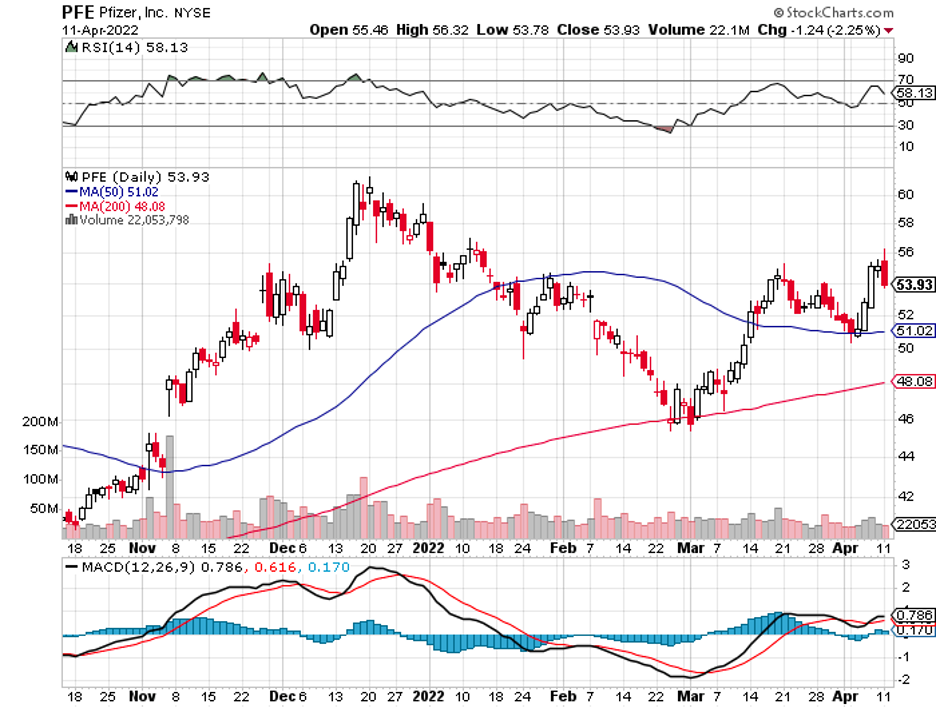
Being one of the most famous names in the biotechnology and healthcare industry, Pfizer (PFE) barely needs any introduction.

Thanks primarily to its COVID-19 vaccine, Comirnaty, Pfizer’s top line has skyrocketed, with its trailing 12-month revenue exploding by over 99% in the past three years and recording a total of a whopping $81.2 billion.

Realistically speaking, it’s best not to rate the chances of this happening again in the years to come.

Still, there are several factors that make Pfizer a convincing stock to hold even when the pandemic shifts to an endemic.

First, the COVID-19 program will most likely continue to rake in blockbuster revenues. Although it won’t be as high as the previous years, Comirnaty sales are projected to reach $39 billion this 2022 and $22 billion in 2023. 

Apart from this vaccine, which was developed with BioNTech (BNTX), Pfizer also recently received approval for its own COVID-19 oral treatment called Paxlovid. The addition of this pill in its portfolio all but guarantees another high-growth revenue stream for the company.

Second, Pfizer holds eight blockbuster treatments focused on diverse sectors.

While these will eventually struggle with generic competition by 2030, the company has that issue covered. To date, Pfizer has roughly 89 candidates in its pipeline with 27 undergoing Phase 3 trials.

Pfizer’s plans to expand its pipeline became particularly evident in the past week as the company made some noise in the muted M&A scene.

Right on the heels of its successes in its lead RSV vaccine candidate, Pfizer bolstered this program through a $525 million biotechnology buyout.

The company that caught this Big Pharma’s attention is ReViral, which has been hard at work in developing Sisunatovir, an oral RSV drug.

While eyebrows may have raised over the price tag for a company with a single asset, it should be noted that Sisunatovir is estimated to rake in $1.5 billion in annual sales—and this pill isn’t the only candidate in ReViral’s pipeline. 

All in all, that’s obviously not a bad payback for a contract this size.

The RSV space has always been a challenging and lucrative market for biopharmas, with the global costs linked to this disease reaching $5.45 billion in 2017.

Researchers have been working on a vaccine for decades, with some experiments dating as far back as the 1960s.

With the addition of ReViral to its portfolio, Pfizer has clearly positioned itself as the frontrunner in the RSV vaccine race.

This puts it firmly ahead of GlaxoSmithKline (GSK), which had to suspend its trials for safety reasons, and even the partnership between Sanofi (SNY) and AstraZeneca (AZN).

Evidently, Pfizer’s deep pockets could indicate additional acquisitions of smaller companies with promising candidates in their pipelines.

We’ve seen this happen with ReViral and, prior to this, Arena Pharmaceuticals to the tune of $6.7 billion primarily for the smaller biotech’s encouraging anti-inflammatory treatment Etrasimod.

Although that price tag initially raised doubts about Pfizer’s spending, a deeper analysis of Arena’s pipeline showed that it could bring $28 billion per annum by 2025.

Flush with the billions it earned from its COVID-19 program, the recent ReViral deal appears to be a relatively minor one for Pfizer.

This leads me to believe that this move marks the beginning of a fresh season of biotech buyouts—and Pfizer might very well be in the lead.

Overall, Pfizer presents a compelling investment case. It is remarkably diversified, which means it offers below-average risks.

Considering its trajectory and putting it against the backdrop of the fast-growing biotechnology industry, Pfizer has the potential to become a trillion-dollar company within 20 years.


https://madhedgefundtrader.com/wp-content/uploads/2019/05/cropped-mad-hedge-logo-transparent-192x192_f9578834168ba24df3eb53916a12c882.png 0 0 Mad Hedge Fund Trader https://madhedgefundtrader.com/wp-content/uploads/2019/05/cropped-mad-hedge-logo-transparent-192x192_f9578834168ba24df3eb53916a12c882.png Mad Hedge Fund Trader2022-04-12 16:00:202022-04-12 16:30:36Can This Be The Next 10-Bagger Biopharma Stock?
Mad Hedge Fund Trader

April 7, 2022

Biotech Letter

Mad Hedge Biotech and Healthcare Letter
April 7, 2022
Fiat Lux

Featured Trade:

(A BIOTECH DAVID AND GOLIATH STORY)
(ALLO), (NVS), (GILD)

https://madhedgefundtrader.com/wp-content/uploads/2019/05/cropped-mad-hedge-logo-transparent-192x192_f9578834168ba24df3eb53916a12c882.png 0 0 Mad Hedge Fund Trader https://madhedgefundtrader.com/wp-content/uploads/2019/05/cropped-mad-hedge-logo-transparent-192x192_f9578834168ba24df3eb53916a12c882.png Mad Hedge Fund Trader2022-04-07 17:02:562022-04-07 20:35:35April 7, 2022
Mad Hedge Fund Trader

A Biotech David and Goliath Story

Biotech Letter

Back in 1996, a man named Doug Wilson received devastating news. He had chronic lymphocytic leukemia, a kind of cancer that begins with white blood cells. As the cancer progressed, he started going through several rounds of chemotherapy.

In 2009, he was told that the cancer had evolved. More alarmingly, chemo would no longer be an effective treatment for his condition. At that time, his doctor suggested a bone marrow transplant. Unfortunately, none of his family members were a good match.

With the cancer getting worse and nothing else left to try, Olson learned about a clinical trial for a new type of cancer treatment: CAR T-cell therapy.

The goal is to re-engineer the immune cells in the laboratory and transform them into weapons to hunt down killer cancer cells.

In 2010, Olson signed up for the trials.

Fast forward to 2022, Olson has become the poster child for the benefits of CAR T-cell therapy.

While oncologists are highly reluctant even to whisper the word “cure” when it comes to cancer, this term was thrown around several times during the news conference at the University of Pennsylvania.

The event, led by immunologist Carl June, presented data from 10 years of follow-up on the patients with leukemia who participated in the trial back in 2010.

Olson’s data demonstrated that CAR-T could cure cancer patients, with zero leukemia cells found in his blood 10 years after the treatment. 

For decades, the mainstays of cancer treatments have been surgery, radiation therapy, and chemotherapy.

With the emergence of CAR T-cell therapy, the fourth pillar of oncology may very well be the answer to this debilitating and fatal disease.

After all, CAR T-cell therapy has improved patients’ lives where other treatments failed to work.

Unlike chemo and radiation, this therapy targets the tumors with higher precision instead of killing both the healthy and cancerous cells.

CAR T-cell therapy dates as far back as the 1950s when the potential was studied following a bone marrow transplantation. That marked the first time that healthy living cells were infused into patients with blood cancer in an effort to control the disease.

But it was as early as the 1900s when researchers noted T cells' capacity to easily find, identify, and then kill cancer cells. The cells follow a “guide” to lead them to the tumors to achieve this. This introduced the role of antibodies as priceless medical and scientific tools.

In 2017, the groundbreaking approvals of two CAR T-cell therapies proved to be the climax of over 60 years of research on this immunotherapy.

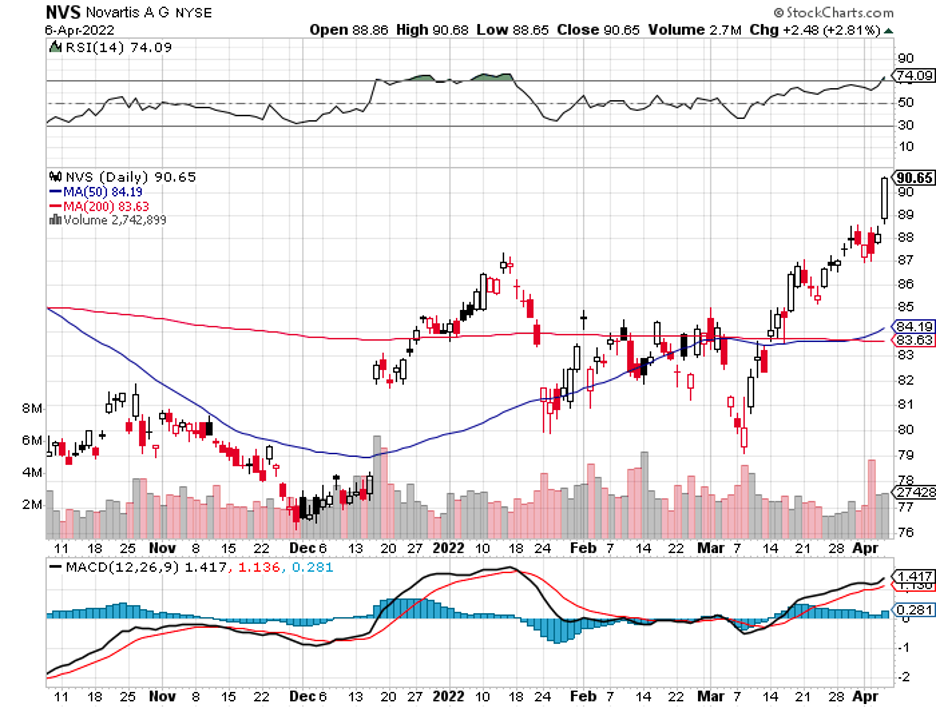
Five years after it started working with the University of Pennsylvania, Novartis (NVS) became the first-ever biotechnology company to earn FDA approval for its CAR T-cell therapy: Kymriah.

Kymriah was first launched to target acute lymphoblastic leukemia in 2017. Since then, the indications for this treatment have expanded, and the latest is its application as an approved therapy for large B-cell lymphoma.

The other groundbreaking CAR T-cell therapy approved in 2017 is Kite Pharma’s large B-cell lymphoma treatment Yescarta.

In the same year, Gilead Sciences (GILD) acquired Kite Pharma for $11.9 billion and instantly became a major player in the CAR T-cell therapy space.

Thus far, Gilead and Novartis have remained the biggest names in this segment.

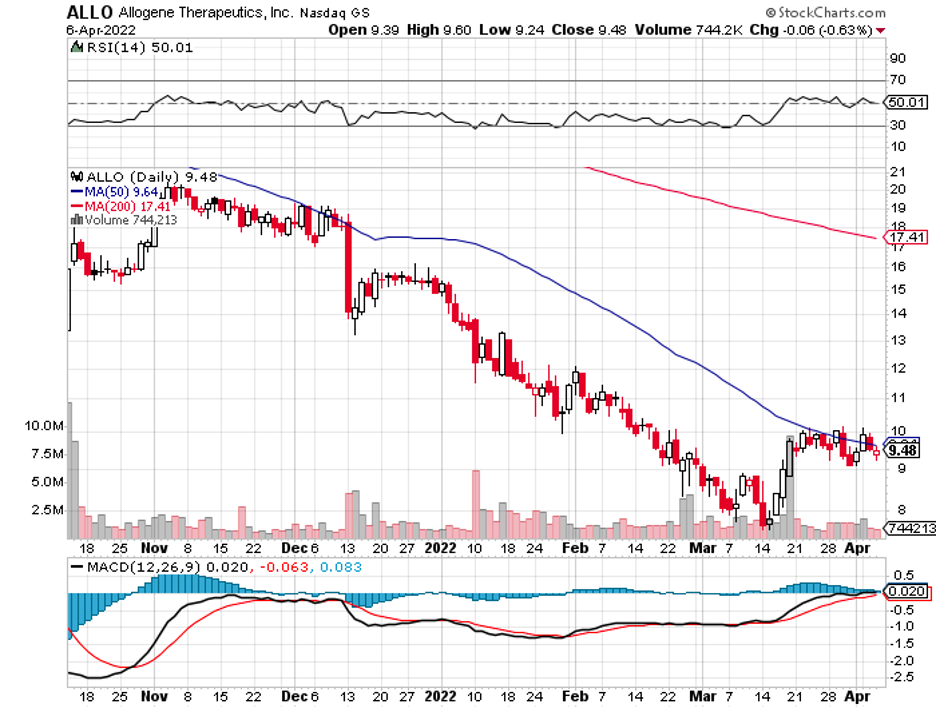
However, another biotech appears to be making a play in becoming the frontrunner in the CAR T-cell therapy space: Allogene Therapeutics (ALLO).

Unlike its competitors, Allogene is regarded as a speculative biotech play.

Despite its smaller market capitalization of $1.35 billion compared to Gilead’s massive $76.38 billion and Novartis’ jaw-dropping $223.18 billion, this biotech prides itself on an extensive pipeline filled with CAR T-cell therapies under development.

More importantly, Allogene has developed the AlloCAR T technology platform, which harvests healthy T-cells from other healthy donors.

In contrast, older CAR T-cell methods required harvesting the T-cells from the patients themselves.

Among its candidates, the most exciting integration of this technology is ALLO-316. This is the first program developed for renal cell carcinoma or kidney cancer patients.

This is an excellent first indication for the biotech due to the sheer size of the kidney cancer market. Globally, this segment is projected to reach $9.4 billion by 2026.

Where ALLO-316 and several of the candidates in the pipeline stand out is in their ability to go after CD70—a highly sought-after protein in cancer treatments. 

This is an extremely promising breakthrough because tumor cells hijack this protein to accelerate the invasion of the immune system. This results in the high expression of CD70, which then inhibits the body’s anti-tumor response.

This is where ALLO-316 truly shines. This CAR-T therapy can precisely target CD70.

Add that to the patented AlloCAR T technology, and you get a highly effective and safe off-the-shelf CAR T-cell therapy with multiple applications.

Therefore, it offers the biotech incredible flexibility to utilize the therapy for hematologic malignancies or blood cancer and even solid tumors.

Needless to say, this opens the door to so many indications involving tumor expressions of CD70, including multiple myeloma, non-small cell lung cancer, cervical cancer, and ovarian cancer.

The CAR T-cell area, albeit exciting, remains relatively new that it’s challenging to figure out which companies will emerge as the most dominant forces.

At this point, Novartis and Gilead are looking like the strongest bets considering their financial and marketing capacity.

Both companies have more than sufficient revenue streams to tinker with the technology until they find a space that would truly pay off.

However, Allogene has the markings of a biotech that could upend the CAR T-cell industry—if its off-the-shelf solutions work out.

Currently, one of the biggest hindrances in this immunotherapy is the cost, and Allogene’s treatments appear to be the solution that could exponentially broaden their use.

Overall, Allogene is an interesting speculative biotech play to check out. Looking at its pipeline and patented technology, this company can revolutionize some cancer treatments in the future.


allo


https://madhedgefundtrader.com/wp-content/uploads/2019/05/cropped-mad-hedge-logo-transparent-192x192_f9578834168ba24df3eb53916a12c882.png 0 0 Mad Hedge Fund Trader https://madhedgefundtrader.com/wp-content/uploads/2019/05/cropped-mad-hedge-logo-transparent-192x192_f9578834168ba24df3eb53916a12c882.png Mad Hedge Fund Trader2022-04-07 17:00:512022-04-16 02:54:22A Biotech David and Goliath Story
Mad Hedge Fund Trader

April 5, 2022

Biotech Letter

Mad Hedge Biotech and Healthcare Letter
April 5, 2022
Fiat Lux

Featured Trade:

(A BRIGHT SPOT IN A GLOOMY SECTOR)
(VRTX), (MRNA), (ABBV), (CRSP)

https://madhedgefundtrader.com/wp-content/uploads/2019/05/cropped-mad-hedge-logo-transparent-192x192_f9578834168ba24df3eb53916a12c882.png 0 0 Mad Hedge Fund Trader https://madhedgefundtrader.com/wp-content/uploads/2019/05/cropped-mad-hedge-logo-transparent-192x192_f9578834168ba24df3eb53916a12c882.png Mad Hedge Fund Trader2022-04-05 18:02:172022-04-05 18:26:54April 5, 2022
Mad Hedge Fund Trader

A Bright Spot in a Gloomy Sector

Biotech Letter

In an economy continuously plagued with a rising interest rate, it’s not unheard of for risk-averse investors to steer clear of businesses with high debt loads.

After all, those kinds of companies could be the most affected as climbing interest rates inevitably lead to lower profits. 

The silver lining is that there’s no need to sacrifice putting money in growth stocks altogether.

You can simply load up on ultra-conservative businesses to ensure that you don’t come off the losing end in the battle of an ever-increasing interest rate.

In the biotechnology and healthcare sector, there are a handful of promising fast-growing businesses that are not saddled with tons of debt. One of them is Vertex Pharmaceuticals (VRTX).

A continuously growing business, Vertex recorded $7.5 billion in sales in 2021, showing off a 22% increase from 2020.

Its cystic fibrosis (CF) program is a major player in its growth, particularly Trikafta/Kaftrio. On its own, this blockbuster treatment contributed $5.7 billion to Vertex’s top line in 2021.

As it expands and goes after more growth opportunities, Vertex consistently ensures that it is backed by a solid balance sheet. In total, its short- and long-term liabilities amount to roughly $3.3 billion.

With a cash balance of $6.8 billion, the company has more than enough to clear that off.

In the past 12 months, Vertex has generated roughly $2.6 billion in cash from its daily operating activities.

This biotechnology company has been in such excellent shape that it managed to buy back shares with $1.4 billion last year. That’s practically three times the $539 million it allocated to repurchasing efforts in 2020.

Meanwhile, investors who feel they missed the boat on Moderna (MRNA) now have a second shot at investing in another high-growth biotechnology company.

Plus, it still has a Moderna connection and already has a strong track record of dominating a lucrative market.

Vertex and Moderna, which saw their stock price catapult to a record-breaking 800% in the past two years, are working on an mRNA-based therapy for CF patients.

Now, you might be wondering why Vertex is pursuing this program, considering its dominance in the CF market.

In fact, the closest rival would be AbbVie (ABBV). However, Phase 2 trial results for this candidate are due in two to three years. That means Vertex will likely remain the top name in the CF space for a while. Nevertheless, Vertex appears determined to keep its lead.

So, why bother with a new program instead of bolstering the existing Trikafta pipeline?

Well, right now, Vertex has virtually covered 90% of the CF market—and this is where Moderna comes in.

What the two are trying to do is to completely cover the market and target the remaining 10% not qualified to take the existing Vertex CF treatment.

As of the last update, the remaining demographic is at 25,000 patients. This would translate to another $4 billion in commercial sales.

If they succeed, the two would have created the biggest competitor to Trikafta. That means Vertex’s most formidable rival would be Vertex as well.

Needless to say, Vertex’s continuous dominance in the CF space guarantees blockbuster levels of profits in the years to come.

Vertex has been busy expanding into additional therapeutics segments despite its resounding success in the CF space.

Another potential blockbuster is CTX001, a one-time gene-editing treatment targeting blood disorders beta-thalassemia and sickle disease, developed in collaboration with CRISPR Therapeutics (CRSP). This is by far the most exciting venture of the company, with the partners expected to file for regulatory approval by the end of 2022.

Aside from these, Vertex’s pipeline is filled with promising candidates. One is VX-147, which is a groundbreaking therapy for severe genetic kidney diseases. There’s also autoimmune treatment VX-880.

VX-548 is another exciting candidate. While this drug is aimed to be an acute pain treatment, a key characteristic is the absence of drug addictiveness.

This is a breakthrough effort because it might just be the answer to the ongoing opioid crisis.

Given the unique mechanism of VX-548, this alternative aims to deliver treatment with low addictive effects.

There are roughly 75,000 deaths reported annually caused by overdose on opioid drugs in the United States alone. This could translate to $4 billion in the addressable market.

Although these candidates are not as advanced as Vertex’s CF program, they demonstrate that the company can go beyond its well-established niche and bolsters investor confidence.

With the rising inflation and economic turbulence, it’s advisable to prioritize companies with steady cash flow and promising growth prospects

Despite the rough couple of years for the broader market, Vertex easily meets these expectations and appears to be one of the positive stories in the healthcare and biotechnology sector.


cf

https://madhedgefundtrader.com/wp-content/uploads/2019/05/cropped-mad-hedge-logo-transparent-192x192_f9578834168ba24df3eb53916a12c882.png 0 0 Mad Hedge Fund Trader https://madhedgefundtrader.com/wp-content/uploads/2019/05/cropped-mad-hedge-logo-transparent-192x192_f9578834168ba24df3eb53916a12c882.png Mad Hedge Fund Trader2022-04-05 18:00:112022-04-13 02:17:27A Bright Spot in a Gloomy Sector
Mad Hedge Fund Trader

March 31, 2022

Biotech Letter

Mad Hedge Biotech and Healthcare Letter
March 31, 2022
Fiat Lux

Featured Trade:

(A SUPERCHARGED BUY-AND-HOLD GEM FIRING ON ALL CYLINDERS)
(ABT), (PFE), (VTRS), (MRK), (OGN), (ABBV)

https://madhedgefundtrader.com/wp-content/uploads/2019/05/cropped-mad-hedge-logo-transparent-192x192_f9578834168ba24df3eb53916a12c882.png 0 0 Mad Hedge Fund Trader https://madhedgefundtrader.com/wp-content/uploads/2019/05/cropped-mad-hedge-logo-transparent-192x192_f9578834168ba24df3eb53916a12c882.png Mad Hedge Fund Trader2022-03-31 20:02:022022-04-01 09:14:37March 31, 2022
Page 64 of 115«‹6263646566›»

Legal Disclaimer

There is a very high degree of risk involved in trading. Past results are not indicative of future returns. MadHedgeFundTrader.com and all individuals affiliated with this site assume no responsibilities for your trading and investment results. The indicators, strategies, columns, articles and all other features are for educational purposes only and should not be construed as investment advice. Information for futures trading observations are obtained from sources believed to be reliable, but we do not warrant its completeness or accuracy, or warrant any results from the use of the information. Your use of the trading observations is entirely at your own risk and it is your sole responsibility to evaluate the accuracy, completeness and usefulness of the information. You must assess the risk of any trade with your broker and make your own independent decisions regarding any securities mentioned herein. Affiliates of MadHedgeFundTrader.com may have a position or effect transactions in the securities described herein (or options thereon) and/or otherwise employ trading strategies that may be consistent or inconsistent with the provided strategies.

Copyright © 2026. Mad Hedge Fund Trader. All Rights Reserved. support@madhedgefundtrader.com
Scroll to top