Global Market Comments
January 14, 2022
Fiat Lux
Featured Trades:
(LEARNING THE ART OF RISK CONTROL)
Global Market Comments
January 14, 2022
Fiat Lux
Featured Trades:
(LEARNING THE ART OF RISK CONTROL)
Global Market Comments
January 13, 2022
Fiat Lux
Featured Trades:
(WHY A US HOUSING BOOM WILL CONTINUE),
(LEN), (PHM), (KBH),
(WHY SENIORS NEVER CHANGE THEIR PASSWORDS)
Lately, my inbox has been flooded with emails from subscribers asking if the housing market is about to crash as a result of the housing bubble and if they should sell their homes.
They have a lot to protect.
Since prices hit rock bottom in 2011 and foreclosures crested, the national real estate market has risen by 50%.
The hottest markets, like those in Seattle, San Francisco, and Reno, are up by more than 125%, and certain neighborhoods of Oakland, CA have shot up by 500%.
Looking at the recent housing statistics, I can understand their concern. The data are the hottest on record across the board:
* Housing prices are still exploding to the upside with S&P Case Shiller Rising 10.4% in December, the one-month biggest spike in history
*Your Check is in the Mail, with the passage of the $1.9 trillion rescue package. A big chunk of this is going into housing upgrades
* Goldman Sachs is Forecasting a Jobs Boom, which will take the headline Unemployment Rate down to 4.1% by yearend. Employed people buy houses.
*Rising rates haven’t touched the housing market, and won’t for years.
*Workforce at home will double post-pandemic, maintaining demand for large homes
*30-year fixed-rate mortgages still a mere 3.26%, still near a historic low
*$45 billion in rental assistance is now available, thanks to Biden’s Rescue Package.
I have a much better indicator of future housing prices than the depressing numbers above. The way homebuilder stocks like Lennar (LEN), KB Homes (KBH), and Pulte Homes (PHM) are trading I’d say your home will be worth a lot more in a year, and possibly double in another five years. Many of these stocks are up nearly 200% since the March 23 bottom.
What I call “intergenerational arbitrage” will be the principal impetus. The main reason that we are just endured two “lost decades” of economic growth over the last 20 years is that 85 million baby boomers are retiring to be followed by only 65 million “Gen Xers”. When you are losing 20 million consumer economies, don’t grow very fast. For more about millennial investing habits,x please click here.
When the majority of the population is in retirement mode, it means that there are fewer buyers of real estate, home appliances, and “RISK ON” assets like equities, and more buyers of assisted living facilities, healthcare, and “RISK OFF” assets like bonds. That’s what got us to a 0.32% yield in the ten-year.
The net result of this is slower economic growth, higher budget deficits, a weak currency, and registered investment advisors who have distilled their practices down to only municipal bond sales.
Fast forward to the other side of the pandemic and the reverse happens. The baby boomers will be out of the economy, worried about whether their diapers get changed on time or if their favorite flavor of Ensure is in stock at the nursing home.
That is when you have 65 million Gen Xers being chased by 85 million of the “millennial” generation trying to buy their assets!
By then, we will not have built new homes in appreciable numbers for 14 years, and a severe scarcity of housing hits. Even before the pandemic, new home construction was taking place at half the 2008 peak. Residential real estate prices will naturally soar. Labor shortages will force wage hikes.
The middle-class standard of living will then reverse a 40-year decline. Annual GDP growth will return from the subdued 2% rate of the past four years to near the torrid 4% seen during the 1990s. It all leads to my “Return of the Roaring Twenties” scenario which you can learn about by clicking here.
It gets better.
It is certain that the current administration will restore tax deductions for state and local real estate taxes (SALT) lost in the 2017 tax bill. The cap on home mortgage interest rate deductions will also rise.
These two events will trigger an immediate 10% increase in the value of your home on an after-tax basis and more on the coasts.
So, if someone approaches you with a discount offer for your home, I would turn around and run a mile the other way.
You should also pile into the stocks, options, and LEAPS of housing stocks in any future market dip.
Global Market Comments
January 12, 2022
Fiat Lux
Featured Trades:
(WHY GLOBALIZATION WORKS)
I am writing this to you from the Amtrak California Zephyr. Having got my Pfizer Covid-19 shots, it is now finally safe to ride public transport.
I am riding the rails in a first class sleeping compartment from Oakland, CA to Truckee, CA to reposition a car from my Lake Tahoe lakefront estate now that winter is over.
Pulling out of the station, I couldn’t help but notice the gigantic cargo ships from China and South Korea unloading containers by the tens of thousands.
Mountains of these containers dot the horizon.
The cranes that used to automatically unload them were the models for George Lucas’s AT walkers in Star Wars.
Having been a vociferous supporter of globalization since its dawn a half century ago, first during a decade spent as a reporter for The Economist magazine, and then as an investor, I will explain how our international trading system works, and especially why it works for us.
There was a polyglot of travelers from all over the world on my train.
Large groups of Chinese were led by flag-bearing guides.
Italian Millennials mobbed the bar.
A retired English couple strolled the observation car.
There was even the occasional American student backpacker repeating my own adventure from the 1960s.
And you know what? This disparate international group shared many things in common.
Most of them spent much of the day glued to iPhones or Androids run by US-designed apps.
Many were staying in accommodation organized by Airbnb.
Like me, they may have made the trip from and to the train station in an Uber cab.
They wore Levi Strauss blue jeans. American pop music pulsed through their earbuds. Probably half of them arrived in America on a Boeing jet financed by the US Export-Import Bank.
In short, they were all sending enormous amounts of money to US companies and shareholders in more ways than they could possibly count, without realizing it.
You never used to see tourists from most countries, like Russia, Spain, Portugal, Italy, or Ireland.
They were too poor.
Rapidly rising standards of living created by globalization changed all of that, creating an enormous new market for American products, especially technology ones.
You can see some of this impact in international balance of trade statistics. In 2020, the US ran a trade deficit with the world of $689 billion.
There is a more elegant way to describe this trade. We are in fact running a massive goods deficit, where foreigners send us $290 billion a month worth of stuff and we give them paper in return, US dollars, which has been steadily depreciating in value for the past 50 years.
Who is the big winner here? The US consumer, i.e. you and I. Sounds like a good deal to me. Without this inflow of cheap goods the US, inflation rate would be at least double or triple what it is now.
Subtract our $402.8 billion surplus in services, which includes, financial services, education, patents, and other intellectual property, and that brings our current account deficit down by more than half to only $488.5 billion. Some 78.6% of private sector US GDP is now accounted for by services.
But that doesn’t tell the whole story.
Trade data completely miss the enormous number of products and services that are now given away FOR FREE in exchange for the chance of earning some uncertain revenue at some future date.
In a pre-Internet, pre-globalized world, a service like the Diary of a Mad hedge Fund Trader covering so many asset classes and individual stocks real-time might have cost $100,000, if not $1 million.
And you know what? It would have been worth it!
Multiply this effect on a global scale and you see what I am talking about.
Give up your name, email address, and phone number and you can obtain almost any kind of online service for nothing. And as far as I know, no government agency has any measurement of this whatsoever.
Needless to say, the United States is far and away the leader in this immeasurable field.
By the way, this might also be the reason why the published productivity data has been so poor, despite the fact that US GDP has grown by 20% since 2009. Everywhere I look, productivity is skyrocketing, including my own.
It also might be the reason why Amazon continuously sports a nosebleed valuation. Much of what they provide is FREE, and therefore immeasurable.
Of course, globalization wrought havoc on your life if you went into it with the wrong job in the wrong industry and an inadequate skill set.
Blue-collar workers tied to textiles, shoes, toys, and other low value-added manufacturing were toast, as their jobs fled offshore.
If you didn’t retrain or adapt, you became an angry, mostly white man.
As my friend, New York Times columnist Tom Friedman, likes to say, “Average doesn’t cut it anymore.”
However, while the jobs are gone, the bulk of the profits stayed here in the US. American companies offshored the $2 an hour jobs (mass assembly), but kept the $150 an hour ones (design and marketing).
As my friends in the Chinese government never fail to point out, if they build the iPhone for $100 and we sell it for $1,000, we are the big winners, not them.
They believe we are perpetuating 19th century colonialism by making wage slaves of their workers.
They are correct.
Globalization enables the US dollar to continue as the world’s reserve currency, as almost all international trade is conducted in the buck.
That is one of the greatest free lunches of all time.
It enables the US government to indirectly control the global economy through its own monetary policy. Some half of all of the $22 trillion in US government debt is owned by foreigners.
When sanctions forced Iran to drop out of the international trading system, what did they get? A Great Depression that cut their GDP by 25%. You can’t run a country of 80 million with oil barter deals, gold, and bitcoins alone.
There are also the huge defense benefits that globalization brings us.
Back in the early days, the main reason to steer a country into capitalism was to prevent it from going communist, and therefore becoming an enemy.
Grow your allies and shrink your enemies, and your defense costs shrink dramatically, raising our friends’ standards of living.
That is what has happened on a massive scale.
Increased trade also boosted foreign standards of living, therefore creating a growing market for American goods and services.
This was the whole point of the World Trade Organization, NAFTA, the Trans-Pacific Partnership.
Humans rarely bite the hands that feed them. They are also highly unlikely to set fire to their paycheck or bomb the sources of income.
Make a foreigner a millionaire, and you turn him into a pacifist. I have seen this unfold time and again over the past half century, be it in China, Russia, Vietnam, Cambodia, and most recently in Iran.
Create an embedded base of businessmen in any country who are getting rich off of you, and international relations invariably improve.
Any system based on greed is guaranteed to succeed.
A side benefit of all of this is that stock markets for up forever.
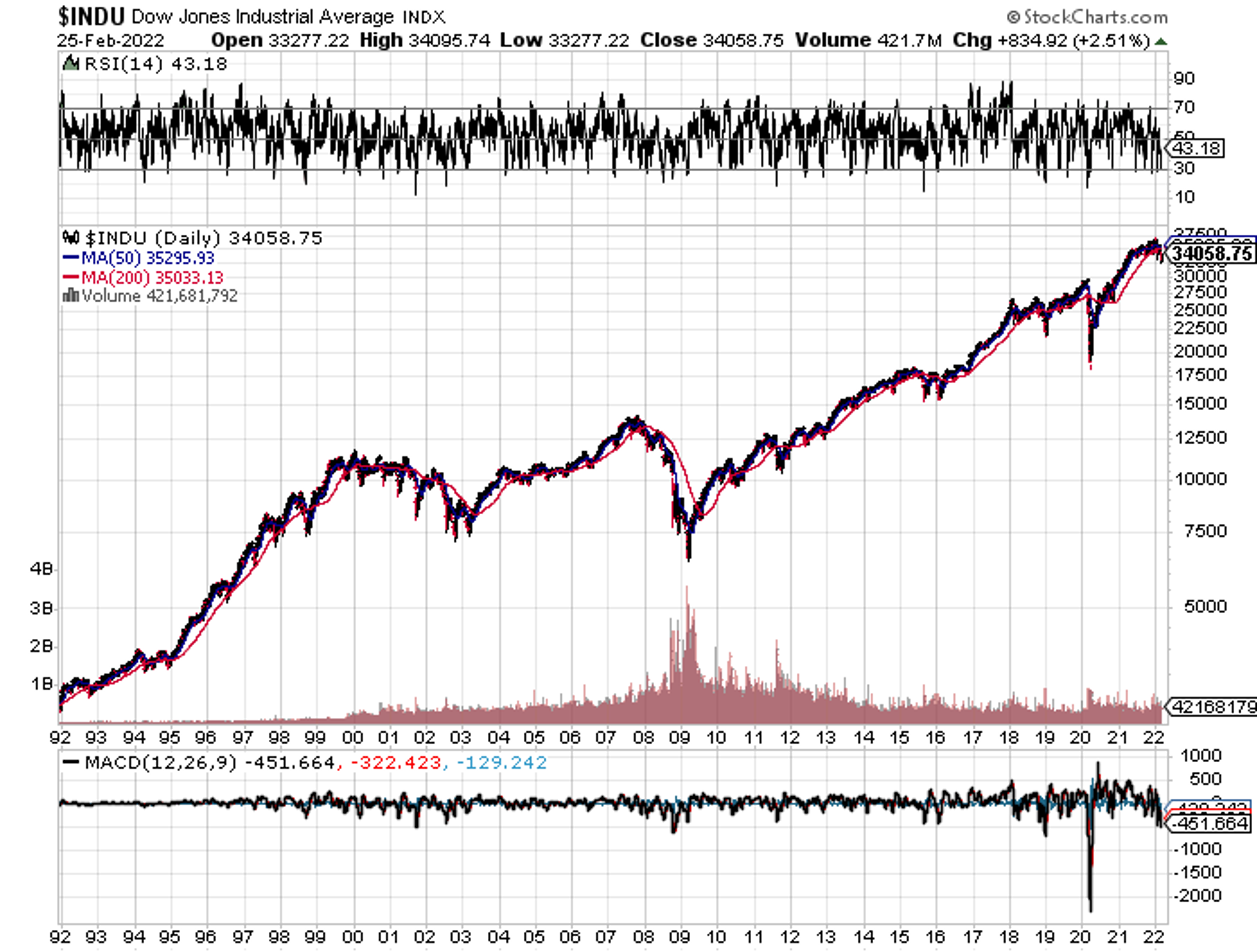
Since globalization started in earnest in 1951, the Dow Average has risen from $239 to $21,800, a prodigious gain of some 92-fold.
And you wondered why?
Globalization is the mechanism through which America is paid the dividend for all of the good deeds it has done and inventions it has created for the past century.
I am thinking about the construction of the Panama Canal, Lend Lease, and the Marshall Plan, as well as the transistor, memory chip, microprocessor, personal computer, Windows, the Internet, online commerce, the iPhone, and social media.
That is why globalization is a win-win-win for everyone.
There are really only two true communist countries left in the world, Cuba and North Korea, which never joined the international trading community. They also happen to have the planet’s lowest standard of living.
And Cuba will become totally capitalist within two years. Just give them a million iPhones, get them talking, and see what happens. Castro will become just another neighborhood in South San Francisco.
So why end a trading system from which America and its people have profited so mightily?
That is a very good question, one that someone might ask the former president.
“Consumers are going to do best and that is consume,” said Brian Jacobsen of Wells Fargo.
Global Market Comments
January 11, 2022
Fiat Lux
Featured Trades:
(THE BARBELL PLAY WITH BERKSHIRE HATHAWAY),
(BRKA), (BRKA), (BAC), (KO), (AXP), (VZ), (BK) (USB), (TLT), (AAPL), (MRK), (ABBV), (CVX), (GM), (PCC), (BNSF)
Global Market Comments
January 10, 2022
Fiat Lux
Featured Trades:
(MARKET OUTLOOK FOR THE WEEK AHEAD, or WHY I FEEL SO MUCH BETTER)
(TSLA), (AAPL)
A month ago, I was wringing my hands, pacing the floor, and tossing and turning at night. I had no idea what the stock market was going to do in 2022.
Now, I feel so much better. For while getting snowed in at Lake Tahoe for two weeks, I dove into the deep research. Slowly, the fog cleared, the clouds lifted, and everything became crystal clear.
The markets vindicating my views with a sledgehammer, I feel so much better.
A year behind schedule, the great bond market crash has begun in earnest, taking ten-year US Treasury yields up an eye-popping 45 basis points in a month. Financial stocks have caught on fire. Technology stocks are getting mercilessly dumped. Any non-yielding security, be it gold, silver, Bitcoin, or small-cap tech stocks, have been taken to the woodshed.
So what happens next? More of the same. The out-of-tech into financials trade could continue for another three to five months.
Then the Fed’s cycle of rising interest rates will take a break by summer. Financials will be super-heated and at all-time highs. Technology stocks will be below their 200-day moving averages. So you reverse the trade. Tech will lead in the second half.
All I can say is that I am really glad that I am not the Chairman of the Federal Reserve right now. If Omicron convinces Jay Powell to delay interest rate hikes, he risks inflation getting out of control. If he continues to accelerate the rate high schedule he could kill the recovery.
And here’s the 800-pound gorilla in the room that no one is talking about. What is the biggest threat to the US and the global economy? No, it’s not Covid. It isn’t inflation. It’s not even a tempestuous midterm election, which has already begun.
It’s a stock market crash. Remember that stock market crash that took the Dow Average down 40%, as we saw in March-April 2020? That is first and foremost what is in Powell’s mind.
So if we breach the 10% correction that now appears underway, Jay may quietly pull back on the rate hike throttle. The folder making the argument will be quietly lost behind the radiator at 20th street and Constitution Avenue in Washington DC, the home of the Federal Reserve.
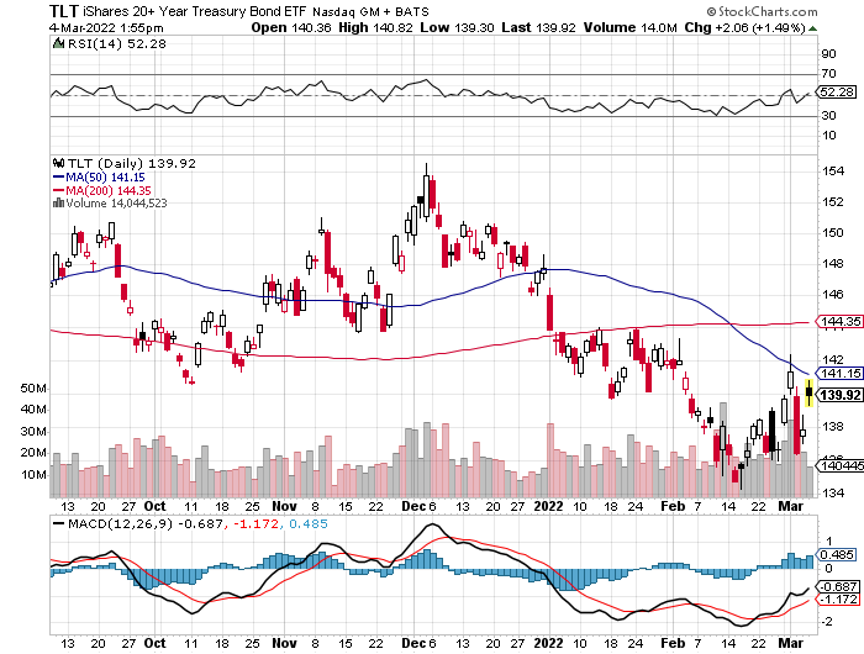
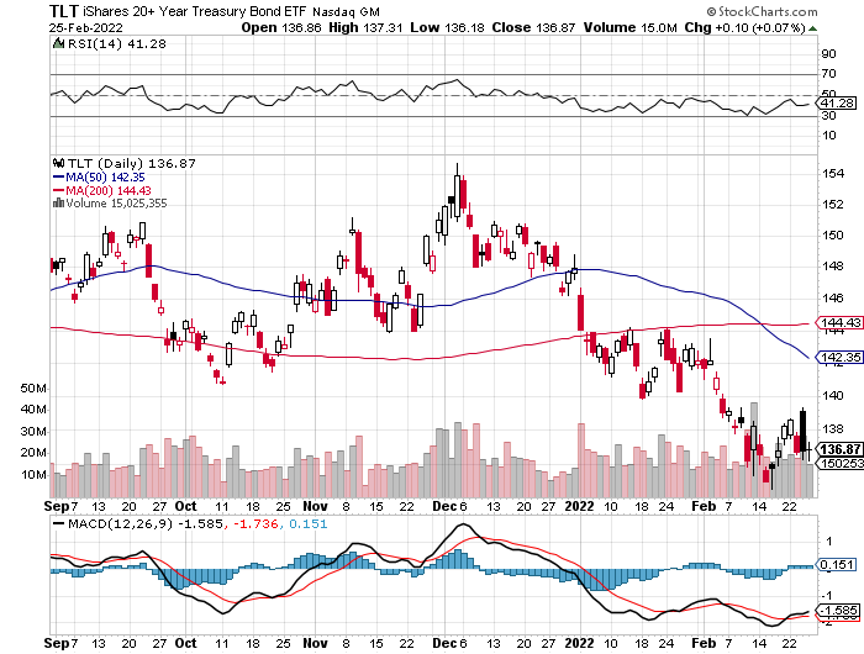
The Fed Minutes were a bombshell, indicating a serious acceleration of interest rate hikes is in the cards this year. The Fed may flip to a net seller of Treasury bonds by the fall. Bonds sold off hard and may break to new 2-year lows. Take profits on all short-dated bond plays, with the (TLT) down $14.00 in a month. Technology got crushed, posting the worst day in 11 months. Sell all tech option plays. You can buy them back cheaper later. But keep big tech stocks. They can only go don so much with 30% earnings growth this year.
NASDAQ Stocks down 50% hits record from one-year highs. It’s a Dotcom bust echo. Traders are selling first and doing the research later. That means half of all tech stocks are in bear markets. Soaring interest rates aren’t helping.
Nonfarm Payroll Report disappoints at 199,000 in December. But the Headline Unemployment Rate plunged from 4.2% to 3.9%, approaching a new century low. The U-6 “discouraged worker” rate dropped to 7.3%. Leisure & Hospitality led at 53,000, followed by Professional & Business Service at 43,000, and Manufacturing at 26,000. The government lost 12,000 jobs. Some 650,000 people gain jobs, with self-employment surging. Once again, the data is wildly contradictory as a post-pandemic America remakes itself. Bonds and tech were crushed, financials soared.
Apartment Occupancy hits all-time high, as growing numbers are priced out of home ownership. As a result, rental rates are now rising faster than home prices. Occupancy is now at 97.5%.
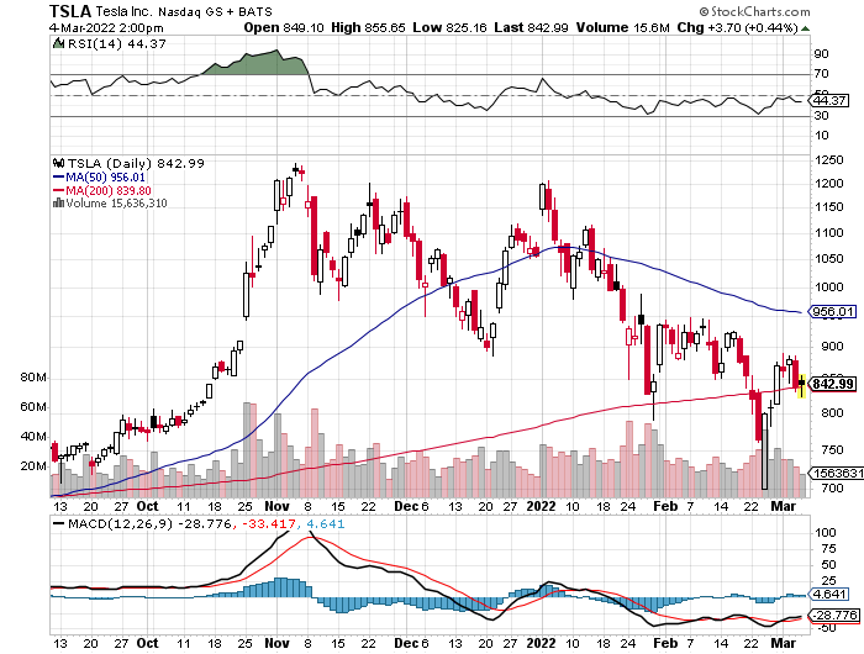
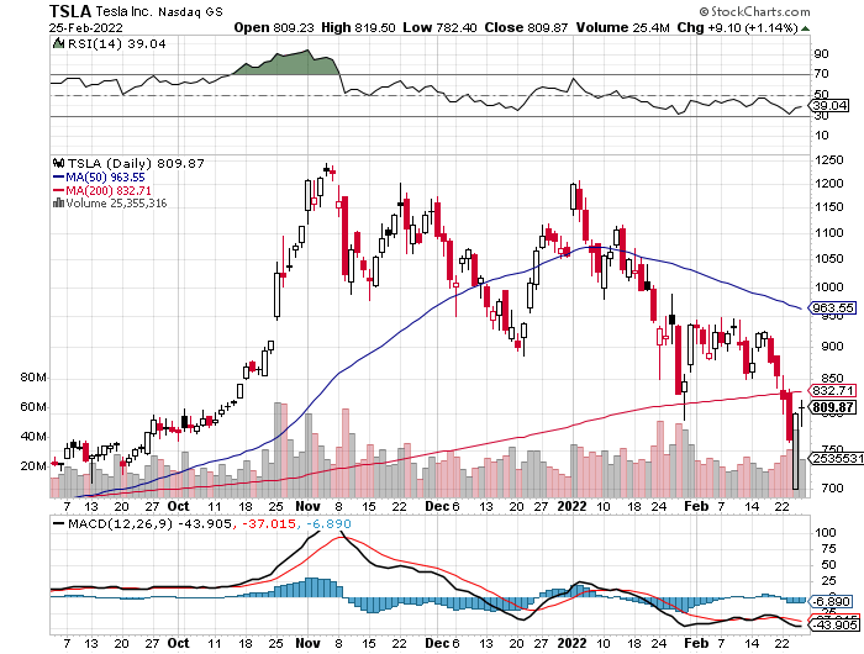
Tesla delivers a record 308,600 EVs in Q4, blasting all expectations, taking them nearly to Elon Musk’s 2021 target of one million. They managed to beat all supply chain challenges. In a brilliant move, when other car makers cancelled chip orders in 2020, Tesla bought them all up. Tesla remains far and away the mass production leader in EVs, and I am maintaining my $10,000 target. In addition, Musk is done selling the stock for another year.
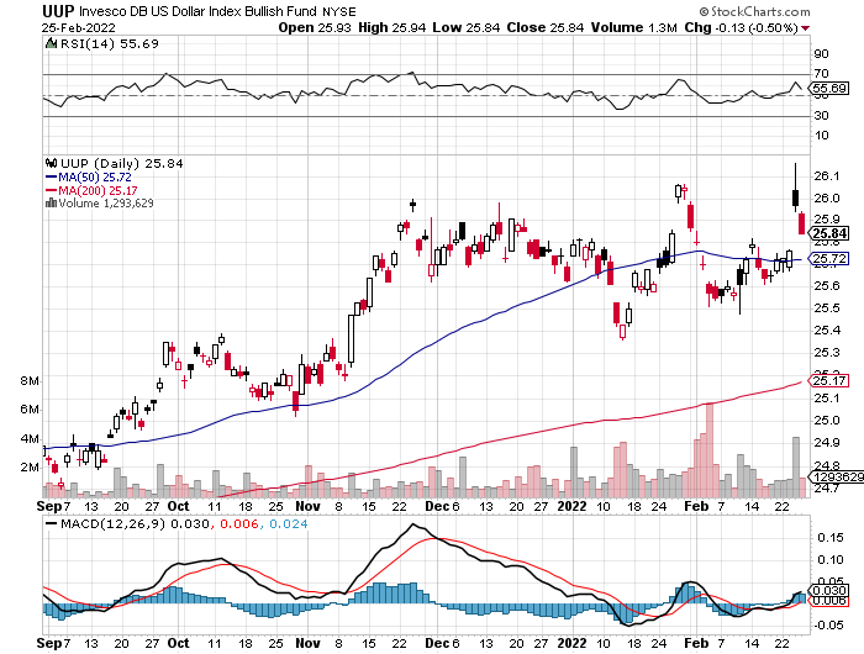
US Dollar clocks best year in six, up 7%, powered by rising interest rate fears that never came. The Turkish lira was the worst-performing, down 44%, thanks to government mismanagement there.
Apple tops $3 trillion market cap, the shares rising above $183, well on the way to my $250 target for 2022. The stock is getting extended short term to raise cash to buy on the next selloff. I am hanging on to my own long term holding with a split-adjusted cost basis of 25 cents.
US Home Prices soar 18% in October according to S&P Case Shiller. Phoenix (32.3%), Tampa (28.1%), and Miami (25.7%) led. 30-year fixed rate mortgages at 3.05% were a huge help.
Bitcoin gets crushed, approaching a one-year low at $40,000, and will continue to do so. Not interest-bearing instruments like gold and crypto don’t do well during rapidly rising interest rates. In the meantime, some $3.2 billion in crypto was stolen in 2021, a rise of 516% from the previous year, mostly from those who don’t know how to protect their Defi platforms with no central exchange authority.
My Ten-Year View
When we come out the other side of pandemic, we will be perfectly poised to launch into my new American Golden Age, or the next Roaring Twenties. With interest rates still at zero, oil cheap, there will be no reason not to. The Dow Average will rise by 800% to 240,000 or more in the coming decade. The American coming out the other side of the pandemic will be far more efficient and profitable than the old. Dow 240,000 here we come!
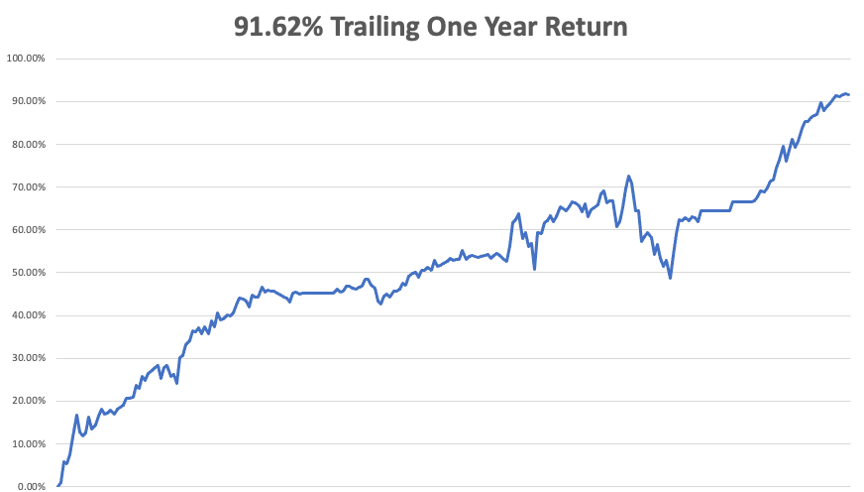
With the pandemic-driven meltdown on Friday, my December month-to-date performance bounced back hard to 11.26%. My 2021 final performance ended at 90.02%. The Dow Average was up 18.4% in 2021.
I have a 100% cash position, waiting for the ideal entry point to enter the market. With the 500-point crash today, suddenly the requests for new trade alerts have faded.
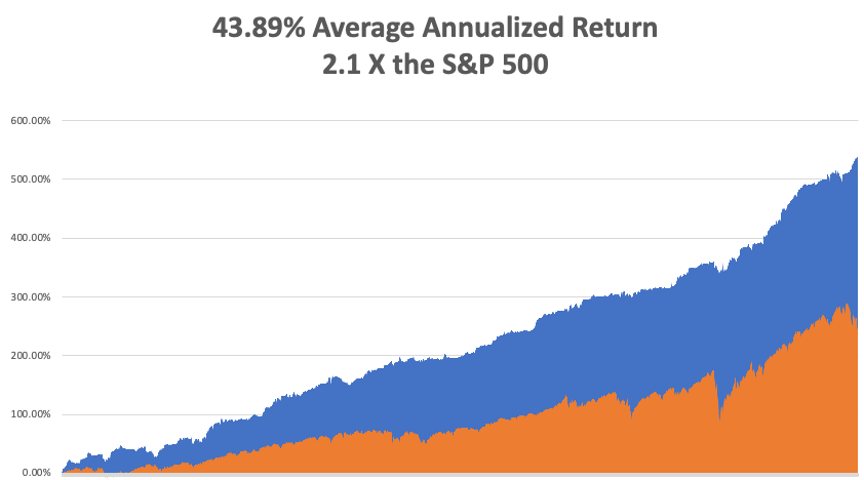
That brings my 12-year total return to 512.56%, some 2.00 times the S&P 500 (SPX) over the same period. My 12-year average annualized return has ratcheted up to 42.41% easily the highest in the industry.
We need to keep an eye on the number of US Coronavirus cases at 60 million and rising quickly and deaths going up t0 840,000, which you can find here at https://coronavirus.jhu.edu.
On Monday, January 10 at 8:00 AM, Consumer Inflation Expectations are announced.
On Tuesday, January 11 at 10:00 AM, Jay Powell testifies in front of Congress.
On Wednesday, January 12 at 8:30 AM, the Core Inflation Rate for December is released.
On Thursday, January 13 at 8:30 AM the Weekly Jobless Claims are disclosed.
On Friday, January 14 at 8:30 AM, the Retail Sales for December are out.
As for me, as this pandemic winds down, I am reminded of a previous one in which I played a role in ending.
After a 30-year effort, the World Health Organization was on the verge of wiping out smallpox, a scourge that had been ravaging the human race since its beginning. I have seen Egyptian mummies at the Museum of Cairo that showed the scarring that is the telltale evidence of smallpox, which is fatal in 50% of cases.
By the early 1970s, the dread disease was almost gone but still remained in some of the most remote parts of the world. So, they offered a reward to anyone who could find live cases.
To join the American Bicentennial Mt. Everest Expedition in 1976, I took a bus to the eastern edge of Katmandu and started walking. That was the farthest roads went in those days. It was only 150 miles to basecamp and a climb of 14,000 feet.
Some 100 miles in I was hiking through a remote village, which was a page out of the 14th century, back when families threw buckets of sewage into the street. The trail was lined with mud-brick two-story homes with wood shingle roofs, with the second story overhanging the first.
As I entered the town, every child ran to their windows to wave, as visitors were so rare. Every smiling face was covered with healing but still bleeding smallpox sores. I was immune, since I received my childhood vaccination, but I kept walking.
Two months later, I returned to Katmandu and wrote to the WHO headquarters in Geneva about the location of the outbreak. A year later I received a letter of thanks at my California address and a check for $100 telling me they had sent in a team to my valley in Nepal and vaccinated the entire population.
Some 15 years later, while on customer calls in Geneva for Morgan Stanley, I stopped by the WHO to visit a scientist I went the school with. It turned out I had become quite famous, as my smallpox cases in Nepal were the last ever discovered.
The WHO certified the world free of smallpox in 1980. The US stopped vaccinating children for smallpox in 1972, as the risks outweighed the reward.
Today, smallpox samples only exist at the CDC in Atlanta frozen in liquid nitrogen at minus 346 degrees Fahrenheit in a high-security level 5 biohazard storage facility. China and Russia probably have the same.
That's because scientists fear that terrorists might dig up the bodies of some British sailors who were known to have died of smallpox in the 19th century and were buried on the north coast of Greenland remaining frozen ever since. If you need a new smallpox vaccine, you have to start from somewhere.
As for me, I am now part of the 34% of Americans who remain immune to the disease. I’m glad I could play my own small part in ending it.
Stay Healthy,
John Thomas
CEO & Publisher
The Diary of a Mad Hedge Fund Trader
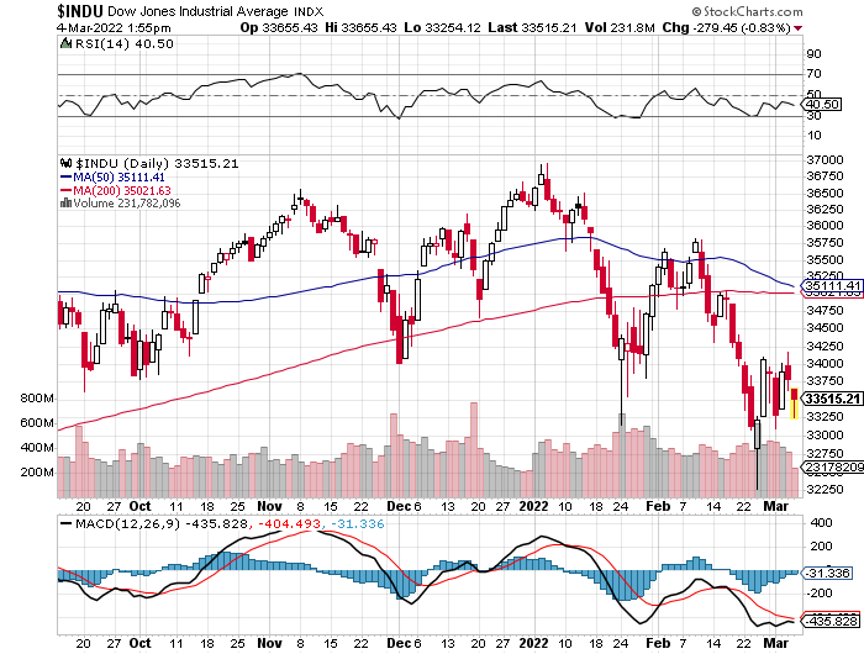
Mt. Everest in 1976
Global Market Comments
January 7, 2022
Fiat Lux
Featured Trades:
(JANUARY 5 BIWEEKLY STRATEGY WEBINAR Q&A),
(IWM), (RUA), (TSLA), (NVDA), (USO), (TBT), (ROM), (SDS), (ZM), (AAPL), (FCX), (HOOD), (BRKB)
Legal Disclaimer
There is a very high degree of risk involved in trading. Past results are not indicative of future returns. MadHedgeFundTrader.com and all individuals affiliated with this site assume no responsibilities for your trading and investment results. The indicators, strategies, columns, articles and all other features are for educational purposes only and should not be construed as investment advice. Information for futures trading observations are obtained from sources believed to be reliable, but we do not warrant its completeness or accuracy, or warrant any results from the use of the information. Your use of the trading observations is entirely at your own risk and it is your sole responsibility to evaluate the accuracy, completeness and usefulness of the information. You must assess the risk of any trade with your broker and make your own independent decisions regarding any securities mentioned herein. Affiliates of MadHedgeFundTrader.com may have a position or effect transactions in the securities described herein (or options thereon) and/or otherwise employ trading strategies that may be consistent or inconsistent with the provided strategies.