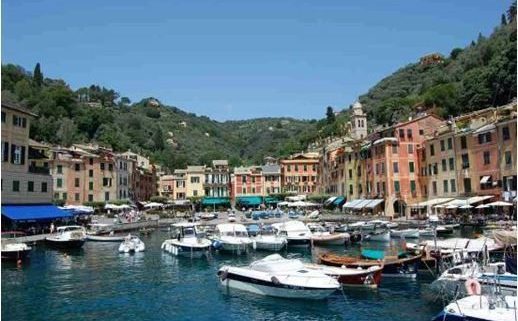
Come join John Thomas for lunch at the Mad Hedge Fund Trader?s Global Strategy Update, which I will be conducting near Portofino, Italy on the Italian Riviera, on Thursday, July 25, 2013. A three-course lunch will be followed by a PowerPoint presentation and an extended question and answer period.
I?ll be giving you my up to date view on stocks, bonds, foreign currencies, commodities, precious metals, and real estate. And to keep you in suspense, I?ll be throwing a few surprises out there too. Enough charts, tables, graphs, and statistics will be thrown at you to keep your ears ringing for a week. Tickets are available for $205.
The lunch will be held at major hotel on the beach in the village of Santa Margherita Ligure, the details of which will be emailed with your purchase confirmation. The town is easily accessible by train from Genoa, and the hotel is about a ten-minute walk from the train station.
Bring your broad brimmed hat, sunglasses, and suntan lotion. You will need them. The dress is casual. Accompanying spouses will be free to use the beach below and bill drinks to the luncheon. Together we will plot the future of western civilization.
I look forward to meeting you, and thank you for supporting my research. To purchase tickets for the luncheons, please go to my online store.
https://www.madhedgefundtrader.com/wp-content/uploads/2013/05/Portofino-Italy.jpg347518Mad Hedge Fund Traderhttps://madhedgefundtrader.com/wp-content/uploads/2019/05/cropped-mad-hedge-logo-transparent-192x192_f9578834168ba24df3eb53916a12c882.pngMad Hedge Fund Trader2013-07-16 01:05:462013-07-16 01:05:46July 25 Portofino, Italy Strategy Luncheon
As a fanatical follower of the price of everything, I have long been an avid viewer of the television program, Antiques Roadshow, for 14 years, and the English version of the show well before that. This is where you learn what stuff like ?majolica? is. Many aspiring collectors come into the open appraisal events hoping they have inherited something of untold value from their late Aunt Gertrude.
The show has had its ups and down, and was once ensnared in a scandal where appraisers deliberately overvalued objects to boost television ratings. But some of the stories that come with these objects are amazing, and their educational value can?t be underestimated. Once, they really did discover an original seal of the United States, missing since the British burned Washington DC in 1814, which someone had bought at a Paris flee market for $20.
The knowledge that I gained over the years has allowed me to swoop in and pick up incredible bargains, everywhere from Sotheby?s auctions to local garage sales.
Some of my better deals have included buying a pair of prewar German Zeiss binoculars for $10 (I recently saw an identical pair inside U-505 at the Museum of Science and Industry in Chicago). I also managed to score three cases of 1909 and 1915 Massandra port and sherry, last own by Czar Nicholas II of Russia, for $25 a bottle. Current market price: $1,000. The taste is amazing.
So it was with some amusement that I noticed yesterday that the show recently made its greatest find in history. A man in Tulsa, Oklahoma appeared with five tea cups that he had purchased at a local antique store in the seventies for a couple of bucks. The Chinese antiquities expert was aghast, informing the surprised owner that these dated from the 17th century, were made from extremely rare rhinoceros horn, and were estimate to worth $1-$1.5 million.
It turns out that the previous record for an object was also Chinese, some? $1 million for some carved jade bowls.It has long been a rule of thumb that when a country sees of burst of strong economic growth, its antiques rise in value. I saw this happen to Japanese screens, swords, and woodblock prints in the seventies and eighties during their economic boom, and it is happening now with Islamic antiquities, thanks to the high price of oil. In the meantime, I will continue to visit the local garage sales with a sharp eye. I wonder about that copy of the Declaration of Independence I have lining an attic drawer upstairs. Could it be the real thing?
How about $300,000 Each?
https://www.madhedgefundtrader.com/wp-content/uploads/2013/07/Antique-Road-Show.jpg326433Mad Hedge Fund Traderhttps://madhedgefundtrader.com/wp-content/uploads/2019/05/cropped-mad-hedge-logo-transparent-192x192_f9578834168ba24df3eb53916a12c882.pngMad Hedge Fund Trader2013-07-16 01:04:492013-07-16 01:04:49Knowing the Price of Everything and the Value of Nothing
The first thing I noticed when Paul walked in was the few extra pounds and silvery tinge to his hair he acquired since I saw him last. He?s clearly spending too much time behind a computer writing those acidic columns for the New York Times. We?re all short dated options in the end, I thought.
We met at my favorite San Francisco restaurant, Gary Danko?s (click here for their site at http://www.garydanko.com/), where one can get a once in a lifetime, bucket list type meal for about $300 for two, but only if you get the cheaper wine. Ideally located near Fisherman?s Wharf, they are one of only a tiny handful of Bay area restaurants to boast a coveted Michelin star. Good luck getting a reservation if you?re not having dinner with Bill Clinton.
Paul went for the lobster salad with hearts of palm and the soft shell crab with bacon. I settled for the Dungeness crab salad with quinoa and quail stuffed with foie gras. We washed it down with an excellent 2008 Duckhorn cabernet called ?The Discussion?. I kidded him about recent articles in the press that described him as the ?Mick Jagger of economics?.
These days, Paul is not about pulling any punches. He argued that the US is really in another Great Depression that started in 2007. Only narrow segments of the economy are doing well, like the fracking driven boom in the Dakotas, which has a population smaller than Brooklyn.
In terms of chronic unemployment, human suffering, and hopelessness, this Depression is every bit as soul crushing as the one the country experienced during the 1930?s. Long term unemployment over 4 million is unprecedented in the postwar period. The jobless rate of recent college grads is even worse.
The only thing preventing Depression era breadlines and soup kitchens is the Food Stamp program that is feeding 45 million people, including many active duty military. The original Great Depression lasted ten years and included two mini recoveries like the one we just saw. The current one will last just as long if we continue the current policies.
The great misconception is that these problems are long term and structural. Adopt the right policies, and the economy would rebound ?faster than you can possibly imagine?. Vicious austerity at the state and local level is the main culprit, squeezing the life out of the economy and cancelling out any stimulus efforts by the federal government.
Austerity is not the answer. It doesn?t work when everyone is trying to reduce their debt at the same time. One man?s debt is another?s income. It?s all about the teachers. The Great Recession has prompted the firing of 1.2 million and prevented the hiring of another 800,000. Hire 2 million teachers, and the unemployment rate drops from 8.1% to 6.5%, and the consumer spending and the multiplier effects they bring with them will return the economy from a 2% to a more normal and sustainable 3% growth rate.
The answer is to spend more money, and a lot of it. If you need proof before proceeding, look no further than the 1939-41 period. Then it was massive government spending in the buildup to WWII that caused the unemployment rate to plummet from 20% to near zero.
If Paul were king of the world, he would immediately allocate $300 billion to the states to rehire teachers, and maintain the infusion annually until we are out of the crisis. The one time only injection we saw in 2009 was inadequate. He would change FHA rules to allow underwater homeowners to refinance at current rock bottom interest rates. That will keep their homes off the market and allow some recovery there, one of the largest sectors of the economy. He would keep monetary policy easy. A modest level of subsidies for alternative energy so we can quit financing sellers of oil in the Middle East who are trying to kill us is also justified.
The origins of the current malaise aren?t hard to fathom and are an exact repetition of what occurred in the 1920?s. A long period of complacency led to a relaxed attitude towards debt and risk. The flames were fanned by deregulation. Gatekeepers of the public interest were lavishly paid to look the other way. Then the Wiley E. Coyote moment came when he only plummets after looking down, that particular physics unique to cartoon characters.
Today, the waters are being deliberately muddied by a dozen billionaires funding hundreds of PAC?s and countless bogus research institutes. Their sole interest is to minimize their own tax bills, at whatever cost.
Krugman spits out ideas with machine gun rapidity and is a gold mine of insightful economic data. Eye opening observations are regularly interlaced with biting humor. I?m sure that in a past life he was a standup comedian, or in vaudeville.
I only touched on Europe with him, as my own predictions there have already come true. He said that the US and Europe are in a contest to see who has the worst managed economy, and that right now, Europe is winning. He observed that maintaining a single currency without a single government is untenable. It doesn?t help that in the German language the same word is used for debt and guilt. A work out will take years, if not decades.
Paul used to work for Fed Chairman Ben Bernanke as a Princeton economics professor before Ben was demoted to the job of saving the world. When he recently met him he handed him a well-known academic paper written in the 1990?s on the monetary policy mistakes that led to the post bubble collapse of the Japanese economy, and admonished him for repeating the mistakes. The author of the paper? Ben Bernanke.
Krugman argued that the tax system was long overdue for a major overhaul, which now has the lowest tax burden of any developed country in terms of GDP. He said the maximum rate should rise from the current 43%, including state and local taxes, to 70%, possibly for earners over $1 million.
That is still well below the 90% peak rates during the Roosevelt era. Money is concentrating at the top at an unprecedented rate and stagnating in the bond market instead of being invested to create jobs. As for health care, we may have to implement a European style VAT tax to pay for it, however regressive that may be.
I asked, with the national debt now over 100% of GDP, how much more could the US borrow without crashing the bond market, he answered ?a lot more.? Japan is able to borrow 240% of GDP at only 0.9% interest rates with far worse fundamentals than our own. There is a global savings glut and bond shortage, and investors are crying out for a safe haven.
Runaway government borrowing is a problem, but not now. Falling bridges and failing infrastructure are causing much more long-term damage to the economy than additional debt. Kids today are infinitely more concerned about getting a job tomorrow than the amount of money the government will owe in 30 years.
Paul is a naturally shy fellow who avoids the limelight whenever possible. He once had a thin skin, but after the attacks from the right that erupted after he started writing for the New York Times, ?a rhinoceros has nothing on me?.
As divine as they are at Gary Danko?s, I skipped the desert, as I know I will be packing on the pounds during my upcoming cruise across the Atlantic on the Queen Mary 2. Paul went for the warm Louisiana butter cake with apples, huckleberry sauce and vanilla bean ice cream. Well, that explains the weight gain.
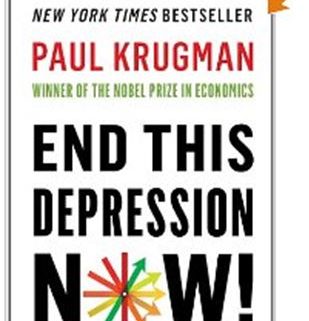
Before he left, Paul handed me an autographed copy of his latest book, End This Depression Now!, the second tome he penned since the 2008. There was one condition. I had to give him an autographed copy of my next book.
I pointed out that by grinding out 10,000 words a week with my blog, trade alerts, and webinars, I was effectively knocking out a new book every two months. That was no excuse he said, with the impatience of a university professor admonishing a grad student who was late with a dissertation. With that, he was out the door like a whirlwind.
I don?t get to meet with Nobel Prize winners very often, not more than once a month, so I thought I would give you the full blast. Believe it or not, I left out some of his more incendiary opinions. After all, this is a family oriented, PG website. So take from it what you may.
To buy Paul?s book at Amazon, End This Depression Now!, please click here.
https://www.madhedgefundtrader.com/wp-content/uploads/2013/07/End-This-Depression-Now.jpg451309Mad Hedge Fund Traderhttps://madhedgefundtrader.com/wp-content/uploads/2019/05/cropped-mad-hedge-logo-transparent-192x192_f9578834168ba24df3eb53916a12c882.pngMad Hedge Fund Trader2013-07-16 01:03:072013-07-16 01:03:07Dinner with Nobel Prize Winner Paul Krugman
Featured Trade: (AUGUST 1 MYKONOS, GREECE STRATEGY LUNCHEON), (WHAT?S GOING ON WITH THE VIX?), (VIX), (VXX), (CONNECTING UP AMERICA), (THE MYSTERY OF THE BRASHER DOUBLOON), (GLD)
Come join John Thomas for lunch at the Mad Hedge Fund Trader?s Global Strategy Update, which I will be conducting on the Greek island of Mykonos in the Aegean Sea on Thursday, August 1, 2013. A three-course lunch will be followed by a PowerPoint presentation and an extended question and answer period.
I?ll be giving you my up to date view on stocks, bonds, foreign currencies, commodities, precious metals, and real estate. And to keep you in suspense, I?ll be throwing a few surprises out there too. Enough charts, tables, graphs, and statistics will be thrown at you to keep your ears ringing for a week. Tickets are available for $259.
The lunch will be held at major resort hotel on the south shore of the island, which can be found by steering a course of 120 degrees 99 nautical miles from the port of Piraeus. Just make sure you don?t run aground on the island of Andros on the way, as the tides can be treacherous. The pirates on Mykonos have already been dealt with. Moorings can me made available for private visiting yachts offshore. I will email more details with your purchase confirmation.
Bring your broad brimmed hat, sunglasses, and plenty of SPF 50 suntan lotion. You will need them. The Greek islands are cooking hot this time of the year. The dress is casual. Those not wishing to view the clothing optional beach can have a chair with its back to the sea. Accompanying spouses and significant others will be free to bill drinks to my personal account as my guest. Together we will plot the future of western civilization.
I look forward to meeting you, and thank you for supporting my research. To purchase tickets for the luncheons, please go to my online store.
https://www.madhedgefundtrader.com/wp-content/uploads/2013/06/Mykonos.jpg342397Mad Hedge Fund Traderhttps://madhedgefundtrader.com/wp-content/uploads/2019/05/cropped-mad-hedge-logo-transparent-192x192_f9578834168ba24df3eb53916a12c882.pngMad Hedge Fund Trader2013-07-15 01:06:152013-07-15 01:06:15August 1 Mykonos, Greece Strategy Luncheon
After crawling off the mat at the 12% level, and rising all the way back up to 19%, traders are wondering if the Volatility Index (VIX) is finally coming back to life. Or is this just another dead cat bounce?
It wasn?t supposed to work that way. Falling markets should send investors scrambling to buy downside protection in the form of put options, which would automatically send the (VIX). Except when they don?t.
I spoke to over 30 market participants yesterday attempting to root out the cause of this seeming anomaly. All I got was shrugs or idle speculation. A (VXX) at this level, the ETF for the (VIX) assumes that the complacency now endemic in the market will continue for several more months. It is betting that the S&P 500 will continue moving sideways or up with no pullbacks greater that 2%. Oh, really?
It is also discounting a rise in the (SPX) to 1,750, based on a multiple expansion from 16 to 17, while corporate earnings are falling. This will see confirmation when Q3, 2013 earnings start to hit in October. Oh, really, again? It will do this in the face of economies that are dramatically slowing in both Europe and China. Oh, really, a third time?
I finally got through to some friends in the Chicago pits who explained what was going on. A sizeable portion of the trading community believes that we will see a rise in volatility someday, but not in the near future. So they have been buying September call options in the (VIX). To pay for these and hedge out their risk, they have been selling short calls in the front months of December and March at much higher implied volatilities.
Since the (VXX) focuses on only the front two months of the options calendar, it has taken an inordinate brunt of the selling. This is why the (VXX) has continued a rapid decent even on days when the (VIX) was stable and the Dow was down. Needless to say, it has been a huge money maker for the early participants.
How does this end? At some point we do get a serious sell off in the stock market, and the (VIX) rockets back up to 20%, or higher. That means that anyone who initiates this position now will get slaughtered. But the long term players will simply write those losses off against the substantial short dated premium they have taken in in the meantime.
As long as this dynamic is in place, there really is no limit to how far the (VXX) can fall. As traders roll from one expiring month to the next, they will continue to hammer volatility.
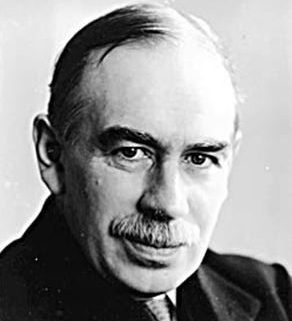
Markets Can Remain Irrational Longer Than You Can Remain Solvent
https://www.madhedgefundtrader.com/wp-content/uploads/2013/07/John-Keynes.jpg355292Mad Hedge Fund Traderhttps://madhedgefundtrader.com/wp-content/uploads/2019/05/cropped-mad-hedge-logo-transparent-192x192_f9578834168ba24df3eb53916a12c882.pngMad Hedge Fund Trader2013-07-15 01:05:362013-07-15 01:05:36What?s Going on With the VIX?
Until now, the country?s power grid has been divided into three unconnected, noncompetitive kingdoms (in the spirit of Game of Thrones), making transnational transmission impossible, leading to huge regional mispricing. While California and New York suffered from periodic brown outs and sky high prices, electricity was given away virtually for free in Texas.
A group of power companies is now proposing to build the $1 billion Tres Amigas superstation in Clovis, New Mexico that would connect all three grids. The plant would use advanced superconducting technology that will send five gigawatts of power down cables cooled at 300 degrees below zero. Construction is expected to reach completion in 2014.
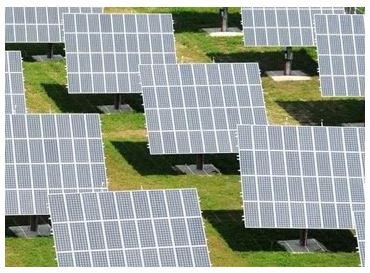
The facility would solve a major headache of alternative energy planners, and will no doubt accelerate development. It would allow the enormous wind farms in the Lone Star State to ship energy to the power hungry coasts. Ditto for the mega solar projects proposed in the Southwest deserts, and the big geothermal plants being built in Nevada. With the Department of Energy having already sent tidal waves of government cash towards the sector, the timing couldn?t be better.
https://www.madhedgefundtrader.com/wp-content/uploads/2013/04/Solar-Panels.jpg273370Mad Hedge Fund Traderhttps://madhedgefundtrader.com/wp-content/uploads/2019/05/cropped-mad-hedge-logo-transparent-192x192_f9578834168ba24df3eb53916a12c882.pngMad Hedge Fund Trader2013-07-15 01:04:132013-07-15 01:04:13Connecting Up America
I?ll never forgot when my friend, Don Kagin, one of the world?s top dealers in rare coins, walked into the gym one day and announced that he made $1 million that morning.? I inquired ?How is that, pray tell??
He told me that he was an investor and technical consultant to a venture hoping to discover the long lost USS Central America, which sunk in a storm off the Atlantic Coast in 1857, heavily laden with gold from the California mines (for the full story click following link: ?http://www.sscentralamerica.com/). He just received an excited call that the wreck had been found in deep water off the US east coast.
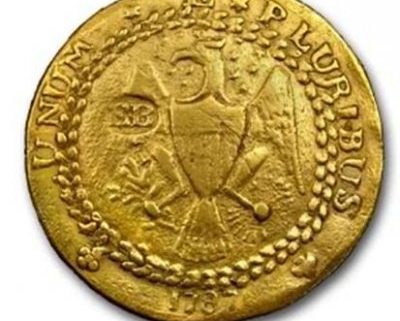
I learned the other day that Don had scored another bonanza in the rare coins business. He had sold his 1787 Brasher Doubloon for $7.4 million. The price was slightly short of the $7.6 million that a 1933 American $20 gold eagle sold for in 2002.
The Brasher $15 doubloon has long been considered the rarest coin in the United States. Ephraim Brasher, a New York City neighbor of George Washington, was hired to mint the first dollar denominated coins issued by the new republic.
Treasury secretary Alexander Hamilton was so impressed with his work that he appointed Brasher as the official American assayer. The coin is now so famous that it is featured in a Raymond Chandler novel where the tough private detective, Phillip Marlowe, attempts to recover the stolen coin. The book was made into a 1947 movie, ?The Brasher Doubloon,? starring George Montgomery.
This is not the first time that Don has had a profitable experience with this numismatic treasure. He originally bought it in 1989 for under $1 million, and has made several round trips since then. The real mystery is who bought it last? Don wouldn?t say, only hinting that it was a big New York hedge fund manager who adores the barbarous relic. He hopes the coin will eventually be placed in a public museum. Who says the rich aren?t getting richer?
https://www.madhedgefundtrader.com/wp-content/uploads/2013/07/Brasher-Doubloon-e1440346073108.jpg379400Mad Hedge Fund Traderhttps://madhedgefundtrader.com/wp-content/uploads/2019/05/cropped-mad-hedge-logo-transparent-192x192_f9578834168ba24df3eb53916a12c882.pngMad Hedge Fund Trader2013-07-15 01:03:402013-07-15 01:03:40The Mystery of the Brasher Doubloon
Featured Trade:
(JULY 16 BERLIN STRATEGY LUNCHEON),
(WHEN THE DEMOGRAPHIC HEADWIND BECOMES A TAILWIND),
(AN AFTERNOON WITH ACE REPORTER HELEN THOMAS)
(STOPPING BY OBAMA?S HOUSE)
https://madhedgefundtrader.com/wp-content/uploads/2019/05/cropped-mad-hedge-logo-transparent-192x192_f9578834168ba24df3eb53916a12c882.png00Mad Hedge Fund Traderhttps://madhedgefundtrader.com/wp-content/uploads/2019/05/cropped-mad-hedge-logo-transparent-192x192_f9578834168ba24df3eb53916a12c882.pngMad Hedge Fund Trader2013-07-12 01:07:082013-07-12 01:07:08July 12, 2013
Come join John Thomas for lunch at the Mad Hedge Fund Trader?s Global Strategy Update, which I will be conducting in Berlin, Germany, at 12:00 noon on Tuesday, July 16, 2013. A three-course lunch will be followed by a PowerPoint presentation and an extended question and answer period.
I?ll be giving you my up to date view on stocks, bonds, foreign currencies, commodities, precious metals, and real estate. And to keep you in suspense, I?ll be throwing a few surprises out there too. Enough charts, tables, graphs, and statistics will be thrown at you to keep your ears ringing for a week. Tickets are available for $219.
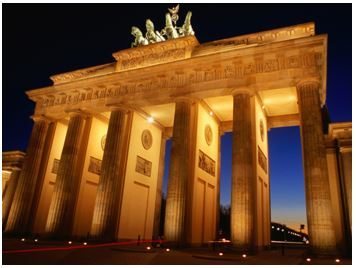
The lunch will be held at a downtown Berlin hotel within sight of the Brandenburg Gate, the details of which will be emailed with your purchase confirmation.
I look forward to meeting you, and thank you for supporting my research. To purchase tickets for the luncheons, please go to my online store.
https://www.madhedgefundtrader.com/wp-content/uploads/2013/05/Berlin-Brandenburg-Gate.jpg268356Mad Hedge Fund Traderhttps://madhedgefundtrader.com/wp-content/uploads/2019/05/cropped-mad-hedge-logo-transparent-192x192_f9578834168ba24df3eb53916a12c882.pngMad Hedge Fund Trader2013-07-12 01:06:412013-07-12 01:06:41July 16 Berlin Strategy Luncheon
Legal Disclaimer
There is a very high degree of risk involved in trading. Past results are not indicative of future returns. MadHedgeFundTrader.com and all individuals affiliated with this site assume no responsibilities for your trading and investment results. The indicators, strategies, columns, articles and all other features are for educational purposes only and should not be construed as investment advice. Information for futures trading observations are obtained from sources believed to be reliable, but we do not warrant its completeness or accuracy, or warrant any results from the use of the information. Your use of the trading observations is entirely at your own risk and it is your sole responsibility to evaluate the accuracy, completeness and usefulness of the information. You must assess the risk of any trade with your broker and make your own independent decisions regarding any securities mentioned herein. Affiliates of MadHedgeFundTrader.com may have a position or effect transactions in the securities described herein (or options thereon) and/or otherwise employ trading strategies that may be consistent or inconsistent with the provided strategies.