
Global Market Comments
July 27, 2016
Fiat Lux
SPECIAL BLACK SWAN ISSUE
Featured Trade:
(THE COMING BLACK SWANS OF 2016),
(TESTIMONIAL)
Let me make this clear.
These are not forecasts, predictions, or prognostications. They are not even guesses.
They ARE events which have a very low probability of occurring, but which can have an extremely large market impact if they do.
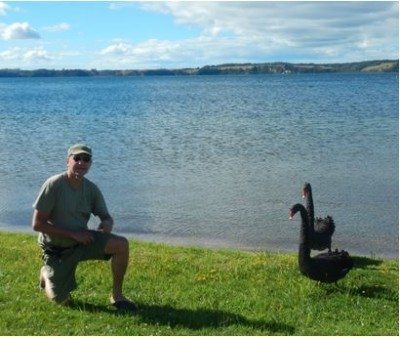
That is the textbook definition of a ?Black Swan?, a concept created by my friend, fellow mathematician, and fractal geometry fan, Nassim Taleb.
And here?s the bad news: Black Swans almost always have hugely negative impact on asset prices.
Black Swans have been occurring with disturbing regularity this year. Brexit, which almost everyone thought would fail, is a perfect example. So would an extreme, out-of-consensus monthly Nonfarm Payroll Report.
A black swan can come out of nowhere and completely wipe out your performance for the year. I have seen it happen to the unfortunate and the unwary too many times.
So it behooves us to engage in the intellectual exercise of what possible black swans are headed our way.
I won?t engage in the ridiculous, the fanciful, or in science fiction.
So an asteroid destroying the earth, a global pandemic, a giant solar electromagnetic pulse, or a visit from aliens, are definitely off the list.
I?ll limit myself to the highly unlikely, but not impossible.
1) Janet Yellen raises interest rates at the September 14 FOMC Meeting
You may guffaw at this one, with deflation accelerating, Brexit, a strong US dollar, and global uncertainty running amok.
However, I happen to know that the Fed governors absolutely HATE low interest rates, seeing them opening up a Pandora?s Box of risks for the US economy in the 2020s, and would love to abandon them at the earliest opportunity.
So if the recent bout of stock market strength continues into autumn, Janet may use the opportunity to nudge up overnight rates by 25 basis points. And you all remember what happened to risk assets the last time she did this.
Unlikely, but definitely a ?maybe?.
2) Donald Trump Wins the US Presidential Election
Despite all of the fanfare generated by the Republican National Convention, Hillary Clinton is still massively ahead of Donald Trump by 33 points, or 67% to 33%, on the betting sites, the most accurate predictors of election outcomes this year (click here at http://tippie.uiowa.edu/iem/).
This compares to the Bloomberg poll results, which still give Hillary an 18-point lead, 54% to 36%.
As a result, markets are discounting a Clinton win, which is why we have seen such a monster stock market rally since June, and is also why the Dow Average rose for nine consecutive days after the FBI gave her a clean bill of health on the email server matter.
However, TRUMP COULD STILL WIN.
If complacent Democrats stay at home and highly energized Trump supporters show up in droves, even the betting pools could get upset.
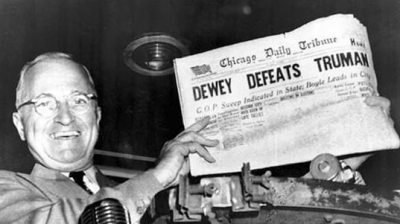
Just ask Thomas Dewey, who was supposed to beat Harry Truman, hands down, in the 1948 election.
Since details of Trump?s economic plans have yet to be clearly elicited, companies would simply cease new investment and sit on their hands.
At this point, they only know about the walls, the isolation, and the deglobaliztion of Trump?s, dark dystopian view made clear in the primaries, not exactly barn burners for risk takers anywhere.
Big capital only invests in high probabilities and certainties, not maybe's, possibilities, or uncertainty.
Recession would ensue, corporate earnings would collapse, and the stock market would crash. And I?m not talking about a measly 10% correction. This would be more like a severe 30%-40% bear market.
You have been forewarned!
3) The Apple iPhone 7 Bombs
Steve Jobs? creation has produced one of the longest strings of successful product rollouts in corporate history. Each one pushed the technology envelope unimaginably forward, to the very cutting edge.
So far, the next generation iPhone 7 roll out is scheduled for September. New sales records are anticipated, partly on the back of accelerating sales in China.
But what if the iPhone 7 is delayed? What if consumers fail to show? What if it just plain doesn?t work.
If the most widely owned stock in America, and one of the largest capitalized, suddenly drops by a third, as it has done on many occasions in the past, it would cast a pall on risk taking generally.
The downstream suppliers would certainly take a giant hit.
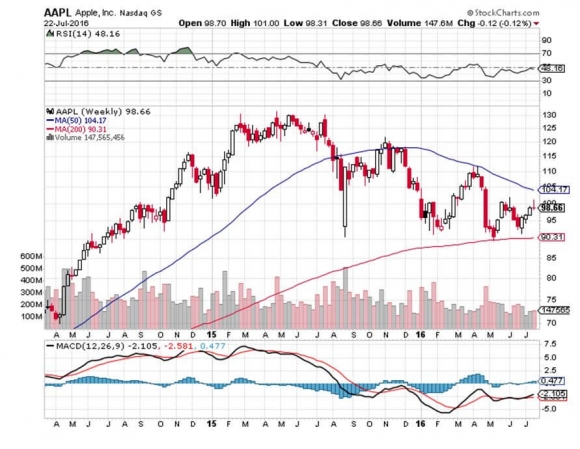
I don?t buy it, have great faith in Tim Cook, and think Apple will deliver once again. But there is one seriously disconcerting fact to consider.
Apple?s stock chart show than many investors believe this dire scenario is at least a possibility.
Apple?s shares have already been one of the worst performing big tech shares of 2016.
4) The Disintegration of Europe Accelerates
Sitting here in Europe, listening to the political posturing in the aftermath of Brexit, I can tell you that the future of Europe is uncertain, to say the least.
Will Brexit get undone? Will it stall for six years and drown in an endless series of meetings? Or will it accelerate?
If the latter occurs, the sharp recession now unfolding in the UK could spread Europe wide. Only last week, British business confidence hit an all time low, while redemptions from publicly traded commercial property ETF?s have been frozen.
A European recession would produce a serious drag on global growth, demolishing stock markets around the world.
So far, the Germans seem to be insisting, ?If you play, you pay.? The idea that Britain could maintain free access to the European market, while retaining it's subsidies, but restricting immigration, is being proven a fantasy.
It looks like my 2017 Mad Hedge Fund Trader European Global Strategy Tour is going to be a lot cheaper.
5) A Large Unicorn Goes Bankrupt
OK, I am definitely not naming names here, as I don?t want to prematurely trigger a stampede.
But there is no doubt that the San Francisco ?Unicorns?, non-public technology companies owned by founders, employees, and venture capital firms, are the most overvalued financial assets anywhere in the world today.
Many of these start ups either lose money, or sport astronomical price earnings valuations.
If any one of these 70 or so companies goes under, it could have a cataclysmic effect on the valuations of all the others.
There is a tree in the forest effect here protecting the general public. If no one is there and a tree falls, would anyone know it?
However if a serious unicorn collapse occurs, it could have a spill over impact on the public markets. That could hurt.
At least I?d finally be able to get a reservation at a decent restaurant at home.
Just thought you?d like to know.
Is a President Hillary Such a Sure Thing?
![John Thoms - Black Swans]()
Watch Out! They Bite

Your background is very impressive and intriguing. You definitely have a lot of valuable and unique experience.
I read your most recent post on activist investing and couldn't agree more. I have always been a fan of activist strategies because even under an assumption of efficient markets, activism can still generate alpha in theory.
I have also heard about how process-oriented investments such as activism or distressed investing, where you have a greater influence over the final outcome, are valuable from a standpoint of downside protection.
Many thanks,
Andrew

Global Market Comments
July 26, 2016
Fiat Lux
Featured Trade:
(LAST CHANCE TO ATTEND THE JULY 27 BASEL, SWITZERLAND GLOBAL STRATEGY LUNCHEON),
(THE BULL MARKET IN AMERICAN COLLEGE DEGREES),
(TESTIMONIAL)
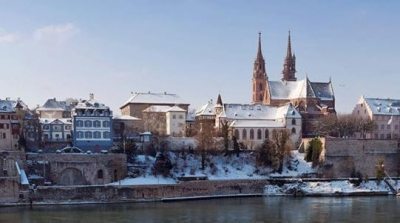
Come join me for lunch for the Mad Hedge Fund Trader?s Global Strategy luncheon, which I will be conducting in Basel, Switzerland on Wednesday, July 27, 2016.
A three-course lunch will be followed by an extended question and answer period.
I?ll be giving you my up to date view on stocks, bonds, foreign currencies, commodities, precious metals, and real estate.
And to keep you in suspense, I?ll be tossing a few surprises out there too. Enough charts, tables, graphs, and statistics will be thrown at you to keep your ears ringing for a week. Tickets are available for $257.
I?ll be arriving at 11:30 AM and leaving late in case anyone wants to have a one on one discussion, or just sit around and chew the fat about the financial markets.
The lunch will be held at an exclusive five star hotel in the downtown area of the city, the location of which will be emailed to you with your purchase confirmation.
Basel is the city in Northwestern Switzerland where the German, French, and Italian cultures meet.
The third largest city in the country, it has been a major trade center since the Renaissance. During the 20th Century, it became the capital of the global pharmaceuticals industry.
Much of the Altstadt, where I?ll be staying, dates back to the 15th century. Basel offers a wealth of museums and other cultural amenities. It is also the site of many international conferences.
I know Basel well from my days as a director of the former Swiss Bank Corporation (now a subsidiary of UBS).
I look forward to meeting you, and thank you for supporting my research.
To purchase tickets to the luncheon, please click here.
Global Market Comments
July 25, 2016
Fiat Lux
Featured Trade:
(WHAT?S ON YOUR PLATE FOR THIS WEEK?),
(SPY), (TLT), (GLD), (USO), (FCY),
(BLAME IT ALL ON THE RISK PARITY TRADERS!),
(VIX), (SPY), (TLT),
(TESTIMONIAL)
SPY SPDR S&P 500 ETF
TLT iShares 20+ Year Treasury Bond
GLD SPDR Gold Shares
USO United States Oil
FXY CurrencyShares Japanese Yen ETF
^VIX VOLATILITY S&P 500
The summer doldrums are back!
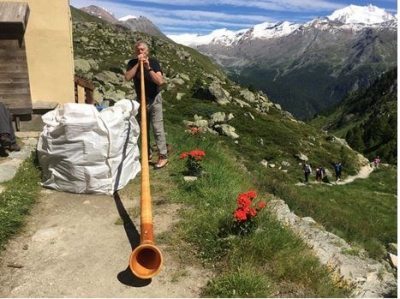
That is the only conclusion one can draw after observing the market action last week from my mountain lair in Zermatt, Switzerland.
Try as I might, it is impossible to flee this connected world, unless the power is cut off by an avalanche and your batteries die.
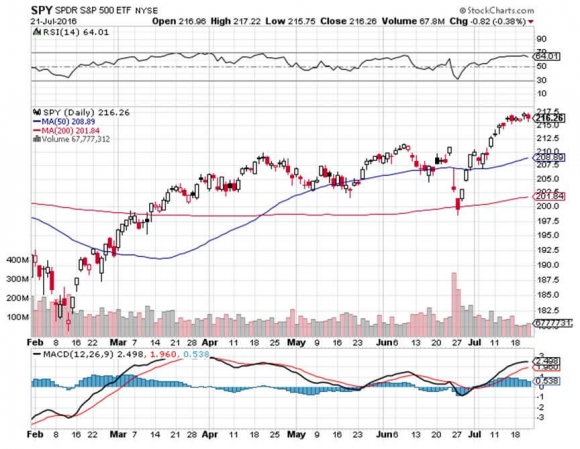
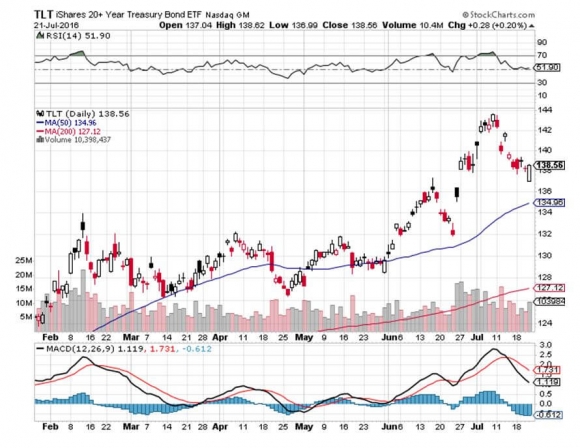
As I expected, last week stopped the monster stock market rally in its tracks. Every other asset class behaved accordingly.
Even the most wildly bullish investor has to be deeply concerned about the extreme overbought condition of the market on a short term basis, the incredibly narrow focus of buyers on a handful of names, and the utter lack of volume.
The bears have to be worried abut the failure of the of the market to selloff last week in the face if such sky high valuation parameters.
The S&P 500 (SPY) begrudgingly gave up a few points. Ten year Treasury bonds (TLT) suffered a much more serious seven-point hickey. Oil (USO) dove. Gold (GLD) flat lined. The Japanese Yen (FXY) churned.
But what else would you expect with someone like Donald Trump sucking all the oxygen out of the room?
And here?s the bad news. Next week, another political party will repeat the feat. Financial markets will react accordingly.
In other words, they won?t react at all.
We might get some nice month end mark ups on Friday to assure managers have some decent performance numbers to report.
That?s if anyone is around to notice.
This is definitely the week of the ?B? Team, with senior decision makers on risk and asset allocations more likely to be found in Southampton, New York, Newport Beach, California, or Cannes, France.
It?s not like they?ll be missing anything, as this coming week is relatively devoid of significant economic data, except for one big one.
At 10:30 AM EST on Monday, July 25, we get a peak of how seriously the oil collapse is affecting the rest of the Texan economy with the Dallas Fed Manufacturing Survey.
I?m looking for continued weakness, as shocks of this magnitude, like the oil crash, take years to work themselves out.
On Tuesday, July 26 at 9:00 AM Eastern the S&P 500 Case Shiller Home Price Index should deliver a housing market going from strength to strength.
As this is a three-month lagging indicator, the benefits of the ultra-low interest rates brought to us by Brexit won?t be apparent for another few months.
The big event of the week will be the Federal Open Market Committee decision on overnight interest rates, out at 2:00 PM EST on Wednesday, July 27.
Any action, other than a change of a word or two in their public statement, is highly unlikely. This cautious group of people is highly focused on the negative economic impact of Brexit and a strong dollar that are still unfolding.
Thursday, July 28, will be dominated by the Weekly Jobless Claims at 8:30 EST. It is unlikely that we will see a break down to a new 43-year low during the traditional summer slowdown.
Friday, July 29 at 8:30 AM brings us another look at Q2 Real GDP. These pre-Brexit estimates should continue to deliver a clear uptrend.
The bottom line here is that we should be setting up for a 4% correction in stocks in August.
If that happens, surely load the boat with risk, as we are headed for higher highs in everything going into the presidential election and the yearend.
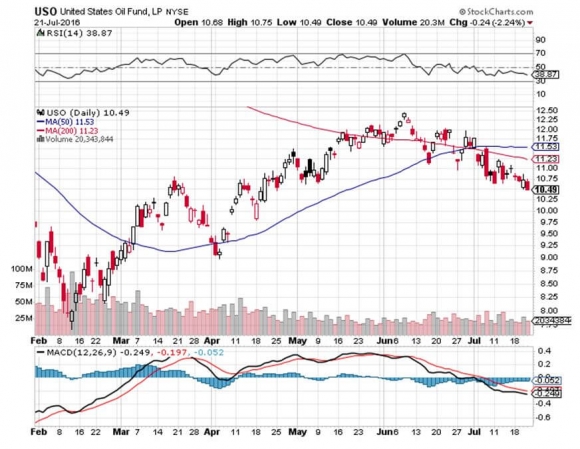
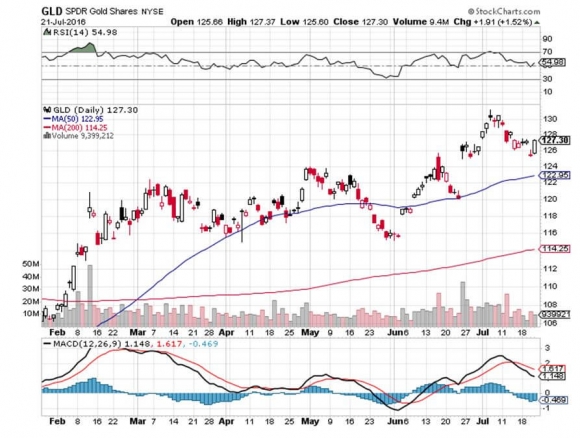
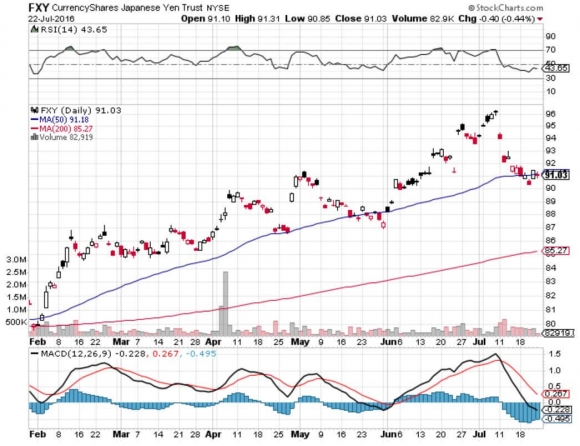
?The fundamental argument against gold is so fundamentally one-sided that it is almost comical,? said options trader, Jim Iuorio, of TJM Institutional Services.
Global Market Comments
July 22, 2016
Fiat Lux
Featured Trade:
(LAST CHANCE TO ATTEND THE JULY 27 BASEL, SWITZERLAND GLOBAL STRATEGY LUNCHEON),
(THE VOLATILITY BOTTOM IS IN),
(VIX), (VXX), (XIV), (SVXY),
(REPORT FROM THE ORIENT EXPRESS)
^VIX VOLATILITY S&P 500
VXX iPath S&P 500 VIX ST Futures ETN
XIV VelocityShares Daily Inverse VIX ST ETN
SVXY ProShares Short VIX Short-Term Futures
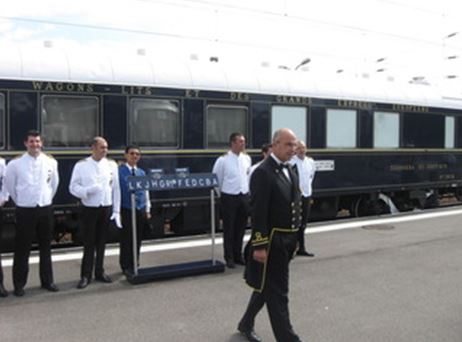
I was awoken from a dead sleep in the middle of the night in my suite on the Orient Express by a juddering halt and the smell of burning brakes in the air.
We were somewhere high in the Swiss Alps, and every single passenger on the first class only train had to be thinking that a murder had just been discovered.
It turned out that in the darkness we had hit a 400-pound wild boar astride the tracks. We spent four hours on a remote siding waiting for Swiss National Rail to deliver us a new engine.
I elicited chuckles when I ordered boar for lunch the next day. The ma?tre d? assured me it wasn?t ready yet, as the meat had to soak in vinegar for 48 hours before cooking.
That's the kind of thing you only hear in Europe.
I boarded the train that morning at London?s Victoria station in anticipation of the trip of a lifetime.
Venice Simplon Orient Express didn?t disappoint, although I would not be surprised if the IRS questioned the $8,500 cost for the 34-hour trip as a business expense on my tax return this year.
The legendary train has been featured in a dozen films (James Bond and Agatha Christie), two dozen television shows, and played a major part in countless novels. You can even buy the video game.
The modern Orient Express is in fact three different trains.
From Victoria Station in London to Folkestone on the coast, I traveled on a vintage British train that was definitely showing its age.
Then I boarded a bus, which drove on to a flatbed rail car that whisked us through the tunnel under the English Channel.
There, we claustrophobes closed our eyes and held our breath for 20 minutes, which at the nadir my altimeter watch showed us at 1,500 feet below sea level.
The real luxury started when I boarded a vintage 1924 Pullman first class sleeping car in Calais, France, lovingly restored to the day it was built.
I set my watch ahead one hour and back 92 years. Suddenly, the trees resembled those in impressionist paintings, the land was dotted with Norman fortresses, and gasoline was $8 a gallon.

The original Orient Express, from Paris to Istanbul, made its inaugural journey in 1882, and quickly became famous for its unheard of luxury and speed. Modern bullet trains and cut-rate airlines put it out of business 100 years later.
The current incarnation started in 1977 when James Sherwood, who had built up a fortune through Sea-Land Containers, bought three dilapidated Pullman rail cars at an auction in Monte Carlo.
Like all of us with insanely expensive hobbies, he sought a way for outsiders to fund his passion.
Hence, the Venice-Simplon Orient Express started luring big spenders and the romantically inclined in 1982 (click here for their site http://www.orient-express.com/web/vsoe/venice_simplon_orient_express.jsp).
I became one of the original passengers in England when my broker chartered it for a day of client entertainment, an ancient steam engine laboring all the way.

Over the next 30 years, Sherwood built Orient Express into one of the world?s preeminent luxury brands, on par with Cartier, Tiffany, and Chanel.
He developed a massive global network of cross marketing deals that tied in package tours, hotels, cruises, and other vintage trains.
Today, the parent company, Orient Express Hotels (OEH) carries a market cap of $1.15 billion (click here for that site http://www.orient-express.com/).
Ironically, the company today still only owns one of it's dozens of rail cars. The rest have been sold to Middle Eastern investors with long-term leaseback contracts.
The dinner onboard is the highlight of the trip, a fabulous six course, three hour affair. There you meet the other passengers, all dressed to the nines.
Most were wealthy elderly couples knocking off a bucket list item, along with a few young hedge fund managers and a passel of mistresses.
I was one of the few Americans. I ate with a casino operator in Ireland and the owner of a manufacturing company in the UK. All I can say is thank goodness for the elastic waist on my tux trousers.
Having spent a lifetime analyzing corporate managements, I was fascinated by the operation of the train.
While the onboard staff is limited to 79, they are supported by a management, marketing, and engineering team of no less than 4,500.
You don?t just show up with a 17-car train in Europe?s incredibly congested rail network. You must first file a route plan and get a clearance slot, much like any airline.
Engines and crews must be changed at every border. Mechanics are onboard with an ample stockpile of 1920?s rail car parts.
Oblivious passengers are frequently left stranded behind at stations along the way and must be retrieved by taxis, which catch the train down the line.

To make up the time we lost due to the unlucky boar, the rail authorities routed us though the 12 mile long transalpine tunnel under Spl?gen Pass, then along the sublime shores of Lake Como, where the train rarely travels.
We roared past George Clooney?s house, who, I am told, is a frequent passenger on the train.
Amazed Italians were waving and taking pictures of us with their cell phones at every stop.
Suddenly the buildings were all shaded in pastels, the churches changed from Protestant to Catholic, and the trees resembled those in Renaissance religious paintings.
We raced over the causeway to Venice?s Marco Polo station that evening, dumping our considerable luggage into a private speedboat which whisked us away down a Grand Canal crowded with gondolas, en route to the fabled Cipriani Hotel.
To be continued.