

Global Market Comments
January 15, 2013
Fiat Lux
Featured Trades:
(ON EXECUTING TRADE ALERTS),
(THE FINAL WORD ON THE ELECTRIC NISSAN LEAF)
(NSANY), (TSLA)
From time to time I receive an email from a subscriber telling me that they are unable to get executions on trade alerts that are as good as the ones I get. There are several possible reasons for this:
1) Markets move, sometimes quite dramatically so.
2) Your Trade Alert email was hung up on your local provider?s server, getting it to you late. This is a function of your local provider?s capital investment, and is totally outside our control.
3) The spreads on deep-in-the-money options spreads can be quite wide. This is why I recommend readers place limit orders to work in the middle market. Make the market come to you.
4) Hundreds of market makers read Global Trading Dispatch. The second they see one of my Trade Alerts, they adjust their markets accordingly. This is especially true for deep-in-the-money options. A spread can go from totally ignored to a hot item in seconds.
On the one hand, this is good news, as my Trade Alerts have earned such credibility in the marketplace. On the other hand, it is a problem for readers encountering sharp elbows when attempting executions.
5) Occasionally, emails just disappear into thin air. This is cutting edge technology, and sometimes it just plain doesn?t work. This is why I strongly recommend that readers sign up for my free Text Alert Service as a back up.
The bottom line on all of this is that the prices quoted in my Trade Alerts are just ballpark ones with the intention of giving traders some directional guidance. You have to exercise your own judgment as to whether the risk/reward is sufficient with the prices you are able to execute yourself. Sometimes it is better to pay up by a few cents rather than miss the big trend. The market rarely gives you second chances.
Good luck and good trading.
John Thomas

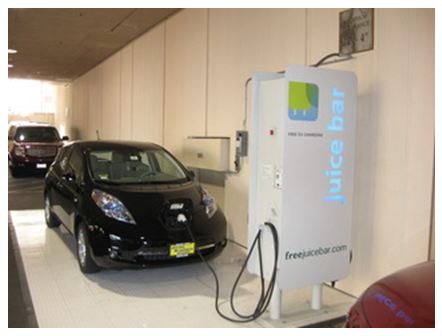
After driving my all-electric Nissan Leaf four-door hatchback for two years, my final conclusion is that it is absolutely the perfect second car for most American families. Some 90% of all US driving is less than 40 miles a day, and this car is targeted at that market.
If a spouse has a reliable daily round trip commute of less than the car?s 80-mile range, this is your car. The ideal combination is to own a Leaf and a hybrid SUV for those long distance ski weekends, visits to out-of-state relatives, and road trips in general.
The real revelation comes when you realize that this is a car that creates its own fuel. When I depart the Berkeley Hills and reach the entrance to the Oakland Bay Bridge ten miles away, I have more power than when I started. That?s because the trip is entirely downhill. Wow!
There are other benefits beyond flipping your local Exxon station the bird when you cruise by. I often find handwritten notes stuck under my windshield wipers from young women asking for rides. When you are 61, such offers come increasingly few and far between. That alone is worth the cost of purchase. Now, I only use gas station for their toilets and air pumps, which somehow seems appropriate.
You can get all of this for $38,000, of which $7,500 can be applied as a federal tax credit. Or you can go to your local Nissan dealer, where you can pick up a used model in new condition with 16,000 miles on the clock for $20,000. Given that you are no longer spending $4,000 a year on gas and tune ups, you easily amortize the entire cost of a new car in in ten years. Expect to get a lot of thumbs up from bystanders as you silently drive by.
This is not a souped up golf cart by any means. After comfortably sliding my 6?4? frame behind the wheel, I asked the salesman to pack the car with beefcake so I could give it a real test. Three farm boys from Tennessee, real heifers, dutifully piled in. It made no difference; the car took off like a Porsche.
When I first got the car, I tore off down the freeway at 90 mph, gleefully weaving in and out of the lumbering, gas guzzling GM Suburban?s, Cadillac Escalades, and Ford Excursions that inhabit California state highway 24. Eventually I throttled off, lest I get California?s first zero emissions speeding ticket.
The Leaf can be recharged from dead flat at home on a 240-volt plug in eight hours, or at your friend?s house in 16 hours at 110 volts. A GPS mapping system constantly displays your remaining range, as well as the locations of the nearest charging stations. If you run out of juice on the freeway, Nissan offers free roadside service with an immediate recharge. With a 600-pound lithium ion battery lining the bottom of the chassis, it has tremendous stability, and corners like it is on rails. The battery comes with an eight-year warranty and a ten-year life.
One problem is that the car is utterly soundless. That is an issue driving in shopping mall parking lots, when clueless kids, especially those wearing ear buds, walk directly in front of a moving car. It is just a matter of time before the state mandates required cartones for electric cars in motion.
When I took delivery of one of the first American Leaf?s, I was a pioneer. The entire San Francisco Bay area had only 25 public charging stations. More than a few times I ducked into sushi shops with a 100-foot extension cord in search of enough juice to get home. Once, I convinced the bemused parking attendants at the San Francisco Opera House to unplug their coffee machine to recharge my car. Even then, I coasted into my garage on my last couple of electrons, the car shouting warnings at me all the way. The pathfinder days are now long gone. Today, there are over 500 charging stations in this part of California.
I have to say that it helped being a pilot and a scientist. Calculation of range and fuel consumed to destination come as second nature to me. If I didn?t, I would have found my place at the bottom of the Atlantic, the Pacific, or the Persian Gulf, ages ago. So I would think twice about buying one of these for a right-brained high school English teacher with no technical aptitude whatsoever.
Figuring out the car?s actual performance was a mutual learning experience for both Nissan and me. There were quite a few calls to their engineers to discuss glitches and workarounds in the early days. Finally, Nissan sent a product development guy from Japan to discuss design of the second generation Leaf. By the way, their stock has been on fire for the past three months, up some 25%, as the weakening yen boosts their global competitiveness.
My local utility has been cheering from the sidelines. PG&E is offering a special Plug-in-Vehicle rate of only 4.6 cent per kilowatt hour from 12:00 am to 7:00 am, compared to the standard top tier rate of 40 cents per hour, an 89% discount. That means the Leaf?s 80-mile trip cost me 92 cents. This is the same as buying all the gasoline I want at 23 cents per gallon! In other words, the fuel is basically free.
When I asked the chief engineer about maintenance costs, I got a blank stare. Then he answered in a deadpan fashion, ?there is no maintenance?. During the first 100,000 miles, the only expenses will be for brake pads and tires, as the 107 horsepower electric induction engine only has five moving parts operating at room temperature. Even the brake pads last forever, since the regenerative braking system does most of the stopping to generate more electric power. Instead of tune-ups, you get software upgrades. Only the tires need to be rotated every 8,000 miles.
Alas, it is time for me to move on from my beloved Leaf. As with a first high school love, the excitement of the unfamiliar eventually wears off, and you start looking to trade up. I also could use more performance. In the electric, zero emissions car world, that means buying a brand Tesla S-1 performance model (TSLA), which I will pick up at the Fremont, California factory as soon as I finish writing this letter. I?ll let you know how she works out, once I have broken her in.


Global Market Comments
January 14, 2013
Fiat Lux
Featured Trades:
(THE LAST CRISIS TO GO), (SPX), (IWM), (INDU), (QQQ),
(TESTIMONIAL)

Generally, the world does not end. That is my sage observation after spending 45 years in the investment industry. Given the recent market action, it appears that money managers are finally coming around to my point of view.
Remember the great Debt Ceiling Crisis in July of 2011? Congress held out until the last second of the last minute of the last hour before coming to agreement on, what in past years, has been a simple housekeeping matter. Before the ink was even dry on the deal, the stock market started to amputate 25% off the value of your IRA in the following two months.
I always thought that this plunge was due to investors completely losing confidence in the full faith and credit of the United States government. Can you blame them when a Republican House was refusing to pay a largely (65%) Republican debt?
Then we got the ?Fiscal Cliff?. This time, your retirement fund suffered only a 10% hickey. That was the extent of the descent in stock indices in the aftermath of the presidential election. Then, guess what? We made it all back in six weeks and closed the year at the highs. Investors were learning that, generally, the world doesn?t end after all.
In a mere seven weeks we will face the last crisis for the foreseeable future, that of the Debt Ceiling Crisis, Part II. Only this time, it?s different. Stocks are not cratering. Instead, they are grinding sideways on diminishing volume, holding on to the dramatic gains they have wracked up since the end of November. What gives?
I believe that traders are not going to get scared by this impending disaster into dumping all their positions at the bottom, only to buy them back at the top. This time, they are holding tight. What this sets up is asset prices that grind sideways for a month on declining volatility, frustrating every attempt by the underinvested to boost equity weightings.
Then on the eve of a resolution of this donnybrook, stock prices will explode to the upside. To anyone who spent much of their youth pheasant or quail hunting, it is all familiar behavior. Stand still in one spot long enough, and you will eventually flush out a bird, or sometimes an entire covey, which makes an easy shot. That?s what I expect investors to do in February.
How am I positioned for such a market? I have the heaviest equity allocation in over a year. But every position has a short volatility element to it. If the market goes up, my year-to-date performance will hit 20% by February 15. If the market goes sideways, it will still reach 20% by February 15. If it goes down by less than 5%, I should still show a profit of 20% by February 15. To get the inside baseball on how I do this, you have to subscribe to my market beating Trade Alert Service.
It may well turn out that there is no crisis at all on March 31. President Obama could fall back on the 14th amendment, which requires the government to honor its debts in all circumstances. That leaves the House to argue with itself in the obscurity of CSPAN. If the market figures this out, it will go ballistic.
The rally that ensues will set up the high for the year for assets, and a new 14 year high in the stock market. Whether the S&P 500 (SPX) reaches 1,500, 1,550, or 1,600, is anybody?s guess. The top, no doubt, will be made by capitulation buying by those who, until now, idly watched the appreciation on TV, as they always do.
Then we are in for some tough sledding. Q1, 2013 will be dominated by better than expected data from superior business performance at the end of 2012. In Q2, 2013, the story will be about a torrent of worse than expected data that the bitter fruit of the fiscal cliff resolution come to harvest in the form of less spending by a newly impoverished government and consumers. That sets up nicely for a 15%-20% summer correction.
By the way, the California hunting grounds of my youth are long gone, turned into suburbs or factories. To hunt these days, you have to join an exclusive club which stocks limited grounds with as many as 20,000 birds a year. But you know what? They still behave just the same, and taste just as good.



I though you would be interested in this note I received from my real estate broker in Squaw Valley, California, where I sold my ski cabin in 2005 for $3 million. This is the high beta end of the housing market in the Golden State.
"Here are some stats (from the multiple listing system and other sources) and developing trends:
2012 Summary of Sales info
? 24 cabins and homes sold from $385.5K to $2.9M
*3 over $2M - 6 from $1M to $2M and 9 under $1M
? 4 lots sold from $385K to $750K-
? 9 non- hotel condos sold from $154.9K to $580K
? 11 Resort at Squaw Creek condos from $84K to $745K
? 6 Squaw Valley Lodge condos from $220K to $815K
? 17 Village at Squaw Valley condos from $235K to $825K
Most of the short sales, bank sales and foreclosures are gone from the market and the real estate market is showing signs of recovery. As the market recovers, the biggest problem is for the buyers to grasp that prices are rising and trying to buy a property based on the comparable sales data is now difficult as the comparable sales data may not support the listing prices and ultimate selling prices of the properties selling. Most of you are now aware of the potential development plans for the valley at the base of the ski area. If you have not already checked it out here is a link www.SquawRenaissance.com.
Listing inventory is beginning to decrease and we expect to see this continue into 2013. This makes for tough decisions for buyers who have not already purchased a property as the longer they wait to buy, the more changes that are occurring in the availability of properties."

Global Market Comments
January 10, 2013
Fiat Lux
Featured Trades:
(BECOME MY FACEBOOK FRIEND),
(ECONOMIST DAVID HALE SAYS THE ACTION WILL BE IN SOUTHEAST ASIA),
(EPHE), (IDX), (IWM, (THD),
(THE LOST DECADE FOR BONDS IS BEGINNING!), (TLT), (TBT),
(TESTIMONIAL)
If you would like to get a free headline service from The Diary of the Mad Hedge Fund Trader, then please join my 1,375 friends. Every day we are posting headlines along with summaries of the stories on our Facebook page. As soon as you open your own Facebook page, you will receive our latest headlines as newsfeeds. To ?friend me?, please go to my home page at http://madhedgefundradio.com/ and click on the Facebook box.
If you have been negative on bonds as I have, these charts should enable you to sleep much better.
Virtually every fixed income product is peaking now. Let me draw a simple picture for you laymen out there. That means you should sell every major bond market rally for the next ten years. It?s looking like the 1.38% yield we reached in the Treasury bond market will be the absolute nadir.
The technical set up is now so dire, that bonds are going to have a really tough time rallying from here. The momentum players will eventually smell blood in the water, and they'll be jumping in with both feet at every opportunity. The lost decade for bonds has begun!
Of course, you knew this was coming. It doesn?t help that the budget proposals for both political parties going forward will engineer a dramatic increase in the deficit. The bond market is not laughing. It is time to dump that old investment guideline where you own your age in bonds. From here on, the bond/equity ratio should be 0% in bonds and 100% in equities, whatever your age. You now should own your age in high dividend paying equities and the balance in aggressive growth or emerging market equities.


Is the Lost Decade for Bonds Beginning?
Global Market Comments
January 9, 2013
Fiat Lux
Featured Trades: None