
Mad Hedge Technology Alerts!
It’s a little weird seeing Janet Yellen road-tripping to China to ask the Chinese to stop making such cheap products.
I’ll give her a hint - they won’t stop making cheap products to supply the world.
The U.S. could use cheaper products, especially at the dinner table, but that is another story.
Let’s talk about China and how they are reaching up the value-added tech food chain to fiercely compete with expensive tech products.
Dumping or the non-dumping of “clean energy” products is not something a U.S. Secretary of the Treasury should fly halfway across the world to Asia to lecture a government about what the costs of their products, but that is what Janet did.
It really is the antithesis of a free market economy.
I would argue that lower-cost Chinese products have been rocket fuel for many small American businesses over the past 30 years.
Competition is largely a good phenomenon in the technology sector and brings out the best in terms of quality and price for the end consumer.
Who wants to pay $1 million for a Tesla?
It appears that Janet Yellen wouldn’t mind.
Yellen was not only referencing EVs, but her speech also dived into the cheap pricing of solar power and lithium-ion batteries.
China has been pouring billions into clean energy for years, outpacing the rest of the world including the US in the energy transition and the results are there for the agnostic consumer to see.
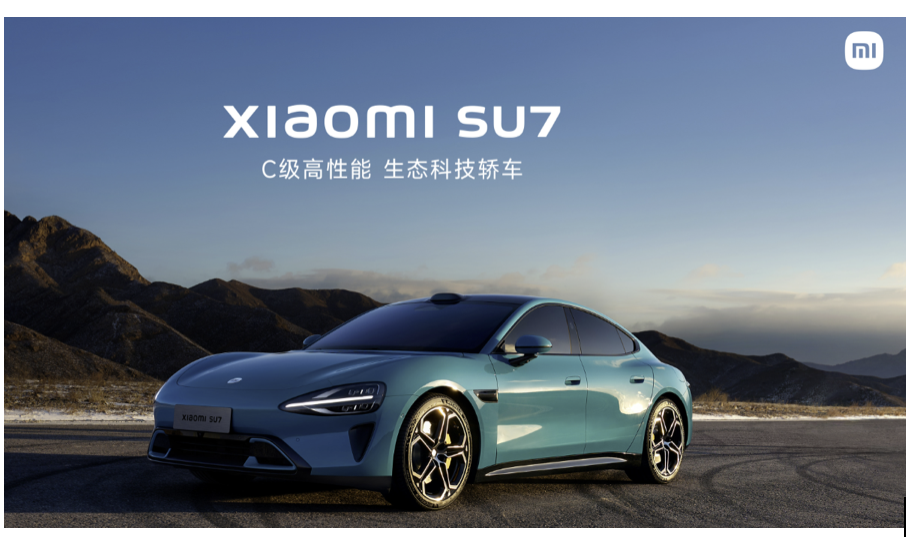
Not only are Chinese cell phones just as good as Apple iPhones for half the price, but the new bombshell to rock the menu of tech products is the new EV made by Chinese cell phone company Xiaomi.
Buyers have been told they may have to wait up to 8 months for the car to be delivered.
Xiamo is the third-largest seller of smartphones in the world with a market share of about 12%.
The standard Xiaomi SU7 model is priced at $30,000.
The SU7, which has drawn comparisons with Porsche's Taycan and Panamera models, has a minimum range of 435 miles, beating the Tesla Model 3's 567km.
Xiaomi and its new car, the SU7, will share an operating system with its in-house phones, and other smart devices.
Xiaomi's EVs are made by a unit of state-owned car manufacturer BAIC Group at a plant in Beijing that can produce as many as 200,000 vehicles a year.
Xiaomi has said it will invest $10 billion in its vehicles business over the next 10 years.
Here is the quick hot take from all this geopolitical and economic activity.
EVs are about to get a whole lot cheaper without sacrificing the quality thanks to China. The days of $100,000 EVs are about to be swept into the tech dustbin of history.
The trend mirrors closely the trajectory of Chinese smartphone evolution so much so that consumers will have a chance at real cost savings.
Any non-Chinese automotive company will need to come to the realization that if they don’t compete at the brand-new Chinese price points, demand will evaporate.
It’s a massive dose of reality to stomach for many German car makers, and imagine all those jobs that would be cut in one fell swoop.
The Chinese just know how to make stuff cheaper and nothing will get in the way of that. I urge other companies to embrace this fact and not fight it.
Get ready for a smattering of luxury EV vehicles for $30,000 a pop made from China.
This is no joke.
China has made it their mission to reach up the value-added product chain, and if this isn’t it then I don’t know what is.

“An investment in knowledge pays the best interest.” – Said Benjamin Franklin

Mad Hedge Technology Letter
April 10, 2024
Fiat Lux
Featured Trade:
(PODCASTS A NEW EXPERIMENT FOR SPOTIFY)
(SPOT)