Mad Hedge Technology Alerts!

The world is rapidly shifting into a new paradigm where not only do people invent, but people also build artificial intelligence that can invent.
This will have massive ramifications for the business world and the tech industry which is the avant-garde of the business world.
Recent decisions from South Africa and Australia that an artificial intelligence machine can be listed as an inventor on a patent could spur these two locales into being one of the most competitive tech scenes in the world.
The U.S. and Europe will need to figure out what it means to be an inventor.
Registering A.I. as an inventor could potentially mean that multinational corporations won’t shoulder the blame if some sort of insidious experiment with A.I. goes horribly wrong crushing half of mankind.
It also opens up the possibility of some “A.I. invented” app triggering 1000X growth delivering prosperity to half of mankind.
The wide range of possibilities is enough to keep one up at night, and the deeper knock-on effect is that A.I. is now prime for game time.
The rapid acceleration of not only the quantity of A.I., but the increasing quality of A.I. means that countries will need to make some high-stakes business decisions on where A.I. fits into the law and patent system.
Courts in the U.S. and U.K. are expected to issue rulings later this year, and policymakers are gathering information on how to deal with the rising use of AI.
Another piece to the puzzle is how China will treat A.I. and the knock-on effects on American consumers and American businesses.
This sub-sector has been identified as one of the “must-win technologies of the future” by the U.S. administration.
China also leads in AI as it relates to facial recognition and has a database of 1.3 billion citizens to pull data from.
China is pursuing a centrally controlled strategy with hyperlocal implementation. Values and goals are set from above, and resources are made available.
At the local level of municipalities, cities, and provinces, regional administrations compete for the new AI clusters.
The result is a national and regional administrative state that works closely with research, investors, and industry to build a successful AI ecosystem.
In either case, American companies need a verdict and the initial framework of how to treat A.I. in terms of who owns the patents and what that means, or they risk falling behind places like China which is hell-bent on being the first A.I. superpower.
Imagine if all companies were protected from anything negative that AI manufactured and not only with social media.
One could understand how investors could win out big time if a flood of capital nosedived into controversial projects that became money generators.
Big tech has the capital and connections in Washington to advance the initiative.
Another project that comes to mind that would benefit from AI law is Elon Musk-supported Neuralink.
Elon Musk wants everyone to get brain surgery. Specifically, he wants everyone to get a brain implant — the brain-machine interface created by his company, Neuralink. He says it will be able to solve any number of medical conditions — including paralysis, anxiety, and addiction.
A project like this is high risk — a lot could go wrong with it.
But what if the law was set up to just allow investors to write off the externalities and fiscal costs of a failed project?
These rulings also have massive consequences in where the new Silicon Valley migrates to and if the rules are favorable in South Africa, what’s stopping Facebook from exploring an opening of a Cape Town subsidiary?
Not much is the answer.
The issue of inventorship is just a small part of the dilemma over how to deal with AI, such as what types of AI software are eligible for a patent and who owns the massive amounts of data required to “teach” the machines.
A decision clarifying which AI inventions are eligible for patenting would be impactful.
Ultimately, AI is a high-stake game that gets more important by the day and so far there has been nothing detrimental that will affect the fortunes of big tech and their quest for higher share prices.

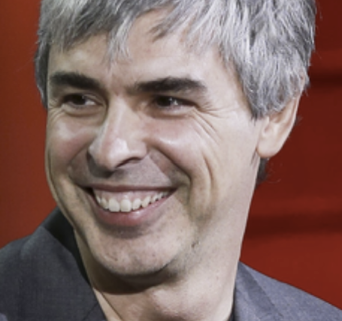
“You may think using Google's great, but I still think it's terrible.” – Said Co-Founder of Google Larry Page

Mad Hedge Technology Letter
December 18, 2023
Fiat Lux
Featured Trade:
(THE TRUTH ABOUT AUTOMATION AND WALL STREET JOBS)
(AAPL), (GOOGL), (FB), (AMZN), (NFLX)