Mad Hedge Technology Alerts!
According to IBM, Quantum computing is a rapidly emerging technology that harnesses the laws of quantum mechanics to solve problems too complex for classical computers.
Used correctly, quantum computers are incredibly fast and effective. They can perform calculations in a few seconds for which today's supercomputers would need decades or even millennia. This fact is also referred to by experts as quantum superiority.
Why Buy Quantum Computing Stocks?
Quantum computing isn’t so crazy as you think and it’s inching closer to reality.
These types of transcendent technologies are what investors need to key in on to help make their tech stock portfolio better than ever.
This will enable researchers to break new ground in areas such as pharmaceutical drug discovery, weather forecasting, cybersecurity, and computational chemistry.
It will also result in unprecedented gains for owners of quantum computing stocks.
The Best Quantum Computing Stocks
Will quantum computing be successful? That's the multi-trillion dollar question.
We're in the first innings of a long ball game if the game has even started.
Still, there are already some pioneers that are re-imagining the field.
Here are two quantum computing stocks to put on your radar:
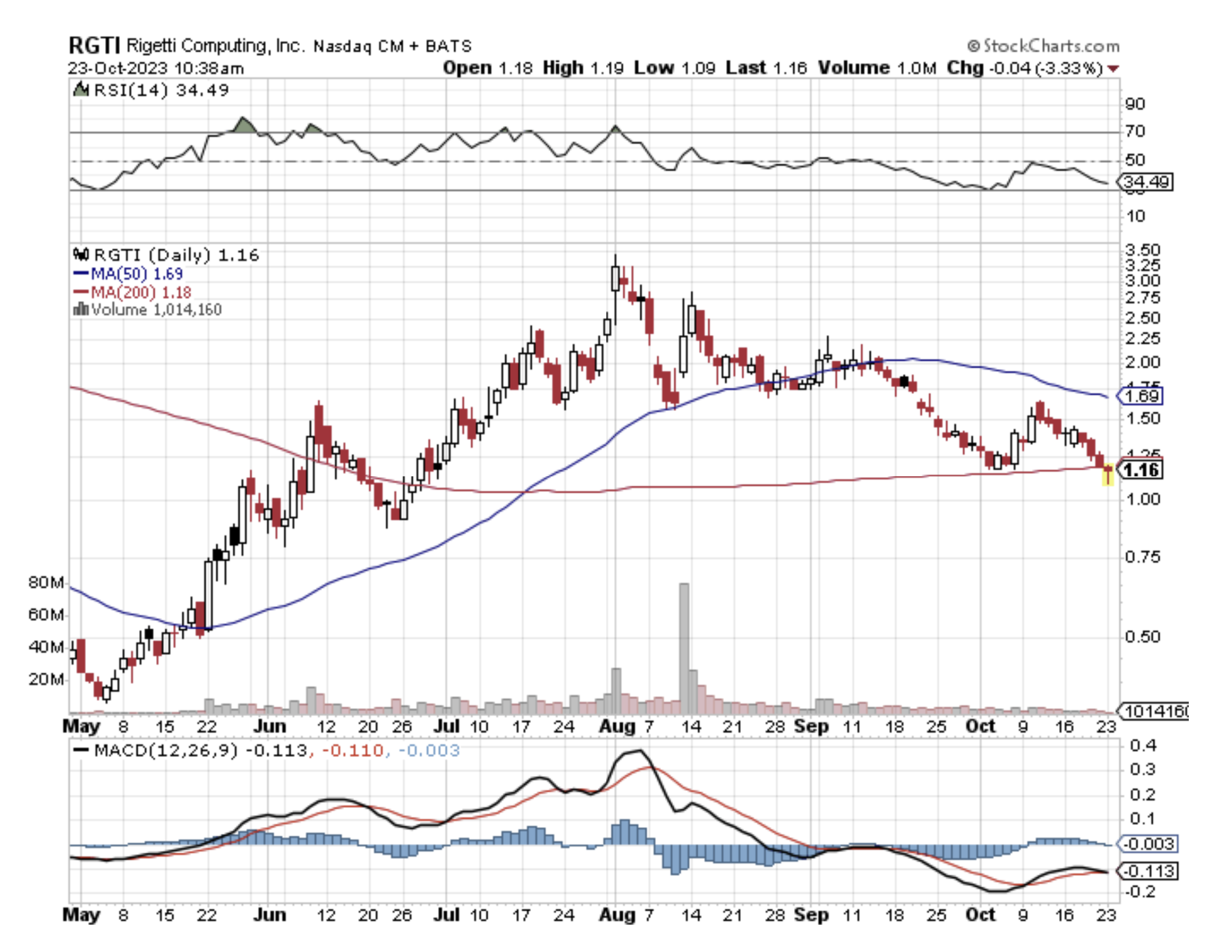
Rigetti Computing, Inc. (RGTI)
Rigetti Computing builds and deploys integrated quantum computing systems leveraging superconducting qubit technology.
CEO Chad Rigetti has a simple and clear thesis on this space: “In the next decade, a single Rigetti quantum computer could be more powerful than the entire global cloud industry today.”
Rigetti will need the capital infusion from going public because the firm doesn’t have any positive revenue to talk about. The IPO delivered a much-needed financial lifeline and the additional $458 million in funding came after an initial $200 million was raised previously. That could also be a big con about the sub-sector, it might be years until an actual profitable income stream is built.
Whoever said that Rome was built in one day?
Quantum computing is only at the beginning of its development. It is difficult to estimate how large the market demand for this product will be. It's also uncertain how quickly Rigetti or competitors like IonQ will be able to expand their technical capabilities. This is an entirely new technological territory, so there are zero guarantees here in this tech sub-sector.
Needless to say, Rigetti is a concept stock for now. One has to believe in the underlying vision of quantum computing to place a bet here. Otherwise, it would be wise to switch to other stocks without a quantum computing business plan or corporate strategy.
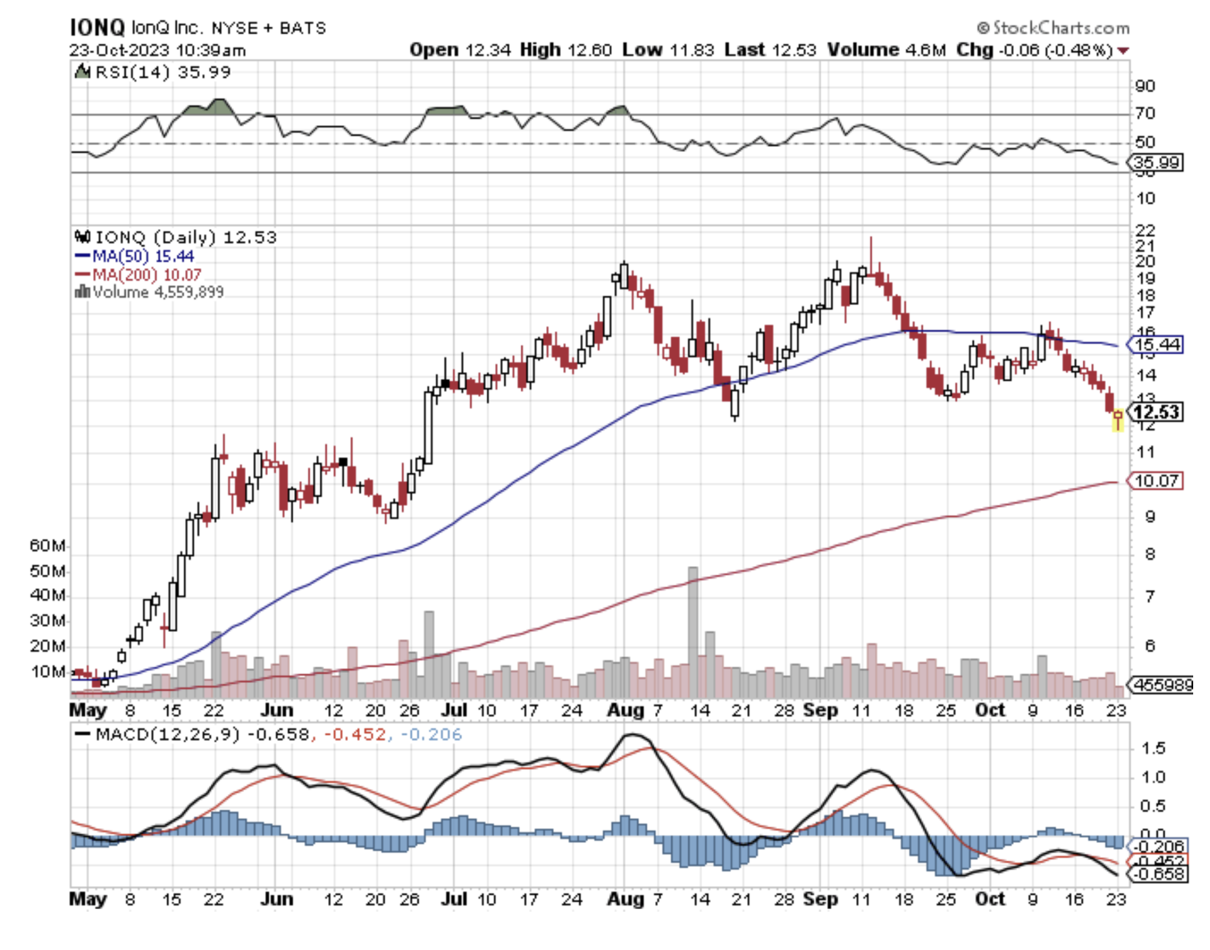
IonQ (IONQ)
IonQ produces quantum hardware and software.
IonQ was faster to market than Rigetti, making it the first publicly traded quantum computer stock. Also, the company is backed by a number of influential investors including Bill Gates, Silver Lake, and Fidelity.
Unfortunately, like many SPACs these days, IonQ only exists on paper. That means there is still very little operational business. IonQ only did a few million in revenue last year and had no revenue in 2019 or 2020. In fact, free cash flow is projected to remain negative through at least 2026. Also, it will take multiple technological leaps - such as machine learning - to reach a point where quantum computing can reach mass markets and make IonQ successful.
RGTI’s market cap is only $125 million and IonQ’s is $927 million and they are cheap for a reason.
Investors aren’t willing to pay for the time it's willing to take for quantum computing to go mainstream yet.
However, if a reader is willing to invest with a 35-year view, then it would make sense to invest 1% of one’s portfolio into these names and also at a time when interest rates are trending lower.
These types of loss-makers and far-in-the-future bets work better when the cost of capital is lower.
Expect some stock appreciation as investors start to bet on the Fed lowering interest rates.
Mad Hedge Technology Letter
October 20, 2023
Fiat Lux
Featured Trade:
(INDIA CATCHES A TECH WAVE)
(GOOGL), (AAPL)

With all the tumult going on in the world today, it’s not shocking that big decisions are being made in terms of tech production and manufacturing outsourcing.
These decisions will reverberate through the tech world for a generation.
China used to be the factory of the world and many thought that its economy would rebound from its lockdown lull to carry the tech world on its shoulders.
It’s clear that China will remain in the doldrums.
China and the west are decoupling fast and that means American tech companies are no longer comfortable doing business in the Middle Kingdom.
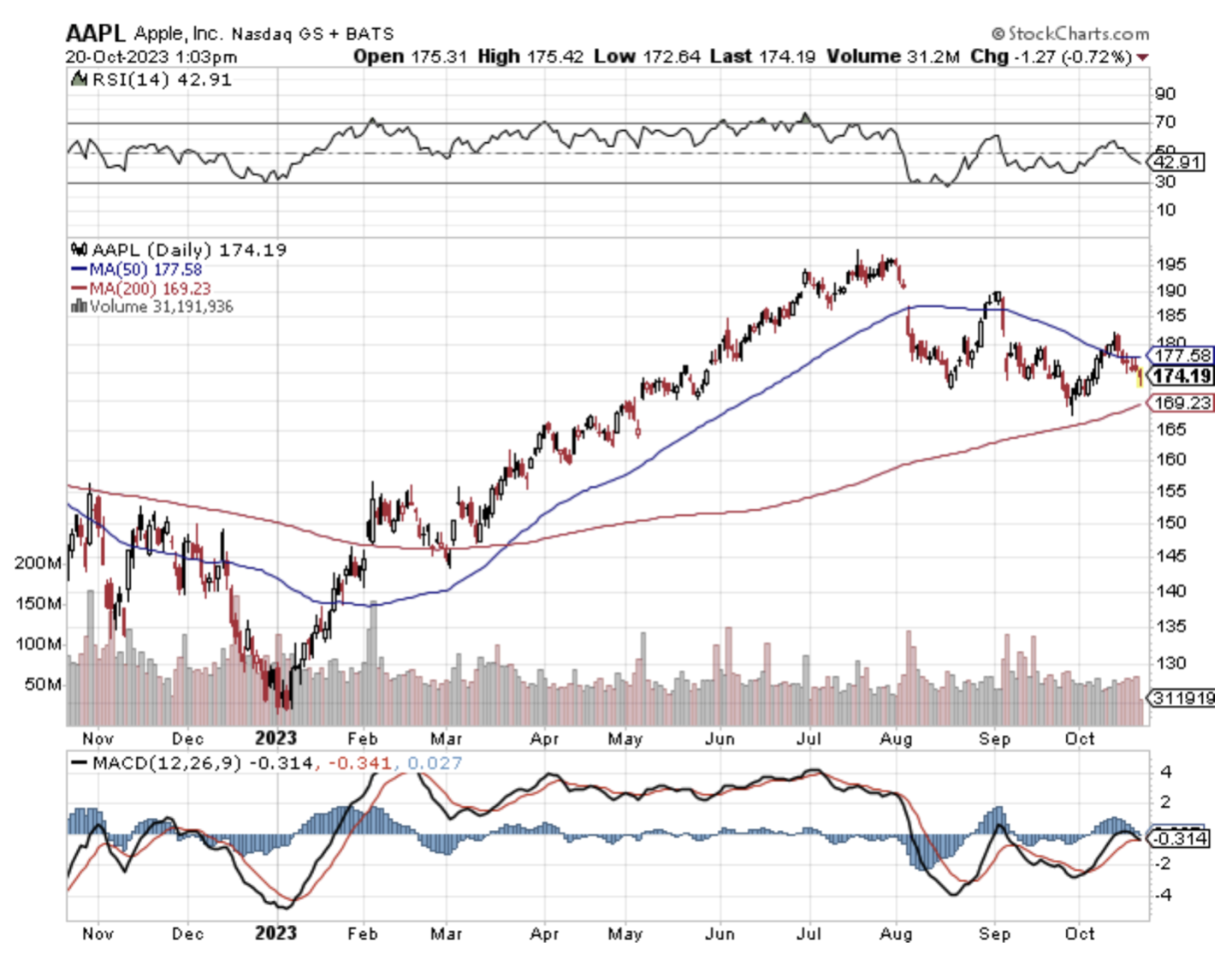
Many big players like Apple are hitching a ride out of the land of pot stickers and Beijing roast duck.
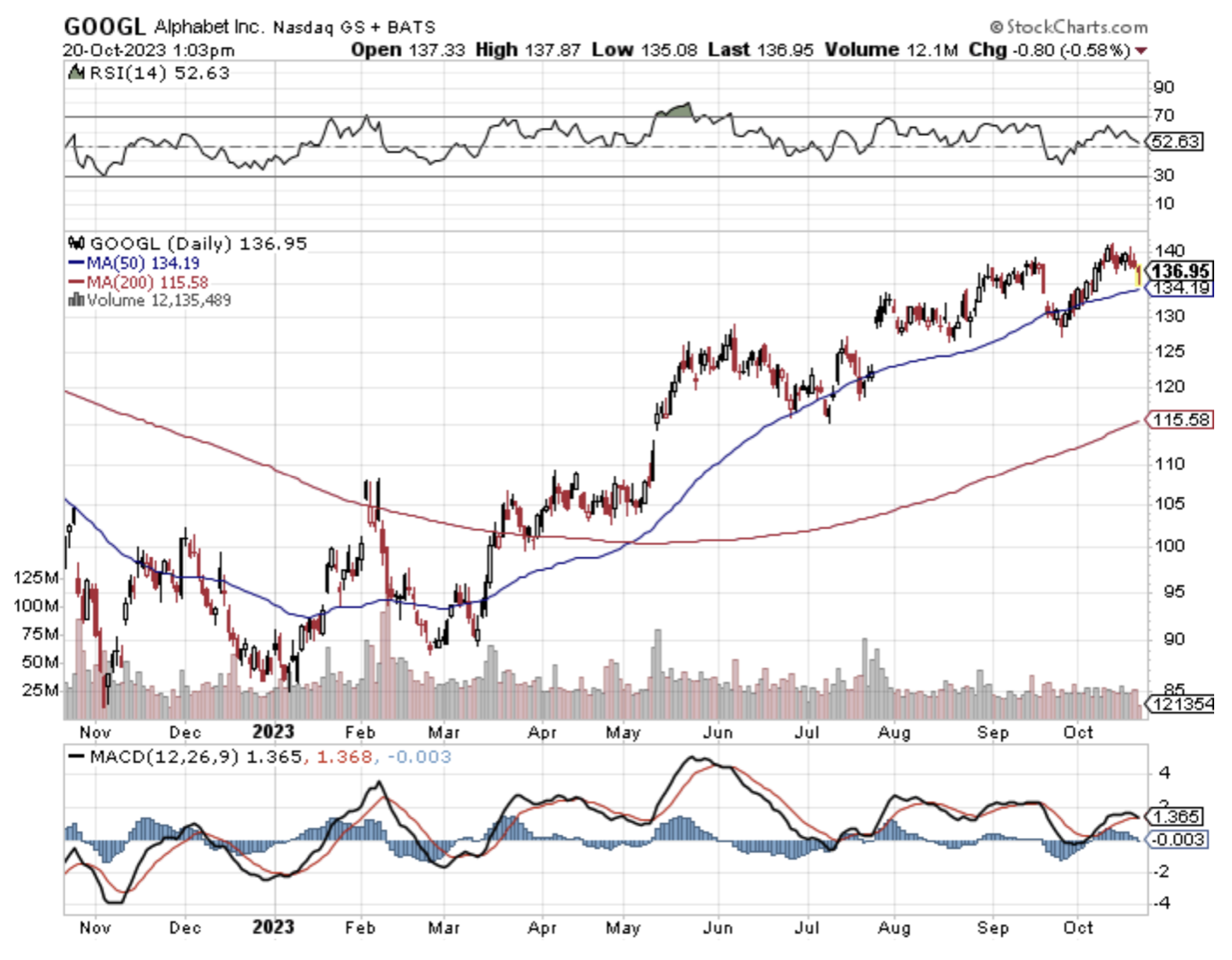
The latest announcement was Alphabet (GOOGL) who will begin production in India of its Pixel 8 smartphones in time for sales in 2024.
Google will partner with local and global suppliers to put together its first India-made handsets, hardware.
The move from the company responsible for Android, the world’s most-used mobile operating system, adds to a string of successes by India’s government in enticing international device makers to build locally.
Dixon Technologies India and Foxconn Technology Group’s Indian unit are the leading contenders to manufacture the phone.
Indian Prime Minister Narendra Modi’s administration has attracted greater investment from Apple, which opened its first two stores in India this year and is increasingly shifting iPhone production from China to India.
The latest iPhone 15 generation was also the first in the company’s history to launch made-in-India handsets at the same time as those made in China.
Outside of US device makers, Samsung Electronics Co. also manufactures its Galaxy handsets in India and Chinese Android vendors have set up partnerships with local assemblers.
Google counts India as a critical growth engine, where most smartphones run on its Android ecosystem.
However, Google also faces business and regulatory challenges there – startups and companies like Disney have legally challenged some of its in-app policies. Google is also fighting several antitrust battles including one related to alleged abuse of its position in the Android market.
Interestingly, the South Asia country's approach to attracting big manufacturing investments isn't limited to incentives alone.
The government has also implemented comprehensive restrictions to control the influx of foreign electronic devices. It's a strategic blend of both persuasion and coercion, convincing these tech giants to take the plunge into the Indian manufacturing landscape.
Around 200 U.S. companies are actively exploring the possibility of shifting their manufacturing bases from China to India, according to the US-India Strategic and Partnership Forum (USISPF).
It is entirely realistic that in the short future that India will secure the title of the world's largest global manufacturing hub, toppling China's longstanding dominance in the years to come.
These developments are emblematic of a tech manufacturing world in turmoil.
India is perceived as a safe bet to be able to pump out all those gizmos and gadgets that American big tech is reliant on to drive sales.
India also has a massive work force that specializes in software.
It’s easy to say that if American big and small tech hopes to power itself for the next 30 years; they absolutely need the mojo of Indian tech labor and manufacturing to prop up Silicon Valley.
Google moving their supply chain to India gives me more conviction in recommending this stock for the long term.