Mad Hedge Technology Alerts!
Hot wars play a central role in accelerating inflation and the world’s newest kinetic war in the Middle East could prove toxic to the Fed’s quest to quell high inflation.
First, condolences to the atrocities that have occurred in the past 72 hours, the damage to families, society, and communities are hurtful and long-lasting.
Conflict in the Middle East means higher energy prices because a higher risk premium will be attached to the cost of logistics and production.
The Middle East has some of the highest outputs of oil and natural gas in the world with supply from Qatar, Saudi Arabia, and Iran flooding the world with cheap energy.
What does that mean for technology stocks?
I can tell you nothing good.
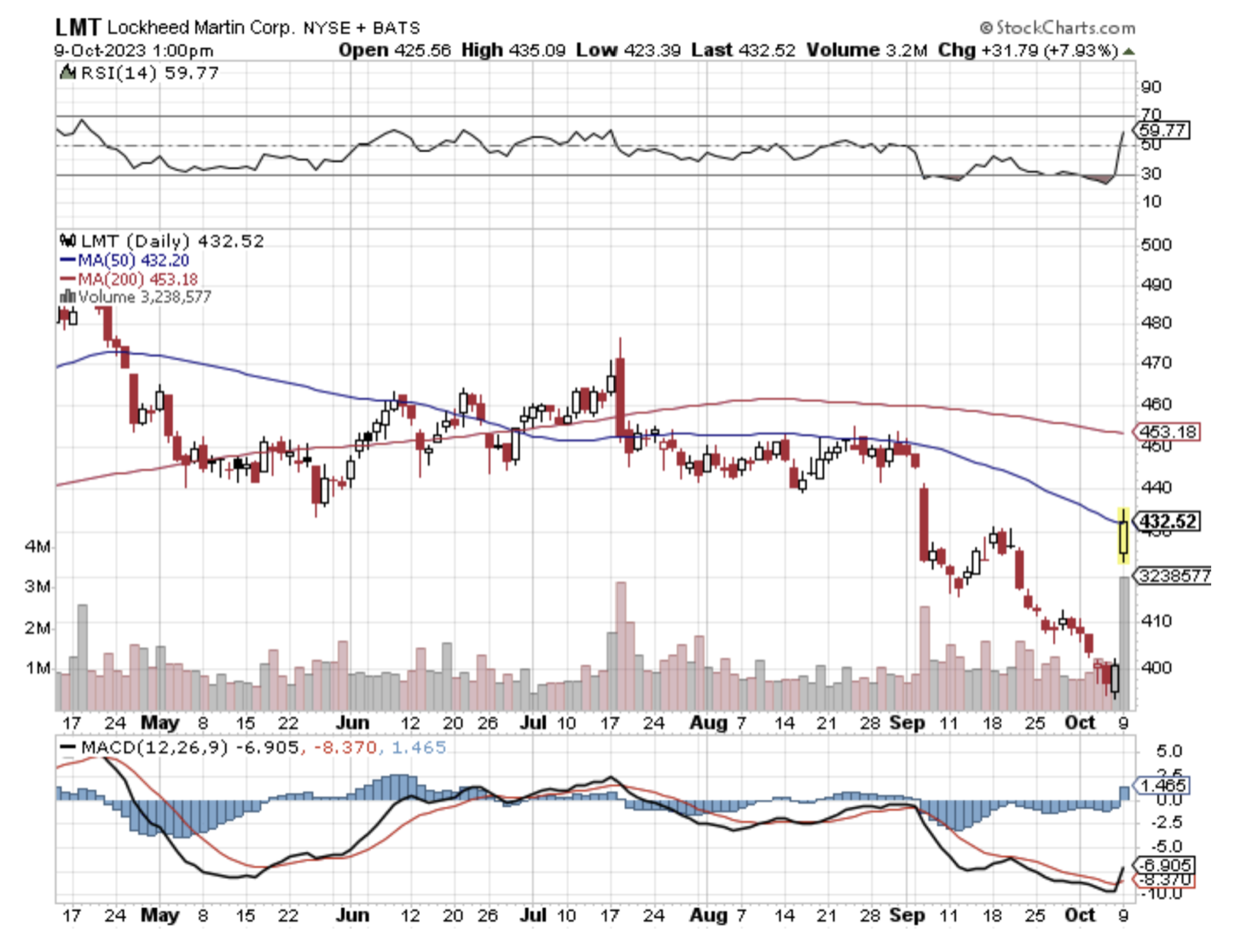
Physical wars rotate demand to certain goods that will deliver the consumer the best outcomes and in this case food and shelter. Running a supermarket during the lockdowns was a small gold mine. That means there is a high chance that money rotates out of Google and Microsoft and goes into defense and military stocks like Raytheon and Lockheed Martin (LMT).
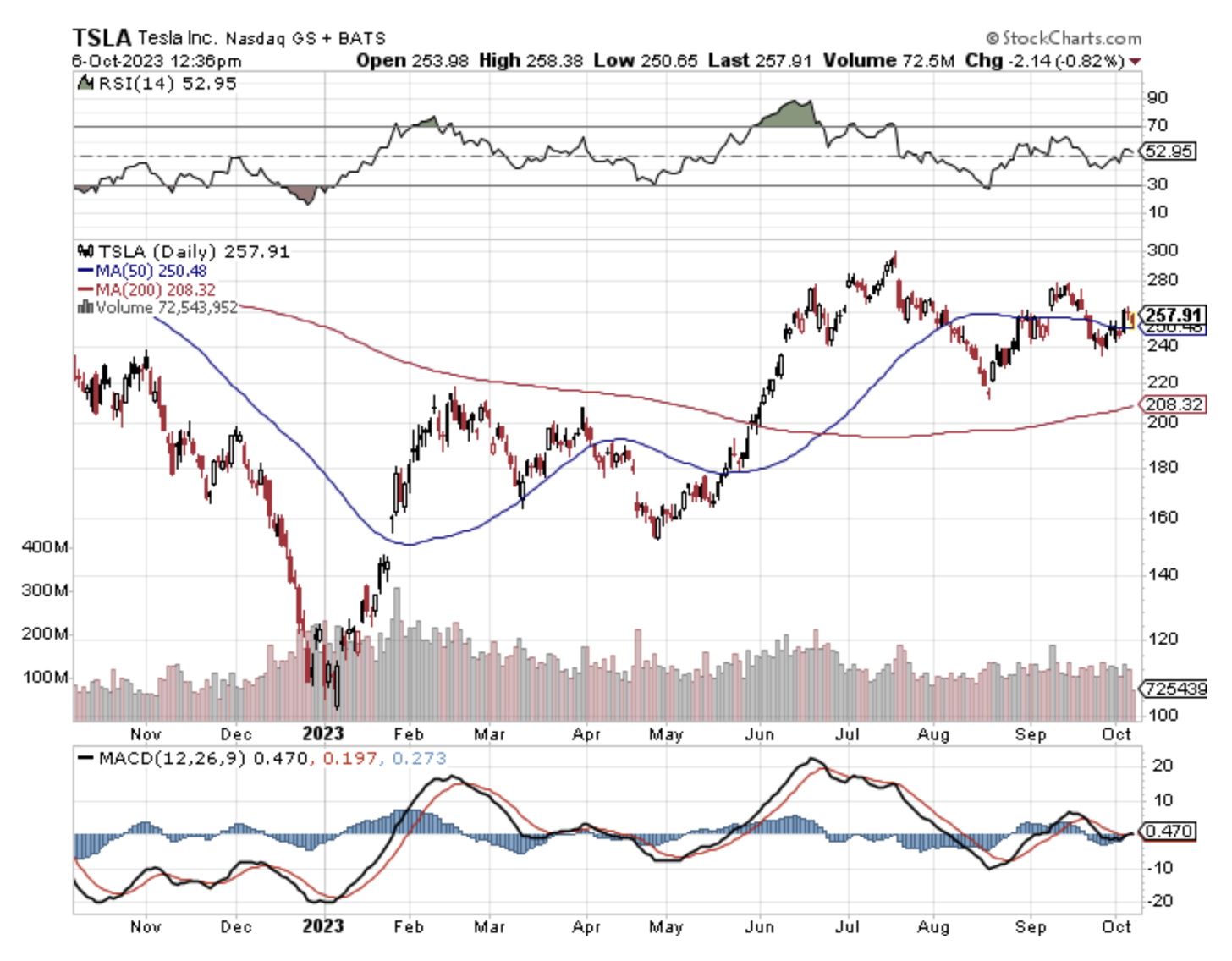
Unless products are critical to survival, goods like EVs and Tesla’s (TSLA) are placed on the backburner.
Few will have the money to charge their EVs with another wave of price increases coming down the pipeline. I already hear Norwegians complaining about the cost of fueling EVs after cheap Russian energy was shut off to them.
Forget about an iPhone upgrade cycle.
Kids will just have to deal with the iPhone 14 for longer.
High inflation plays a leading role in wars and conflicts. But that doesn’t mean that economic policy doesn’t matter anymore. Less wars result in bigger tailwinds to deflation.
China also owns the rare metals industry and policy might dictate to hold back supply and earmark it for national and military industries instead of selling to foreigners.
Tesla’s might not be able to be produced anymore because they can’t secure the right materials like cobalt from China.
If a full-fledged regional war intensifies, then the US economy is almost guaranteed to lock in 4% as the new CPI low for this inflationary cycle. The next move would be higher.
The US has already pledge financial and military aid to Israel and that bill will be footed by the US taxpayer.
If this war begins to get expensive and the US starts shipping off $200 billion every few months to the Middle East then this fiscal spending will bring forward more inflation.
Ultimately, if a third war in the shape of Taiwan rears its ugly head, we could experience high 20% inflation like we did in the 1970’s, but this time around, we would do it with close to $34 trillion in US federal debt and those onerous debt interest payments.
The technology sector better hope and pray for a quick resolution to the Middle East conflict in order to stave off the threat of destroying the Santa Claus rally in the Nasdaq.
A third concurrent war in Taiwan would mean instant recession, spiking bond yields, $150 per barrel oil, and technology stocks experiencing a wild pullback.
In the meantime, the newest stresses will guarantee the Eurozone plus UK into a deep recession because they aren’t self-sufficient.
It also adds even more stress to the US economy which is the last man standing at this point because US tech earnings are still in the green.
Certain stocks do very well in times of geopolitics, but these multinational globalized companies have a lot to sacrifice if the world goes pear-shaped.
Mad Hedge Technology Letter
October 6, 2023
Fiat Lux
Featured Trade:
(TESLA GAINS UPPER HAND WITH HELP FROM CHINA)
(TSLA), (LCID), (RIVN), (EV), (CHINA)

The American consumer has been battered.
Declining iPhone sales says it all, but that is nothing compared to the Chinese consumer who are drowning in a cesspool of their own debt.
The Chinese economy is threatening to become the new Japanese economy which is infamous for its run of lost decade after lost decade.
Who cares?
I don’t, but lithium prices do and that’s why we need to focus on as the lust for EVs in the western world picks up pace.
The Chinese have cornered the lithium market and supply has expanded.
This should allow EV makers like Elon Musk to lower the price of Tesla’s further effectively winning the price war. The inverse of Bidenomics sometimes happens, but usually takes the Chinese to flood the market with extra product and in this case lithium.
Every small EV stock should be ignored. There is Tesla and nobody else.
Lithium prices are crashing around the world.
After a buying frenzy sent global prices soaring though last year, they’ve since plunged as electric vehicle demand crashes and supplies are expected to remain strong.
The weakness has been especially pronounced there as battery makers tap stockpiles built up during the boom, while demand concerns are being exacerbated by wider fears about the country’s economy.
Chinese sentiment is being hurt by weak consumer and business confidence and an ongoing property crisis.
The nation’s EV sales growth slowed to 37% in the second quarter from a year earlier, versus a global average of 50%.
That’s helped push most-active Chinese lithium carbonate futures down about 37% since they started trading in July. They’re at a level that works out to a roughly 35% discount to lithium hydroxide futures in the US, according to traders.
The price decline has further to go. Lithium carbonate and hydroxide could drop another 30% in the near term on the back of weaker demand, high inventories and improved supply.
Tesla can lower the price of EVs as it seeks to capitalize on US consumer’s lack of discretionary budget as inflation takes a bite out of their daily budgets.
Today, the carmaker marked down the starting price of the base Model 3 by $1,250 to $38,990.
Tesla also lopped $2,250 off the price of the performance version of the Model 3, which now starts at $50,990, and $2,000 off the long-range and performance versions of the Model Y sport utility vehicle, which now cost $48,490 and $52,490, respectively.
The biggest factor contributing to Tesla’s price cuts has been the lifting of production constraints that held the company back for years.
Tesla still maintains a dominant position in the US electric-vehicle market, though it’s increasingly relied on discounting to preserve its position. Fresh product could help buoy pricing in the coming months, with the carmaker recently debuting an updated version of the Model 3.
Tesla has already identified the race to the bottom for the price of EVs and this should crush the rest of the competition as EVs turn from luxury goods to commodities.
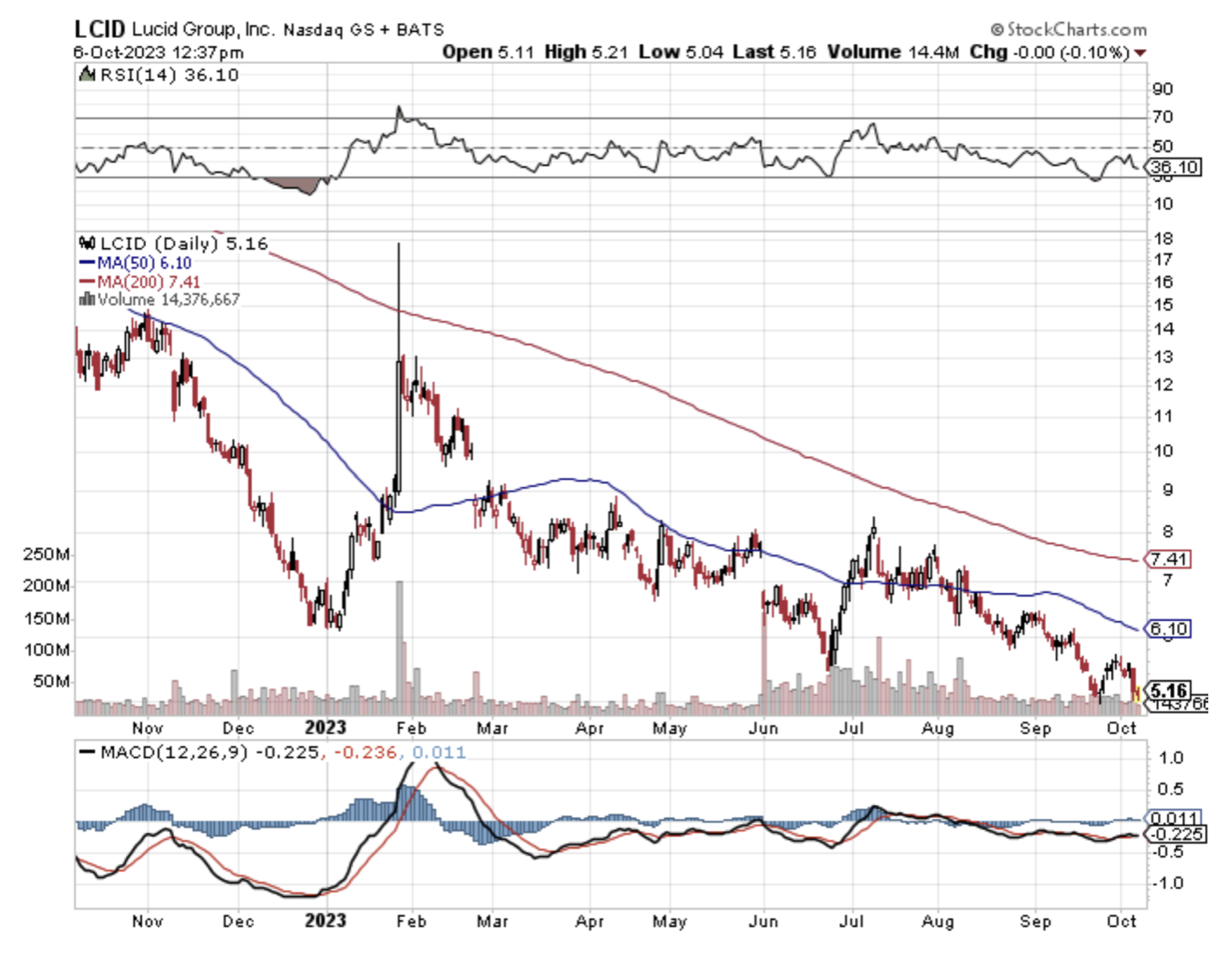
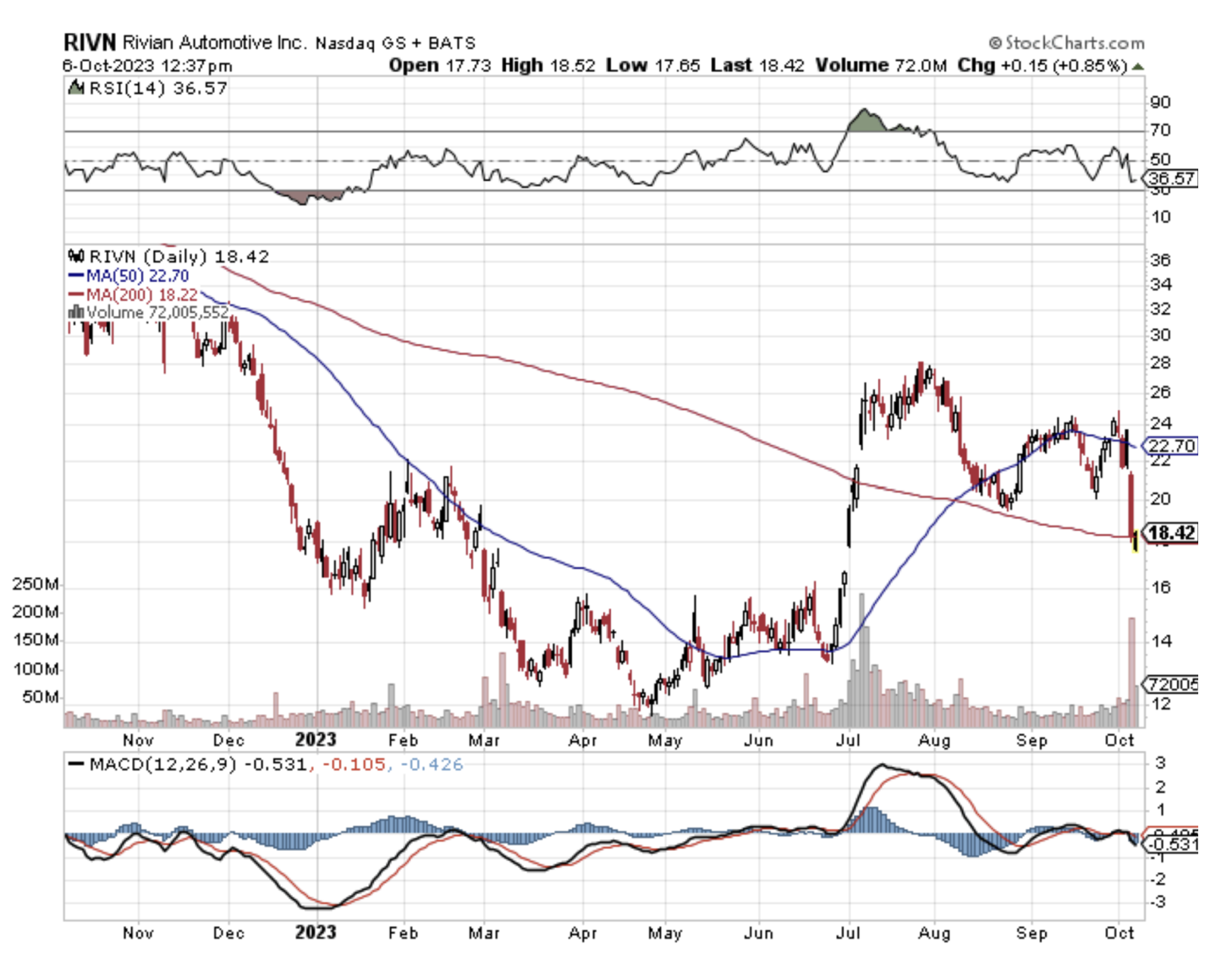
Just take a look at rivals like Rivian (RIVN) who lose $33,000 for each vehicle they sell. EV maker Lucid’s $338,000 loss per car Is turning investors off
I wouldn’t put a cent into any other EV stock aside from Tesla.
They will be the future iPad on wheels that Steve Jobs dreamed about and now they can lower prices even more aggressively now that the price of lithium has crashed.
Musk was smart to start the price war earlier to crush competition.