Mad Hedge Technology Alerts!

“Most Americans agree that technology is going to eliminate many more jobs than it is going to create.” – Said American entrepreneur and former presidential candidate Andrew Yang

Mad Hedge Technology Letter
April 26, 2023
Fiat Lux
Featured Trade:
(THE FORTRESS)
(GOOGL), (MSFT), (NVDA), (META), (TSLA), (AAPL), (AMZN)

This is a seven-stock tech market and there is no point to getting exotic and buying something aside from these 7.
That is what the price action is telling us.
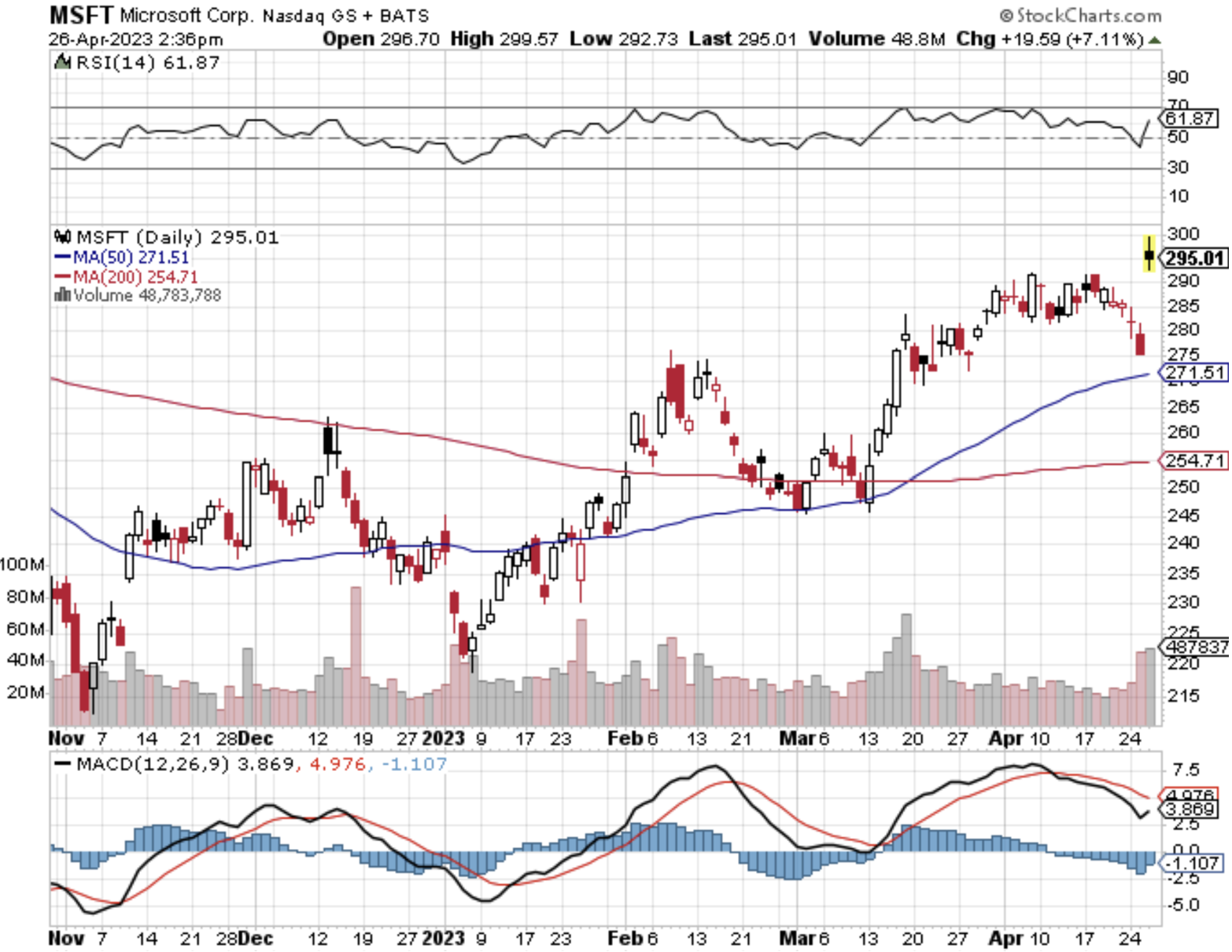
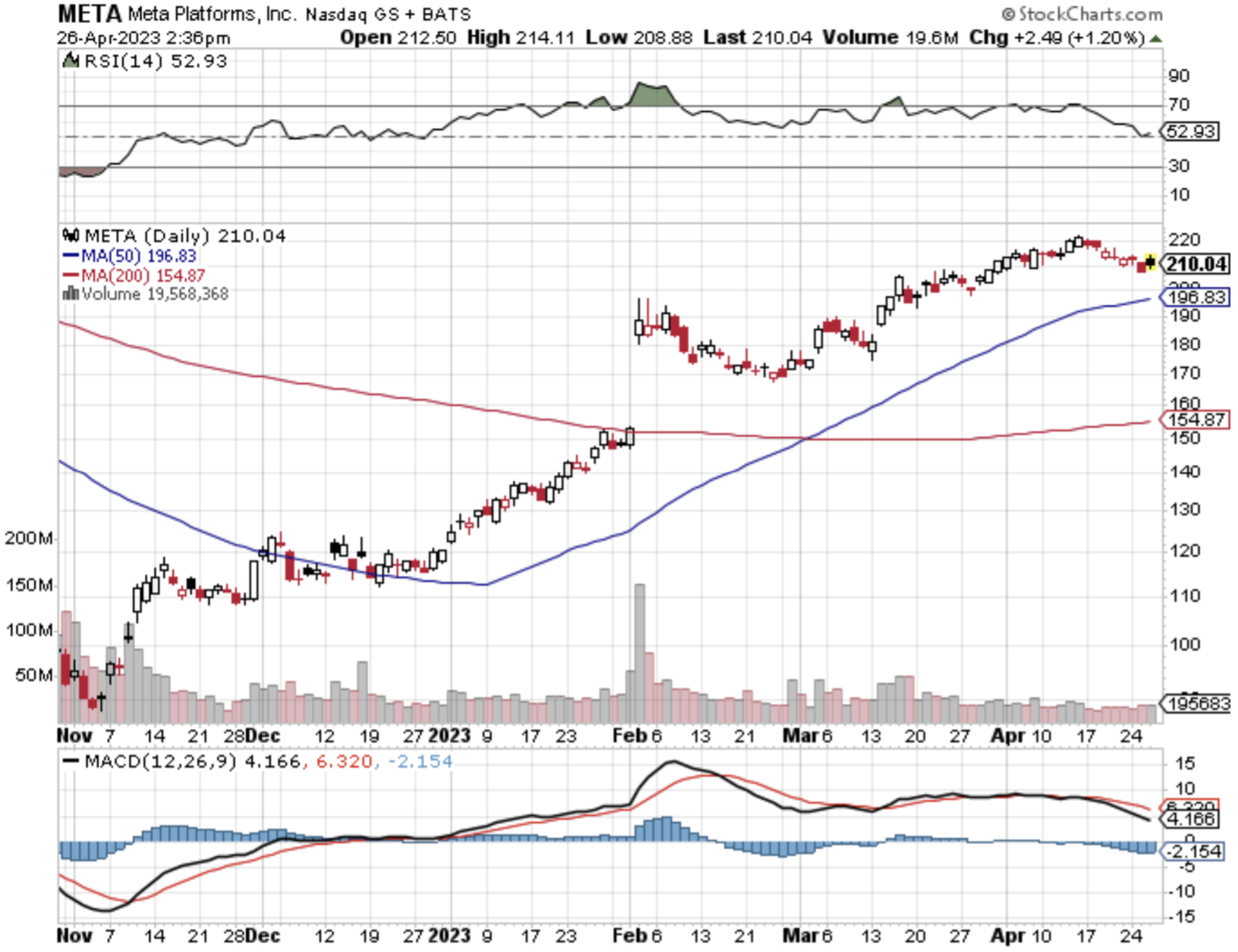
Four of the seven are no other than tech overlords Alphabet (GOOGL), Amazon, (AMZN), Microsoft (MSFT), and Meta Platforms (META). These four Big Tech stocks alone account for 41% of the S&P 500's 2023 gain.
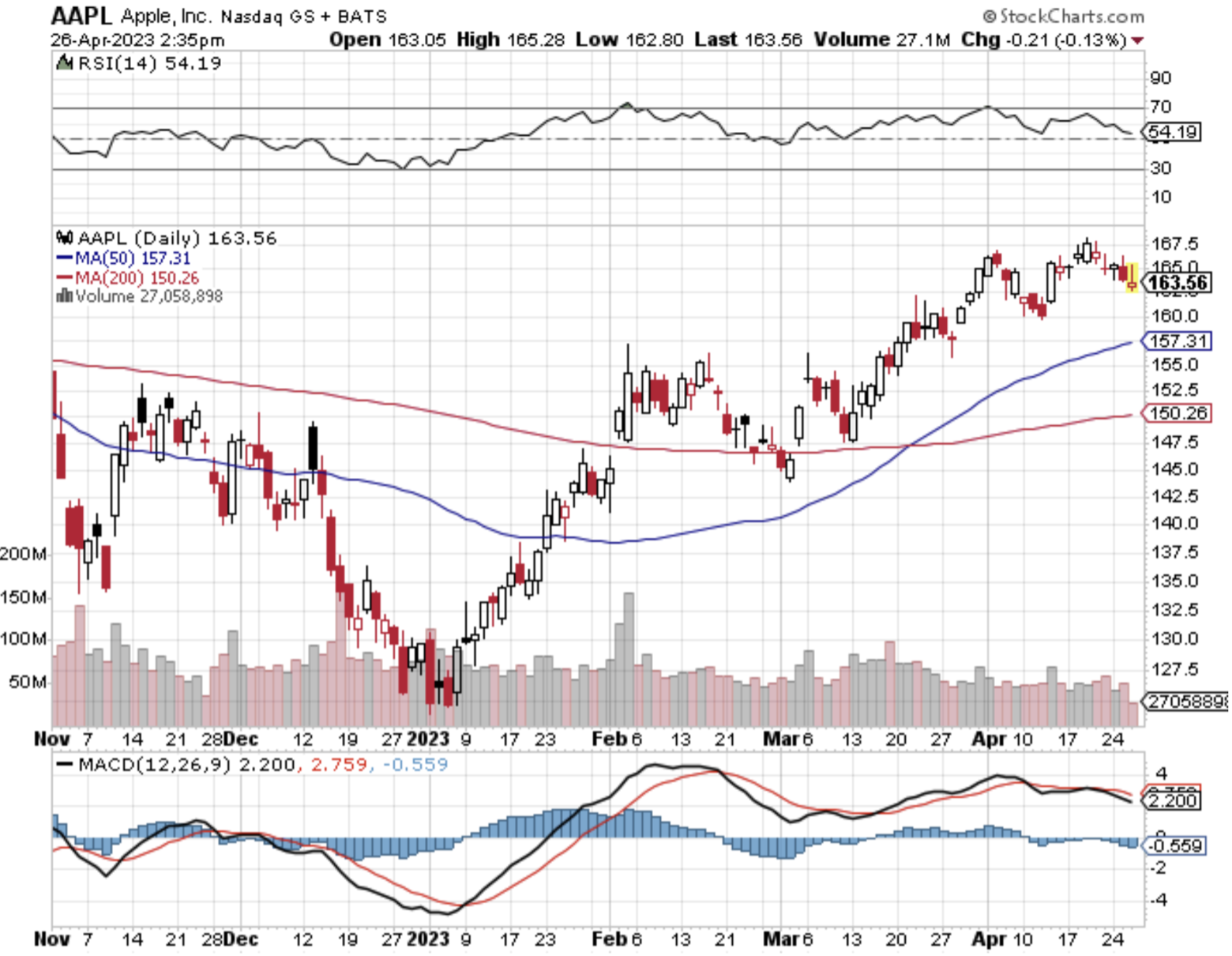
The other three are Apple (AAPL), which reports next week, Nvidia (NVDA), and Tesla (TSLA) stock.
These seven account for 86% of the S&P 500's 2023 gain.
These seven Big Tech stocks have essentially made the market this year and everybody else is dragging behind kicking and screaming.
Part of the great performance has to do with the market's oversold nature in 2022.
Rarely does a market operate at the extremes for so long.
These seven have done more than bounce back.
The January Effect is a seasonal increase in stock prices throughout the month of January. The increase in demand for stocks in January is often preceded by a decrease in prices during the month of December, in part due to tax-loss harvesting.
Second, many of these tech companies have been aggressively cutting costs.
I would even say again that Facebook cutting 25% of staff since 2022 is not enough.
Get rid of 80% like Twitter did.
Even more important, the world's most advanced AI models are coming together with the world's most universal user interface - natural language - to create a new era of computing.
Microsoft helped kick off Big Tech's AI obsession with its multi-year, multi-billion dollar investment in ChatGPT developer OpenAI.
MSFT has since implemented versions of OpenAI's technology in its Edge browser, Bing search engine, Microsoft 365 productivity software, and cybersecurity offerings.
Microsoft leading the AI means that rival Alphabet's Google (GOOGL) is playing catch up. Amazon (AMZN), meanwhile, is working to bring generative AI to its services, while Facebook parent Meta (META) is piecing together teams to kick-start its own efforts.
And while Microsoft’s stock has seemingly benefited from both the AI hype and overall market rebound after a rough 2022, the company's main growth driver continues to be its cloud computing efforts in its Azure unit.
But that growth has drastically cratered over the last year. In Q3 2022, Microsoft reported Azure growth of 46% year-over-year. But that's since fallen each quarter, landing at 27% in Q3 2023.
Part of the reason for this decline was large customers pulling back on spending as higher interest rates challenged global growth. Microsoft is also contending with scarce PC sales, as demand from consumers and business customers falls from pandemic-era highs.
It’s easy to say that tech has fared quite well this year.
However, peel back the layers and the lack of participation in this tech rally is highly worrisome.
In a winner take all economy, we have never been reliant on a small group of stocks to save us from collapse.
Interest rates as high as they mean that without a strong balance sheet, it is tough sledding out there for the growth companies.
In the short term, I fully expect tech companies with poor fundamentals to struggle and show minimal price appreciation as recession risks pile up.
These 7 should be a fortress for investors looking to protect their wealth.