Mad Hedge Technology Alerts!
Dealing with the Cloud works, and for every relevant tech company, this division serves as the pipeline to the CEO position.
If this isn’t the case for a tech company, then there’s something egregiously wrong with them!
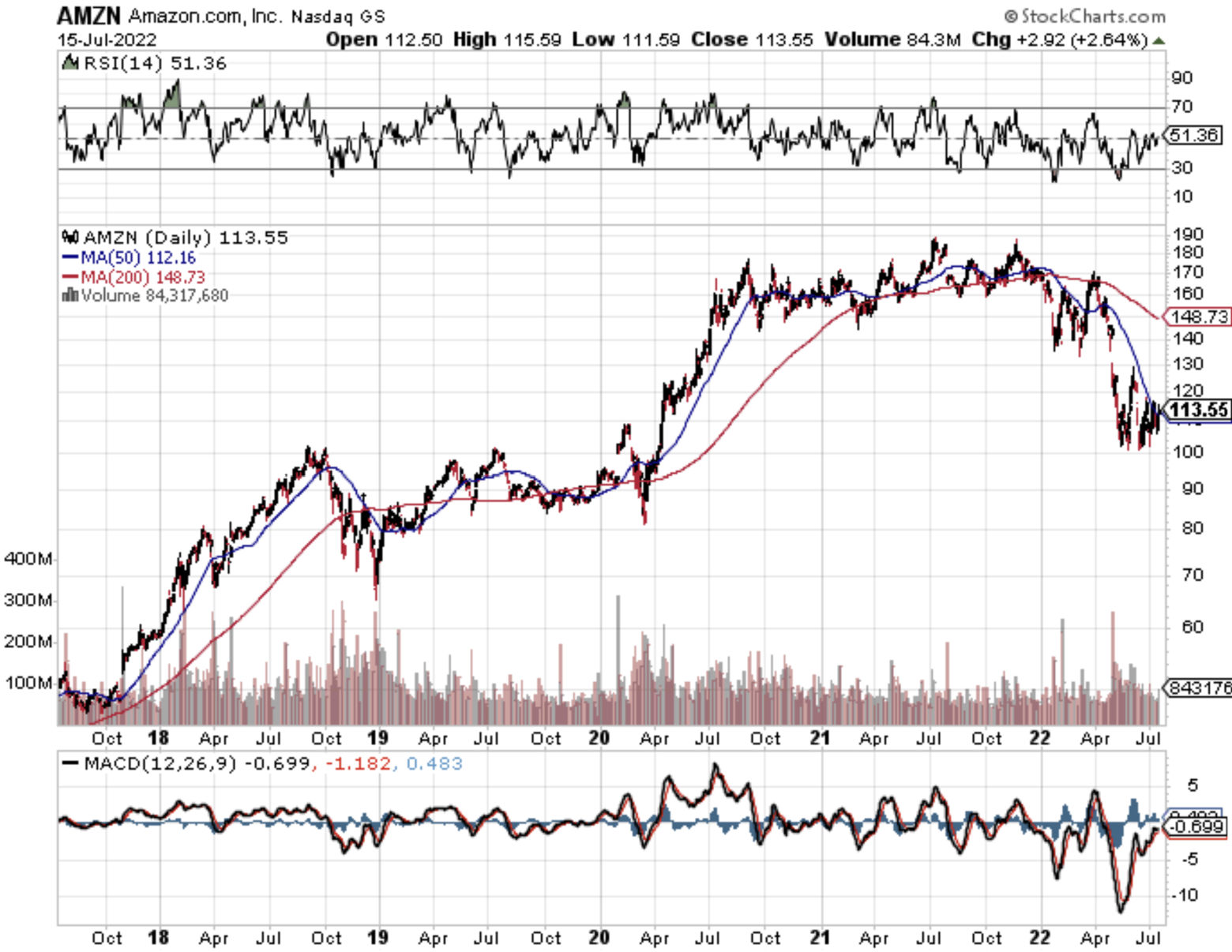
Take Andy Jassy, the mastermind behind Amazon’s (AMZN) lucrative cloud computing division and the man who succeeded company founder Jeff Bezos.
He was rewarded this important position based on his performance in the cloud and faced the daunting proposition of following Bezos as CEO.
Bezos incorporated Amazon almost 30 years ago.
Jassy developed a highly profitable and market-leading business, Amazon Web Services, that runs data centers serving a wide range of corporate computing needs.
Cloud 101
If you've been living under a rock the past few years, the cloud phenomenon hasn't passed you by and you still have time to cash in.
You want to hitch your wagon to cloud-based investments in any way, shape, or form.
Amazon leads the cloud industry it created.
It still maintains more than 30% of the cloud market. Microsoft would need to gain a lot of ground to even come close to this jewel of a business.
Amazon relies on AWS to underpin the rest of its businesses and that is why AWS contributes most of Amazon's total operating income.
Total revenue for just the AWS division would operate as a healthy stand-alone tech company if need be.
The future is about the cloud.
These days, the average investor probably hears about the cloud a dozen times a day.
If you work in Silicon Valley, you can quadruple that figure.
So, before we get deep into the weeds with this letter on cloud services, cloud fundamentals, cloud plays, and cloud Trade Alerts, let's get into the basics of what the cloud actually is.
Think of this as a cloud primer.
It's important to understand the cloud, both its strengths and limitations.
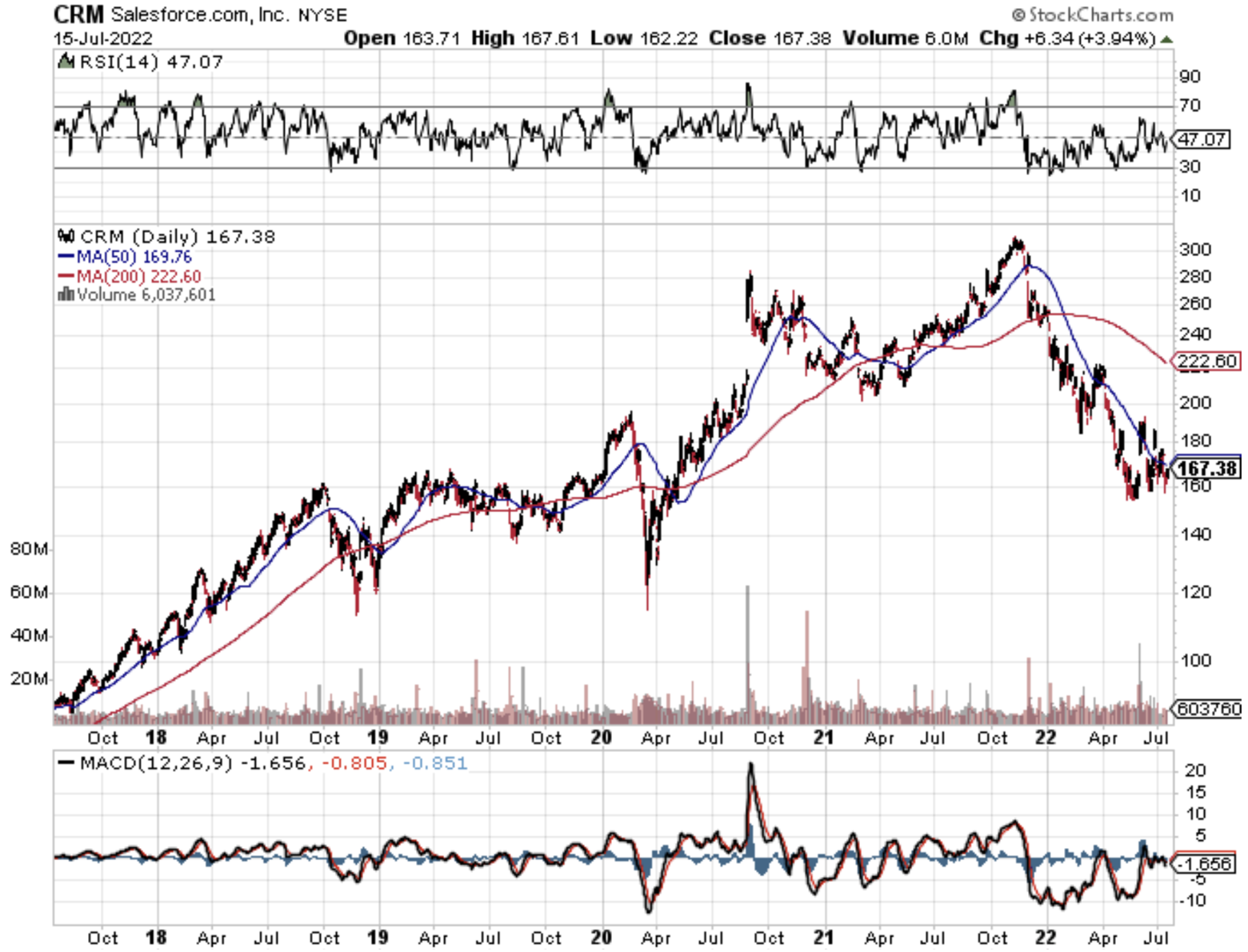
Giant companies that have it figured out, such as Salesforce (CRM) and Zscaler (ZS), are some of the fastest-growing companies in the world.
Understand the cloud and you will readily identify its bottlenecks and bulges that can lead to extreme investment opportunities. And that is where I come in.
Cloud storage refers to the online space where you can store data. It resides across multiple remote servers housed inside massive data centers all over the country, some as large as football fields, often in rural areas where land, labor, and electricity are cheap.
They are built using virtualization technology, which means that storage space spans many different servers and multiple locations. If this sounds crazy, remember that the original Department of Defense packet-switching design was intended to make the system atomic bomb-proof.
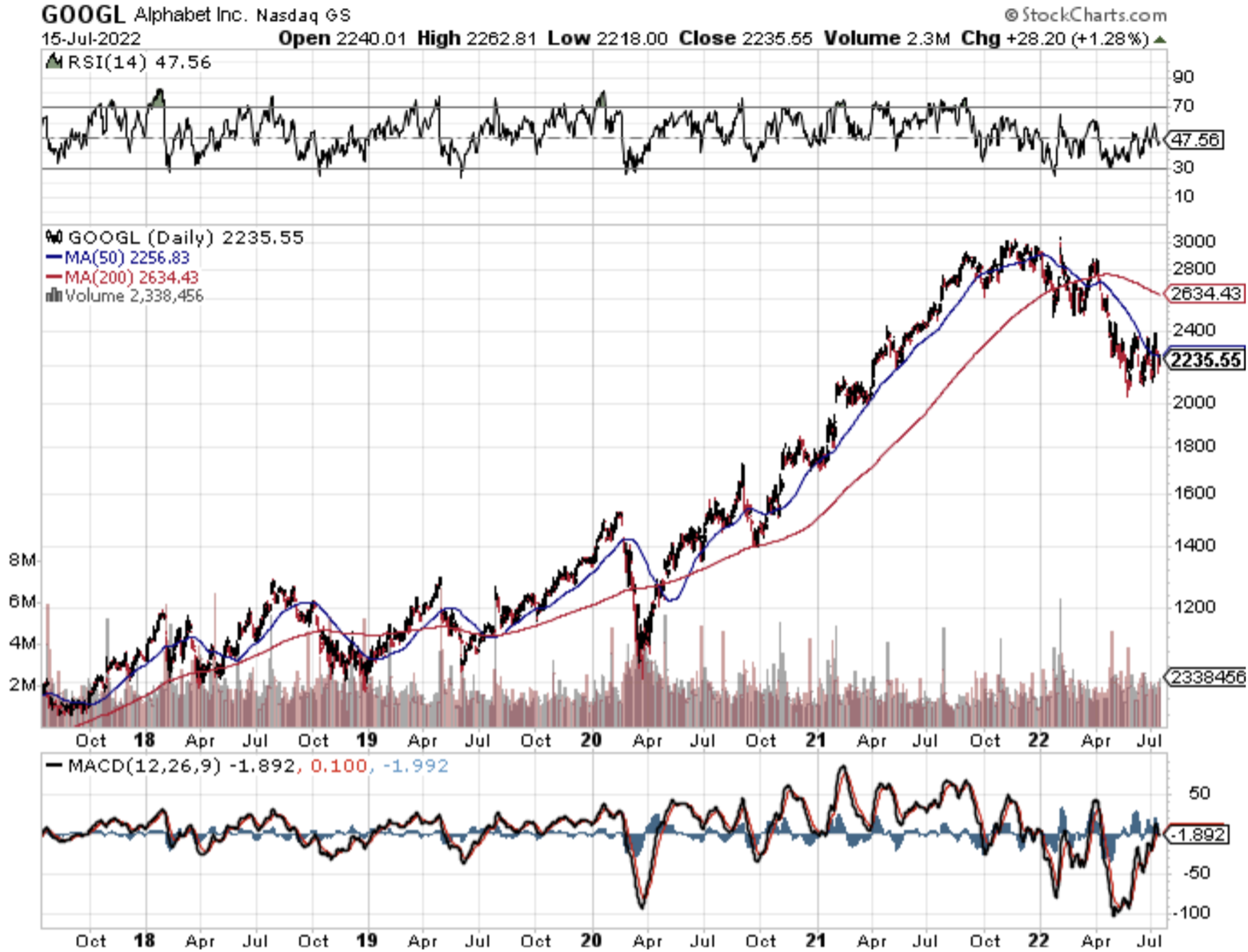
As a user, you can access any single server at any one time anywhere in the world. These servers are owned, maintained, and operated by giant third-party companies such as Amazon, Microsoft, and Alphabet (GOOGL), which may or may not charge a fee for using them.
The most important features of cloud storage are:
1) It is a service provided by an external provider.
2) All data is stored outside your computer residing inside an in-house network.
3) A simple Internet connection will allow you to access your data at any time from anywhere.
4) Because of all these features, sharing data with others is vastly easier, and you can even work with multiple people online at the same time, making it the perfect, collaborative vehicle for our globalized world.
Once you start using the cloud to store a company's data, the benefits are many.
No Maintenance
Many companies, regardless of their size, prefer to store data inside in-house servers and data centers.
However, these require constant 24-hour-a-day maintenance, so the company has to employ a large in-house IT staff to manage them - a costly proposition.
Thanks to cloud storage, businesses can save costs on maintenance since their servers are now the headache of third-party providers.
Instead, they can focus resources on the core aspects of their business where they can add the most value, without worrying about managing IT staff of prima donnas.
Greater Flexibility
Today's employees want to have a better work/life balance and this goal can be best achieved by letting them work remotely which effectively happened because of the public health situation. Increasingly, workers are bending their jobs to fit their lifestyles, and that is certainly the case here at Mad Hedge Fund Trader.
How else can I send off a Trade Alert while hanging from the face of a Swiss Alp?
Cloud storage services, such as Google Drive, offer exactly this kind of flexibility for employees.
With data stored online, it's easy for employees to log into a cloud portal, work on the data they need to, and then log off when they're done. This way a single project can be worked on by a global team, the work handed off from time zone to time zone until it's done.
It also makes them work more efficiently, saving money for penny-pinching entrepreneurs.
Better Collaboration and Communication
In today's business environment, it's common practice for employees to collaborate and communicate with co-workers located around the world.
For example, they may have to work on the same client proposal together or provide feedback on training documents. Cloud-based tools from DocuSign, Dropbox, and Google Drive make collaboration and document management a piece of cake.
These products, which all offer free entry-level versions, allow users to access the latest versions of any document so they can stay on top of real-time changes which can help businesses to better manage workflow, regardless of geographical location.
Data Protection
Another important reason to move to the cloud is for better protection of your data, especially in the event of a natural disaster. Hurricane Sandy wreaked havoc on local data centers in New York City, forcing many websites to shut down their operations for days.
And we haven’t talked about the ransomware attacks by Eastern Europeans on energy company Colonial Pipeline and meat producer JBS Foods.
The cloud simply routes traffic around problem areas as if, yes, they have just been destroyed by a nuclear attack.
It's best to move data to the cloud, to avoid such disruptions because there your data will be stored in multiple locations.
This redundancy makes it so that even if one area is affected, your operations don't have to capitulate, and data remains accessible no matter what happens. It's a system called deduplication.
Lower Overhead
The cloud can save businesses a lot of money.
By outsourcing data storage to cloud providers, businesses save on capital and maintenance costs, money that in turn can be used to expand the business. Setting up an in-house data center requires tens of thousands of dollars in investment, and that's not to mention the maintenance costs it carries.
Plus, considering the security, reduced lag, up-time and controlled environments that providers such as Amazon's AWS have, creating an in-house data center seems about as contemporary as a buggy whip, a corset, or a Model T.
The cloud is where you want to be.
Mad Hedge Technology Letter
July 15, 2022
Fiat Lux
Featured Trade:
(THE HUNT FOR RAW MATERIALS)
(TSLA), (F), (GM), (CATL)

Tesla (TSLA) CEO Elon Musk has been in the headlines a lot lately, and I don’t write about him because I idolize the guy.
He is simply the richest man in the world and straddles the vanguard of space technology and EV technology, all while failing to purchase one of the biggest social media platforms in the world.
Naturally, his point of contact in the business world is immense, the man moves markets and we need to acknowledge it.
His latest quip has to do with natural resources - particularly lithium.
He defined the term energy independence for a world full of electric cars: You simply need the batteries.
His tweet of “lithium batteries are the new oil” is an updated variation of “data is the new oil.”
It doesn’t mean lithium is the new data but in a conceptual future when lithium batteries power the potential iPhone on wheels product, it gets close to or at the very minimum, it is complicit in accelerating data generation.
Batteries may be the future. But for now, oil is still the new oil.
About 20 million barrels of oil are consumed in the US every day. (About eight million barrels are imported.)
About two-thirds of oil ends up in gas tanks, according to the US Department of Energy.
Outrageous oil prices is why the American consumers want to buy an EV, there is a massive backlog of orders.
The American Automobile Association reported that 25% of new car buyers surveyed are considering an EV as their next car.
But, as Musk said, EVs can't completely solve the energy independence problem. Because the oil problem is simply replaced by the problem with lithium-ion batteries.
OPEC countries don't produce many lithium-ion batteries.
They are mainly produced in Asia. The Chinese company Contemporary Amperex Technology, better known as CATL, manufactures about 30% of the electric car batteries produced worldwide, according to Ford CEO Jim Farley.
CATL has grown into the 800-pound gorilla in the room with a market capitalization of $200 billion, it competes with Toyota and competes well.
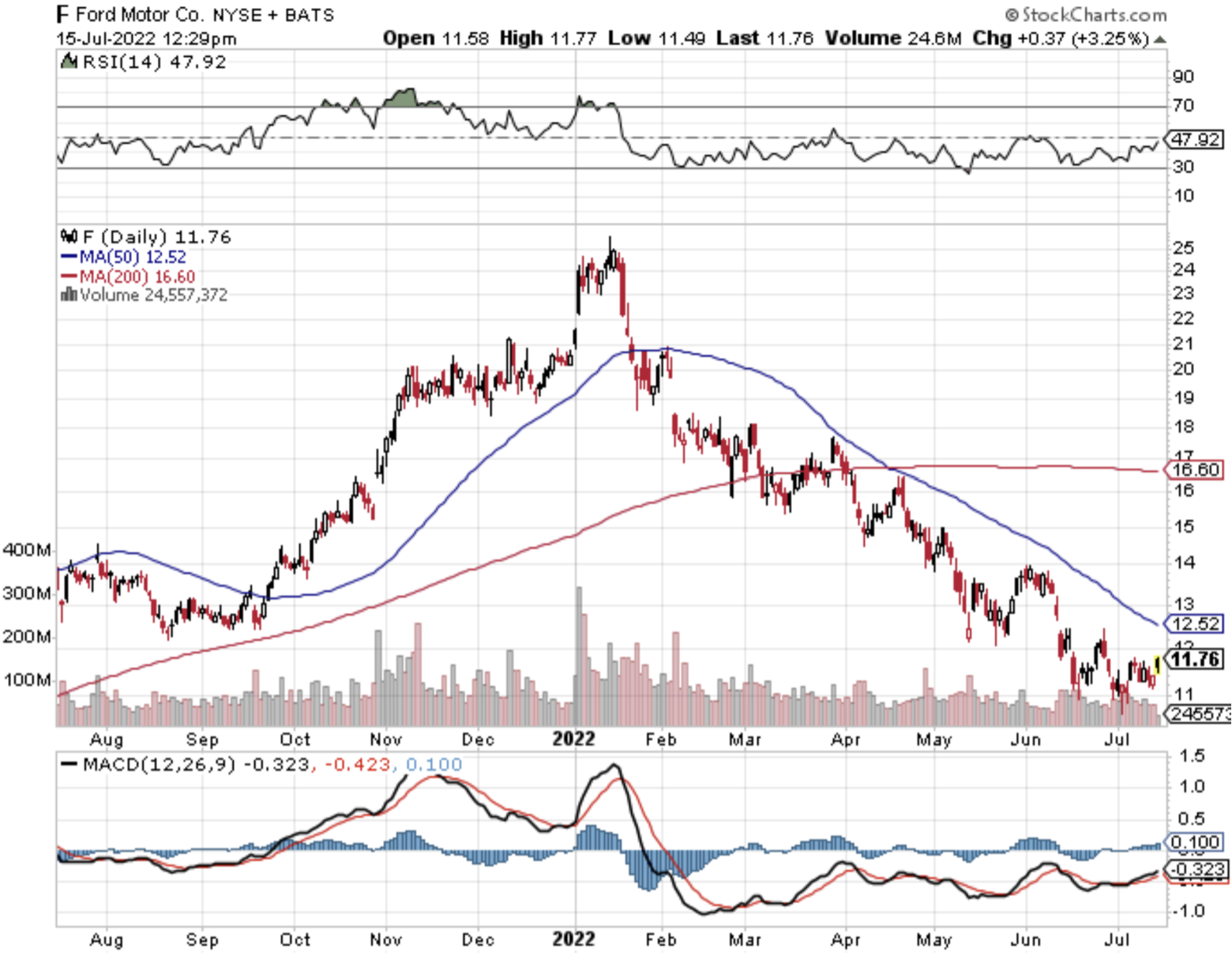
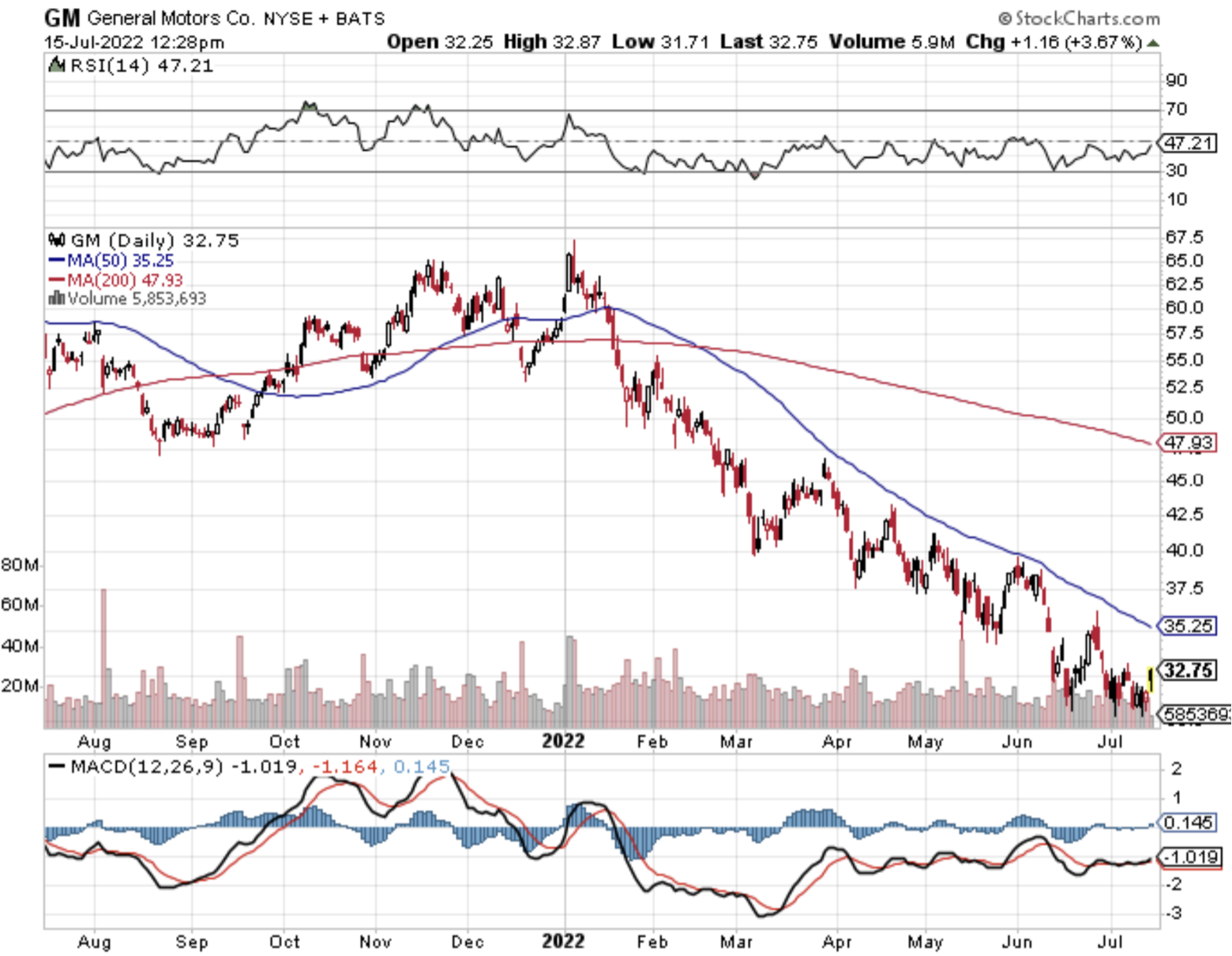
Most automakers, including General Motors (GM) and Ford (F), predict that by 2030 around 50% of new cars sold will be battery-powered. That corresponds to up to ten million EVs per year in America alone.
Manufacturing batteries in the US is part of a strategy to become independent in the lithium-ion battery space.
Another factor is the raw materials required for the batteries. Lithium is mainly mined in South America and Australia and mostly processed in China.
Other raw materials such as nickel and cobalt come from many other countries like the Congo.
Automakers, including Tesla, may be considering investing early in the battery value chain. This could protect them from commodity price shocks like those experienced by US consumers in 2022.
Musk hopes to front-run the situation and that means investing in Lithium-ion solutions instead of one day held hostage by Chinese price gouging.
The communist Chinese are the ones who hope to corner the market with state subsidies.
There are many things I envy about Musk, but I particularly appreciate his knack for pre-emptively looking for unique solutions before problems get out of hand.
That can’t be said for most American corporations that are held hostage by the short-termism of quarterly earnings reports.
Musk has a longer leash, and he certainly uses it to abandon which is why he can handle a higher risk tolerance.
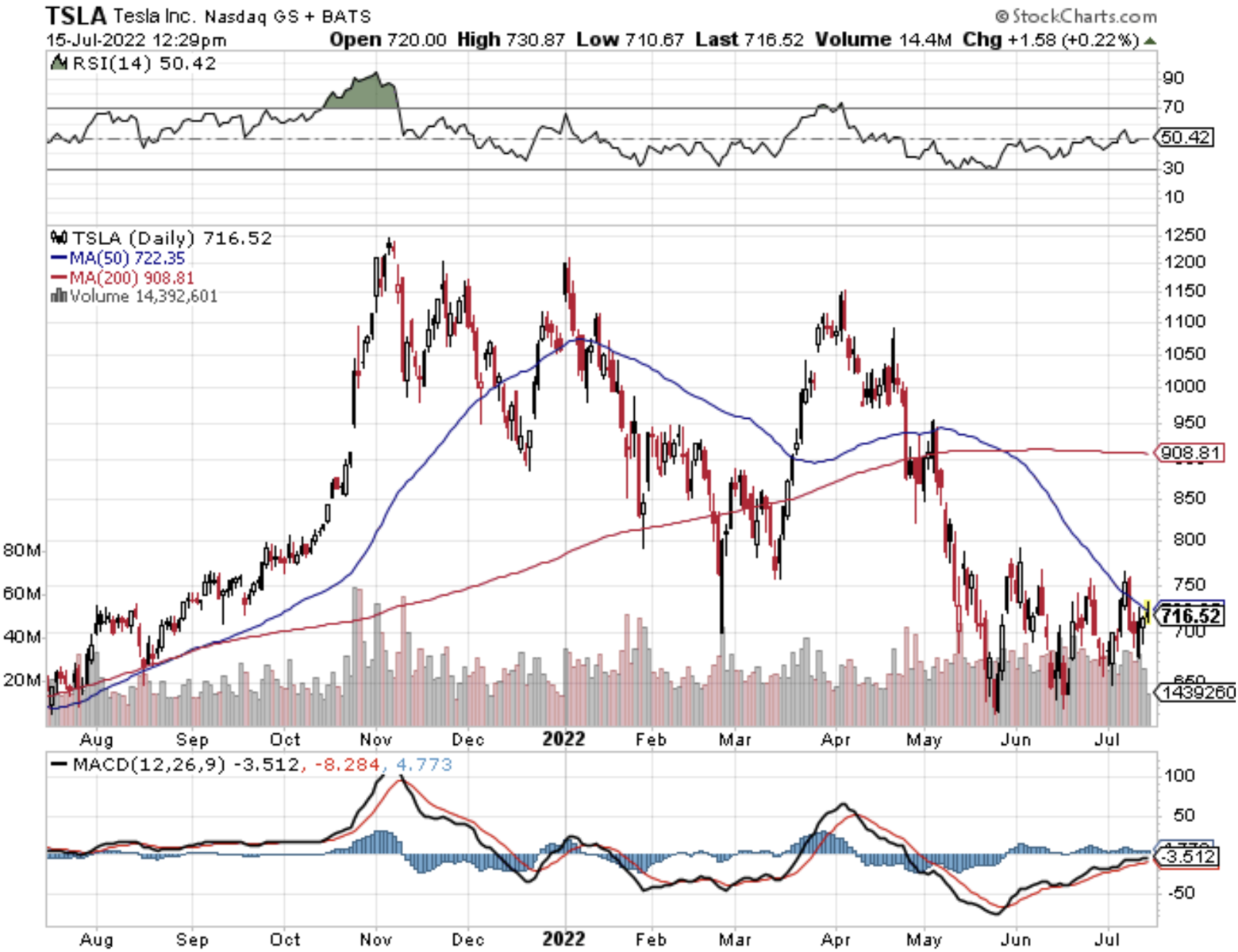
Tesla shares were only recently at $1,200 and at $700, this represents immense value for long-term buy and hold investors.