Mad Hedge Technology Alerts!

“I do not fear computers. I fear a lack of them.” - Said American writer and former professor of biochemistry at Boston University Isaac Asimov

Mad Hedge Technology Letter
June 15, 2022
Fiat Lux
Featured Trade:
(HIGH STAKES)
(LCID), (RIVN), (TSLA)

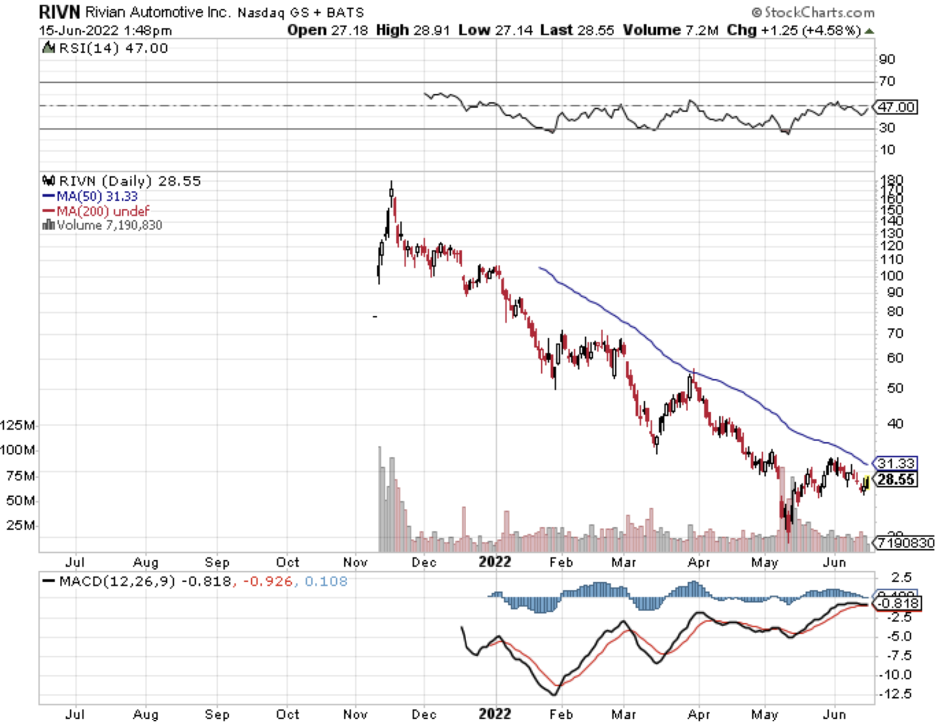
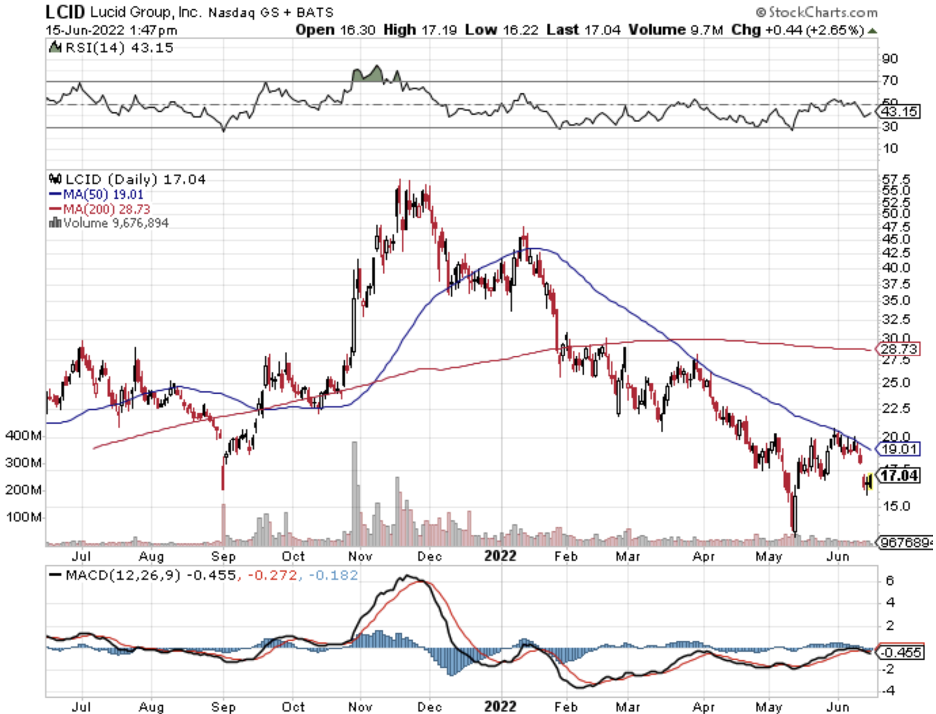
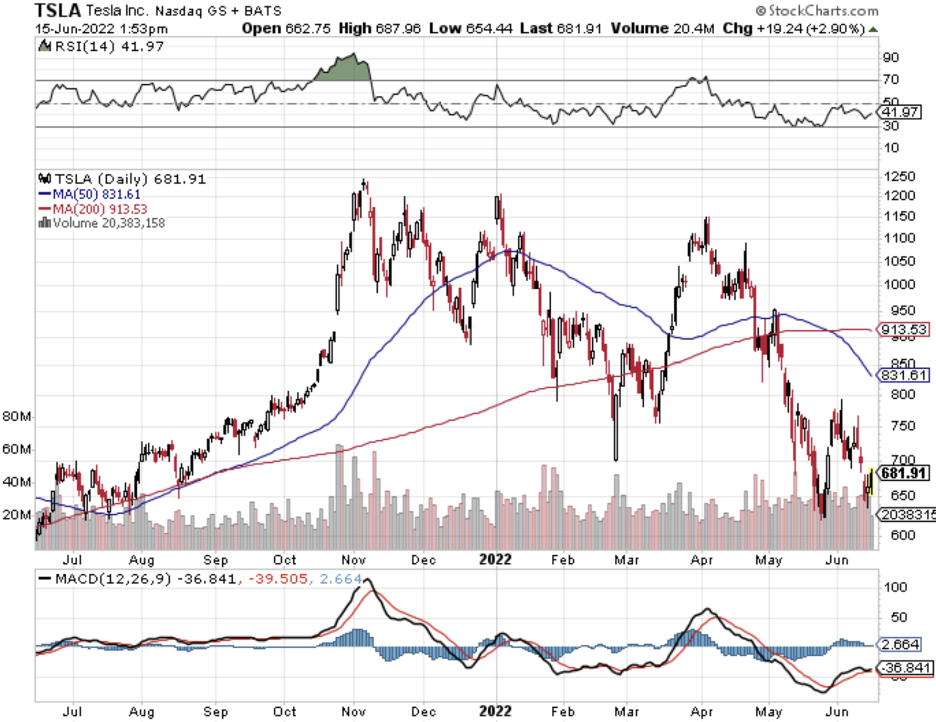
CEO of Tesla (TSLA) Elon Musk commented in an interview that he thought EV makers Rivian (RIVN) and Lucid (LCID) would go bankrupt.
Musk can’t seem to avoid media scrutiny.
Yet while there are indeed elements of truth in his words, we should take it with a grain of salt.
Tesla was once in the same position as RIVN and LCID.
Out of everyone in the world, Musk knows how it feels to be in their position now, and it most likely feels like the world caving in on you.
The pressure from shareholders can be intense, and defying gravity by creating new industries can be incredibly tedious.
What are my thoughts?
Give it some time, even though there isn’t much of it.
Musk’s timing for a sucker punch couldn’t be more cruel as we head into the Fed meeting where there is a 95% chance of a 75-basis point.
In an industry where to become profitable takes many years of losses, it hurts to hear that borrowing money will be at least .75% higher tomorrow.
This matters for Rivian and Lucid because they most likely will need to tap the debt market to keep existing.
The debt markets can either be your friend or foe as a startup.
Musk quipped that raising prices will reduce customers.
Talk about stating the obvious and yes, he is technically accurate, but I think that the comments need some color that wasn’t offered during the interview.
Rivian bled $1.5 billion last quarter, and it has significant negative gross margins and so do many unproven tech firms.
If it keeps hemorrhaging on electric vehicles it sells and delivers, it will go bankrupt unless it can raise more money, which is getting more expensive literally by the day.
Lucid is in a similar situation.
They can also sell a stake and release control over the operation which isn’t great either.
However, this is where you’d expect Rivian and Lucid to be at this stage in their evolution and Tesla was in a very similar situation around the same time.
Tesla was losing money and relied on raising more capital for a long time before it got its costs under control.
Costs are out of control because the global supply chain is in chaos, and Musk shouldn’t make it seem like he’s not dealing with the same external forces as Rivian and Lucid.
Tesla has also been raising the prices of their vehicles too so it’s not only Rivian.
Musk also can’t afford to piss off the Chinese communist party so I would say that each company has rather outsized idiosyncratic risk but in different shapes and forms.
Rivian has $16 billion in cash and even if that pile dwindles, it most likely will be enough gunpowder to get them where they need in the short run.
It’s easy for Musk to lash out from his ivory tower and he has every incentive for RIVN and Lucid to fail because every one of their customers potentially converts to Tesla.
Perhaps, he would also buy these bankrupt car companies for a discount if they did happen to topple.
Both Lucid and Rivian have good products that are sleek and what you would imagine from a new EV car.
Getting through the short-term to enjoy economies of scale is where they are trying to go and just like Tesla, it’s a hard slog with many infrastructure problems building new gigafactories along the way.
Oh, and don’t forget that not everybody is still in love with Tesla either.
There are still haters like vaccine entrepreneur Bill Gates who wagered $1 billion in put options against Tesla.
Many aren’t sold on Tesla the business yet even though the car is great.
In the short-term, I believe it’s a rate story and rising rates induced by Central Bank negligence doesn’t invite higher stock prices, nor if a recession hits next year.
On the other side, high oil prices are driving customers to EV purchases and once rate hikes are priced in later this year, EV stocks have a chance to rebound.