
Mad Hedge Technology Alerts!
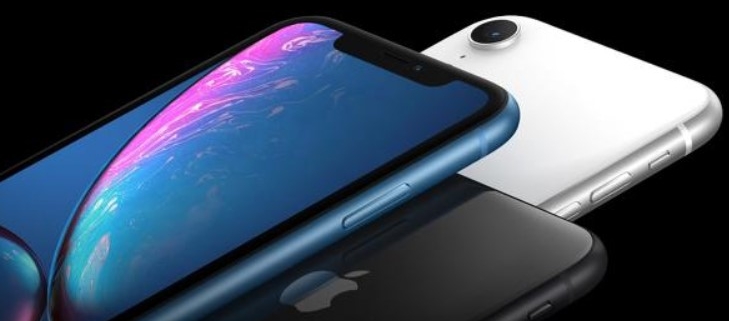
A steady hand on the tiller – that was the key takeaway from the recent Apple release event that saw updated iPhone models poised to hit stores in October.
There was nothing of substance to steal the show or radical revelations awing the patient neutral, but that is how Apple CEO Tim Cook likes it.
iPhone XS, iPhone XS Max and iPhone XR were conveniently named after their predecessor the iPhone X.
These smartphones are of the same ilk but in a refreshed way.
The iPhone XR is the lower-grade version of the three, but shares many of the same specs as the superior versions.
This version could be the model that lures in Apple lovers that avoided upgrading last cycle, because the inner workings are similar enough and the look is premium enough, but hundreds of dollars cheaper than the XS and XS Max models.
Check, check, and check.
I wouldn’t label it an “entry level” smartphone, but it hits all the right notes for iPhone fans that can’t cough up the big bucks for the higher-priced products.
The phone’s price tag has been a lingering concern especially in the emerging world.
Apple smartly widened the range of premium phone prices to the lower and higher range - the net effect will be a moderate bump in the all-critical average selling price (ASP), which is a huge winner in all of this.
At the top end of the range, the iPhone XS Max with 512 GB of memory will command a hefty $1,449.
This is the priciest iPhone ever made.
Larger screen sizes in the 6.5" XS Max and 6.1" XR will appeal to their fan base driving additional incremental business to the company that Steve Jobs left his indelible mark on as well.
The covert winner in all of this is Apple’s share price.
Apple’s share price is notorious for being slashed and burned before their new iPhone release events and the run up to earnings season.
The lack of apocalyptic behavior in its recent share price surely has the bulls rejoicing.
Basically, these new iPhone models aren’t worrying Apple investors even one scintilla.
Apple going forward is not betting the ranch on hardware anymore and investors have approved in spades.
Last quarter’s earnings report highlighted the Teflon nature of Apple’s iPhone demand by proving to investors that Apple could successfully sell smartphones over $1,000.
The seminal shift breaking psychological price barriers is indicative of Apple’s relentless pursuit to produce the best phone in the world.
This perpetual chase has seen the company almost surpass the $1,500 price tag this time around and will smash this price point next time around.
The strength in recent Apple price action wholeheartedly signifies that Apple is a software and service company now and not a hardware company.
Apple was able to make the transformation with grace and elegance and avoiding any damaging blowups.
Apple is on pace to double services revenue to $15 billion per quarter by 2020 creating a $60 billion per year revenue beast of a division.
The software and services are where all the high margin activity is migrating in Apple’s ecosystem.
I have incessantly urged readers to stay with the highest quality tech companies that continue to unlock value at a breathtaking pace, especially amid a precarious backdrop of global trade spats and brutal competition.
Investors are migrating up the value chain storing their hard-earned capital in the best of tech as the weak hands are flushed out by the regulation and global trade police.
Apple is one of these companies with a dazzling portfolio of products.
Their steady march upward in quality is confirmed by products such as the Apple Watch Series 4.
Wearables have become a strength of Apple’s product line after botching the initial debut.
The new watch is redesigned, sleek, and mesmerizingly beautiful.
The display is more than 30% larger than its old design and offers flawless software functionality.
Apple’s shift into health is partly driven by monetizing its watch and other wearables.
Apple hopes its watch can be a natural part of sportsmen and sportswomen’s lives.
If Apple’s watch can be your lovable sports companion going forward, then an entire new avenue of revenue can break ground and be redistributed to shareholders.
The Cupertino company packed a ton of heat into this sensational device. It is a big reason why industry insiders believe that half of the 43.5 million smartwatches expected to be sold in 2018 will come from Apple.
Google's Wear OS lags distantly behind with a forecasted 12% market share, and it will be tough going to compete with Apple in this space.
Not only is the watch’s screen bigger, the speakers are also 50% louder.
The larger screen will allow users up to eight shortcuts on the screen for apps.
Apple also noted that the watch’s battery life will last 18 hours with an outdoor workout time of six hours.
Another groundbreaking feature is the ability to take electrocardiograms (ECG) reaffirming Apple’s pivot into the health sector through their shimmering new watch.
According to Apple, this revolutionary feature is the first time an (ECG) product has been available to retail consumers.
To admire the full beauty of this scintillating watch, click here to watch a video.
Earlier this year, Apple CFO Luca Maestri told the Financial Times that wearables in the past year have experienced a “60% growth in revenue terms. Adding up the last four quarters, wearables revenue now exceeds $10 billion.”
Apple’s wearables are classified under “other products” and include AirPods, Watch, Beats, and the HomePod.
Watch this division to continue its robust performance going forward.
In a nod to the emerging markets, Apple decided to introduce its first dual sim card inside the new iPhone models.
One of the slots will be an “eSIM” slot – a nascent technology that hasn’t been widely adopted yet.
For all the newbies unsure of what an eSIM card is - “Electronic SIM card” removes the hassle of poking a paperclip through your sim tray to switch out your sim card, which is a little smaller than your pinkie finger nail.
Rather, eSIM cards only need a compatible network requiring support, and it bypassed the need for a physical sim card and sim card tray altogether.
This move could syphon off even more revenue for phone network carriers if the eSIM technology mushrooms.
Apple will be the gatekeeper of the eSIM tech since it will have total control over it, even opening up the possibility to rotate between more than two carriers in the future if a physical sim card is not needed.
This could pave the way for Apple to get rid of the sim card slot entirely for the next iPhone iteration and use the space to develop something even better.
Technological innovation requires bold moves, to which Apple is no stranger.
In fact, only 10 countries currently support eSIM technology - Austria, Canada, Croatia, the Czech Republic, Germany, Hungary, India, Spain, the UK, and the U.S.
Demonstrating that dual sim cards are a way of life in the emerging world is data showing that 98% of Indian smartphones come with embedded dual sim card functionality, 92% in the Philippines, 90% in China, 77% in Indonesia, and just 4% in the U.S. in the third quarter of 2017 to the second quarter of 2018.
The ease of swapping in and out contract less sim cards is useful for any digital nomad. Buy a sim card for a few dollars at the airport, activate it, and you’re on your merry way.
In another nod to the Chinese customer, Apple will forgo the eSIM technology entirely and stick with the physical dual tray, allowing mainland Apple fans to physically implant two sim cards at one time.
Whether enhancing the phone, recreating its beloved watch, or rolling out audacious new technologies – Apple is satisfying all the naysayers.
It’s no wonder this company is a buy on the dip and hold to eternity stock.

Still Doing What They Do Best
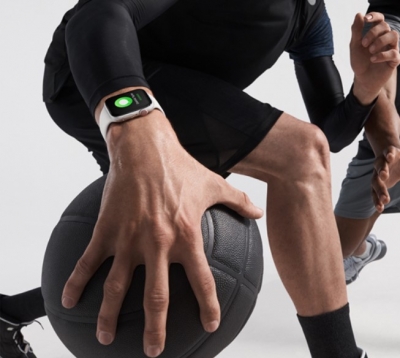
Apple’s Health Pivot Via the Watch
________________________________________________________________________________________________
Quote of the Day
“Price is rarely the most important thing. A cheap product might sell some units. Somebody gets it home and they feel great when they pay the money, but then they get it home and use it and the joy is gone,” said Apple CEO Tim Cook.

Mad Hedge Technology Letter
September 13, 2018
Fiat Lux
Featured Trade:
(THE THREAT TO YOUR DIGITAL LIFE FROM CHATBOTS),
(FB), (GOOGL), (MSFT)

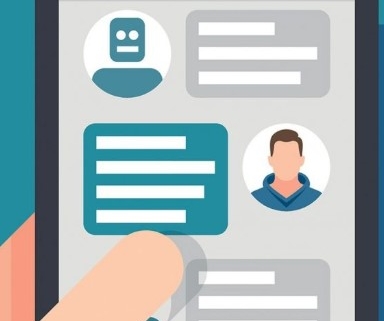
Not all tech will survive.
Come hell or high water, chatbots are not going away today but have an ugly fate with the tech graveyard of past technologies in the near future.
The rise of pervasive technology has brought consumers a wave of modern technology – some useful and some that go straight rogue.
Microsoft (MSFT) was on the receiving end of tech gone bad when its Tay bot was duped into spewing anti-Semitic and racist blather.
Bill Gate’s brainchild allowed Tay to behave according to what it learned from fellow users with which it interacted.
The developers forgot that not all Internet speak is nice and bubbly.
In another humiliating episode, cyberhackers wielded a chatbot to masquerade as a woman asking men to hand over credit card information in order to become verified on the raunchy dating app Tinder.
Manipulating an app platform has been a favorite of cyberhackers where users blindly trust these brands with which they have become familiar, and barely question the motives behind these strange developments.
As cybercriminals endlessly hunt for monetization and opportunities ramp up, chatbots represent a critical vehicle to pillage prospective victims.
These examples are just two that were publicly reported.
In reality, flashpoints are widespread, and users are usually completely unaware that they are being victimized.
Some chatbots are even out just for data harvesting among other targeted activity.
The dark web is the perfect marketplace to sell hijacked data.
Many Internet users believe they can feel safe and secure behind the auspices of end-to-end encryption.
However, users seem to forget that this type of foolproof security has its limitations.
The easiest way to become exposed is by the other person on the other end of the message.
They can turn you in.
Paul Manafort found this out the hard way when the FBI seized messages from the people he sent them too.
WhatsApp, owned by Facebook, along with chat app Signal are the best ways to keep chats confidential if you trust the other party. This is where the conversation disappears in about ten seconds.
However, just because WhatsApp is secure now, does not mean it will be secure tomorrow.
WhatsApp co-founder and CEO Jan Koum quit in a vicious row against Facebook’s upper management flipping off the rogue ad-seller as the relationship came to a screeching halt.
He later said he was quitting to collect “rare air-cooled Porsches” and play “ultimate frisbee.”
Facebook plans to weaken WhatsApp’s encryption levels and is intent on harvesting the data to eventually install a digital ad business to this ad-less messenger.
Facebook has shown a blatant disregard to privacy. Plan on everything you have ever sent on WhatsApp being privy to all the workers in the Facebook office at some point in the near future.
In some eerie way, Facebook mimics the hackers that maneuvered around Tinder’s developers, but in a completely legal way showing zero concern for its end user.
That is a scary thing.
Facebook has become borderline criminal in the court of public opinion in Europe. And that sentiment has seeped into the hearts of minds of Americans as well, and rightly so.
In short, the tidal wave of junk tech such as chatbots and Facebook spinning your information to the hills will end badly.
The public has smartened up and cannot be misled by Facebook’s privileged management spouting out that its “values” are different as an excuse for obvious debacles.
The global chatbot market was $369.79 million in 2017, and by 2024, this industry will balloon to $2.17 billion.
Chatbots will have a ubiquitous presence in work and daily life.
Companies desire to curtail rising costs, and are doubling down on the chatbot revolution.
The current obstacle is that artificial intelligence (A.I.) is just not good enough yet for chatbots to comprehensively serve customers and never will be.
The chatbots rely on the data in their systems to solve problems to difficult questions, but humans need to receive answers on the fly in the case of multi-part complications.
Chatbots spectacularly fail at this endeavor.
Even worse, chatbots cannot empathize with a furious customer and feel out customers’ emotions to properly optimize the perfect solution.
And in some instances, humans do not feel at ease to discuss certain topics with software code.
Then there is the generational difference of age groups preferring to use what they are familiar with.
For older generations, this absolutely means speaking to a real human who lives, breathes, and sleeps at night.
Younger generations who grew up never going outside but instead addicted to a screen have an easier time routing their lives through technology.
Granted, chatbots are effective when answering rudimentary questions to direct the customer to a department where they will soon be talking to a human. But chatbots are not the solution to every customer service problem.
Then there is the question of whether a rogue chatbot is going to disperse your data to a nefarious hacker or even behave like Microsoft’s Tay chatbot.
Facebook is already a legal entity that disperses personal data for money.
As the tech sector advances, the weak technology will crash and burn.
Low-quality social media platforms such as Facebook and inferior technology-like chatbots will succumb to the same fate as the woolly mammoth.
Investors are experiencing this massive migration up in quality as the public and investors are doing everything to insulate themselves from the dark side of technology.
In a further blow to user-generated platforms Facebook and Alphabet’s Google (GOOGL), Brussels voted in favor of a law that would force tech companies to actively filter out copyrighted content uploaded to their platforms.
This will crimp profitability for the two giants, as the data and content received for free is being put under a stronger microscope.
Europe is doing everything it can to disrupt these two companies from their free lunch, and they are fed up with the negligence and arrogance in which they run their platforms.
This was evident when Europe slapped Alphabet on the wrist with a $5 billion antitrust penalty earlier this year.
Chatbots will eventually face the public opinion death squad, as fatigued Internet users will completely avoid chatting with software code and move their businesses to the competitor.
The ultimate problem tying chatbots and Facebook together is the utter lack of attention to the customers’ needs.
These two phenomena exist to make more corporate money in a myopic fashion.
Every shortcut available will be taken and has been taken.
Facebook will never be able to monetize its website like the pre-Cambridge Analytica scandal days. It will take a sweeping reset, most importantly dethroning Mark Zuckerberg from his perch in Menlo Park, California, to reinvigorate this lost firm.
Chatbots will not exist in a few years and technology will move on to more effective solutions.
It is the end of bad tech as we know it, as technology is evolving so fast, yesterday’s conquerors become todays pariah’s in just a few years.


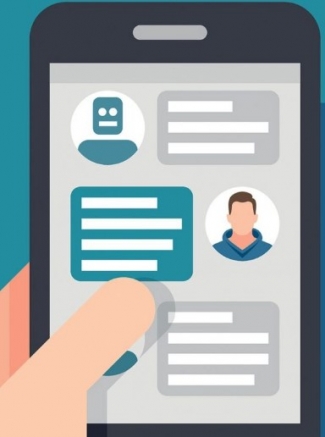
Chatbots – A Flash in The Pan Tech
________________________________________________________________________________________________
Quote of the Day
"Our goal has never been to make the most. It's always been to make the best,” said CEO of Apple Tim Cook.