There is no end to which I am willing to go to understand the future direction of the world economy. So when I learned that the price of Brazilian bikini waxes was going through the roof, I had to sit up and take note. Last month, the price of the popular beauty treatment soared by 16.6% to 35 Reals, about $22.
This is no joke. The Brazilian government includes the removal of unsightly body hair in the most strategic of places in a basket of consumer services that it uses in calculating the country?s inflation rate, now estimated at 6.49%. An economist in Rio de Janeiro assured me that this has nothing to do with the opposite sex. It is one of the few measures they track, which can?t be clouded through the surreptitious altering of its quantity or quality. You either get it, or you don?t.
The big picture here is that inflation is worsening, not only in Brazil, but other emerging markets, like China, India, and Vietnam. This is why the yields on one year Brazilian debt are sky-high, a hedge fund favorite.
What can I say? An economic indicator in the hand is worth two in the bush? And I won?t even get into the implications of ?Stealth? inflation. This certainly gives new meaning to the term ?market bottom.?
The Latest Economic Indicator?
https://www.madhedgefundtrader.com/wp-content/uploads/2013/05/Girls-at-beach.jpg262350Mad Hedge Fund Traderhttps://madhedgefundtrader.com/wp-content/uploads/2019/05/cropped-mad-hedge-logo-transparent-192x192_f9578834168ba24df3eb53916a12c882.pngMad Hedge Fund Trader2013-05-30 07:52:212013-05-30 07:52:21The One Economic Indicator You Can Rely On
Come join me for lunch for the Mad Hedge Fund Trader?s Global Strategy Seminar, which I will be conducting in New York, NY on Tuesday, July 2, 2013. An excellent three-course lunch will be provided. A PowerPoint presentation will be followed by an extended question and answer period.
I?ll be giving you my up to date view on stocks, bonds, foreign currencies, commodities, precious metals, and real estate. And to keep you in suspense, I?ll be throwing a few surprises out there too. Enough charts, tables, graphs, and statistics will be thrown at you to keep your ears ringing for a week. Tickets are available for $209.
The formal luncheon will run from 12:00 to 2:00 PM. I?ll be arriving an hour early and leaving late in case anyone wants to have a one on one discussion, or just sit around and chew the fat about the financial markets.
The event will be held at a prestigious private club on Central Park South, the details of which will be emailed to you with your purchase confirmation.
I look forward to meeting you, and thank you for supporting my research. To purchase tickets for the luncheons, please go to my online store.
https://www.madhedgefundtrader.com/wp-content/uploads/2013/04/Empire-State-Building.jpg380253Mad Hedge Fund Traderhttps://madhedgefundtrader.com/wp-content/uploads/2019/05/cropped-mad-hedge-logo-transparent-192x192_f9578834168ba24df3eb53916a12c882.pngMad Hedge Fund Trader2013-05-29 01:04:522013-05-29 01:04:52July 2 New York Strategy Luncheon
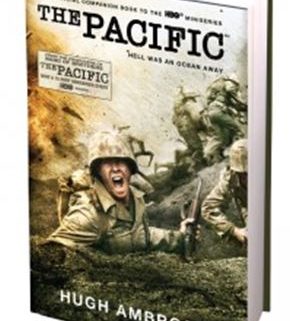
As the son of a Marine who served on Guadalcanal in 1942, I had an unusual childhood. The memories all came flooding back to me as the HBO program, The Pacific, which aired once again over this Memorial Day weekend.
Every scene in the ten-hour series I had already heard about around campfires, at veteran?s reunions, or in officers clubs around the world. At five, I learned how to open a coconut by tapping around the three eyes with a bayonet. At ten, I could shinny up a palm tree with a belt wrapped around my ankles.
I learned that you can shoot down a Japanese zero fighter by leading with four hand widths and aiming high. A tank can be disabled by ramming a log into its tracks. There was the survival training; practicing how to find water in the desert, setting a snare trap to catch small animals to eat, and starting a fire with only flint and steel. All the sniper training was fun, but was fortunately never put to use.
I can still thrill the kids by hitting a quarter taped to a tree 50 feet away with a Winchester lever action 30-30. We outfitted ourselves with surplus WWII equipment from the ?Supply Sergeant? for camping trips, which you could buy for a couple dollars. Now, you only find these things in museums. We ate left over C-rations.
Perhaps it was dad?s explanation of how to make highly alcoholic hooch out of canned peaches that led to my degree in biochemistry. In the end, I had my own Marine career as a pilot in Desert Storm. There you learn the true meaning of ?gung ho.? At 61, I stay in boot camp shape. This week, I am hiking 100 miles in in the High Sierras over 8,000 feet in eight days. I am carrying a 60-pound pack, and living on only 500 calories a day entirely composed of fruit and nuts. I love every minute of it.
Watching the series, I was reminded how feeble and meaningless my profession is, toiling away all year just to create a spreadsheet full of numbers, and how the men of seven decades ago were made of sterner stuff. Buying a dip on a bad day just doesn?t equate to ?take out that machine gun.? How times have changed.
You can buy the Hugh Ambrose book the series was based at Amazon on by clicking here.
https://www.madhedgefundtrader.com/wp-content/uploads/2013/05/The-Pacific-by-Hugh-Ambrose.jpg429290Mad Hedge Fund Traderhttps://madhedgefundtrader.com/wp-content/uploads/2019/05/cropped-mad-hedge-logo-transparent-192x192_f9578834168ba24df3eb53916a12c882.pngMad Hedge Fund Trader2013-05-29 01:03:082013-05-29 01:03:08Recollections of a Marine
Featured Trade: (MAY 29 GLOBAL STRATEGY WEBINAR), (ANNOUNCING THE RELAUNCH OF HEDGE FUND RADIO), (SKYBRIDGE CAPITAL?S ANTHONY SCARAMUCCI ON HEDGE FUND RADIO) (SPY), (EWJ), (DXJ), (TLT), (FXY), ?(YCS), (IDX), (EWM), (EWS), (GLD)
SPDR S&P 500 (SPY)
iShares MSCI Japan Index (EWJ)
WisdomTree Japan Hedged Equity (DXJ)
iShares Barclays 20+ Year Treas Bond (TLT)
CurrencyShares Japanese Yen Trust (FXY)
ProShares UltraShort Yen (YCS)
Market Vectors Indonesia Index ETF (IDX)
iShares MSCI Malaysia Index (EWM)
iShares MSCI Singapore Index (EWS)
SPDR Gold Shares (GLD)
https://madhedgefundtrader.com/wp-content/uploads/2019/05/cropped-mad-hedge-logo-transparent-192x192_f9578834168ba24df3eb53916a12c882.png00Mad Hedge Fund Traderhttps://madhedgefundtrader.com/wp-content/uploads/2019/05/cropped-mad-hedge-logo-transparent-192x192_f9578834168ba24df3eb53916a12c882.pngMad Hedge Fund Trader2013-05-28 09:47:192013-05-28 09:47:19May 28, 2013
I often get asked by readers to share the industry contacts that enable me to make such timely and insightful market calls. Now you have the opportunity to do so.
Hedge Fund Radio is the online radio program for the true investment professional. There, you can hear me roll out my 40-year accumulation of trading contacts from across the width and breadth of the financial industry. It will enable you to match my own trading performance, which has catapulted me to the top of the hedge fund industry.
My guests will include legendary hedge fund managers, research analysts, senior government officials, specialized niche managers, industry experts, and the occasional world leader. To make these as interesting and informative as possible, I?ll be drawing on my ten years of experience as the radio correspondent British Broadcasting Corporation (BBC) in Tokyo.
My goal is to further enhance your understanding of the global financial system through these one-on-one interviews, which will last 30-60 minutes. It will give you the opportunity to find out who the figures that shape our markets really are. You can obtain all of this for a mere $4.95 per show, which you can order one at a time.
Purchasing a download of the entire interview for $4.95 is very simple. Just go to the HEDGE FUND RADIO menu tab and click on the pull down menu for RADIO SHOW (click here ). Click on the green BUY NOW button and complete the order form. A blue link will appear telling you to ?click here to proceed?. Then click on the small blue box with the question mark inside to download. Hit the PLAY arrow to listen. You can pause, fast forward, or rewind at any time.
00Mad Hedge Fund Traderhttps://madhedgefundtrader.com/wp-content/uploads/2019/05/cropped-mad-hedge-logo-transparent-192x192_f9578834168ba24df3eb53916a12c882.pngMad Hedge Fund Trader2013-05-28 09:44:312013-05-28 09:44:31Announcing the Relaunch of Hedge Fund Radio
Markets are overbought now, especially given that the US economy is only growing at a subpar 2% annual rate. But the S&P 500 (SPY) will close higher by yearend. Despite the fact that 30-year Treasury prices (TLT) are near all time highs, there are still huge opportunities in the fixed income space. And both the Japanese yen (FXY) (YCS) and the Tokyo stock market (EWJ) (DXJ) have more to run.
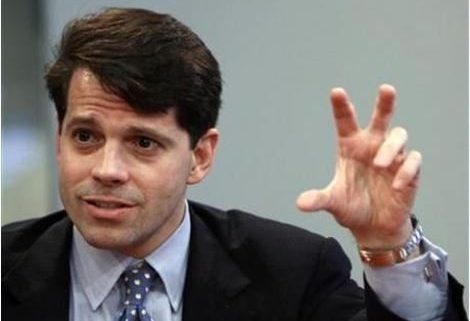
These were a few choice investment nuggets I gleaned from my wide-ranging interview with my friend, Anthony Scaramucci. Anthony is the founder and managing partner of SkyBridge Capital, a leading fund of funds for alternative investments. To learn more about SkyBridge Capital, please go to their website at http://www.skybridgecapital.com/.
After getting a law degree from Harvard, he started his investment career at Goldman Sachs in 1989, where he spent 7 years in the wealth management division. He went on to start his own money management firm, which he sold to Neuberger Berman in 2001. When Lehman Brothers bought Neuberger Berman in 2003, Scaramucci spent a short stint there as managing director of its Investment Management Division.
Anthony is the author of two books: The Little Book of Hedge Funds:What You Need to Know About Hedge Funds but the Managers Won?t Tell You and Goodbye Gordon Gekko: How to Find Your Fortune Without Losing Your Soul.
Scaramucci is focusing his heaviest weighting in fixed income strategies that benefit from improving credit ratings in the US real estate market and low prepayment rates. This brilliant, reasonably well risk adjusted strategy is earning him 11%-13% annual returns, or 5-7 times the cash flow of ten-year Treasury bonds.
Anthony has been consistently negative on gold, which makes him look like a genius for the past two years. He has a small weighting in emerging markets, which offer higher risk and volatility, but potentially greater returns. His picks there include the Southeast Asian nations of Indonesia (IDX), Singapore (EWS), and Malaysia (EWM).
He thinks Apple (AAPL) is very cheap, but is facing an innovation headwind. Still, investors in Steve Jobs? creation should do well over the long term.
SkyBridge Capital uses 28 sub managers to generate outsized market returns. He came out ahead by 20% in 2012 and is up 9% so far this year. It has won awards for the best fund of funds with over $1 billion in assets for the last three years in a row. The firm now has over $7.7 billion in assets under management or advisement.
Anthony?s team of professionals does all the spadework in finding great managers, doing the due diligence, and cross hedging exposures. He charges 1.50% management fee, but last year earned back 77 basis points for his clients in manager discounts. So on a net basis the fees are really quite reasonable.
New investors can open an account for as little as $50,000. This is a big deal because some of the best managers have minimums as high as $10-$15 million. It is the only way the little guy can get access to the best of the best. Customers must be accredited investors with at least $200,000 in annual income and a net worth of over $1 million.
Anthony comes across as polished and erudite, yet cautious. He clearly spends a lot of time thinking about how to invest other people?s money.
As if Scaramucci didn?t have enough to do, he devotes much energy to organizing the SkyBridge Alternatives Conferences, the annual Woodstock for the high and the mighty of the hedge fund industry. The most recent event in Las Vegas presented heavyweight hedge fund legends Paulson & Co.?s John Paulson, Third Point?s Daniel Loeb, and Omega?s Leon Cooperman (click here for my coverage of this love fest).
I will be attending the next SkyBridge Alternatives Conference in Singapore during September 24-27, 2013 (click the link http://www.saltconference.com/saltasia2013/). Former Treasury secretary, Tim Geithner, and the last European Central Bank president, Jean-Claude Trichet, will be the keynote speakers.
To learn the precise details of the SkyBridge high return strategy, please follow the instructions for downloading the full interview below. There you can also get his list of the best US stocks to buy in the current environment.
Just go to the AUDIO menu tab and click on the pull down menu for RADIO SHOW (click here for the link at http://madhedgefundradio.com/radio-show/). Click on the green BUY NOW button and complete the order form. A blue link will appear telling you to ?click here to proceed?. Then click on the small blue box with the question mark inside to download. Hit the PLAY arrow to listen. You can pause, fast forward, or rewind at any time. Given the quality of the information you will obtain, the $4.95 price is a bargain.
To buy The Little Book of Hedge Funds at a discounted Amazon price, please click here. To buy Goodbye Gordon Gekko, please click here.
SkyBridge Capital?s Anthony Scaramucci on Hedge Fund Radio
https://www.madhedgefundtrader.com/wp-content/uploads/2013/05/Anthony-Scarmucci.jpg344470Mad Hedge Fund Traderhttps://madhedgefundtrader.com/wp-content/uploads/2019/05/cropped-mad-hedge-logo-transparent-192x192_f9578834168ba24df3eb53916a12c882.pngMad Hedge Fund Trader2013-05-28 09:42:272013-05-28 09:42:27SkyBridge Capital?s Anthony Scaramucci on Hedge Fund Radio
Come join me for lunch for the Mad Hedge Fund Trader's Global Strategy Updates, which I will be conducting throughout Europe during the summer of 2013. A three-course lunch will be followed by a PowerPoint presentation and an extended question and answer period.
I'll be giving you my up to date view on stocks, bonds, currencies commodities, precious metals, and real estate. And to keep you in suspense, I'll be throwing a few surprises out there too. Enough charts, tables, graphs, and statistics will be thrown at you to keep your ears ringing for a week.
I look forward to meeting you, and thank you for supporting my research. To purchase tickets for the luncheons, please go to my online store at http://madhedgefundradio.com/ and click on "LUNCHEONS" and then the post for the city that you wish to attend.
New York City -July 2
London, England -July 8
Amsterdam, Netherlands -July 12
Berlin, Germany -July 16
Frankfurt, Germany -July 19
Portofino, Italy -July 25
Mykonos, Greece- August 1
Zermatt, Switzerland - August 9
https://www.madhedgefundtrader.com/wp-content/uploads/2013/05/Europe.jpg323299Mad Hedge Fund Traderhttps://madhedgefundtrader.com/wp-content/uploads/2019/05/cropped-mad-hedge-logo-transparent-192x192_f9578834168ba24df3eb53916a12c882.pngMad Hedge Fund Trader2013-05-24 09:48:082013-05-24 09:48:08Updated 2013 Strategy Luncheon Schedule
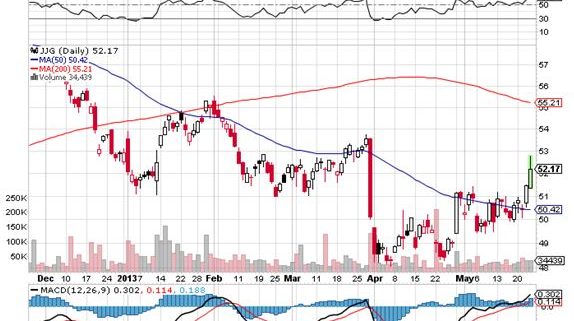
I am happy to report that we are making great progress with The Mad Day Trader, rapidly evolving the service to best meet the needs of the professional trader. We have already closed huge winners in soybeans (SM), the iPath Dow Jones AIG Grains Total Return Index ETF (JJG), and short Treasury bond (TBT).
It is not easy for me to translate "traderese" in plain English, but the readers say it's worth the effort. As of today, trader Jim Parker will be posting his open positions on the website, which will be updated daily. We have temporary parked them under the Global Trading Dispatch menu tab under "POSITIONS" (just click here). Things will migrate further once we refine the product.
While the Global Trading Dispatch focuses on investment over a one week to six-month time frame, Mad Day Trader will exploit moneymaking opportunities over a ten minute to three-day window. It is ideally suited for day traders, but can also be used by long-term investors to improve market timing for entry and exit points.
Mad Day Trader uses a dozen proprietary short-term technical and momentum indicators to generate buy and sell signals. These will be sent to you by text message and email for immediate execution. During normal trading conditions, you should receive three to five alerts a day.
As with our existing service, you will receive ticker symbols, entry and exit points, targets, stop losses, and regular real time updates. At the end of each day, a separate short-term model portfolio will be sent to you and posted on the website.
The new service will generate long and short-selling signals for a range of widely traded exchange traded funds (ETF's). These include stock indexes (SPY), bonds (TLT), (TBT), foreign exchange (FXY), (FXE), (FXA), commodities (CU), (CORN), energy (USO), (UNG), and precious metals (GLD), (SLV). There is also a special focus on the leading hot stocks of the day. This will be followed up with a series of educational webinars that will be an important resource for the serious trader.
The Mad Day Trader service will be provided out of Chicago by my old friend and industry veteran, Jim Parker. Jim is a 40-year veteran of the financial markets and has long made a living as an independent trader in the pits at the Chicago Mercantile Exchange. He has worked his way up from a junior floor runner, to advisor to some of the world's largest hedge funds. We are lucky to have him on our team and gain access to his experience, knowledge, and expertise.
I have been following his alerts for the past five years, and his market timing has become an important part of the "unfair advantage" that I provide readers. The time has finally come to offer Mad Day Trader as a stand-alone product.
A trading service with this degree of success and sophistication normally costs $20,000 a year. As a client of The Mad Hedge Fund Trader, you can purchase Mad Day Trader alone for $2,000 per year or $699 per quarter. Or you can buy it as a package together with Global Trading Dispatch, which we call Global Trading Dispatch Pro, for $4,000 per year, a 20% discount to the full retail price. Give yourself the unfair advantage you always wanted and buy the combined package.
As part of the initial launch, I will send out Mad Day Trader free to all current paid subscribers of Global Trading Dispatch until June 21st. That will give you the opportunity to decide if the new service can enhance your trading performance. When the free service expires, we will send you a link to purchase a full subscription. There will be no automatic billing of current subscribers.
Part of the deal is that I want to hear from you on how we can improve Mad Day Trader to make it more user friendly and coherent to better meet your needs. Sometimes, a couple of old warhorses like us forget how much our specialized language is incomprehensible to the outside world. Just send us an email with suggestions to support@madhedgefundtrader.com.
https://www.madhedgefundtrader.com/wp-content/uploads/2013/05/JJG-5-23-13.jpg457574Mad Hedge Fund Traderhttps://madhedgefundtrader.com/wp-content/uploads/2019/05/cropped-mad-hedge-logo-transparent-192x192_f9578834168ba24df3eb53916a12c882.pngMad Hedge Fund Trader2013-05-24 09:29:252013-05-24 09:29:25Update on The Mad Day Trader
Legal Disclaimer
There is a very high degree of risk involved in trading. Past results are not indicative of future returns. MadHedgeFundTrader.com and all individuals affiliated with this site assume no responsibilities for your trading and investment results. The indicators, strategies, columns, articles and all other features are for educational purposes only and should not be construed as investment advice. Information for futures trading observations are obtained from sources believed to be reliable, but we do not warrant its completeness or accuracy, or warrant any results from the use of the information. Your use of the trading observations is entirely at your own risk and it is your sole responsibility to evaluate the accuracy, completeness and usefulness of the information. You must assess the risk of any trade with your broker and make your own independent decisions regarding any securities mentioned herein. Affiliates of MadHedgeFundTrader.com may have a position or effect transactions in the securities described herein (or options thereon) and/or otherwise employ trading strategies that may be consistent or inconsistent with the provided strategies.