• support@madhedgefundtrader.com
  • Member Login
Mad Hedge Fund Trader
  • Home
  • About
  • Store
  • Luncheons
  • Testimonials
  • Contact Us
  • Click to open the search input field Click to open the search input field Search
  • Menu Menu

Tag Archive for: (APPL)

Mad Hedge Fund Trader

The Best Way to Supercharge Your Tech Portfolio

Tech Letter

Superiority is mainly about taking complicated data and finding perfect solutions for it. Trading in technology stocks is no different.

Investing in software-based cloud stocks has been one of the seminal themes I have promulgated since the launch of the Mad Hedge Technology Letter way back in February 2018.

Well, if you thought every tech letter until now has been useless, this is the one that should whet your appetite.

Instead of racking your brain to find the optimal cloud stock to invest in, I have a quick fix for you and your friends.

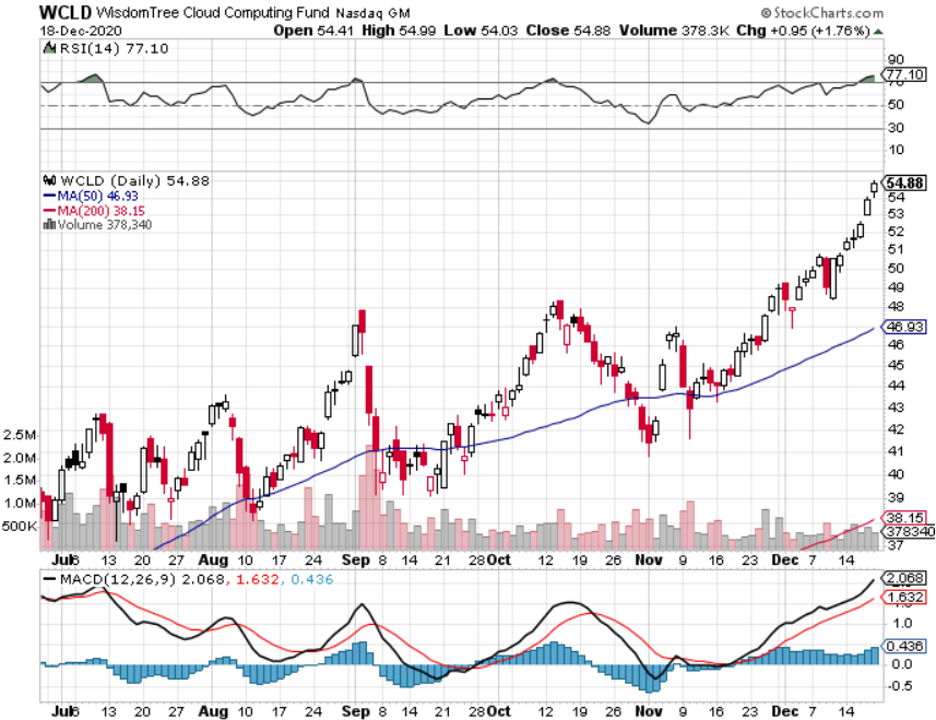
Invest in The WisdomTree Cloud Computing Fund (WCLD) which aims to track the price and yield performance, before fees and expenses, of the BVP Nasdaq Emerging Cloud Index (EMCLOUD).

What Is Cloud Computing?

The “cloud” refers to the aggregation of information online that can be accessed from anywhere, on any device remotely.

Yes, something like this does exist and we have been chronicling the development of the cloud since this tech letter’s launch.

The cloud is the concept powering the “shelter-at-home” trade which has been hotter than hot in 2020.

Cloud companies provide on-demand services to a centralized pool of information technology (IT) resources via a network connection.

Even though cloud computing already touches a significant portion of our everyday lives, the adoption is on the verge of overwhelming the rest of the business world due to advancements in artificial intelligence and the Internet of Things (IoT) hyper-improving efficiencies.

The Cloud Software Advantage

Cloud computing has particularly transformed the software industry.

Over the last decade, cloud Software-as-a-Service (SaaS) businesses have dominated traditional software companies as the new industry standard for deploying and updating software. Cloud-based SaaS companies provide software applications and services via a network connection from a remote location, whereas traditional software is delivered and supported on-premise and often manually. I will give you a list of differences to several distinct fundamental advantages for cloud versus traditional software.

Product Advantages

Speed, Ease, and Low Cost of Implementation – cloud software is installed via a network connection; it doesn’t require the higher cost of on-premise infrastructure setup and installation.

Efficient Software Updates – upgrades and support are deployed via a network connection, which shifts the burden of software maintenance from the client to the software provider.

Easily Scalable – deploying via a network connection allows cloud SaaS businesses to grow as their units increase, with the ability to expand services to more users or add product enhancements with ease. Client acquisition can happen 24/7 and cloud SaaS companies can more easily expand into international markets.

Business Model Advantages

High Recurring Revenue – cloud SaaS companies enjoy a subscription-based revenue model with smaller and more frequent transactions, while traditional software businesses rely on a single, large, upfront transaction. This model can result in a more predictable, annuity-like revenue streams making it easy for CFOs to solve long-term financial solutions.

High Client Retention with Longer Revenue Periods – cloud software becomes embedded in client workflow, resulting in higher switching costs and client retention. Importantly, many clients prefer the pay-as-you-go transaction model, which can lead to longer periods of recurring revenue as upselling product enhancements does not require an additional sales cycle.

Lower Expenses – cloud SaaS companies can have lower R&D costs because they don’t need to support various types of networking infrastructure at each client location.

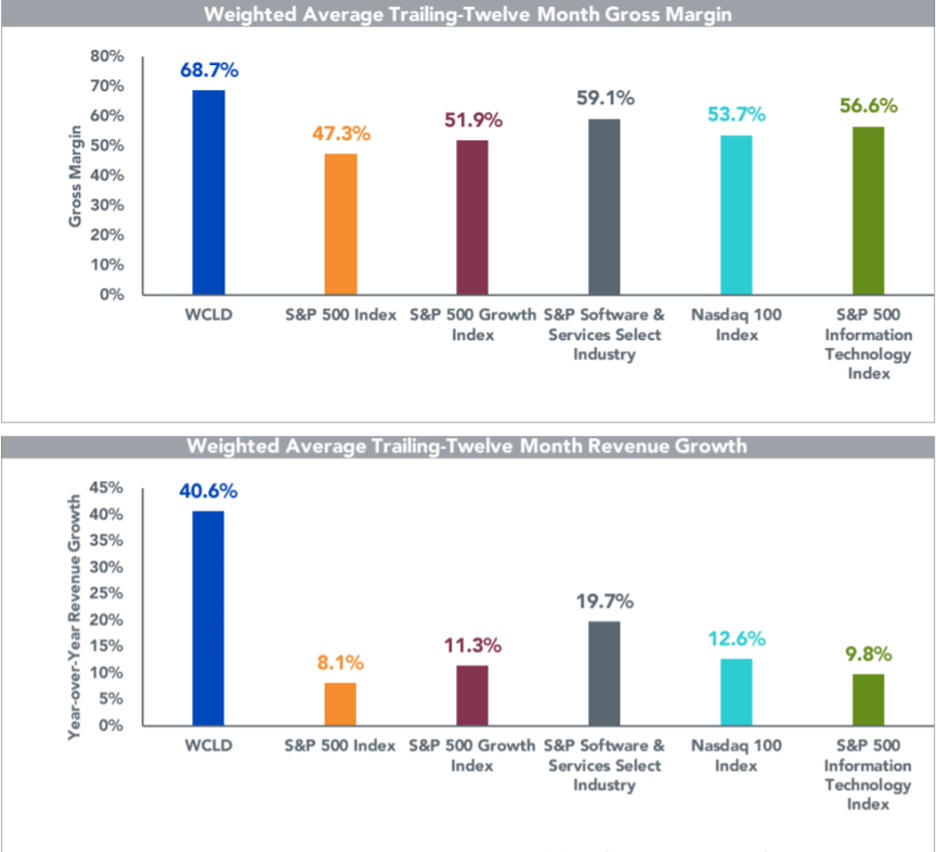
I believe the product and business model advantages of cloud SaaS companies have historically led to better margins, growth, higher free cash flow, and efficiency characteristics as compared to non-cloud software companies.

How does the WCLD ETF select its indexed cloud companies?

Each company must satisfy critical criteria such as they must derive the majority of revenue from business-oriented software products, as determined by the following checklist.

+ Provided to customers through a cloud delivery model – e.g., hosted on remote and multi-tenant server architecture, accessed through a web browser or mobile device, or consumed as an application programming interface (API).

+ Provided to customers through a cloud economic model – e.g., as a subscription-based, volume-based, or transaction-based offering Annual revenue growth, of at least:

+ 15% in each of the last two years for new additions

+ 7% for current securities in at least one of the last two years

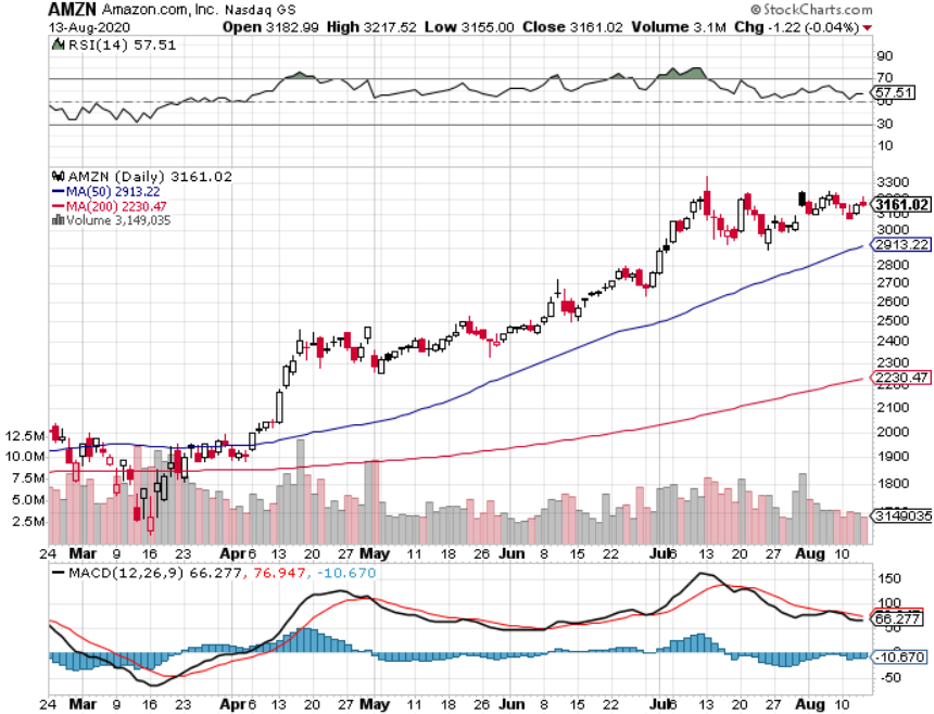
Some of the stocks that would epitomize the characteristics of a WCLD stock are Salesforce, Microsoft, Amazon-- I mean, they are all up, you know, well over 100% from the nadir we saw in March and contain the emerging growth traits that make this ETF so robust.

If you peel back the label and you look at the contents of many tech portfolios, they tend to favor some of the large-cap names like Amazon, not because they are “big” but because the numbers behave like emerging growth companies even when the law of large numbers indicate that to push the needle that far in the short-term is a gravity-defying endeavor.

We all know quite well that Amazon isn't necessarily a direct play on cloud computing, but the elements of its cloud business are nothing short of brilliant.

But ETF funds like WCLD, what they look to do is to cue off of pure plays and include pure plays that are growing faster than the broader tech market at large. So you're not going to necessarily see the vanilla tech of the world in that portfolio. You're going to see a portfolio that's going to have a little bit more sort of explosive nature to it, names with a little more mojo, a little bit more risk because you're focusing on smaller names that have the possibility to go parabolic and gift you a 10-bagger.

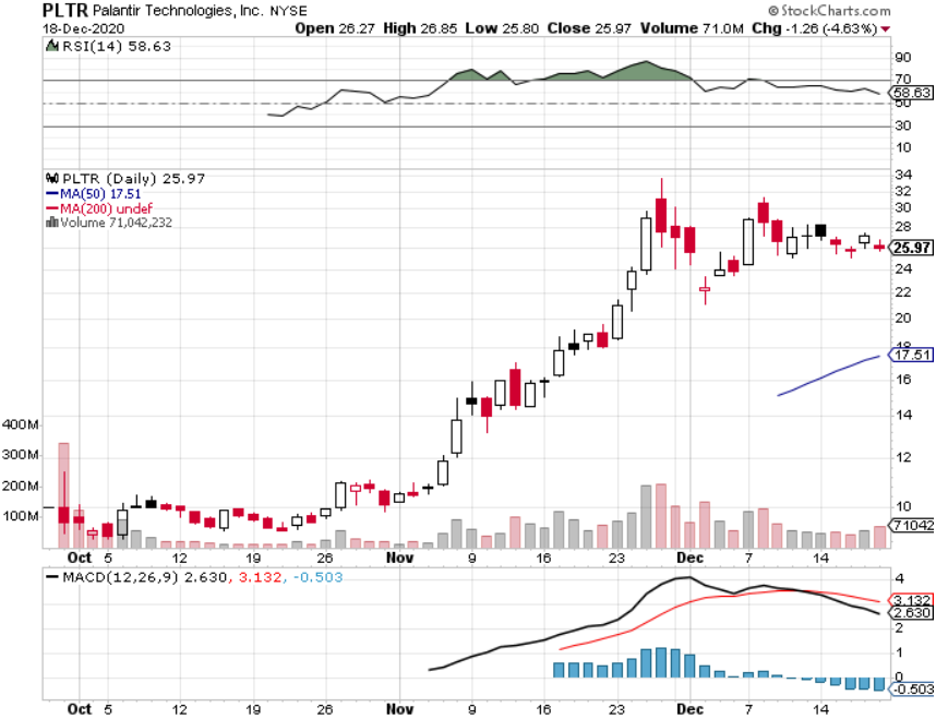
One stock that has the chance of a 10-bagger is my call on Palantir (PLTR).

Palantir is a tech firm that builds and deploys software platforms for the intelligence community in the United States to assist in counterterrorism investigations and operations, and my call was to buy them at $10 after it’s IPO, it's up to $26 and has an easy pathway to $50.

This is one of the no-brainers that procure revenue from Democrat and Republican administrations even though its CEO Alex Karp has been caught on video making fun of the current administration’s leaders.

In a global market where the search for yield couldn’t be tougher right now, right-sizing a tech portfolio to target those extraordinary, extra-salacious tech growth companies is one of the few ways to produce alpha without overleveraging.

No doubt there will be periods of volatility, but if a long-term horizon is something suited for you, this super-growth strategy is a winner and don’t forget about PLTR while you’re at it.
cloud software


cloud software


cloud software


cloud software

https://madhedgefundtrader.com/wp-content/uploads/2019/05/cropped-mad-hedge-logo-transparent-192x192_f9578834168ba24df3eb53916a12c882.png 0 0 Mad Hedge Fund Trader https://madhedgefundtrader.com/wp-content/uploads/2019/05/cropped-mad-hedge-logo-transparent-192x192_f9578834168ba24df3eb53916a12c882.png Mad Hedge Fund Trader2020-12-21 11:02:042020-12-23 17:21:23The Best Way to Supercharge Your Tech Portfolio
Mad Hedge Fund Trader

December 14, 2020

Tech Letter

Mad Hedge Technology Letter
December 14, 2020
Fiat Lux

Featured Trade:

(NVIDIA’S SHOW OF FORCE)
(NVDA), (AMD), (APPL), (OTC:SFTBF), (INTC), (QCOM)

https://madhedgefundtrader.com/wp-content/uploads/2019/05/cropped-mad-hedge-logo-transparent-192x192_f9578834168ba24df3eb53916a12c882.png 0 0 Mad Hedge Fund Trader https://madhedgefundtrader.com/wp-content/uploads/2019/05/cropped-mad-hedge-logo-transparent-192x192_f9578834168ba24df3eb53916a12c882.png Mad Hedge Fund Trader2020-12-14 12:04:142020-12-14 12:39:46December 14, 2020
Mad Hedge Fund Trader

Nvidia's Show of Force

Tech Letter

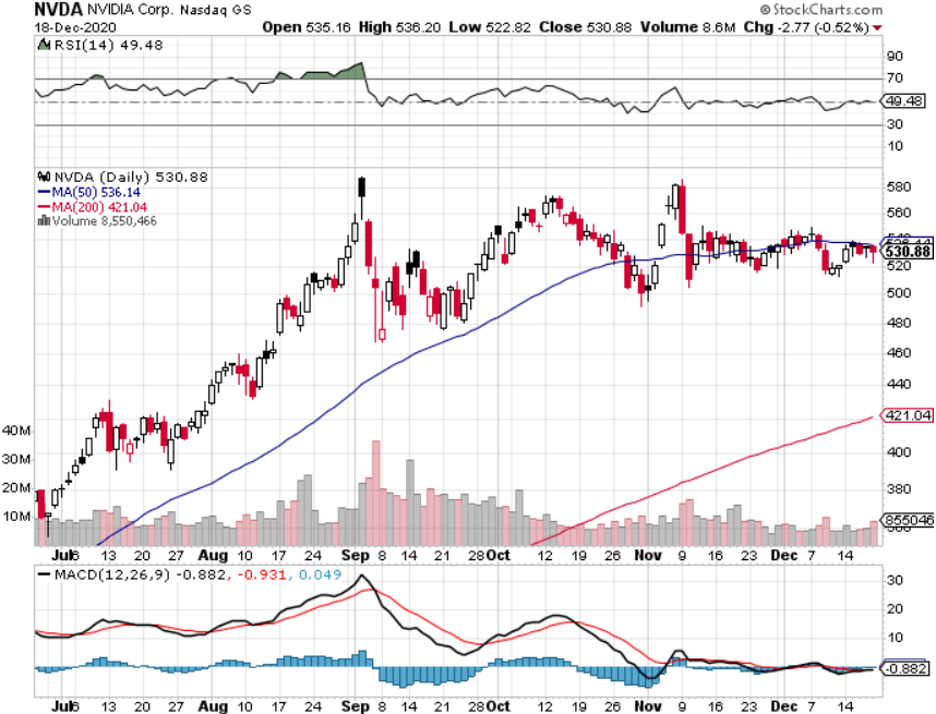
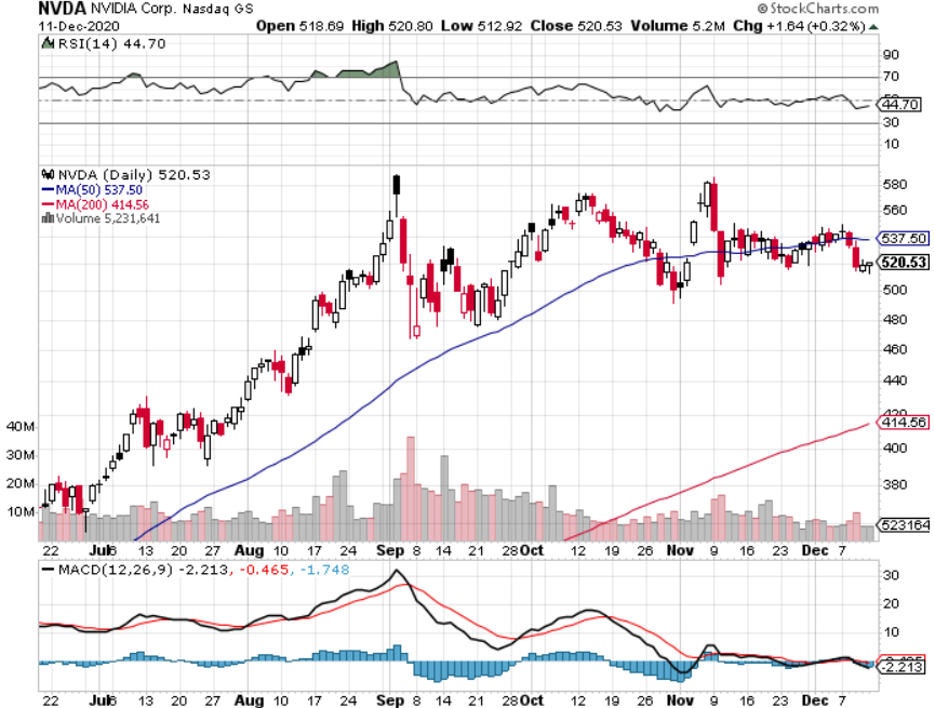
One of the best buy and hold tech stock has to be Nvidia (NVDA).

They are positioned at the vanguard of every major cutting-edge technology in the world such as self-driving technology, data center, and artificial intelligence.

Their cash cow business of manufacturing GPUs (graphics processing unit) which are essential to video gaming has been bolstered by the shelter-at-home movement.

Video games as an activity or something to just pass the time has never been so popular and Nvidia is the best of breed in this department.

The key takeaway from Nvidia’s asset portfolio is the diversity.

They aren’t beholden to any one division and I wouldn’t bet anytime soon that video games are going to go out of fashion because of the generational tailwind occurring.

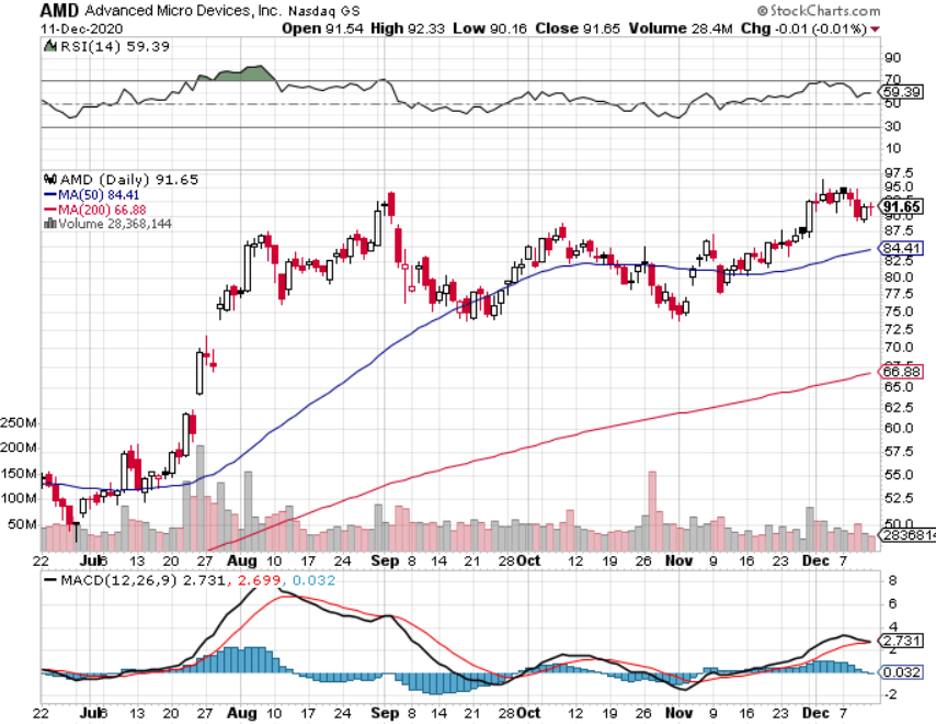
In fact, the underlying Nvidia stock has risen more than 120% in 2020 and semiconductors have proven to be an astute place to put your money in during the pandemic.

The same goes for competitive rivals such as Advanced Micro Devices (AMD), Intel (INTC), and Qualcomm (QCOM) who explore some of those same markets.

Nvidia counts Amazon (AMZN) Web Services as a customer for data-center chips. It is partnering with VMware (VMW) and Amazon on an AI-driven cloud platform for big businesses.

Be mindful that semiconductor stocks are volatile because of the boom-bust nature of their business cycle.

Global chip sales cratered in late 2018 and fell 12% in 2019.

They rallied early this year on signs of an industry recovery and on a U.S.-China trade deal, then sold off on coronavirus fears.

The trade war has also thrown a spanner in the works of global chip production.

Production was first halted in China and then put global economies under strain.

Despite the pandemic, the semiconductor industry will return to growth in 2020.

Chip sales will rise by 5.1% to $433 billion this year and accelerate to 8.4% in 2021.

The spread of 5G wireless networks is a key catalyst.

Moving forward, it’s highly likely that U.S. lawmakers maintain an anti-China doctrine, and Nvidia and AMD derive only 1% to 2% of revenue from Huawei.

In fact, other companies are more exposed like Cisco and Intel.

How well is Nvidia doing?

They increased revenue by 57% year over year in the third quarter predominately due to its data center business, which grew revenue by 162% over the same period.

In Q3, the data center division accounted for $1.9 billion of the company's $4.7 billion of revenue.

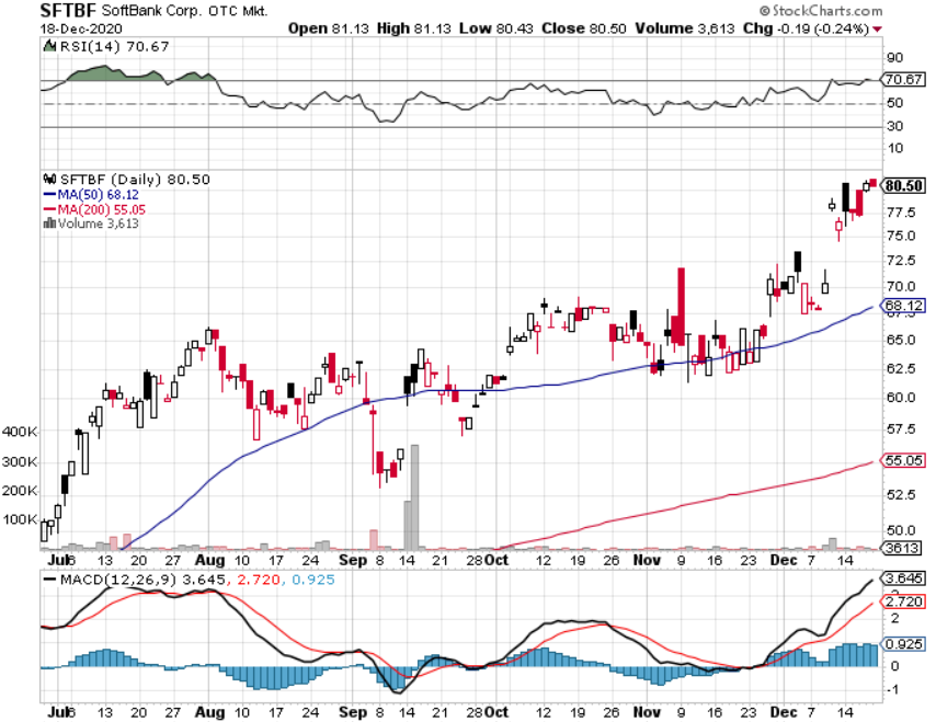
Nvidia is also growing through acquisitions with its blockbuster pending $40 billion acquisition of chip design licensor ARM Holdings from Softbank (OTC:SFTBF).

ARM’s acquisition will help NVIDIA maintain the best of breed quality through 2021 and beyond. 

That is important because the semiconductor industry is becoming more cutthroat with many big players sourcing chips in-house after deeply investing in this technology.

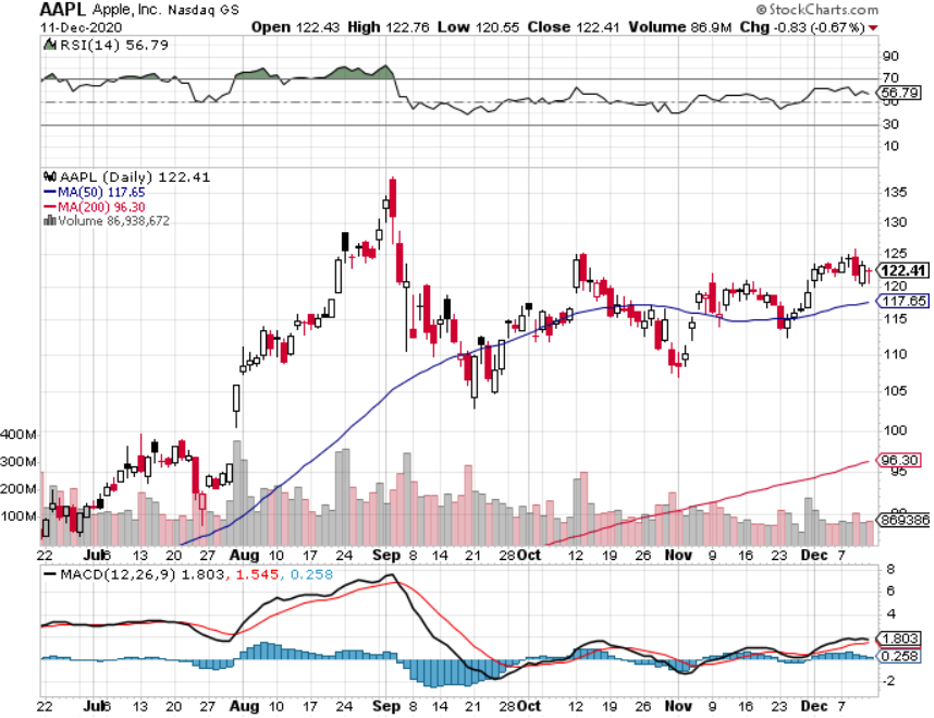
Apple (AAPL) recently unveiled its own stable of Mac processors, the M1, making its debut in late 2020. Manufacturing chips is historically a capital-intensive activity, and new chips don’t roll out that fast. In any case, cash-rich companies the size of Google and Apple have the firepower to pull this off.

ARM holds many unique patents forcing many companies to license from them, Apple can customize those designs, and the actual fabrication is outsourced to Taiwan Semiconductor (TSM), the largest and most technologically advanced semiconductor fabricator in the world.

In this specific case, Intel is the direct loser from the production of Apple M1 chips and at this point, this is becoming an existential crisis for Intel.

The acquisition of ARM is a gamechanger, and not just because NVIDIA would gain access to new markets like CPUs for mobile as early as 2021.

Integrating with ARM signals NVIDIA's future shift toward licensing of technology - a far more stable business model than the traditionally cyclical nature of semiconductor industry sales driven by upgrade cycles.

It all comes down to the quality of NVIDIA's chips which remain highly competitive in secular growth areas of tech, such as data centers and artificial intelligence. This alone should keep NVIDIA high up investors' list for years to come.

Demand for the new Nvidia GeForce RTX GPU has been “overwhelming” and the company completed its Mellanox acquisition, a tech firm that sells adapters, switches, software, cables, and silicon for markets including high-performance computing, data centers, cloud computing, computer data storage, and financial services, in April, helping it to double down on their revenue drivers.

Sales for Nvidia's chips remain robust across some of the most desirable end markets and there is nothing meaningful out there to suggest that Nvidia won’t continue its overperformance next year even if the shelter-at-home economy stops.

I am highly bullish on Nvidia stock into 2021 and beyond.


Nvidia stock


Nvidia stock

https://madhedgefundtrader.com/wp-content/uploads/2019/05/cropped-mad-hedge-logo-transparent-192x192_f9578834168ba24df3eb53916a12c882.png 0 0 Mad Hedge Fund Trader https://madhedgefundtrader.com/wp-content/uploads/2019/05/cropped-mad-hedge-logo-transparent-192x192_f9578834168ba24df3eb53916a12c882.png Mad Hedge Fund Trader2020-12-14 12:02:472020-12-17 02:03:09Nvidia's Show of Force
Mad Hedge Fund Trader

October 14, 2020

Tech Letter


Mad Hedge Technology Letter
October 14, 2020
Fiat Lux

Featured Trade:

(TECH OPTION VOLUME UNHINGED)
($COMPQ), (APPL), (FB), (MSFT), (GOOGL), (NFLX)

https://madhedgefundtrader.com/wp-content/uploads/2019/05/cropped-mad-hedge-logo-transparent-192x192_f9578834168ba24df3eb53916a12c882.png 0 0 Mad Hedge Fund Trader https://madhedgefundtrader.com/wp-content/uploads/2019/05/cropped-mad-hedge-logo-transparent-192x192_f9578834168ba24df3eb53916a12c882.png Mad Hedge Fund Trader2020-10-14 11:04:262020-10-14 10:56:52October 14, 2020
Mad Hedge Fund Trader

Tech Option Volume Unhinged

Tech Letter

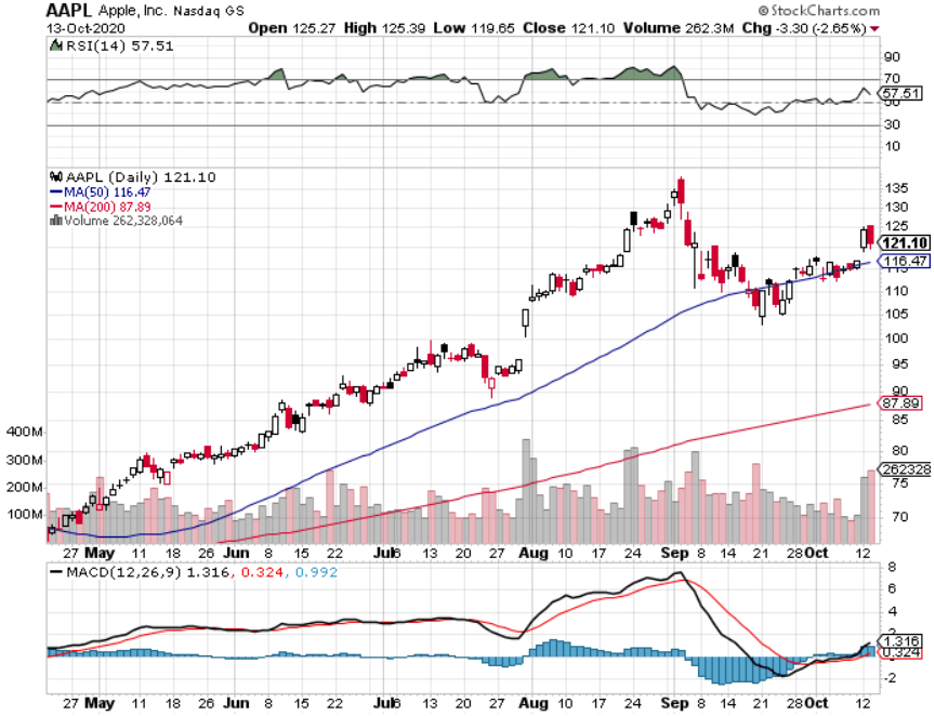
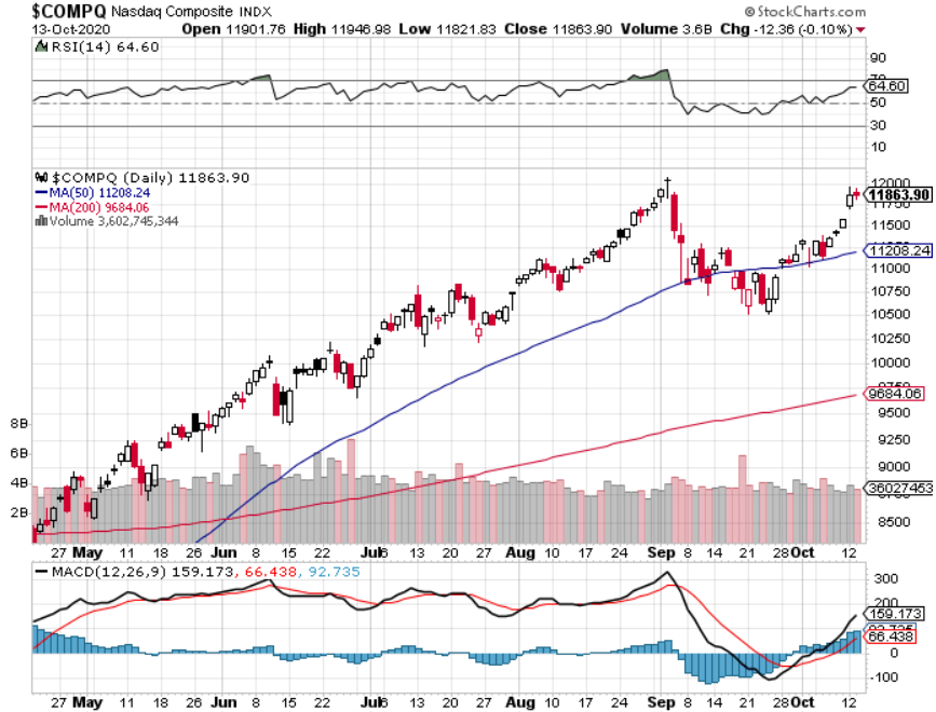
The euphoria in big cap tech shares is the catalyst moving the Nasdaq index recently.

Call option activity is taking the top off of tech shares with usual low beta stocks surging over 5% in single trading sessions.

This unfortunately is causing our options trades to experience heightened stock volatility and the knock-on effect is our strikes getting blown out.

Some of the excess volatility comes down to traders making big bets in the run-up to the election.

Remember when Trump won in 2016, the market exploded higher when many “experts” guaranteed a massive sell-off would ensue.

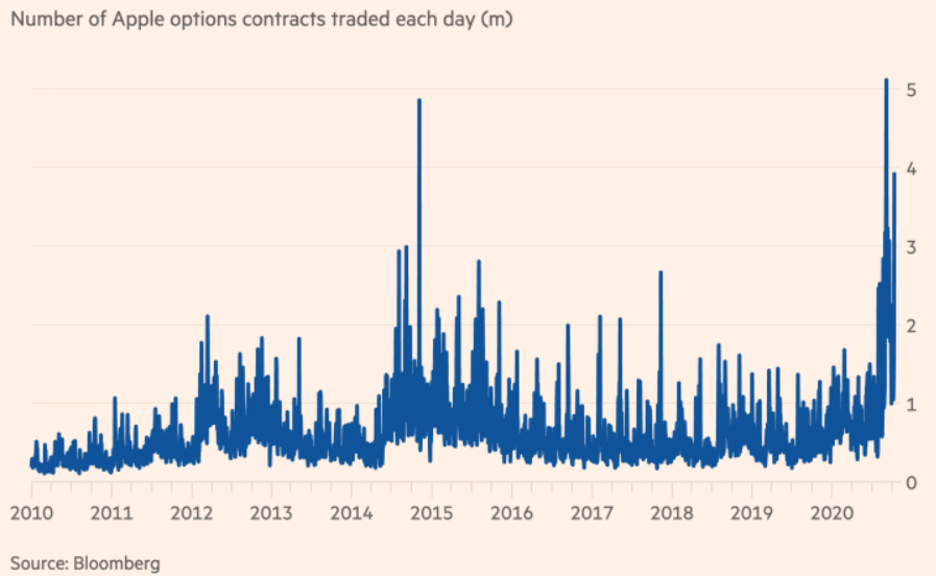
In the short-term, the unsustainable pace of speculation in derivatives will translate into wild price swings. Monday brought the biggest rally for the Nasdaq 100 Index since April, but measures of volatility rallied as well.

One proxy for the froth still latent in options, the percentage of overall volume represented by single-stock contracts, remains up 19% from a year ago.

Most of the action is concentrated in mega cap technology and momentum-driven shares.

A consensus is coalescing around a few big buyers coming into the options market to corner it with rumors of purchases around $300 million worth of call contracts on tech stocks in a single day.

The Nasdaq 100 Index has gained in all but two sessions this month and just notched its best week since July after last month’s sharp drop.

Whipsawing markets are also possible when liquidity remains thin.

Trading in options showed itself capable of influencing share movement in August and September when dealer hedging (demand from people who sell options for the underlying stock) created feedback loops that helped drive the Nasdaq higher.

That dynamic can also make sell-offs worse than they should be as well as sellers adjust positions.

Big trades in thin markets, especially in technology or momentum trades considered overbought or oversold, increase the potential for exacerbated stock moves as dealers hedge exposure.

Call open interest in Facebook (FB), Amazon (AMZN), Netflix (NFLX), Alphabet (GOOGL), Apple (APPL) and Microsoft (MSFT) has averaged 12.8 million contracts over the 30 days through Friday, the highest since early 2019.

The tech-heavy Nasdaq index has gyrated an average of 1.8% per day since the beginning of September, while the broader market gauge has fluctuated by 1.2% over that time period.

Recent options activity has been momentum-based, meaning that stocks tend to attract more interest in calls when it’s rallying versus when it trades lower.

Throw in structural forces that are contributing to a sustained high implied volatility environment, and election hedgers have their work cut out for them.

There are fewer short-volatility players as well in the wake of the health crisis.

There’s also less volatility selling by retail investors after the delisting of some popular VIX products earlier this year like the volatility ETF ticker symbol XIV.

It could take a few years for the imbalances to work itself through the system.

Then there’s the resurfacing of an event similar to the “Nasdaq whale” which is reported as Softbank acting like a hedge fund and buying as many big tech call options they could afford.

Softbank CEO has essentially turned his failed hedge fund named the Vision Fund from a start-up investor into a speculative hedge fund in risky option contracts solely betting on the rise of Silicon Valley tech in the age of the coronavirus.

After being burnt by Uber and WeWork, he finally decided to stay out of the messy acquisitions/seed funding and just speculative through derivatives from Tokyo.

The avalanche of options volume will no doubt cause the tech markets to become jittery and it certainly puts a floor under tech implied volatility for a while.

Retail investors have taken notice of this insane volume and largely stayed on the sideline.

At the apex of the madness, retail traders spent more than $511 billion in notional value on call options and that figure was slashed to $343 billion in the first week of October.

Retail traders tend to buy less-expensive short-dated contracts which tend to have greater convexity and ability to exacerbate share movements.

The level of risk-taking occurring in the public markets is at an all-time high.

Just look at America’s most elite university endowments who have slashed their exposure to the stock markets to the lowest levels since before the crash of 1929. And now they’re betting the ranch on secretive, illiquid, and high-risk private-equity funds and hedge funds.

A US teachers’ pension fund has sued Allianz Global Investors, accusing one of the world’s biggest asset managers of employing a “reckless strategy” that cost retirees almost $800m during this year’s market turmoil.

This is just one example of the high-risk strategies taking place with pension money.

In a lawsuit filed on Monday in New York, the Arkansas Teacher Retirement System claims that Alpha Funds, investment vehicles marketed by AllianzGI, had placed bets against an escalation of market volatility in an effort to recover losses they incurred from the same strategy in February.

So here we stand with derivative trading in tech options and general equity strategies leveraged to the hills that are betting on the system not breaking, or at least not breaking yet.

Even if the system reaches breaking point, many of these private investors are betting on governments to come rescue them perpetuating the feedback loop and offers a conundrum to savvy asset managers to miss or partake in the gaps up themselves.


tech option


tech option

https://madhedgefundtrader.com/wp-content/uploads/2019/05/cropped-mad-hedge-logo-transparent-192x192_f9578834168ba24df3eb53916a12c882.png 0 0 Mad Hedge Fund Trader https://madhedgefundtrader.com/wp-content/uploads/2019/05/cropped-mad-hedge-logo-transparent-192x192_f9578834168ba24df3eb53916a12c882.png Mad Hedge Fund Trader2020-10-14 11:02:242020-10-16 14:56:14Tech Option Volume Unhinged
Mad Hedge Fund Trader

September 2, 2020

Tech Letter


Mad Hedge Technology Letter
September 2, 2020
Fiat Lux

Featured Trade:

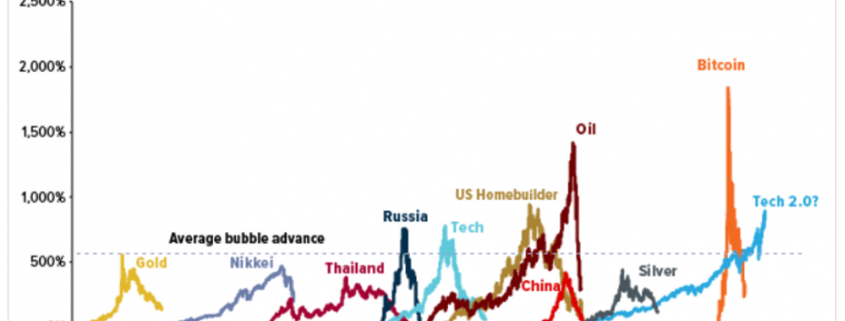
(THE 2020 TECH BUBBLE)
(TSLA), (APPL), (AMZN), (NFLX)

https://madhedgefundtrader.com/wp-content/uploads/2019/05/cropped-mad-hedge-logo-transparent-192x192_f9578834168ba24df3eb53916a12c882.png 0 0 Mad Hedge Fund Trader https://madhedgefundtrader.com/wp-content/uploads/2019/05/cropped-mad-hedge-logo-transparent-192x192_f9578834168ba24df3eb53916a12c882.png Mad Hedge Fund Trader2020-09-02 11:04:292020-09-02 13:34:03September 2, 2020
Mad Hedge Fund Trader

The 2020 Tech Bubble

Tech Letter

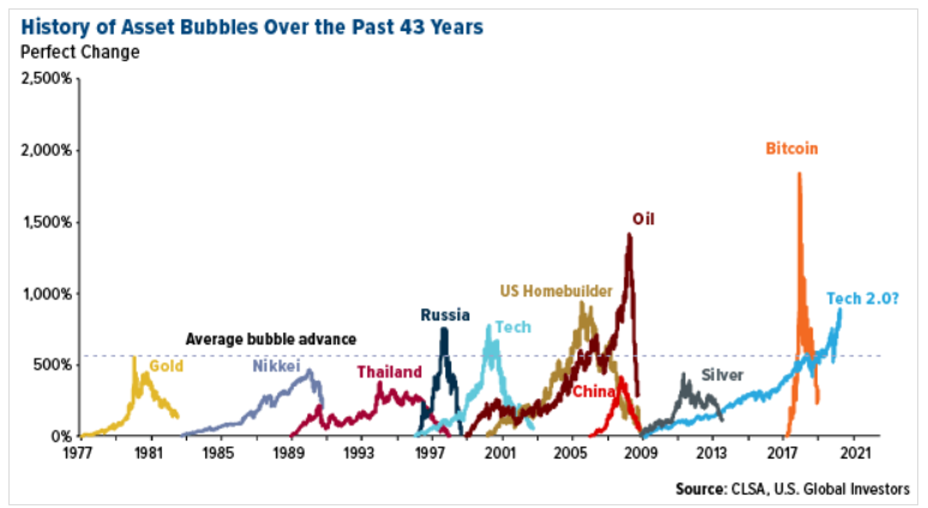
It was February 19 when the tech comprised Nasdaq index swan dived from a liquidity crisis of epic proportions triggered by the virus only to recover the 30% of loss gains in 3 months.

When the Nasdaq made a V-shaped recovery, experts were shocked by the pace of the recovery as the Fed deployed every tool in the toolbox at saving the stock market.

Well, three months on from the Nasdaq index pulling level year to date, tech stocks are 20% higher as main street still labors under an economy that has seen net job losses of 10s of millions.

The liquidity poured into the system has been overwhelming, but many investors aren’t complaining.

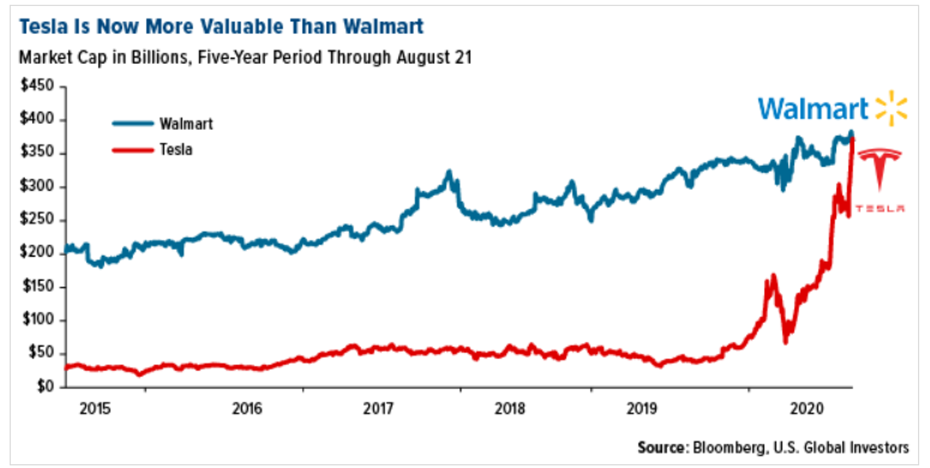
Insane price action is the crucial signal to this market frothiness and can be seen in Tesla (TSLA) whose stock has gone from $85 in March to almost $500.

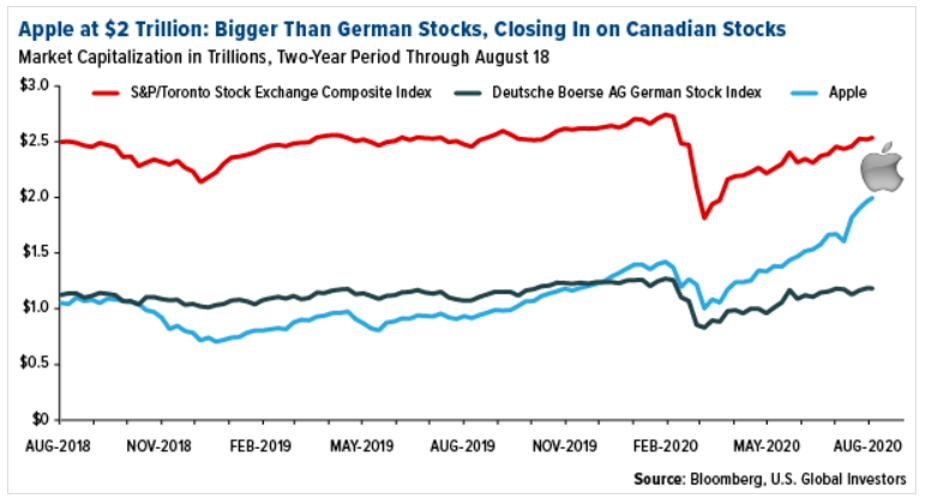
Apple (AAPL) has surpassed the $2 trillion mark.

The market is “looking through” any bad news and is putting a high premium on tech shares that have usurped the mojo of the rest of the broader economy.

Investors need to be in tech because it’s not only where the growth is, but it is where business models are mostly protected.

Last time I checked, computers and smartphones cannot get the coronavirus.

Billionaire Mark Cuban, team owner of Dallas Mavericks in the NBA, sees a huge tech bubble reminiscent of the infamous dot.com fiasco in the late 1990s and early 2000s.

Suddenly, the get-rich-quick crowd is investing with reckless abandon. It seems these upstarts have a fear of missing out and are chasing the market. Cuban is skeptical about the market rally and the bubble could burst in a couple of years.

Unlike the tech debacle at the turn of the millennium, Cuban opines that this year’s version has the Federal Reserve’s help. The U.S. central bank is pumping money into the pandemic-battered economy, but unintentionally supporting risk appetite on Wall Street. Bolder investors are even picking up shares of bankrupt companies.

People have a newfound interest in the stock market and hopping on the bandwagon because the Feds are injecting money to prop up the economy.

Cuban has investments in Amazon (AMZN) and Netflix (NFLX).

Shopify happens to be the largest publicly-listed company in Canada as of July 31, 2020, besting bank giant Royal Bank of Canada.

The 16-year old e-commerce company year-to-date gain is 170%.

I believe in the wisdom of crowds, and that markets have gotten it right far more often than they’ve been wrong.

Ultimately, there are simply too many dollars chasing too few trades.

Tech stocks have driven much of the U.S. market’s gains since March. Were it not for a handful of them, the S&P 500 may have performed more in line with other economies’ stock indices.

Between the market bottom on March 23 and August 20, shares of Apple, Amazon, Microsoft, Facebook, Alphabet, and graphics processor designer NVIDIA were responsible for a heart-stopping 33 percent—an entire third—of the uptrend in the S&P 500.

Apple alone was responsible for more than 11 percent of the market’s moves. Last week, the iPhone-maker became the first U.S. company to surpass $2 trillion in market capitalization, nearly as much as all the companies in the Russell 2000 Index of small-cap stocks combined. Apple is now valued more highly, in fact, than German stocks in the Deutsche Boerse Index and is closing in on Canadian stocks in the S&P/TSX Composite Index.

We are seeing unprecedented price action in the tech sector with the old normal of 1% gains in one trading day turning into 3% or 5%.

We will need some type of liquidity prevention event to experience a real major sell-off in technology and it is true, the higher we go, the harder we will fall.


tech market


tech market

https://www.madhedgefundtrader.com/wp-content/uploads/2020/09/asset-bubbles.png 508 928 Mad Hedge Fund Trader https://madhedgefundtrader.com/wp-content/uploads/2019/05/cropped-mad-hedge-logo-transparent-192x192_f9578834168ba24df3eb53916a12c882.png Mad Hedge Fund Trader2020-09-02 11:02:272020-09-04 13:58:26The 2020 Tech Bubble
Mad Hedge Fund Trader

August 14, 2020

Tech Letter


Mad Hedge Technology Letter
August 14, 2020
Fiat Lux

Featured Trade:

(BIG TECH AND THE FUTURE OF COLLEGE CAMPUSES)
(SPG), (AMZN), (APPL), (MSFT), (FB), (GOOGL)

https://madhedgefundtrader.com/wp-content/uploads/2019/05/cropped-mad-hedge-logo-transparent-192x192_f9578834168ba24df3eb53916a12c882.png 0 0 Mad Hedge Fund Trader https://madhedgefundtrader.com/wp-content/uploads/2019/05/cropped-mad-hedge-logo-transparent-192x192_f9578834168ba24df3eb53916a12c882.png Mad Hedge Fund Trader2020-08-14 11:04:442020-08-14 14:47:06August 14, 2020
Mad Hedge Fund Trader

Big Tech and the Future of College Campuses

Tech Letter

The genie is out of the bottle and things will never go back to how they once were. Sorry to burst your bubble if you thought the economy, society, and travel rules would just revert to the pre-coronavirus status quo.

They certainly will not.

One trend that shows no signs of abating is the “winner take all” mentality of the tech industry.

Tech giants will apply their huge relative gains to gut different industries.

Once a shark smells blood, they go in for the kill; and nothing else will suffice until these revenue machines get their way in every other adjacent industry.

Recently, we got clarity on big box malls becoming the new tech fulfillment centers with the largest mall operator in the United States, Simon Property Group (SPG), signaling they are willing to convert space leftover in malls from Sears and J.C. Penny.

Then I realized that another bombshell would hit sooner rather than later.

College campuses will become the newest of the new Amazon, Walmart, or Target eCommerce fulfillment centers starting this fall, and let me explain to you why.

When the California state college system shut down its campuses and moved classes online due to the coronavirus in March, rising sophomore Jose Garcia returned home to Vallejo, California where he expected to finish his classes and hang out with friends and family.

Then Amazon announced plans to fill 100,000 positions across the U.S at fulfillment and distribution centers to handle the surge of online orders. A month later, the company said it needed another 75,000 positions just to keep up with demand. More than 1,000 of those jobs were added at the five local fulfillment centers. Amazon also announced it would raise the minimum wage from $15 to $17 per hour through the end of April.

Garcia, a marketing and communications major, applied and was hired right away to work in the fulfillment center near Vallejo that mostly services the greater Bay Area. He was thrilled to earn extra spending money while he was home and doing his schoolwork online.

This is just the first wave of hiring for these fulfillment center jobs, and there will be a second, third, and fourth wave as eCommerce volumes have exploded. Even college students desperate for the cash might quit academics to focus on starting from the bottom in Amazon.

Even though many of these jobs at Amazon fulfillment centers aren’t those corner office job that Ivy League graduates covet, in an economy that has had the bottom fall out from underneath, any job will do.

Chronic unemployment will be around for a while and jobs will be in short supply.

When you marry that up with the boom in ecommerce, then there is an obvious need for more ecommerce fulfillment centers and college campuses would serve as the perfect launching spot for this endeavor.

The rise of ecommerce has happened at a time when the cost of a college education has risen by 250% and, more often than not, doesn’t live up to the hype it sells.

Many fresh graduates are mired in $100,000 plus debt burdens that prevent them from getting a foothold on the property ladder and delays household formation.

Then consider that many of the 1000s of colleges that dot America have borrowed capital to the hills building glitzy business schools and rewarding the entrenched bureaucrats at the school management level outrageous compensation packages.

The cost of tuition has risen by 250% in a generation, but has the quality of education risen 250% during the same time as well?

The answer is a resounding no, and there is a huge reckoning about to happen in the world of college finances.

America will be saddled with scores of colleges and universities shutting down because they can’t meet their debt obligations.

Not to mention the financial profiles of the prospective students have dipped by 50% or more in the short-term with their parents unable to find the money to send their kids to college.

Then there is the international element here with the lucrative Chinese student that added up to 500,000 total students attending American universities in the past.

They won’t come back after observing how America basically shunned the pandemic and the U.S. public health system couldn’t get out of the way of themselves after the virus was heavily politicized on a national level.

The college campuses will be carcasses with mammoth buildings ideal to be transformed into eCommerce inventory centers.

The perfect storm is hitting on every side for Mr. Jeff Bezos to go in and pick up a bunch of empty college campuses for pennies on the dollar as the new Amazon fulfillment centers.

This will happen as the school year starts and schools realize they have no pathway forward and look to liquidate their assets.

Defaults will happen by the handful in the fall, while some won’t even open at all because too many students have quit.

Then the next question we should ask is: will a student want to pay $50,000 in tuition to attend online Zoom classes for a year?

My guess is another resounding no.

By next spring, there will be a meaningful level of these college campuses that are repurposed, as eCommerce delivery centers with the best candidates being near big metropolitan cities that have protected white collar jobs the best.

The coronavirus has exposed the American college system, b  as university administrators assumed that tuition would never go down.

Not every college has a $40 billion endowment fund like Harvard to withstand today’s financial apocalypse.

It’s common for colleges to have too many administrators and many on multimillion-dollar packages.

These school administrators made a bet that American families would forever burden themselves with the rise in tuition prices just as the importance of a college degree has never been at a lower ebb.

Like many precarious industries such as college football, commercial real estate, hospitality, and suburban malls, college campuses are now next on the chopping block.

Big tech not only will make these campuses optimized for delivery centers but also gradually dive deep into the realm of educational revenue, hellbent on hijacking it from the schools themselves as curriculum has essentially been digitized.

Colleges will now have to compete with the likes of Google (GOOGL), Facebook (FB), Amazon (AMZN), Apple (AAPL) and Microsoft (MSFT) directly in terms of quality of digital content since they have lost their physical presence advantage now that students are away from campus.

Tech companies already have an army of programmers that in an instance could be rapidly deployed against the snail-like college system.

The only two industries now big enough to quench big tech’s insatiable appetite for devouring revenue is health care and education.

We are seeing this play out quickly, and once tech gets a foothold literally on campus, the rest of the colleges will be thrust into an existential crisis of epic proportions with the only survivors being the ones with large endowment funds.

It’s scary, isn’t it?

This is how tech has evolved in 2020, and the tech iteration of 2021 could be scarier and even more powerful than this year’s iteration. Imagine that!

amazon college campuses


amazon college campuses

AMAZON PACKAGES COULD BE DELIVERED FROM HERE SOON!

https://madhedgefundtrader.com/wp-content/uploads/2019/05/cropped-mad-hedge-logo-transparent-192x192_f9578834168ba24df3eb53916a12c882.png 0 0 Mad Hedge Fund Trader https://madhedgefundtrader.com/wp-content/uploads/2019/05/cropped-mad-hedge-logo-transparent-192x192_f9578834168ba24df3eb53916a12c882.png Mad Hedge Fund Trader2020-08-14 11:02:052020-08-16 19:53:57Big Tech and the Future of College Campuses
Mad Hedge Fund Trader

June 5, 2020

Tech Letter

Mad Hedge Technology Letter
June 5, 2020
Fiat Lux

Featured Trade:

(EUROPE’S BIG TECH TAX GRAB),
(COMPQ), (NFLX), (APPL), (AMZN), (GOOGL), (MSFT)

https://madhedgefundtrader.com/wp-content/uploads/2019/05/cropped-mad-hedge-logo-transparent-192x192_f9578834168ba24df3eb53916a12c882.png 0 0 Mad Hedge Fund Trader https://madhedgefundtrader.com/wp-content/uploads/2019/05/cropped-mad-hedge-logo-transparent-192x192_f9578834168ba24df3eb53916a12c882.png Mad Hedge Fund Trader2020-06-05 11:04:392020-06-05 11:21:32June 5, 2020
Page 7 of 10«‹56789›»

tastytrade, Inc. (“tastytrade”) has entered into a Marketing Agreement with Mad Hedge Fund Trader (“Marketing Agent”) whereby tastytrade pays compensation to Marketing Agent to recommend tastytrade’s brokerage services. The existence of this Marketing Agreement should not be deemed as an endorsement or recommendation of Marketing Agent by tastytrade and/or any of its affiliated companies. Neither tastytrade nor any of its affiliated companies is responsible for the privacy practices of Marketing Agent or this website. tastytrade does not warrant the accuracy or content of the products or services offered by Marketing Agent or this website. Marketing Agent is independent and is not an affiliate of tastytrade. 

Legal Disclaimer

There is a very high degree of risk involved in trading. Past results are not indicative of future returns. MadHedgeFundTrader.com and all individuals affiliated with this site assume no responsibilities for your trading and investment results. The indicators, strategies, columns, articles and all other features are for educational purposes only and should not be construed as investment advice. Information for futures trading observations are obtained from sources believed to be reliable, but we do not warrant its completeness or accuracy, or warrant any results from the use of the information. Your use of the trading observations is entirely at your own risk and it is your sole responsibility to evaluate the accuracy, completeness and usefulness of the information. You must assess the risk of any trade with your broker and make your own independent decisions regarding any securities mentioned herein. Affiliates of MadHedgeFundTrader.com may have a position or effect transactions in the securities described herein (or options thereon) and/or otherwise employ trading strategies that may be consistent or inconsistent with the provided strategies.

Copyright © 2025. Mad Hedge Fund Trader. All Rights Reserved. support@madhedgefundtrader.com
Scroll to top