Global Market Comments
December 9, 2024
Fiat Lux
Featured Trade:
(MARKET OUTLOOK FOR THE WEEK AHEAD or WHY THE MAG SEVEN ARE FADING) plus (HOW TO GET A TESLA FOR FREE),
(NVDA), (GLD), (JPM), (BAC), (C),
(CCJ), (MS), (BLK) (TSLA), (TLT)

Global Market Comments
December 9, 2024
Fiat Lux
Featured Trade:
(MARKET OUTLOOK FOR THE WEEK AHEAD or WHY THE MAG SEVEN ARE FADING) plus (HOW TO GET A TESLA FOR FREE),
(NVDA), (GLD), (JPM), (BAC), (C),
(CCJ), (MS), (BLK) (TSLA), (TLT)
First of all, I have to apologize for skipping the last Monday Global Strategy Letter, the highlight of my writing week.
I usually write this letter on weekends, but the last one followed Thanksgiving. I thought that 30 years in the future when I am on my deathbed, I’m definitely NOT going to be regretting that I didn’t write one more letter. Instead, I will be asking myself, “Why didn’t I take an extra day off?”
There’s your answer.
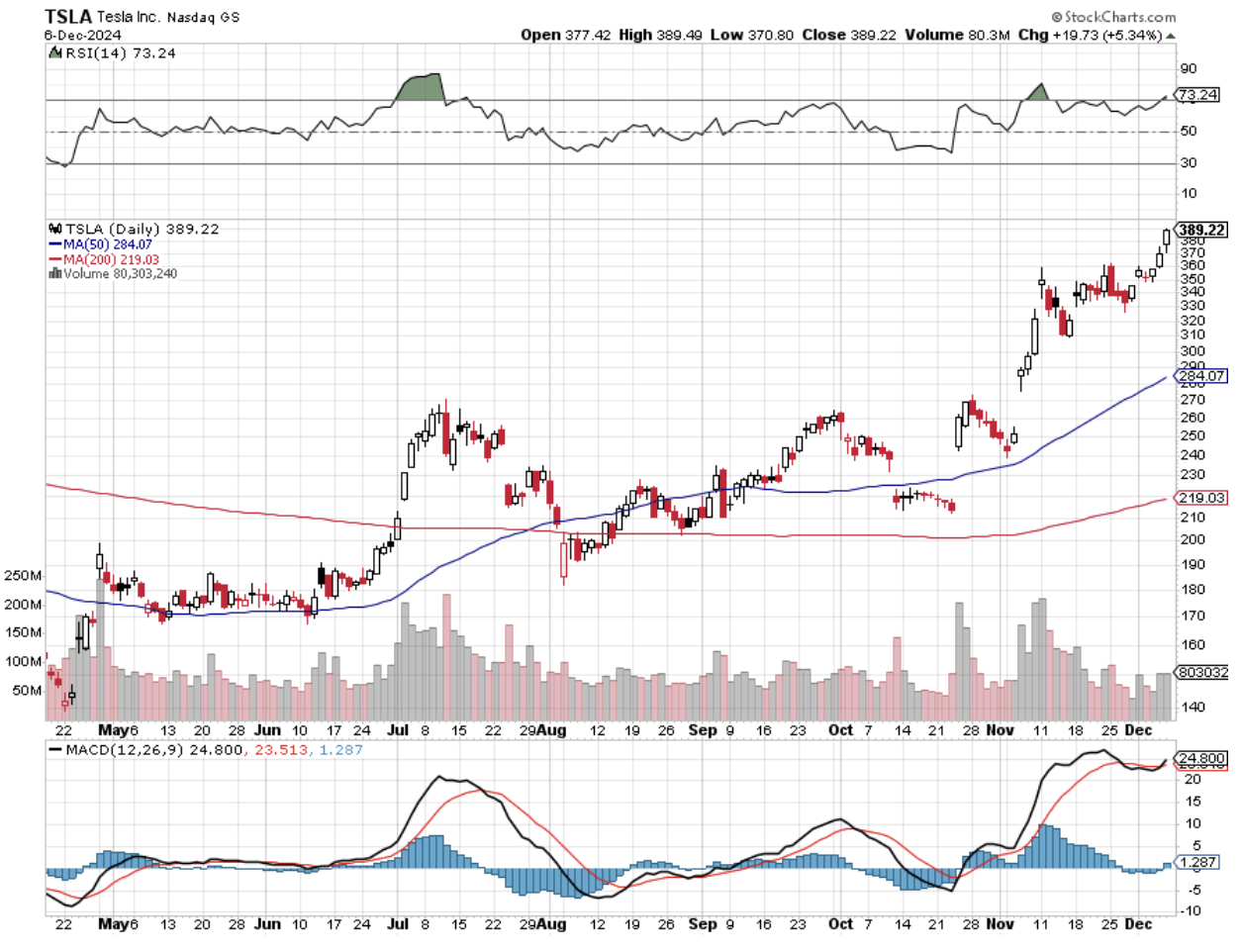
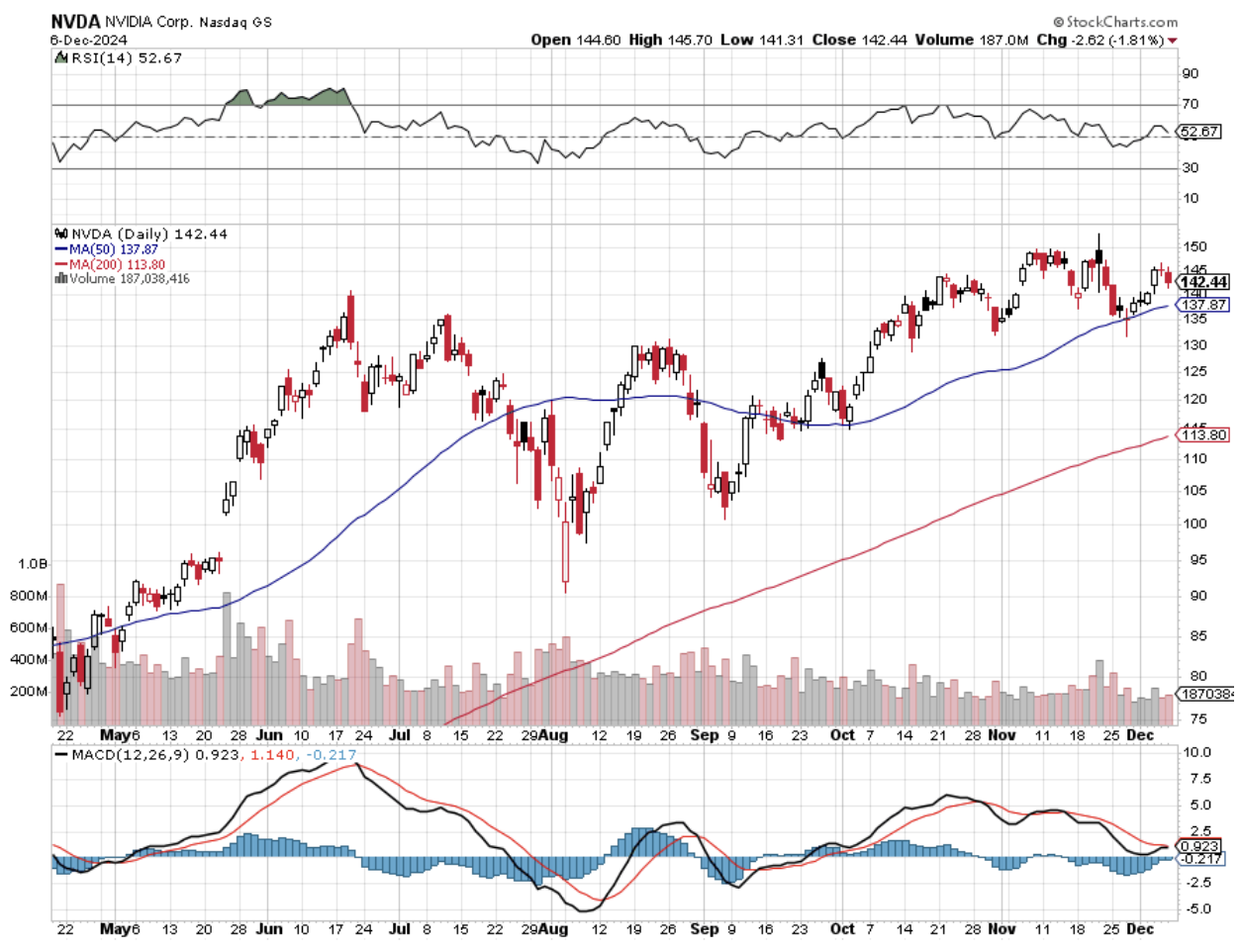
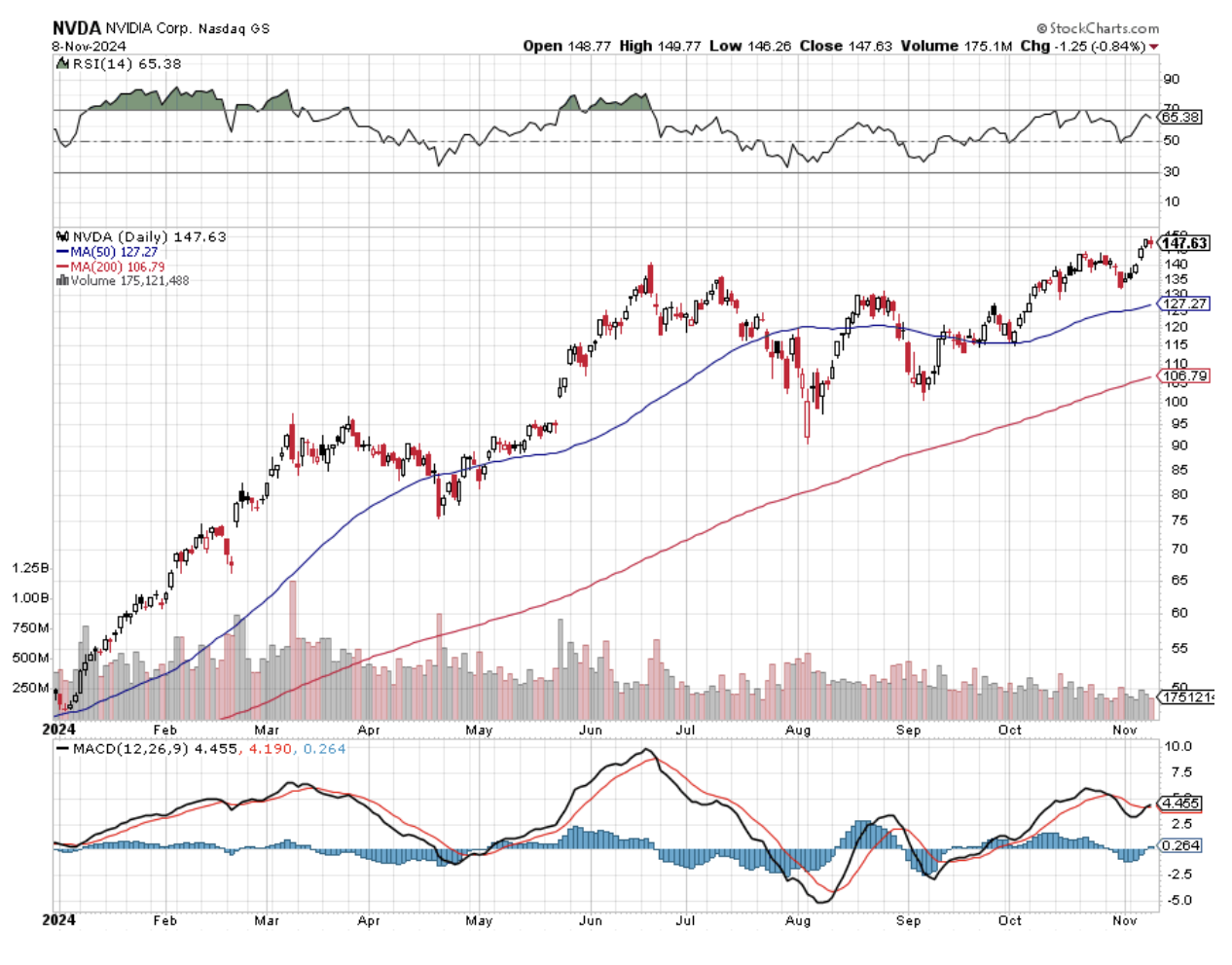
Which leads us to the pressing question of the day. Why has the performance of the Magnificent Seven shares been fading since June? Largely, they have been drifting sideways, and Nvidia (NVDA) is down. Only Tesla has rocketed, thanks to an election push.
This is a big deal because all of you own the Mag Seven stocks as the bulk of your portfolios, with (NVDA) as the single largest position, thanks to spectacular performance (up 10X). This sector has buttered our bread very nicely, thank you very much, allowing Mad Hedge Fund Trader to outperform all others by a huge margin.
The reason is very simple. Their earnings growth rate relative to the rest of the market has been steadily declining. They delivered a 66% performance premium relative to the S&P 500 last year and 22% this year, compared to 3% for the rest of the market and 8% for the market as a whole. That drops to only 11% in 2025.
So, the Mag Seven will continue to perform but at a fraction of the pace of the last two years.
The slowdown is happening largely because these companies have gotten so big. You have three giants with $3 trillion-plus market capitalizations battling it out for the position as the world’s largest company (AAPL), (NVDA), and (MSFT). They are followed by Meta (META) is at $1.5 trillion, (GOOGL) is at $2 trillion, and (AMZN) at $2.2 trillion. Combined, they represent 35% of the total stock market.
That is a lot.
I’ll give you another interesting factoid.
There has not been a single 10% correction in the stock market this year. That has not happened since 1928. What happens when you skip corrections? They bunch up in the following year. We all know what happened in 1929. There has been a massive pull forward of performance from 2025 into 2024.
The bottom line is that we are going to have to work harder for our crust of bread in 2025 and get less of it in return. That is….unless you are a subscriber to the Mad Hedge Fund Trader.
Fortunately, we will still have plenty of new fish to fry. I jumped in with a 100% fully invested portfolio on day one of the new deregulation trend, up 19% in November alone. This has several more months to run.
After That? Ask me in March.
I learned a fascinating statistic the other day. The Labor Force Participation Rate for 75-year-olds and older has doubled to 9% of the total workforce since 1987. My barber is 85, and my seamstress is 84, and there are many more like them.
I happen to be one of these “Never Retirers”. They are going to have to pry my cold, dead fingers off my keyboard. Why quit taking tests when you already know all the answers? Never quitting also has health benefits in that it can substantially extend the quality and quantity of your life. I’ve had many billionaire hedge fund manager friends retire because they earned more money than they could ever possibly spend. All they do now is play golf or waste my time calling me looking for free stock tips.
I have another disincentive to retire. Some 15 people spread all over the US and around the world would lose their jobs. At some time or another, all five of my kids, aged 19-39, have worked for Mad Hedge Fund Trader. Others who own their own companies face the same predicament.
Unfortunately, the US tax system isn’t exactly set up for people like me. When I turn 73 in January, I will be forced to withdraw and pay the maximum income tax rate of 4% of my entire retirement funds, even though I don’t need them. Such is the price of a tax system that was designed in 1937, back when half of all men died before age 65.
However, there are those rare times when I am ready to throw in the towel and cash in my chips. That happens when a customer asks for a refund despite making a +75.25% profit this year. A particularly thick follower when it comes to understanding options trading strategies occasionally pushes me over the edge.
That’s when I look to my role model and mentor, Warren Buffet. He’s still working, and he’s 95.
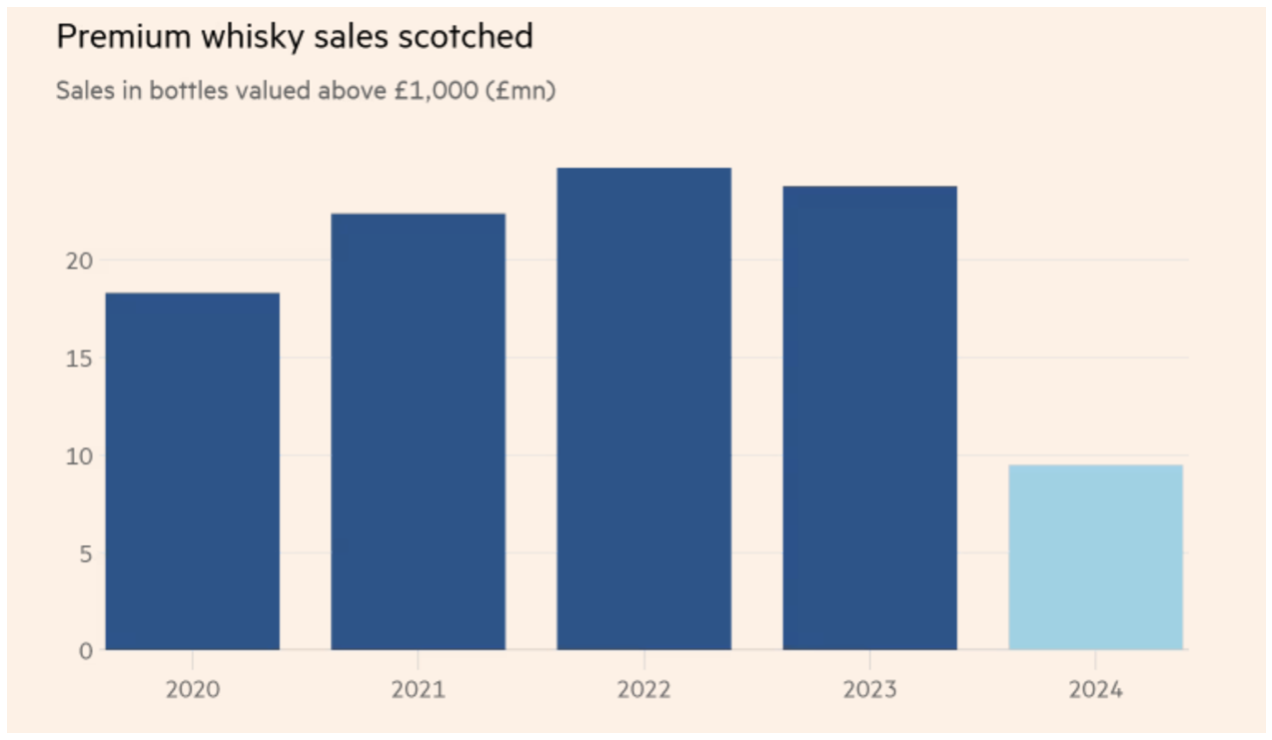
If you’re worried about a market crash next year, one has already started. Rare Whiskey is down 40% by price and 34% by volume this year. Bottles such as the 50-year-old Macallan Lalique had been selling for as much as 50,000 pounds, while bottles of Bowmore’s First Edition have been going for 15,000 pounds. First, it was hedge fund managers trying to outbid each other. Then, wealthy Chinese piled in.
Overall, Scottish whiskey exports are off 18% this year, thanks to Brexit choking off European markets. Low interest rates had prompted investors to seek out unusual asset classes. But the bubble has popped. American whiskey prices have held up better thanks to the strong economy. But the current high interest rates have scotched that appetite as fixed income offers a more generous and stable return.
Who knows what they will collect next?
Finally, I would be remiss if I did not mention that Saturday was Pearl Harbor Day, December 7. Although the tragic 1941 attack happened before I was born, I know many people who were there on both sides and have accumulated dozens of stories. However, I do have a personal connection with this historic event.
I did my flight training at the Ford Island Naval Air Station. In the 1970’s, they used to say, “No heavy landings, please, because we still haven’t found all the Japanese bombs.”
While in the circuit, you could see the wreckage of the superstructure of the USS Arizona, the battleship that took a direct hit and took town 1,177 sailors. The location has always been kept secret by the Navy because they didn’t want fortune hunters selling souvenirs to the public.
But I know right where it is. Today, only 16 Pearl Harbor veterans survive.
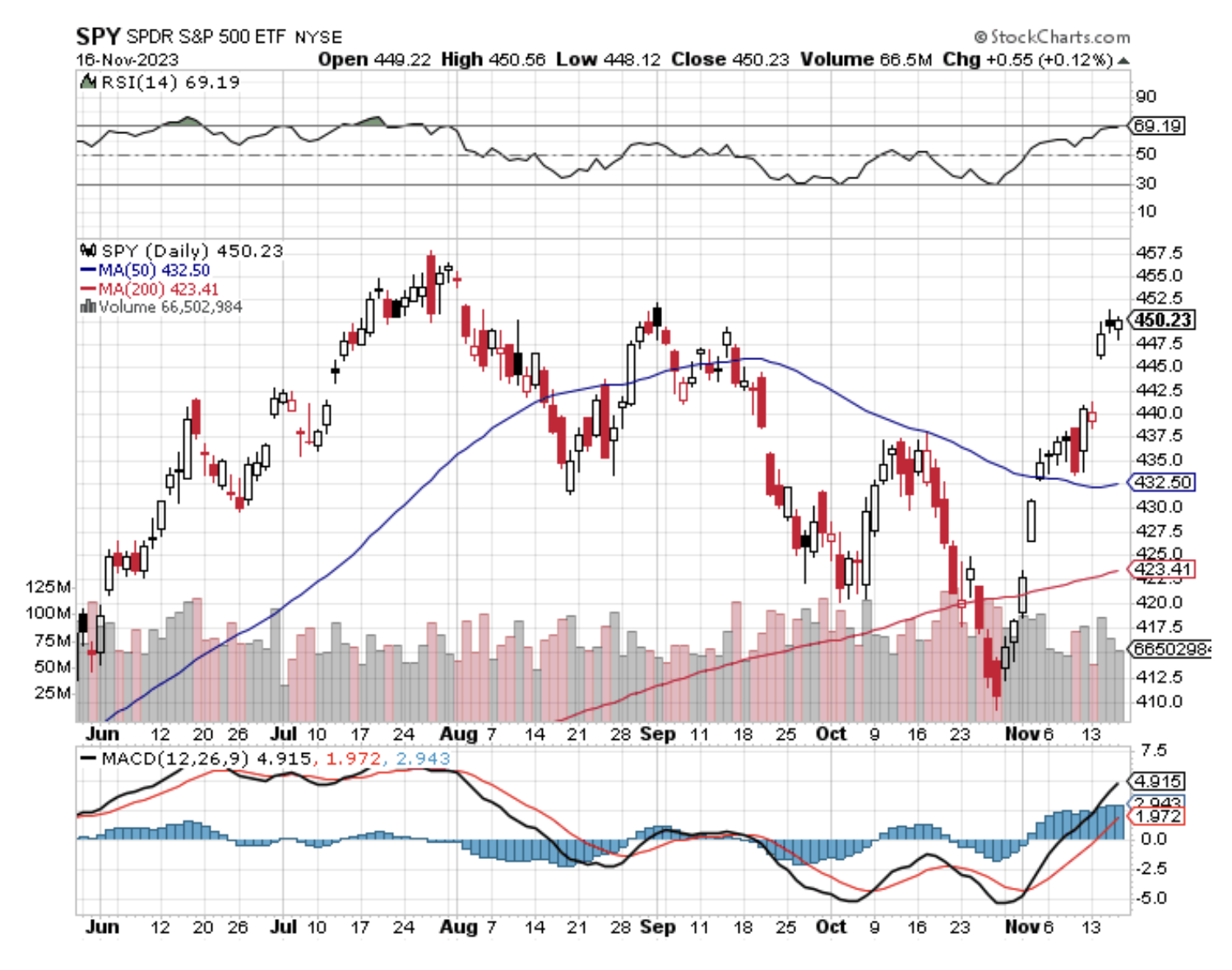
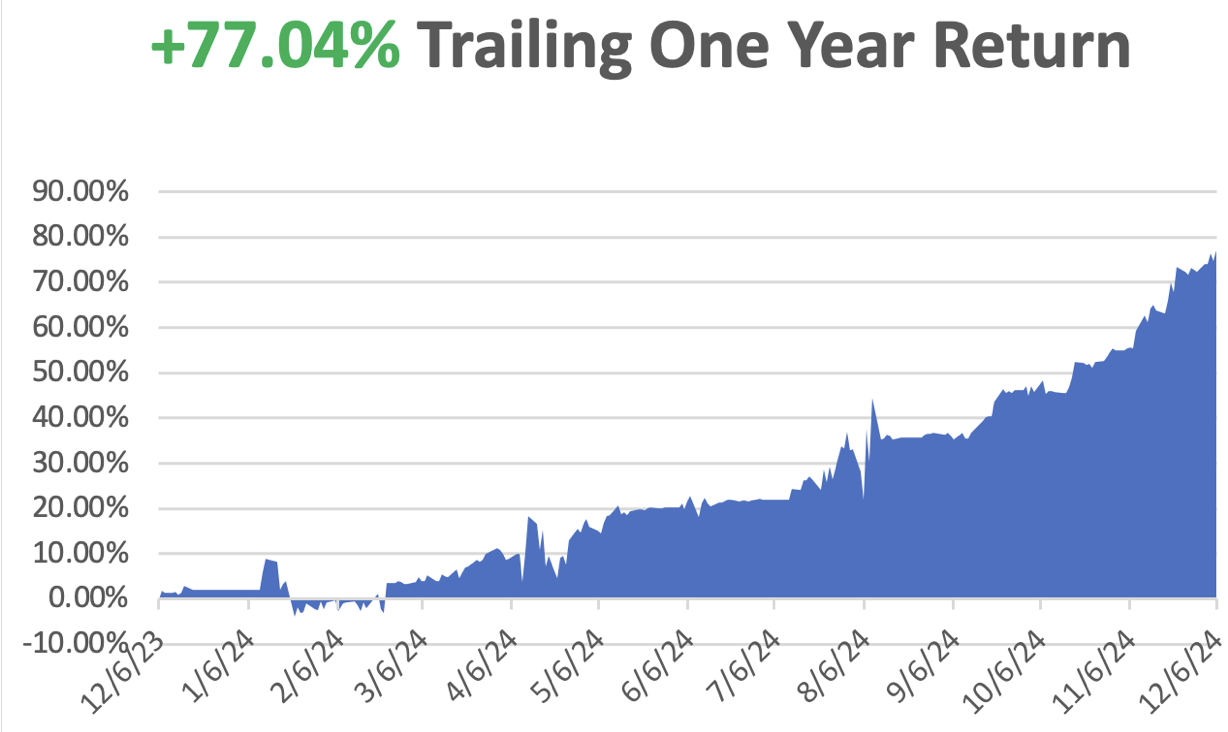
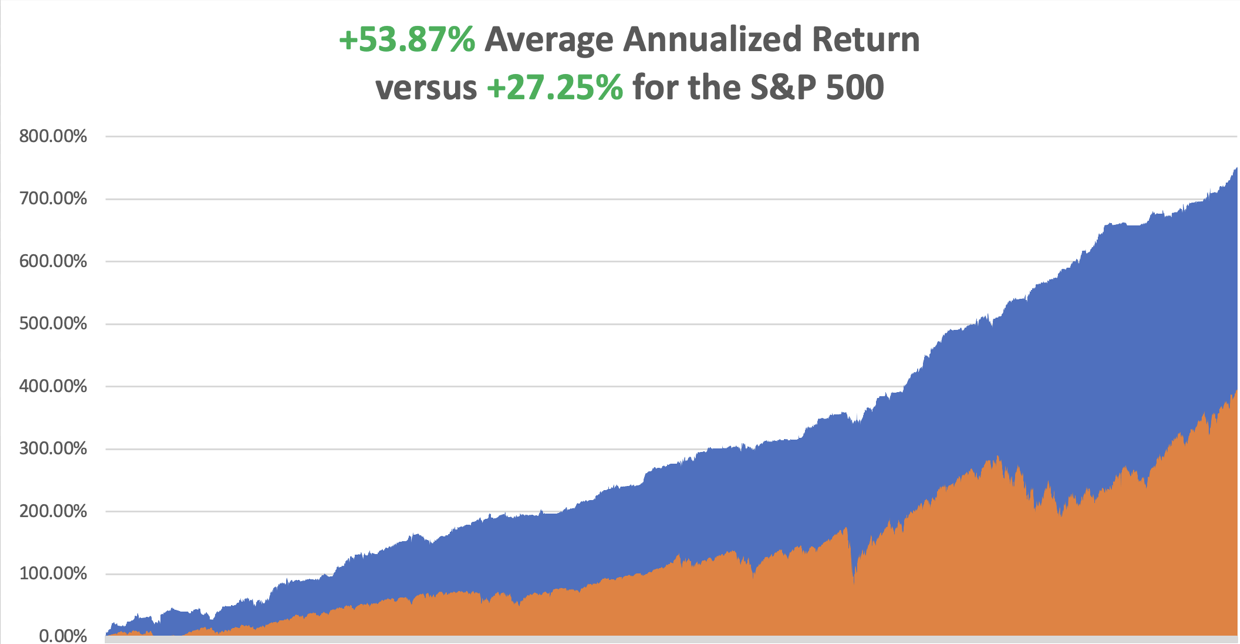
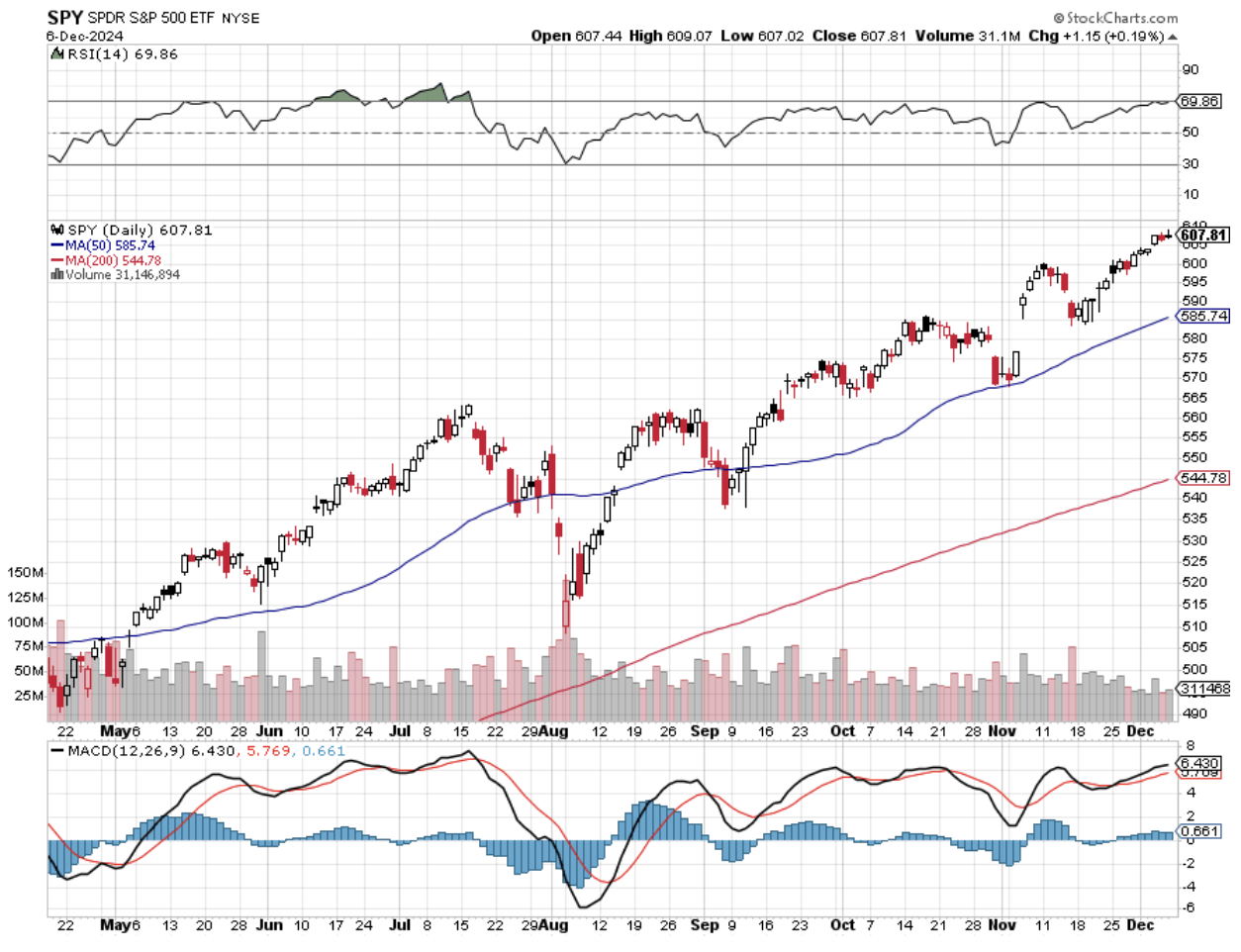
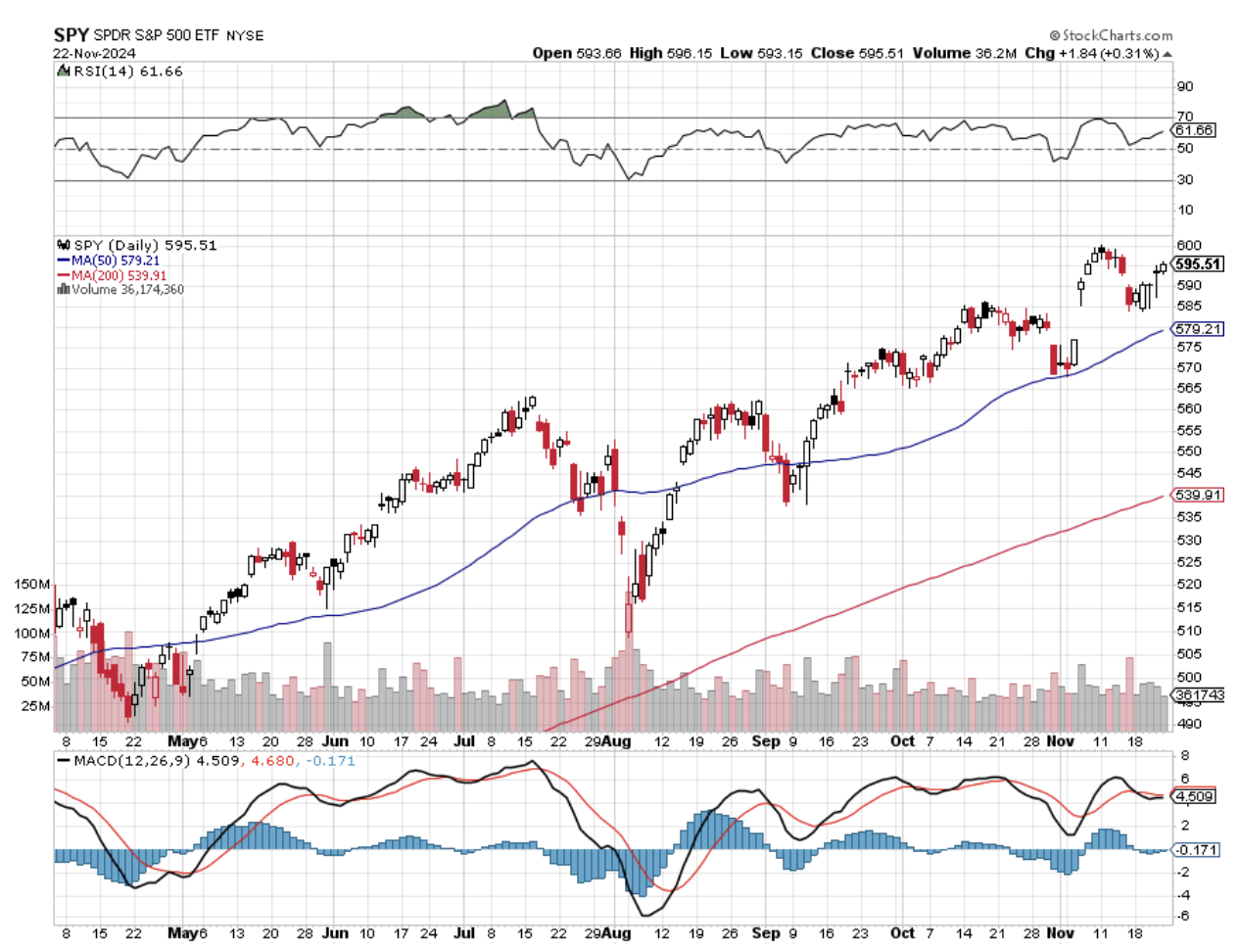
In December, we have gained +1.10%. November proved to be our best month of the year, up +18.96%. My 2024 year-to-date performance is at an amazing +73.10%. The S&P 500 (SPY) is up +24.73% so far in 2024. My trailing one-year return reached a nosebleed +77.04%. That brings my 16-year total return to +749.73%. My average annualized return has recovered to an incredible +53.87%.
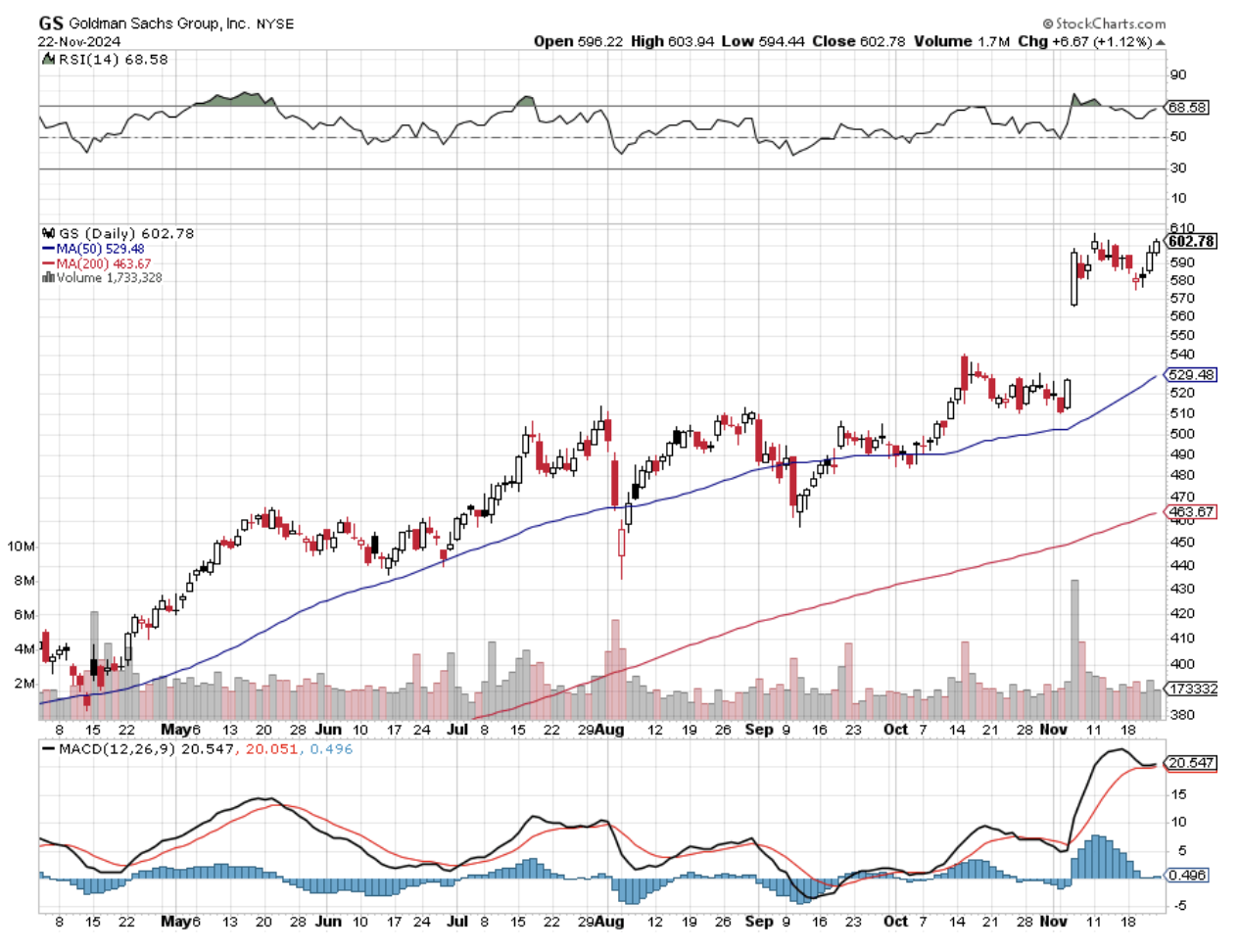
I maintained a 100% long-invested portfolio, betting that the market doesn’t drop below pre-election levels. That includes (JPM), (NVDA), (BAC), (C), (CCJ), (MS), (BLK) and a triple long in (TSLA). We are now so far in the money with all of our positions we can safely run them until the December 20 option expiration in 9 trading days, thanks to a Santa Claus rally, time decay, and falling volatility.
Some 63 of my 70 round trips, or 90%, were profitable in 2023. Some 74 of 94 trades have been profitable so far in 2024, and several of those losses were really break-even. That is a success rate of +78.72%.
Try beating that anywhere.
My Ten Year View – A Reassessment
When we have to substantially downsize our expectations of equity returns in view of the election outcome. My new American Golden Age, or the next Roaring Twenties, is now looking at a headwind. The economy will completely stop decarbonizing. Technology innovation will slow. Trade wars will exact a high price. Inflation will return. The Dow Average will rise by 600% to 240,000 or more in the coming decade. The new America will be far more efficient and profitable than the old.
My Dow 240,000 target has been pushed back to 2035.
On Monday, December 9 at 8:30 AM EST, the Consumer Inflation Expectations is out.
On Tuesday, December 10 at 8:30 AM, the NFIB Business Optimism Index is published.
On Wednesday, December 11 at 8:30 AM, the Consumer Price Index is printed.
On Thursday, December 12 at 8:30 AM, the Producer Price Index is announced.
On Friday, December 13 at 8:30 AM, US Import and Export Prices are published. At 2:00 PM, the Baker Hughes Rig Count is printed.
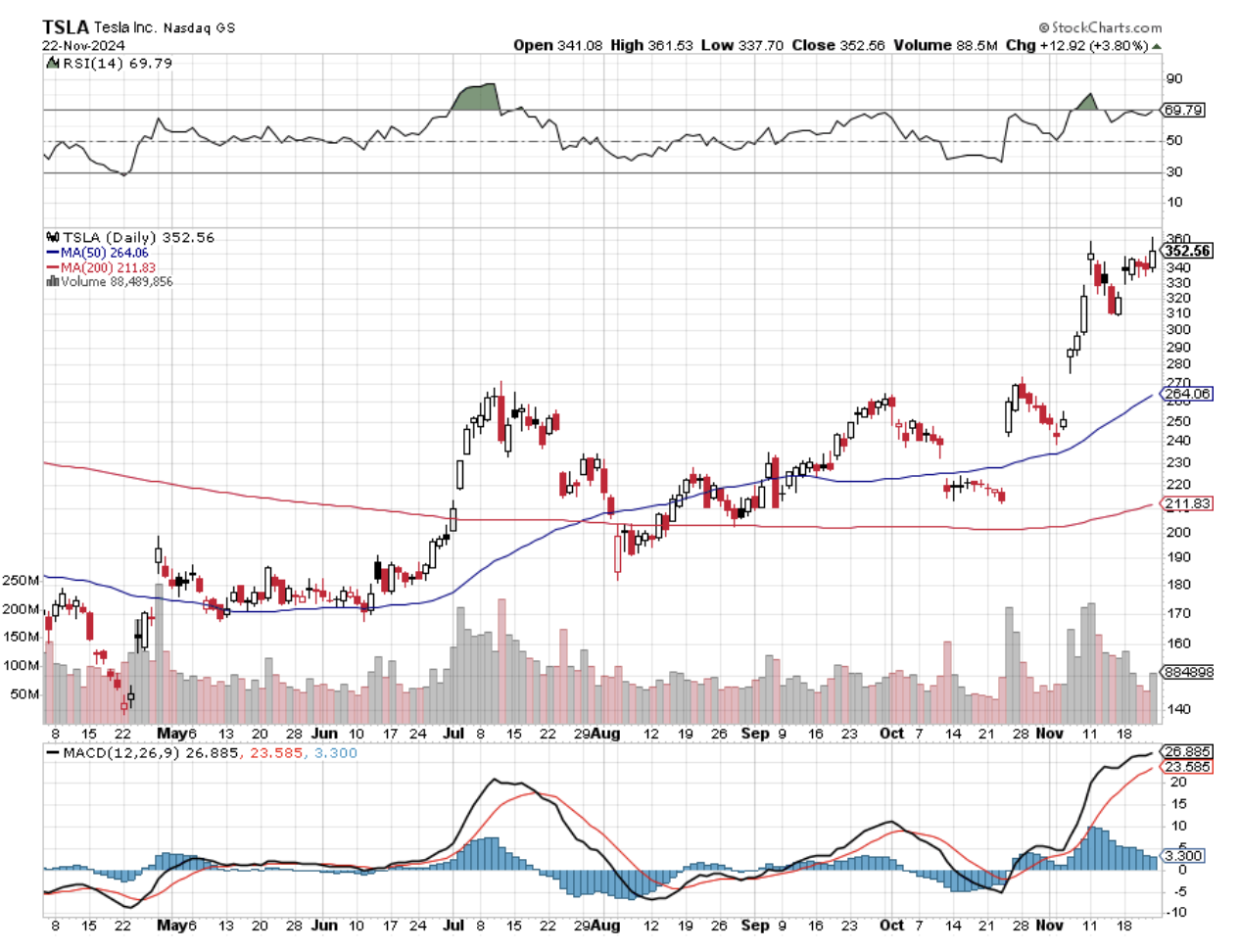
As for me, I have proven yet again that if you buy Tesla shares, you get the car for free. That is the result of the triple-long-in-the-stock I egged followers into right after the election.
So when is the best time to buy a Tesla? That would be right now.
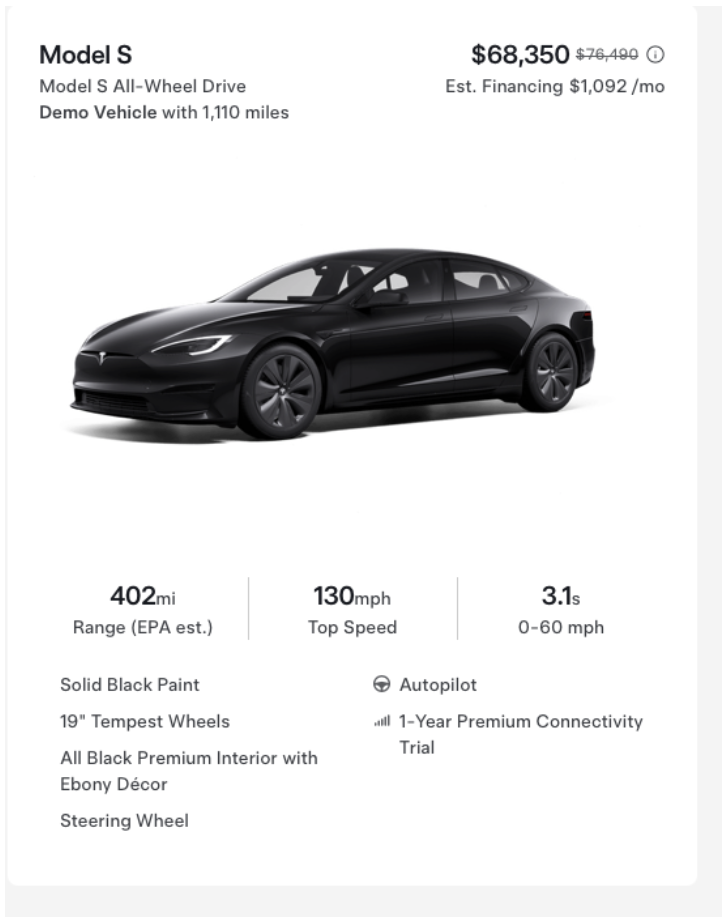
To meet yearend goals, Elon Musk always offers the best deals of the year every December. See below the offers I received yesterday of rock bottom prices, 0% financing, and free recharging. You can get the brand new Cybertruck for $99,990 and the slick Model S for a bargain $68,350.
The Tesla Model S1 (TSLA) has been rated by Consumer Reports magazine as the best car ever built, grabbing a covered 99 score out of 100. It has been ranked by the US Government Department of Transportation as the safest car ever built. Even competitors love the car.
So I decided to see if these vaunted claims were true and crash-test my own $162,500 high-performance Model X P100 on public streets.
Actually, it wasn’t I who made the decision. It was the harried housewife with four screaming kids in the back seat speaking on a cell phone while driving who made that call. She drove her GMC Silverado quad cab pickup truck straight into the side of my Tesla.
All I heard was a loud horn and a big slam as my car spun around 360 degrees. It was like going through aerobatic pilot school all over again.
I jumped out and asked if everyone was alright. They were. All I found were four deadly silent boys and a woman crying over the phone to her husband about how his brand-new truck had just gotten a small dent on the front bumper. I inspected the damage, took pictures (see below), and calculated that her repairs would run about $1,500.
Bottom line on the safety issue? I didn’t even know that I had been in an accident. The vehicle is essentially a giant crumple zone. But it comes at a high price.
All four ultra-thin racing tires tore off the wheels during the spin (expensive). That meant the custom-painted 21-inch wheels had to scrape along the pavement, destroying them (more expensive). After teaching the AAA tow truck guy how to drive it, he hauled it away.
It was then that I learned about the arcane world of fixing Teslas. Since the car is made out of aluminum, no neighborhood body shop can work on it, as it melts at a much lower temperature than steel. Standard welders are not allowed. There are, in fact, only three specialized niche repair shops in the entire San Francisco Bay Area that can work with this ultra-lightweight metal.
Brooks Auto Body of Oakland is one of them. When I stopped by to talk about the job, the owner, a 6-foot 6-inch Korean guy, was in too much of a good mood. I would find out why later. Behind him were 16 other Teslas in varying states of assembly.
News flash: These things are not cars. They are more like giant computers, with an 18-inch screen and a 1,100-pound battery. None of the components looked anything like car parts. Only the wheels belied any connection with transportation.
It took two months to finish the repairs. Since Tesla would only sign off on the car when it was perfect, it was sent back to the factory in Fremont three times for additional realignment and recalibration. The final bill came to $32,000. The good news is that my lithium-ion battery was fine, which would have cost an extra $30,000 to replace.
The really humiliating thing about the entire experience was that I had to drive a KIA Optima loaner until the Tesla was back in action. So, for eight weeks, my life was dull, mean, and brutish. Driving on the freeway, every nut and bolt made its presence felt. And I had to buy gas at those ugly places that sell cigarettes, chewing tobacco, and condoms! Yuck! Once you’ve had electric, you never go back.
All of which brings me to Tesla’s share price, which has just nearly tripled from $140 to $390 as hot money poured into the big momentum names. Let me tell you that the revolutionary vehicle is still wildly misunderstood, and the company has done a lousy job making its case.
The electric power source is, in fact, the least important aspect of the car. Here are 15 reasons that are more important:
1) The vehicle has 75% fewer parts than any other, massively reducing production costs. The drive train has 11 parts, compared to over 1,500 for conventional gasoline-powered transportation. Tour the factory, and it is eerily silent. There are almost no people, just a handful who service the German robots that put these things together.
2) No maintenance is required, as any engineer will tell you about electric motors. You just rotate the tires every 6,000 miles.
3) This means that no dealer network is required. There is nothing to fix.
4) If you do need to repair something, usually, it can be done over the phone. Rebooting the computer addresses most issues. If not, they will send a van to do an onsite repair for free.
5) The car runs at room temperature, not the 500 degrees, in standard internal combustion cars. This means that the parts last forever.
6) The car is connected to the Internet 24/7. Once a month, it upgrades its own software when you are sleeping. You jump in the car the next morning, and a message appears on your screen saying, “We just upgraded the following 20 Apps.” This is the first car I ever owned that improved itself with age, as I do myself.
7) This is how most of the recalls have been done as well, over the Internet while you are sleeping.
8) If you need to recharge at a public station, Tesla has the world’s largest charging network. Tesla has its own national network of superchargers that will top you up in 20 minutes and allow you to drive across the country. (I can’t wait to try out the one in Winnemucca, Nevada, on my next trip to Chicago). But hotels and businesses have figured out that electric car drivers are the kind of big-spending customers they want to attract. So, public stations have been multiplying like rabbits. When I first started driving my Nissan Leaf in 2010, there were only 25 charging stations in the Bay Area. There are now over 1,000. They even have them at Costco.
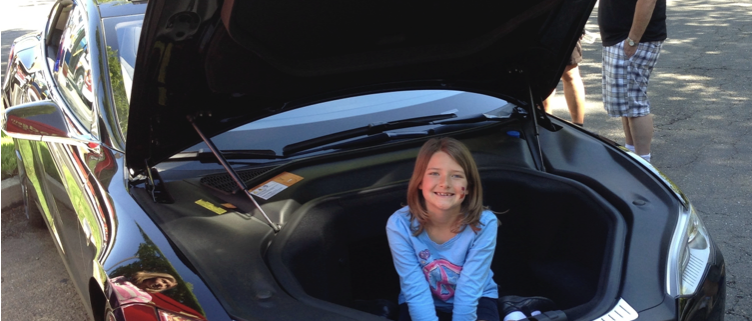
9) No engine means a lot more space for other things, like storage. You get two trunks, a generous one behind and a “frunk” in front.
10) Drive an electric car, and you can drive in the HOV commuter lanes as a single driver. This also won’t last forever, but it’s a nice perk now.
11) There is a large and growing market for all American-made products. Tesla has a far higher percentage of US parts (100%) than any of the big three (GM is only at 70%).
12) Since almost every part is made on the side at the Fremont factory, supply line disruptions are eliminated. Most American cars are over-dependent on Asian supply lines for parts and frequently fall victim to disruptions.
13) There are almost no controls, providing for more cost savings. Except for the drive train, windows, and turn signals, all vehicle controls are on the touch screen, like a giant iPhone 5s.
14) A number of readers have argued that Tesla really runs on coal, as this is still the source of 16.2% of the US power supply. However, if you program the car between midnight and 7:00 AM (one of my ideas that Tesla adopted in a recent upgrade), you are using electricity generated by the utilities to maintain grid integrity at night that otherwise goes unused and wasted. How much power is wasted like this in the US every night? Enough to recharge 150 million cars per night.
15) Oh yes, the car is good for the environment, a big political issue for at least half the country.
No machine made by humans is perfect. So, in the interest of full disclosure, here are a few things Tesla did not tell you before you bought the car.
1) There is no spare tire or jack, just an instant repair kit in a can.
2) The car weighs a staggering 3 tons, so conventional jacks don’t work. Lithium is heavy stuff.
3) The car is only 8 inches off the ground, so only a scissor jack works.
4) The 21-inch tires on the high-performance model are a special order. Get a blowout in the middle of nowhere, and you could get stranded for days. So if you plan to drive to remote places, Like Lake Tahoe, as I do, better carry a 19-inch spare in the “frunk” to get you back home.
5) If you let some dummy out in the boonies jack the car up the wrong way, he might puncture the battery and set it on fire. It will be a decade before many mechanics learn how to work with this advanced technology. The solution here is to put a hockey puck between the car and the jack. And good luck explaining what this is to a Californian.
6) With my Leaf, I always carried a 100-foot extension cord in the trunk. If power got low, I just stopped for lunch at the nearest sushi shop and plugged in for a charge. Not so with Tesla. You are limited to using their own 20-foot charging cable, or it won’t work. I haven’t found anyone from the company who can tell me why this is the case.
And guess what? Detroit is so far behind in developing this technology that they will never catch up. My guess is that they eventually buy batteries and drive trains from Tesla on a licensed basis, as Toyota (for the RAV4) and Daimler Benz (for the A-Class) already are. All of Detroit’s existing hybrid technologies are older versions similarly purchased from the Japanese (I bet you didn’t know that).
You might also go out and buy a Model S1 for yourself as well. It’s like driving a street-legal Formula 1 racecar and is a total blast. Just watch out for drivers of Silverado’s speaking on cell phones.
Good Luck and Good Trading,
]
John Thomas
CEO & Publisher
The Diary of a Mad Hedge Fund Trader
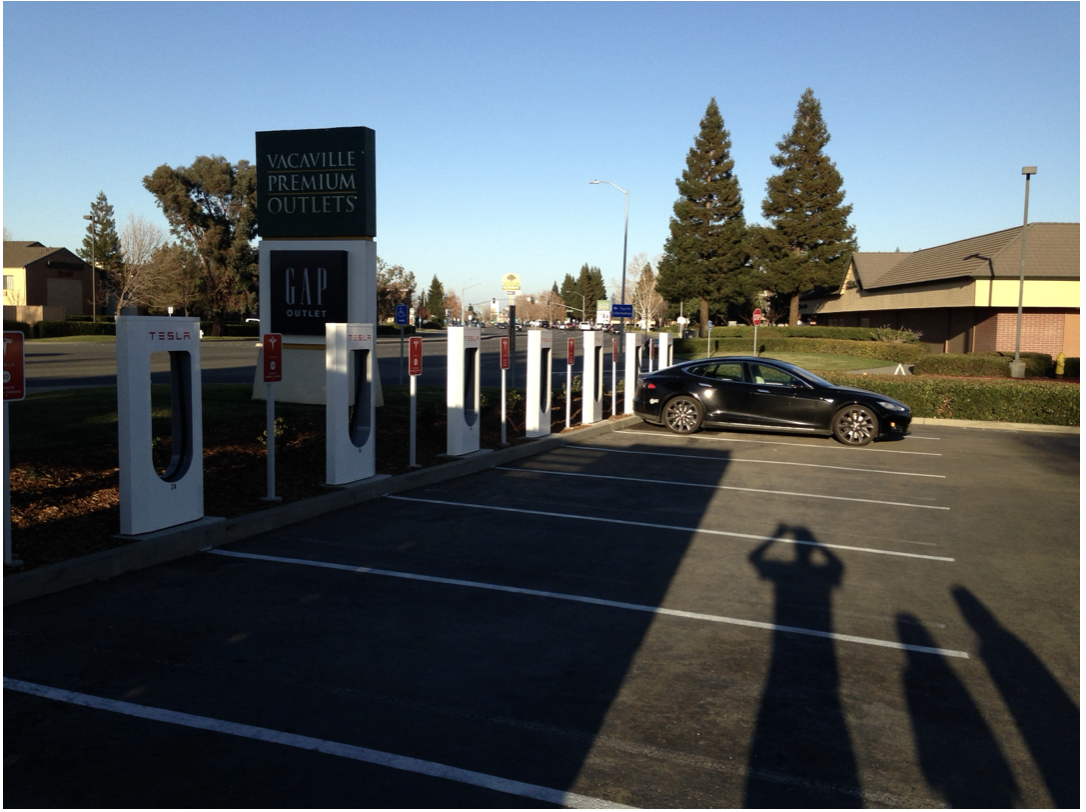
Not Much of a Wait at the Vacaville Supercharger
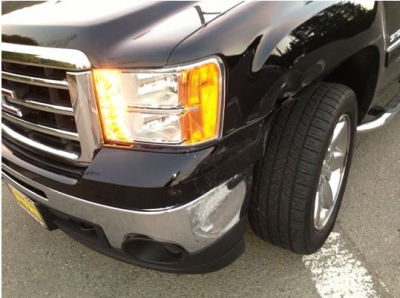
$1,500 Worth of Damage
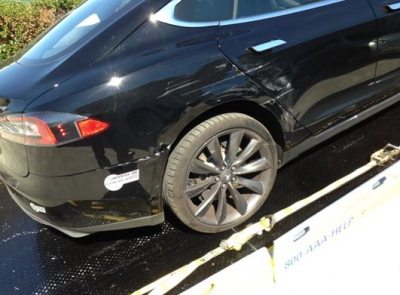
$32,000 Worth of Damage
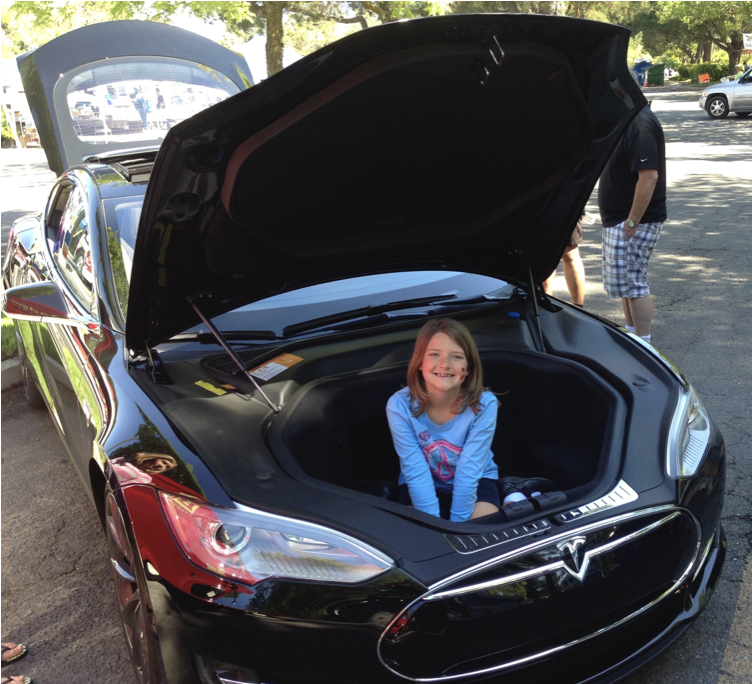
But the Motor Was Fine


Global Market Comments
November 25, 2024
Fiat Lux
Featured Trade:
(MARKET OUTLOOK FOR THE WEEK AHEAD or WHAT TO DO ABOUT NVIDIA), plus THE WORLD’S WORST INVESTOR),
(NVDA), (GLD), (JPM), (JPM), (NVDA), (BAC), (C),
(CCJ), (MS), (BLK) (TSLA), (TLT)

Boy, did I make the right move going into the election?
I always have a propensity to reduce risk going into a major event. Let the newbies stick their necks out. I’ll collect the low-hanging fruit afterward while trampling over their bodies. As they used to say at Morgan Stanley, “It’s the pioneers who get the arrows in their backs.”
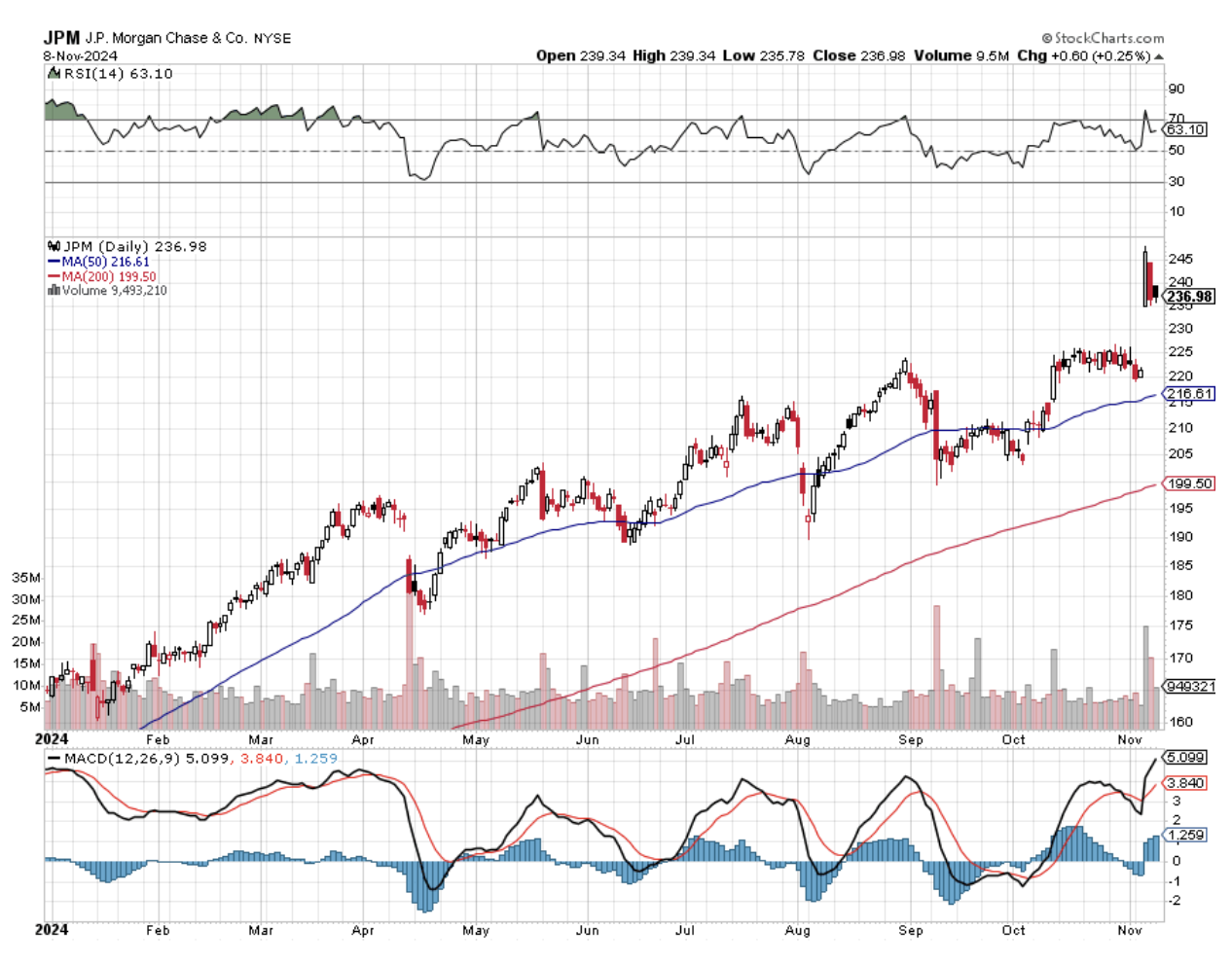
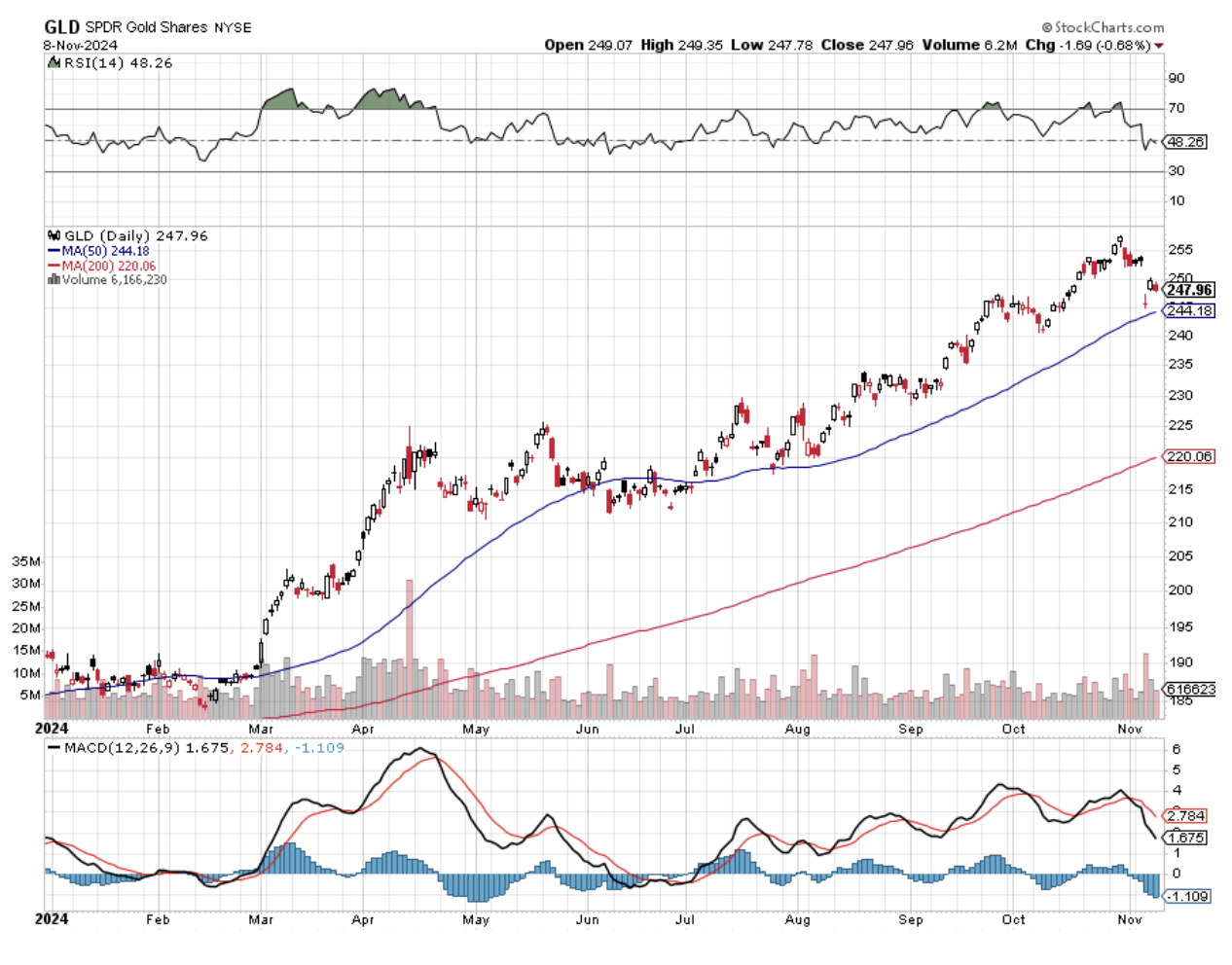
So I went into the November 5 election with 70% cash and long JP Morgan (JPM), Nvidia (NVDA), and gold (GLD). On November 6, I quickly stopped out of gold at cost and let the other two run, which launched on major rallies driven by a new deregulation trend. I then converted the remaining cash into a deregulation portfolio.
The bottom line? Since the election, I have been able to run up a monster 18.05% profit in only 14 trading days. That works out to 1.29% a day, the most earned in the nearly 17-year history of the Mad Hedge Fund Trader.
Notice that no specific deregulation measures have been proposed. No action has been taken. What we are seeing in unrestrained buying is driven by beliefs, animal spirits, and unbounded optimism, which markets all love. Call it euphoria. The problem with euphoria is that it fades as easily as it starts. After the 2016 election, the euphoria lasted for four months, then the market died for three months.
We’ve heard a lot about deficit reduction in the coming years, and let me tell you that the bond market isn’t buying it for a second. Since September, Fed Funds futures markets have plunged from 350 basis points in interest rate cuts by June to only 150 basis points, and half of that has already been done. Even the December 25 basis point rate cut has shrunk to only a 50% probability.
And this is what the bond market has been sniffing out. Tax cuts, spending increases, mass deportation of minimum wage workers, and a trade war are all highly inflationary. The voters may buy it, but not bond investors, and the bond market is always right. All it sees is the National Debt rocketing from $35 trillion to $45 trillion in four years.
“Bond market vigilantes” is soon a term you will hear every day.
It's just a matter of time before we get a shocking, out-of-the-blue move-up in a monthly inflation report. That is when the stock market will crash, and bonds get taken out to the woodshed. Next to happen will be a US Treasury auction that fails, spiking interest rates across the board, which recently caused the British government to fall. Then, hello, recession. We will spend the next many months trading against that day. The new administration’s most important appointment will be the guy in charge of borrowing.
And let me tell you about the National Debt, which I learned all about in my years in the White House Press Corp. The Social Security budget now runs at $1.4 trillion a year in payments, while defense is at $825 billion, for a total spend of $2.225 trillion a year. On top of that, you have to add $1 trillion a year in existing interest payments on the outstanding debt.
Even if spending on these two items goes to ZERO, it would take 16 years to pay off the current National Debt. If the debt rises to $45 trillion in four years plus interest, it would take 22.5 years to pay off. And this is with the number of new retirees exploding thanks to the Baby Boomer generation and defense demands in all parts of the world rising by the day.
Cutting the deficit boils down to cutting Social Security, cutting defense, or cutting the tax subsidies for your largest donors (billionaires, the oil industry), which is why it is never going to happen. Any other spending is too small to move the needle.
One of my favorite tests for someone’s knowledge of the federal budget is to ask them how much the US gives away in foreign aid to poor countries every year, a number that gets wildly exaggerated by political parties. The guesses come in at anywhere from 1% to 10% of the total budget. The correct figure? $63.1 billion, or 0.94% of the total $6.7 trillion in US budget expenditures, or less than one-tenth of one percent. You have been warned. I’m going to give you a test the next time I run into you.
The current deficit is, in fact, a product of five successive tax CUTS (Kennedy, Reagan, Bush II, Trump 1, and soon to be Trump II), which now has far and away the lowest income tax rates in the industrialized world. Remember, before Kennedy, the Great Depression maximum marginal tax rate of 90% prevailed.
But you have to get around to know this. I know because I moved an entire hedge fund from London to San Francisco in 1994 to take advantage of lower tax rates and the emerging Internet boom. I saved millions.
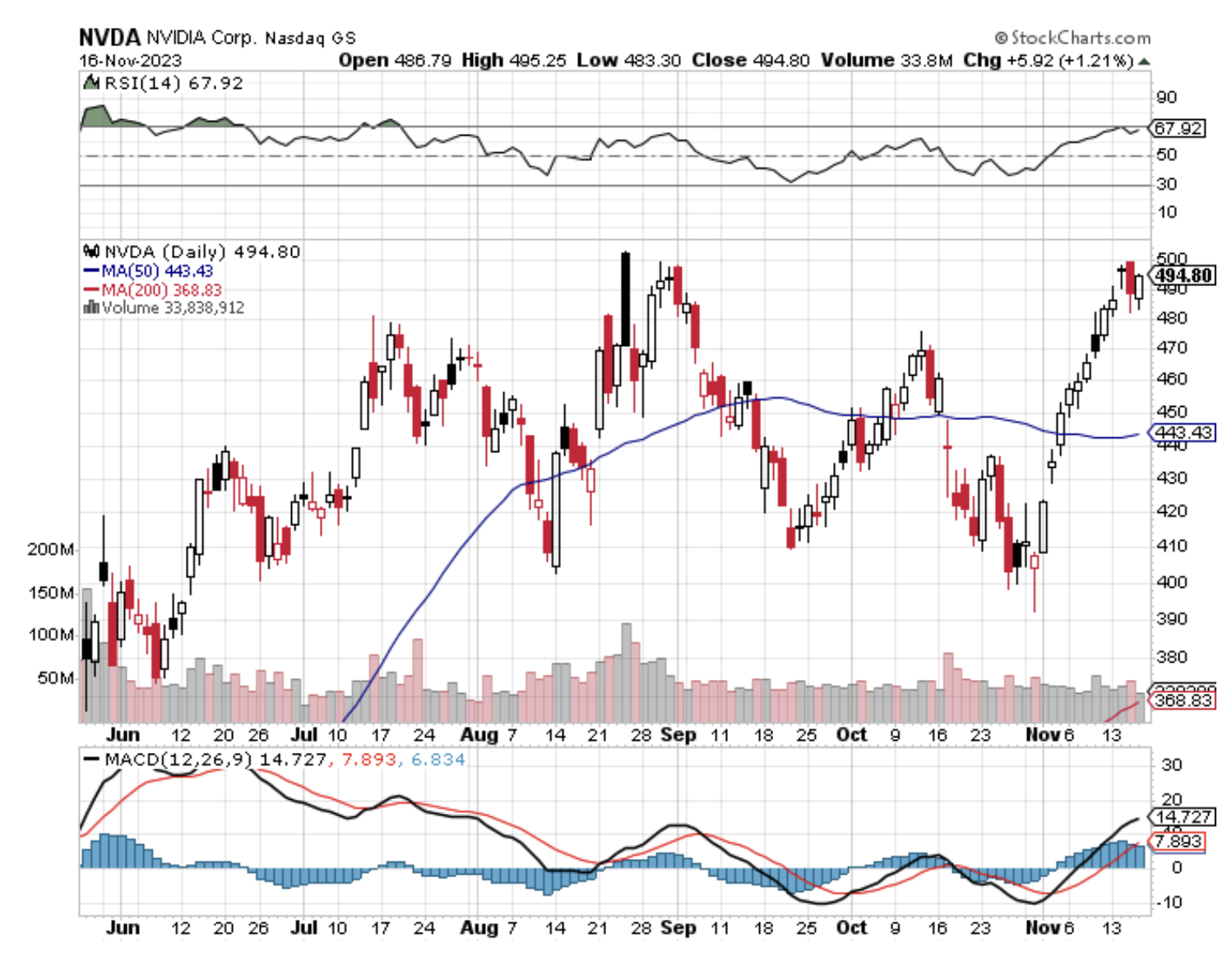
Which leads us to the most important question of the day: what to do about Nvidia (NVDA), almost certainly the largest holding of everyone who reads this letter. The company delivered spectacular earnings as promised, but the shares sold off $12. In fact, (NVDA) has only risen by $13 since June, with a drawdown of 37%. Rising volatility with incremental gains is a sign that a stock is topping out. At a $3.6 trillion market capitalization, the spectacular share price gains of the past are no longer attainable. The Law of Large Numbers is kicking in.
I still believe that (NVDA) will rise next year, but not by 200%. Some 20% is more likely. Fortunately, there is something you can do about it. With an options implied volatility of 40%, you can sell short the December 20, 2024, $156 call options against your existing position for $2.20. If Nvidia rises above $156 and your stock gets called away, your net proceeds will be $158.20, and you will think you died and went to Heaven.
If it doesn’t rise above $156, sell the January call options, and you take in another $2.20. After several months, this starts to add up to a lot of money. Eventually, the implied volatility will fade, and this trade won’t be there anymore.
But it works now.
That’s what I would do.
In November, we have gained a breathtaking +17.38%, November is proving to be our largest month of the year. My 2024 year-to-date performance is at an amazing +70.42%. The S&P 500 (SPY) is up +24.73% so far in 2024. My trailing one-year return reached a nosebleed +71.07%, up an incredible $10 on the week. That brings my 16-year total return to +747.05%. My average annualized return has recovered to an incredible +53.68%.
I maintained a 100% long-invested portfolio, betting that the market doesn’t drop below pre-election levels. That includes (JPM), (NVDA), (BAC), (C), (CCJ), (MS), (BLK) and a triple long in (TSLA). My November position in (JPM) expired at max profit. We are now so far in the money with all of our positions we should make 27 basis points a day until the December 20 option expiration in 18 trading days, thanks to time decay and falling volatility.
Some 63 of my 70 round trips, or 90%, were profitable in 2023. Some 74 of 94 trades have been profitable so far in 2024, and several of those losses were really break-even. That is a success rate of +78.72%.
Try beating that anywhere.
My Ten-Year View – A Reassessment
We have to substantially downsize our expectations of equity returns in view of the election outcome. My new American Golden Age, or the next Roaring Twenties, is now looking at a headwind. The economy will completely stop decarbonizing. Technology innovation will slow. Trade wars will exact a high price. Inflation will return. The Dow Average will rise by 600% to 240,000 or more in the coming decade. The new America will be far more efficient and profitable than the old.
My Dow 240,000 target has been pushed back to 2035.
On Monday, November 25 at 8:30 AM EST, the Dallas Fed Manufacturing Index is out.
On Tuesday, November 26 at 8:30 AM, the S&P Case Shiller National Home Price Index is published. At 11:00 AM, the Minutes from the last Fed Meeting are announced.
On Wednesday, November 27, at 8:30 AM, the Core PCE Price Index is 11:00 AM EST. It is a half day for the stock market, which closes at 1:00 PM EST.
On Thursday, November 28, is a National holiday in the US for Thanksgiving.
On Friday, November 29, is Black Friday, and it is a half day for the stock market, which closes at 1:00 PM. At 2:00 PM, the Baker Hughes Rig Count is printed.
Today, I thought I’d recall The World’s Worst Investor, who so happened to be my grandfather on my father’s side.
He was an immigrant from Sicily who joined the army during WWI to attain US citizenship lost an eye when he was mustard gassed on the Western Front in France. I recently obtained his military records from the Department of Defense and learned he was court-martialed for refusing to wash pots and pans at the front while blind!
After the war, the sight came back in one of Grandpa’s eyes, so he
bought a three-bedroom brick home on 76th Street in the Bay Ridge section of Brooklyn street for $3,000, eventually raising four kids. Back then, there was a dairy farm across the street, and horse-drawn wagons delivered ice blocks door to door.
During the roaring twenties, an assortment of relatives chided him for avoiding the stock boom where easy fortunes were made trading on ten to one margin. When the 1929 crash came, all of them lost their homes. Grandpa finished off the basement, creating space for two entire families to move in. He had never bought a stock in his entire life.
Because Dad contracted malaria with the Marines on Guadalcanal during WWII, the old man moved the family to Los Angeles in 1947 for the dry, sunny weather. Unfortunately, my grandmother heard there were no lobsters on the west coast, so she packed two big Maine ones in a suitcase. By the time they got to Las Vegas, the smell was so bad they got kicked off the train. In the booming postwar economy, they had to wait a week to get new seats to LA.
That was enough time for a flimflam man to sell Grandpa five acres of worthless land for $500. Ten years later, my dad drove out to check out the investment. It was a tumbleweed-blown, jackrabbit and rattlesnake-ridden piece of land so far out of town that it had to be worthless. You couldn’t see downtown, even if you stood on the rusted-out model “T” Ford that occupied the site. After that, the parcel became the family joke, and Grandpa was ridiculed as the world’s worst investor.
Grandpa died of cancer in 1977 at the age of 78. What German shrapnel and gas failed to accomplish, 60 years of smoking two packs a day of non-filter Lucky Strikes did. The army gave him cigarettes for free during the war, and he never shook the addiction. Even at the end, he insisted that there was no “proof” that cigarettes caused cancer, which soldiers referred to as “coffin nails.”
His estate executor put the long-despised plot out of Sin City up for sale, and a bidding war ensued. Although the final price was never disclosed, it was thought to be well into eight figures. In the intervening 30 years, the city of Las Vegas had marched steadily westward towards Los Angeles, sending its value through the roof. The deal triggered a big fight among the heirs, those claiming he was the stupidest demanding the greatest share of the proceeds, the bad blood generated continuing to this day. It turns out the world’s worst investor was actually the best, we just didn’t know it.
What was the address of this fabled piece of real estate? Why, it is 3325 Las Vegas Blvd. South, the site today of the Venetian and Palazzo Hotels, home to the Dal Toro restaurant, the venue for the last Mad Hedge Fund Trader’s Las Vegas strategy luncheon.
I’m sure Grandpa is laughing in his grave, in between smoles.
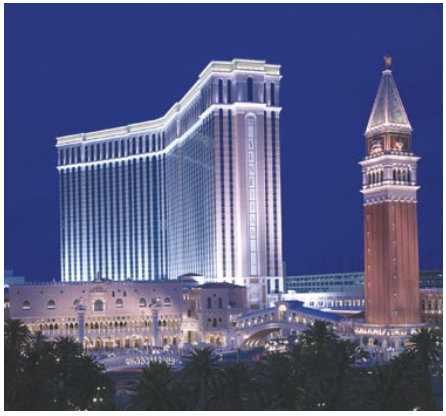
Bought for $500 in 1947
Postscript. One day in New York a few years ago, I had a few hours to spare waiting to board Cunard’s QEII to sail for Southampton, England.
So, I decided to check out the Bay Ridge address that I had heard so much about during my childhood. I took a limo over to Brooklyn and knocked on the front door. I was told the owner was expecting a plumber, so he let me straight in, not noticing my Brioni blue blazer nor the Cadillac stretch limo out front.
I told him about my family history with the property, but I could see from the expression on his face that he didn’t believe a single word.
Then, I told him about the relatives moving into the basement during the Great Depression. He immediately let me in and gave me a tour of the house. He told me that he had just purchased the home and had extensively refurbished it. When they tore out the walls in the basement, he discovered that the insulation was composed of crumpled-up newspapers from the 1930s, so he knew I was telling the truth.
I told him that Grandpa would be glad that the house was still in Italian hands. Could I enquire what he had paid for the house that sold in 1923 for $3,000? He said he bought it as a broken-down fixer-upper for a mere $775,000. And this was after the housing crash in 2011.
My Grandparents 1926
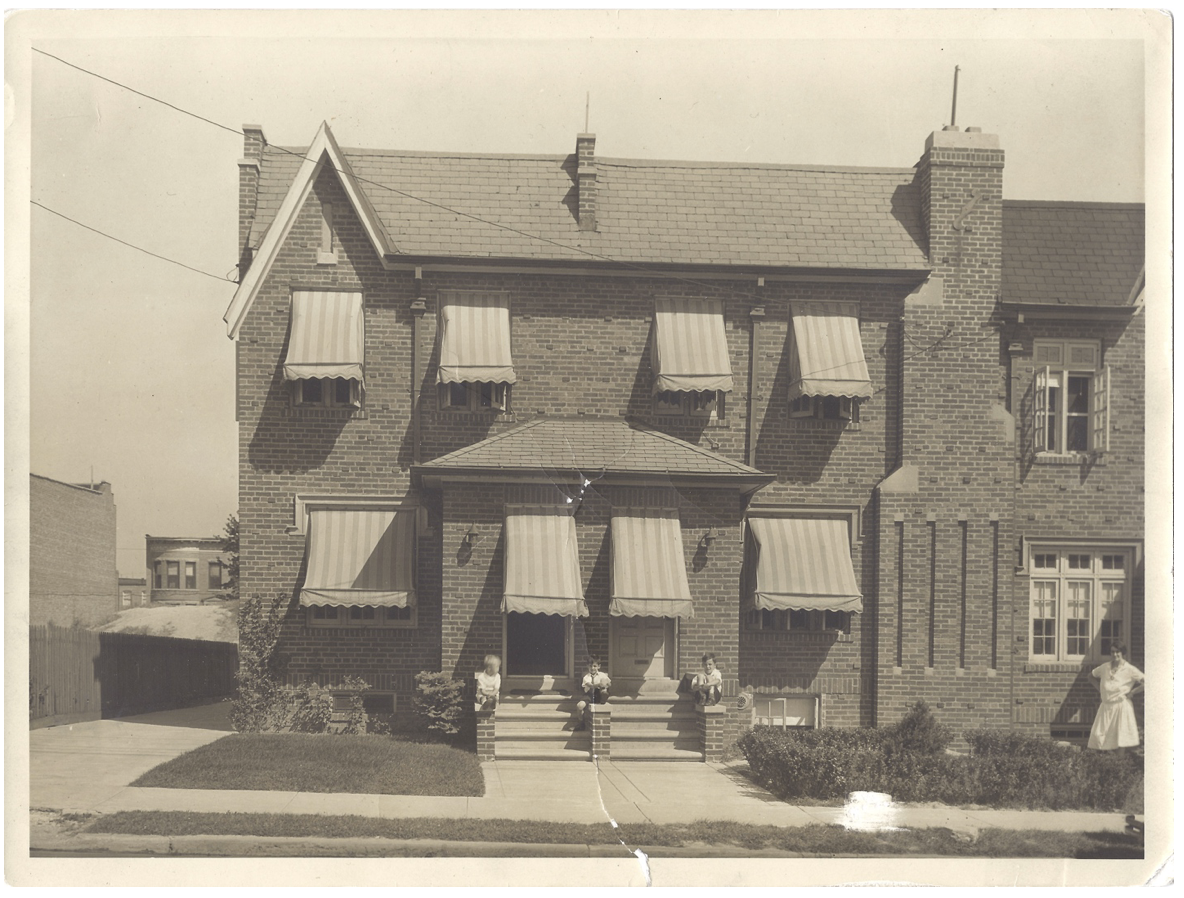
The Fabled Bay Ridge House Bought for $3,000
Good Luck and Good Trading,
John Thomas
CEO & Publisher
The Diary of a Mad Hedge Fund Trader


Global Market Comments
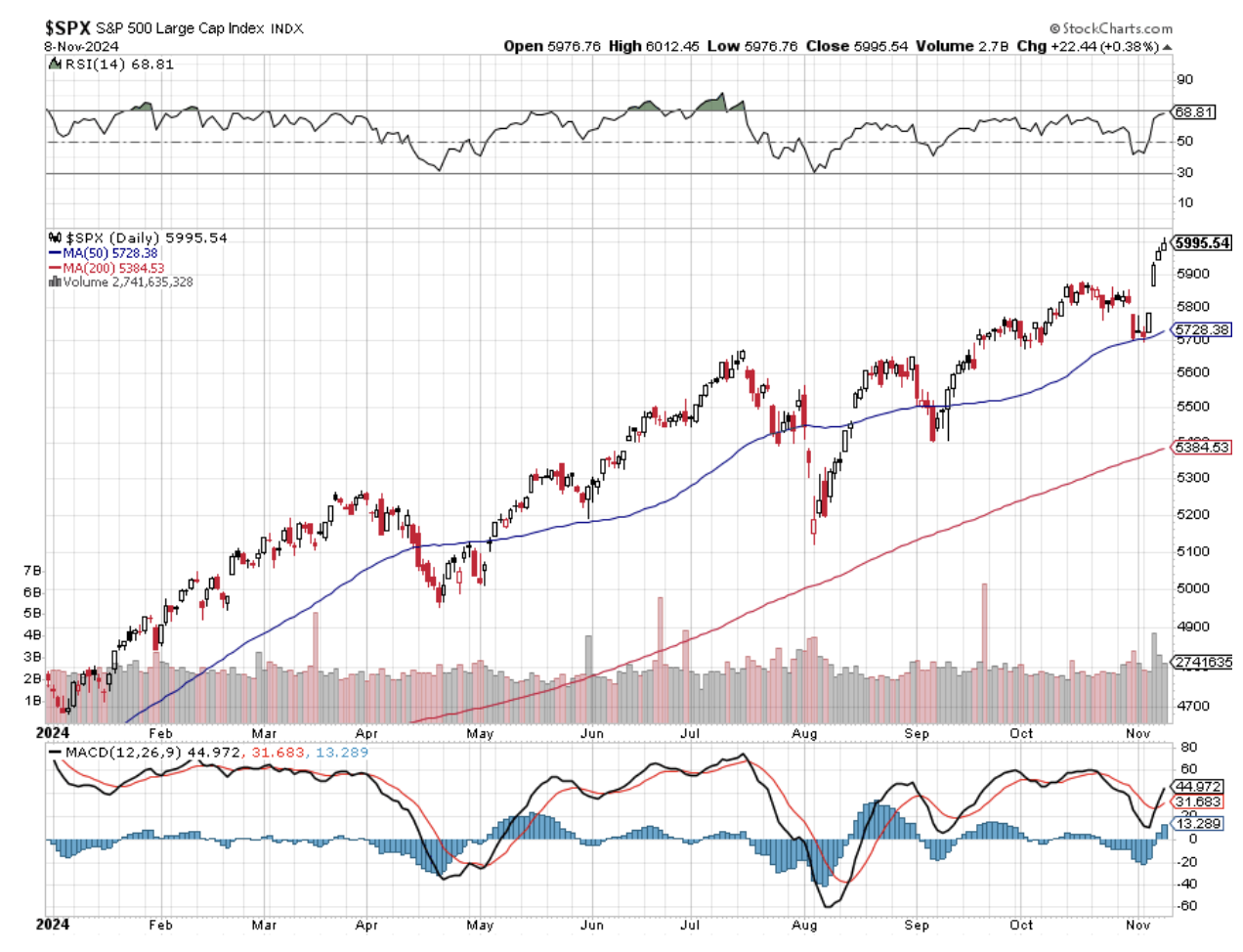
November 11, 2024
Fiat Lux
Featured Trade:
(MARKET OUTLOOK FOR THE WEEK AHEAD or S&P 500 6,000 TARGET ACHIEVED, plus REPORT FROM THE FROZEN WASTELANDS OF THE WEST),
(CCI), (DHI), GLD), (SLV) (JPM), (MS), (BLK),
(CCJ), (NVDA), (AMZN), (TSLA), (DGE)

I was reviled, abused, and outright laughed at by the investment community when, last January 5, I predicted that the S&P 500 would hit 6,000 by yearend, click here for the link. I was accused of sending out clickbait.
Yet here, ten months and change into the year here, we are with an intraday high today of 6,013.
Of course, in this business, you’re only as good as your last trade. So, the big question now is, what happens next?
The next two months are a gimme. The $8 trillion that has been sitting on the sideline is now pouring into the market. An S&P 500 target of 6,600 is within range. Speaking to fund managers around the country, the big concern was not over who won but whether we had a winner at all.
Three months of litigation with no outcome would have raised uncertainty to extremes and crashed the market. The risk of that scenario is now gone, which was worth a $1,500 rally in a day.
However, while the bull market continues, the targets have changed. As you will hear many times over the next four years, elections have consequences.
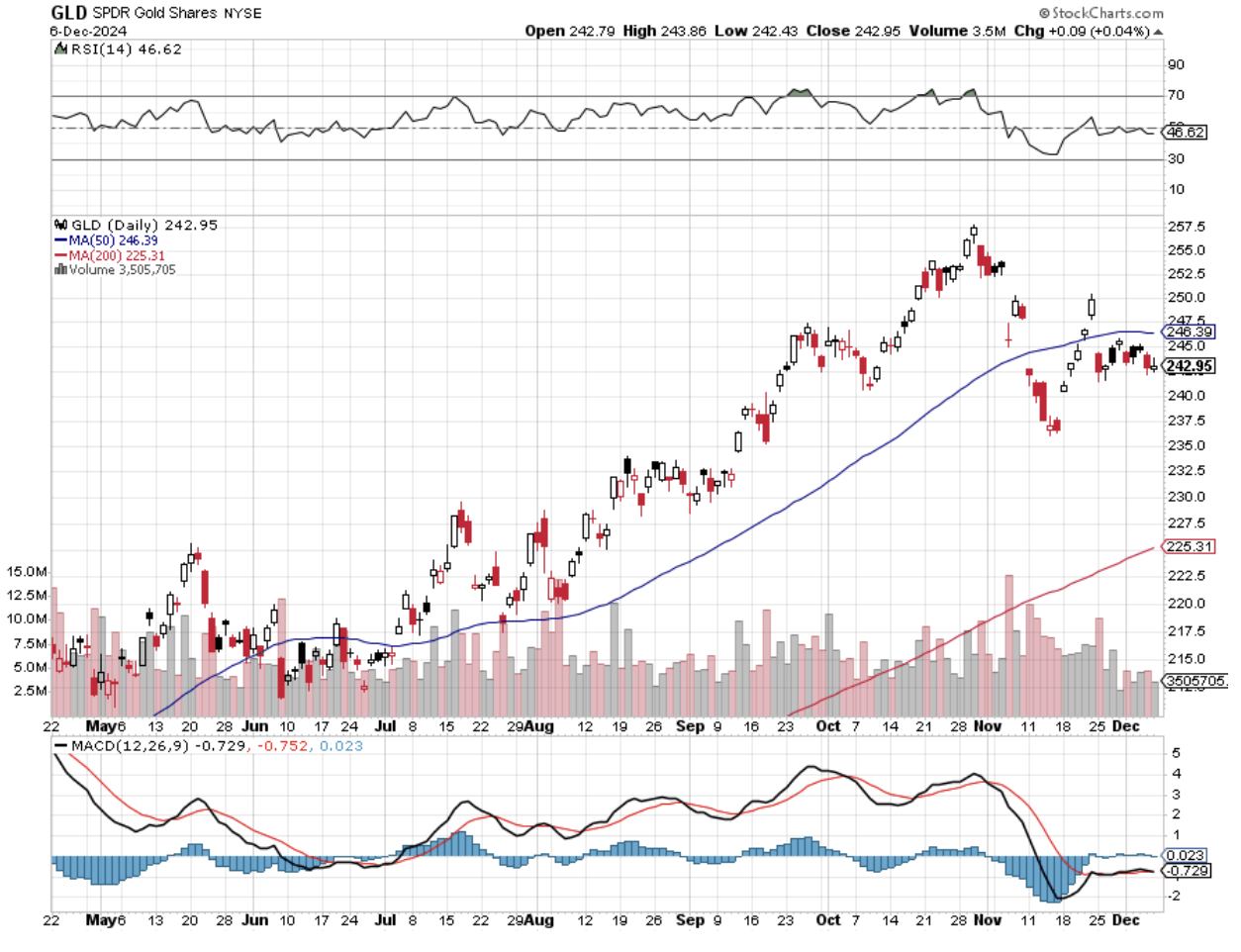
Falling interest rate plays are out. Don’t expect much performance from real estate, REITS (CCI), new homebuilders (DHI), gold GLD), and silver (SLV).
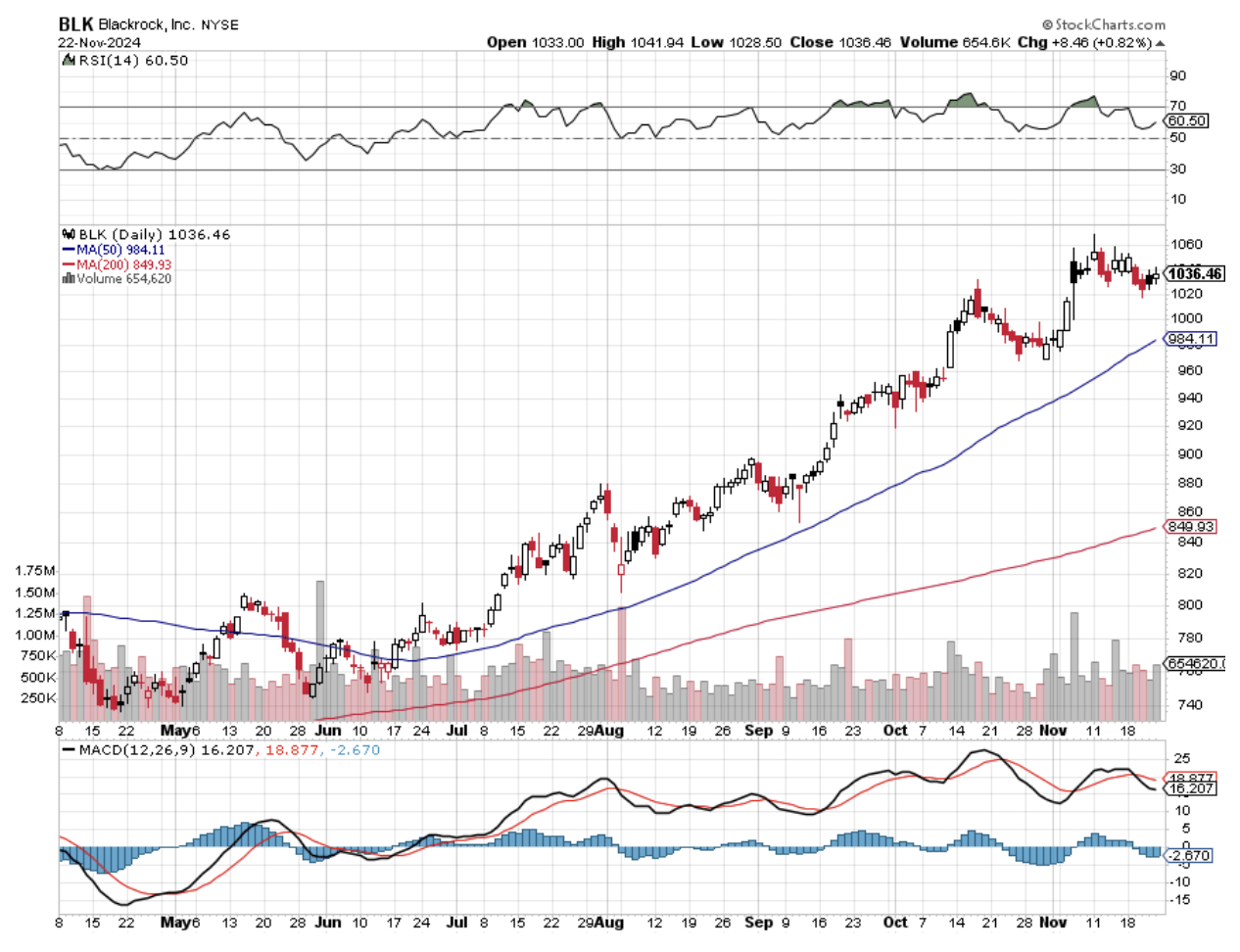
Deregulation plays are in. The good news is that this is a fairly wide sector. It includes banks (JPM), brokers (MS), money managers (BLK), new nuclear (CCJ), big tech that had been targeted by antitrust (NVDA) and (AMZN), and Tesla (TSLA).
Bonds are toast.
Promised Trump policies of tax cuts and spending increases will balloon the National Debt by $10-$15 trillion. The bond market is unlikely to be able to handle this amount of new issuance, especially with annual interest payments owed by the government already at $1 trillion. It is the second largest budget item after Social Security.
Selling into a national debt of $50 trillion is going to be completely different than selling into a national debt of $27 trillion when Trump last left office. This is the reason why major hedge funds are running Treasury bond shorts as their biggest positions, who were all Trump supporters and donors.
It all depends on inflation. This is not some far-distant theoretical thing. It is happening already. I got hit with several price increases today, and I am hearing about rises in other industries, like steel. The expectation is that a stronger economy can handle the price hikes.
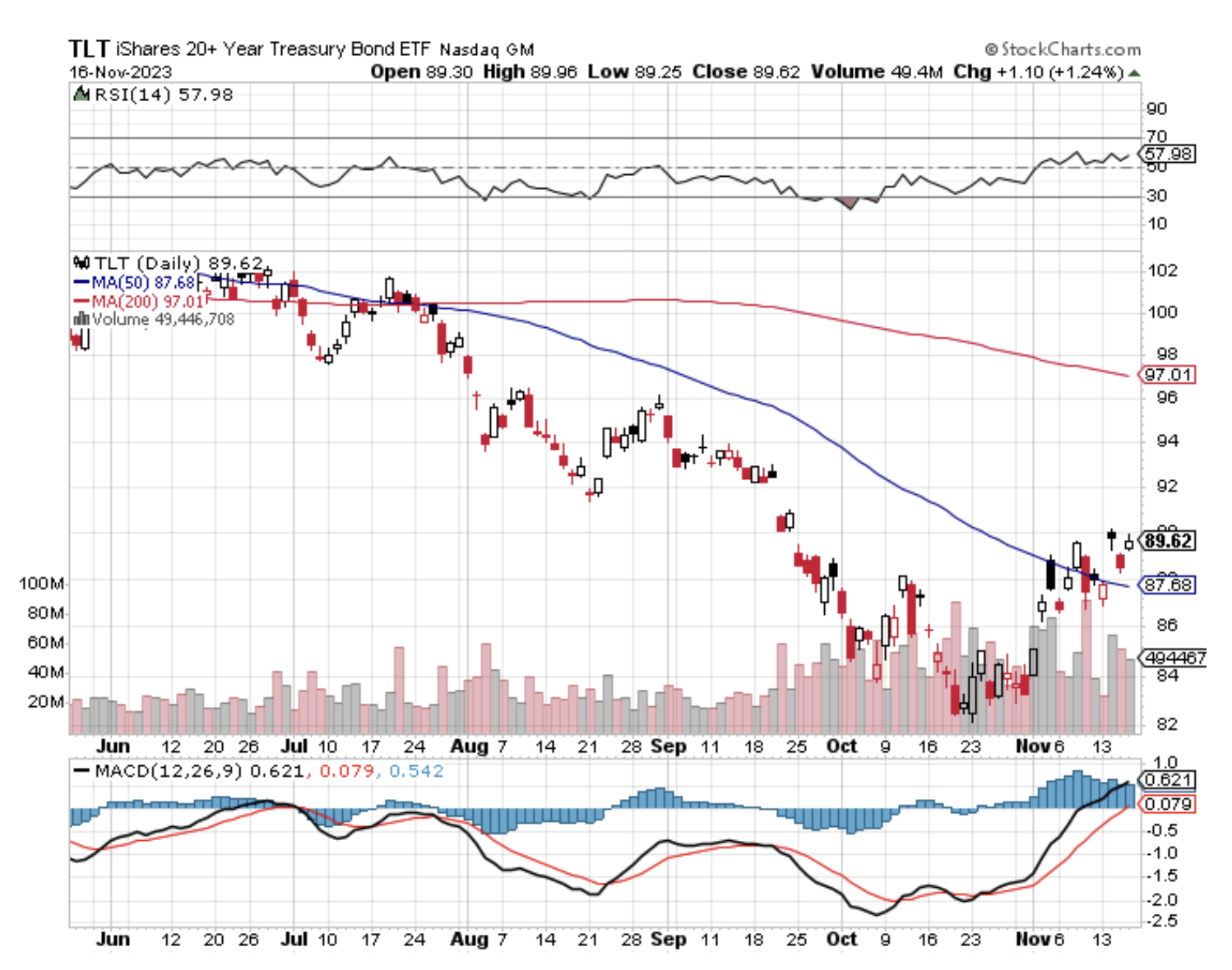
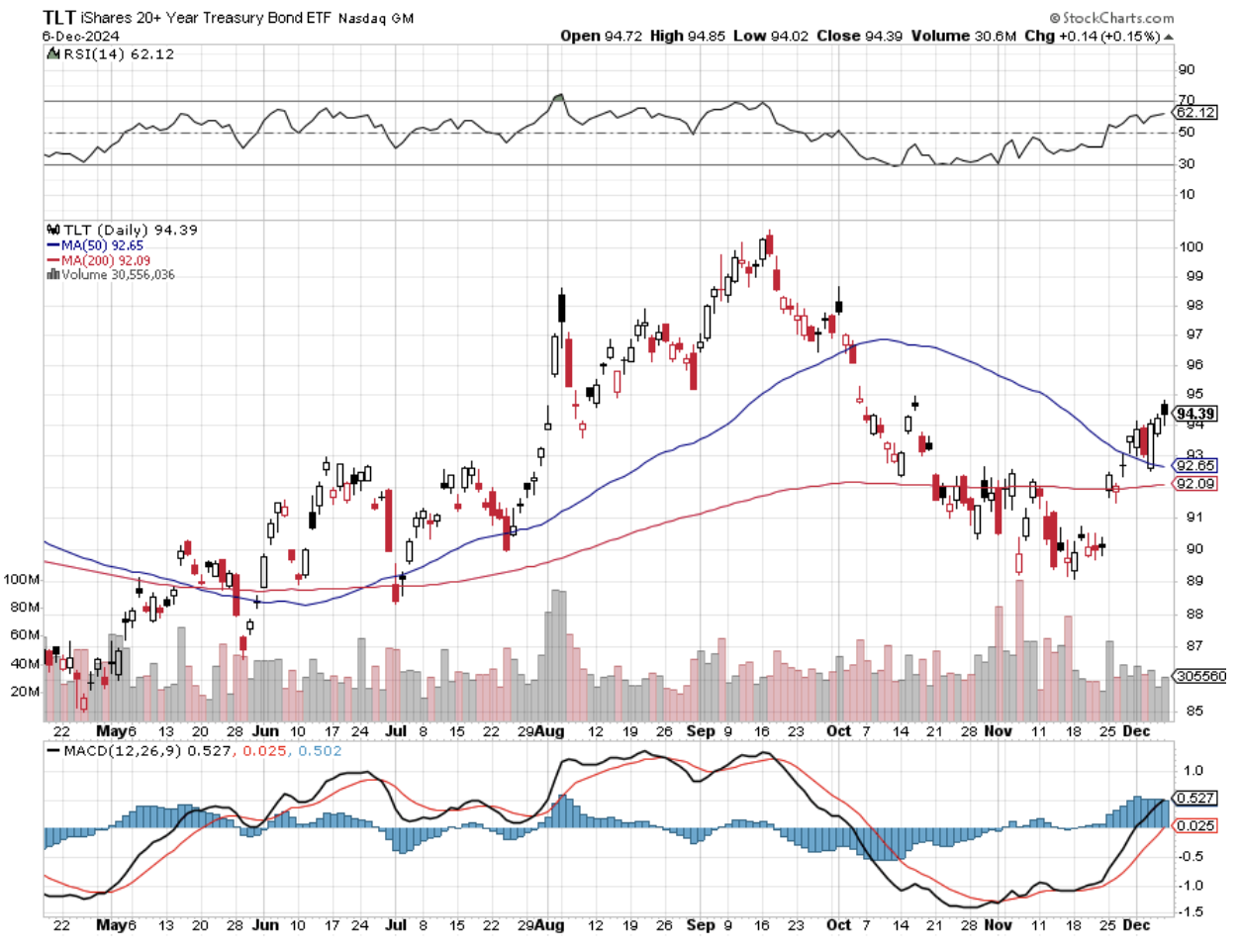
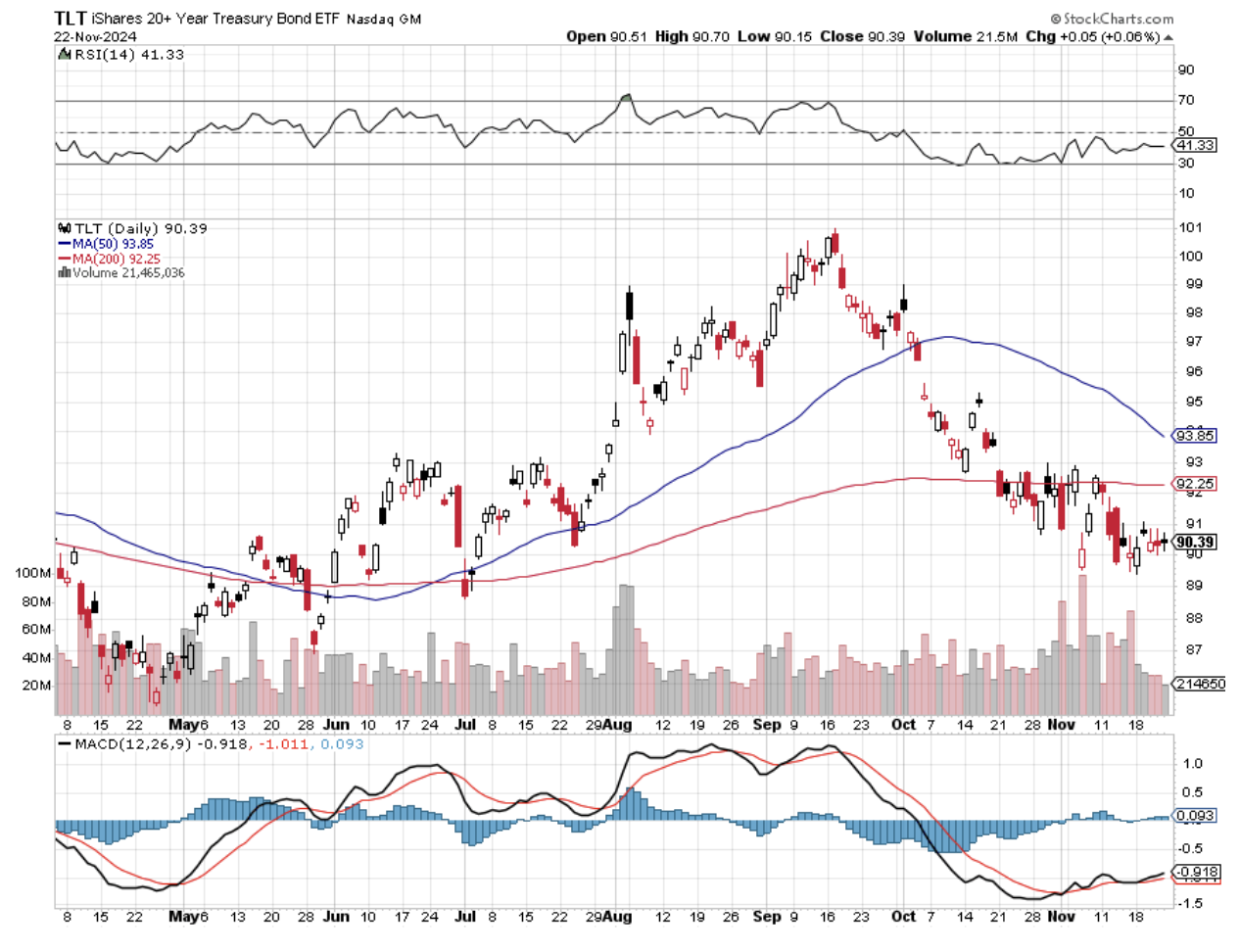
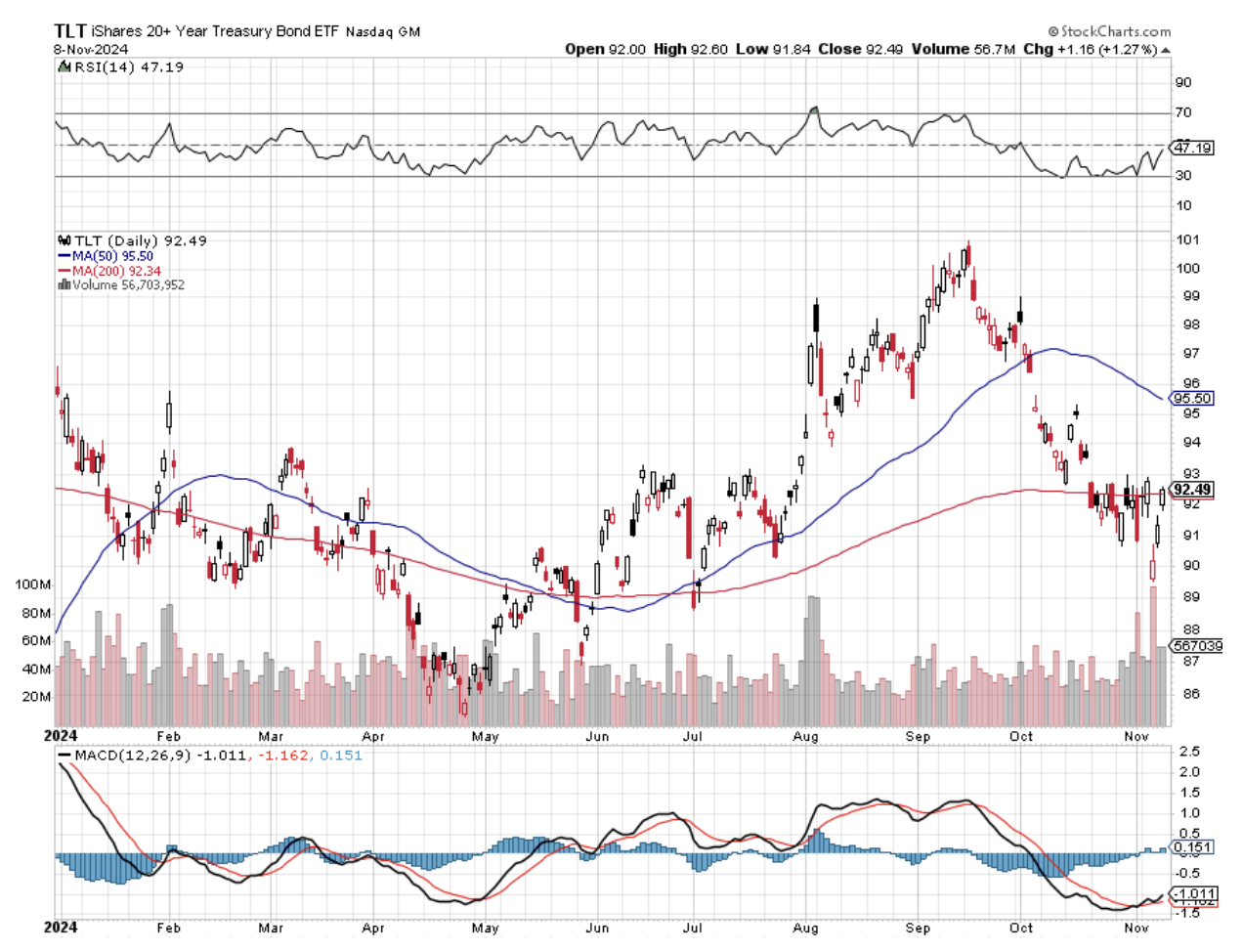
So, the best case for bonds is that the (TLT) chops around here. The worst case is that we retest new lows at $82. It won’t help that the Federal Reserve is cutting interest rates by another 25 basis points on December 18. The Fed controls only overnight interest rates, not the 10–20-year bond market. Even if Trump appoints an ultra-dove as chairman of the Federal Reserve in 2026, bond vigilantes may have other ideas.
Then there is the matter of trade tariffs. I have been through many of these. Remember when Nixon banned the import of Japanese textiles in 1972? They don’t make textiles in Japan anymore because their rising labor costs drove that industry to China.
Trade wars are a negative sum game. There are only losers. The game is to punish your neighbors faster than they are punishing you. They shrink the pie.
If we raise tariffs on our allies, they will retaliate in kind. This will be a problem for big tech, which gets 50%-60% of their sales from abroad. Europe will target uniquely American products, like Captain Morgan rum. Notice that the brand owner, major exporter Diageo (DGE), saw its shares slaughtered last week. As a result, the price of everything here will soon start going up.
The (TLT) will be a great position to have going into the next recession. But the market won’t start discounting that for two or three years. That makes the (TLT) a trade for another day. In any case, there are better fish to fry.
Sell all (TLT) LEAPS now before they go down even more.
About that recession. Every bear market in my lifetime started with a Republican president. The pattern is always the same. Tax cuts, an excess stimulus, and deregulation lead to a higher high in the stock market as euphoria prevails. This leads to inflation, high interest rates, and recession.
This is not exactly an original thought. High rates caused the bear markets of 2008, which took the Dow Average down -52%, 2000 (-30%), 1990 (-30%), 1987 (30%). Previous bear markets in 1979 and 1973 were caused by oil shocks. 2027?
We shall see.
So make hay while the sun shines. The current euphoria binge will last three to six months. After that, we will need to reassess and start shopping for short plays among the most extreme moves, which I have already done with Tesla.
The bottom line for all of this is that equity returns for the next four years will be lower than the last four. If a recession hits, they could well be zero. This won’t be a problem if you get out at the top, as I did in 2008, 2000, 1990, and 1987. Conclusion: You need me now more than ever.
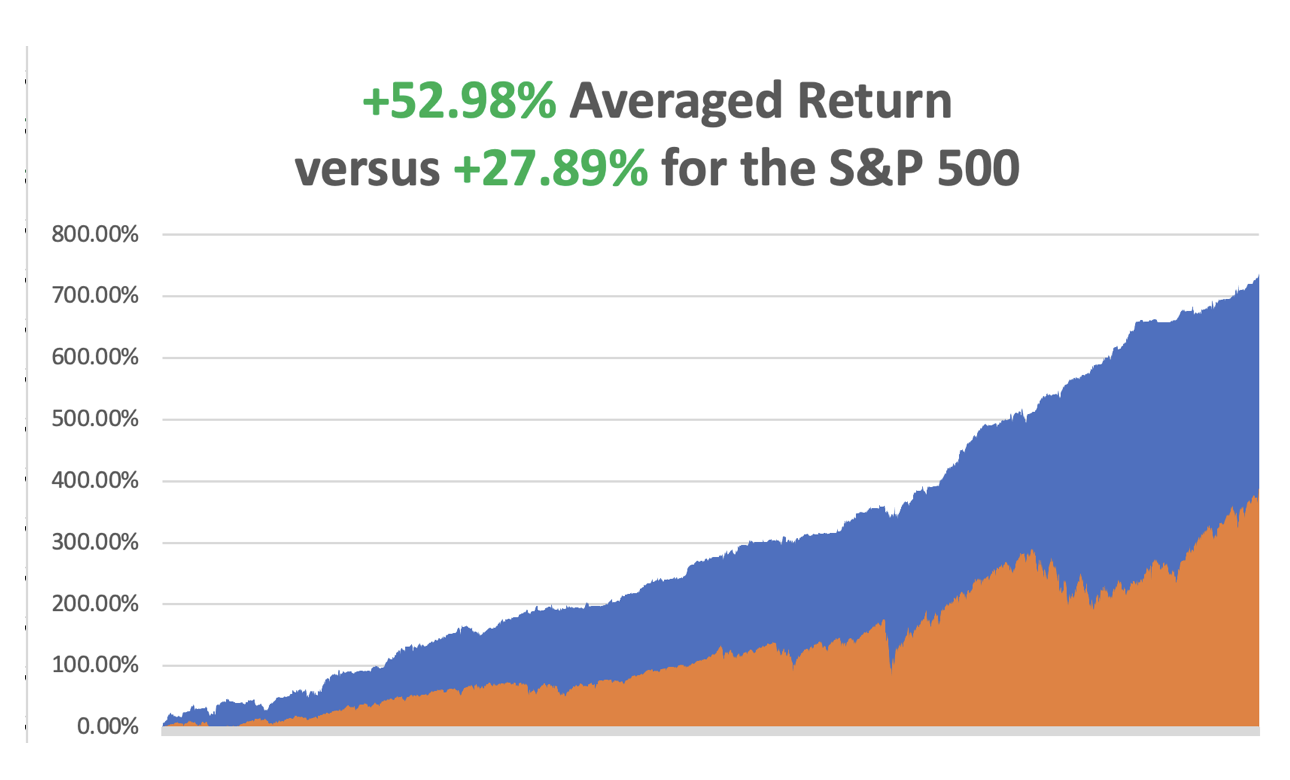
In November, we have gained a breathtaking +7.63%, thankfully because we went into the election with 70% cash and then poured money into deregulation plays. My 2024 year-to-date performance is at an amazing +60.77%. The S&P 500 (SPY) is up +25.73% so far in 2024. My trailing one-year return reached a nosebleed +69.73%. That brings my 16-year total return to +737.30%. My average annualized return has recovered to +52.98%.
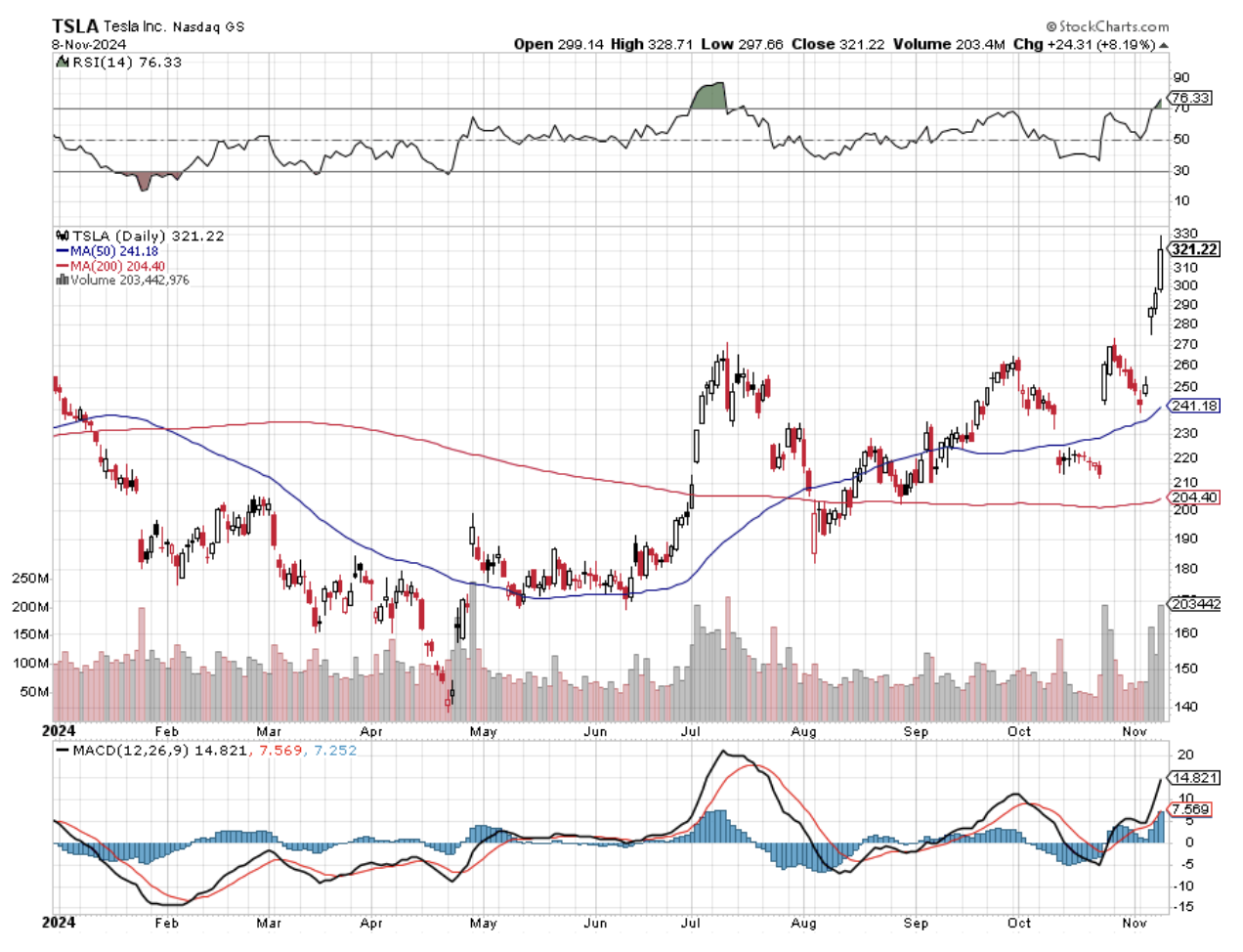
I went into the election with two positions in (JPM) and (NVDA), which turned out to be great deregulations plays. I stopped out of my one interest-sensitive play in (GLD) near cost. I piled on new deregulation plays in (TSLA), (CCJ), and (MS). I also added a new short in (TSLA), taking advantage of a monster 60% implied volatility for the options.
Some 63 of my 70 round trips, or 90%, were profitable in 2023. Some 69 of 89 trades have been profitable so far in 2024, and several of those losses were really break evens. Some 22 out of the last 25 trade alerts were profitable. That is a success rate of +88.80%.
Try beating that anywhere.
My Ten-Year View – A Reassessment
When we have to substantially downsize our expectations of equity returns in view of the election outcome. My new American Golden Age, or the next Roaring Twenties, is now looking at a headwind. The economy will completely stop decarbonizing. Technology innovation will slow. Trade wars will exact a high price. Inflation will return. The Dow Average will rise by 600% to 240,000 or more in the coming decade. The new America will be far more efficient and profitable than the old.
My Dow 240,000 target has been pushed back to 2035.
On Monday, November 11 is Veterans Day, so banks, the bond market, and the post office will be closed.
On Tuesday, November 12 at 6:00 AM EST, the NFIB Business Optimism Index takes place.
On Wednesday, November 13 at 8:30 PM, the Consumer Price Index rate is announced.
On Thursday, November 14 at 8:30 AM, the Producer Price Index is out.
On Friday, November 15 at 8:30 AM, the Retail Sales are announced. At 2:00 PM the Baker Hughes Rig Count is printed.
As for me, I am writing this from a High Sierra peak at 12,000 feet in the at the beginning of winter. It is 15 degrees, and the wind is gusting at 70 miles an hour, turning my backpack into a sail and practically blowing me off the mountain. Over the side, the next stop is 1,000 feet below. I am thirsty, but the water in my canteen is frozen solid.
I had planned to follow my tracks in the snow back down to my car, but the wind had totally obliterated them. So, I am using an old-fashioned army compass to navigate back in total whiteout conditions. Good thing I got the letter out early today!
Actually, I am not writing this, I am thinking it. If I took my hands out of my heavy mittens, my fingers would freeze in seconds. Remember, no fingers, no Trade Alerts!
A couple of times a year, I feel the need to abandon civilization and contemplate the meaning of life while accomplishing a great physical challenge. For me, this is a mandatory religious experience.
This time, I attempted to emulate one of the great physical feats in history. In October 1847, the Donner Party’s wagon train was hopelessly snowed in at a Sierra pass. Starvation loomed. When word reached Sacramento, four rescue parties were sent out, only to be repulsed by driving blizzards.
Finally, a giant of heroic strength, the famous Snowshoe Thompson, who stood at 6’6”, broke through. He emptied his massive wood frame backpack of food and then stuffed it with the two smallest children he could find. He snowshoed back to safety 120 miles over three days, nonstop. The kids grew up to become the founding fathers of modern-day Marin County, California.
I thought, “Gee, I wonder if I could do that?”
So, I sought to replicate the feat, subject to a few modern compromises. Today, Interstate 80 sits astride Thompson’s original route. Instead, I determined to snowshoe 120 miles of the Tahoe Rim Trail around Lake Tahoe, with an average elevation of 9,000 feet. I figured that the 60-pound pack I usually carry was worth the weight of two kids.
My one concession to my advanced age was that instead of going nonstop or camping out at night, I would break the epic trek into ten days at 12 miles each. That allowed me to repair my Tahoe lakefront estate nightly to thaw out my toes, treat injuries, and get some shuteye. Howling winds keep you awake at night.
I fasted while accomplishing this, eating only 600 calories a day of raw fruit and nuts. I’m down about ten pounds since I began.
Hint to readers: almonds have unique, hunger-fighting chemical properties. Eat a handful before you go to sleep, and hunger pangs won’t wake you in the middle of the night. I plan on eating some industrial strength this Christmas, things like Tom and Jerry’s and See's Peanut Brittle, so I need to get ahead of the curve. (note to self: 223 calories in a cup of eggnog).
My friends call this a death march, make excuses why they can’t come, and worry about my sanity. I think of it as a cleansing and a general stocktaking, and I feel great! I always go alone. How many other 72-year-olds do you know who are in a condition to do this sort of thing?
Sure, I might break my ankle someday, die of exposure, and have my bones scattered by wild animals. Who cares? It would be a good death. It’s worth it.
The scenery up here is so spectacular that I almost didn’t feel the pain. Almost. On more than one occasion, while gazing at the endless shades of blue the pristine waters of Lake Tahoe offered, I tripped on my snowshoes.
Once, I landed on some tree roots, which cut right through to the bone in my left forearm. I managed to stop the bleeding by tying off a tourniquet with my teeth. When I got home, I then soaked the wound in Jack Daniels to ward off infection. It works every time! (see pics below). In a pinch, Stolichnaya Vodka works just as well. It’s an old combat first-aid trick.
While hiking along the East Ridge, succeeding mountain ranges in northern Nevada explored every shade of purple. I managed to summit each major peak around the body of water the Washoe Indians called “da-ow-a-ga”, or edge of the lake, which they considered the origin of the universe. Those included Squaw Peak (8,885), Mt Tallac (9,735 feet), Monument Peak (10,067), and Mount Rose (10,776 feet). When the trail got too steep, my trusty ice ax and crampons saw me through.
I was constantly reminded that I was in the “Old West” by the many artifacts I encountered. Prominent granite boulders displayed prehistoric Indian petroglyphs. I found a few abandoned log cabins, complete with potbelly stoves and canned food from the 1850s. Rusted-out cast iron mining equipment was strewn about everywhere, covered with snow. Along the old Pony Express Trail, one finds old horseshoes and the occasional ancient bottle turned purple by the sun.
Lake Tahoe supplied all the water and bracing wood for the Comstock silver mining boom of the 1870s. A hundred years ago, not a single tree was left standing, except for the southwest section of the lake owned by mining baron “Lucky Baldwin” who won it in a card game and made it his private retreat. It was all covered in meticulous and colorful detail for the Virginia City newspaper, The Territorial Enterprise, by a budding young newspaperman who went by the name of Mark Twain.
My ambitious goals often saw me hiking well into darkness. After the batteries died on my three backup headlamps, that flashlight app on the iPhone 5s proved a real lifesaver. It’s good for a full hour and illuminates the eyes of onlooking wildlife a bright yellow up to 200 yards away.
One night, I got back to the car and found that my keys had frozen and were useless. So, I sat on them. In 15 minutes, the car flashed its lights, and the doors magically opened. There was barely enough charge to get the engine started, a trick I accomplished by holding the key right up to the ignition button. Toyota designs them to do this. It’s no fun getting stranded at 10,000 feet at 10 degrees in the middle of nowhere. No Auto Club here!
I often looked behind to make sure a mountain lion was not stalking me. Don’t worry. Only 20 people have been killed by mountain lions in California over the last 100 years. More are killed by their pet dogs every year in the Golden State, mostly by pit bulls. Besides, I am good at staring down mountain lions and black bears. It is just a matter of attitude.
The old souvenir stand for the Ponderosa Ranch, of the TV series Bonanza fame, is now the Tunnel Creek Station Café and mountain bike rental. Good luck to Patty and Max! The nearby Flume Trail offers some of the best cross-country skiing in the world.
Of course, I am not just thinking Great Thoughts during these hikes. An endless series of economic and market data points are constantly churning around in the back of my mind, and I occasionally reach a “Eureka” moment. I keep a pen and notebook in my pack so I don’t forget these earth-shaking revelations.
It was during a similar expedition up the face of the Matterhorn in the Swiss Alps (14,692 feet) last summer when I realized that the S&P was beginning a long run up that would take it to 6,000 by yearend. I’ll never forget the expression on my guide’s face when I stopped midpoint through an abseil and started feverishly writing notes. That little maneuver cost me a bottle of schnapps. The readers and Trade Alert followers prospered mightily.
What is this year’s “Eureka” conclusion? The stock market could keep going up into 2025 but with more volatility. This year was a cakewalk, as my 69.3% trailing return testifies. After that, stocks will be unable to ignore the consequences of a Trump election.
I have been doing this sort of thing since I was 22 and was in somewhat better shape. Then, I was one of the few foreigners attending karate school in Japan, learning the iron discipline and focus of samurai warriors, known as “bushido”. The actor, Steven Segal, studied at a competing school down the street.
Every February, we underwent “kangeiko”, or “winter training. This involved the entire class running the five miles around Tokyo’s Imperial Palace in a pack, suffering freezing temperatures, barefoot, every day for a week. When we returned to the dojo, we were hosed down with ice-cold water, our feet senseless, bloody stumps. Then we would train for three more hours.
The idea was that the extreme pain and exhaustion would deliver insights into us and the world at large. It worked. At least one current reader endured the experience with me and is still alive. Remember that, David? By the way, thanks for knocking out my front teeth.
On the way home, I stopped in Sacramento for a well-deserved double cheeseburger, fries, and chocolate shake at In and Out Burger. You can’t take this diet and health thing too seriously. Snowshoe Thompson would have envied me.
Well, next week, it is back to normal. I’ll be glued in front of my screens, scouring the planet for the next great trading opportunity, although I’m not sure I’ll find many. Buying market tops is against my nature. What are you supposed to do when all of your forecasts and predictions come true? I have a feeling that the answer is not to make more forecasts and predictions.
Perhaps the right answer is to take another hike. Anyone care to join me?

Your Intrepid Reporter
Good Luck and Good Trading,
John Thomas
CEO & Publisher
The Diary of a Mad Hedge Fund Trader

Global Market Comments
October 25, 2024
Fiat Lux
Featured Trade:
(OCTOBER 23 BIWEEKLY STRATEGY WEBINAR Q&A),
(TLT), (JNK), (CCJ), (VST), (BRK/B), (AGQ), (FCX), (TM), (BLK), (NVDA), (TSLA), (T), (SLV), (GLD), (MO), (PM)
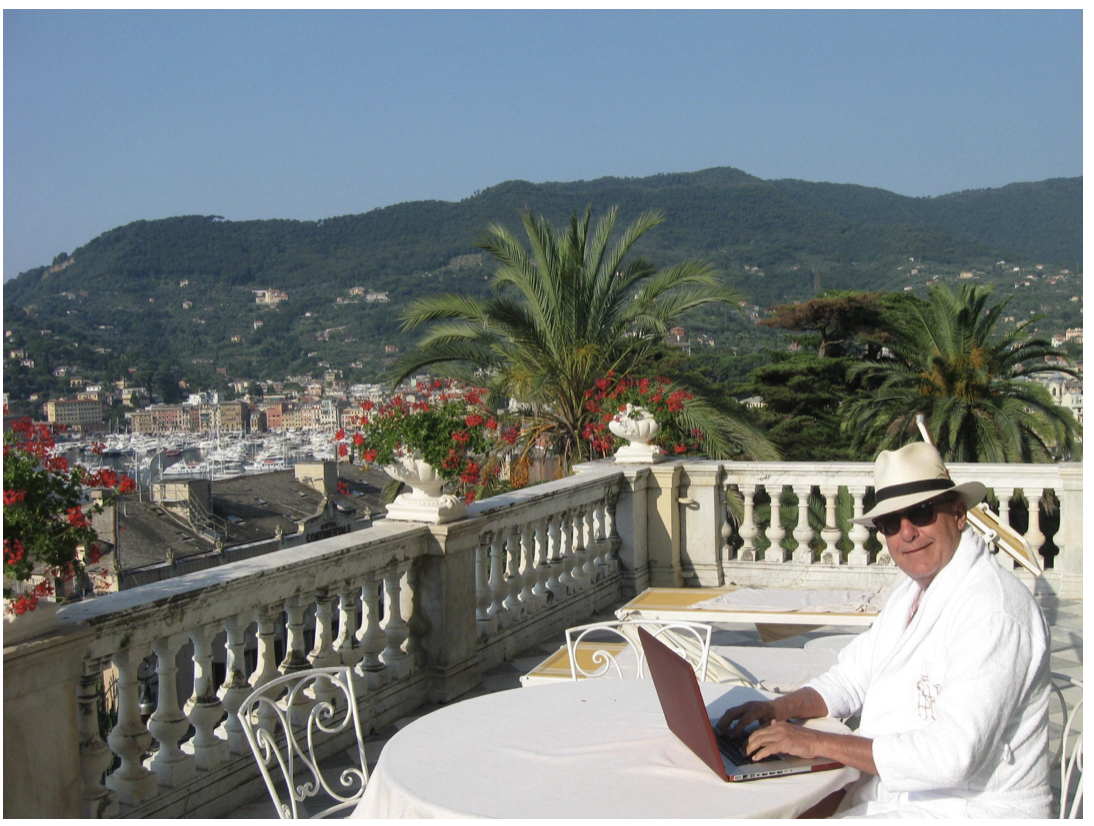
Below, please find subscribers’ Q&A for the October 23 Mad Hedge Fund Trader Global Strategy Webinar, broadcast from Lake Tahoe, Nevada.
Q: What the heck is happening with the iShares 20+ Year Treasury Bond ETF (TLT)? It keeps dropping even though interest rates are dropping. It seems to be an anomaly.
A: It is. What’s happening is that bonds are discounting a Trump win, and Trump has promised economic policies that will increase the national debt by anywhere from $10 to $15 trillion. Bonds don’t like that—you borrow more money through bonds, and the price goes up. Interest rates could go as high as 10% if we run deficits that high (at least the bond market may go that low.) On the other hand, stocks are discounting a Harris win. Stocks went up 60% over the last four years. I did roughly double that. And a Harris win would mean basically four more years of the same. So stocks have been trading at new all-time highs almost every day until this week when the election got so close that the cautious money is running to the sidelines. So what happens if there's a Harris win? Bonds make back the entire 10 points they lost since the Fed cut interest rates. And what happens if Trump wins? Bonds lose another 10 points on top of the 10 points they've already lost. Someone with a proven history of default doesn't exactly inspire confidence in the bond market. So that is what's going on in the bond market.
Q: Will the US dollar continue its run into year-end?
A: No, I have a feeling it’s going to completely reverse in two weeks and, give up all of its gains, and resume a decade-long trend to new lows. So, I think everything reverses after election day. Stocks, bonds, commodities, precious metals—the only thing that doesn't is energy, and that keeps going down because of global oversupply that even a Middle Eastern war can’t support.
Q: Are you expecting a major correction in 2025?
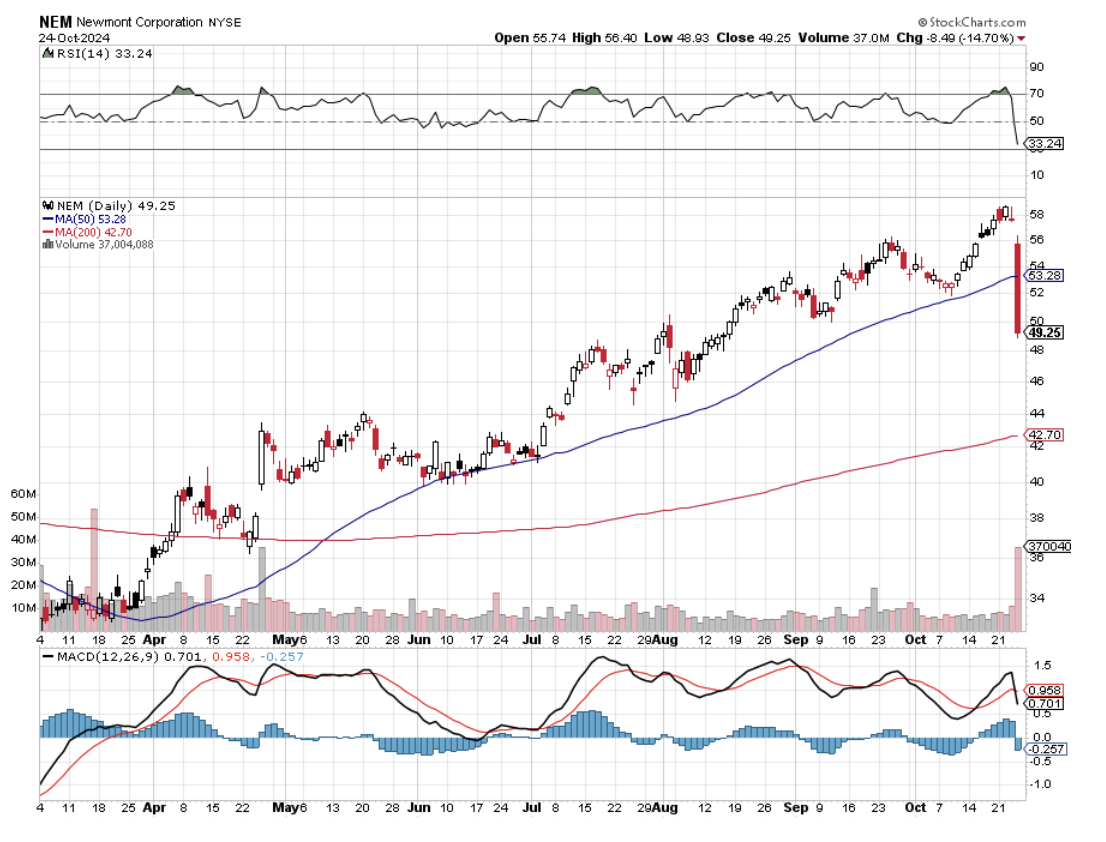
A: I am, actually. We basically postponed all corrections into 2025 and pulled forward all performance in 2024. So, I think we could get at least a 10% correction sometime next year, and that is normal. Usually, we get a couple of them. This year, we only got the one in July/August. So, back to normal next year, which means smaller returns from the stock market. In fact, smaller returns from everything except maybe gold and silver. This is why they're going up so much now.
Q: Are you discounting a huge increase in the deficit under Biden-Harris?
A: No, the huge increase in the deficit is behind us because we had all the pandemic programs to pay for, and if anything, technology inflation should go down because of accelerating technology. We're already seeing that in many industries now, so I don't think there'll be any policy changes under Harris, except for little tweaks here and there. All the big policies will remain the same.
Q: What is a dip?
A: A dip is different for every stock and every asset class. It depends on the recent volatility of the underlying instrument. You know, a dip in something like McDonald's (MCD) or Berkshire Hathaway (BRK/B) might be 5%, and a dip in Nvidia (NVDA) might be 15 or 20%. So, it really depends on the volatility of the underlying stock, and no two volatilities are alike.
Q: What are your top picks on nuclear?
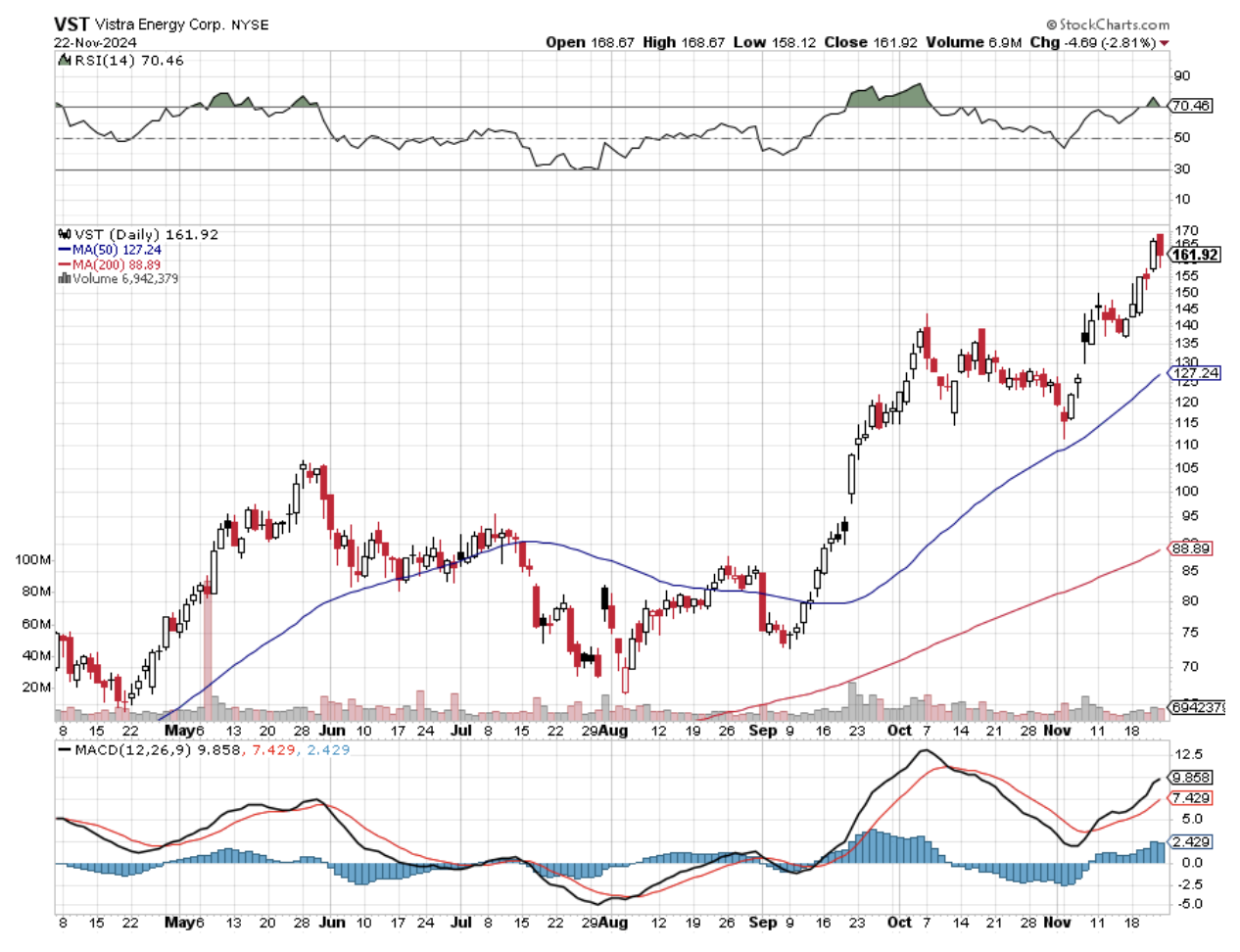
A: Well, we've been in Cameco (CCJ), the Canadian uranium company, since the beginning of the year, and it has doubled. Vistra Corp (VST) is another one, and there are many more names after that.
Q: What are your thoughts on Toyota (TM)?
A: I love Toyota for the long term. The fact that they were late into EVs is now a positive since the EV business is losing money like crazy. They're the ones who really pioneered the hybrid business, and I’ve toured many of their factories in Japan over the years. Great company, but right now, they're being held back by the slow growth of the Japanese economy.
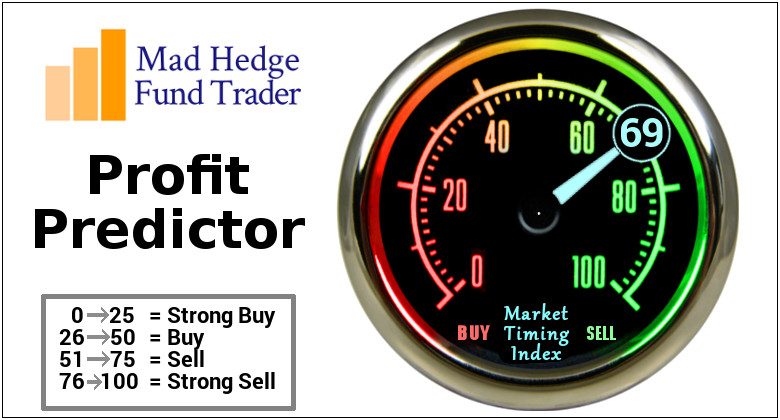
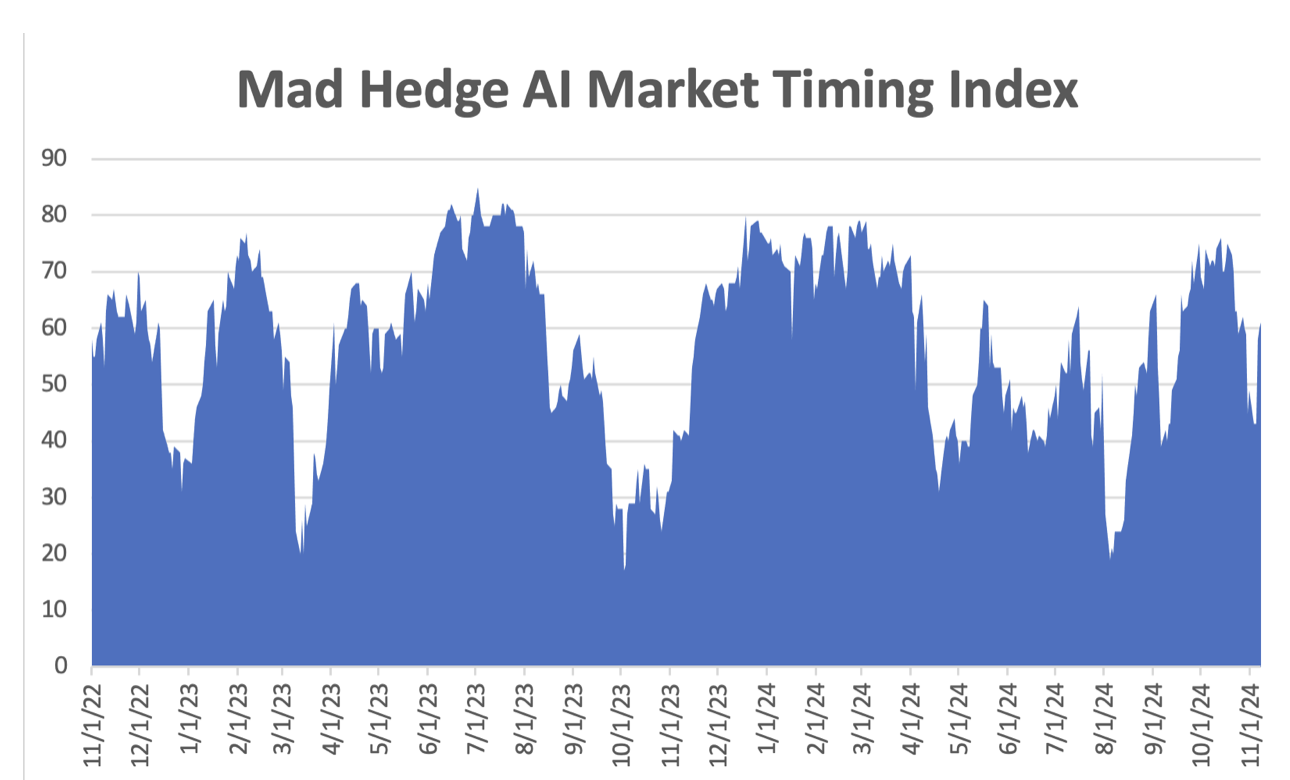
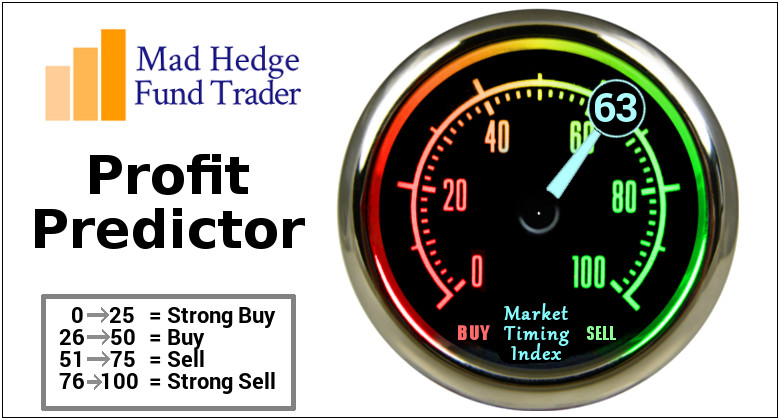
Q: Market timing index says get out. We're heading into the seasonally bullish time of the year. Should we be in or out over the next two months?
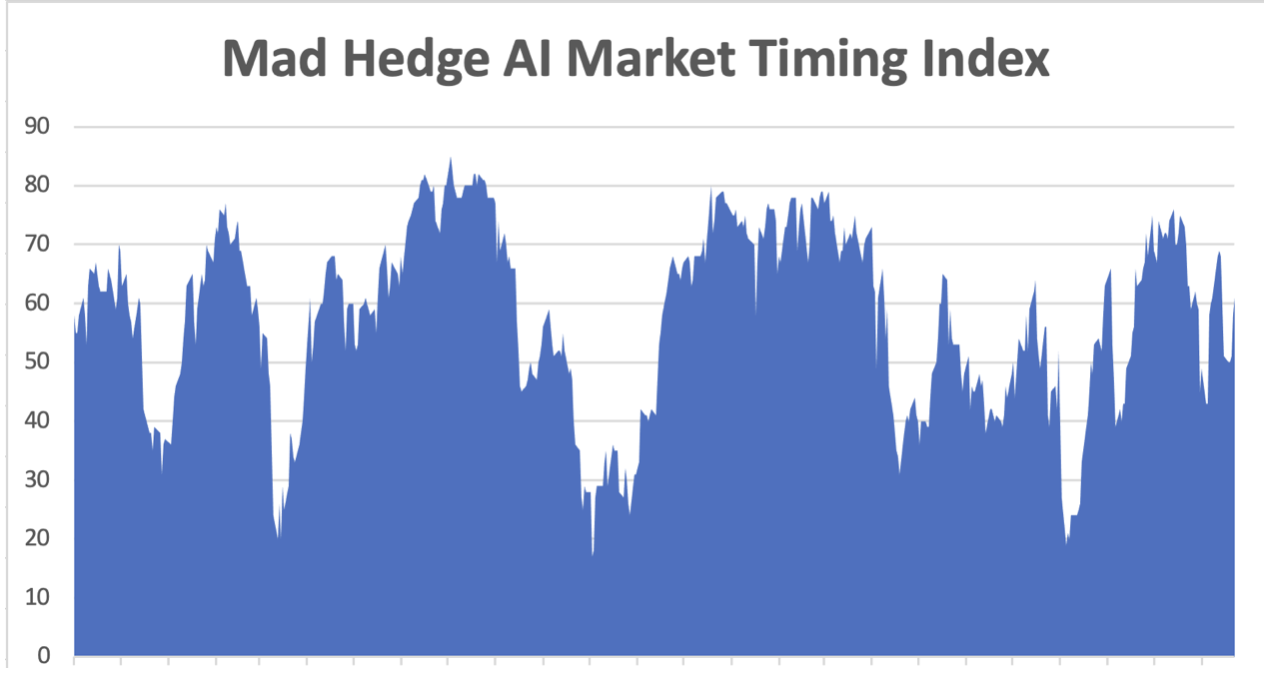
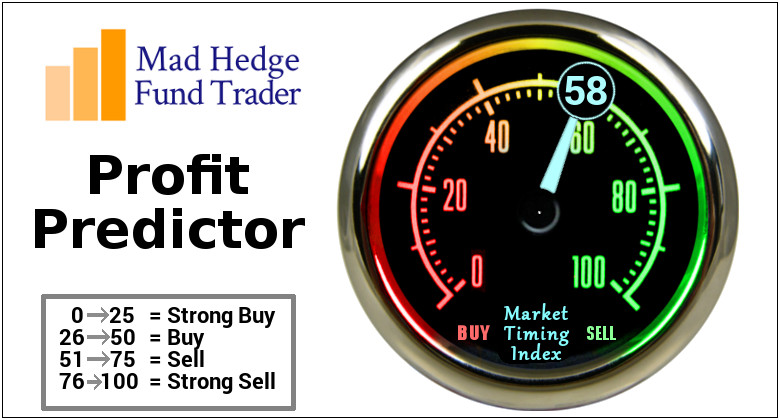
A: I would be in as long as you can handle some volatility around the stock market. When the market timing index is at 70, that means any new trades that you initiate have a 30% chance of making money. Now, they can sit at highs sometimes for months, and it actually did that earlier this year. Markets can get overbought and stay overbought for months, and that is a really difficult time to trade. If you're a long-term investor, you just ignore all of this and just stay in all the time.
Q: Silver has broken out; what's next?
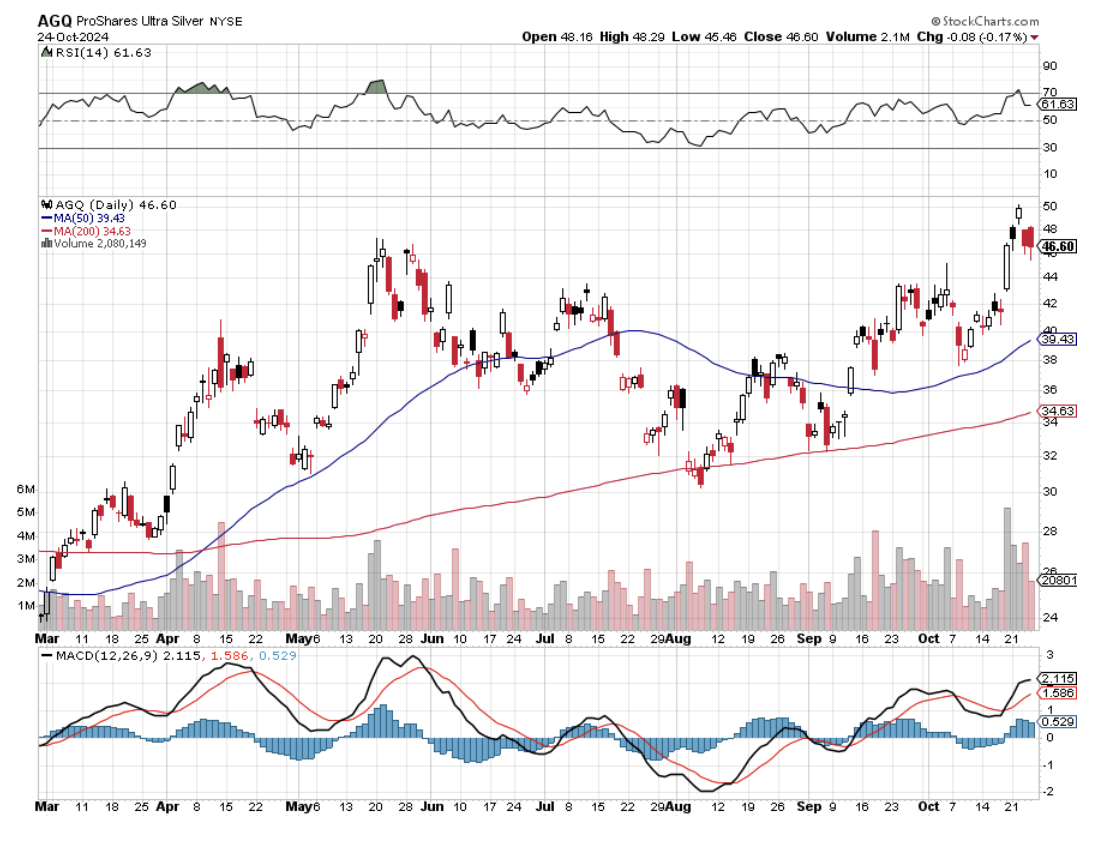
A: Silver had had a massive run since the beginning of September—some 30%. We're up to about $31/oz. The obvious target for silver is the last all-time high, which I think we did 40 years ago, and that was at $50/oz. So there's another easy 60% of upside in silver. That's why I put out a LEAPS on the 2x long silver play (AGQ), and people are already making tons of money on that one. I think Silver will be your big performer going forward.
Q: Too late to invest in Chinese stocks?
A: No, it's selling off again. IT Could retest the lows, especially if the government sits on its hands for too long with more stimulus packages.
Q: Is big tech still a good bargain buy?
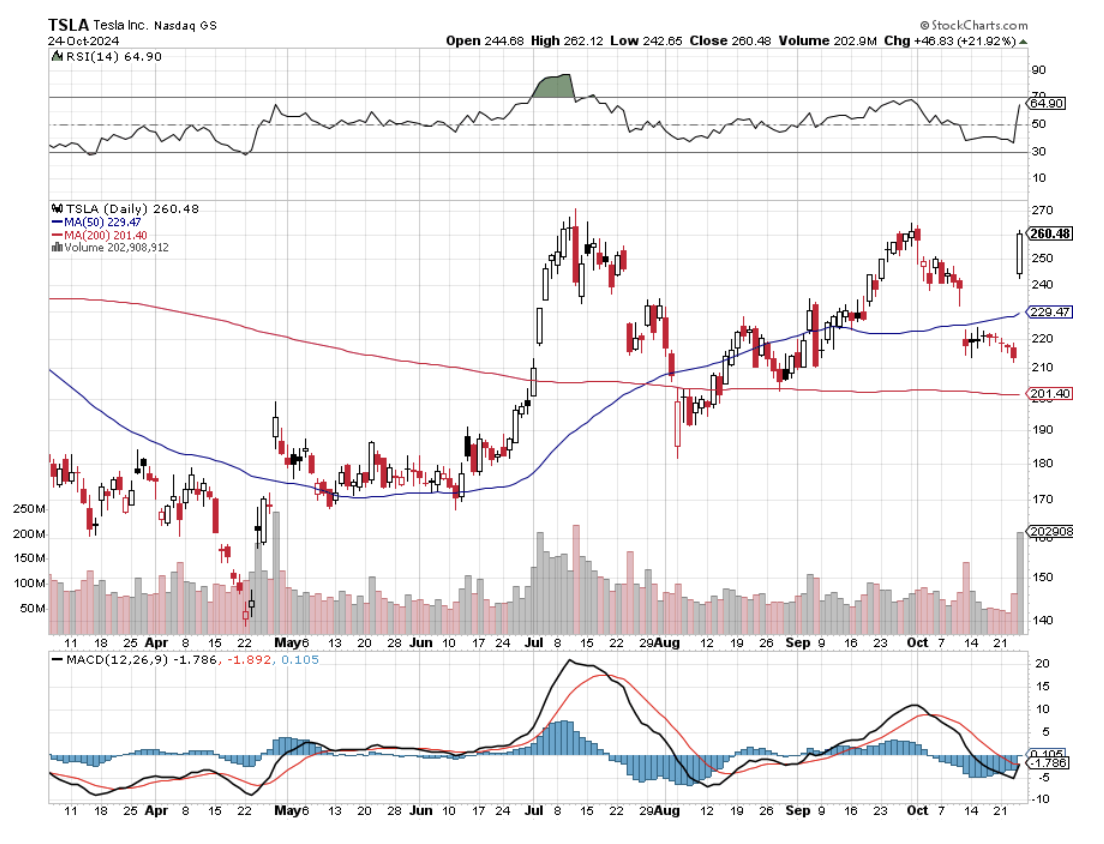
A: I would take “bargain” out of that. The rule on tech investing is you're always buying expensive stuff because the future always has a spectacular outlook. So, tech investing is all about buying something expensive that gets more expensive. This is exactly what tech stocks have been doing for the last 50 years, so it's not exactly a new concept. I know tons of people who never touched Nvidia (NVDA) or Tesla (TSLA) because it was too expensive. (NVDA) was too expensive when it was $2, and now it's even more expensive at $140 or, in Tesla's case, $260.
Q: Will Tesla (TSLA) go up or down tonight?
A: I have no idea. Anybody else who says they have an idea is lying. You go to timeframes that short, and you are subjecting yourself to random chance; even the weather could affect your position by tomorrow.
Q: How uncomfortable is the stem cell extraction?
A: Extremely uncomfortable. If they say it won't hurt a bit, don't believe them for a second. They take this giant needle hammer it into your backbone to get your spinal fluid (and I count the hammer blows.) Last time, I think I got up to 50 before I couldn't take the pain anymore, and they extracted the spinal fluid to get the stem cells. So, for those who don't tolerate pain very well, this is absolutely not for you.
Q: Why is Intel (INTC) stock doing so badly this year?
A: Low-end products, no new products, poor manager. Whenever a salesman takes over a technology company, you want to run a mile. That's what happened at Intel because they have no idea how the technology works.
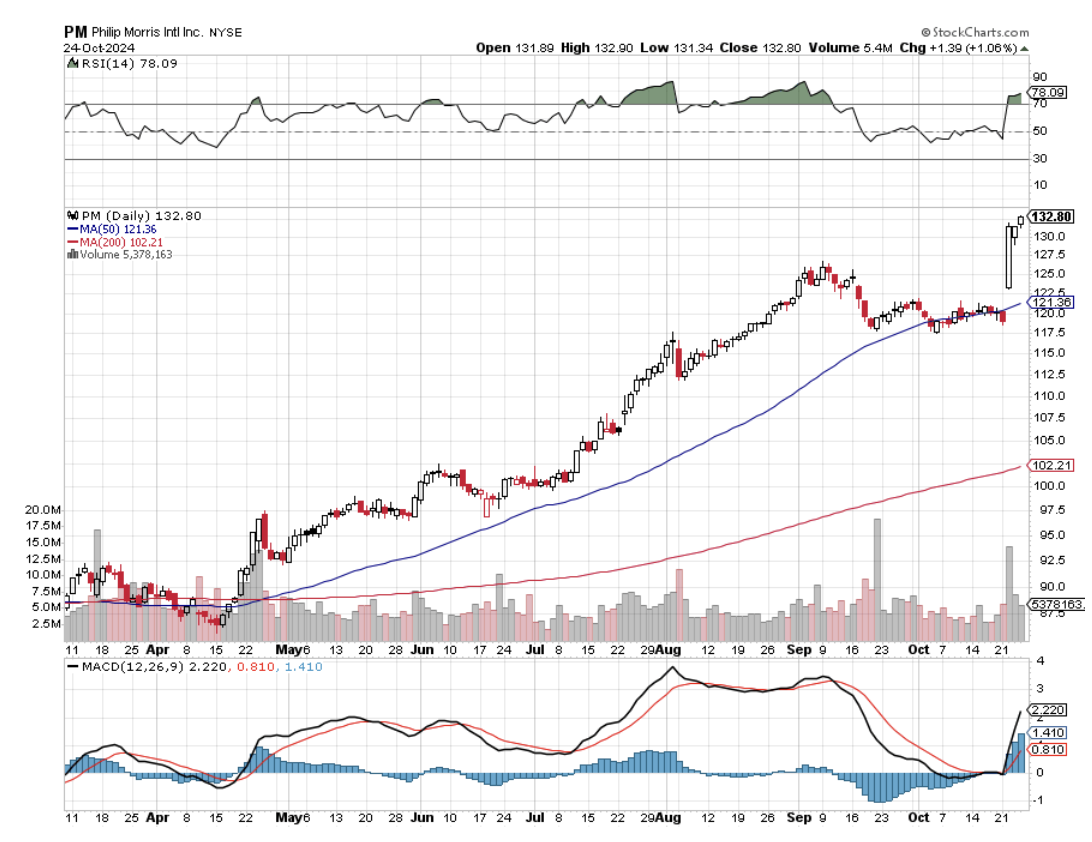
Q: Should I sell my Philip Morris (PM) stock? It's just had a huge run-up.
A: No. For dividend holders, this is the dream come true. They pay a 4.1% dividend. This was a pure dividend play ever since the tobacco settlement was done 40 years ago. Then they bought a Swedish company that has these things called tobacco pouches, and that has been a runaway bestseller. So, all of a sudden, the earnings at Philip Morris are exploding. The dividend is safe. I think Philip could go a lot higher, so buy PM on dips. And I will dig into this story and try to get some more information out of it. I love high growth high dividend plays.
Q: What's the best play for silver?
A: I'm doing the ProShares Ultra Silver (AGQ), which is a 2x long silver and has gone from $30 to $50 since the beginning of September. If you want to sleep at night (of course, I don't need to), then you just buy the iShares Silver Trust (SLV), which is a 1x long silver play and that owns physical silver. I think it's held in a bank vault in London.
Q: Time to sell Copper (FCX)?
A: Short term, yes, as China weakens. Long-term, hang on because we are coming into a global copper shortage, and that'll take the price of copper up to $100 or (FCX) up to $100. So yes, love (FCX) for the long term. Short term, it has a China drag.
Q: Will inflation come back in 2025?
A: No, it won't. Technology is accelerating so fast, and AI is accelerating so fast it's going to cut costs at a tremendous rate. And that's why you're seeing these big tech companies laying off people hundreds at a time; it's because the low-end jobs have already been replaced by AI. There is a lot more of that to come. I'm not worried about inflation at all.
Q: Do you disagree with Tudor Jones on inflation?
A: Yes, I disagree with him heartily. Tudor Jones is talking his own book, which means he doesn't want to get a tax increase with a Harris administration. So he's doing everything he can to talk up Trump, and that isn't helping me with my investment strategy whatsoever. By the way, Tudor Jones is often wrong, you know; he made most of his money 30 years ago. And before that, it was when he was working for George Soros. So, yes, I agree with the man from Memphis. He’s in the asset protection business. You’re in the wealth creation business, a completely different kettle of fish.
Q: Do you hold the ProShares Ultra Silver (AGQ) overnight?
A: I've been holding my (AG for four months, and the cost of carry-on that is actually quite low because silver doesn't pay any dividend or interest. There really isn't much of a contango in the precious metals anyway—it's not like oil or natural gas. It’s a 3X plays that you really shouldn’t hold overnight.
Q: Where is biotech headed?
A: Up for the long term, sideways for the short term. That's because, after the election, risk on will go crazy. We could have a melt-up in stocks, and when that happens, people don't want to buy “flight to safety” sectors like Biotechs and healthcare; they want to buy more Nvidia. Basically, that's what happens. More Nvidia (NVDA), more Meta (META), and more Apple (APPL). They want to buy all the Mag7 winners. Well, let's call them the Mag7 survivors, which are still going up after a ballistic year.
Q: Any suggestions on where to park cash for five to six years?
A: 90-day T-Bills are yielding 4.75%. That would be a safe place to put it. And you might even peel off a little bit of that—maybe 10% — and put that into a junk fund, which is yielding 6%. You're still getting a lot of money for cash—but not for much longer. The golden age of the 90-day T-bill is about to end.
Q: BlackRock (BLK) keeps growing, trillions after trillions. Why is the stock so great at building value?
A: Because you get a hockey stick effect on the earnings. As the stock market goes up, which it always does over time, their fees go up. Plus, their own marketing brings in new money. So, you have multiple sources of income rising at a rapid pace. I'm kicking myself for not buying the stock earlier this year.
Q: How does any antitrust action by the government affect stock prices?
A: Short-term, it caps them. Long term, it doubles them because when you break up these big companies, the individual pieces are always worth a lot more than the whole. We saw that with AT&T (T), where you're able to sell the individual seven pieces for really high premiums. So, that's why I'm never worried about antitrust.
Q: Do dividend stocks provide little upward appreciation since they're paying investors already?
A: To some extent, that's true because low-growth companies like formerly Philip Morris (PM) and Altria (MO) had to pay high dividends to get people to buy their stock because the industries were not growing. AT&T is another classic example of that—high dividend, no growth. But that does set you up for when a no-growth company can become a high-growth company, and then the stocks double practically overnight. And that's what's happening with Philip Morris.
Q: Are you buying physical gold (GLD) and silver (SLV)?
A: I bought some in the 1970s when it was $34/oz for gold, and the US went off the gold standard, and I still have them. It's sitting in a safe deposit box in a bank I will not mention. The trouble with physical gold is high transaction costs—it costs you about 10% or more to buy and sell. It can be easily stolen—people who keep them hidden at home or have safes at home regularly get robbed. And what if the house burns down? You really can't insure gold holdings accept with very high premiums. So, I've always been happy buying the gold ETFs. The tracking error is very small unless you get into the two Xs and three Xs. Gold coins are good for giving kids as graduation presents—stuff like that. I still have my gold coins for my graduation a million years ago (and that was a really great investment! $34 up to, you know, $2,700.)
To watch a replay of this webinar with all the charts, bells, whistles, and classic rock music, just log in to www.madhedgefundtrader.com , go to MY ACCOUNT, click on GLOBAL TRADING DISPATCH, then WEBINARS, and all the webinars from the last 12 years are there in all their glory.
Good Luck and Good Trading
John Thomas
CEO & Publisher
The Diary of a Mad Hedge Fund Trader
2015 in Italy
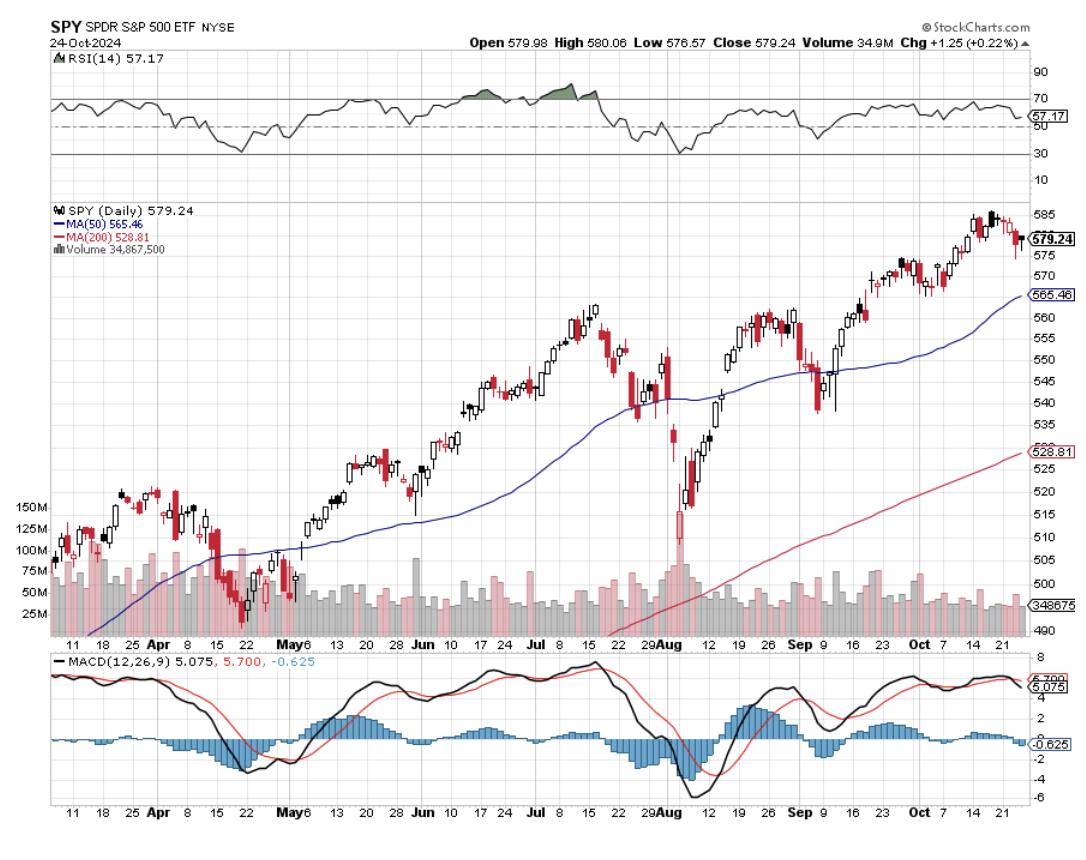
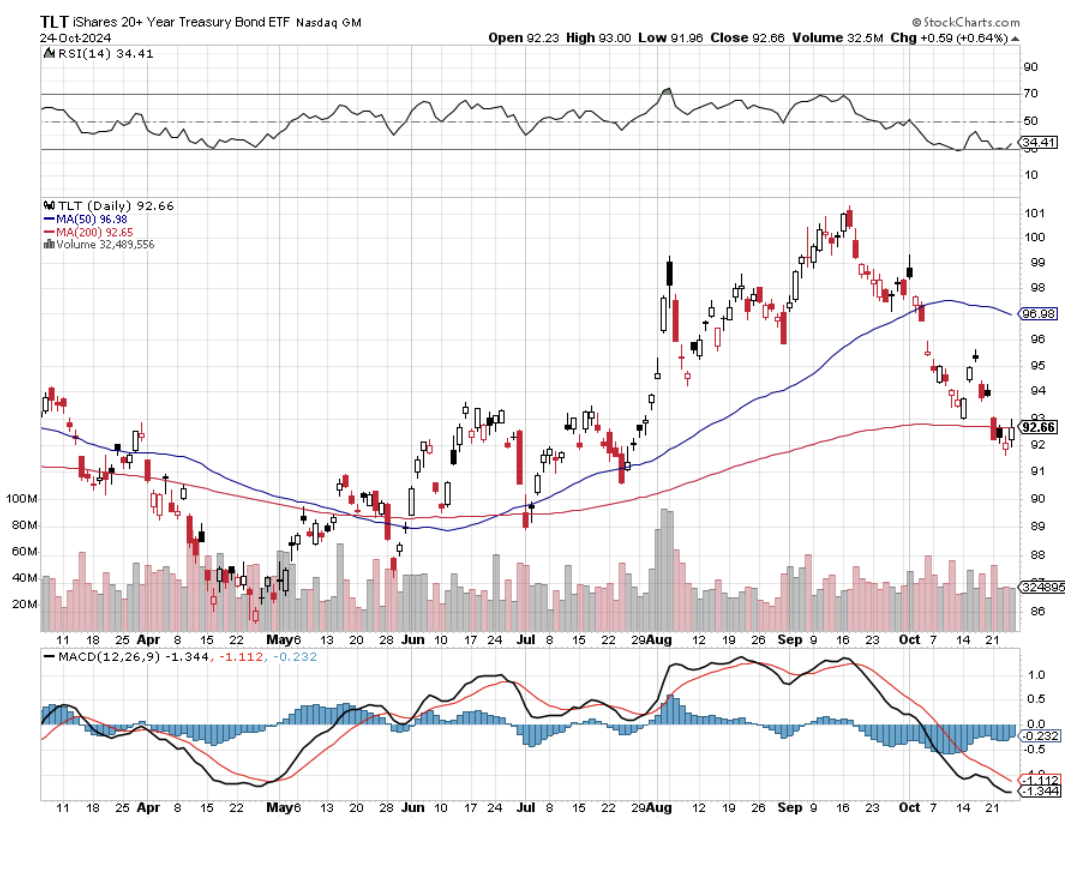
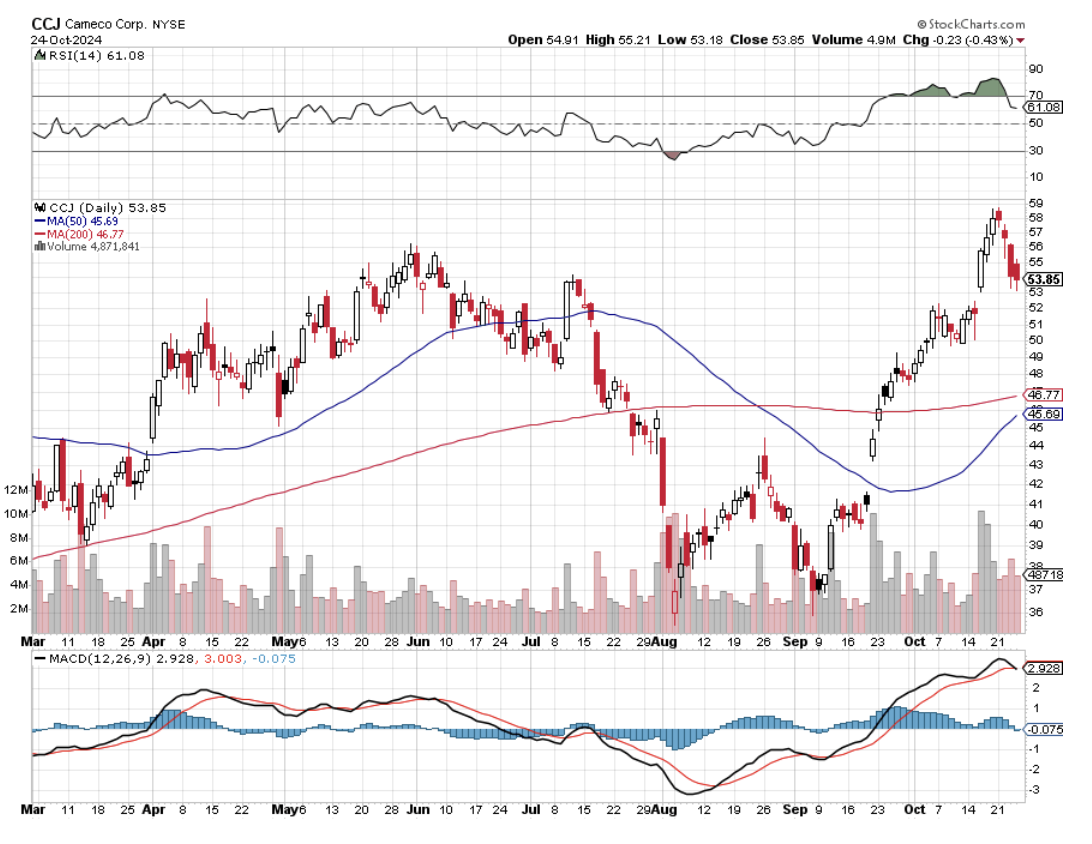
Global Market Comments
November 17, 2023
Fiat Lux
Featured Trade:
(NOVEMBER 15 BIWEEKLY STRATEGY WEBINAR Q&A),
(TLT), (AMD), (SPY), (FXA), (WYNN), (MGM), (RCL), (CCL), (TSLA), (SCHW), (BLK), (JPM), (XHB), (TSLA), (FXI), (FCX)

Below please find subscribers’ Q&A for the November 15 Mad Hedge Fund Trader Global Strategy Webinar, broadcast from Incline Village, NV.
Q: I was a little surprised that you closed the (TLT) $79-$82 vertical bull call spread so early. Why not wait longer?
A: I took an 84% profit in only four trading days and skipped the last 16% which I would have had to wait another month to get. I was much better off putting on another position and making another 100%. In this kind of market, you want to take quick profits and then roll them into new positions as fast as you can. That’s where you make the big money, and that's what we’ve been doing. You have to strike when the iron is hot.
Q: November’s results are phenomenal!
A: Yes they are, 55 years of practice makes it easy.
Q: Thoughts on Advanced Micro Devices (AMD)?
A: It’s going higher. I think the whole semiconductor sector is the leading sector in the market; we have seen that with these gigantic 30-40% moves in the semis. That will continue, and then it will spread out to the rest of big tech (which it’s already done), and eventually, we get to the industrials and commodities in the second half of 2024 when the big economic growth returns. So that is the script for the coming year.
Q: Will the upcoming Fed interest rate cuts crash the dollar, and which emerging currency should I buy?
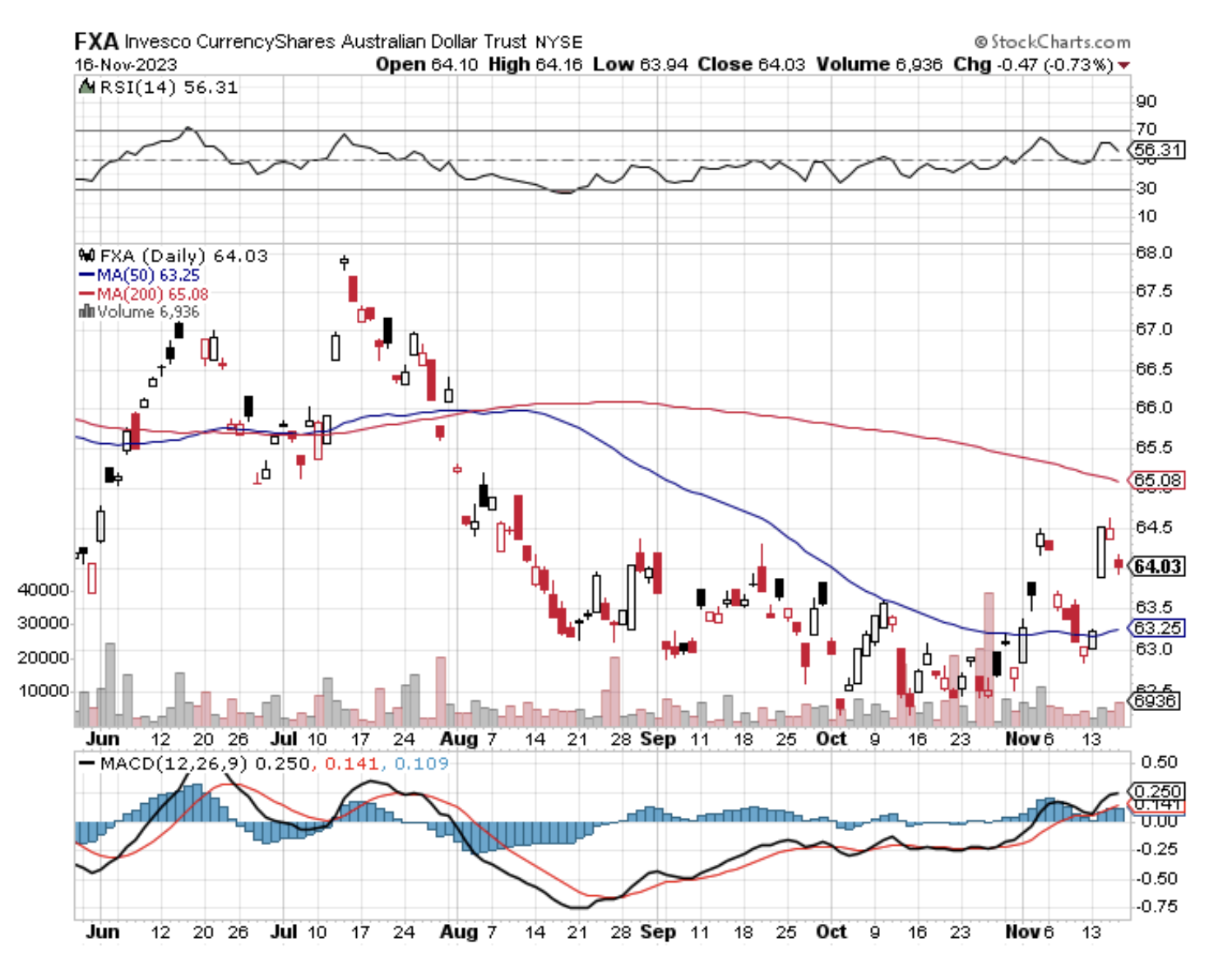
A: Yes and yes. It will crush the dollar–we could be entering a new decade of a falling U.S. dollar. The number one currency to buy is the Australian dollar (FXA). It has the most leverage for a global economic recovery. And you can see when we get to the currency section of today’s webinar that the currencies are already starting to move. Whatever currency has falling interest rates is always the weakest, and the U.S. dollar is about to become just that.
Q: What’s the deal with casino stocks lately like Wynn Resorts (WYNN) and MGM Resorts International (MGM)?
A: These companies took on massive amounts of debt during the pandemic to stay in business, so they are now highly sensitive to interest rates. If you look at the collapse of these stocks in the last four months, it is almost perfectly in sync with rising interest rates, and that’s why the stocks performed so poorly. By the way, the same is true for all the cruise companies like Royal Caribbean (RCL), and Carnival (CCL). The flip side of that is when interest rates start to go down these stocks do great, and they are falling interest rate plays, so you probably should be buying the casinos, the cruise lines, and the hotel stocks here because they are all suffering from massive debt loads, the cost of which is about to decline sharply.
Q: Should we roll up the expiration of LEAPS to 2026?
A: Probably not a bad idea, because we may get weakness in commodities for the next several months before we enter a massive new bull market. If you have the 2025, you’ll probably make money on that, but to be ultra-safe you could roll it forward to 2026. We know there’s a global copper shortage developing because of EVs, but right now EV sales are slow, so you don’t want to be piling onto the leverage plays on that too soon. That’s also why I am not in Tesla (TSLA) for the Moment.
Q: What will happen if the Fed cuts interest rates and there’s no recession? Won’t prices of everything from houses to butter go wild?
A: They won’t go wild, but they will go up at a 2% inflation rate, which is what the Fed wants. And house prices, which have been flat for the last year, will rise. And they may rise greater than the inflation rate of 2%; they may rise more like 5%. Falling interest rates mean falling mortgages; we’ve already seen mortgage rates drop from 8 to 7.4%. It's one of the sharpest drops in history, and more drops bring more first-time home buyers into the market. And don’t forget that the Fed could also raise interest rates down the road. If the economy gets too hot again, they may raise again, but I think we’ll see a lot of cuts first.
Q: Do you think financial stocks will go up or fall with potential rate decreases?
A: Banks always go up during falling interest rates because their cost of funds goes down and the default rate on their loans also goes down, so they get a hockey stick effect on earnings; that’s why you’re seeing such monster moves in stocks like JP Morgan (JPM) and the brokers (SCHW) as well as the money managers like BlackRock (BLK).
Q: Does the bull market keep going since unemployment still hasn’t made a dent, meaning consumers are fueling the rise in stocks?
A: Yes, consumer spending is still doing well. People seem to be getting the money from somewhere and it seems to be rising wages. But I expect wage gains to drop by half; people will still get wage increases, but not the peak levels that the UAW got in their deal with Detroit. Is a Goldilocks economy that is setting up, and the economy keeps growing We never do get a recession, and all risk assets rise as a result. That is the outlook!
Q: Bullish on Berkshire Hathaway (BRK/B)?
A: I completely agree, it’s one of the best-run companies in the world. 93-year-old Warren Buffet and 99-year-old Charlie Munger have delivered double the performance of the S&P 500 over the last three years.
Q: When does the IPO market come back to life, and which industries will benefit the most?
A: AI and Technology will benefit the most. There are several AI companies in the wings waiting to go public, and they will be the first out the door with the highest multiples, and then the IPO business will broaden out from there.
Q: Will a worsening Chinese property market blow up the U.S. Stock rally or is it just a fake risk I shouldn’t worry about?
A: The Chinese (FXI) real estate market is detached from the global economy. There is no international implication, and it’s also typical of emerging markets to overbuild and then have a financial collapse. Nobody I know has suffered anything in China in a long time, and if anything, they’re liquidating what little they have left. It doesn’t affect us at all. It’s interesting reading about it in the newspapers, and that’s about it.
Q: What are some stocks we should consider day trading these days?
A: None. Most people who try day trading lose money doing it; some people pull it off but they have many years of experience. Algorithms from big brokers have essentially taken over the day trading business with high-frequency trading. You do better on a one-month view, which I do on my front-month options. Most 2023 Stock Gains Happened in only eight days, up some 14% since January 1, and only seven stocks accounted for most of the increase. If you are a day trader, you most likely missed all of this because most of the moves were on gap openings.
Q: Home builders (XHB) have just had a great run, is this an area too short?
A: “Short” is a term you need to remove from your language! You don’t want to short a big bull move like this. If anything, wait until May when the summer seasonals start to favor short positions, and it depends on how high the market runs up until then. Don’t ever think about shorting the very beginning of a new bull market in stocks–not for housing, not for anything! And the outlook for housing over the long term looks fantastic; there’s still an overwhelming supply and demand in favor of the home builders. Some 85 million new Millennials need to buy first-time homes.
To watch a replay of this webinar with all the charts, bells, whistles, and classic rock music, just log in to www.madhedgefundtrader.com, go to MY ACCOUNT, select your subscription (GLOBAL TRADING DISPATCH, TECHNOLOGY LETTER, or Jacquie's Post), then click on WEBINARS, and all the webinars from the last 12 years are there in all their glory.
Good Luck and Stay Healthy,
John Thomas
CEO & Publisher
The Diary of a Mad Hedge Fund Trader

2023 Kherson Ukraine – Ha Ha Missed Me! It was a dud.