
Global Market Comments
March 11, 2026
Fiat Lux
Featured Trade:
(HOW TO HEDGE YOUR CURRENCY RISK),
(FXA), (UUP),
(TESTIMONIAL)

Global Market Comments
March 11, 2026
Fiat Lux
Featured Trade:
(HOW TO HEDGE YOUR CURRENCY RISK),
(FXA), (UUP),
(TESTIMONIAL)
Global Market Comments
February 13, 2026
Fiat Lux
Featured Trade:
(FEBRUARY 11 BIWEEKLY STRATEGY WEBINAR Q&A),
(MSFT), (SNOW), (JPM), (KO), (FXE), (FXA), (FXB), (FXC), (TSLA), (GLD), (SLV), (PANW), (PLTR), (LLY)
Global Market Comments
January 16, 2026
Fiat Lux
Featured Trade:
(JANUARY 14 BIWEEKLY STRATEGY WEBINAR Q&A),
(CSCO), (GLD), (MSTR), (JPM), (FXA),
(BTC), (SOFI), (HOOD), (UUP)
Global Market Comments
January 5, 2026
Fiat Lux
2026 Annual Asset Class Review
A Global Vision
FOR PAID SUBSCRIBERS ONLY
Featured Trades:
(SPY), (QQQ), (IWM), (AMZN), (AAPL), (GOOGL), (GS), (MS), (BAC), (C), (BLK), (ABBV), (BIIB), (AMGN), (TSLA), (DHI), (LEN), (PHM), (KBH), (TLT), (TBT), (JNK), (PHB), (HYG), (MUB), (LQD), (FXE), (EUO), (FXC), (FXA), (YCS), (FXY), (CYB), (FCX), (VALE), (DBA), (DIG), (RIG), (USO), (DUG), (UNG), (XOM), (OXY), (GLD), (DGP), (SLV), (PPLT), (PALL), (WPM), (NEM), (B)
Global Market Comments
July 3, 2025
Fiat Lux
Featured Trade:
(JULY 2 BIWEEKLY STRATEGY WEBINAR Q&A)
(SPY), (NVDA), (MSFT), (META), (SNOW), (GOOGL), (DHI), (LEN), (KBH), (FXE), (FXA), (FXY), (FXY), (GLD), (SLV), (PPLT), (ALB), (SQM), (NEM), (ABX)
Global Market Comments
June 4, 2025
Fiat Lux
Featured Trade:
(THE TWO CENTURY DOLLAR SHORT),
(UUP), (FXA), (FXE), (FXY), (FXC)
Global Market Comments
May 27, 2025
Fiat Lux
Featured Trade:
(MARKET OUTLOOK FOR THE WEEK AHEAD or THE BOND VIGILANTES ARE BACK!
(MSTR), (GLD), (AAPL), (QQQ), (MSTR), (FXE),
(FXA), (FXB), (FXY), (TLT), (WMT)
Global Market Comments
March 21, 2025
Fiat Lux
Featured Trade:
(THE MAD HEDGE MARCH TRADERS & INVESTORS SUMMIT REPLAYS ARE UP)
(MARCH 19 BIWEEKLY STRATEGY WEBINAR Q&A),
(SH), (SDS), (COST), (PANW), (FTNT), (ZS), (MSFT), (GOOGL), (NVDA), (GLD), (AMZN), (BAIDU), (BABA), (LNG), (FXA), (FXE), (FXC), (FXB)
Below please find subscribers’ Q&A for the March 19 Mad Hedge Fund Trader Global Strategy Webinar, broadcast from Incline Village, NV.
Q: I tried to get into ProShares Short S&P500 (SH), it seems pretty illiquid. How did you get in?
A: Well, before I actually sent out the trade alert, I tested the liquidity of the SH seeing if you could get anything done. This is an easy thing to buy on up days in the market when others are taking profits. It is a really difficult thing to get into on down days in the market because you have so many long-only mutual funds trying to hedge their exposure through buying the (SH). We literally had just one up day at the beginning of the month, and I was able to increase my position tenfold and had no trouble getting my price on the LEAPS at $0.50. If you waited one day, you would have had to pay $0.60 for the same position, and that’s because the volatility explodes on this thing. If you look at the charts, the 1x short play has actually delivered enormous returns, as well as the 2x. It’s outperforming 2 to 1. So you have to buy when other people are selling, that’s the only way to get in and out of the (SH). Of course, I’m buying these things with the intention of running these to expiration.
Q: Is it time to sell US stocks?
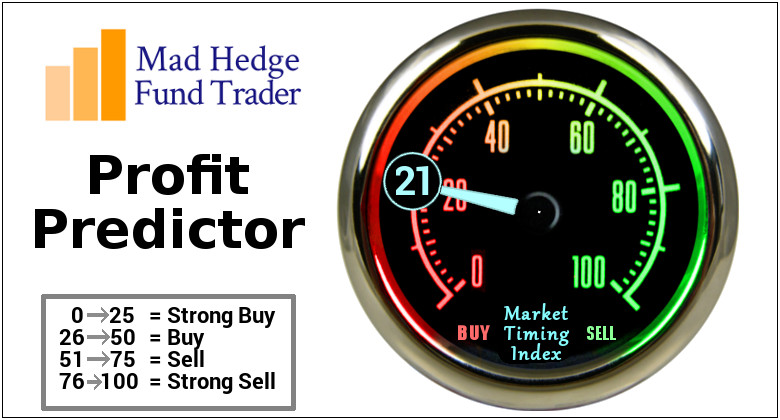
A: Yes but only on the up days like today. Don’t sell into a pit, don’t sell into bottoms—wait for rally days like today. That's a good place to reduce risk and add some short positions like the ProShares Short S&P500 (SH) and the ProShares UltraShort S&P500 (SDS).
Q: How did you miss the rotation to Europe and China in emerging markets?
A: Very simple—if you ignore something for 15 years, it’s easy to miss a turn. I also missed the turn in Japan, which I ignored for 35 years. The real reason though is that I underestimated the extremity of this government, its economic policies, and the chaos it would create. I think almost everyone underestimated what the new government would actually do and how it would affect the stock market. If I knew ahead of time that the government would adopt recessionary policies, I would have done everything to get my money out of the US and into Europe and China, but this kind of unfolded with a shock a day, sometimes a shock an hour, and markets don’t like shocks and surprises, so they sold off. The more a stock had gone up in the last six months, the more it went down when the new government came into office.
Q: What are your downside targets for the market?
A: Now that we are in recession, I think any 5% rally off the recent low at 5500, you want to sell. The market could rally 3-5% off the bottom—that would be half of the recent loss. Then you’d want to get rid of more longs, cut your portfolio down to a few very high-quality positions, and add downside protection by buying the ProShares Short S&P500 (SH), the ProShares UltraShort S&P500 (SDS), doing buy rights on the calls and buying outright puts. That would be my recommendation. Eventually I see the S&P 500 falling to 5,000 by the summer, and if I’m wrong, it’s going down 30% to 4,500. That is a deep recession scenario, which we are on the track for unless the government suddenly reverses its draconian policies. This is the most extreme government in American history.
Q: Are you going to use the selloff to get into Costco (COST) after a 20% selloff?
A: Absolutely. I’ve been trying to get into Costco for years and it’s just always been too expensive. They keep increasing earnings every year —investors are willing to pay very high multiples for that. This time around, I am going to get into Costco because they are an absolutely outstanding company. By the way, my mentor at Morgan Stanley was a guy named Barton Biggs, who created the asset management division some 40 years ago. He was close friends with Sam Walton, the founder of Walmart, and Sam Walton was a huge admirer of Costco, which was just starting up then. I’m surprised they never took over the company, which is too big to take over now.
Q: What to buy at the bottom?
A: You want to buy what was leading right before we went into this collapse. Those are financials, and the highest quality profit making of the Mag7 which include Nvidia (NVDA), Amazon (AMZN), Alphabet (GOOGL), Meta (META), as well as cybersecurity stocks like Palo Alto Networks (PANW), Fortinet (FTNT), Zscaler (ZS) and so on.
Q: Why are you making your recession call when we have no evidence of that fact?
A: If you wait for proof of recession, that often is the market bottom. And that could be August of this year. You know, I talk to hundreds of businessmen around the world, and everyone is saying business is slowing. Companies stop making decisions. Customers stop buying. Everyone's afraid of the tariffs. Nobody knows what's going to happen next. Business confidence is terrible. That adds up to a recession, but data tends to move very slowly, so we won't see it in the data for months. If you're a stock trader, you don't have the luxury of waiting for confirmation of the data. By the time you get it, the move is over. But if you cut half of government spending or 12% of GDP, the recession outcome is guaranteed. It's not a speculation. That is the government's goal: to cause a recession, so they can have a recovery going into the next election to take credit for.
Q: If Alphabet (GOOGL) is broken up, what will happen to the company?
A: With all of these big tech breakups, the parts will be worth a lot more than the whole. The individual pieces can be sold off at much bigger premiums creating new companies with more stock liquidity. This is what happened with AT&T (T) in 1982. I participated in that, and the parts were worth more than the original AT&T was within two years. I expect that to happen to Alphabet, and I expect that to happen if Amazon (AMZN) is broken up— eventually, these companies become so big, they become too big to manage. And if the management sees they can get 100% premium on a spinoff, they'll take it so fast it makes your head spin.
Q: None of the 90% gain in stock prices during the Biden administration was a result of his policies.
A: That's absolutely correct. He stayed out of the way, which is the best thing that governments can do—get the hell out of the way. American capitalism on its own will innovate and create profits far faster than any other economic system in history. Biden did quite a good job of staying away.
Q: Why are credit spreads still okay to do in this environment?
A: Because the implied volatility on the options are so high, you can get insane amounts of money—in the money like 30% or 40% —and get trades done and have a 0% chance of taking a loss on that. Suddenly you're being paid double to take risks on these option trades. The classic example is the $88-$90 call spread in Nvidia (NVDA), which we have expiring on Friday, March 21. We never even got close to $90, but the implied volatility on the day we added that trade was a ridiculous 75%. So, it's almost impossible to lose money when you put on trades with implied volatility in the options of 75%.
Q: What's your long-term target on gold now that your last long-term target of 3,000 finally got hit?
A: Yes, we've been recommending gold (GLD) for seven years now. In that time, it's doubled: $1,500 to $3,000. I'm now looking for $5,000 in gold by 2030, in five years. I got a feeling that flight-to-safety plays are going to be very popular in the world going forward. And by the way, people who did look for Bitcoin to protect them in any downturns: Bitcoin actually went down three times faster than the S&P 500 in the last month.
Q: Will stocks rise if the Fed cuts interest rates?
A: No, they won't, because the only reason the Fed will cut interest rates is if inflation falls, and right now, inflation is about to see a big upturn as those import duties of 25% or 50% work their way through the system. A lot of companies are front-running price increases before they even pay the tariffs and try to carve out some extra margin for themselves in advance. On Wednesday, Jay Powell said he expects inflation to rise from 2.5% to 2.8% by yearend and this will prove to be a low number. That is his “president breathing down the back of his next” forecast.
Q: What are your favorite Chinese stocks?
A: Well, a lot of these leading stocks have already gone up 50% or more since the beginning of the year as capital flees the United States and goes abroad. But if you held a gun to my head and said you had to buy two, I would buy Baidu (BIDU), and I would buy Alibaba (BABA). Those would be my Chinese picks. Alibaba is the closest thing you get to an Amazon in China.
Q: Has the dollar hit its lows this year?
A: No. Risk of the next Fed rate move is an interest rate cut. That is going to hang over the dollar and the currency markets for the entire year. And I don't see any recovery in the dollar this year. In fact, it's easy to see much lower lows, and higher highs in the foreign currencies. Buy (FXA), (FXE), (FXC), and (FXB) on dips.
Q: How do you feel about natural gas?
A: I would not be a buyer here. I think we've had a terrific run off of extreme cold weather—believe me, we got some of that in Nevada too—and that is starting to fade now. This is historically when that gas starts to fade for the year. Long term, my view on gas is bullish because of increased exports to China. We have a very pro-energy administration here; that means taking off the export restraints on natural gas, which can only be good for the gas companies and the gas price. China has basically told us they'll take all the natural gas they can get from us because every shipload of gas they buy (LNG) means less coal they have to burn.
To watch a replay of this webinar with all the charts, bells, whistles, and classic rock music, just log in to www.madhedgefundtrader.com, go to MY ACCOUNT, click on GLOBAL TRADING DISPATCH, then WEBINARS, and all the webinars from the last 12 years are there in all their glory.
Good Luck and Good Trading
John Thomas
CEO & Publisher
The Diary of a Mad Hedge Fund Trader
Global Market Comments
February 20, 2025
Fiat Lux
Featured Trade:
(HOW TO HEDGE YOUR CURRENCY RISK),
(FXA), (UUP),
(TESTIMONIAL)