Mad Hedge Technology Letter
December 16, 2022
Fiat Lux
Featured Trade:
(AMERICAN SUPER APP)
(APPL), (WECHAT), (META), (GRAB), (RAPPI)


Mad Hedge Technology Letter
December 16, 2022
Fiat Lux
Featured Trade:
(AMERICAN SUPER APP)
(APPL), (WECHAT), (META), (GRAB), (RAPPI)
America will never achieve a “super app,” and what does that mean for Silicon Valley?
These “killer apps” thrive in other places but not in America.
WeChat is the super app in China, while there is Careem in the Middle East, Rappi in Latin America, and Grab in Southeast Asia.
Any attempt to move in on that territory has been stymied by Washington.
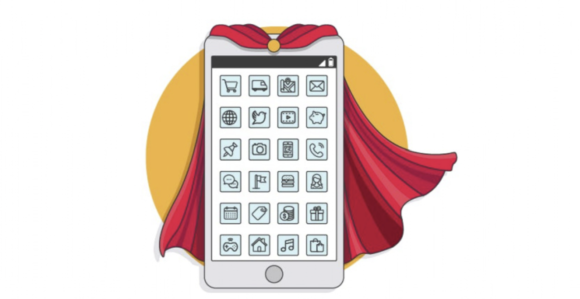
A Super app is roughly a place where ecommerce, daily and monthly payments, financial management, social chats, social media, and daily services like ride-hailing co-exist in harmony on one app.
American tech companies are getting blocked from incorporating new payments into their apps while legacy payment systems remain.
Facebook’s attempts to build out standalone payment capabilities through the Libra/Diem blockchain project failed, but other apps in its family such as Instagram and WhatsApp are bolting on payment and e-commerce functionality.
As Zuckerberg and his team seem to have noticed, payments are critical to any would-be super app.
Half of US smartphone users are expected to adopt mobile payments as late as 2025, according to eMarketer research.
By contrast, 64% of China's population had made a payment on their phone by the end of 2021, according to a report from China UnionPay, the state-owned financial services firm.
Companies will struggle to generate the volume needed to make a super app work the way WeChat does, which has accumulated more than 1 billion users thanks to its mix of services and payments that ensure people don't have to look elsewhere.
In emerging market countries, payments skipped cards altogether because the infrastructure was weak.
Instead of bank cards, citizens went from cash to paying by phones using their local super app.
This could never happen in America because card payment options are diverse and trustworthy.
America has a reliable network of fragmented services and regulators have become so emboldened that they would never allow a financial payment system on a super app to ever develop.
There's another clear reason why the most successful super app has emerged in China.
Beijing has shut out foreign competitors from offering Chinese consumers any alternative.
Under Lina Khan, the FTC is becoming more sharply focused on competition and user privacy. Creating super apps would almost certainly require aggressive consolidation through acquisitions — a surefire way of attracting scrutiny.
As it stands, American regulators are now hawkish against American tech.
There's also the issue of Apple.
With the iOS system, Apple doesn’t allow the type of access needed to be able to build a super app on an iPhone.
Even if Apple wants to build a super app, there are still plentiful Android users in America that wouldn’t be captured either.
Apple would also need to backtrack on its pledge to safeguard personal data which is very unlikely to happen.
The best bet is probably Elon Musk’s Tesla, Twitter, and Space X combo.
He has two strong elements needed for a super app, but he doesn’t have a payment system and there is almost no chance in this regulatory climate of getting that approved.
The best way forward is tech firms with strong balance sheet picking up the best of breed in tech sub-sectors and eventually, they will all merge together.
However, that’s proved difficult as well with Microsoft’s blocked acquisition of video game firm Activision.
In a high interest rate world, profitable tech firms with strong balance sheets will be rewarded the most if they buy smaller tech companies which will be additive to their profit model.
The cash burners have a tough time competing in a high rate world and zero chance of achieving that super app status.
Mad Hedge Technology Letter
June 21, 2021
Fiat Lux
Featured Trade:
(SOFTBANK’S EPIC COMEBACK)
(SOFTBANK), (CS), (CPNG), (GRAB), (AAPL), (GOOGL), (BABA)

I haven’t touched on the Softbank Vision Fund since pre-pandemic times, but it is time to take a barometer of the state of their fund because they also represent a snapshot of the state of emerging technology.
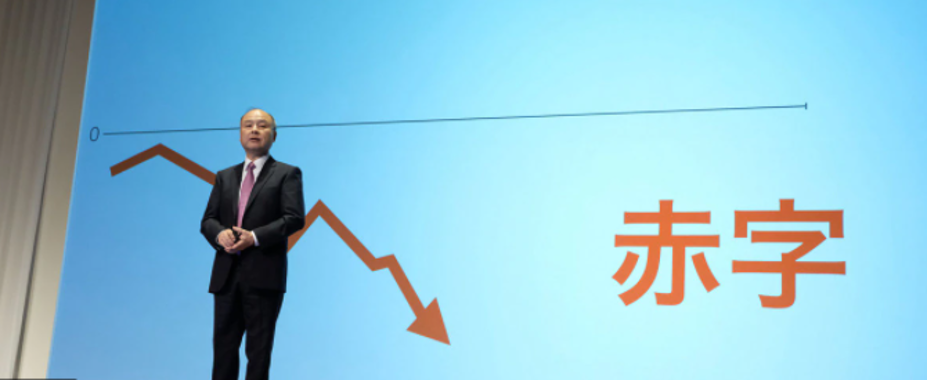
The Fund reported a massive loss of $18 billion during the nadir of the tech correction in 2020, and its clout in the tech world fell by epic proportions to almost pariah status.
Those were perilous times for Softbank Founder and CEO Masayoshi Son who held the distinction of losing the most wealth in the world before making it all back.
The ensuing flood of liquidity, accessible at the tech lows, catapulted most of Softbank’s investments in the U.S. tech market and they recently reported the highest-ever profit for a Japanese company.
Softbank Group reported profits of $48 billion for the fourth quarter, while Softbank Vision Fund, which invests in startups, reported a profit of $37 billion.
After massive weakness in assets including Airbnb, Oyo, and WeWork, we saw the value in these startups dip to an all-time low, then they were essentially bailed out by the Fed.
During that recapitalization process, Softbank Vision Fund fired 10% of its employees to cut costs.
When you combine that with big up moves from South Korean e-commerce company Coupang (CPNG) and ride-hailing firm Grab planning to go public via an SPAC, betting all his chips in emerging tech was the right thing to do and Son was handsomely rewarded for this outsized risk.
Son is quite famous for some of his speculative energy that he has channeled towards China’s Alibaba (BABA) before Alibaba became famous.
More than a decade later, that investment is worth $130 billion, becoming one of the most successful startup bets in history. He then aggressively invested in several startups around the world, including Snapdeal, Oyo, Ola, and Paytm in India.
For as many lemons in his basket, he’s had his fair share of 10-baggers and 433-baggers like Alibaba that validated his aggressive tech strategy.
Son got into many investments before venture capitalists in tech started being copied around the world and before the Arab sovereign funds and Chinese could get their house in order to partake as well.
He wasn’t the first, but the first group mover advantage made these deals possible, and by borrowing heavily against his Softbank equity, he was able to bet the ranch on many emerging techs by acquiring the proper financing and leverage.
However, the Softbank Vision Fund is a harbinger for what’s to come in tech and Son laughing all the way to the bank could also be loosely translated as the low hanging fruit in tech and its harvest has been plucked dry.
Venture capitalists are having a harder time in 2021 finding those 433-baggers or even 3-baggers.
An ominous sign that bodes ill for emerging tech is the financing hawks that have started to highlight the extreme risks involved in investing big in little-known business models with the propensity to fail.
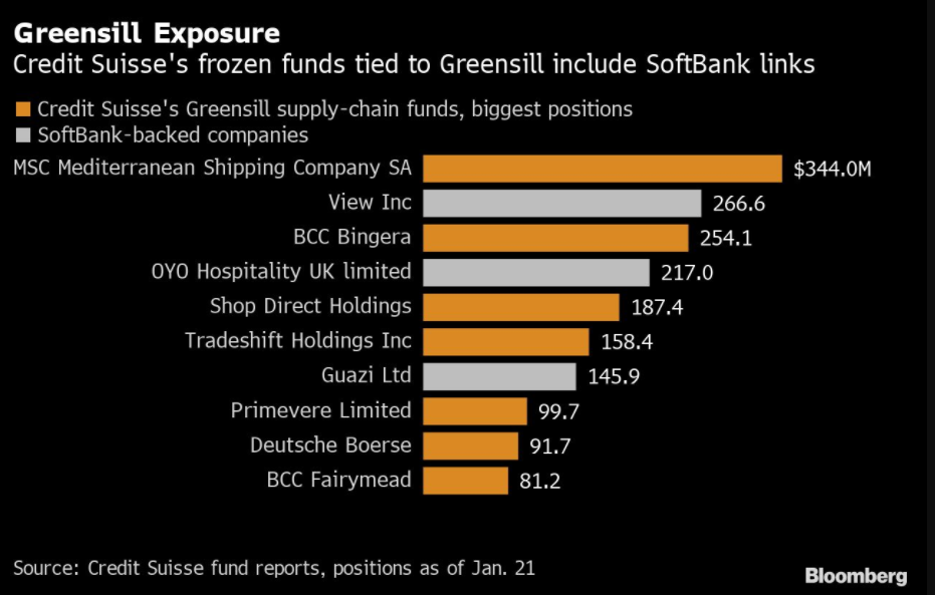
Credit Suisse (CS) has put Son recently on notice by dissolving a longstanding personal lending relationship as the bank clamps down on transactions with his company, according to regulatory filings and people familiar with the situation.
The moves came after the collapse of SoftBank-backed Greensill Capital that caused turmoil for Credit Suisse forcing them to book a massive loss.
That was on the heels of Credit Suisse’s $5.5 billion loss originating from trading by family office Archegos Capital Management.
The bank is now avoiding business with big tech investors who are likely to reach further up the risk barometer and inflict heavy damage.
Does this mean the era of subsidized tech business models is over?
No, but it will become more difficult to originate financing from traditional methods like European banks to invest in these types of exotic tech projects.
Mr. Son had long used Credit Suisse and other banks to borrow money against the value of his substantial holdings in SoftBank.
As recently as February, Mr. Son had around $3 billion of his shares in the company pledged as collateral with Credit Suisse, one of the biggest amounts of any bank, according to Japanese securities filings.
The share pledge loan relationship stretched back almost 20 years. By May, that lending had gone to zero.
Bloomberg News reported in May that Credit Suisse refuses to do any new business with SoftBank, but the silver lining is that Softbank has $48 billion in new profits to theoretically spin into some new projects it likes.
Of course, it’s always easier when you use other people’s money, but these are then new rules of the game.
Its bounty from the liquidity surge will help them advance into this new post-pandemic tech ecosystem with substantial gunpowder.
So I can’t say it’s been all bad for everyone at the individual level because this pandemic divided the masses into tech winners and losers.
Notice that many Bay Area tech investors were taking profits from the tech pandemic stock surge and rolled the capital into $3-5 million Lake Tahoe Mountain chalets as a summer house or dinner party house.
And if they didn’t do that, they were rolling these profits into Hawaiian beachfront properties with views of Diamond Head in Oahu or even dabbling in villas on the Kauai Island.
This could partially explain why Apple (AAPL) has gone sideways for the past 11 months.
This year has instigated a tech reset and in the short term, the Nasdaq has been overwhelmed by external headlines like of perceived inflation fears, chip shortage, and a built-in assumption that earnings will be perfect.
These sky-high earnings expectations have created a “buy the rumor and sell the news” type of price action with only a handful of companies able to top these insane expectations like Google (GOOGL).