Global Market Comments
February 23, 2026
Fiat Lux
Featured Trade:
(MARKET OUTLOOK FOR THE WEEK AHEAD, or THE VIEW FROM THE ANDES),
(SPY), (TLT), (GLD), (SLV), ($VIX),
(FCX), (CCJ), (XLU), (XLC), (XLE), (USO), (TAN)

Global Market Comments
February 23, 2026
Fiat Lux
Featured Trade:
(MARKET OUTLOOK FOR THE WEEK AHEAD, or THE VIEW FROM THE ANDES),
(SPY), (TLT), (GLD), (SLV), ($VIX),
(FCX), (CCJ), (XLU), (XLC), (XLE), (USO), (TAN)
Global Market Comments
February 9, 2026
Fiat Lux
Featured Trade:
(MARKET OUTLOOK FOR THE WEEK AHEAD, or ICEBERGS AHEAD)
($VIX), ($SPX), (AMZN), (KRE), (XLP), (XLI), (IAT), (TAN), (XLK), (HOOD), (MSTR), (COIN), (SLV), (LLY), (SMCI), (UUP), (MSFT), (MSTR)
Global Market Comments
January 26, 2026
Fiat Lux
Featured Trade:
(MARKET OUTLOOK FOR THE WEEK AHEAD, or TACO RIDES AGAIN!),
(SPY), ($INDU), (GLD), (B), (NEM), (GDX), (GS), (TLT), (KO), (CSCO), (MDLZ), (TAN), (BA), (MOS), (IPI), (MU)
Global Market Comments
October 31, 2025
Fiat Lux
Featured Trade:
(OCTOBER 29 BIWEEKLY STRATEGY WEBINAR Q&A),
(SPY), (TLT), (GLD), ($WTIC), (USO), (TAN)
Global Market Comments
June 9, 2022
Fiat Lux
Featured Trade:
(WHAT THE HECK IS ESG INVESTING?),
(TSLA), (FSLR), (TAN), (MO)
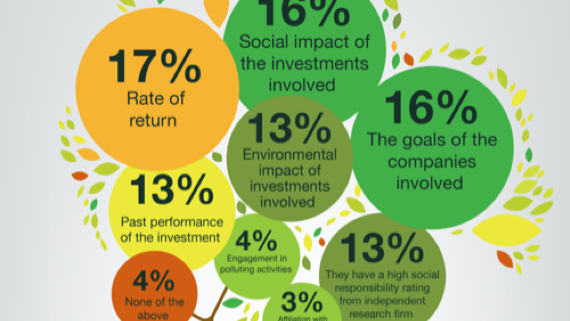
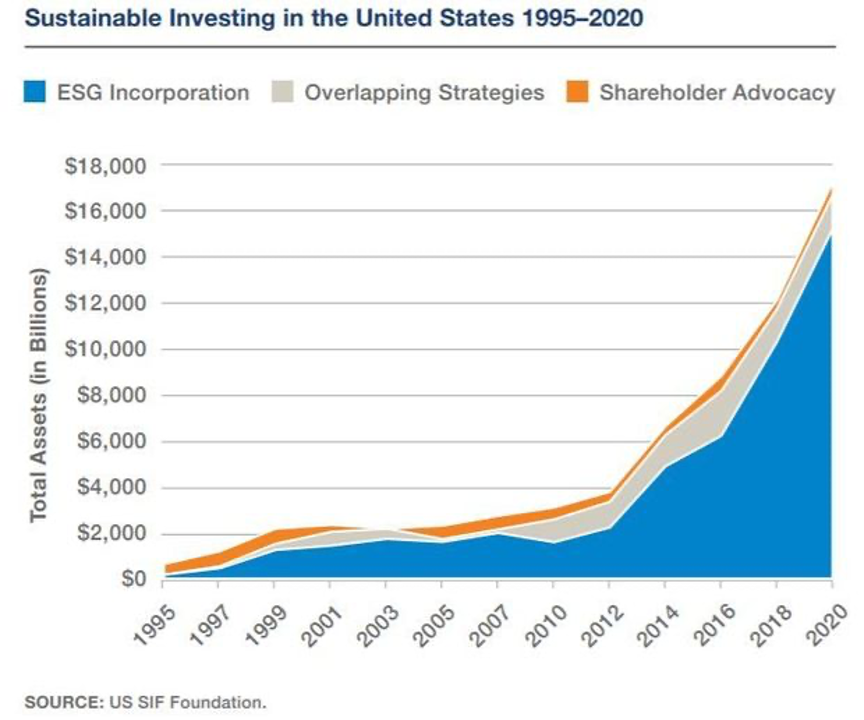
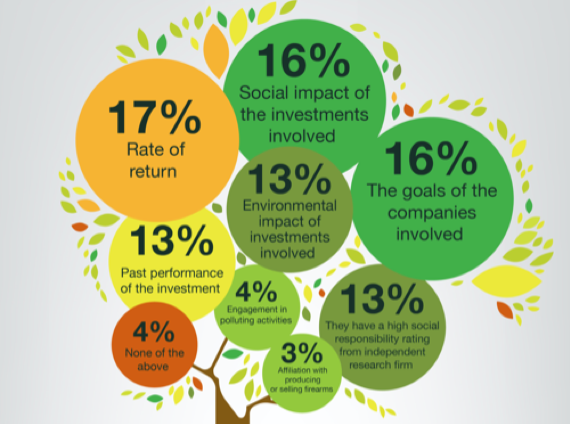
It’s truly astonishing how much money is pouring into ESG investing. Maybe it was another year of blistering heat worldwide that did it. It now accounts for one-third of all US equity investments.
In 2020, BlackRock, one of the largest fund managers in the country, made a major new commitment to ESG investment by rolling out several new ETFs. I thought I’d better take him seriously, as his firm is one of the largest money managers in the world with $10 trillion in assets.
So what the heck is ESG investing?
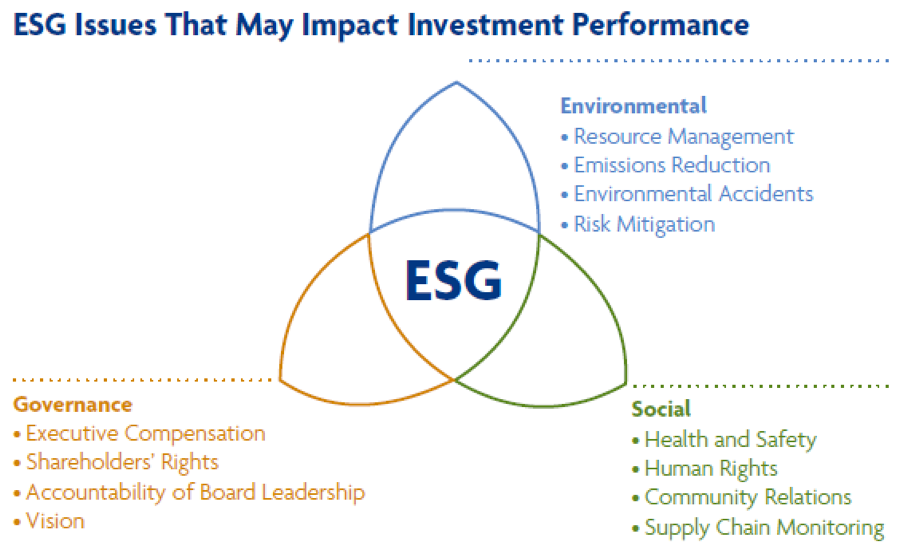
Environmental, Social, and Governance Investing (ESG) seeks to address climate change in any way shape or form possible. Its goal is to move the economy and capital away from carbon-based energy forms, like oil (USO), natural gas (UNG), and coal, to any kind of alternative.
I am always suspicious of investment themes are politically correct and ideologically directed, as they usually end in tears. I can’t tell you how many people I know who invested their life savings in solar companies to save the world, like Solyndra, Sungevity, American Solar Direct, and Suniva, only to get wiped out when they went under.
As laudable as the goals of these companies may have been, they were unable to deal with collapsing prices, Chinese dumping, and the harsh realities of doing business in a cutthroat competitive world.
As a venture capital friend of mine once told me, “Technology is a bakery business”. If you can’t sell your products immediately, you go broke. Technology always drops prices dramatically and if you can’t stay ahead of the curve you don’t stand a chance.
Still, what I believe is not important. The fastest-growing group of new investors in the market today are Millennials, and they happen to take ESG investing very seriously.
There does seem to be a method to BlackRock’s madness. Over the past year, ESG-influenced funds have grown from 1% to 3.6% of total investment. Other major fund families like Vanguard have already jumped on the bandwagon.
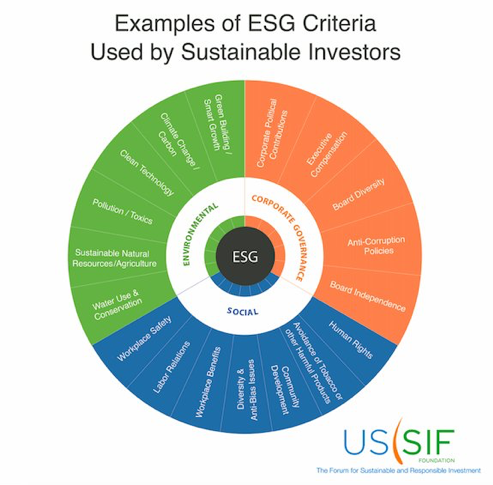
ESG can include a panoply of activities, including, recycling, climate change mitigation, carbon footprint reduction, water purification, green infrastructure, environmental benefits for employees, and greenhouse gas reduction. There are many more.
There is even an ESG rating system for funds and companies produced by firms like Refinitiv, which scores 7,000 companies around the world based on their environmental sensitivity. Companies like United Utilities Group PLC, the UK’s largest water company, get an A+, while China’s Guangdong Investment Ltd, which supplies water and energy to Hong Kong, gets a D-.
It goes without saying that companies from emerging nations tend to score very poorly. So do manufacturing companies relative to service ones, and energy companies versus non-energy ones.
The ESG concept began in 2005 when UN Secretary-General Kofi Annan wrote to 50 global CEOs urging them to take climate change seriously. A major report by Ivor Knoepfel followed a year later entitled “Who Cares Wins.”
The report made the case that embedding environmental, social and governance factors in capital markets makes good business sense and leads to more sustainable markets and better outcomes for societies. The snowball has been rolling ever since.
Themed investing is not new. “Sin” stocks have long been investment pariahs, including alcohol and tobacco companies. As a result, these companies trade at permanently low multiples. The newest investment ban is on firearms-related companies.
ESG investment received a major tailwind in 2021 when the price of oil took off like a rocket. When oil prices rise, it also makes all forms of alternative energy more competitive. But over production by US fracking companies will eventually cause supply gluts that will lead to chronically lower prices. The US happens to have a new 200-year supply of oil and gas, thanks to the fracking revolution.
Saudi Arabia floated their oil monopoly, Saudi ARAMCO, raising a record $26 billion. When Saudi Arabia wants to get out of the oil and gas business, so should you. It’s not because they can’t think of new ways to spend money that they’re unloading it.
That’s why I have been advising followers to avoid energy investments like the plague for the past decade. It’s just a matter of time before alternatives rule the world. Even the oil industry won’t expand production now because they don’t want to buy at the top only to see prices collapse, as they have done many times in the past.
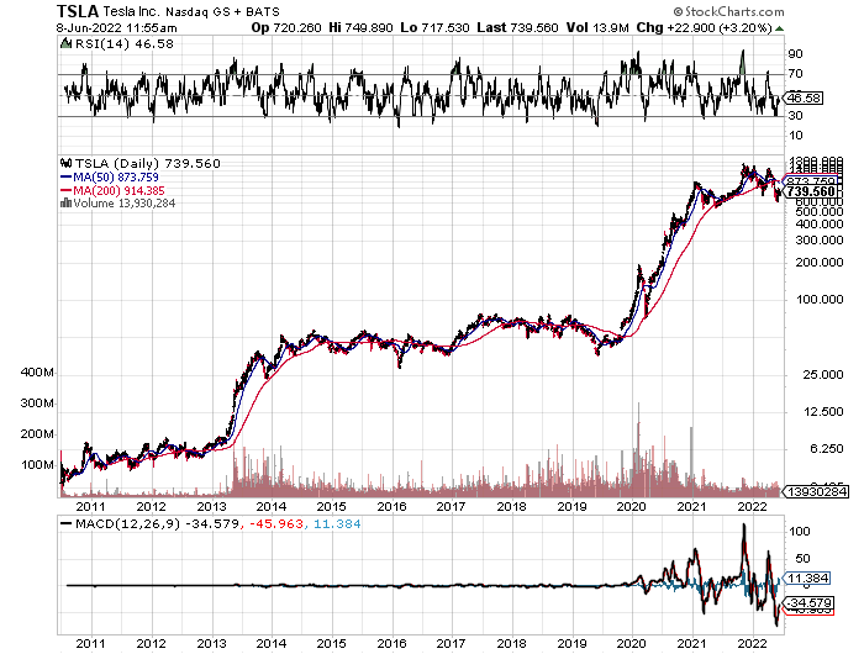
Who is the greenest company in America? That would be electric car and autonomous driving firm Tesla (TSLA). Perhaps ESG investing helps explain why the shares have risen 400 times since I started buying.
What is the top-performing listed stock of the last 30 years? Tobacco company Altria Group (MO), the old Philip Morris.
It’s proof that investment shaming doesn’t always work.
Global Market Comments
September 10, 2021
Fiat Lux
Featured Trade:
(SEPTEMBER 8 BIWEEKLY STRATEGY WEBINAR Q&A),
(TLT), (PLTR), (TSLA), (FCX), (PYPL), (TAN), (FSLR), (SPWR), (GBTC),
(ETHE), (BRKB), (USO), (UNG), (HD), (IBM), (SQ), (AA), (UBER), (UROY)

Below please find subscribers’ Q&A for the September 8 Mad Hedge Fund Trader Global Strategy Webinar broadcast from the safety of Silicon Valley.
Q: Do you think we’ll see the under $130 in the United States Treasury Bond Fund (TLT) before January 2022?
A: I don’t think so; I think we could go below $140, maybe below $135. But $130 would be a brand new low in the move and would be a stretch. We basically lost 4 months on this trade due to the countertrend rally, which just ended. I would come out of your (TLT) $130-$135 vertical bear put spreads right here while they still have time value, but keep the $135-$ 140s, the $140-$145’s, and especially the $150-$155’s. The idea was that you just keep averaging up and up until the market turns, and then you make back any loss. We move into accelerated time decay on those deep out of the money put spreads in December, so I would take the money and then offset it with the gains you made in those positions.
Q: Does Palantir (PLTR) look like it’ll hit $100 by year-end?
A: No, the stock has been dead, and management has not been doing anything to promote it. We did get a move up to $45 but it failed. It’s still a great long-term idea as they are growing at 50% a year. Also, they did buy $50 million worth of gold bars as a hedge. But as a short-term trader, Palantir isn’t working. If you have an options position on that I would probably get out of it or roll it forward to 2023.
Q: PayPal (PYPL) is fluctuating up and down with Bitcoin. Do you like PayPal?
A: Absolutely, but it obviously is being dragged down by Bitcoin. It is a temporary down move caused by a one-time-only event in El Salvador. Buy the dip in PayPal. It is a leader in the whole move into a digital financial system.
Q: When is Freeport McMoRan (FCX) likely to move up?
A: As soon as we shift out of the tech trade into the domestic recovery trade, which could be in weeks or months at the latest. We’ll switch from one side of the barbell to the other.
Q: Where do you see Tesla (TSLA)?
A: It keeps going up, so my guess is we top $800 by the end of the year, and maybe $850. The big news here is that Tesla has gone into the chip business, making its own chips in-house which is easy for them to do in Silicon Valley. But it does make them the first global car maker that is also a chip maker, and therefore the stock deserves a higher premium. The stock went up $30 on the news and is great for all Tesla holders. I hope you have the 2023 LEAPS.
Q: Too late to buy Tesla LEAPS?
A: Unless you’re really deep in the money, with something like a $600-$650; but the return on that will only be about 50% in 2 years.
Q: The Biden administration just set a goal of 45% solar by the end of 2050. Which solar stock should I buy here?
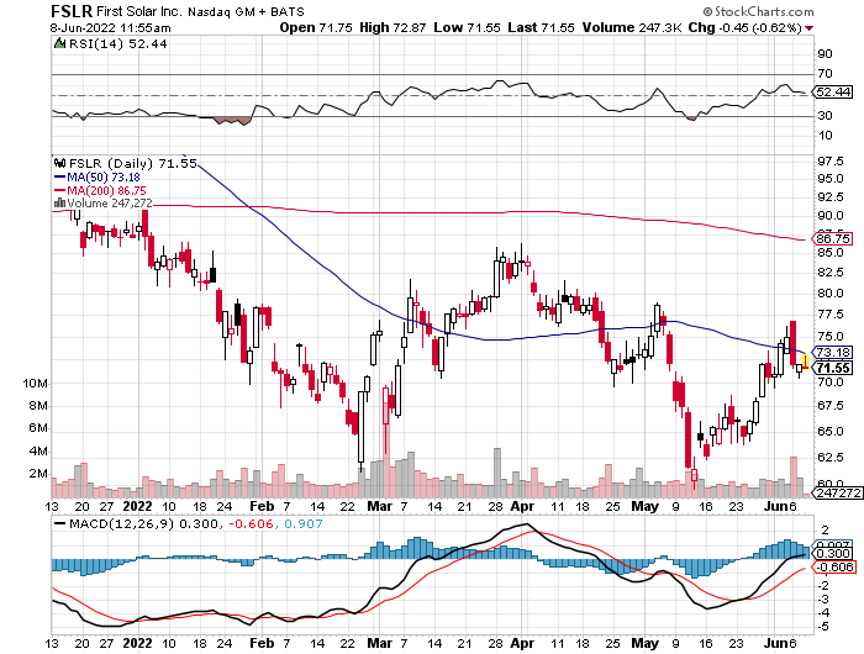
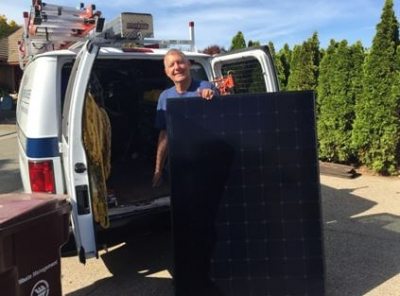
A: The problem with solar is as soon as Biden started winning primaries, every solar stock took off like a rocket, figuring he’d win, which he did. All of them went up 6-fold or more as a result of that, then gave up one-third of their gains and are now moving sideways. So if you look at the charts, the classic one to buy here is the Invesco Solar ETF (TAN), a basked of the top solar companies. All of these peaked in February and have been doing sideways “time” corrections since then, which means they eventually want to go higher. The other two that have charts that look like they’re finally starting to break out to the upside are First Solar (FSLR) and SunPower (SPWR) after 8 months of consolidation.
Q: Why is the second half of September almost always bad? Is it due to institutional repositioning?
A: Not really, the cash comes into the market at certain times of the year, like end of the year, beginning of the year, and end of each quarter. September seems like the month where they kind of just run out of money. But there's actually also a historical reason for that. For most of American history, we had an agricultural economy. Farmers were more than half the population, and the period of maximum distress for farmers is September, where they put all the money into seed and fertilizer and labor into the field, but they haven't harvested it yet. So, traditionally, they always did a lot of borrowing in September, which caused a cash squeeze and interest rate spike, and a stock market panic as a result. So that's the history behind weak Septembers and Octobers. Once the farmers get the crops in and sell them, that resolves the cash squeeze, interest rates fall, and it’s straight up for stocks for the rest of the year most of the time.
Q: SPACs (Special Purpose Acquisition Companies) seem to be losing interest. Do you recommend any or stay away?
A: Stay away—they’re all rip-offs and are simply a means by which managers can increase their fees from 2% to 20%. That's what they did with virtually all of them. This will end in tears.
Q: What's your feeling about satellite internet phone service replacing current internet cell service in the future?
A: It’s in the future, but it may be 10 years off in the future. If it happens sooner, it’s because Elon Musk was able to deliver cheap rocket service. He already has 20,000 satellites in the sky for his own Starlink global cell phone service for internet access.
Q: How does one buy a Bitcoin stock?
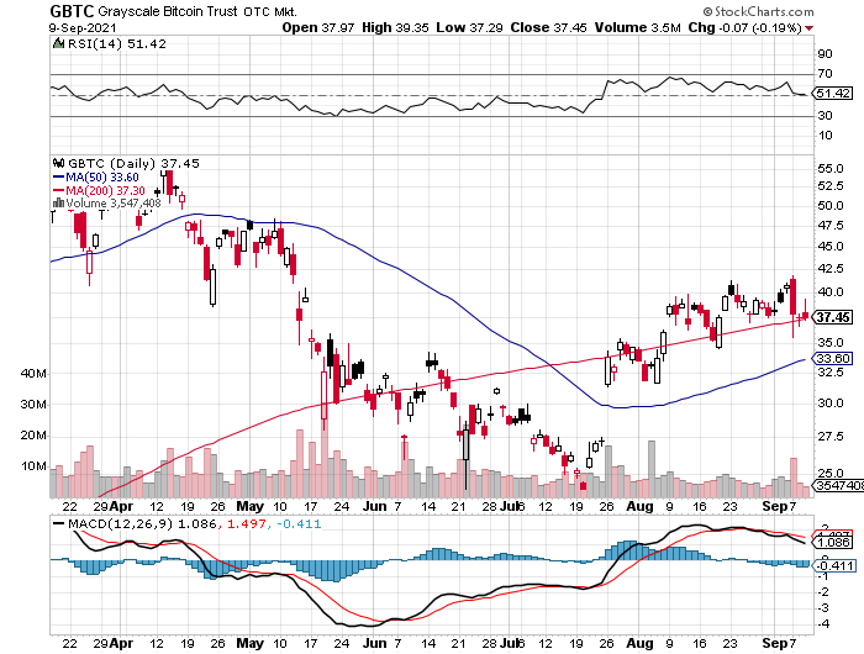
A: Well first of all, I highly recommend you buy the Mad Hedge Bitcoin Letter, which you can get in our store. But there's also the Greyscale Bitcoin Trust (GBTC) which allows you to buy a Bitcoin proxy very easily. I’ll even honor the discounted $995 price for my Bitcoin Letter for another day by clicking here.
Q: Is Warren Buffet and his value philosophy something I should be following, or is he outdated?
A: I have to say, buying stocks cheap with high cash flow will never go out of style. Currently, Warren’s big holdings are domestic industrials, banks, and Apple. All of those look like they will do well moving forward. Buffet’s Berkshire Hathaway (BRKB) has a built-in barbell element to it and is the subject of one of our LEAPS recommendations which has already been hugely successful.
Q: Is Home Depot (HD) at $330 a bargain?
A: Well, we just had a selloff and it bounced hard, and now we’re waiting for the domestic post delta recovery. It's hard to imagine both Home Depot and Lowes not doing well in this scenario.
Q: What will happen to tech when interest rates rise?
A: My bet is they go sideways to down small until you get another peak in interest rates (the next peak will be at 1.76% in the ten year US Treasury bond, the 2021 high) and once you hit that, then tech will take off like a rocket again, and in the meantime, you play the domestics while interest rates are rising. That is the game and will continue to be the game for a couple of years.
Q: Should I buy IBM (IBM) on a turnaround story?
A: No, I've been waiting for IBM to turn around for 10 years. They just don’t seem to get it. What they do is whenever a division starts to make money, they sell it and get cash like they did with the PC division and this year with its infrastructure business called Kyndryl. So, they’re not leaving any growth for the actual IBM holders.
Q: Do you like Square (SQ) at $256?
A: Yes, and that would be a great 2023 LEAPS candidate. All of the digital settlement payment systems are going to do well in the Bitcoin future. They also own quite a lot of Bitcoin. They are leading the charge into a digitized financial system.
Q: What’s a good Ethereum ETF?
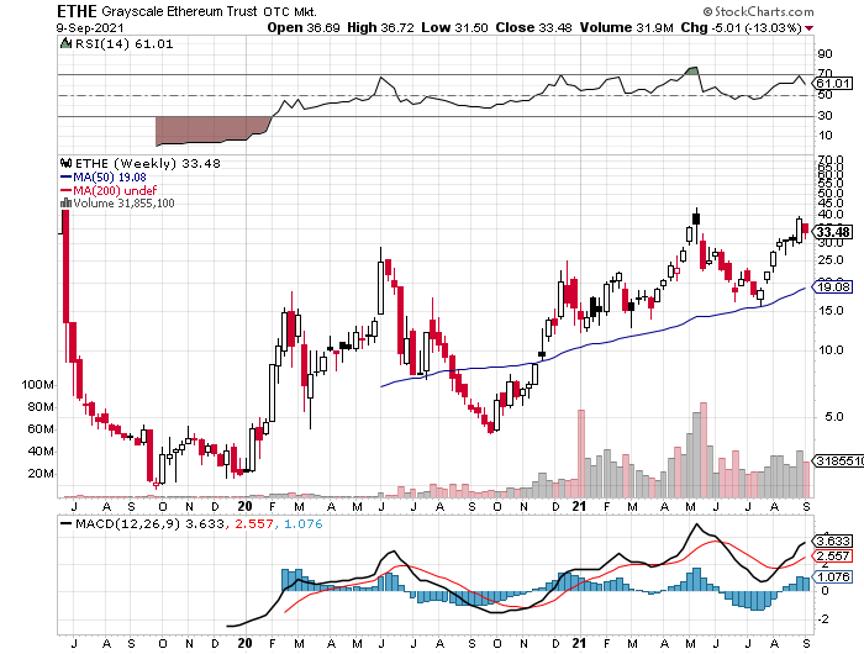
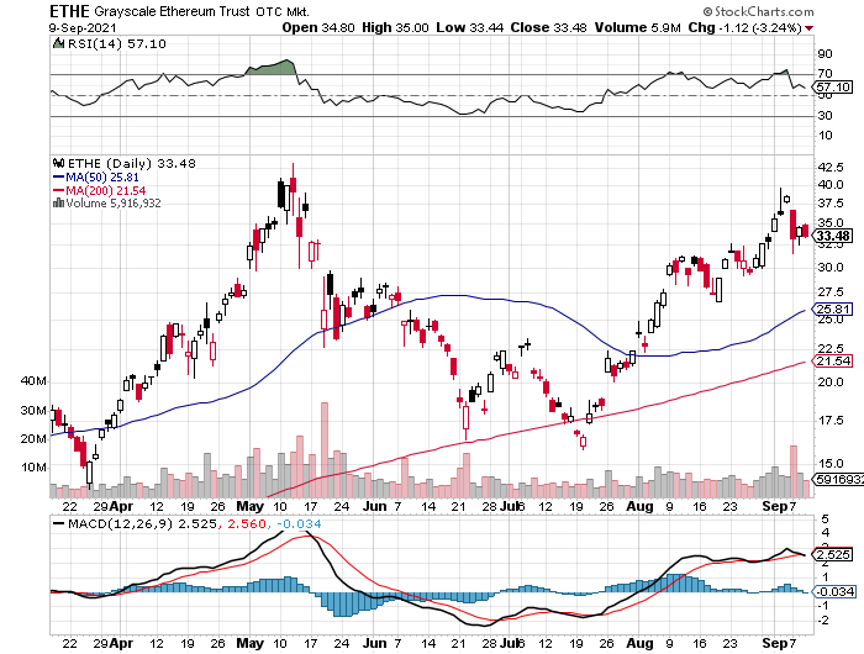
A: The Greyscale Ethereum Trust (ETHE) is just the ticket.
Q: So you avoid energy, meaning oil and gas?
A: Yes, alternative energy we like, but it’s had an enormous run already so after a 7-month time correction it’s probably safe to get into solar. Traditional oil and gas (USO) is in a long-term secular bear market that started 13 years ago and will eventually go to zero. Last year’s visit to negative futures prices is just a start. Since 2020, the energy market weighting has gone from 15% to 2%.
Q: Is Natural Gas the only rational core fuel for the grid?
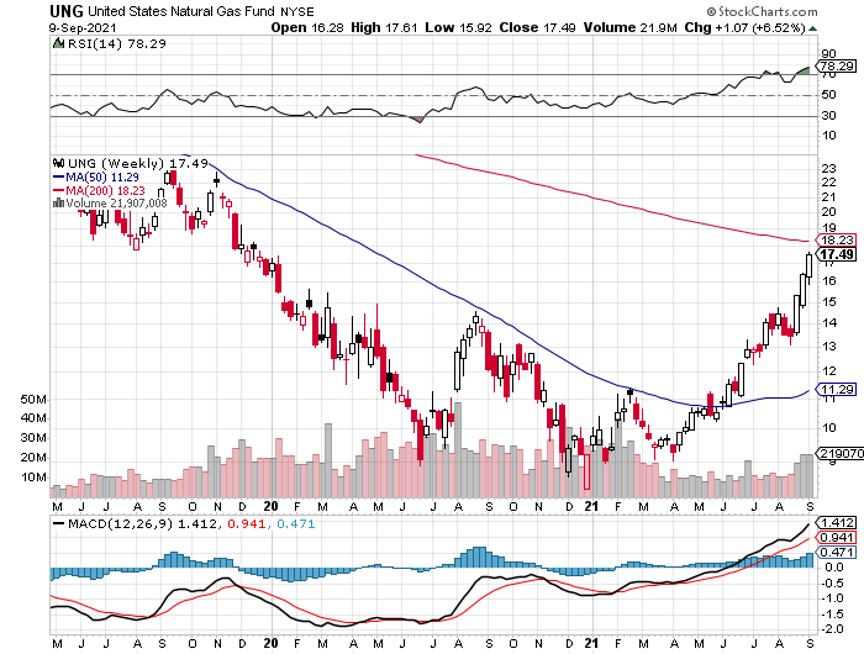
A: No, natural gas (UNG) still produces carbon even though it’s only half the amount of oil. This all gets replaced by solar in the next ten years. That’s why I tell people to stay away from energy like the plague. Would you rather buy natural gas at $4.50/btu or get solar electricity for free? Those are basically going to be the choices in ten years.
Q: Who is the biggest Aluminum producer?
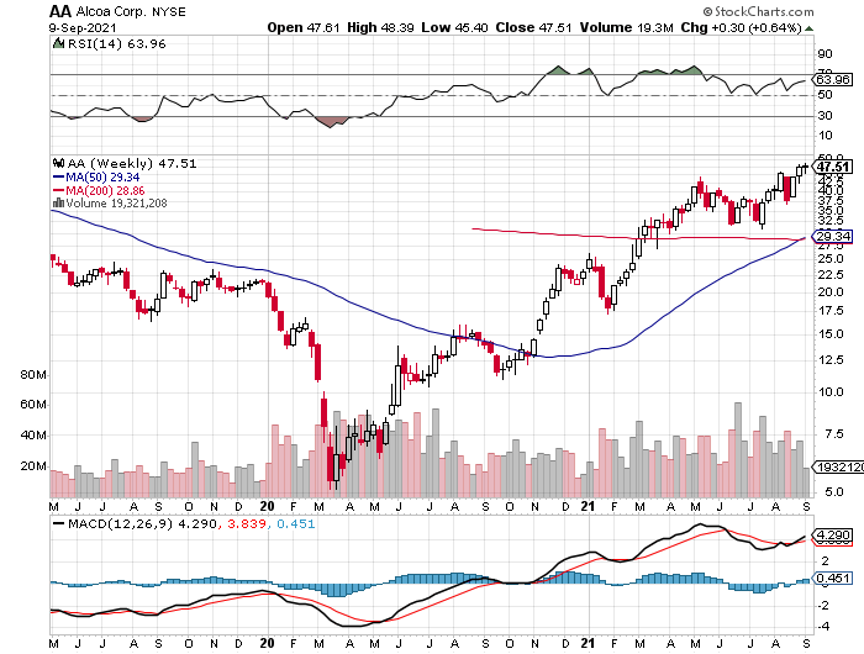
A: Alcoa (AA) which we are a buyer on dips. By the way, if we do have to build 200,000 miles of long-distance transmission lines to cover the electrification of the US energy supply, all of that has to be made of aluminum. You don't use copper for long distances, you use aluminum (aluminum for you Brits).
Q: Would you buy Uber (UBER) at $40 today?
A: Probably, yes; it had a nice 40% correction. However, you are buying into the battle over gig workers—whether they should be treated as full-time or part-time workers. That is going to be a continuing drag on the stock until they win.
Q: What do you think of meme stocks?
A: You're better off buying a lottery ticket. Even with a low payoff, you get a 1:10 chance of winning on a $1 lottery ticket. Meme stocks could double or go to zero with no warning whatsoever—there’s no logic to this market at all.
Q: What do you think of Uranium?
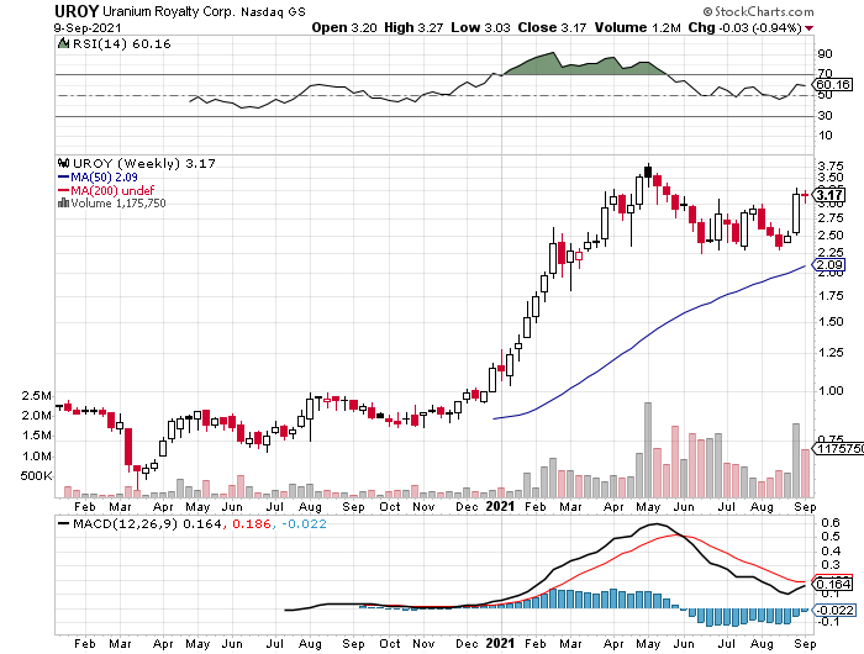
A: Three words come to mind: Chernobyl, Fukushima, and Three Mile Island. I think uranium's time has passed, even though China is building a hundred nuclear power plants. It’s just too expensive to compete against solar on a large scale and impossible to insure. If you still like Uranium though, the Uranium Royalty Corp. (UROY) has had a nice pop recently. But the issue is that nuclear technologies can’t keep up with solar and digital. And they blow up.
To watch a replay of this webinar with all the charts, bells, whistles, and classic rock music, just log in to www.madhedgefundtrader.com, go to MY ACCOUNT, click on GLOBAL TRADING DISPATCH, then WEBINARS, and all the webinars from the last ten years are there in all their glory.
Good Luck and Stay Healthy.
John Thomas
CEO & Publisher
The Diary of a Mad Hedge Fund Trader

Global Market Comments
July 19, 2021
Fiat Lux
Featured Trade:
(MARKET OUTLOOK FOR THE WEEK AHEAD, or THE DELTA CORRECTION IS HERE)
(AMZN), (AAPL), (FB), (MSFT), (TAN), (FSLR)
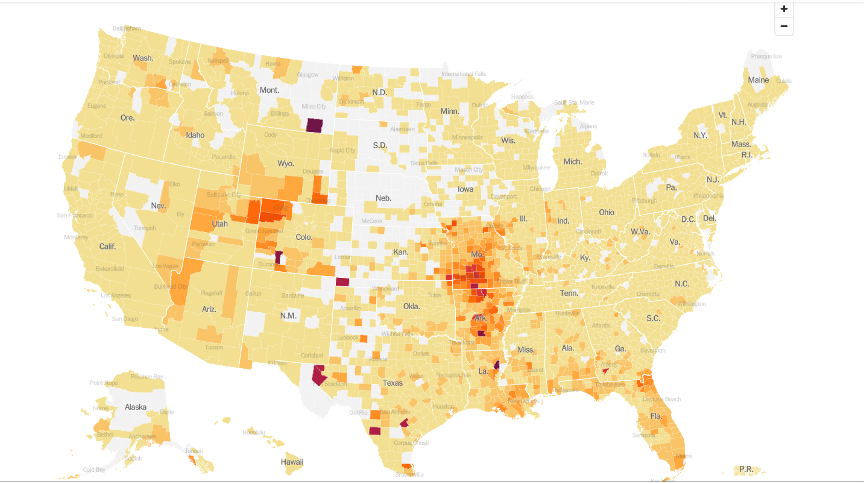
Right now, the fate of your investment portfolio, and indeed your life, is in the hands of a minority of anti vaxers in the Midwest.
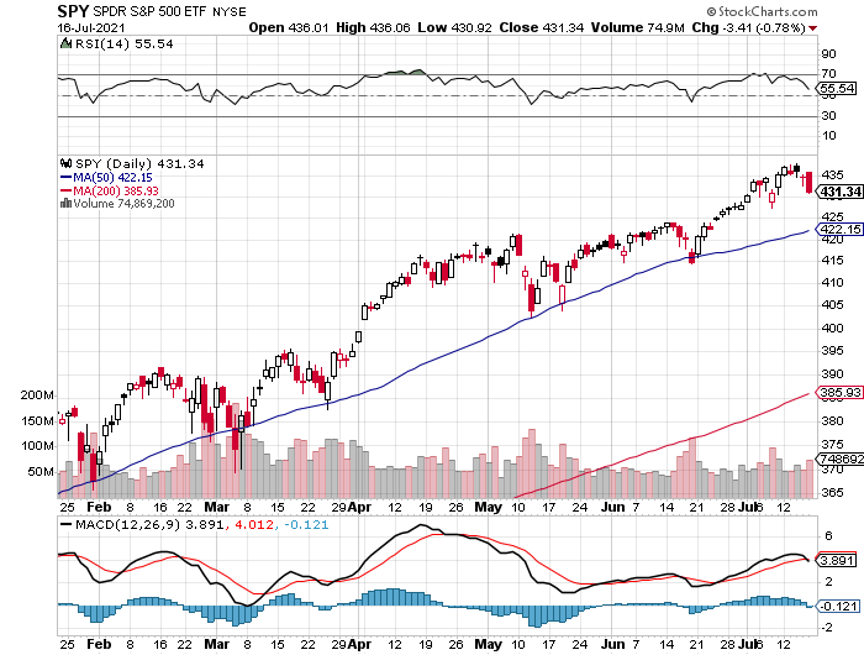
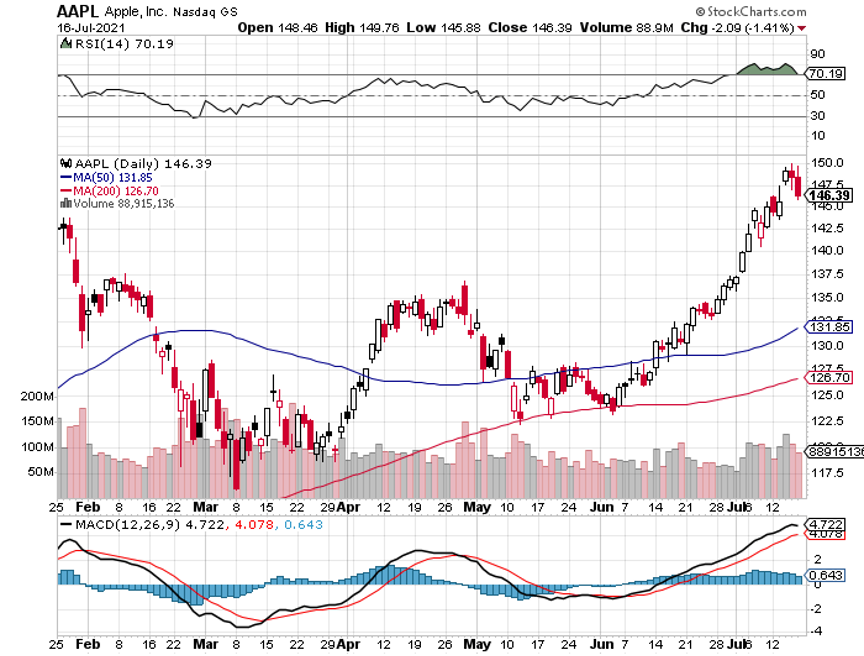
If the surge in the delta variant burns out in weeks or a month, the current market correction won’t extend any more than 5% and you should be loading the boat with big tech stocks like (AMZN), (AAPL), (FB), and (MSFT).
The delta variant is becoming a big deal, with unvaccinated states like Arkansas (35% vaccination rate) and Missouri (40% rate) driving the resurgence. It is essentially an epidemic of the unvaccinated.
Unless checked, it could lead to a broader stock market selloff in August. Los Angeles brought back the indoor mask mandate on Saturday, although compliance is near zero. San Francisco may be close behind.
Everyone in my company worldwide is now vaccinated, with Australia last to get one. I’ll be first in line for the Pfizer booster out in the fall. Delta is twice as contagious, more fatal, with more permanent side effects than earlier variants. And it’s killing more kids.
But it’s not the delta you have to worry about. If a future epsilon or zeta variant emerges, that can overcome our current vaccines, bred in the Midwest, the economy would shut down again and you can kiss your bull market goodbye. That would lead to a 1918 style finish to this pandemic, the fatality rate would go up to 50%, and millions more would die.
I’ll stick to the optimistic case….for now.
Even if we get a new variant, we now have the infrastructure in place to sequence the DNA of a new strain in a day and have 100 million doses in the freezer in two months. But it could be a close-run thing.
If you want to stick with your long portfolio in the face of millions dying here is the argument.
The Fed is unable to stimulate the economy any further through interest rate cuts or more QE. It is like pushing on a string. Companies can’t hire the labor they need to increase production or obtain the parts to make things.
This ends in August when workers get their free childcare back in the form of the public school system. The ending of Covid benefits will also light a fire under them. This will lead to a collapse in the unemployment rate and a further rise in GDP from the current ballistic 7.0% rate. This will allow the Fed to raise rates, but not enough to hurt stocks, especially techs.
This is your Goldilocks scenario for H2.
Driving down from Lake Tahoe to Long Beach to pick up my kids from Scout Camp, I passed two huge wildfires. Half the vehicles on the road (US 395) were fire trucks and crews moving in from other states. It’s like being at war.
So, you might ask the question of when will Climate Change affect the stock market? The answer is that Climate Change is actually great for stocks. Money gets spent to put fires out, then trillions of dollars get spent to rebuild with insurance claims.
The biggest impact of climate change is the decarbonization of our energy infrastructure, out of fossil fuels and into alternatives. Solar will soar from 20% to 70% of total electric power output in a decade while nuclear stays at 20% and hydroelectric at 10%. Coal and oil completely disappear. This will enable a large cut in our total energy bill.
Yes, I know oil has rallied lately. I’m sure American Leather had rallied on the way to zero, the only Dow stock to ever completely disappear. It was wiped out by the transition from horses to cars, eliminating 97% of the demand for leather. (The horse population went from 120 million to only 3.8 million today).
There are ways to play this today. Solar growth will be massive, so you have to look at the Invesco Solar ETF (TAN) and First Solar (FSLR).
Here is the next market top, at least for the short term. That’s because, for the last year, stocks have a nasty habit of selling off after quarterly earnings reports, which are just around the corner. Announcement dates for the FANGS are below. For the short term, you want to sell days before the reports. For the long term, you want to keep them, as I expect all to double or more in the next three years.
Facebook (FB) is July 28, 2021
Alphabet (GOOGL) - Jul 25, 2021
Apple (AAPL) Jul 27, 2021
Amazon (AMZN) Jul 26, 2021
Netflix (NFLX) Jul 20, 2021
Microsoft (MSFT) - Jul 28, 2021
China’s economy is slowing, with the post-Covid bounce over. It just provided $154 billion in stimulus for its economy and cut bank reserve requirements by 50 basis points. If they slow there, we could slow here, especially for big exporters to China in the ags.
Core CPI jumps to 5.4%, the biggest gain in 13 years. Excluding food and energy, it’s the biggest print since 1991. The Fed is holding its breath that these large numbers are temporary. Used car and truck prices accounted for a third of the gain for the second month in a row. That is certainly not sustainable, or I’m going into the used car business. Tech took off like a rocket on the news.
Producer prices show biggest gain since 2008, the is index up a hot 1.0% in June against 0.8% in May. PPI is up 7.3% YOY. Higher commodity and labor costs against shrinking inventories were the big issues. Inflationary pressures are here, but for how long?
Senate agrees to $3.5 trillion spending plan, providing great news for stocks and terrible news for bonds. No Republican support is required. This is in addition to the $579 billion infrastructure deal reach with opposition support. It’s enough dosh to keep this stock market percolating for years. Buy FANGS on dips.
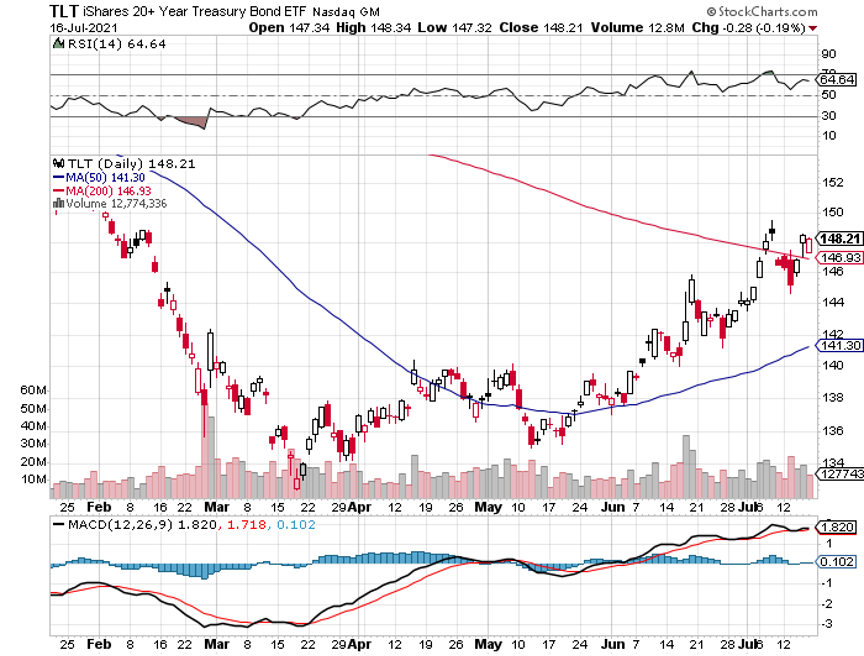
Any tightening is a ways off, says Fed governor Jerome Powell in his congressional testimony, sending bonds soaring. The comment was in response to the superheated 5.4% CPI print on Tuesday. The $120 billion a month in Fed bond buying continues. Big tech loved it and continued with its non-stop rally. The rocket fuel for share prices continues unabated.
The four biggest US banks deliver spectacular earnings, posting a combined $33 billion in profits, triggering the predictable selloff. That is $9 billion above analyst forecasts, which seem to be a permanent lagging indicator. Consumer spending is exceeding pre-pandemic levels, credit quality is soaring, and credit card spending is through the roof. Buy (JPM), (BAC), and (V) on dips.
US retail sales come rocketing back, with customers spending those stimulus checks hand over fist. The 0.6% gain in June came on the heels of a 1.7% drop in May. Vaccinations are driving buyers back into the stores. Electronics stores, clothing, and restaurants saw the biggest increases.
Bank of America lowers US GDP from 7.0% to 6.5%, still the whitest hot numbers in history. 2022 is looking like 5.5%, still double the pre-pandemic rate. Personally, I think these numbers are low, and the stock market thinks so too. Keep buying dips in the good names.
Investors pouring out of bonds and into stocks, according to a survey of mutual fund flows last week. I couldn’t agree more. The Fed can’t keep holding on to zero rates forever, and when their turn comes, its will be brutal.
My Ten Year View
When we come out the other side of pandemic, we will be perfectly poised to launch into my new American Golden Age, or the next Roaring Twenties. With interest rates still at zero, oil cheap, there will be no reason not to. The Dow Average will rise by 800% to 240,000 or more in the coming decade. The American coming out the other side of the pandemic will be far more efficient and profitable than the old. Dow 240,000 here we come!
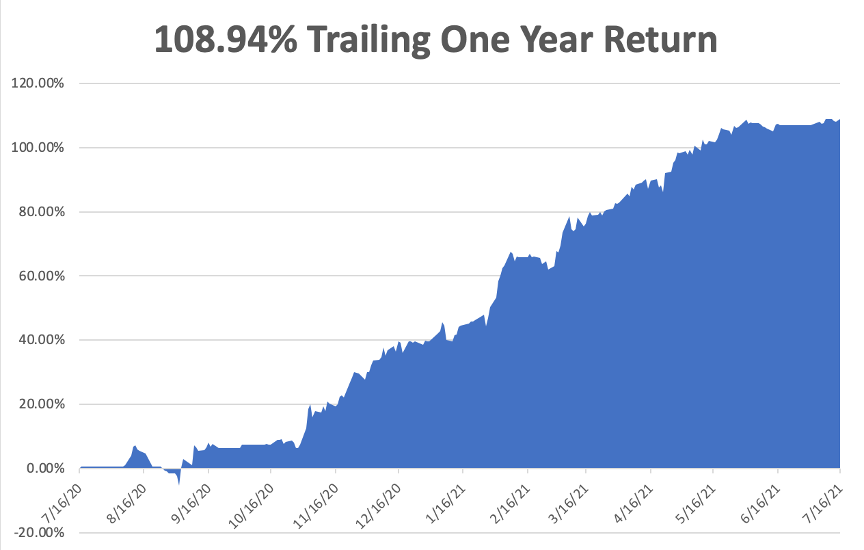
My Mad Hedge Global Trading Dispatch profit reached a 1.84% gain so far in July. My 2021 year-to-date performance appreciated to 70.44%. The Dow Average is up 13.35% so far in 2021.
I spent the week running my two last positions, a long in (JPM) and a short in the (TLT) into the July 16 options expiration. Both expired at max profit. I then immediately strapped on a new short in the (SPY), my first since the pandemic began. That leaves me 90% in cash. I’m keeping positions small as long as we are at extreme overbought conditions.
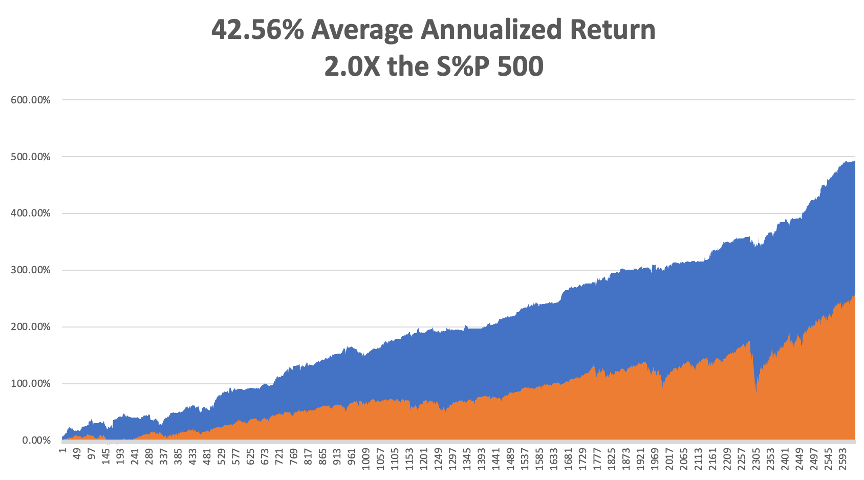
That brings my 11-year total return to 492.99%, some 2.00 times the S&P 500 (SPX) over the same period. My 12-year average annualized return now stands at an unbelievable 42.56%, easily the highest in the industry.
My trailing one-year return exploded to positively eye-popping 108.94%. I truly have to pinch myself when I see numbers like this. I bet many of you are making the biggest money of your long lives.
We need to keep an eye on the number of US Coronavirus cases at 34.1 million and deaths topping 609,000, which you can find here.
The coming week will be a weak one on the data front.
On Monday, July 19 at 11:00 AM, the NAHB Housing Market Index for July is out. Johnson & Johnson (JNJ) and Verizon (VZ) report.
On Tuesday, July 20, at 8:30 AM, Housing Starts for June are printed. Haliburton (HAL) and United Airlines (UAL) report.
On Wednesday, July 21 at 11:30 AM, EIA Crude Oil Stocks are announced. Netgear (NTGR) reports.
On Thursday, July 22 at 8:30 AM, we learn the latest Weekly Jobless Claims. At 11:00 AM, we get Existing Home Sales for June. American Airlines (AAL) and Biogen (BIIB) report.
On Friday, July 23 at 2:00 PM, we learn the Baker-Hughes Rig Count. American Express (AXP) reports.
As for me, we all had to rearrange our budgets in the last year, dumping old spending habits and adopting new ones.
As for me, my electric scooter bill with Lime (click here for the site) has gone through the roof. They neatly fill the gap between walking and Uber in major tourist areas like Long Beach.
It’s a lot of fun, provided you don’t kill yourself on your first ride. The scooters go fast, some 20 miles an hour. Each one has a 13-mile range. When you’re done, you just drop it, take its picture, and then Lime picks it up and recharges it overnight.
I think I broke all seven of their mandatory rules (no driving on sidewalks, driving without a helmet, drinking while driving….). Hey, the great thing about being my age is that there are no long-term consequences to anything.
Stay healthy.
John Thomas
CEO & Publisher
The Diary of a Mad Hedge Fund Trader
Check Out My New Wheels
Here is the Problem