Global Market Comments
January 27, 2021
Fiat Lux
Featured Trade:
(A NEW THEORY OF TESLA, or WHY I’M RAISING MY TARGET TO $10,000),
(TSLA)

Global Market Comments
January 27, 2021
Fiat Lux
Featured Trade:
(A NEW THEORY OF TESLA, or WHY I’M RAISING MY TARGET TO $10,000),
(TSLA)

Mad Hedge Biotech & Healthcare Letter
January 26, 2021
Fiat Lux
FEATURED TRADE:
(EMERGING COVID-19 ALLIANCES)
(CVAC), (PFE), (MRNA), (TSLA), (NVAX), (JNJ), (SNY), (GSK), (BAYN)

Tesla (TSLA) has been sizzling hot for months now, and it looks like its Midas touch has reached the biotechnology world.
It seems that almost everything linked to Tesla achieves success. That could indicate terrific news for a particular biotech: CureVac (CVAC).
CureVac, an under-the-radar biotech stock, is closing in on the leading COVID-19 vaccine developers today.
A differentiating factor it has from the likes of Pfizer (PFE), BioNTech (BNTX), and Moderna (MRNA) is its bonafide tie-in with Tesla. Although it sounds like quite a stretch for an electric car company to have any involvement with a biotech stock, the connection actually makes sense.
Like Moderna and BioNTech, CureVac has also been working on utilizing messenger RNA (mRNA) technology to develop various vaccines and other treatments. If all goes well, this could even lead to finding a way to immunize people against cancer.
Where does Tesla come in?
It all started in 2019 when CureVac was awarded $34 million in funding by the Coalition for Epidemic Prepared Innovations (CEPI).
The goal was to create and eventually build a prototype of an mRNA “printer.” This high-tech tool would be used to produce mRNA doses in areas that suffer from viral outbreaks. It could be used by hospitals to create personalized medicines.
Having an mRNA printer would be groundbreaking in fighting off viral diseases, particularly in remote regions. As expected, this project faced many technology obstacles along the way.
Here’s where Tesla can offer a solution since one of the companies it acquired in the past years is Grohmann Engineering, which specializes in automated manufacturing.
This makes Tesla Grohmann Automation the logical partner for CureVac to turn for help in building its mRNA printer prototype.
What we know so far is that the two companies have been working closely on the project.
It’s only a matter of time before we find out if Tesla’s magic would once again blow our expectations out of the water and we are presented with yet another breakthrough.
Other than its alliance with Tesla in the mRNA race, CureVac has forged another partnership to transform itself into a stronger candidate in the COVID-19 vaccine competition.
CureVac has tapped into the global reach of Bayer (BAYN) to help it distribute its vaccine once it gains approval.
In terms of its own COVID-19 vaccine candidate, CureVac is anticipated to release positive results.
This is because its technology closely mirrors that used by Moderna and BioNTech, which strongly indicates that the efficacy levels could be just as good.
However, CureVac’s vaccine candidate offers a competitive advantage over the others: it doesn’t require cold storage.
This means it would be easier and more convenient to distribute it compared to Moderna’s and Pfizer’s.
It also requires a much smaller dose compared to Moderna’s COVID-19 vaccine candidate. This translates to cheaper manufacturing costs.
CureVac has secured a deal with the EU to deliver an initial 405 million doses for half of the year plus 300 million doses more in 2021 alone. It also agreed to produce 600 million doses in 2022.
Meanwhile, its alliance deal with Bayer indicates that it has secured a powerful distribution partner.
Therefore, we could expect CureVac to leverage Bayer’s global supply network to deliver its vaccines worldwide.
However, CureVac and Bayer are thinking way ahead of 2022.
The alliance formed by the two companies sees to it that the CureVac vaccine candidate would become the strongest contender in the post-pandemic years.
As per Bayer’s projection, the companies estimate 12 billion to 14 billion vaccine doses just to bring this pandemic under control.
Considering that COVID is expected to become an endemic disease, annual or even bi-annual vaccination programs would become the norm.
While Pfizer, Moderna, and AstraZeneca have been well ahead of the vaccine race, the door is still firmly open for other developers like Novavax (NVAX), Johnson & Johnson (JNJ), GlaxoSmithKline (GSK), Sanofi (SNY), and, of course, CureVac to launch their own COVID-19 vaccines.
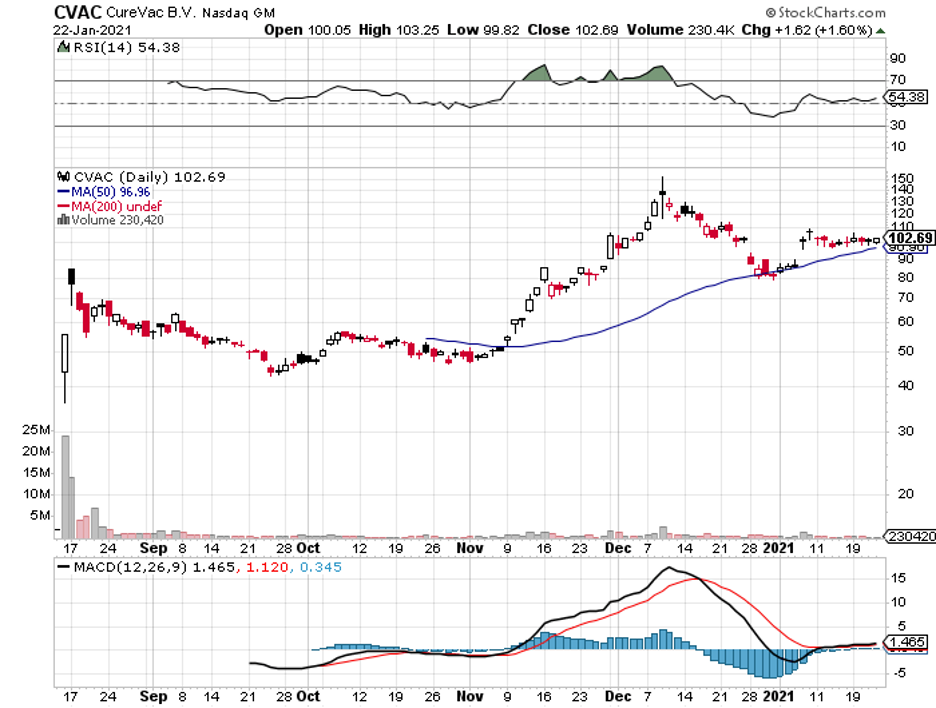
Only going public in August 2020, this German biotech company already has $18.2 billion in market capitalization.
Its public offering of 15.3 million shares sold at $16 each generated $245.3 million for the company back in August.
By early December 2020, CureVac shares were already being traded somewhere around $150 as investors quickly began to realize the value proposition.
If I am to look to invest in a COVID-19 vaccine developer at this point, CureVac would surely be one of my choices.

Global Market Comments
January 25, 2021
Fiat LuxFeatured Trade:
(MARKET OUTLOOK FOR THE WEEK AHEAD, or HERE COMES THE SUPERHEATED ECONOMY),
(SPY), ($INDU), (TLT), (TBT), (TSLA)
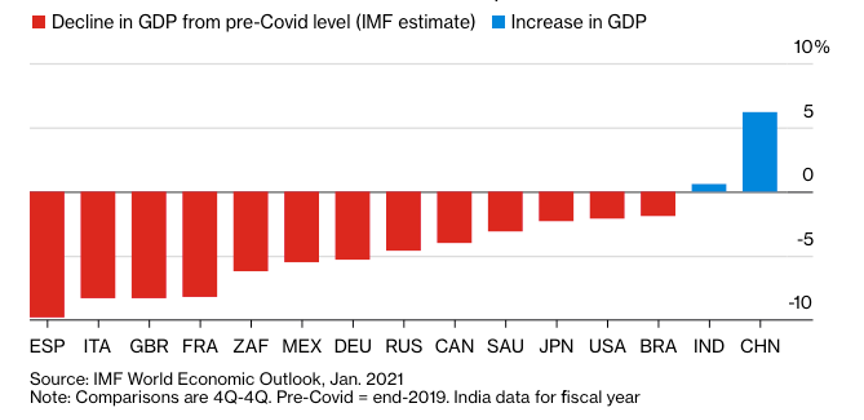
The US economy is in the worst condition in a century. The U6 Unemployment rate stands at 20 million today. Main streets everywhere are boarded up. Millions of businesses have gone under. Some 4,500 people a day are dying from a dreaded virus.
All of this means that you should rush out and buy and stocks, as many as possible, with both hands, and by the bucket load. It’s time to take out that home equity loan and pour it into stocks, damn the torpedoes.
For things are about to get better for the US economy, a whole lot better, better beyond anyone’s wildest imagination, and for you individually.
Speaking to CEOs, fund managers, and hedge fund strategists, it is clear that most are wildly underestimating the strength of the 2021 recovery. People haven’t really added up all the stimulus and quantitative easing that is about the hit, which could reach $20 trillion. The total market value of US stock markets is only $51 trillion.
I hate to engage in some simplistic calculations here, but if you increase the amount of capital going into the economy by nearly 50% in two years, stocks just might go up by nearly 50% in two years. It’s no more complicated than that.
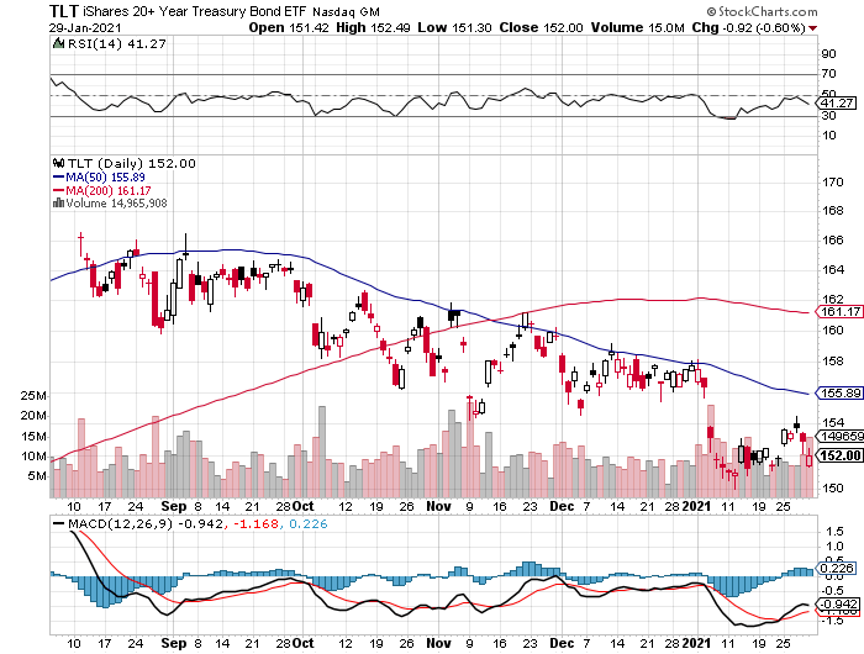
In fact, economic conditions are about to improve so fast that the Federal Reserve may have to break its promise about not raising interest rates for three years and instead start nudging them up by the end of 2021.
Needless to say, this is terrible news for the bond market (TLT), where I am lining up to go from a double to a triple short.
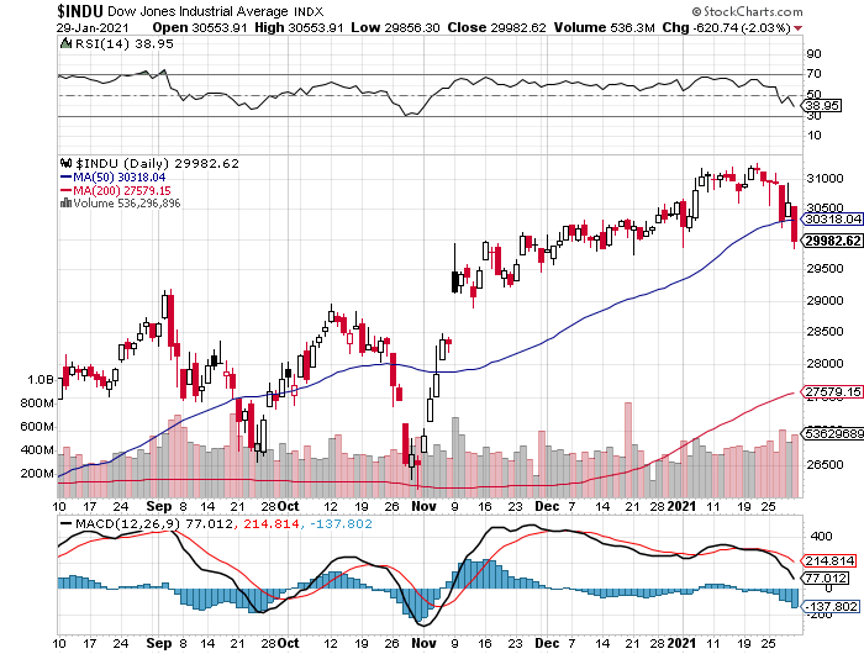
You are already starting to see other analysts ratchet up their overcautious yearend S&P 500 target. By November, they may reach my own outsized goal of 4,800, bringing in a total gain in stocks of 35%.
All of this explains why stocks just absolutely refuse to go down, even a little bit. Each one-day decline seems to be met with a wall of buying. The memo is out: you absolutely have to get into this market, whether you are an individual, hedge fund, institution, or outright bet the ranch gambler.
Of course, if you think I’m so bullish because I made 90% on my money since the April bottom, you’d be right.
Just keep your discipline and observe the basic rules of trading: 1) Don’t buy a position that is so big that it can’t handle a normal 10% correction, 2) Don’t accumulate a position that is so big that you can’t sleep at night, 3) No calling John Thomas in the middle of the night and asking “I have a 3X position in this and their trading down in Asia, what should I do?”
If you have to ask the question, your position is too big.
Biden’s economic plan boosts growth forecasts, according to Goldman Sachs. Prospects have jumped from 6.4% to 6.6%, the highest in a half-century, on the back of a massive Covid-19 package.
Treasury Secretary Janet Yellen says “GO BIG” or go home to the Senate Finance Committee. She was there to get confirmation and push for Biden’s $1.9 trillion stimulus package. Markets are underestimating the extent of the stimulus headed our way, which could reach $10 trillion in addition to another $10 trillion in quantitative easing. Buy dips.
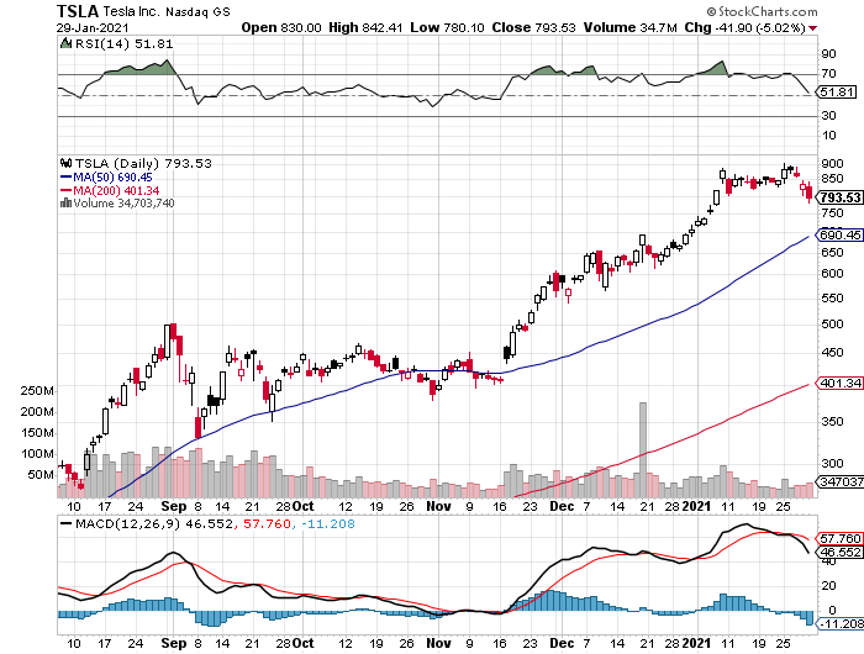
Index Funds are getting trashed, substantially trailing the S&P 500, as single-story stocks dominate the market. It’s become a stock pickers market in the extreme, with no more obvious example that (TSLA), up 1,000% in 9 months. Small caps, IPOs, and cyclical are getting all the action, leaving the (SPX) in the dust.
Tesla delivered its first Chinese Model Y, which will add 250,000 units to sales in 2021. It’s all part of Elon’s quest to take over the global automobile market. He plans to boost sales from 500,000 last year to 20 million in a decade. If so, the stock today still looks cheap. But is the quality the same?
Tesla Q4 registrations soar by 63%, in California, its largest market. It’s due to the runaway success of the Model Y small SUV. The stock is taking a long-overdue rest with a sideways “time” correction. It’s still true that if you buy the stock, you get the car for free.
Weekly Jobless Claims are still sky-high at 900,000. It’s a decline on the week but still horrifically high. The stock market may be starting to notice, with stocks moving sideways for two weeks.
Existing Home Sales soared to a 15-year high, up an amazing 22% YOY in December to a seasonally adjusted 6.76 million units. In the meantime, inventories hit all-time lows at only 1.9 months as they can’t build them fast enough. Sales of $1 million-plus homes are up an incredible 94%. The hottest markets were in Austin, TX, Tampa, FL, and Phoenix, AZ. New York was the worst, followed by San Francisco. The market is on fire and could continue for another decade. Pending tax breaks from the new tax bill will give homeownership another big push.
US Housing Starts jump 5.8%, to 1.7 Million units. Single-family homes are up 12% YOY, driven by the pandemic. Notice the enormous supply/demand gap which assures that home prices will keep rising for years. Rising mortgage interest rates so far have had no effect.
US Manufacturing PMI hits 14-Year high, according to Markit, their index jumping from 57.1 to 59.1. The performance would have been better if it weren’t for rampant parts shortages nationwide. It’s another argument for the long-term bull case.
When we come out the other side of pandemic, we will be perfectly poised to launch into my new American Golden Age, or the next Roaring Twenties. With interest rates still at zero, oil cheap, there will be no reason not to. The Dow Average will rise by 400% to 120,000 or more in the coming decade. The American coming out the other side of the pandemic will be far more efficient and profitable than the old. Dow 120,000 here we come!
My Mad Hedge Global Trading Dispatch shot out of the gate with an immediate 7.25%so far in January. That is net of a 4% loss on a Tesla short which I added one day too soon. Given the great heights of the market, I have trimmed my book to just a long in Tesla and a Short in US Treasury bonds.
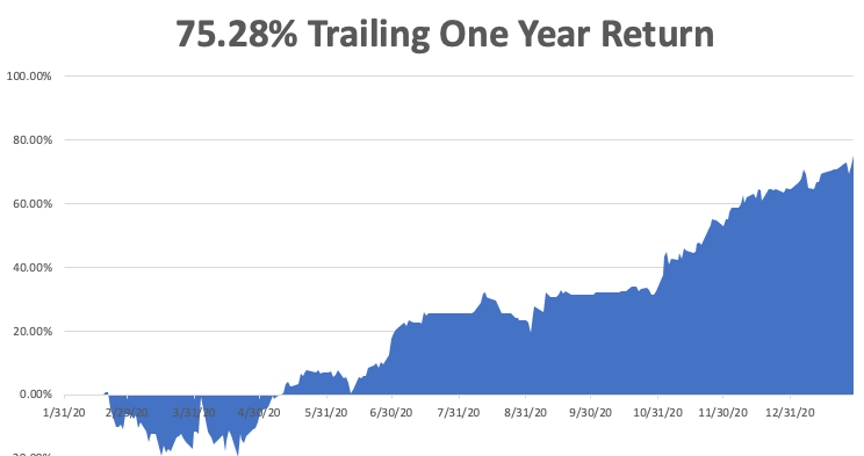
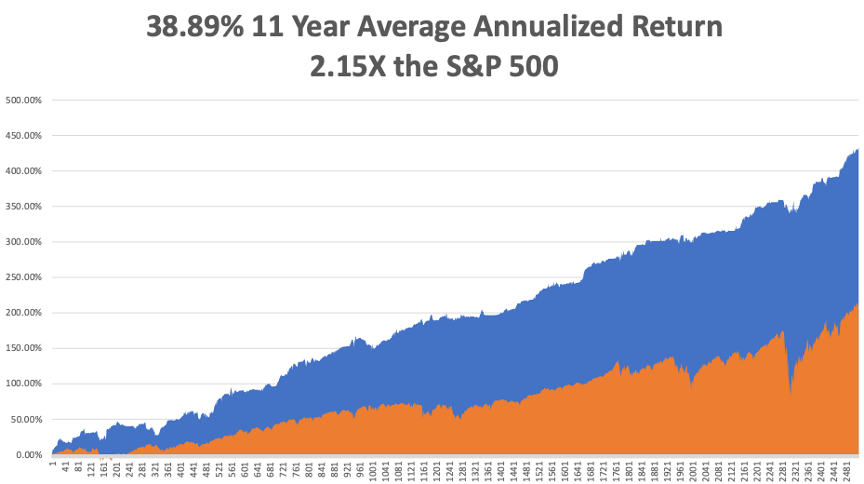
That brings my eleven-year total return to 430.30% double the S&P 500 over the same period. My 11-year average annualized return now stands at a nosebleed new high of 38.80%. My trailing one-year return exploded to 74.44%, the highest in the 13-year history of the Mad Hedge Fund Trader. We have earned 90% since the March low.
The coming week will be a big one for big tech earnings.
We also need to keep an eye on the number of US Coronavirus cases at 25 million and deaths at 420,000, which you can find here. We are now running at a staggering 4,500 deaths a day.
When the market starts to focus on this, we may have a problem.
On Monday, January 25 at 9:30 AM EST, we get the Chicago Fed National Activity Index for December. Phillips (PSX) and Kimberly Clark (KMB) report.
On Tuesday, January 26 at 10:00 AM, we learned the new S&P Case Shiller National Home Price Index. Microsoft (MSFT), Johnson & Johnson (JNJ), and American Express (AMEX) report.
On Wednesday, January 27 at 10:00 AM, US Durable Goods for December are published. Apple (AAPL), Facebook (FB) and Tesla (TSLA) report.
On Thursday, January 28 at 9:30 AM, the first look at US GDP for Q4 is announced. McDonald’s (MCD), American Airlines (AA), and Visa (V) report.
On Friday, January 29 at 9:30 AM, US Personal Income and Spending for December is published. Ely Lilly (LLY) and Caterpillar (CAT) report. At 2:00 PM, we learn the Baker-Hughes Rig Count.
As for me, I have never been big on the “meme” thing, but you have to love the one that has been circulating about Bernie Sanders. Suddenly, he showed up on every transit system in the country. Clearly, the country was dying for a laugh. I include several pictures below. Hopefully, I won’t end up like him someday.
Stay healthy.
John Thomas
CEO & Publisher
The Diary of a Mad Hedge Fund Trader


Global Market Comments
January 15, 2021
Fiat LuxFeatured Trade:
(BETTER BATTERIES HAVE BECOME BIG DISRUPTERS)
(TSLA), (XOM), (USO)
Global Market Comments
January 14, 2021
Fiat LuxFeatured Trade:
(WHAT THE HECK IS ESG INVESTING?),
(TSLA), (MO)
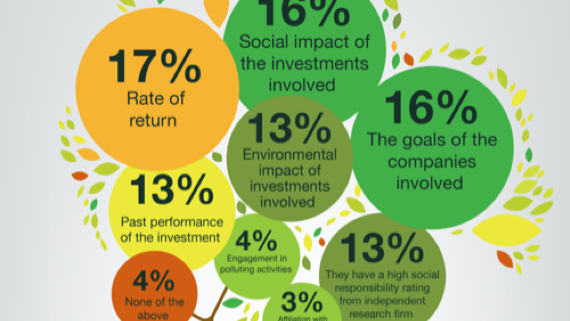
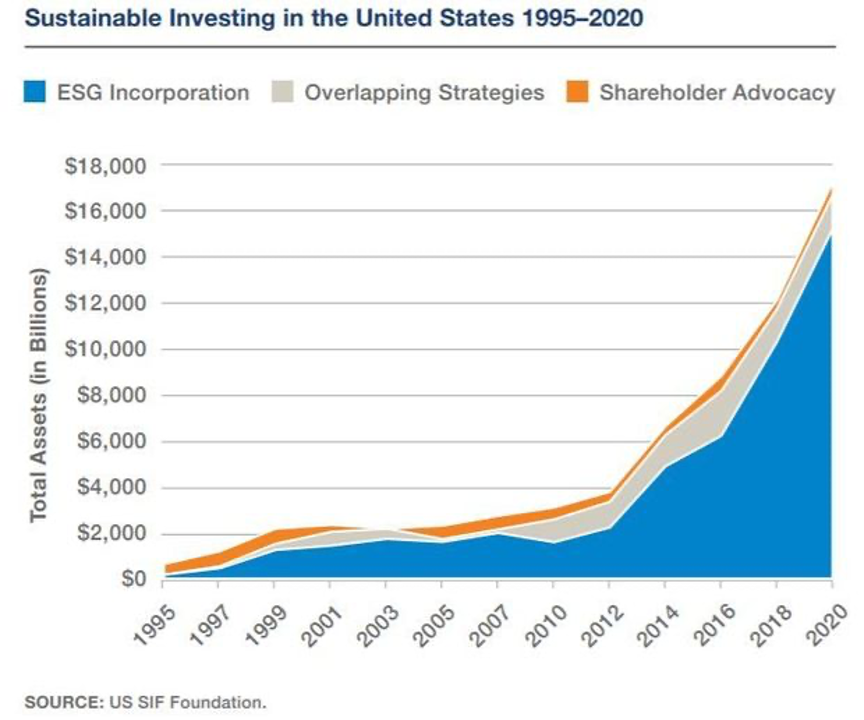
Looking at the New Year equity allocations, it’s truly astonishing how much money is pouring into ESG investing. Maybe it was another year of blistering head worldwide that did it. It now accounts for one-third of all US equity investment.
Last year, BlackRock, one of the largest fund managers in the country, made a major new commitment to ESG investment by rolling out several new ETFs. I thought I’d better take him seriously, as his firm is one of the largest money managers in the world with $7 trillion in assets.
So what the heck is ESG investing?
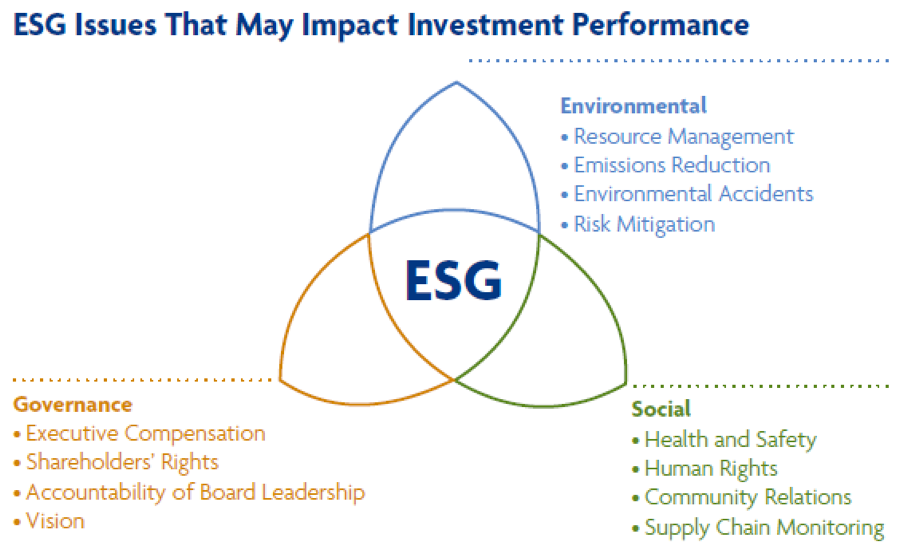
Environmental, Social, and Governance investing (ESG) seeks to address climate change in any way, shape, or form possible. Its goal is to move the economy and capital away from carbon-based energy forms, like oil (USO), natural gas (UNG), and coal (KOL), to any kind of alternative.
I am always suspicious of investment themes that are politically correct and ideologically directed, as they usually end in tears. I can’t tell you how many people I know who invested their life savings in solar companies to save the world, like Solyndra, Sungevity, American Solar Direct, and Suniva, only to get wiped out when they went under.
As laudable as the goals of these companies may have been, they were unable to deal with collapsing prices, Chinese dumping, and the harsh realities of doing business in a cutthroat competitive world.
As a venture capital friend of mine once told me, “Technology is a bakery business”. If you can’t sell your products immediately, you go broke. Technology always drops prices dramatically and if you can’t stay ahead of the curve you don’t stand a chance.
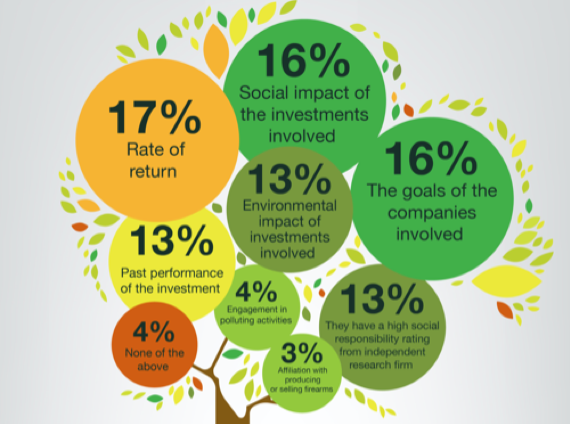
Still, what I believe is not important. The fastest growing group of new investors in the market today are Millennials, and they happen to take ESG investing very seriously.
There does seem to be a method to BlackRock’s madness. Over the past year, ESG-influenced funds have grown from 1% to 3.6% of total investment. Other major fund families like Vanguard have already jumped on the bandwagon.
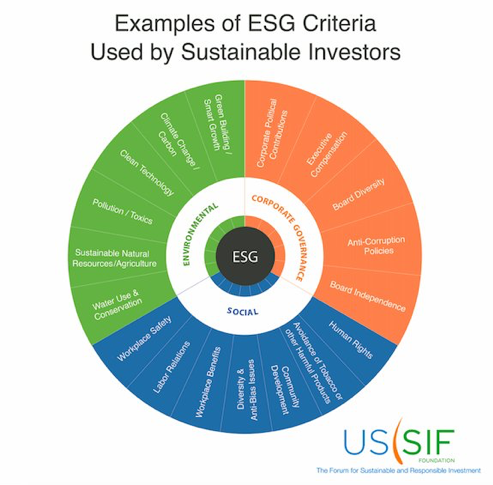
ESG can include a panoply of activities, including recycling, climate change mitigation, carbon footprint reduction, water purification, green infrastructure, environmental benefits for employees, and greenhouse gas reduction. There are many more.
There is even an ESG rating system for funds and companies produced by firms like Refinitiv, which scores 7,000 companies around the world based on their environmental sensitivity. Companies like United Utilities Group PLC, the UK’s largest water company, get an A+, while China’s Guangdong Investment Ltd, which supplies water and energy to Hong Kong, gets a D-.
It goes without saying that companies from emerging nations tend to score very poorly. So do manufacturing companies relative to service ones, and energy companies versus non-energy ones.
The ESG concept began in 2005, when UN Secretary General Kofi Annan wrote to 50 global CEOs urging them to take climate change seriously. A major report by Ivor Knoepfel followed a year later entitled “Who Cares Wins.” The report made the case that embedding environmental, social and governance factors in capital markets makes good business sense and leads to more sustainable markets and better outcomes for societies. The snowball has been rolling ever since.
Themed investing is not new. “Sin” stocks have long been investment pariahs, including alcohol and tobacco companies. As a result, these companies trade at permanently low multiples. The newest investment ban is on firearms-related companies.
ESG investment may be about to get a major tailwind. The laws of supply and demand have oil prices disappearing up their own exhaust pipe. Overproduction by US fracking companies has caused supply gluts that will lead to chronically lower prices. The US happens to have a new 200-year supply of oil and gas, thanks to the fracking revolution.
Saudi Arabia just floated their oil monopoly, Saudi ARAMCO, raising a record $26 billion. When Saudi Arabia wants to get out of the oil and gas business, so should you. It’s not because they can’t think of new ways to spending money that they’re unloading it.
That’s why I have been advising followers to avoid energy investments like the plague for the past decade. My recent trade alerts for oil have been on the short side. It’s just a matter of time before alternatives rule the world.
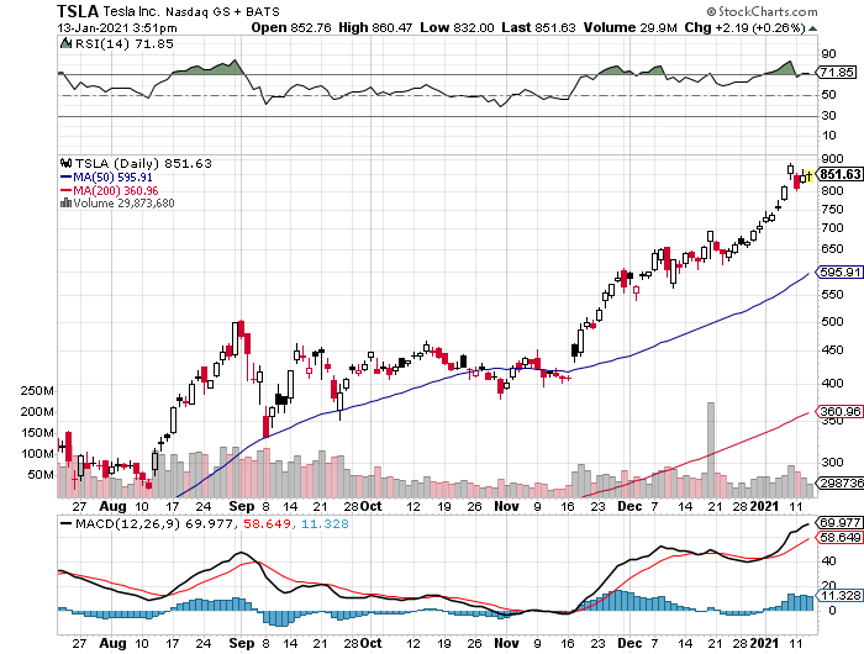
Who is the greenest company in America? That would be electric car and autonomous driving firm Tesla (TSLA). Perhaps ESG investing helps explain the tripling of the share price since June.
What is the top-performing listed stock of the last 30 years? Tobacco company Altria Group (MO), the old Philip Morris.
It’s proof that investment shaming doesn’t always work.


Global Market Comments
January 12, 2021
Fiat Lux
Featured Trade:
(MAD HEDGE 2020 PERFORMANCE ANALYSIS),
(SPY), (TLT), (TBT), (TSLA), (GLD),
(SLV), (V), (AAPL), (VIX), (VXX)
(TESTIMONIAL)

When a Marine combat pilot returns from a mission, he gets debriefed by an intelligence officer to glean whatever information can be obtained and lessons learned.
I know. I used to be one.
Big hedge funds do the same.
I know, I used to run one.
Even the best managers will follow home runs with some real clangors. Every loss is a learning experience. If it isn’t, investors will flee and you won’t last long in this business. McDonald’s beckons.
By subscribing to the Mad Hedge Fund Trader, you get to learn from my own half-century of mistakes, misplaced hubris, arrogance, overconfidence, and sheer stupidity.
So, let’s take a look at 2020.
It really was a perfect year for me during the most adverse conditions imaginable, a pandemic, Great Depression, and presidential election. I made good money in January, went net short when the pandemic hit in February, and played the big bounce in technology stocks that followed.
Right at the March crash bottom, I sent out lists of 25 two-year option LEAPS (Long Term Equity Participation Securities). Many of these were up ten times in months. I then used a Biden election win as a springboard for a big run with domestic recovery stocks and financials.
One client turned $3 million into $40 million last year. He owes me a dinner and my choice on the wine list. (Hmmmmm. Lafitte Rothschild 1952 Cabernet Sauvignon with a shot of Old Rip Van Winkle bourbon as a chaser?). I usually get a few of these every year.
See, that’s all you have to do to bring in a big year. Piece of cake. It’s like falling off a log. But then I’ve been practicing for 50 years.
In the end, I managed to bring in a net return of 66.5% for all of 2020. That compares to a net return for the Dow Average of 5.7%.
My equity trading in general brought in 71.94% in profits, with 216 trade alerts, and were far and away my top performing asset class. This was the best year for trading equities since the 1999 Dotcom bubble top.
Of course, the best single trade of the year was with Tesla (TSLA), with 18 trades bringing in a 10.55%. I dipped in and out during the 10-fold increase from the March low to yearend.
Readers were virtually buried with an onslaught of inside research about the disruptive electric car company. It’s still true if you buy the stock, you get the car for free, as I have done three times.
Some 26 trades in Apple (AAPL) brought in a net 5.94%. It did get stopped out a few times, hence the lower return.
The second most profitable asset class of the year was in the bond market, with 58 trades producing a 31.16% profit. Virtually all of these trades were on the short side.
I sold short the United States Treasury Bond Fund from $180 all the way down to $154. I called it my “rich uncle” trade of the year, writing me a check every month and sometimes several a month. This is the trade that keeps on giving in 2021. Eventually, I see the (TLT) falling all the way to $80.
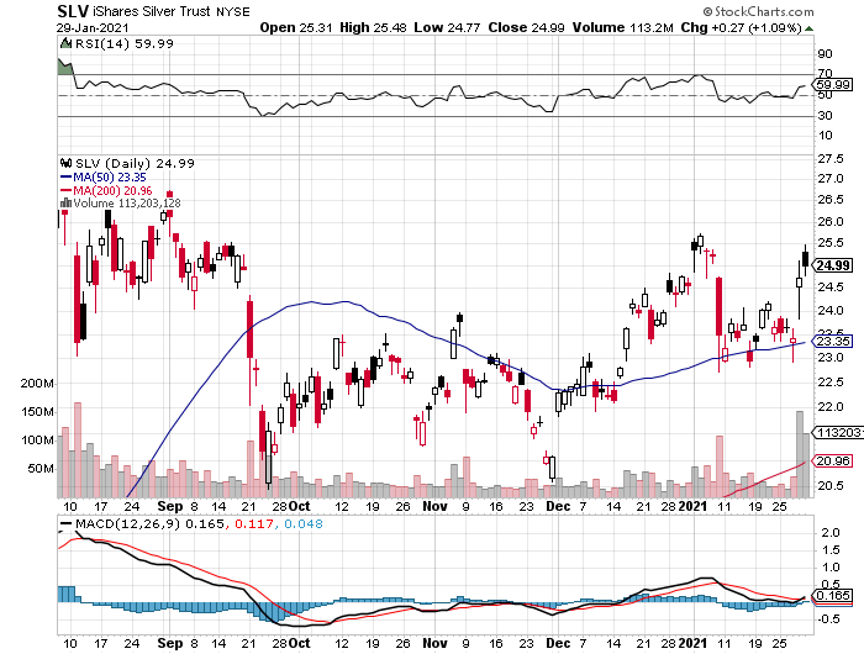
I did OK with gold (GLD), making 4.88% with eight trades in the SPDR Gold Shares ETF. Gold rose steadily until August and then fell for the rest of the year. I picked up another 1.77% on two silver trades (SLV).
It was not all a bed of roses.
Easily my worst asset class of the year was with volatility, selling short the iPath Series B S&P 500 VIX Short Term Volatility ETN (VXX). I was dead right with the direction of the move, with the (VIX) falling from $80 to $20. But my timing was off, with time decay eating me up. I lost 7.29% on six trades.
Two trades in credit card processor Visa (V) cost me 4.37%. I had a nice profit in hand. Then right before expiration, rumors of antitrust action from the administration emerged, a spate of bad economic data was printed, and an expensive acquisition took place.
I call this getting snakebit when unpredictable events come out of the blue to force you out of positions. Visa shares later rose by an impressive 22% in two months.
I lost another 0.99% on my one oil trade of the year with the United States Oil Fund (USO), buying when Texas tea was at negative -$5.00 and stopping out at negative $15.00. Oil eventually fell to negative -$37.00.
Go figure.
I didn’t offer any foreign exchange trades in 2020. I got the collapse of the US dollar absolutely right, but the moves were so small and so slow they could compete with what was going on in equities and bonds.
However, I played the weak dollar in other ways, with bullish calls in commodities and bearish ones in bonds. It always works.
Anyway, it’s a New Year and we work in the “You’re only as good as your last trade” business. 2021 looks better than ever, with a 5% profit straight out of the gate during the first five trading days.
It really is the perfect storm for equities, with $10 trillion about to hit the US economy, most of which will initially go into the stock market.
Good luck and good trading.
John Thomas
CEO & Publisher
The Diary of a Mad Hedge Fund Trader


Legal Disclaimer
There is a very high degree of risk involved in trading. Past results are not indicative of future returns. MadHedgeFundTrader.com and all individuals affiliated with this site assume no responsibilities for your trading and investment results. The indicators, strategies, columns, articles and all other features are for educational purposes only and should not be construed as investment advice. Information for futures trading observations are obtained from sources believed to be reliable, but we do not warrant its completeness or accuracy, or warrant any results from the use of the information. Your use of the trading observations is entirely at your own risk and it is your sole responsibility to evaluate the accuracy, completeness and usefulness of the information. You must assess the risk of any trade with your broker and make your own independent decisions regarding any securities mentioned herein. Affiliates of MadHedgeFundTrader.com may have a position or effect transactions in the securities described herein (or options thereon) and/or otherwise employ trading strategies that may be consistent or inconsistent with the provided strategies.