
“It has become appallingly obvious that our technology has exceeded our humanity.” – Said Scientist Albert Einstein

“It has become appallingly obvious that our technology has exceeded our humanity.” – Said Scientist Albert Einstein
Mad Hedge Technology Letter
April 15, 2020
Fiat Lux
Featured Trade:
(SOFTBANK’S CRASH AND BURN)
(SOFTBANK VISION FUND)


The bizarre case of Softbank’s emperor has no clothes – its enigmatic CEO Masayoshi Son was heralded as a tech genius who planned to validate his intelligence by throwing money at budding tech companies that were supposed to deliver his investors billions in shareholder value.
It’s now Mr. Market who has the last laugh, as the infamous tech venture fund, smartly named the Vision Fund, bankrolled by Son and Middle Eastern wealth funds, took a turn for the worst with a $16.6 billion loss in the fiscal year that just ended.
Apparently, the vision fund is blind.
How bad is the situation at the “vision” fund?
A fraudulent tech company that sells shared office space owned by Softbank is now suing itself, creating a scenario where WeWork is reliant on Softbank to fund it, yet attacking the hand that is feeding it.
Presiding over a cesspool of conflict of interests, unremarkable business models, inflated egos, and botched management, the vision fund’s greatest success is overpaying for massive loss-making tech companies that sometimes weren’t even tech companies.
WeWork is the most high-profile casualty of Son’s excesses, but Oyo, the hotel sharing company, also epitomizes the state of Son’s crumbling empire.
Less than a year ago, Son publicly anointed Founder and CEO of Oyo Ritesh Agarwal one of the new up-and-coming tech innovators.
Oyo is the Uber of hotels that, through a reservation website, matches hotel units with paying customers.
Agarwal began working with small hoteliers on service, design and standardized accouterments like bedding and toiletries to draw more travelers. He took a 25% cut of sales.
The online hotel platform expanded ambitiously by recruiting hotel owners and guaranteeing a minimum amount of revenue, essentially doubling down that its online booking system and brand name would attract enough extra cash flow to sustain sales.
In the event that revenue goes to zero because of a pandemic, Oyo would incur abnormally high risk by still being on the hook for the revenue to the hotel operators.
Oyo has since gone back on its guarantee to pay guaranteed revenue streams to hotel operators alienating any potential relationships with hotels in the future.
Agarwal’s brainchild was supposedly poised to become the biggest hotel operator in the world.
Fast forward to today and the situation is nothing short of a disaster.
Oyo has called for a major restructuring, furloughing thousands of employees as it clings on for dear life.
Oyo is just another disastrous instance of the Vision Fund’s toxic array of underperforming assets.
The hotel startup was valued at $10 billion just recently and even though not a zero yet, the company has lost around 70% of its value in one month.
Complicating the pitiful situation, Agarwal borrowed $2 billion to buy back shares in his own creation speculating that Oyo would be able to offload the asset to avid investors.
Agarwal could face an imminent margin call from the banks he borrowed from, setting the stage for Son to bail out another ridiculous sideshow or let it rot like WeWork who is effectively suing Son for not following through with a $3 billion bailout that he is walking away from.
Son promised after WeWork that he wouldn’t bail out any more startups, but the issue now is that the list of eroding companies grows longer and Son’s ability to fund these decrepit companies weakens by the day as business is shut around the world and his balance sheet sours.
Just look around at the lifeless companies that have been put out of their misery such as Brandless Inc., Zume Pizza Inc., and OneWeb just filed for bankruptcy.
I double down that no tech firm will be able to go public in 2020, and the rotten apples under Son’s leadership are now being inspected for exactly how rotten each apple is.
Tech investors should take this cue to find higher ground in the form of iron-clad balance sheets, positive cash flow, and unmistakable intellectual property.
If you can slip in a recurring subscription model in the equation, then that is the cherry on top of the chocolate sundae.
Park money in the corona tech stocks of DocuSign (DOCU), Zoom Video Communications, Inc. (ZM), Amazon (AMZN), Netflix (NFLX) and Microsoft (MSFT), then grab some popcorn to watch how Son’s portfolio blows up in dramatic fashion.

“It's better to be a pirate than to join the Navy.” – Said Co-Founder and Former CEO of Apple Steve Jobs

Mad Hedge Technology Letter
April 13, 2020
Fiat Lux
Featured Trade:
(THE BEST SHORT PLAYS IN TECH)
(EHTH), (IQ)

Fed’s Neel Kashkari described the path of the U.S. economy as a “long, hard road” boding ill for the tech sector. During economically unpredictable times, avoiding tech stocks that could be sinkholes is crucial to protecting a portfolio, which is why it's useful to consider the best short plays in tech.
One person I drop everything to listen to is Muddy Waters Research Founder and CEO Carson Block.
Block is best described as a short-seller, and his calls on allegedly fraudulent accounting practices in publicly traded Chinese companies are typically spot on.
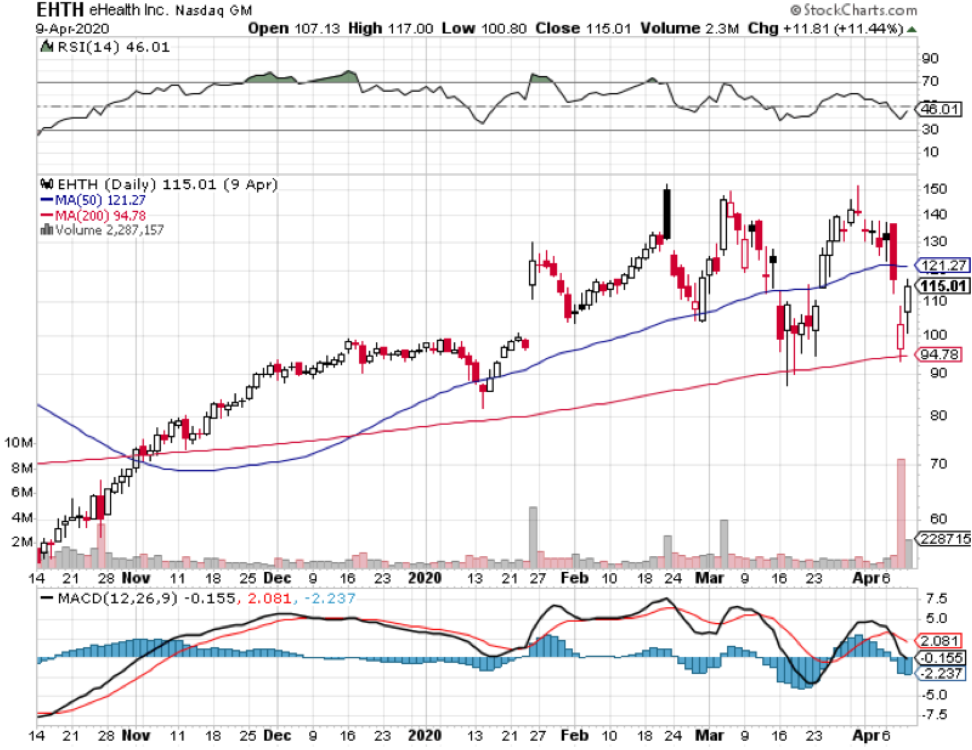
Block has found another potential gem and he is willing to bet on it by acquiring a short position in eHealth, Inc. (EHTH) which owns a digital health insurance exchange.
His gripes revolve around shoddy management who hoped to “pump the stock,” and shares reacted by dropping more than 17% at last Wednesday’s open after Block’s premarket disclosure.
The second part of Block’s argument centered around artificial growth caused by higher TV marketing spend resulting in high churn rates.
His evidence derives from management manipulating its presentation of churn to be misleadingly low and booking multi-year 'tail' revenue at the end of each cohort's estimated life, which is extremely aggressive in light of the significantly elevated churn.
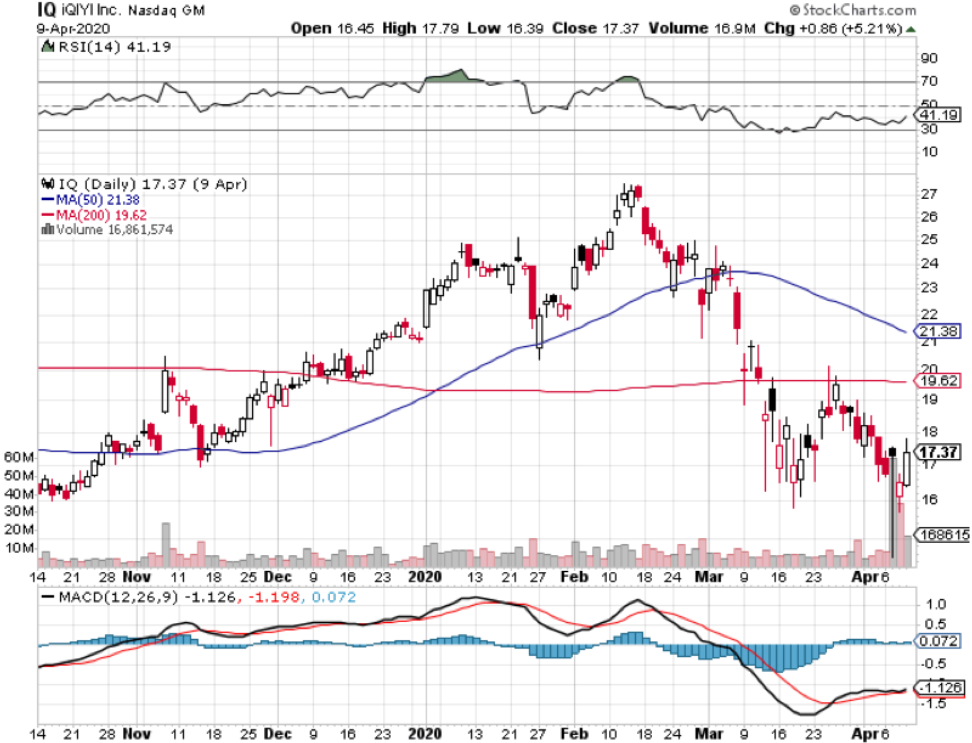
Block didn’t stop there, turning his attention to another Chinese tech company that is billed as the Netflix of China called iQIYI, Inc. (IQ).
Activist firm Wolfpack Research alleges that iQiyi “was committing fraud well before its IPO in 2018” on the Nasdaq, and it’s “continued to do so ever since.”
The Netflix of China has been fudging its numbers for quite a while and is the most egregious example of accounting fraud.
How do they do it?
The inflation of its barter transaction revenue. Barter sublicensing revenues are determined by IQ’s internal estimates of the value of the content it traded.
In other words, IQ’s management can effectively assign any value they want to these transactions, providing an easy opportunity to inflate revenues.
Based on the highest-end estimated value per non-exclusive episode provided by a former IQ employee involved in content acquisition, IQ would have needed to barter the licenses for ~3.9x and ~3.2x the total number of TV series episodes produced by all Chinese production companies to legitimately reach its reported barter revenues in 2018 and 2019, respectively.
IQ is a mature company and will turn 10 years old this month - yet has burned money for 10 consecutive years.
Even worse, losses are rapidly accelerating, unlike its growth and the company is doing more to mask their rotten core.
IQ lost around $1.5B in 2019, $170 million more than 2018.
Meanwhile, paying subscriber growth in 4Q19 hit a nadir at only 0.7%. IQ’s advertising revenue was also crashed -15% in 2019 and it still has a negative gross margin.
The Chinese consumer mindset is to never pay for digital content because they can just find it on the web for free, meaning digital streamers like IQ must go to extreme lengths to create “growth.”
The reverberation from the coronavirus is that tech investors are more risk adverse than ever and any whiff of illegality will scare them off.
Even though the Fed has basically swallowed every asset class we have with its latest move, that will not save the marginal tech companies with dishonest business models.
iQIYI, Inc. (IQ) and eHealth, Inc. (EHTH) are high-risk tech companies that readers should avoid like the plague.
“I’m skeptical of any mission that has advertisers at its centerpiece.” – Said Jeff Bezos
Mad Hedge Technology Letter
April 8, 2020
Fiat Lux
Featured Trade:
(AVOID YELP ON PAIN OF DEATH)
(YELP), (GRUB)

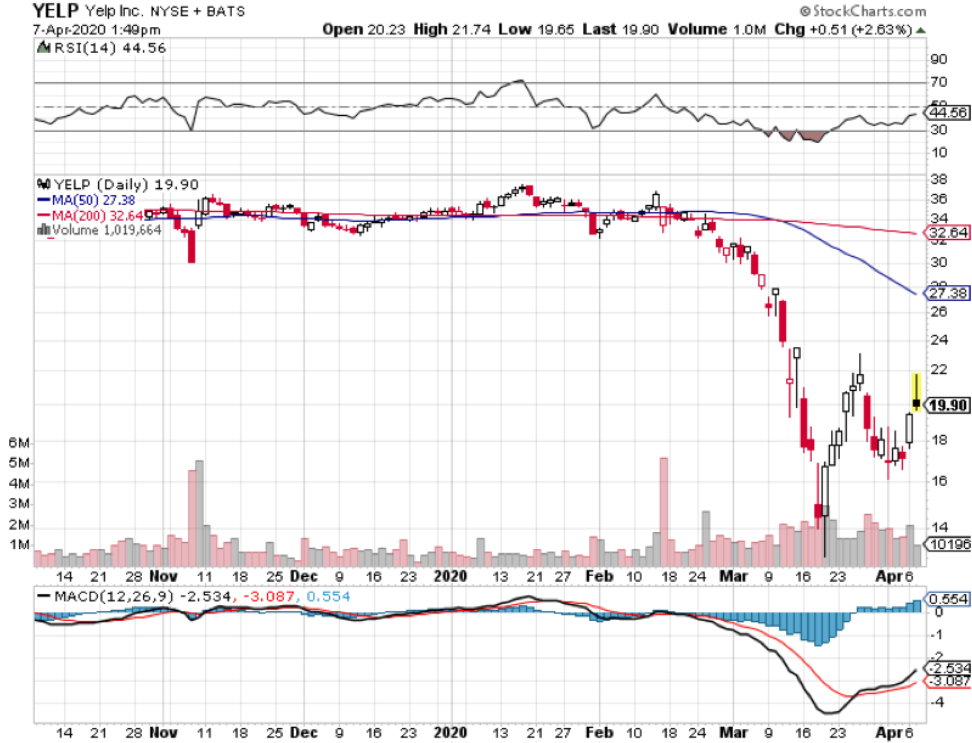
Tech investors should be migrating towards stocks that have high visibility of an earnings turnaround once a health solution is discovered for the current health scare. One that definitely does not fit the bill is Yelp (YELP) who has experienced negative earnings growth for the past three years.
What’s the deal with Yelp?
The company recently withdrew its first quarter and 2020 financial guidance because the coronavirus has destroyed large parts of its business probably to never return.
If you didn’t know, Yelp provides information through online communities on restaurants, shopping, nightlife, financial, health, and other services, so it’s easy to do the calculus as to why lockdowns and restrictions on public life are affecting these revenue streams.
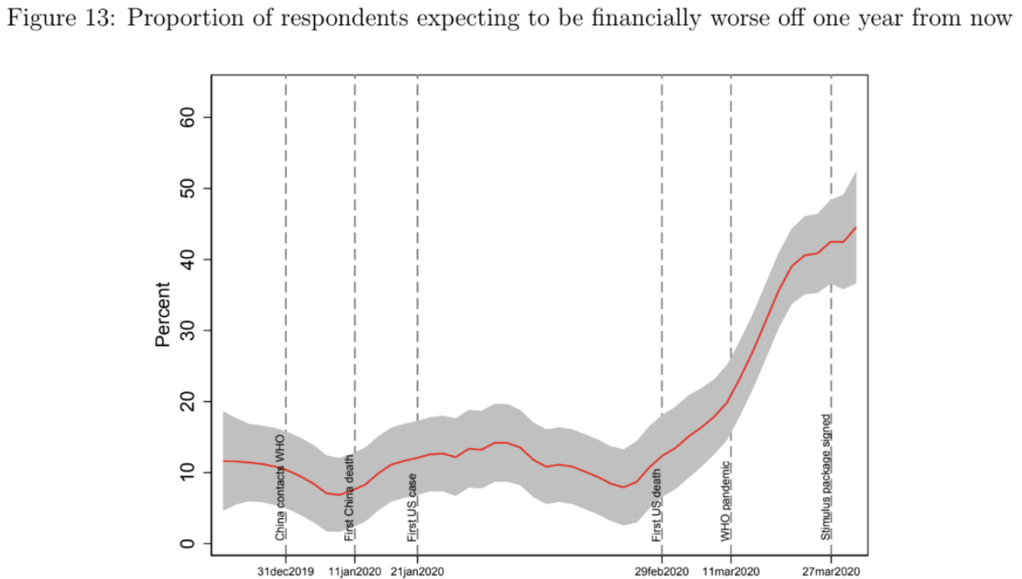
A recent survey reported a higher average likelihood of households missing a debt payment over the next three months, meaning the consumer is in dire straits unless there is a swift 180 in circumstances.
In the longer-term, the New York Fed affirms a “persistent deterioration” in consumers’ expectations to access credit throughout the rest of 2020.
The New York Fed said the sharp decline in consumer expectations cuts across all age, education, and income groups.
Less money for consumer spending means less consumer demand on Yelp translating into lower ad revenue – it’s that simple.
On a conference call on February 13, Yelp mentioned that it expects 2020 revenues to grow between 10% and 12% year over year and adjusted EBITDA by 1 to 2 percentage points. It had also expected margins to expand again in 2020.
What a difference 4 weeks makes!
Now almost every company is in survival mode and Yelp is the weakest link.
Consumer interest in restaurants and nightlife has taken a nosedive in the new coronavirus economy.
Yelp data shows that consumer interest had declined 54% for restaurants and 69% for nightlife venues.
Cafes, French restaurants, and wineries decreased their share of daily consumer actions (down 66%, 47% and 44%, respectively) week over week.
In contrast, the weekly growth numbers favor just a select few - grocery stores interest is up 102%, fruit and vegetable shops are up 102%, fast-food joints are up 64%, and pizzerias round out the bunch up 44%.
Some hard-hit companies come in the form of bowling, yoga and martial arts services which tend to involve groups of people, declined by a respective 43%, 38%, and 33%, and these are all companies that would be spending ad money.
Even worse news on the financial side - mom and pop stores have a short leash with median cash buffer for a small business at just 27 days.
As you would assume, searches on home fitness equipment surged 344%, and interest in parks rose 53%.
Interest was also up 360% for buying guns and 166% up for buying water - breweries were down 61%.
Lawmakers and states, including New York, New Jersey, California, and Pennsylvania, have ordered a temporary closure of restaurants and bars and I can safely say that consumers probably won’t return the next day to barge down the entrance door.
The last earnings report wasn’t all that hot for Yelp who missed on revenue while spending 10% more on advertising to get to that miss.
Earnings per share also missed estimates by sliding 35% year over year validating my thesis that this is a sinking ship headed towards an iceberg.
These propped up numbers were before the coronavirus hit the company and the business model is poorly prepared for this type of phenomenon and the lasting effects.
I expect a material decrease in the growth of the number of paying advertising locations and lower advertising budgets from multi-location customers.
Paying advertising locations should drop by half just this quarter.
Materially lower traffic dropping over 50% is a trend that will perpetuate and even if there is a dead cat bounce because shares are so beaten down, this is an unequivocal “sell on the rally” type of stock.
“Culture eats strategy for breakfast.” – Said Microsoft CEO Satya Nadella