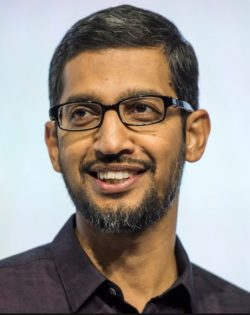
"Android was built to be very, very secure." – Said CEO of Google Sundar Pichai

"Android was built to be very, very secure." – Said CEO of Google Sundar Pichai
Global Market Comments
February 6, 2019
Fiat Lux
Featured Trade:
(MY 20 RULES FOR TRADING IN 2019)


When John identifies a strategic exit point, he will send you an alert with specific trade information as to what security to sell, when to sell it, and at what price. Most often, it will be to TAKE PROFITS, but, on rare occasions, it will be to exercise a STOP LOSS at a predetermined price to adhere to strict risk management discipline. Read more
While the Diary of a Mad Hedge Fund Trader focuses on investment over a one week to the six-month time frame, Mad Day Trader, provided by Bill Davis, will exploit money-making opportunities over a brief ten minute to three-day window. It is ideally suited for day traders, but can also be used by long-term investors to improve market timing for entry and exit points. Read more
Mad Hedge Hot Tips
February 5, 2019
Fiat Lux
The Five Most Important Things That Happened Today
(and what to do about them)
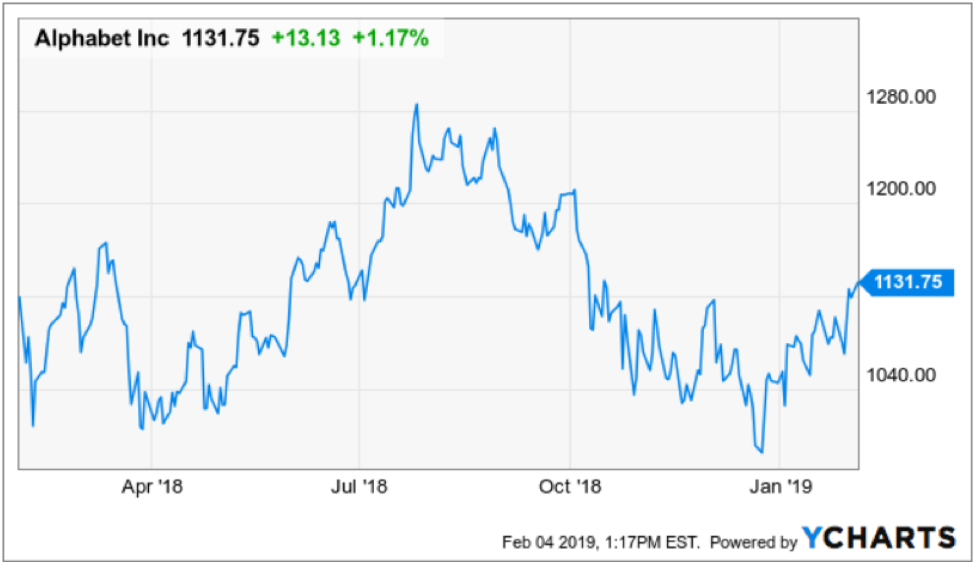
1) The Last FANG Reports, with Alphabet (GOOGL) surprising to the upside. Ad sales and earnings beat, but the stock sells off anyway. Will this be that last earnings surprise to drive the market? Click here.
2) Talking of Banning Share Buybacks is Rising. Blamed as a major cause of income inequality, far left Dems want to ban this highly lucrative practice. The stock market and the stock-owning half of the country hate the prospect, so it will never happen. Click here.
3) The Bond King Retires, with Bill Gross leaving Janus Henderson at the age of 75. Bill and I both worked our way through college card counting at blackjack in Las Vegas before the casinos knew what it was. Bill was never able to match his legendary PIMCO performance at Janus citing difficulties in the bond market. As a fellow bond trader, I totally sympathize. Click here.
4) Tech Stocks May Be About to Fade, with grim guidance dominating earnings reports. Where will we fail at this run at the old highs? Click here.
5) Robots are Taking Over the Super Bowl, without mechanical friends dominating the ad space. I particularly liked the Budweiser ad with the Game of Thrones play. Next to come are the players who delivered the most boring game in history with a 13-3 score. Click here.
Published today in the Mad Hedge Global Trading Dispatch and Mad Hedge Technology Letter:
(A NOTE ON OPTIONS CALLED AWAY)
(TLT), (AAPL),
(THE GOVERNMENT’S COMING WAR ON MONEY)
(THE FINTECH COMPANY YOU’VE NEVER HEARD OF),
(FISV), (AAPL), (GOOGL), (FDC), (PYPL), (SQ)
While the Diary of a Mad Hedge Fund Trader focuses on investment over a one week to a six-month time frame, Mad Day Trader, provided by Bill Davis, will exploit money-making opportunities over a brief ten minute to three-day window. It is ideally suited for day traders, but can also be used by long-term investors to improve market timing for entry and exit points. Read more
Global Market Comments
February 5, 2019
Fiat Lux
Featured Trade:
(A NOTE ON OPTIONS CALLED AWAY)
(TLT), (AAPL),
(THE GOVERNMENT’S COMING WAR ON MONEY)
Mad Hedge Technology Letter
February 5, 2019
Fiat Lux
Featured Trade:
(THE FINTECH COMPANY YOU’VE NEVER HEARD OF),
(FISV), (AAPL), (GOOGL), (FDC), (PYPL), (SQ)
I bought a tall caramel macchiato at Starbucks the other day. When I handed over a crisp $100 bill, the cashier’s response set me back.
“Oh, dinosaur money.”
I have to tell you that after speaking to US Treasury officials for a half-century, there is one thing I know for sure. The government absolutely hates money.
Now they finally have an alternative.
The government has been attempting to regulate Bitcoin almost since its inception. The SEC already successfully fought off several attempts to give it respectability by denying approval of several cryptocurrency-based securities.
The next step is for the government to get into the cryptocurrency business itself and snuff out the competition banning private issuance of online money.
It wouldn’t be the first time this has happened. Private issuance of paper money preceded government issuance by hundreds of years.
When I lived as a student in West Berlin during the 1960s, I had a nice little side business.
I organized weekend walking tours through the Berlin Wall at Checkpoint Charlie to visit East Berlin for American students too afraid to go alone.
To pay for it, I smuggled Ostmarks in my boots which I had purchased at a 75% discount in the west and used them to pay for everything in the east, booking a nice profit on the day. $10 for a lavish lunch for ten? No problem!
That would be much more difficult to pull off today as governments around the world have launched a war on cash that will not end until its ultimate demise.
This became clearly apparent when the government of India withdrew circulation of its two largest banknotes in 2017. Some 50% of Indian GDP is thought to take place in the underground economy in cash only.
The move caused a financial panic as consumers sold gold (GLD) and other hard assets to meet bills because they were unable to settle accounts with the large denomination notes they had hoarded.
As we move towards an all-electronic economy, the few remaining purposes where cash is essential are largely illegal.
Waitresses, babysitters, hookers, and bookies don’t report income to the IRS. Nor do drug dealers or illegal immigrants.
This is a big deal because eight states legalized marijuana in the last election.
Since banks are still banned from handling pot proceeds, this booming business has to take place entirely in cash, or more lately, bitcoin. Tales of dealers making their runs with gym bags full of $100 bills are rampant. States are reporting that while drunk driving is down, robberies are up.
The IRS estimates that $460 billion in tax revenue is lost every year through unreported income which is largely earned in cash.
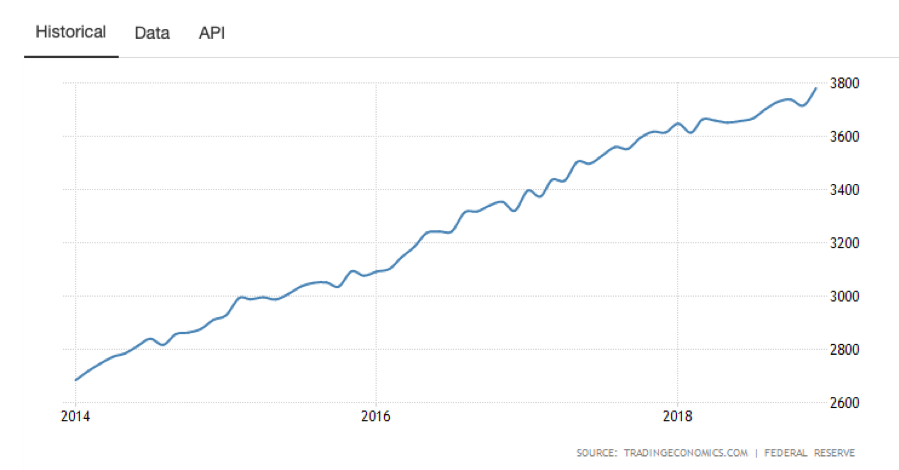
Some half of the entire US paper money supply is held by foreigners or some $3.8 trillion where it is used to evade taxes, bribe foreign officials, and finance terrorism.
The US government’s war on cash is not a new thing. In 1929, it cut the size of US banknotes by one third to save money on the cost of high-grade paper.
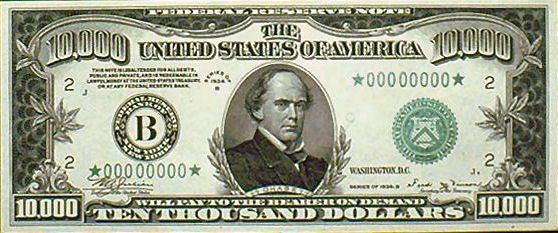
In 1970, the US Treasury banned the circulation of the $10,000, $5,000, $1,000, and $500 bills to halt mafia money laundering. Since then, the IRS has been the biggest beneficiary of the move by catching tax cheaters.
Large denomination US bills are now solely the domain of collectors.
The US government would love to get out of the cash business entirely as it is so expensive to run. It spends about $737.4 million a year just to print American $1, $2, $5, $10, $20, $50, and $100 notes.
Paper dollar bills, which are actually made of 75% cotton and 25% linen, are completely worn out and have to be returned in only 18 months.
Coins are even a bigger loser. It costs more than two cents to make a penny.
Since the advent of color printers, counterfeiting has exploded. North Korea runs almost its entire economy on fake $100 bills which are said to be the best in the world.
Today, some 80% of the entire $3.8 trillion M1 notes and coins in circulation in America are in the form of $100-dollar bills. That works out to $4,200 per person. Where has all that money gone?
The US is now considering eliminating even this convenient denomination. While $1 million in $100s can fit into a tote bag, that quantity of $10 bills would weigh 220 pounds, a quantity much more difficult to sneak around.
An all-electronic economy would certainly pose some privacy problems as it would leave a massive paper trail on everything you do.
When you get audited by the IRS, the first thing they do is obtain your past three years of bank and credit card records detailing your every transaction.
State authorities will pursue phone records to establish your physical presence to verify residency. So how long did you really spend in tax-free Florida last year? Your cell phone carrier and credit card companies both know.
It would also pare back illegal immigration as this is another industry that runs entirely on cash. Once here, undocumented workers are often paid in cash in restaurants and on construction sites.
There is truly no place to hide.
Other countries are already well ahead in the war of cash. In Belgium, some 93% of all financial transactions take place electronically.
Sweden has also been pushing hard on this front taking the M1 money supply there down by 27% over the past two years.
Many small businesses there now post signs saying they don’t accept cash. The goal is to move to an all-electronic economy.
The preferences of Millennials are also moving us towards the cashless economy.
Have you ever been in line at Starbucks and noticed that the kid in front of you just paid $2 for a cup of coffee with his credit card? Or maybe he swiped his Apple Pay account on his iPhone?

Here’s a company for you involved in technology’s tectonic shift towards FinTech in 2019.
They aren’t new, but you’ve probably never heard of them.
It’s Fiserv Inc. (FISV) which sells financial technology and can include customers such as banks, credit unions, securities broker-dealers, leasing, and finance companies.
An inflection point is occurring within the global business and that is financial technology and the rapid integration of it.
Financial institutions are building products around this concept and Fiserv has a head start on the others with more than 30 years of experience in aiding banks, thrifts, and credit unions, managing cash and processing payments, loans, and account services.
The Wisconsin-based company constructed an unstoppable machine leveraging its time-honored relationships and expertise to bring banking to all the screens that pervade daily life.
“Innovation, Integration and Scale” has been the motto that has served this company well for so long.
The company cut its teeth in the trenches helping banks move money long before it became the next big thing.
Five years ago, under the leadership of CEO Jeff Yabuki, there was a corporate flashpoint with upper management realizing they needed to evolve or die.
Yabuki anticipated a near future fueled by mobile wallets and changing consumer expectations - an always-on, never-off connected world.
An environment where consumers want what they want when they want it.
There has been no letup in this trend.
Silicon Valley companies were always the 800-pound gorilla in the room and Fiserv didn’t want to become sideswiped by them.
And in 2014, at the Money 20/20 conference in Las Vegas, Yabuki set out his vision that continues to prevail today.
The financial services industry had become obsessed with point-of-sale transactions.
And at $200 billion in annual domestic sales, it was a business that resonated to all corners of the FinTech world.
It was sensical to persuade consumers to use branded credit or debit cards to pay for stuff in stores and online.
At the time, that was bread-and-butter banking.
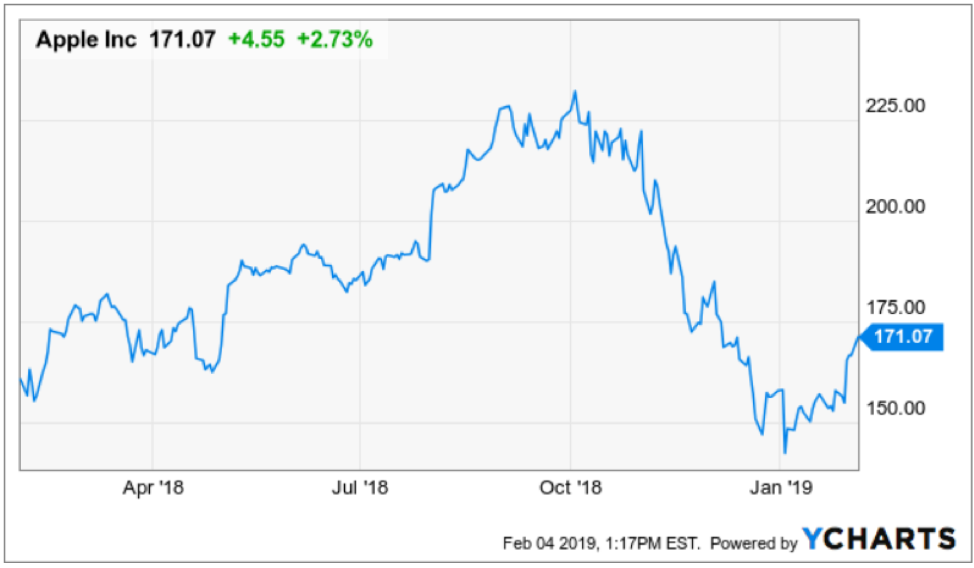
To the banks' chagrin, Silicon Valley has gotten in on the act with the likes of Apple (AAPL), Alphabet (GOOGL), PayPal (PYPL), Square (SQ) firing warning shots.
They formulated products of their own, whipped up the necessary scale and maximized the reverberating network effects.
Yabuki urged financiers at the conference to double down on what they did best while looking to grab low-hanging fruits in the short-term.
The business beyond point-of-sale was theirs waiting on a decorative platter – the opportunity was a $55 billion behemoth consisting of consumer-to-consumer, business-to-business and consumer-to-business transactions.
Embracing FinTech translated into massive speed advantages, stauncher security-laced products while offering traditional bank customers higher quality service at their convenience.
Fiserv erected a platform to help financial institutions focus on payments beyond POS called Network for Our World.
The goal of this NOW Network was to help customers' flow of money by paying bills and getting paid.
These entrepreneurs are looking for more efficient ways to collect money owed - they are a lucrative addressable audience for bankers.
The Fiserv sales pitch is working wonders according to the data. The company has 12,000 clients worldwide, with 85 million online banking end-users.
It has rolled out innovative products for payments, processing, risk and compliance, customer service and optimization.
The company has become ever so profitable with a 3-year EPS growth rate of just 15%, but in the last quarter, this metric surged to 23% and projected to rise.
Fiserv also dabbled with some M&A hauling in debit-based assets of Elan Financial Services.
The stellar acquisition, with annual revenue of over $170 million, extends Fiserv’s leadership in payments, broadens client reach and scale, and provides new solutions to enhance the value proposition of the existing 3,000 debit solutions clients.
The deal also gave Fiserv ownership of Money Pass, the second largest surcharge-free ATM network in the U.S., with over 33,000 in-network ATMs.
They also added other major pieces with the purchase of First Data Corp (FDC).
The maneuver is strategically solid, and Fiserv will benefit from a parlay of idiosyncratic opportunities from the combined synergies.
Fiserv will be able to refer First Data's merchant-acquiring services to the banks it currently works with.
I predict cost savings of $1 billion from the deal and potential upside from platform rationalization, which has not yet been included in synergies.
There will be significant upside potential from interest expense savings given refinancing FDC's debt at investment-grade.
Dipping your toe into this name before its multiple inevitable expands is a good long-term strategy.
Profitability is increasing while management has made moves that will fatten its top line business from the 5% internal growth today.
All these growth levers will push up revenues in the upcoming quarters - Fiserv happens to be the right company in the right industry at the perfect time in the technology cycle.
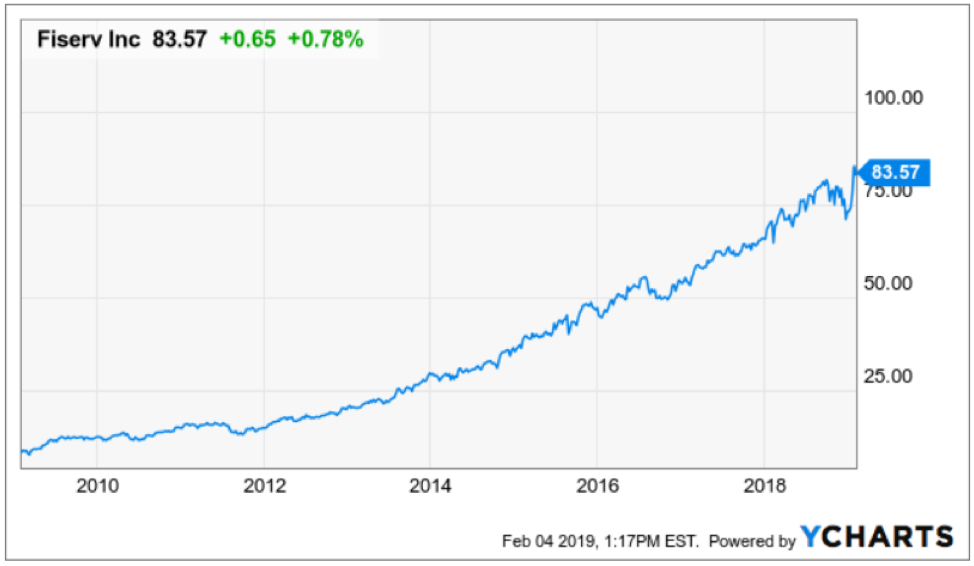
The stock is up over 1,000% in 10 years.
In February 2009, the stock was meddling around $8 and the $83 it trades at today demonstrates the potency of FinTech and the strength in their underlying business model.
I would wait for a sell-off to get into this one, but it’s a keeper.