Global Market Comments
March 11, 2021
Fiat Lux
Featured Trade:
(HOW TO FIND A GREAT OPTIONS TRADE)


Global Market Comments
March 11, 2021
Fiat Lux
Featured Trade:
(HOW TO FIND A GREAT OPTIONS TRADE)
Mad Hedge Technology Letter
March 10, 2021
Fiat Lux
Featured Trade:
(2 FINTECH BETS TO JUMP ON)
(PYPL), (SYF), (V), (MA)

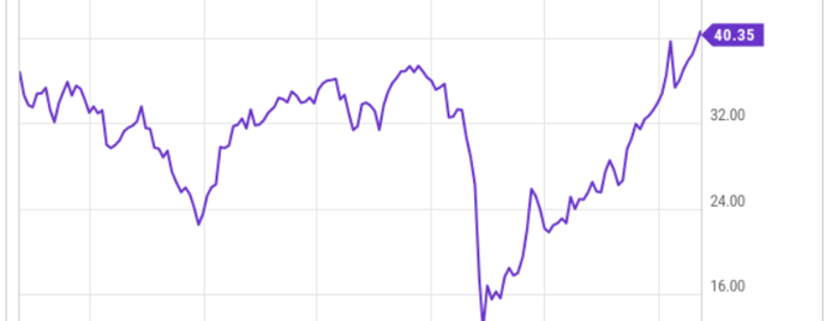
I cannot overstate the importance of digital financial innovation to the success of PayPal (PYPL) and Synchrony Financial (SYF).
Consumers are rapidly adopting technologies that enable contactless commerce and expect engagement along their digital purchase journeys.
These fintech firms are leveraging robust digital assets and continuously investing to ensure their partners are well-positioned in this rapidly evolving dynamic.
These investments include the capabilities to empower SaaS and seamless integration with partners' digital assets, enable customer choice at the point of sale, enhance contactless experiences, facilitate a seamless and easy application process, bring the in-store experience to a customer's digital devices for applications and payment, and integrate financing office throughout the entire digital shopping experience.
They also continue to make headway in digital penetration of all aspects of the customer journey.
Lockdown requirements and 14-day quarantine are forcing consumers to resort to online transactions for payment networks, online lending, money transfers, business-to-business payments, personal finance, banking, and more.
The key factor driving the growth of the fintech market is high investments in technology-based solutions by banks and other financial institutions. In addition, infrastructure-based technology and APIs (application programming interface) are reshaping the future of fintech.
The behavioral changes induced by the pandemic, such as online shopping and cashless payments, are here to stay and will continue to propel fintech’s growth this year and beyond.
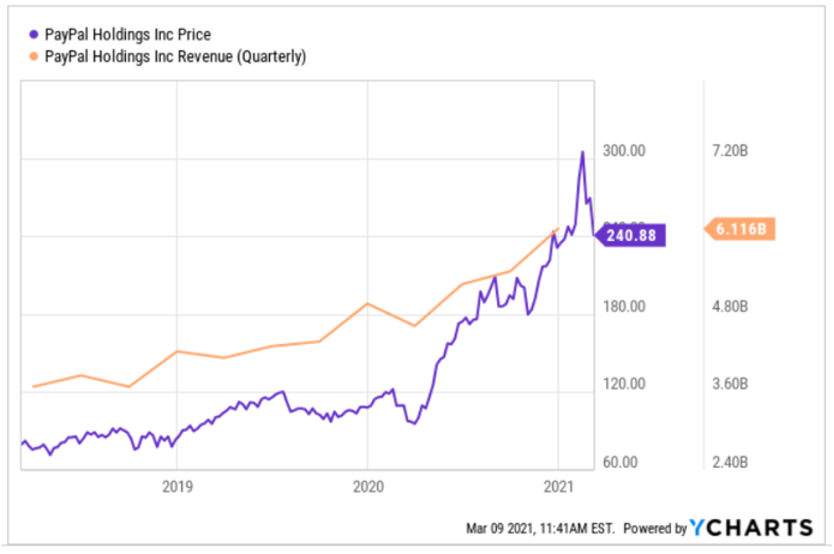
PYPL is one of the most entrenched digital payment operating technology platforms that enables digital and mobile payments on behalf of consumers and merchants worldwide.
It has more than 361 million active users globally and is available in more than 200 markets around the world, enabling consumers and merchants to receive money in more than 100 currencies.
The overperformance of late is not a fluke, in just the last quarter, PYPL added more than 15.2 million new accounts. Its top-line has increased 25% year-over-year to $5.46 billion.
The company is now doing total payment volume (TPV) of $247 billion, growing 38% from the year-ago quarter.
Profitability is another check off the list with EPS for the third quarter coming in at $0.86, rising 121% year-over-year.
The company has been propelled by a spike in e-commerce sales and is one of the preeminent fintech stocks in the U.S.
A less entrenched name but worth a speculative look is Synchrony Financial (SYF).
SYF delivers a wide range of specialized financing programs as well as innovative digital banking products across key industries including retail, home, auto, travel, and pet care.
They have a private labeled credit card business with around 60% of SYF applications done digitally during the fourth quarter and grew 18% in mobile channel applications. In Retail Card, 51% of total sales occurred online. Finally, approximately 65% of payments were made digitally.
Synchrony is the 10th-largest credit card issuer in the U.S., with a roughly 2% market share.
But unlike other issuers, Synchrony primarily issues store credit cards, which offer users rewards and benefits.
Synchrony offers more than 100 of these store cards, including the Amazon.com Store Card, which can only be used for Amazon purchases, as well as cards from Lowe's, Banana Republic, Ashley Furniture, and Sam's Club.
Synchrony also offers about 30 store-branded cards that can be used on the broader Mastercard (MA) or Visa (V) network. Among them are the Nissan Visa card and the PayPal Cashback Mastercard.
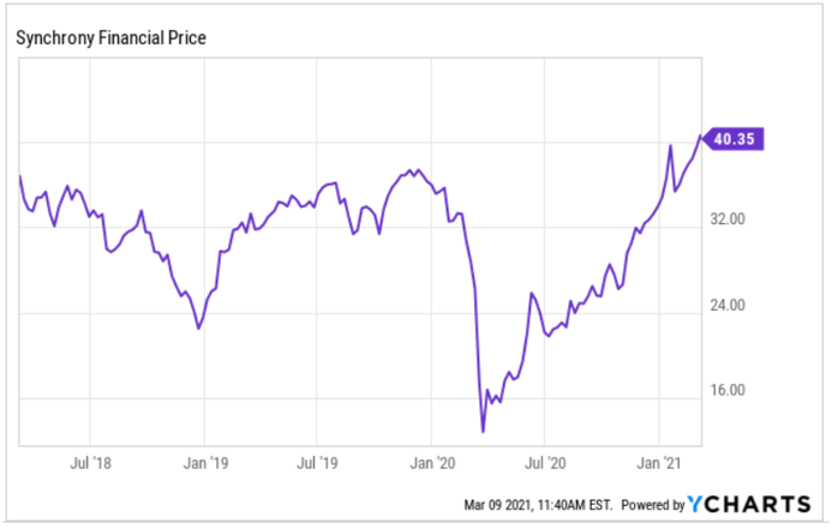
Synchrony saw earnings plummet to $286 million in the first quarter, down from $731 million in the fourth quarter of 2019. Then, earnings dropped to a low of $46 million in the second quarter before climbing back up to $313 million in the third quarter.
But they rebounded in the fourth quarter of 2020 with earnings surging to $738 million signifying an expansion from pre-pandemic performances.
The Venmo card is also a huge growth opportunity and the possibility of linking up with other fintech groups to create attractive products.
Synchrony added 25 new relationships in 2020, including two major deals that should drive growth in 2021 and beyond.
One was with PayPal to launch the Venmo credit card fueled by Visa.
Venmo is PayPalʻs hugely popular mobile app to send and receive money.
The Venmo credit card, which can be used virtually, provides Venmo users with cashback on purchases and comes with a QR code that allows contactless payments.
Synchrony also signed two other major credit card deals with Walgreens and Verizon.
The Walgreens relationship gets Synchrony into the health space, which allows people to pay for health and wellness expenses at some 225,000 different healthcare providers.
The company also acquired Allegro Credit, a provider of point-of-sale consumer financing for audiology products and dental services, to be part of the growing CareCredit network.
The other big move last year was launching the Verizon Visa card, which offers benefits and discounts for Verizon customers.
Synchrony and PayPal are dynamic fintech companies with savory futures.
PayPal is the bigger and safer bet of the two, but Synchrony will benefit more if their risks turn out well because the law of large numbers isn’t counting against them yet.


“I am not trying to chase what other people are doing.” – Said Softbank Founder and CEO Masayoshi Son

Global Market Comments
March 10, 2021
Fiat Lux
Featured Trade:
(WHY GLOBALIZATION WORKS)
Global Market Comments
March 9, 2021
Fiat Lux
Featured Trade:
(THE CODER BOOM)
(HOW TO EXECUTE A VERTICAL BULL CALL SPREAD)
(AAPL)
Mad Hedge Biotech & Healthcare Letter
March 9, 2021
Fiat Lux
FEATURED TRADE:
(AN MRNA STOCK TO CONSIDER)
(BNTX), (MRNA), (PFE), (NVS), (SNY), (AZN), (JNJ), (NVAX), (MRK), (BMY), (REGN), (DNA), (CVAC), (FB), (TSLA), (GOOG)

Mad Hedge Technology Letter
March 8, 2021
Fiat Lux
Featured Trade:
(A SPECULATIVE EV NAME TO CONSIDER)
(FSR), (TSLA), (NIO)

The 700% gain by Tesla (TSLA) in the past 365 days has meant that this is a Tesla world and everyone else is living in it.
Not to mention they produce a magnificent car that everyone wishes they could drive.
Just look at the unusual options activity of last Friday, and the top 10 most voluminous call activity was in TSLA and Chinese electric vehicle (EV) maker NIO.
Heavy call option buying signals that derivative traders believe the underlying stock will go up in the short-term.
EVs have leaped ahead of the cloud as a derivate of the cloud that contains ultra-growth price growth in the underlying stocks.
Fortunes are being made on speculative EV bets as we speak.
The success has spawned lookalikes, charlatans, and copycat imposters that hope to mimic the same type of trajectory and business.
Infinite attempts will be made to make a crack at the Tesla narrative and to join them as the number two or three in a group of one.
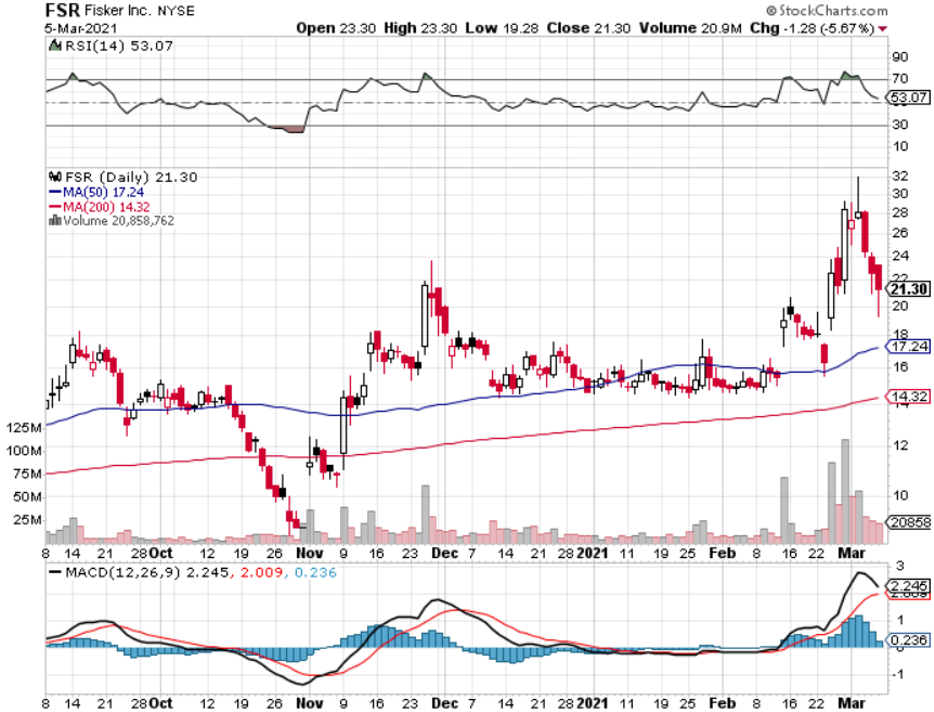
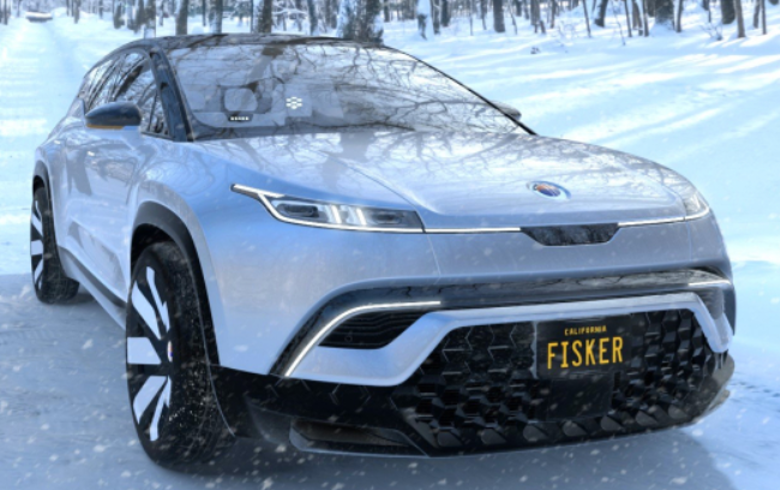
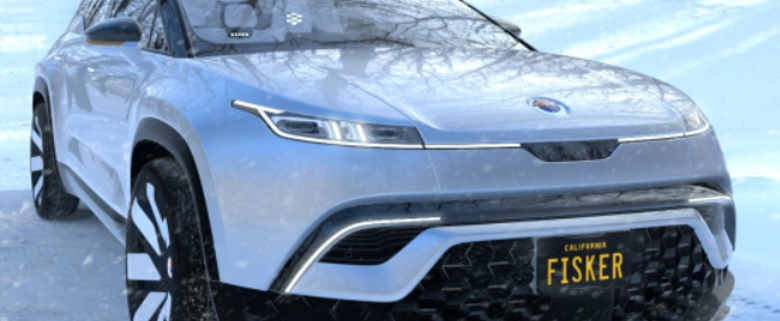
One speculative bet that has a distant shot of making headway in the short to medium term is EV manufacturer Fisker (FSR).
Fisker recently made ingenious inroads to Apple’s subcontracting partner, EV Taiwanese manufacturing specialist Foxconn Technology Group.
They agreed to develop a smartphone maker Foxconn’s hoping the manufacturer’s efforts will boost its automotive capabilities at a time when technology companies including its main customer, Apple Inc., are looking to expand in vehicles.
It’s not coincidental that Foxconn’s first try to sort out the teething pains coalesces around an unknown brand like Fisker.
If plans to fortify their skills in this relatively new industry go awry, they’ll just write this one off.
The know-how and knowledge developed on the ground could also reroute Fisker’s prospects and attach it to the back of Apple’s potential 5G car.
A three-way partnership with each entity providing expertise would certainly mean a 10-fold increase in Fisker’s underlying stock or provide the ammo needed to claim itself as number 2 to Tesla.
Of course, the road is windy and long and there is no certainty that Fisker will knock the socks out of this agreement, but the parameters have been initially set for them to do well in the short-term.
The car will be built by Foxconn, targeted at multiple markets including North America, Europe, China, and India, and sold under the Fisker brand.
Production is set to start in the fourth quarter of 2023.
There is outsized risk in producing this car because Foxconn specializes in making smartphones and not cars.
They are new to the auto business and relying on collaboration and innovative manufacturing that will either go well or unravel quickly.
Fisker founder Henrik Fisker has criticized the car industry for being outdated and said, “We still talk about adopting the Toyota manufacturing system,” referring to a production and logistics concept that was developed decades ago.
Fisker plans to design and market the vehicle while Foxconn will supply the skateboard chassis and manage supply chain and assembly.
Provided they can use their smartphone know-how and flip it into car-making mode, however, in reality, it’s a tall order for the Taiwanese giant.
“Outside the box” solutions are needed to compete with Tesla and taking a speculative bet on Fisker also means believing this Foxconn partnership will work.
Shares of Fisker rose 39% on the announcement showing there is a cohort believing the risk is worth a bet because the upside is savory.
Foxconn will build more than 250,000 vehicles annually for the Fisker partnership and Founder Fisker hatched the plan when he was reading about Apple’s plans for a car. He said he began sketching what he thought a tech company would build if one went into the car business.
“It will be like nothing you’ve seen before,” Fisker said.
With still much development yet to come, Apple will take 5-7 years to launch their car and that’s if they can get their act together while caring for their main iPhone business.
Certainly, many things need to align for Fisker to score a long-term contract designing Apple smart cars, but at least they can claim to be in the same universe as Apple, even if it is a distant planet.