• support@madhedgefundtrader.com
  • Member Login
Mad Hedge Fund Trader
  • Home
  • About
  • Store
  • Luncheons
  • Testimonials
  • Contact Us
  • Click to open the search input field Click to open the search input field Search
  • Menu Menu
Mad Hedge Fund Trader

July 15, 2010 - Why the World's Worst Economy Has the Strongest Currency

Diary

Featured Trades: (FXJ), (YCS)
Currency Shares Japanese Yen Trust ETF
ProSharesUltraShort Yen ETF


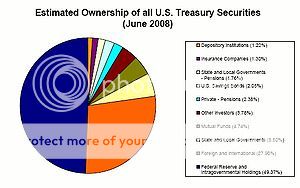
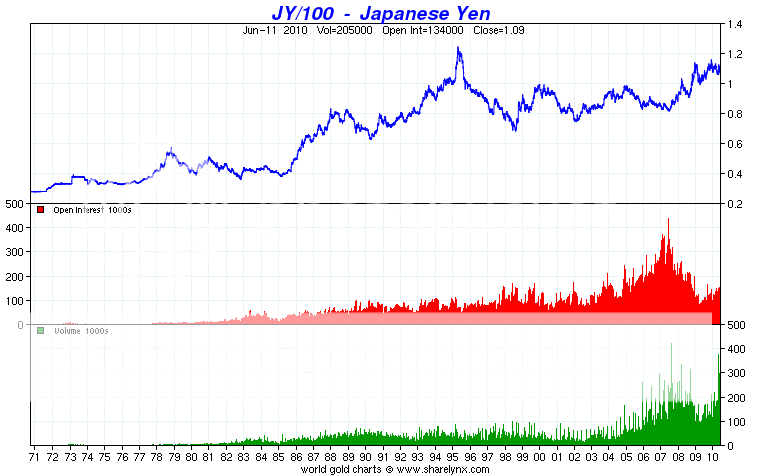
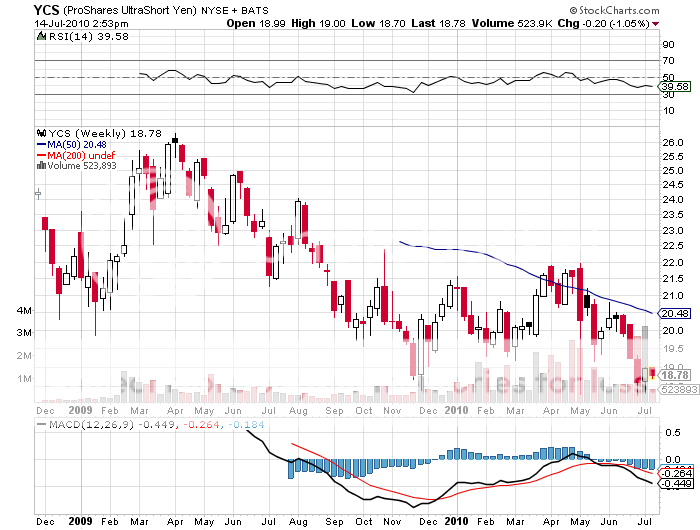
2) Why the World's Worst Economy Has the Strongest Currency. Global currency traders remain puzzled by the continuing strength of the yen (FXY), (YCS), which broke out of a ?90- ?95 range a few weeks ago and insists on levitating around the ?87-?89 area. Looking at the fundamentals, you would not pick Japan to possess one of the world's most virile currencies. It runs one of the planet's largest and most rapidly climbing budget deficits, suffers a demographic nightmare of epic proportions, and lives in the shadow of China, which surpassed it in GDP this year to become number two. It produces a tenth of the Middle Kingdom's new per capita GDP. And the ruling Democratic Party of Japan (DPJ), which promised to weaken the yen, just took an absolute pasting at the polls. The reason is simple: the fundamentals are so poor, that no one owns the yen, and therefore, can't sell it. Central bank holdings of the Japanese currency have been plummeting for years, and are now thought to be around 10% of the total. Japan's 15 year old zero interest rate policy made it unattractive when the others were yielding 5%-6%. Now that all the major currencies yield close to nothing, the playing field is level. While the government has been a massive issuer of debt, thanks to the country's high savings rate some 95% is held domestically, unlike the US, where more than 28% is owned by foreigners. You don't hear rumors of China threatening to dump its JGB holdings, because they own virtually none. Japan's notoriously anemic long term growth rate of a minuscule% hasn't exactly seduced managers to pack their portfolio with yen assets. Risk reducing hedge funds buying yen to unwind carry trades has been another dynamic at work (click here for an explanation). But it doesn't look so bad if you think that the US growth rate is about to double dip into negative numbers. Yen bulls, and yes, there are such people out there, are hoping for a run to the 1996 high of ?85, and even an overshoot to the all time high of ?79.5. If that happens, you can kiss the Nikkei goodbye, and watch 10 year Japanese bond yield touch 0.45% once again. This is one slugfest that I prefer to watch from the sidelines. I think the long term trend of the Japanese currency is down from here, and won't own it here on pain of death.
YenLT.png


ProShares Ultrashort Yen


DebtUS.jpg


sumo.jpg

https://madhedgefundtrader.com/wp-content/uploads/2019/05/cropped-mad-hedge-logo-transparent-192x192_f9578834168ba24df3eb53916a12c882.png 0 0 Mad Hedge Fund Trader https://madhedgefundtrader.com/wp-content/uploads/2019/05/cropped-mad-hedge-logo-transparent-192x192_f9578834168ba24df3eb53916a12c882.png Mad Hedge Fund Trader2010-07-15 01:50:172010-07-15 01:50:17July 15, 2010 - Why the World's Worst Economy Has the Strongest Currency
Mad Hedge Fund Trader

July 15, 2010 - Quote of the Day

Diary

'America has become a second rate power. It's fiscal and trade deficits are at nightmare proportions. In the days of the free market when our country was a top industrial power, there was accountability to the stockholder. The Carnegies, the Mellons, and the men who built this great empire made sure of it because it was their money at stake,' said Gordon Gecko in the classic 1987 film,Wall Street. Wow! I should hire writer and director, Oliver Stone, as a research analyst.

StoneOliver.png

https://madhedgefundtrader.com/wp-content/uploads/2019/05/cropped-mad-hedge-logo-transparent-192x192_f9578834168ba24df3eb53916a12c882.png 0 0 Mad Hedge Fund Trader https://madhedgefundtrader.com/wp-content/uploads/2019/05/cropped-mad-hedge-logo-transparent-192x192_f9578834168ba24df3eb53916a12c882.png Mad Hedge Fund Trader2010-07-15 01:00:302010-07-15 01:00:30July 15, 2010 - Quote of the Day
Mad Hedge Fund Trader

July 13, 2010 - Why I'm Not Buying the US Stock Rally

Diary

Featured Trades: (SPX)

S&P 500 SPDR's ETF


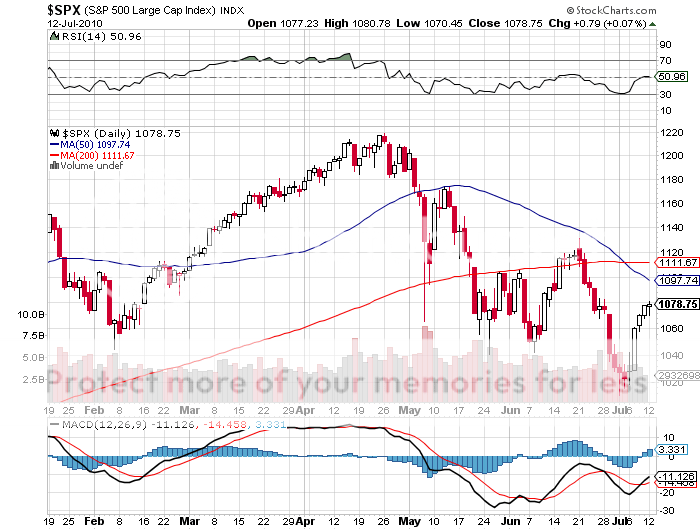
2) Why I'm Not Buying the US Stock Rally. Tempt me all you want, you seductive vixen, but I'm not buying into last week's 6% rally in the US stock market. You can whisper sweet nothings into my ear all you want about the trillions of dollars sitting on the sidelines, the low PE multiples, and cash laden corporate balance sheets. Slip some of those low interest rates in my drink and it will do you no good. You can even wear that low cut blouse that reveals your hidden assets. All I see is your paltry volume, structural deficiencies, and overuse by professionals.? And as much as I try to avert my eyes from such things, your technical position sucks. It all paints a picture of a weak summer rally in a bear market, something to be avoided like the clap. You know who's outing you for the low life strumpet that you really are? Those 3% yields on the ten year Treasuries, which have been a far better judge of character than your equity oriented pals. Change your slumming ways, and I might take a second look. A surreptitious visit to the local free clinic might help too. Until then, I'd rather take my chances with the acne faced nerd I met on Match.com, who wears glasses thicker than Coke bottle bottoms, and lists herself as 'Debbie Downer,' but scored 800 on her math SAT's.

S&P 500 Large Cap Index


hooker13.jpg

https://madhedgefundtrader.com/wp-content/uploads/2019/05/cropped-mad-hedge-logo-transparent-192x192_f9578834168ba24df3eb53916a12c882.png 0 0 Mad Hedge Fund Trader https://madhedgefundtrader.com/wp-content/uploads/2019/05/cropped-mad-hedge-logo-transparent-192x192_f9578834168ba24df3eb53916a12c882.png Mad Hedge Fund Trader2010-07-13 01:50:522010-07-13 01:50:52July 13, 2010 - Why I'm Not Buying the US Stock Rally
Mad Hedge Fund Trader

July 13, 2010 - How to Become One of the Rich Who Are Getting Richer

Diary

Featured Trades: (ROB)
Claymore/Robb Report Global Luxury Index ETF


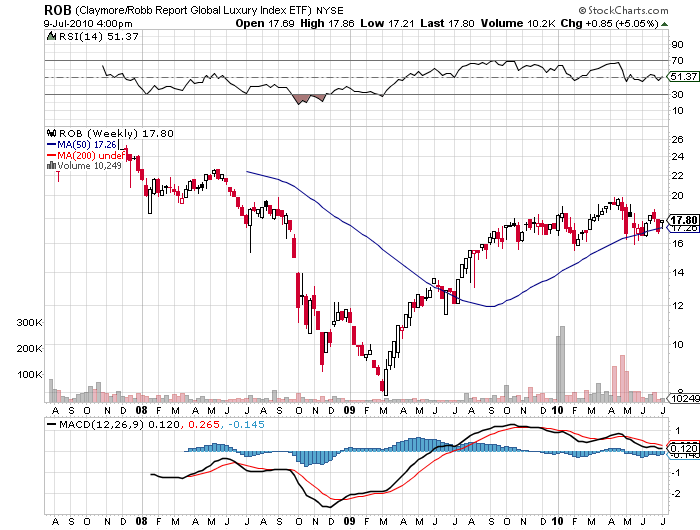
4) How to Become One of the Rich Who Are Getting Richer. One of the great certainties in our economy is that the rich are getting richer, no matter who is running the country. Despite the worst business conditions in 80 years, there was a 17% increase in millionaires in the US last year. Far greater increases were seen in China and other emerging markets. Indisputable proof that there will eventually be an ETF for everything can be found in the Claymore/Robb Report Global Luxury Index ETF (ROB), which seeks to cash in on this trend. The fund is modeled on an index of the producers of international luxury brands put together by the Malibu, California based Robb Report. If you were ever looking to buy a mega mansion, the ultimate customized Lamborghini, or that over the top piece of jewelry for your mistress, you know The Robb Report well (click here for their site at http://www.robbreport.com/ ). The top five holdings are The Swatch Group AG-B, BMW, Hermes, Daimler, and Pernod Ricard. You get some decent international diversification with France and the US accounting for 27% each, Switzerland 14%, and Germany 11%. After hitting bottom last year at $9, the ETF rocketed 122%. So it seems the fund is essentially a retail play on steroids. Keep in mind that this is the last thing on the planet I want to touch right now. I think retail is currently going to hell in a hand basket. But once we get to hell, and the ETF is at $9, let's talk, especially if the Euro is also cheap.

Claymore/Rob Report Global Luxury Index ETF


Megayacht13.jpg


lamborghini.jpg


Jewelry.jpg

https://madhedgefundtrader.com/wp-content/uploads/2019/05/cropped-mad-hedge-logo-transparent-192x192_f9578834168ba24df3eb53916a12c882.png 0 0 Mad Hedge Fund Trader https://madhedgefundtrader.com/wp-content/uploads/2019/05/cropped-mad-hedge-logo-transparent-192x192_f9578834168ba24df3eb53916a12c882.png Mad Hedge Fund Trader2010-07-13 01:30:052010-07-13 01:30:05July 13, 2010 - How to Become One of the Rich Who Are Getting Richer
Mad Hedge Fund Trader

July 13, 2010 - Quote of the Day

Diary

'I don't think the solution for Europe is going to end up being determined in the board rooms or the finance ministries of the EMU. I think it's going to be on the streets of Athens, Lisbon, Madrid, and elsewhere,' said former Federal Reserve Chairman Alan Greenspan.

frenchrevolution-1.jpg

https://madhedgefundtrader.com/wp-content/uploads/2019/05/cropped-mad-hedge-logo-transparent-192x192_f9578834168ba24df3eb53916a12c882.png 0 0 Mad Hedge Fund Trader https://madhedgefundtrader.com/wp-content/uploads/2019/05/cropped-mad-hedge-logo-transparent-192x192_f9578834168ba24df3eb53916a12c882.png Mad Hedge Fund Trader2010-07-13 01:00:242010-07-13 01:00:24July 13, 2010 - Quote of the Day
Mad Hedge Fund Trader

July 12, 2010 - How China's Economy is Already Bigger Than the US

Diary

ANOTHER SPECIAL CHINA ISSUE

Featured Trades: (USO), (VALE), (BTU), (FCX), (CAT),
(FXI), (EWA), (EWC), (FXA), (FXC)
, (CORN), (SOYB), (WEAT)
Currency Shares Canadian Dollar Trust ETF
Currency Shares Australia Dollar Trust ETF
Australia iShares ETF
Canada iShares ETF
iShares FTSE/Xinhua China 25 ETF


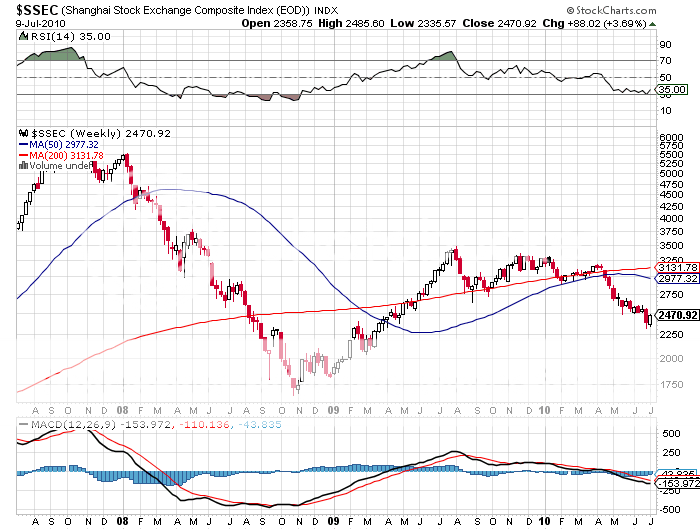
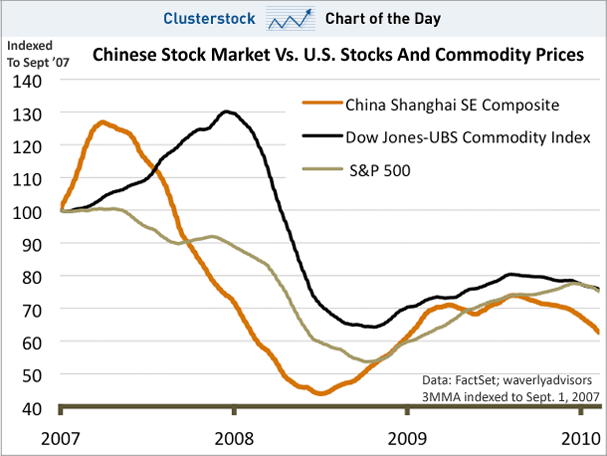
1) How China's Economy is Already Bigger Than the US. China has already surpassed the US in the global competition sweepstakes and is on track to extend its lead. No, I'm not talking about some pie in the sky 2030 or 2050 forecast from some hole in the wall research boutique. I'm referring to right now, today, this minute. At the end of 2009, America could boast a GDP of $14.2 trillion, while China's stood at $4.9 trillion. The Middle Kingdom will grow by at least 10% this year, generating $490 billion in new GDP, while the US, growing at only an average 3% rate, will add $425 billion in this key measure of economic muscle. That easily makes China the world's largest country in terms of new business activity, and therefore, the most important when gauging the future direction of financial markets. This is why I have been feverishly pounding the table this year screaming that it's all about China, China, China. It's also why I announced to readers why I'd rather get a poke in the eye with a sharp stick than buy equities (click here for the call). Since then, the Chinese stock markets have been falling, not in a great cataclysmic crash, but in a slow death by a thousand cuts. Chinese equity PE multiples have fallen from 50, three years ago, to 10 today, and there are still no buyers. Money managers and financial advisors of all stripes only need to make one call this year: when will the Chinese economy turn? This is harder than it sounds because it means that your entire investment strategy is now dependent on unreliable, contradictory, and untimely data, from a third world nation that only recently moved on from the abacus to measure business activity. When good data does become available, you can then count on the locals to front run and inside trade the first 10%-20% of the move. That will leave you with the difficult choice of getting in late, or not at all. I never said this was going to be easy. So I'll give you a head start and tell you when this will happen: the day before the People's Bank of China stops tightening. This is why hedge funds have kept a laser like focus on Chinese bank reserve requirements, which now stand at 17.5%.? When the slowdown does end, every stock, bond, currency, and commodity market will do so as well. Focus first on the things that the Chinese have no choice but to buy. Just go down their list of largest imports, and you'll find oil (USO), iron ore (VALE), coal (BTU), food (CORN), (SOYB), (WEAT), copper (FCX), and machinery (CAT). You can also buy the suppliers of these commodities, including Australia (EWA), Canada (EWC), and their currencies (FXA, FXC). There is a huge buy setting up here, but the overwhelming verdict of the markets is 'Not Yet'! While I'm waiting for the big trade, you can find me having lunch at a restaurant on Grant Street in San Francisco's Chinatown, eating chop suey and egg foo yung, pestering the waiters for the names of the next hot IPO's.

Shanghai Stock Exchange Composite Index (EOD)


Chinesestocks


ChineseRestaurant-2.jpg picture by madhedge

https://madhedgefundtrader.com/wp-content/uploads/2019/05/cropped-mad-hedge-logo-transparent-192x192_f9578834168ba24df3eb53916a12c882.png 0 0 Mad Hedge Fund Trader https://madhedgefundtrader.com/wp-content/uploads/2019/05/cropped-mad-hedge-logo-transparent-192x192_f9578834168ba24df3eb53916a12c882.png Mad Hedge Fund Trader2010-07-12 02:00:392010-07-12 02:00:39July 12, 2010 - How China's Economy is Already Bigger Than the US
Mad Hedge Fund Trader

July 12, 2010 - Who's Been Buying All Those Japanese Bonds?

Diary

ANOTHER SPECIAL CHINA ISSUE


2) Who's Been Buying All Those Japanese Bonds? International bond and foreign currency markets were stunned last week when figures were released showing that the Chinese had bought record amounts of Japanese government bonds in May. The move was no doubt the impetus behind the big rally that took Japanese ten year debt to a pitiful 1.15% yield, and triggered the break out by the yen from a six month, ?90- ?95 range that caught many hedge funds flat footed. The Middle Kingdom's purchases of short term yen paper soared to $8.3 billion, more than the entire first quarter. China has the enviable problem in that it has a plethora of riches. In fact, it has so much money, that there are really only three places it can go: US Treasuries, Euro denominated bonds, and JGB's. Any move out of one, necessitates purchases of the other two, and a good dose of Euroscare, no doubt, stampeded the Chinese away from that beleaguered currency into the yen. Sure they can dabble in other attractive, fundamentally strong currencies, like the Australian and Canadian dollars and Swiss francs (click here for more depth). But the floats in these lesser currencies are so small that any serious move would quickly send them through the roof. Where else can you go with $2.4 trillion? Antique postage stamps? Vintage baseball cards? Collectable Beanie Babies? (Ebay would love it!). I think not. This also explains why, no matter how dire its prospects are, some two thirds of China reserves are still parked in the dollar.

beanie-babies.jpg


dollars1.png

https://madhedgefundtrader.com/wp-content/uploads/2019/05/cropped-mad-hedge-logo-transparent-192x192_f9578834168ba24df3eb53916a12c882.png 0 0 Mad Hedge Fund Trader https://madhedgefundtrader.com/wp-content/uploads/2019/05/cropped-mad-hedge-logo-transparent-192x192_f9578834168ba24df3eb53916a12c882.png Mad Hedge Fund Trader2010-07-12 01:50:312010-07-12 01:50:31July 12, 2010 - Who's Been Buying All Those Japanese Bonds?
Mad Hedge Fund Trader

July 12, 2010 - The Grains Take Off

Diary

ANOTHER SPECIAL CHINA ISSUE

Featured Trades: (SOYBEANS), (SOYBEAN MEAL),
(CORN), (WEAT), (SOYB)
Teucrium Agricultural Trust Corn Fund
Teucrium Agricultural Trust Soybean Fund
Teucrium Agricultural Trust Wheat Fund


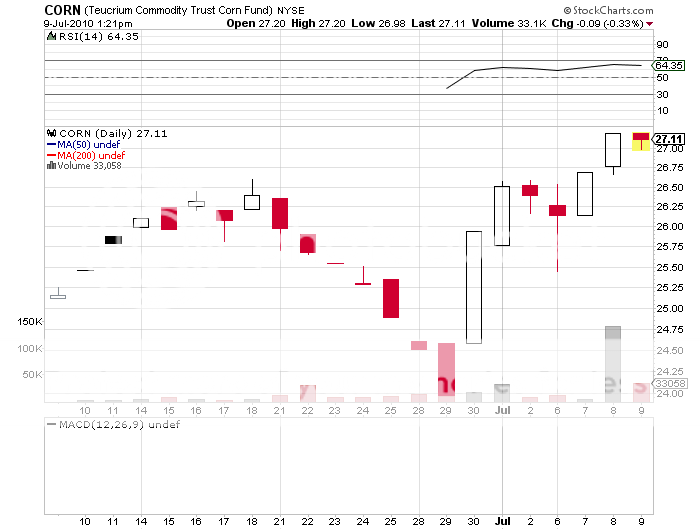
3) The Grains Take Off. It turns out that perfection doesn't continue forever, after all. That was the bet I was more than happy to make three weeks ago when I started to buy the ags (click here for 'Going Back Into the Ags' ). Since then, torrential rains in the US and Canada have worsened growing conditions, causing the US Department of Agriculture and virtually every independent research house to stat rapidly paring forecasts of both acreage and yields. Oats have had a gigantic move, corn futures clocked a limit move up day, wheat has taken off like a scalded chimp, and soybeans have decisively broken out to the upside. It's not just a North American problem. Reports of shortages have started pouring in from the major producers of Brazil, Russia, China, the Ukraine, and Australia. The hidden hand of massive Chinese buying is now turning up everywhere, as they scramble to lock in supplies to feed their hungry masses. The backwardation in the soybean meal market, where front month futures contracts trade at big premiums to the far months, speaks volumes about the demand out there. Just look at the wheat action on Friday. The USDA announced a slight improvement in the crop, which should have tanked the market, but the futures tacked on 4% anyway. Throw bad news on a market, and if it goes up, you want to own it. No one was more surprised than the full time grain traders, who saw nothing but record supplies stretching out as far as the eye could see. Only the (CORN) ETF has made it to market so far, bringing in a 13% gain from its low.? The paperwork for wheat (WEAT) and soybean ETF's (SOYB) is still in the works. So the only way to play this was through the futures markets. I look for more gains in the grains, and it is safe to say that, at this stage, you have missed the bottom. And as I always like to say with the ags, if the trade doesn't work out, you can take delivery and eat your longs.

Teucrium Commodity Trust Corn Fund


Soybeans.gif


Bread.jpg

https://madhedgefundtrader.com/wp-content/uploads/2019/05/cropped-mad-hedge-logo-transparent-192x192_f9578834168ba24df3eb53916a12c882.png 0 0 Mad Hedge Fund Trader https://madhedgefundtrader.com/wp-content/uploads/2019/05/cropped-mad-hedge-logo-transparent-192x192_f9578834168ba24df3eb53916a12c882.png Mad Hedge Fund Trader2010-07-12 01:40:132010-07-12 01:40:13July 12, 2010 - The Grains Take Off
Mad Hedge Fund Trader

July 12, 2010 - Quote of the Day

Diary

'We in the business of trying to judge risk significantly underestimated the extreme tail risk, the so called risk involved in very low probability events and what the consequences would be should they happen,' said former Federal Reserve Chairman Alan Greenspan.

dice2-3.jpg

https://madhedgefundtrader.com/wp-content/uploads/2019/05/cropped-mad-hedge-logo-transparent-192x192_f9578834168ba24df3eb53916a12c882.png 0 0 Mad Hedge Fund Trader https://madhedgefundtrader.com/wp-content/uploads/2019/05/cropped-mad-hedge-logo-transparent-192x192_f9578834168ba24df3eb53916a12c882.png Mad Hedge Fund Trader2010-07-12 01:00:532010-07-12 01:00:53July 12, 2010 - Quote of the Day
Mad Hedge Fund Trader

July 9, 2010 - Why I Still Hate Japan

Diary

Featured Trades: (JAPAN), (EWJ), (NIKKEI)
Japan iShares ETF


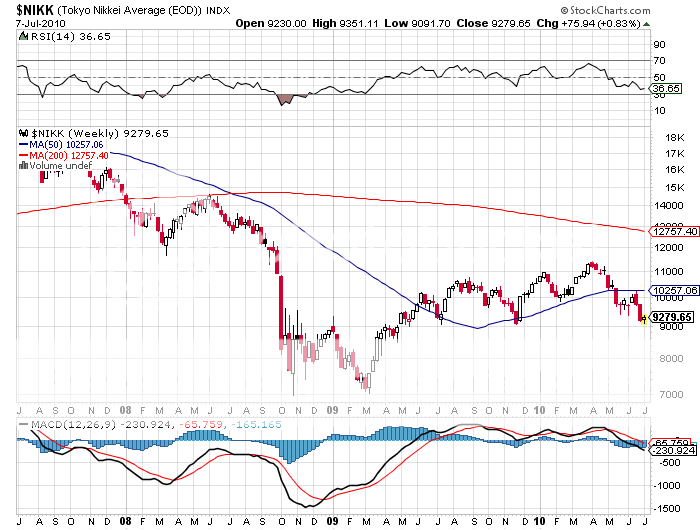
1) Why I Still Hate Japan. Like watching an old friend who fell from the high life as a special bracket investment banker to a stumbling drunk, I can't help but pity Japan's beleaguered stock investors. Since peaking in 1989 at 39,800, they have been mired in a 20 year bear market, the longest in history, and there is no sign of the index climbing substantially off the current 10,000 level anytime soon. I have watched with dismay as GDP growth shriveled from a white hot 10% in the sixties, to 7%, 5%, 3%, and now 1%, and share prices reflect this.

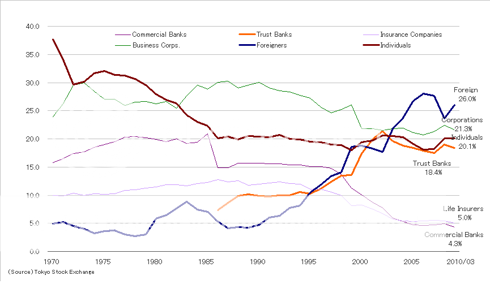
Not even the Japanese want to buy their own stocks, with foreign institutions accounting for up to 60% of trading volume on a good day, while domestic ones generate a paltry 10%. Local investors would much rather buy emerging market funds, currency funds, bond funds, anything but their own equities. This explains the miserable 1.15% yield investors get on ten year JGB's. Nikkei stock index volatility is driven by a handful of foreign hedge funds that rush in, and then right back out.

Although the government launched one Keynesian reflationary package after another during the nineties, the end result was a massive accumulation of debt and a thousand 'bridges to nowhere.' Obama take note.? In four decades I have watched the country degenerate from a paragon of fiscal rectitude to one of the most debt burdened nations on the planet. The country's total debt, net of cross holdings, is 111.6%, and is rocketing towards the 140% now seen in Greece.

Japan used to have a great story up until the eighties, when they were the world's low cost provider of quality manufactured goods. The Nikkei was the place to be when Japan's share of the US car market soared from 3% to 40%, and the yen went hyperbolic from ?360 to ?78. But then a beefy new kid showed up in the neighborhood called China, which has taken over that role. Sure, the quality isn't there yet, but you can't beat those prices! This is why global investors see Asia as a China only bet, and avoid the Land of the Rising Sun like the plague.

Equity price earnings multiples have fallen from 100 down to 15. But even that seems high if the country is only able to eke out 1% GDP growth rate for the foreseeable future. An appreciating yen serves only to tighten the screws on the country's prolific exporters even further. Now it seems they want to raise VAT taxes too. That will simply hobble consumption further. Some 12.7% of Japan's equity is still held in corporate crossholdings, a relic from the old zaibatsu days, that will continue to weigh on share prices. Great thing to have in a rising market, but not so good on the downside.

Japan has the world's worst demographic outlook (click here for my analysis). They're just not making Japanese anymore. Changing governments as often as I change my socks doesn't exactly inspire confidence among foreign investors. What does the center left Democratic Party of Japan (DPJ) stand for, anyway? Politics has degenerated into a scrum of conflicting interests to see who gets a share of an ever shrinking pie.

Independent research analyst Darrel Whitten of Japaninvestor.com (click here for the site ) believes that Japan has to engineer a substantially weaker yen to stimulate exports, aggressively use the Bank of Japan's balance sheet to create inflation, and draw up a new pro growth economic plan, much like the Ministry of International Trade and Industry (MITI) successfully engineered in the fifties. I won't be holding my breath. The strong leadership and ironclad consensus that created the Japanese economic miracle isn't to be found these days. Until then, Japan will, at best, be a single stock story, with money pouring into companies that can still prosper against these incredible force nine gales.

I have made such a massive personal investment in Japan, living there ten years, learning their impossible language, and publishing several books on the topic. I wish I had better news to report. But I don't.

Tokyo Nikkei Average (EOD)


JapanStock.png

Ownership of Japanese Equities


JapanCastle.jpg

https://madhedgefundtrader.com/wp-content/uploads/2019/05/cropped-mad-hedge-logo-transparent-192x192_f9578834168ba24df3eb53916a12c882.png 0 0 Mad Hedge Fund Trader https://madhedgefundtrader.com/wp-content/uploads/2019/05/cropped-mad-hedge-logo-transparent-192x192_f9578834168ba24df3eb53916a12c882.png Mad Hedge Fund Trader2010-07-09 02:00:552010-07-09 02:00:55July 9, 2010 - Why I Still Hate Japan
Page 762 of 836«‹760761762763764›»

Legal Disclaimer

There is a very high degree of risk involved in trading. Past results are not indicative of future returns. MadHedgeFundTrader.com and all individuals affiliated with this site assume no responsibilities for your trading and investment results. The indicators, strategies, columns, articles and all other features are for educational purposes only and should not be construed as investment advice. Information for futures trading observations are obtained from sources believed to be reliable, but we do not warrant its completeness or accuracy, or warrant any results from the use of the information. Your use of the trading observations is entirely at your own risk and it is your sole responsibility to evaluate the accuracy, completeness and usefulness of the information. You must assess the risk of any trade with your broker and make your own independent decisions regarding any securities mentioned herein. Affiliates of MadHedgeFundTrader.com may have a position or effect transactions in the securities described herein (or options thereon) and/or otherwise employ trading strategies that may be consistent or inconsistent with the provided strategies.

Copyright © 2026. Mad Hedge Fund Trader. All Rights Reserved. support@madhedgefundtrader.com
Scroll to top