

Once again, I am writing to you from poolside cabana B-2 at the posh Bellagio Hotel in Las Vegas. It is a baking hot 100 degrees in the shade and the air is bone-dry, so I?m draining my third strawberry daiquiri for the day.
The days when I risked getting dragged out to the parking lot by some heavies to get my hands broken with a hammer for card counting at blackjack have long since passed. So I am able to relax.
As with PIMCO?s former bond maven, Bill Gross, that?s how I worked my way through college, the hard way. How many face cards are still in that deck?
May Bugsy Siegel Rest in Peace.
I was sad to hear they closed the famed Riviera Hotel, the must go to Las Vegas destination of the late 1950?s. My parents fled there for a romantic weekend whenever they could find a babysitter for seven children, which I think was exactly once.
Today, there are just not enough budget package tours from China, Russia and Japan to keep the crumbling edifice going. Drunken cowboys throwing up into the pool wasn?t much of a draw.
The tattoos seem to be getting bigger and more colorful every year. I am told by the people who know about these things that when a girl dumps her boyfriend, she has to get a bigger tattoo to completely cover up the name of the outgoing one.
Frequent fliers eventually end up covered head to toe, much like the tattooed lady at the circus.. I am so old that I remember when only Marine gunny sergeants had tattoos.
How times have changed.
As for me, I am a blank canvas, but only because I never got drunk enough when I was in the Corps.
I have to tell you that the SkyBridge Alternatives Conference (SALT) is the best investment event I have ever attended, bar none, and I eagerly await the annual May event.
Never have I seen such a concentration of great minds so willing to share with the general trading community market-bending views on all assets classes, long and short.
Some of the best-known speakers were humbled, and almost at a loss for words, addressing the impressive firepower assembled before them, 1,800 of the smartest people in the world.
Former Federal Reserve Chairman, Ben Bernanke, shared his innermost thoughts, at long last free to say whatever he wanted without sparking extreme market volatility.
Omega?s Leon Cooperman peppered us with his favorite stocks, which always have the habit of doing extremely well. The audience certainly perked up and took note. Last year?s tip gained 65%.
Mohamed El-Erian, advisor to the German financial conglomerate Allianz, warned the audience of the coming liquidity crisis in the bond market.
Former Greek prime minister, George Papandreou, (whose father and grandfather both held the high office), gave a unique insider?s view of his country?s debt crisis.
Gene Sperling, recently the president?s economic advisor, gave us insights into the early years of the Obama administration.
Unquestionably, the most moving part of the week came when the actor, Michael J. Fox, shared his challenges in dealing with Parkinson?s Disease.
The head of his foundation, Debra W. Brooks, gave us a fascinating look at ?high impact philanthropy,? and how the efficient allocation of resources is leading to great advances on a wide range of maladies.
Gyrating all over his seat, the man was clearly dying, and a pall cast over the room. Questions were invited, but there was utter silence.
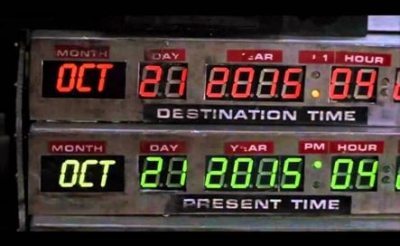
So I strode up to the microphone, and thanked him for his courage. I then asked him, ?In your 1985 movie ?Back to the Future? Marty McFly traveled 30 years into the future in his DeLorean time machine, to October 21, 2015. That date is now only five months off. What do you think of the future we got, where did we fall short, and where did we exceed your expectations??
Michael was taken aback by my question, and the entire room burst into laughter. He confided that the flying cars have yet to arrive, but that computer processing capacity has exceeded his wildest imagination.
The cost for the four day assembly was a bargain at the price, given that you will probably make all of this back, and much more, on your next trade. This is an education that can make, or break, your year, and even a career.
It spoke volumes that the stock market saw the lowest turnover of the year this week. The running joke is that the markets were dead because the hot money was all in Vegas.
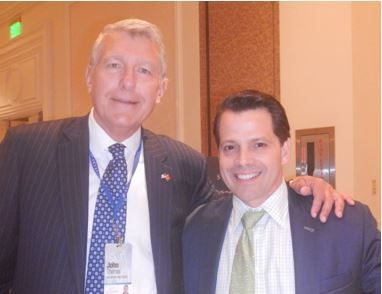
SALT was hosted by my friend, Anthony Scaramucci, the managing partner of SkyBridge Capital, LLC, a world-class networker and high profile operator in the hedge fund industry.
Scaramucci is the author of two books, The Little Book of Hedge Funds: What You Need to Know About Hedge Funds but the Managers Won?t Tell You, and Goodbye Gordon Gekko: How to Find Your Fortune Without Losing Your Soul.
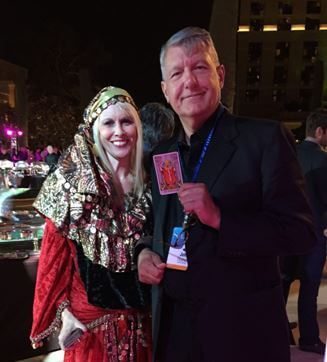
![John Thomas with Anthony Scaramucci]() Meeting the ?Mooch?
Meeting the ?Mooch?
SkyBridge Capital is a research driven alternative investment firm with over $13 billion in?total assets under advisement or management. It recently opened an office in South Korea.
The firm offers?hedge fund investing solutions?that address?a wide range of market participants from individual retail investors to large institutions.
Their businesses?include?comingled funds of hedge fund products, customized separate account?portfolios,?and hedge fund advisory services. To learn more about their services, please visit their coolest of all websites at http://www.skybridgecapital.com.
Andrew, or ?The Mooch? to his friends, seems to get better at this game every year. One minute, he is frenetically putting out fires, and the next, coolly introducing the next high profile name in a relaxed and suave manner. Every time I saw him, he was on the way to somewhere in a high speed hustle.
Unfortunately, there was a total press blackout for all of the marquee names. So most of the high-grade intelligence was for ears only, with ?OFF THE RECORD? projected on the gigantic high definition screens in big bold red letters.
You can?t blame these guys for being gun shy. All have been grievously misquoted by the press in the past.
This can be a dicey problem when their comments are market moving and they already own big positions. With the former world leaders, there is always the chance of an offhand comment creating an international incident.
Given the choice between restrained, politically correct views approved by compliance heads, public relations departments, or intelli
gence agencies, and the real, but unquotable, skinny, I?ll definitely take the latter.
You?ll learn the market impact of what was said in my coming Trade Alerts.
I?ll give you a quicky hint right now: Use the next dip to double up your cyber security position.
Non-stop panel discussions kept us all up to date on the many urgent issues facing hedge funds and their investors. Fee discounts for size, once unheard of, are now becoming common. As the industry is rapidly becoming commoditized, prices are dropping.
There is a rise in the customization of accounts for specific clients. Risk control and transparency have improved dramatically since the 2008 crash. Concerns about the popping of the bond market bubble were almost universal.
Peripheral to the large conference halls were two vast meeting rooms, one with 100 tables, another with 50 white upholstered sofas. There, an army of young, fresh faced marketing reps sold a panoply of hedge fund products to a flotilla of hardened, craggy faced, and wizened end investors.
Reading the body language was fascinating. Dozens of small, start up hedge fund managers earnestly articulated their own strategies to potential partners. Every 20 minutes, the buyers of services rotated tables.
You could almost feel the supercharged energy of the deals getting done and commerce coursing through the air. The participants referred to this whimsically as ?speed dating.?
God bless America!
![John Thomas]() My New Stock Selection System
My New Stock Selection System
There are now 23 hedge fund strategy categories, some with another half dozen subdivisions. You need a PhD in Higher Mathematics from MIT to understand some of the more abstruse ones.
Managers can now outsource any service to third party providers, be it compliance, tech support, investor relations, or support staff. The business has been sliced and diced so many ways it is dizzying.
The elevators hummed with the language of finance; duration, convexivity, alphas, betas, deltas, thetas, and price earnings ratios. Baffled vacationers from the Midwest might have thought they took a wrong turn and landed in ancient Greece by accident.
At night, the guests were treated to a blowout party around the Bellagio?s ornate swimming pool complex. A rock band boomed out the music, and the torsos of dancers gyrated wildly in true bacchanalian fashion.
A fire breather roamed about singeing the guests, as did elaborately dressed women on stilts wearing fantastic feathered costumes. Tarot card and palm readers were available if you wanted to learn your performance numbers in advance.
Comely waitresses served all the iced tequila shots you could drink, which had ?headache? written all over them. The hotel wisely stationed lifeguards around the pools in case a drunken reveler fell, or was thrown in.
I asked one shapely attendant if she would save me if I inadvertently took a plunge, and she cautiously answered ?yes?.
It was all a scene worthy of The Great Gatsby.
Because I recently started posting my pictures on the site, I was mobbed by fans, dispensing some 200 business cards that evening.
Why do I feel like the protagonist, Nick Carraway? Or am I the doomed Wall Street titan Jay Gatsby himself?
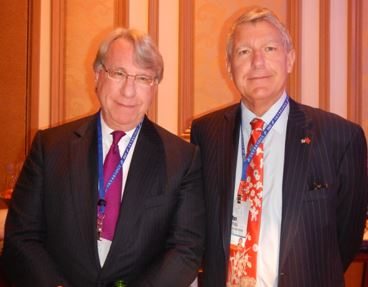
I managed to pin down short selling legend, Jim Chanos, telling him he is wrong about China for the umpteenth time. Still, he has already made a fortune there on the downside in recent years, and admitted he did carry some longs there against his shorts.
![James Chanos]() No, Jim, You?re Wrong!
No, Jim, You?re Wrong!
?When I first jumped into the industry 30 years ago, there were only two dozen hedge funds managing a miniscule amount of money, and we all knew each other. We all used to meet for lunch once a month to trade ideas.
Most of Wall Street thought we were all crooks. Making money in a falling market? That has to be illegal!
Now you have 10,000 funds managing $2.7 trillion, accounting for 50%-70% of all trading volume. Pension funds have made the industry respectable, and huge.
The highlight of the event was a private concert by the boy band, OneRepublic. A production company from Los Angeles hauled out ten truckloads of sound equipment to make it happen with industrial strength. ?Watch out, it?s going to be LOUD,? warned the producer, as he handed me a pair of earplugs.
I saw one of the richest men in the world casually walk up to the stage to get his ears blasted out, dressed in designer blue jeans, Gucci loafers, and a blue checked shirt with the tails hanging out.
Girls walked up to shake his hand, and wouldn?t let go. Half the women were wearing six-inch stilettos with red soles, meaning they ran a grand a pair.
The next day, some of the younger kids from marketing were clearly wrecked, and could have walked out of the morning after scene from The Hangover, which was shot at the Bellagio.
I?m sure they spent the morning shuffling the stacks of business cards they collected, wondering who some of these people were. Ah, the price of youth!
And who the hell is John Thomas?
After drinking my meals for four days, I managed to cover all the bases. I even spent time with the hairy chest and silver chain crowd in the lukewarm pool, who leased office space to hedge funds. Business was booming.
![John Thomas]() You Meet the Most Interesting People in Las Vegas
You Meet the Most Interesting People in Las Vegas

?As much as I love the Bellagio, living there for a week gets a bit tiring. Every time I left my room I was assaulted by ringing bells and distant screaming by someone who had just won a fortune on the slots.
Catching my flight home, I saw a falling down drunk woman wearing only a bikini try to board a flight and punch out a TSA officer when she was turned away.
Big mistake.
You meet the nicest people in Las Vegas.
Oh, did I tell you how hard it is to get your clothes off when they are soaking wet?
My dry cleaner is going to hate me.
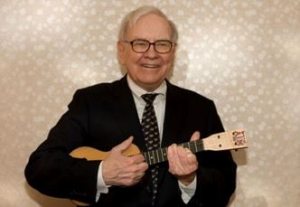
?Most of the time, stocks are in a zone of reasonableness. I think stocks are reasonable now,? said Oracle of Omaha, Berkshire Hathaway?s Warren Buffett.
Global Market Comments
May 4, 2016
Fiat Lux
Featured Trade:
(WHY THE MARKETS HAVE GONE INSANE THIS YEAR),
(FXY), (USO), (SPY), (FXE), (VRX), (AAPL),
(A SPECIAL NOTE ON EXERCISED OPTIONS)
CurrencyShares Japanese Yen ETF (FXY)
United States Oil (USO)
SPDR S&P 500 ETF (SPY)
CurrencyShares Euro ETF (FXE)
Valeant Pharmaceuticals International, Inc. (VRX)
Apple Inc. (AAPL)
A market where both fundamental research and technical analysis are utterly useless and everything goes the opposite of where it should is no place for me.
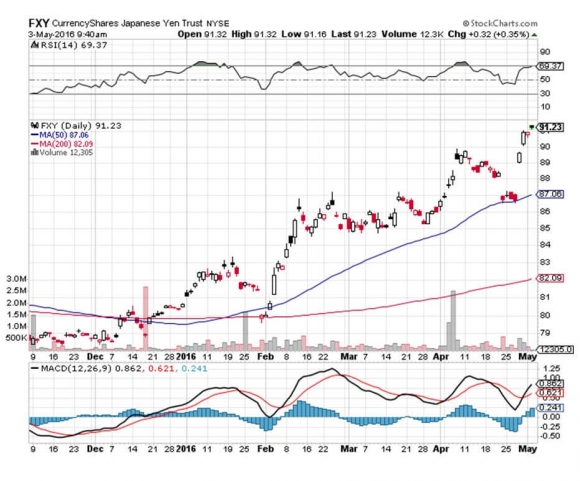
Despite having negative interest rates and the world?s worst fundamentals, the Japanese yen has been skyrocketing since the beginning of February.
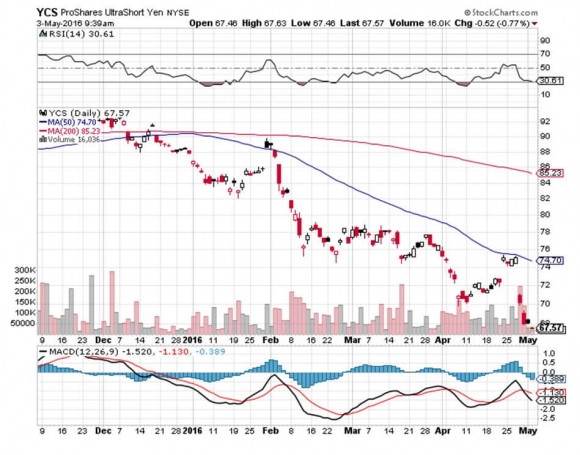
The last time the yen (FXY), (YCS) moved this sharply was when President Richard Nixon took the US off the gold standard in 1972, and currencies floated for the first time. The yen immediately shot up 10%.
I remember it like it was yesterday.
There is something unprecedented going on, not with just the yen right now, but with all assets.? So I am getting out of the way. If I don?t understand what is happening with a position, I drop it like a hot potato.
This could be occurring because Japan?s oil bill has been cut in half over the past year, shaving some $125 billion off it's annual imports. That means less dollar buying and yen selling to settle the trade.
However, in looking for reasons to explain the madness about us I could be too logical and analytical here.
In my travels around the US two weeks ago I discovered what might be a more pressing reason to cause all asset classes to go haywire.
I heard on the grapevine that there are at least a half dozen large hedge funds with tens of billions of dollars in assets each that are going out of business.
Poor performance has led investors to demand redemptions en masse. That means unwinding possibly $100 billion worth of positions.
And every one of these positions was financed by short sales in the Japanese yen. The only way for them to get out of these positions and raise cash is to buy yen, a lot of them, to close those shorts.
If this is the case, it would explain a lot of what is going on in the markets this year. The worst performing asset classes of 2016 have been those where hedge funds were major owners.
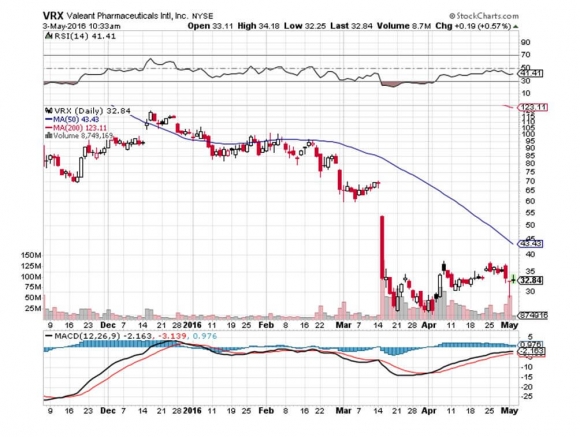
Those would include US banks, short positions in ten-year Treasury bonds (TLT), shorts in the Euro (FXE), and special situations like Variant Pharmaceutical (VRX).
It provides the logic behind the atrocious performance by the big tech FANG stocks in recent weeks. And yes, it gives the backdrop for the enormous over reaction in Apple (AAPL) shares after the Q1 earnings report.
It gets worse.
When markets sniff out that big positions have to be shifted, they suddenly go illiquid. That leads to small amounts of capital triggering exaggerated moves in the underlying prices.
That has given us the enormous volatility in all asset classes we have seen this year. Look at oil, stocks, gold, gold miners, silver, and the yen and they are all delivering the most extreme moves in a half century.
This all makes markets impossible to trade.
Markets aren?t breathing. We are seeing one straight line move after another. Prices aren?t trading within defined channels that traders make their living from. Instead, they are going ballistic.
In other words, the price action of 2016 can be described as liquidity events.
And this is the good news.
All liquidity events burn out. Eventually the positions get liquidated, the investors get their money back, and markets return to normal.
You could blame all this on negative interest rates, which have never occurred before in history. I have never seen the strategist community so clueless before.
You might also ascribe it to the demise of the hedge fund. It seems that whenever industry assets approach $3 trillion in assets, it implodes. The market can accommodate only so much ?smart? money.
Almost all hedge funds accumulated their stellar track records when they were small. Get above $20 billion and they can only generate slightly better than utility type returns. Only a select few friends of mine have been able to keep the numbers coming.
My strategy has always been to break even when it is tough, and coin it when it is easy. This is one of those breakeven times.
This is why my performance has been flat lining just short of an all time high for months.
This too shall pass. When it does, it will be back to racking up double-digit returns, as I have done with this service for the past eight years.
Personally, I have great hopes for the second half of the year, when the presidential election gets out of the way.

Did You Say Two and Twenty?
I received a few emails from readers whose option holdings have already been exercised against them, and have asked me for advice on how best to proceed.
In the last few months, we have enjoyed several positions that have gone deep in the money, earning tidy profits. So, it is important that we tread carefully to get the full benefit. So, here we go.
The options traded on US exchanges and referred to in my Trade Alerts are American style, meaning that they can be exercised at any time by the owner.
This is in contrast to European style options, which can only be exercised on the expiration day.
The call option spreads that I have been recommending for the past year are composed of a deep out-of-the-money long strike price plus a short portion at a near money strike price. ?The combination is known as a vertical bull call spread.
When stocks have high dividends, there is a chance that the near money option you are short gets exercised against you by the owner. This requires you to deliver the stock equivalent of the option you are short, plus any quarterly dividends that are due.
Don?t worry, because your long position perfectly hedges you against this possibility.
You usually get notice of this assignment in an email after the close. You then need to email or call your broker back immediately informing him that you want to exercise your remaining long option position to meet your assigned short position.
This is gift, as it means that you can realize the entire maximum theoretical profit for the position without having to take the risk of running it all the way into expiration. You can either keep the cash, or pile on another short dated option spread position and make even more money.
This should completely close out your position and leave you with a nice profit. This is not an automatic process and requires action on your part!
Assignments are made on a random basis by an exchange computer, and can happen any day. Exercise means the owner of the option that you are short completely loses all of the premium on his call.
Dividends have to be pretty high to make such a move economic, usually at least over 3% on an annual rate. But these days, markets are so efficient that traders, or their machines, will exercise options for a single penny profit.
Surprise assignments create a risk for option spread owners in a couple of ways. If you don?t check your email every day after the close, you might not be aware that you have been assigned.
Alternatively, such emails sometimes get lost, or hung up in local servers or spam filters, which occasionally happens to readers of my own letter.
Then, you are left with the long side deep out-of-the-money call alone, which will have a substantially higher margin requirement. This is equivalent to going outright long the stock in large size.
This is a totally unhedged position now, and suddenly, you are playing a completely different game. If the stock then rises, you could be in for a windfall profit.
But if it falls, you could take a big hit. Better to completely avoid this situation at all cost and not take the chance. You are probably not set up to do this type of trading.
If you don?t have the cash in your account to cover this, you could get a margin call. If you ignore this call as well, your broker will close out your position at market without your permission.
It could produce some disconcerting communications from your broker. They generally hate issuing margin calls, and could well close your account if it is too small to bother with, as they create regulatory issues.
In order to get belt and braces coverage on this issue, it is best to call your brokers and find out exactly what their assignment policies and procedures are.
Believe it or not, some are still in the Stone Age, and have yet to automate the assignment process or give notice by email. An ounce of prevention could be worth a pound of cure here.
Consider all this a cost of doing business, or a frictional execution cost. In-the-money options are still a great strategy. But you should be aware of all the ins and outs to get the most benefit.

?There were three things the Russians were afraid of: AIDS, Jewish people, and Ronald Reagan. They were afraid he was going to push the button,? said KGB defector, Jack Barsky.
Global Market Comments
May 3, 2016
Fiat Lux
Featured Trade:
(THE IRS LETTER YOU SHOULD DREAD),
(PANW), (CSCO), (FEYE),
?(CYBR), (CHKP), (HACK), (SNE),
(TESTIMONIAL)
Palo Alto Networks, Inc. (PANW)
Cisco Systems, Inc. (CSCO)
FireEye, Inc. (FEYE)
CyberArk Software, Ltd. (CYBR)
Check Point Software Technologies Ltd. (CHKP)
PureFunds ISE Cyber Security ETF (HACK)
Sony Corporation (SNE)
I knew the letter from the IRS sitting in my mail box was bad news just from the color of the paper.
It was not light green, the color of a refund check from the United States Treasury. Instead, it was white, warning that it contained some sort of demand, audit notice, or threatened legal action.
In fact, it was far worse than that.
In the most stilted, bureaucratic language possible, I was informed that my $100,000 tax refund for 2015 had been paid out to someone else.
Another party using my name and social security number, but a different address, had already filed a 2015 return.
In order for me to get my money back I would have to file a new return and include hard copies of every single piece of supporting documentation. It was in effect a full paper audit. Then I would have to wait 60 days.
This was three months ago.
I informed my accountant immediately. I heard him shout across the room to his partner, ?Hey, I?ve got another one.?
He told me that half of his clients had had their refund checks stolen this year, and as a result, the IRS was now demanding automatic audits on all refund requests into four figures or more.
It gets worse. Budget cuts at the despised government agency means that huge delays are occurring in almost all interactions. Even routine requests can sit on a bureaucrat?s desk for two years. The number of standard audits has fallen substantially.
The ones that take place are just a quick pass over, often conducted by mail, rather than the in-person, no stone unturned drill downs of the past.
Furthermore, the government didn?t have the money to pay for the latest upgrade of QuickBooks Pro.
This means it is unable to use this online accounting service?s spreadsheets during audits when the taxpayer?s accountant has upgraded, greatly increasing the time required for each audit while decreasing its effectiveness.
As a result, QuickBooks is seeing the fastest and most widespread adoption of its latest software version in history.
You can?t make this stuff up.
I asked my accountant how long it would really take for me to collect my 2015 refund.? Better count on a year,? he said.
Then the news flash came out that hackers had stolen the tax returns of 100,000 individuals, including their personal information. I was clearly one of those victims.
Not only did the crooks discover my name and social security number, they also knew that my high school team name was the ?Apaches?, my first car was a Volkswagen, and that I was married in Tokyo. I bet they know my inside leg measurement as well (I?m not telling!).
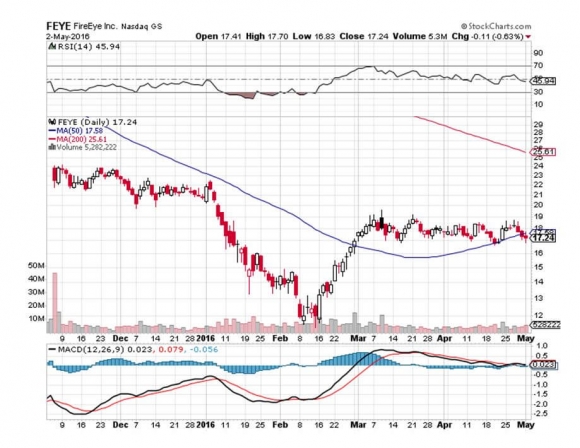
It all reminds me that it is once again time to revisit Palo Alto Networks (PANW) and Fireye (FEYE). I have been recommending these two cyber security names for the past three years, issuing Trade Alerts on each opportunistic dip.
The near destruction of Sony (SNE) by North Korean hackers has certainly put the fear of God into corporate America.
Apparently, they have no sense of humor whatsoever north of the 38th parallel. I saw The Interview the other day on a plane, the film making fun of Supreme Leader Kim Jong-un that so pissed them off, and it totally sucked.
As a result, there is a generational upgrade in cyber security underway, with many potential targets boosting spending by multiples.
It?s not often that I get a stock recommendation from an army general. That is exactly what happened the other day when I was speaking to a three star about the long-term implications of the Iran peace deal.
He argued persuasively that the world will probably never again see large-scale armies fielded by major industrial nations. Wars of the future will be fought online, as they have been silently and invisibly over the past 15 years.
All of those trillions of dollars spent on big ticket, heavy metal weapons systems are pure pork designed by politicians to buy voters in marginal swing states.
The money would be far better spent where it is most needed, on the cyber warfare front. Needless to say, my friend shall remain anonymous.
The problem is that when wars become cheaper, you fight more of them, as is the case with online combat. Cyber wars are now happening every day, all the time, 24/7.
You probably don?t know this, but during the Bush administration, the Chinese military downloaded the entire contents of the Pentagon?s mainframe computers at least seven times.
This was a neat trick because these computers were in stand alone, siloed, electromagnetically shielded facilities not connected to the internet in any way.
In the process, they obtained the designs of all of our most advanced weapons systems, including our best nukes. What have they done with this top-secret information?
Absolutely nothing.
Like many in senior levels of the US military, the Chinese have concluded that these weapons are a useless waste of valuable resources. Far better value for the money are more hackers, coders, and servers, which the Chinese have pursued with a vengeance.
You have seen this in the substantial tightening up of the Chinese Internet through the deployment of the Great Firewall, which blocks local access to most foreign websites.
Some Mad Hedge Fund Trader subscribers in the Middle Kingdom have told me they can no longer access their US based online brokerage accounts, which are blocked by mainland ?porn? filters.
Try sending an email to someone in the middle Kingdom with a Gmail address. It is almost impossible. This is why Google (GOOG) closed their offices there years ago.
As a member of the Joint Chiefs of Staff recently told me, ?The greatest threat to national defense is wasting money on national defense.?
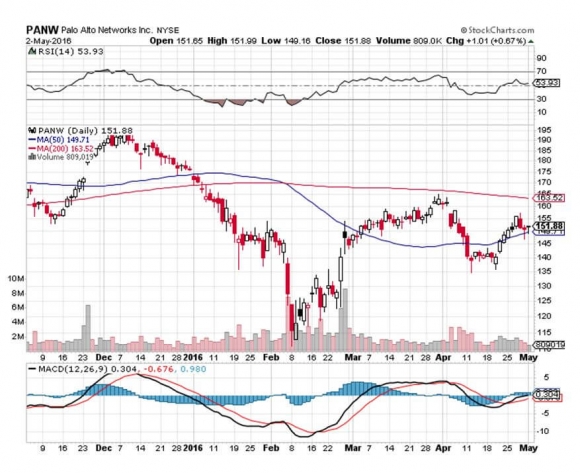
Although my brass-hatted friend didn?t mention the company by name, the implication is that I need to go out and buy Palo Alto Networks (PANW) right now.
Palo Alto Networks, Inc. is an American network security company based in Santa Clara, California just across the water from my Bay area office.
The company?s core products are advanced firewalls designed to provide network security, visibility and granular control of network activity based on application, user, and content identification.
Palo Alto Networks competes in the unified threat management and network security industry against Cisco (CSCO), FireEye (FEYE), Fortinet (FTNT), Check Point (CHKP), Juniper Networks (JNPR), and Cyberoam, among others.
The really interesting thing about this industry is that there are no losers. That?s because companies are taking a layered approach to cyber security, parceling out contracts to many of the leading firms at once, looking to hedge their bets.
To say that top management has no idea what these products really do would be a huge understatement. Therefore, they buy all of them.
This makes a basket approach to the industry more feasible than usual.
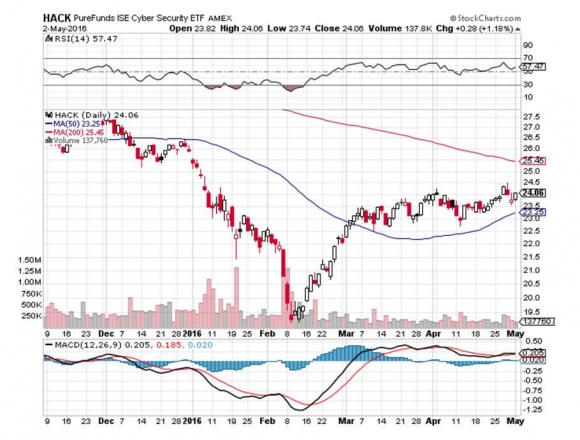
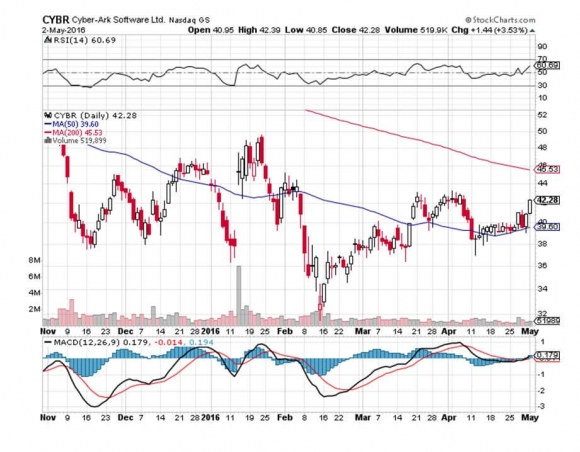
You can do this through buying the $746 million capitalized PureFunds ISE Cyber Security ETF (HACK), which boasts CyberArk Software (CYBR), Infoblox (BLOX), and FireEye (FEYE) as its three largest positions. (HACK) has been a hedge fund favorite since the Sony attack.
For more information about (HACK), please click link: http://www.pureetfs.com/etfs/hack.html .
As for my tax refund, I am still waiting.
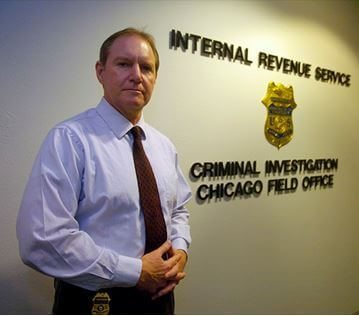
![IRS Investigator]() I Have Some Bad News for You Mr. Thomas
I Have Some Bad News for You Mr. Thomas

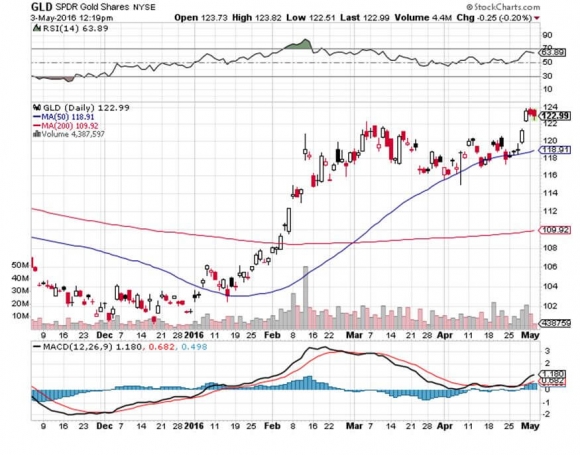
Just a quick note of appreciation for your helping me decide to get my clients into (GLD) with a 15% allocation early this year.
It sure has helped me to be more of a hero to my clients this year than a goat?
Best wishes to you and yours!? Keep ?em coming.
Brad
Bakersfield, California
"In Italy, for 30 years under the Borgias, they had warfare, terror, murder and bloodshed, but they produced Michelangelo, Leonardo da Vinci and the Renaissance. In Switzerland they had brotherly love, they had 500 years of democracy and peace - and what did that produce? The cuckoo clock,? said the filmmaker, Orson Wells.
