

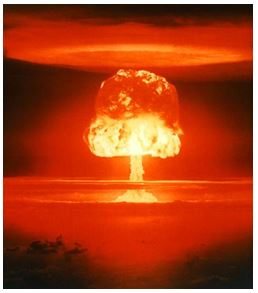
My friend was having a hard time finding someone to attend a reception who was knowledgeable about financial markets, White House intrigue, international politics, and nuclear weapons.
I asked who was coming. She said Reagan?s Treasury Secretary George Shultz, Clinton?s Defense Secretary William Perry, and former Senate Armed Services Chairman Sam Nunn. I said I?d be there wearing my darkest suit, cleanest shirt, and would be on my best behavior, to boot.
When I arrived at San Francisco?s Mark Hopkins Hotel, I was expecting the usual mob scene. I was shocked when I saw the three senior statesmen making small talk with their wives and a handful of others.
It was a rare opportunity to grill high-level officials on a range of top-secret issues that I would have killed for during my days as a journalist for The Economist magazine. I guess arms control is not exactly a hot button issue these days. I moved in for the kill.
I have known George Shultz for decades, back when he was the CEO of the San Francisco based heavy engineering company, Bechtel Corp. I saluted him as ?Captain Schultz?, his WWII Marine Corp rank, which has been our inside joke for years. Since the Marine Corps didn?t know what to do with a PhD in economics from MIT, they put him in charge of an anti-aircraft unit in the South Pacific, as he already was familiar with ballistics, trajectories, and apogees.
I asked him why Reagan was so obsessed with Nicaragua, and if he really believed that if we didn?t fight them there, we would be fighting them in the streets of Los Angeles. He replied that the socialist regime had granted the Soviets bases for listening posts that would be used to monitor US West Coast military movements in exchange for free arms supplies. Closing those bases was the true motivation for the entire Nicaragua policy. To his credit, George was the only senior official to threaten resignation when he learned of the Iran-contra scandal.
I asked his reaction when he met Soviet premier Mikhail Gorbachev in Reykjavik in 1986 when he proposed total nuclear disarmament. Shultz said he knew the breakthrough was coming because the KGB analyzed a Reagan speech in which he had made just such a proposal.
Reagan had in fact pursued this as a lifetime goal, wanting to return the world to the pre nuclear age he knew in the 1930?s, although he never mentioned this in any election campaign. As a result of the Reykjavik Treaty, the number of nuclear warheads in the world has dropped from 70,000 to under 10,000. The Soviets then sold their excess plutonium to the US, which today generates 10% of the total US electric power generation.
Shultz argued that nuclear weapons were not all they were cracked up to be. Despite the US being armed to the teeth, they did nothing to stop the invasions of Korea, Hungary, Vietnam, Afghanistan, and Kuwait.
I had not met Bob Perry since the late nineties when I bumped into his delegation at Tokyo?s Okura Hotel during defense negotiations with the Japanese. He told me that the world was far closer to an accidental Armageddon than people realized.
Twice during his term as Defense Secretary he was awoken in the middle of the night by officers at the NORAD early warning system to be told that there were 200 nuclear missiles inbound from the Soviet Union. He was given five minutes to recommend to the president to launch a counterstrike. A minute latter, they upgraded the count to 2,000 missiles. Four minutes later, they called back to tell him that there were no missiles, that it was just a computer glitch.
When the US bombed Belgrade in 1999, Russian president, Boris Yeltsin, in a drunken rage, ordered a full-scale nuclear alert, which would have triggered an immediate American counter response. Fortunately, his generals ignored him.
Perry said the only reason that Israel hadn?t attacked Iran yet, was because the US was making aggressive efforts to collapse the economy there with its oil embargo. Enlisting the aid of Russia and China was key, but difficult since Iran is a major weapons buyer from these two countries. His argument was that the economic shock that a serious crisis would bring would damage their economies more than any benefits they could hope to gain from their existing Iranian trade.
I told Perry that I doubted Iran had the depth of engineering talent needed to run a nuclear program of any substance. He said that aid from North Korea and past contributions from the AQ Khan network in Pakistan had helped them address this shortfall.
Ever in search of the profitable trade, I asked Perry if there was an opportunity in nuclear plays, like the Market Vectors Uranium and Nuclear Energy ETF (NLR) and Cameco Corp. (CCR), which have been severely beaten down by the Fukushima nuclear disaster. He said there definitely was. In fact, he personally was going to lead efforts to restart the moribund US nuclear industry. The key here is to promote 5th generation technology that uses small, modular designs, and alternative low risk fuels like thorium.
I had never met Senator Sam Nunn and had long been an antagonist, as he played a major role in ramping up the Vietnam War. Thanks to his efforts, the Air Force, at great expense, now has more C-130 Hercules transport planes that it could ever fly because they were assembled in his home state of Georgia. Still, I tried to be diplomatic.
Nunn believes that the most likely nuclear war will occur between India and Pakistan. Islamic terrorists are planning another attack on Mumbai. This time India will retaliate by invading Pakistan. The Pakistanis plan on wiping out this army by dropping an atomic bomb on their own territory, not expecting retaliation in kind. But India will escalate and go nuclear too. Over 100 million would die from the initial exchange. But when you add in unforeseen factors, like the broader environmental effects and crop failures (CORN), (WEAT), (SOYB), (DBA), that number could rise to 1-2 billion. This could happen as early as 2013.
Nunn applauded current administration efforts to cripple the Iranian economy, which has caused their currency to fall 70% in the past six months. The strategy should be continued, even if innocents are hurt. He argued that further arms control talks with the Russians could be tough. They value these weapons more than we do, because that?s all they have left. Nunn delivered a stunner in telling me that Warren Buffet had contributed $50 million of his own money to enhance security at nuclear power plants in emerging markets. I hadn?t heard that.
As the event drew to a close, I returned to Secretary Shultz to grill him some more about the details of the Reykjavik conference held some 26 years ago. He responded with incredible detail about names, numbers, and negotiating postures. I then asked him how old he was. He said he was 92. I responded ?I want to be like you when I grow up?. He answered that I was ?a promising young man.? It was the best 61st birthday gift I could have received.


Oops, Wrong Number
If you would like to get a free headline service from The Diary of the Mad Hedge Fund Trader, then please join my 1,448 friends. Every day we are posting headlines along with summaries of the stories on our Facebook page. As soon as you open your own Facebook page, you will receive our latest headlines as newsfeeds. To ?friend me?, please go to my home page at http://madhedgefundradio.com/ and click on the Facebook icon.


Virtually every analyst has been puzzled by the seeming immunity of stock markets to soaring oil prices (USO), (DIG), (DUG) this year. In fact, stocks and crude have been tracking almost one to one on the upside. The charts below a friend at JP Morgan sent me go a long way towards explaining this apparent dichotomy.
The first shows the number of barrels of oil needed to generate a unit of GDP, which has been steady declining for 30 years. The second reveals the percentage of hourly earnings required to buy a gallon of gasoline in the US, which has been mostly flat for three decades, although it has recently started to spike upwards.
The bottom line is that conservation, the roll out of more fuel-efficient vehicles and hybrids, and the growth of alternatives, are all having their desired effect. Notice how small all the new cars on the road are these days, many of which get 40 mpg with conventional gasoline engines. As for my own household, it has gone all electric.
Developed countries are getting six times more GDP growth per unit of oil than in the past, while emerging economies are getting a fourfold improvement. The world is gradually weaning itself off of the oil economy. But the operative word here is 'gradually', and it will probably take another two decades before we can bid farewell to Texas tea, at least for transportation purposes.


But the Mileage is Great!

Global Market Comments
March 19, 2013
Fiat Lux
Featured Trade:
(BUY STOCKS ON THE CYPRUS DIP), (SPX), (SPY),
(INVESTORS WILL WIN THE ETF PRICE WAR),
(BIDDING FOR THE STARTS),
(THE DEATH OF THE MUTUAL FUND)
S&P 500 Large Cap Index (SPX)
SPDR S&P 500 (SPY)

Many hedge fund traders are unhappy about the current near monopoly enjoyed by the top three ETF issuers, Black Rock, State Street, and Vanguard, which control 80% of the market. At last count more than 1,300 ETF?s were capitalized at more than $1.4 trillion. The result has been grasping management fees, exorbitant expense ratios, and poor structural designs, which create massive tracking error.
The good news is that new entrants are flooding into the ETF space, and the heightened competition they are bringing will help curtail the worst of these abuses. This development will accelerate the demise of the bloated and arthritic mutual fund industry, whose end has been a long time in coming. Not only will management fees and expense ratios plunge, there will be a far broader range of offerings, as new funds are launched from a diverse range of institutions coming from differing areas of expertise. Failure to enter the newly lucrative ETF market by the remaining giants sitting on the sidelines means that their existing mutual fund businesses will be cannibalized.
Look no further than bond giant PIMCO, which CAME out with a plethora of fixed income related funds, Van Eck?s expanding list of ETF?s for commodities, and the even growing list of inverse and leveraged inverse ETF?s presented by ProShares. The bottom line will be that lower costs and tighter spreads will leave more profits on the table for the rest of us.

The Mutual Fund Industry is Getting Cannibalized

A few years ago, I went to a charity fund raiser at San Francisco?s priciest jewelry store, Shreve & Co., where the well-heeled men bid for dates with the local high society beauties, dripping in diamonds and Channel No. 5. Well fueled with champagne, I jumped into a spirited bidding war over one of the Bay Area?s premier hotties, who shall remain nameless. Suffice to say, she has a sports stadium named after her.
The bids soared to $10,000, $11,000, $12,000. After all, it was for a good cause. But when it hit $12,400, I suddenly developed lockjaw. Later, the sheepish winner with a severe case of buyer?s remorse came to me and offered his date back to me for $12,000.? I said ?no thanks.? $11,000, $10,000, $9,000? I passed.
The current altitude of the stock market reminds me of that evening. If you rode gold (GLD) from $800 to $1,920, oil, from $35 to $149, and the (DIG) from $20 to $60, why sweat trying to eke out a few more basis points, especially when the risk/reward ratio sucks so badly, as it does now?
I realize that many of you are not hedge fund managers, and that running a prop desk, mutual fund, 401k, pension fund, or day trading account has its own demands. But let me quote what my favorite Chinese general, Deng Xiaoping, once told me: ?There is a time to fish, and a time to hang your nets out to dry.?
At least then I?ll have plenty of dry powder for when the window of opportunity reopens for business. So while I?m mending my nets, I?ll be building new lists of trades for you to strap on when the sun, moon, and stars align once again. And no, I never did find out what happened to that date.


See Any Similarity?

Time to Mend the Nets
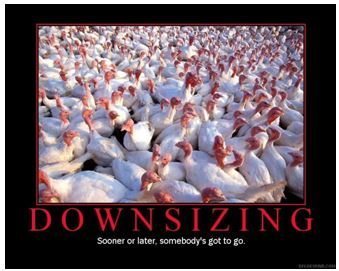
ETF?s are much more attractive than mutual fund competitors, with their notoriously bloated expenses and spendthrift marketing costs. You can?t miss those glitzy, overproduced, big budget ads on TV for a multitude of mutual fund families. You know, the ones with the senior couple holding hands walking down the beach into the sunset, the raging bulls, etc.? You are the sucker who is paying for these. Sometimes I confuse them for Viagra commercials.
I once did a comprehensive audit on a mutual fund, and a blacker hole you never saw. There were so many conflicts of interest it would have done Bernie Madoff proud. Any trainee assistant trader can tell you that more than 90% of all mutual fund managers reliably underperform the indexes, some grotesquely so.? Published performance is bogus, they show a huge survivor bias, not including the hundreds of mutual funds that close each year. And there?s always that surprise tax bill at the end of the year.
If there was every an industry crying out for a fundamental restructuring, consolidation, price competition, and ultimately a whopping great downsizing, it is the US mutual fund industry. ETF?s may be the accelerant that ignited this epochal sea change, with the number of mutual funds recently having shrunk from 10,000 to 8,000. It?s still early days, with ETF?s only accounting for 5-6% of trading volume, even though they have been around for a decade.

The Mutual Fund?s Days Are Numbered
Global Market Comments
March 18, 2013
Fiat Lux
Featured Trade:
(MARCH 20 GLOBAL STRATEGY WEBINAR),
(HAS APPLE BOTTOMED?), (AAPL),
(TESTIMONIAL),
(SOVEREIGN DEBT WAS A GREAT PLACE TO HIDE),
?(PCY), (LQD)
Apple Inc. (AAPL)
PowerShares Emerging Mkts Sovereign Debt (PCY)
iShares iBoxx $ Invest Grade Corp Bond (LQD)

I am constantly asked where to find safe places to park cash by investors understandably unhappy with the risk/reward currently offered by the markets. Any reach for yield now carries substantial principal risk, the kind we saw, oh say, in the summer of 2007.
I have had great luck steering people into the Invesco PowerShares Emerging Market Sovereign Debt ETF (PCY) for the last few years, which is invested primarily in the debt of Asian and Latin American government entities, and sports a generous 4.75% % yield. This beats the daylights out of the one basis point you could earn for cash, the 2.0% yield available on 10 year Treasuries, and still exceeded the 3.84% yield on the iShares Investment Grade Bond ETN (LQD), which buys predominantly single ?BBB?, or better, US corporates.
The big difference here is that (PCY) has a much rosier future of credit upgrades to look forward to than other alternatives. It turns out that many emerging markets have little or no debt, because until recently, investors thought their credit quality was too poor. No doubt a history of defaults in the region going back to 1820 is in the backs of their minds.
You would think that a sovereign debt fund would be the last place to safely park your money in the middle of a debt crisis, but you?d be wrong. (PCY) has minimal holdings in the Land of Sophocles and Plato, and very little in the other European PIIGS. In fact, the crisis has accelerated the differentiation of credit qualities, separating the wheat from the chaff, and sending bonds issues by financially responsible countries to decent premiums, while punishing the bad boys with huge discounts.? It seems this fund has a decent set of managers at the helm.
With US government bond issuance going through the roof, the shoe is now on the other foot. Even my cleaning lady, Cecelia, knows that US Treasury issuance is rocketing to unsustainable levels (she reads my letter to practice her English).
Since my initial recommendation, my total return on (PCY) has been 50%, not bad for an insurance policy. Money has poured into (PCY), the net assets under management increasing nearly tenfold. If we get a sudden sell off in Treasury bonds, a scenario that may have already started, I think it will take the rest of the fixed income universe along with it. I therefore want to take the money and run.
I lived through the Latin American debt crisis of the seventies. You know, the one that almost took Citibank down? Never in my wildest, Jack Daniels fueled dreams did I think that I?d see the day when Brazilian debt ratings might surpass American ones. Who knew I?d be trading in Marilyn Monroe for Carmen Miranda? Given the advanced age of this bond bubble, I?m now thinking of swearing off women altogether.


Time to Swear Off Women Altogether?
Global Market Comments
March 15, 2013
Fiat Lux
Featured Trade:
(TAKING PROFITS ON STOCKS), (SPY),
(TAKING A BITE OUT OF STEALTH INFLATION),
(TESTIMONIAL)
SPDR S&P 500 (SPY)