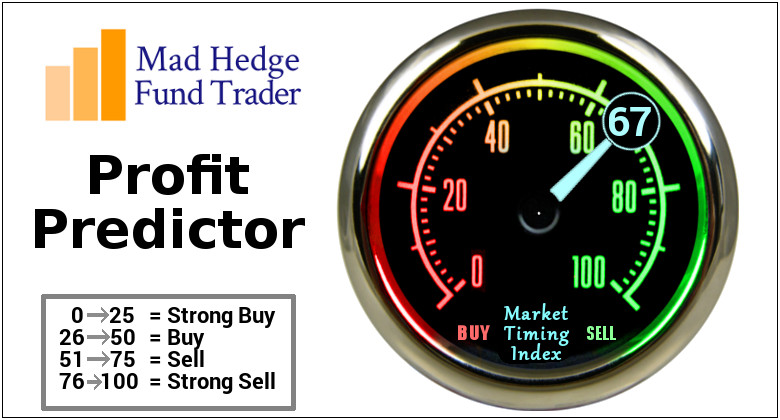
When John identifies a strategic exit point, he will send you an alert with specific trade information as to what security to sell, when to sell it, and at what price. Most often, it will be to TAKE PROFITS, but on rare occasions, it will be to exercise a STOP LOSS at a predetermined price to adhere to strict risk management discipline. Read more
The relationship between global trade policies and the technology sector is becoming increasingly intertwined. With tariffs on essential materials like steel and aluminum recently being implemented or proposed, the ripple effects extend far beyond construction and manufacturing. One area significantly impacted is the data center industry, which forms the backbone of the AI revolution. This article explores how rising costs for data center construction and maintenance, driven by tariffs, could indirectly influence AI processing and infrastructure development.
The Role of Steel and Aluminum in Data Centers
Data centers, the physical facilities housing servers and computing equipment, depend heavily on materials like steel and aluminum for their construction and operation. Steel is essential for building the structural framework, server racks, and enclosures, while aluminum is used for components like cooling systems, wiring, and casings. These materials ensure the physical stability and functionality of the centers, enabling uninterrupted service.
As AI technologies continue to advance, the demand for high-performance computing (HPC) systems, extensive storage solutions, and energy-efficient cooling mechanisms grows. This reliance on steel and aluminum makes data centers particularly vulnerable to price fluctuations in these materials.
Tariffs and Rising Material Costs
Tariffs, which are taxes imposed on imported goods, can significantly increase the cost of steel and aluminum. For example:
- If the U.S. imposes a 25% tariff on steel and a 10% tariff on aluminum, these additional costs are typically passed down to consumers and businesses, including data center operators.
- Countries responding with retaliatory tariffs can further disrupt the global supply chain, limiting the availability of these materials.
The result is a surge in prices for raw materials needed to construct and upgrade data centers, thereby increasing the capital expenditure for companies in the tech industry.
Escalating Construction Costs
Building a data center is already a capital-intensive process, often costing hundreds of millions of dollars. Tariffs on steel and aluminum can inflate these costs in several ways:
- Structural Framework: Steel used for constructing the data center's skeleton becomes more expensive, pushing up the overall budget.
- Server Racks: Custom steel racks designed to hold servers may see price hikes, particularly for high-density data centers.
- Cooling Systems: Aluminum-based cooling systems, essential for maintaining optimal operating temperatures, also become costlier.
These increased expenses can lead to delays in new data center projects, as companies may require additional time to secure funding or reevaluate the feasibility of their investments.
Operational Impacts and Maintenance Costs
The impact of tariffs is not limited to initial construction. Data centers require regular maintenance and upgrades, often involving steel and aluminum components:
- Replacement of Structural Elements: Periodic reinforcement or repairs to steel frameworks are standard practices.
- Cooling System Upgrades: AI workloads generate significant heat, necessitating frequent enhancements to aluminum cooling systems.
- Expansion Projects: Growing demand for AI processing often requires scaling data centers, which becomes more expensive under tariff-induced price hikes.
These operational challenges can hinder a company's ability to maintain its infrastructure, reducing its capacity to support AI workloads.
Indirect Effects on AI Processing
AI systems, from natural language processing to autonomous vehicles, rely on the computational power provided by data centers. When tariffs drive up data center costs, the following indirect effects on AI processing can be observed:
- Higher Service Costs: Cloud service providers like AWS, Microsoft Azure, and Google Cloud may pass on the increased costs to customers, raising the price of AI-related services.
- Slower AI Development: Companies may reduce their investment in AI research and development to offset higher infrastructure expenses.
- Geographical Shifts: Firms might relocate data centers to countries with lower material costs or fewer tariffs, potentially disrupting AI processing continuity and access.
Innovation and Energy Efficiency Challenges
Data centers are continually evolving to become more energy-efficient and environmentally friendly. However, tariffs can create roadblocks in this journey:
- Delay in Upgrades: Higher costs for materials may postpone the adoption of advanced cooling systems and energy-saving technologies.
- Limited Resources for Innovation: Companies may prioritize cost-cutting over research into sustainable data center solutions, hindering progress in green computing.
These challenges are particularly concerning given the growing energy demands of AI technologies, which already contribute to the carbon footprint of the tech industry.
Global Trade and Supply Chain Dynamics
Tariffs also affect the global supply chain for steel and aluminum, introducing additional complexities for data center operators:
- Supply Shortages: Retaliatory tariffs between countries can reduce the availability of materials, leading to project delays and cost overruns.
- Increased Import Costs: Companies relying on imported steel and aluminum may face logistical challenges and higher transportation expenses.
These dynamics further underscore the interconnectedness of global trade policies and the AI ecosystem.
Mitigation Strategies
Despite these challenges, companies can adopt strategies to mitigate the impact of tariffs on data centers and AI infrastructure:
- Diversifying Supply Chains: Sourcing materials from multiple countries can reduce reliance on tariff-affected imports.
- Investing in Recycling: Using recycled steel and aluminum can lower costs and promote sustainability.
- Leveraging Government Incentives: Applying for tax credits or subsidies for green initiatives can offset some expenses.
These proactive measures can help companies navigate the complexities of tariffs while continuing to invest in AI development.
Conclusion
The imposition of tariffs on materials like steel and aluminum presents significant challenges for the data center industry, indirectly affecting AI processing and infrastructure. By driving up construction and maintenance costs, tariffs could slow the growth of AI technologies, limit innovation, and disrupt global supply chains.
However, with strategic planning and collaboration, companies can mitigate these impacts and ensure the continued advancement of AI. As the relationship between trade policies and technology evolves, the industry must remain adaptable and forward-thinking to overcome these obstacles.
When John identifies a strategic exit point, he will send you an alert with specific trade information on what security to sell, when to sell it, and at what price. Most often, it will be to TAKE PROFITS, but, on rare occasions, it will be to exercise a STOP LOSS at a predetermined price to adhere to strict risk management discipline. Read more
Mad Hedge Technology Letter
April 23, 2025
Fiat Lux
Featured Trade:
(TESLA HITS AN AIR POCKET)
(TSLA)

Tesla (TSLA) has problems and so do other tech firms at the start of 2025.
Saying that doesn’t give comfort even with a great bull market of 12 years.
The scary thing here is that many tech bulls might believe this is the end of the stock market party.
Moving forward, we will see many tech firms miss gross revenue and profitability.
Then there is the future forecast and I wouldn’t blame management on making excuses using the trade war which they can’t control.
Tesla missed their first quarter revenue target by nearly $2 billion.
Management has literally been in Washington DC getting into politics, and that has hurt Tesla’s stock.
Tesla’s stock almost halved to around $200 before catching a bid.
CEO and Founder Elon Musk said he will step back from his role with DOGE, staying involved part time.
He said he'll continue to spend a day or two a week on government matters, for as long as President Donald Trump wants him to.
Looking forward, a potential key revenue driver is the robo-taxi.
Tesla is set to debut this service in Austin this June, starting with "maybe 10 to 20 vehicles," Musk said.
Tesla also confirmed on the call that the initial launch will include remote human operators who can intervene if a vehicle becomes stuck or encounters an issue.
Musk said the goal is to bring the service to "many other cities in the US by the end of this year," predicting that "there will be millions of Teslas operating fully autonomously in the second half of next year."
Musk said that Tesla would be "the least affected car company" when it comes to tariffs.
"With respect to supply chain risk, something that Tesla has been working on for several years, is to localize supply chains," Musk said. "Tariffs are still tough on a company when margins are still low, but we do have localized supply chains in both America, Europe, and China, so that puts us in a stronger position than any of our competitors."
I do believe the low 200 level for the stock should hold as resistance for TSLA.
Much of the bad news, and there is a lot, is already priced into the stock.
It will be interesting to see if the brand recovers, because the product is deeply unpopular in California and Western Europe.
To be honest, while we wait on the robo-taxi to roll out, Musk saw an air pocket and we are hitting that with full turbulence.
That being said, if there was not a change of administration, there is no way he could make headway with the robo-taxi division.
Musk is waiting on the robo-taxi to save the day and the possibility that happens is better than 50%. In the meantime, I believe he will have a hard time moving sales of his standard EV. He has done a lot of damage by alienating half of his addressable audience.
I believe the stock slowly creeps higher, but in a volatile way.
As for Musk, I think he’ll be spending more time at his day job moving forward and that should help the stock just for that.

“People work better when they know what the goal is and why.” – Said Elon Musk


(TRUMP WAS FORCED TO EAT HIS WORDS)
April 23, 2025
Hello everyone
President Trump has indicated that he will lower the tariffs on Chinese goods, after acknowledging that the current trade war between the world’s two largest economies cannot last.
Trump has said the tariff won’t be 0, but it won’t be anything like 145 per cent.
The IMF has forecast a significant slowdown in global growth due to Trump’s tariffs and has slashed its US growth forecast from 2.7 per cent to 1.8 per cent, due partly to the tariff program.
The IMF has also cut Australia’s 2025 growth forecast from 2.1 per cent to 1.6 per cent, a cost to the economy of about $13 billion.
IMF chief economist Pierre Olivier Gourinchas said the fund was not forecasting a US recession because the US economy was “coming from a position of strength.”
That position of strength will be a needed buffer over the next couple of years.
HEADLINE CORNER
American consumers and companies are likely to be the biggest tariff victims.
Travellers are avoiding the US.
Airlines see steep declines in travel to and from America.
GOLD UPDATE
You will see that gold has dropped from its record high of $3,500 yesterday.
I’m watching the price action closely, and if gold falls $400 from its peak – breaks $3100 - and you are short-term to medium-term focused, I suggest you close some gold trades/stocks.
If you are long - term focused, hold.
I will be able to give you a better update next week after I see more price action this week.
BITCOIN UPDATE
Bitcoin is $93k+ as I write this, and I am expecting it to keep rallying, as it appears to have made a bottom.
When the US stock market was tanking on Monday, Bitcoin was quietly rising and has continued to gain ground.
Gerry O’Shea, Head of Global Market Insights at Hashdex, comments that more “investors seem comfortable with the view that Bitcoin is a form of ‘digital gold’ that can perform independently from equities and act as a risk-off asset during periods of uncertainty.”
Hold your position in Bitcoin and your options/stock on (MSTR) and (IBIT).
S&P500 UPDATE
The index rallied yesterday, and futures are up strongly this evening. The index may rally for the short term. ($4800 - $5500/$5700) Expect wide ranging pattern behaviour. However, I don’t believe we have seen the bottom yet. So, don’t get complacent that all is now rosy in the world.
When we do see the bottom, it will be the buying opportunity of the century.
QI CORNER

SOMETHING TO THINK ABOUT


WELL-BEING CORNER


A wallaby in my backyard enjoying a grassy patch in the sunshine.

Cheers
Jacquie
Global Market Comments
April 23, 2025
Fiat Lux
Featured Trade:
(WHERE’S THIS MARKET BOTTOM?),
(SPX), (INDU), (TLT),
(THE ONE SAFE PLACE IN REAL ESTATE)

After Monday’s 1,200-point swoon, the S&P 500 (SPY) has fallen 20.88% from its February peak. And we may still have a “Sell in May” ahead of us.
This was one of the most overbought stock markets in my career. I have to think back to the March 2000 Dotcom Top and the Tokyo bubble in 1989 to recall similar levels of ebullience. It seems that everyone in the world is now dumping US bonds and dollars as well.
With a price/earnings multiple of 20, we are still near the top of a long-time historic range of 9-22. High US interest rates make that level appear even more expensive. The “Buy the Dip” crowd has become an extinct species.
So, how much lower do we have to go? I just completed a conference call with some major hedge fund traders, and thought I‘d throw out my numbers and the logic behind them. The following is an itinerary of what your summer trading might look like, expressed in (SPX) terms:
-20.88% - 4,850 – The April 9 low before a tweet triggered a monster 500-point rally. The market is begging for a retest of this level.
-29.52% - 4,320 is an earnings multiple of 18X times unchanged earnings for the (SPX) of $240 a share.
-37.35% - 3,840 is an earnings multiple of 16X times an unchanged earnings for the (SPX) of $240 a share.
-39.96% - 3,680 is an earnings multiple of 16X times a lower earnings for the (SPX) of $230 a share.
-42.57% - 3,520 is an earnings multiple of 13X times an unchanged earnings for the (SPX) of a recessionary $220 a share.
-45.18% - 3,360 is an earnings multiple of 16X times an unchanged earnings for the (SPX) of $210 a share, which assumes the trade war with China extends into 2026.
Big swings in the market also often start and finish around an options expiration, which takes place on the third Friday of each month.
To confuse you even further, contemplate the concept that I refer to as the “Lead Contract.” There is always a lead contract around, one on which all traders maintain a laser-like focus, which leads every other financial product out there. It says “Jump,” and we ask “How High?” It is also always changing.
Right now, the bond market futures are the lead contract. When bonds rise and interest rates fall, it is a positive for equities. When bonds fall and rates rise, the “Sell America” trade is back on, leading to the dumping of all US assets. If you want to get a preview of each day’s US trading, stay up the night before and watch the action in the US bond futures in Singapore, as I often do.


Looking for More Market Insights
I feel obliged to reveal one corner of this time of great turmoil that might actually make sense.
By 2050, the population of California will soar from 40 million to 50 million, and that of the US from 340 million to 400 million, according to data released by the US Census Bureau and the CIA Factbook (check out the population pyramid below).
That means enormous demand for the low end of the housing market–apartments in multi-family dwellings. They will be joined by generational demand for limited rental housing by 65 million Gen Xer’s and 85 million Millennials enduring a lower standard of living than their parents and grandparents.
These people aren’t going to be living in cardboard boxes under freeway overpasses. The trend towards apartments also fits neatly with the downsizing needs of 80 million retiring Baby Boomers. So you have three different generations converging on a single sector of the real estate market. Prices here will hold up, and may even rise.
Rents are now rising at more than 5% a year in some of the more popular markets, and vacancies are dropping like a stone. Good luck finding an apartment in Silicon Valley. Fannie and Freddie financing is still abundantly available.
Institutions combing the landscape for low volatility cash flows and limited risk are now accounting for up to 30% of the low-end market. In some markets, it is now cheaper to buy than to rent, a 50-year reversal, if you can get the credit.

More a Rectangle Than a Pyramid

Legal Disclaimer
There is a very high degree of risk involved in trading. Past results are not indicative of future returns. MadHedgeFundTrader.com and all individuals affiliated with this site assume no responsibilities for your trading and investment results. The indicators, strategies, columns, articles and all other features are for educational purposes only and should not be construed as investment advice. Information for futures trading observations are obtained from sources believed to be reliable, but we do not warrant its completeness or accuracy, or warrant any results from the use of the information. Your use of the trading observations is entirely at your own risk and it is your sole responsibility to evaluate the accuracy, completeness and usefulness of the information. You must assess the risk of any trade with your broker and make your own independent decisions regarding any securities mentioned herein. Affiliates of MadHedgeFundTrader.com may have a position or effect transactions in the securities described herein (or options thereon) and/or otherwise employ trading strategies that may be consistent or inconsistent with the provided strategies.