• support@madhedgefundtrader.com
  • Member Login
Mad Hedge Fund Trader
  • Home
  • About
  • Store
  • Luncheons
  • Testimonials
  • Contact Us
  • Click to open the search input field Click to open the search input field Search
  • Menu Menu
april@madhedgefundtrader.com

The Truth About Automation And Banking

Tech Letter

Automation is taking place at warp speed, displacing employees from all walks of life. 

According to a recent report, the U.S. financial industry will depose of 400,000 workers in the next decade because of automating efficiencies.

Yes, humans are going the way of the dodo bird, and banking will effectively become algorithms working for a handful of executives and engineers.

The x-factor in this equation is the $150 billion annually that banks spend on technological development in-house, which is higher than any other industry.

Welcome to the world of lower costs, shedding wage bills, and boosting performance rates.

We forget to realize that employee compensation eats up 50% of bank expenses.

The 400,000 job trimmings would result in 20% of the U.S. banking sector getting axed.

The hyped-up “golden age of banking” should deliver extraordinary savings and premium services to the customer at no extra cost.

This iteration of mobile and online banking has delivered functionality that no generation of customers has ever seen.

The most gutted part of banking jobs will naturally occur in the call centers because they are the low-hanging fruit for automated chatbots.

A few years ago, chatbots were suboptimal, even spewing out arbitrary profanity, but they have slowly crawled up in performance metrics to the point where some customers are unaware that they are communicating with an artificial engineered algorithm.

The wholesale integration of automating the back-office staff isn’t the end of it, the front office will experience a 30% drop in numbers, sullying the predated ideology that front-office staff are irreplaceable heavy hitters.

Front-office staff has already felt the brunt of downsizing, with purges carried out from 2022 representing a twelfth year of continuous decline.

Front-office traders and brokers are being replaced by software engineers as banks follow the wider trend of every company transitioning into a tech company.

The infusion of artificial intelligence will lower mortgage processing costs by 30%, and the accumulation of hordes of data will advance the marketing effort into a smart, multi-pronged, hybrid cloud-based, and hyper-targeted strategy.

The last two human bank hiring waves are a distant memory.

The most recent spike came in the 7 years after the dot com crash of 2001 until the sub-prime crisis of 2008, adding around half a million jobs on top of the 1.5 million that existed then.

After the subsidies wear off from the pandemic, I do believe that the banking sector will quietly put in the call to trim even more.

The longest and most dramatic rise in human bankers was from 1935 to 1985, a 50-year boom that delivered over 1.2 million bankers to the U.S. workforce.

This type of human hiring will likely never be seen again in the U.S. financial industry.

Recomposing banks through automation is crucial to surviving as fintech companies like PayPal (PYPL) and Square (SQ) are chomping at the bit, and even tech companies like Amazon (AMZN) and Apple (AAPL) have started tinkering with new financial products. 

And if you thought that this phenomenon was limited to the U.S., think again, Europe is by far the biggest culprit by already laying off 102,000 employees in 2021, more than 10x higher the number of U.S. financial job losses, and that has continued in 2022, 2023 and 2024.

In a sign of the times, the European outlook has turned demonstrably negative, with Deutsche Bank announcing layoffs of 40,000 employees as it scales down its investment banking business.

Don’t tell your kid to get into banking because they will most likely be feeding on scraps at that point.  


THE LAST STAGE OF HUMAN-FACING BANK SERVICES IS NOW!

https://madhedgefundtrader.com/wp-content/uploads/2019/05/cropped-mad-hedge-logo-transparent-192x192_f9578834168ba24df3eb53916a12c882.png 0 0 april@madhedgefundtrader.com https://madhedgefundtrader.com/wp-content/uploads/2019/05/cropped-mad-hedge-logo-transparent-192x192_f9578834168ba24df3eb53916a12c882.png april@madhedgefundtrader.com2024-12-27 14:02:492024-12-27 13:39:35The Truth About Automation And Banking
april@madhedgefundtrader.com

December 27, 2024

Jacque's Post


(THE LONG-TERM INFLATION TARGET MAY BE 2%, BUT THE REALITY WILL LIKELY BE QUITE DIFFERENT)

December 27, 2024


Hello everyone

The era of stable inflation is over.

Yes, the Fed might get inflation down to close to 2%, but I believe they will struggle to keep it there.

Let’s check out the reasons why here.

First, demographics.

The U.S. and other Western industrial countries – even China – are facing declining populations that will result in a persistent shortage of labour.  Tight labour markets in turn will keep upward pressure on wages as businesses compete for workers.


AND THESE ARE THE TOP 50 COUNTRIES WITH THE LARGEST POPULATION IN 2050.


And then there is the era of global free trade, which is taking a backseat to security concerns in the wake of the Russian war on Ukraine and Western tensions with China after the pandemic.  Any tensions between the U.S. and China tend to be costly.


The growing government deficit – does anyone really think about this and its consequences? – is also fuel for inflation.  The U.S. has been running trillion-dollar deficits since the pandemic and the national debt is expected to continue to grow by leaps and bounds.


The importance of greening the economy is a concept we all appear to accept.   But this is another potential inflation accelerator.  And what about the implications here?  The U.S. would need to spend trillions of dollars to modernize its electric grid and feed the insatiable appetite of emerging technologies such as artificial intelligence.  Lots of older, valuable assets such as coal-or gas-fired could also get stranded.


2% inflation has gone by the wayside for the long term?  We’re probably looking at a 3% inflation world.

The only way to get to 2% long term would be to drive up unemployment and collapse the economy.  Hands up who thinks the Fed is going to do that? 


Cheers

Jacquie

https://madhedgefundtrader.com/wp-content/uploads/2019/05/cropped-mad-hedge-logo-transparent-192x192_f9578834168ba24df3eb53916a12c882.png 0 0 april@madhedgefundtrader.com https://madhedgefundtrader.com/wp-content/uploads/2019/05/cropped-mad-hedge-logo-transparent-192x192_f9578834168ba24df3eb53916a12c882.png april@madhedgefundtrader.com2024-12-27 12:00:032024-12-27 12:08:44December 27, 2024
april@madhedgefundtrader.com

December 27, 2024

Diary, Newsletter, Summary

Global Market Comments
December 27, 2024
Fiat Lux


Featured Trade:

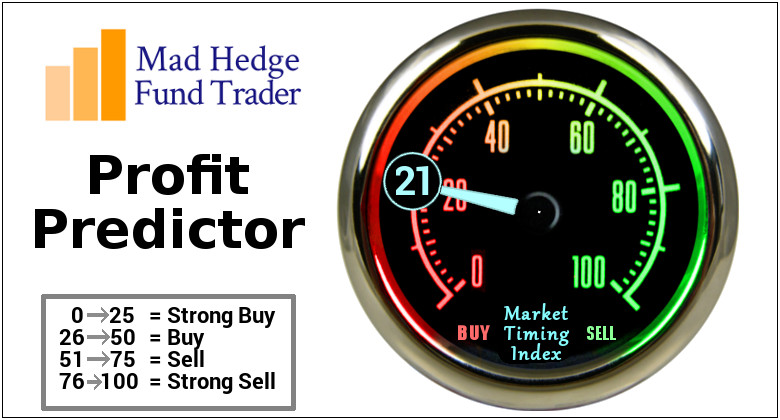
(HOW MY MAD HEDGE AI MARKET TIMING ALGORITHM WORKS)

https://madhedgefundtrader.com/wp-content/uploads/2019/05/cropped-mad-hedge-logo-transparent-192x192_f9578834168ba24df3eb53916a12c882.png 0 0 april@madhedgefundtrader.com https://madhedgefundtrader.com/wp-content/uploads/2019/05/cropped-mad-hedge-logo-transparent-192x192_f9578834168ba24df3eb53916a12c882.png april@madhedgefundtrader.com2024-12-27 09:04:392024-12-27 10:16:42December 27, 2024
april@madhedgefundtrader.com

December 26, 2024

Biotech Letter

Mad Hedge Biotech and Healthcare Letter
December 26, 2024
Fiat Lux


Featured Trade:

(PHASE 2 OR NOT PHASE 2: THAT'S NOT EVEN A QUESTION IN 2025)

(LLY), (NVO)

https://madhedgefundtrader.com/wp-content/uploads/2019/05/cropped-mad-hedge-logo-transparent-192x192_f9578834168ba24df3eb53916a12c882.png 0 0 april@madhedgefundtrader.com https://madhedgefundtrader.com/wp-content/uploads/2019/05/cropped-mad-hedge-logo-transparent-192x192_f9578834168ba24df3eb53916a12c882.png april@madhedgefundtrader.com2024-12-26 12:02:412024-12-26 12:04:52December 26, 2024
april@madhedgefundtrader.com

Phase 2 Or Not Phase 2: That's Not Even A Question In 2025

Biotech Letter

I had dinner with a veteran biotech investor at San Francisco's Waterbar earlier this month, watching the Bay Bridge lights while discussing what's coming for biotech in 2025.

"The game is changing," he said, picking at his salmon. "It's not about platform promises anymore. Show me the Phase 2 data, or don't show up at all."

He's nailed what I've been seeing in my recent travels through the biotech corridors of Boston, San Diego, and Basel. The days of throwing money at shiny new platforms are ending.

That means that by 2025, we'll see venture capital concentrate in fewer but larger deals, especially in companies with solid Phase 2 data.

Let me break down what this means for our portfolio next year. First, North America will dominate in advanced biologics and AI-driven drug discovery. I've toured enough labs recently to see that our capabilities in these areas are leaving others in the dust.

Europe's doubling down on sustainable manufacturing and rare diseases - smart move given their regulatory environment. Asia? They're positioning to own generics and biologics manufacturing, with India making particularly interesting moves in antibody-drug conjugates.

The money's following these regional specialties. If you're investing in biotech companies that don't align with their region's strengths, you might find yourself waiting longer for returns than a Red Sox fan waiting for another World Series.

My contacts in several major VC firms confirm they're already adjusting their 2025 strategies around these regional strengths.

Here's what's really interesting: obesity and GLP-1 drugs are the exception to every rule. After watching Eli Lilly (LLY) and Novo Nordisk's (NVO) recent success, everyone wants a piece of this action.

Even early-stage obesity plays are attracting serious capital, bucking the trend toward late-stage investments.

But remember this about 2025 - being picky about Phase 2 data isn't just smart, it's survival. We're heading into a market where strong clinical validation will matter more than ever.

I've seen enough biotech cycles to know that when the market gets selective, you want to be where the data is solid.

The numbers back this up. Looking at the trends, Phase 2 companies have consistently captured the highest deal sizes, except for that brief period in 2023 when obesity deals sent Phase 1 valuations through the roof.

By 2025, expect this preference for Phase 2 assets to become even more pronounced. Phase 3 investments have been declining - dropping from $4.2 billion in 2021 to $1.7 billion in 2024 - partly because companies with strong Phase 2 data are getting snatched up through partnerships or acquisitions before they even get to Phase 3.

Speaking of partnerships, watch Big Pharma's moves carefully in 2025. They're increasingly hungry for de-risked assets, and strong Phase 2 data is their favorite meal.

I had lunch with a Big Pharma exec last week who told me they've completely restructured their BD team to focus on Phase 2 assets in their regional sweet spots.

As for AI platforms? They'll still get funded - companies like Xaira and Generate:Biomedicines are proving that. But by 2025, they'll need to show more than just fancy algorithms. The market's going to demand real clinical validation.

I recently visited an AI-driven drug discovery company where the CEO proudly showed me their latest neural network. "That's great," I told him, "but show me your clinical data." The silence was deafening.

So, what’s the play here? Well, I'm keeping my own biotech portfolio focused on companies with strong Phase 2 assets heading into 2025, especially in regional sweet spots.

And yes, I've got a position in the obesity space - sometimes a trend is too strong to ignore, even for an old contrarian like me.

One final thought: keep an eye on those time gaps between funding rounds. They're getting longer, and by 2025, companies that don't fit neatly into regional specialties or lack solid clinical data might find themselves in the financial equivalent of a Phase 2 trial that never ends.

Now, if you'll excuse me, I've got a call with a German biotech CEO about their sustainable manufacturing process. These regional specialties aren't going to research themselves.


https://madhedgefundtrader.com/wp-content/uploads/2019/05/cropped-mad-hedge-logo-transparent-192x192_f9578834168ba24df3eb53916a12c882.png 0 0 april@madhedgefundtrader.com https://madhedgefundtrader.com/wp-content/uploads/2019/05/cropped-mad-hedge-logo-transparent-192x192_f9578834168ba24df3eb53916a12c882.png april@madhedgefundtrader.com2024-12-26 12:00:482024-12-27 08:49:18Phase 2 Or Not Phase 2: That's Not Even A Question In 2025
april@madhedgefundtrader.com

December 26, 2024

Diary, Newsletter, Summary

Global Market Comments
December 26, 2024
Fiat Lux


SPECIAL ISSUE ABOUT THE FAR FUTURE

Featured Trade:
(PEAKING INTO THE FUTURE WITH RAY KURZWEIL),
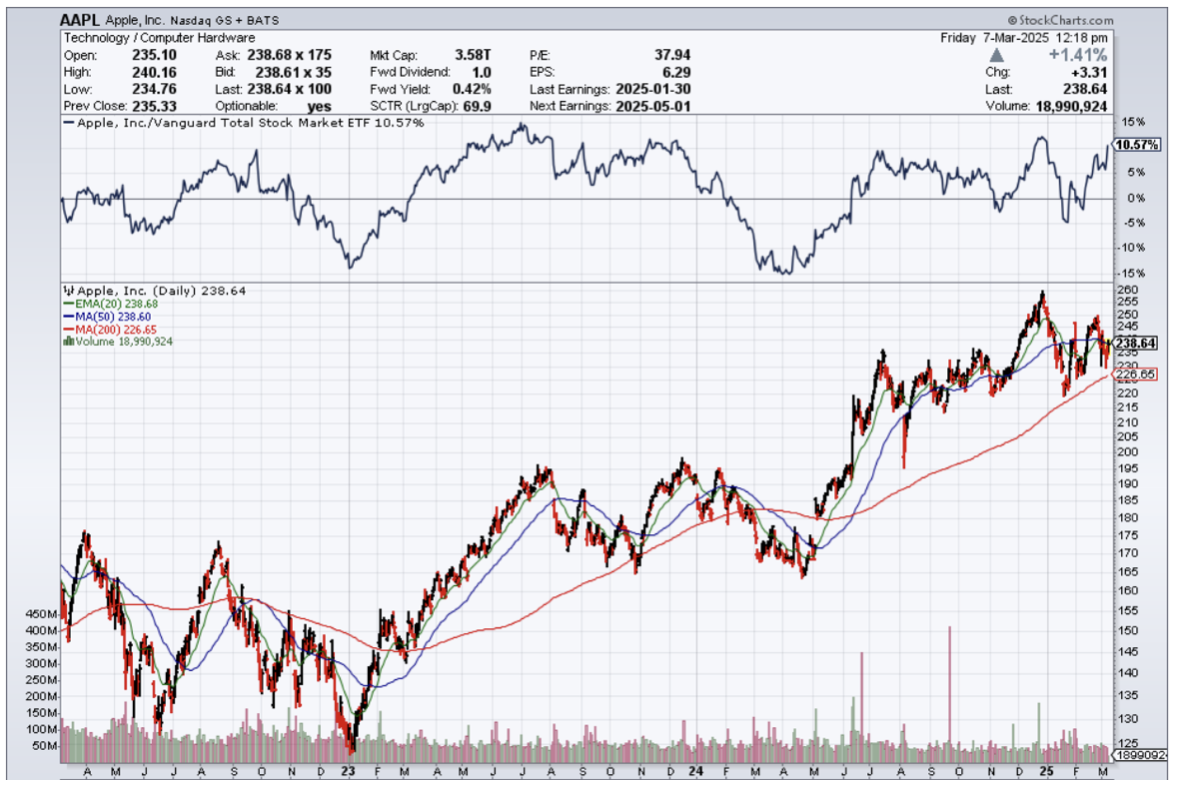
(GOOG), (INTC), (AAPL), (TXN)

https://madhedgefundtrader.com/wp-content/uploads/2019/05/cropped-mad-hedge-logo-transparent-192x192_f9578834168ba24df3eb53916a12c882.png 0 0 april@madhedgefundtrader.com https://madhedgefundtrader.com/wp-content/uploads/2019/05/cropped-mad-hedge-logo-transparent-192x192_f9578834168ba24df3eb53916a12c882.png april@madhedgefundtrader.com2024-12-26 09:04:192024-12-26 10:02:24December 26, 2024
april@madhedgefundtrader.com

December 24, 2024

Biotech Letter

Mad Hedge Biotech and Healthcare Letter
December 24, 2024
Fiat Lux


Featured Trade:

(THE LAB RESULTS ARE IN)

(GILD), (TSLA), (WVE), (EDIT), (CRSP), (LLY), (NVO), (WMT), (CVS), (CCCC), (RHHBY)

https://madhedgefundtrader.com/wp-content/uploads/2019/05/cropped-mad-hedge-logo-transparent-192x192_f9578834168ba24df3eb53916a12c882.png 0 0 april@madhedgefundtrader.com https://madhedgefundtrader.com/wp-content/uploads/2019/05/cropped-mad-hedge-logo-transparent-192x192_f9578834168ba24df3eb53916a12c882.png april@madhedgefundtrader.com2024-12-24 12:02:372024-12-24 12:26:21December 24, 2024
april@madhedgefundtrader.com

The Lab Results Are In

Biotech Letter

I found myself gridlocked in Bay Area traffic a few days ago, inching past Gilead's (GILD) sprawling Foster City headquarters, when my phone lit up with a call from an old friend at Goldman.

“Alright, tell me—what’s the real story with biotech this year?” she asked, her tone hovering somewhere between curiosity and exasperation. “Half my portfolio feels like a masterstroke, the other half... well, let’s just say it’s testing my patience.”

As I watched a Tesla (TSLA) weave through traffic like it was auditioning for a Fast & Furious reboot, I smiled.

Biotech has always been a bit of a high-stakes chess game—brilliance in one corner, chaos in another, and always a few surprises lurking behind the next move.

“Let me break it down for you,” I said, steering the conversation as carefully as I did my car through the bumper-to-bumper maze.

First, the winners are crushing it, and I mean crushing it. Gilead (GILD) finally cracked the code on HIV treatment, developing what's essentially a vaccine that doesn't require popping pills like they're Tic Tacs.

My contacts in clinical development tell me the Phase 3 data in cisgender women is nothing short of spectacular. With a $6 billion annual market potential by 2028, this isn't just another incremental advance - it's the kind of breakthrough that makes everyone in biotech salivate.

Then there's Wave Life Sciences (WVE) and their RNA editing technology. Remember when we thought CRISPR was the only game in town? Well, Wave just showed us there's more than one way to edit a gene.

Their liver-targeting therapy is the first successful RNA editing in humans - think of it as spell-check for your DNA, but reversible. The market's currently at $1.1 billion, but with 35% CAGR through 2030, this train is just leaving the station.

Speaking of trains leaving stations, molecular glue developers like C4 Therapeutics (CCCC) are watching Big Pharma back up the Brink's truck.

We're talking $8 billion in licensing deals this year alone. After all, when Roche (RHHBY) drops $300 million upfront - not milestone payments, mind you, but cold hard cash - you know they've seen something special in the data room.

But here's where it gets interesting, and I had to pull over at this point in the conversation because my friend wasn't going to like what came next.

CRISPR stocks? Down 20%. Editas (EDIT) and CRISPR Therapeutics (CRSP) are learning that revolutionary science doesn't always translate to revolutionary returns.

My friend Janet at the Fed might be talking about higher rates, but these companies are bleeding cash faster than a Silicon Valley startup's WeWork budget.

The obesity market? Unless your name is Eli Lilly (LLY) or Novo Nordisk (NVO), you're probably not having a great time.

Only three startups cleared $100 million in funding this year. In biotech terms, that's like trying to build a house with pocket change.

The global market's sitting at $4.1 billion, but it's more crowded than a San Francisco coffee shop during a tech conference.

And don't get me started on Walmart (WMT) and CVS (CVS) trying to play doctor. They thought they could disrupt traditional healthcare with their “get your physical next to the garden tools” model.

The result? A combined loss of $250 million and a wave of clinic closures.

The lesson here is clear: just because you can sell lightbulbs and Band-Aids in the same aisle doesn’t mean you should try to diagnose strep throat next to the automotive department.

A kid in a modded Subaru WRX cut me off as I wrapped up the call, but I left my friend with this: In biotech, timing is everything.

Gilead and Wave are showing us that patience pays off when the science is solid. Meanwhile, CRISPR stocks remind us that even the most promising technology needs good timing and deep pockets.

So, watch those clinical trial results like a hawk, and keep an eye on where the venture money's flowing.

But most importantly, remember what my old mentor used to say: "In biotech, you're not just betting on the science - you're betting on the scientist, the CFO, and sometimes, just sometimes, on whether people are ready to get their flu shot next to the garden center."

Now, where's that highway patrol when you need them?


https://madhedgefundtrader.com/wp-content/uploads/2019/05/cropped-mad-hedge-logo-transparent-192x192_f9578834168ba24df3eb53916a12c882.png 0 0 april@madhedgefundtrader.com https://madhedgefundtrader.com/wp-content/uploads/2019/05/cropped-mad-hedge-logo-transparent-192x192_f9578834168ba24df3eb53916a12c882.png april@madhedgefundtrader.com2024-12-24 12:00:482024-12-24 12:26:07The Lab Results Are In
april@madhedgefundtrader.com

December 24, 2024

Diary, Newsletter, Summary

Global Market Comments
December 24, 2024
Fiat Lux


Featured Trade:

(THE NEXT COMMODITY SUPER CYCLE HAS ALREADY STARTED),
(COPX), (GLD), (FCX), (BHP), (RIO), (SIL),
(PPLT), (PALL), (GOLD), (ECH), (EWZ), (IDX)

https://madhedgefundtrader.com/wp-content/uploads/2019/05/cropped-mad-hedge-logo-transparent-192x192_f9578834168ba24df3eb53916a12c882.png 0 0 april@madhedgefundtrader.com https://madhedgefundtrader.com/wp-content/uploads/2019/05/cropped-mad-hedge-logo-transparent-192x192_f9578834168ba24df3eb53916a12c882.png april@madhedgefundtrader.com2024-12-24 09:04:022024-12-24 09:59:07December 24, 2024
Douglas Davenport

RBC's Global Insight 2025 Outlook: Navigating a World Transformed by AI

Mad Hedge AI

Toronto, Canada - RBC, a leading global financial institution, has released its highly anticipated Global Insight 2025 Outlook report, providing a comprehensive analysis of the economic, financial, and geopolitical trends that are expected to shape the world in the coming years. The report highlights the profound impact of artificial intelligence (AI) across various sectors, emphasizing the need for investors and businesses to adapt to this rapidly evolving landscape.

AI: The Defining Technology of Our Time

RBC's report identifies AI as the most transformative technology of the 21st century, with the potential to revolutionize industries, redefine business models, and reshape the global economy. The report emphasizes that AI is no longer a futuristic concept, but a present-day reality that is already impacting our lives in numerous ways.

"AI is not just a technological advancement; it's a fundamental shift that is reshaping the world as we know it," says Helen Zhang, Head of Global Insight at RBC. "Its impact will be felt across all sectors, from healthcare and finance to manufacturing and transportation. Businesses and investors who fail to grasp the implications of AI risk being left behind."

AI's Impact on the Global Economy

RBC's report predicts that AI will be a key driver of economic growth in the coming years, boosting productivity, creating new jobs, and unlocking new opportunities. The report estimates that AI could contribute up to $15.7 trillion to the global economy by 2030.

However, the report also acknowledges the potential challenges associated with AI, including job displacement, ethical concerns, and the risk of widening inequality. RBC stresses the importance of responsible AI development and deployment, ensuring that its benefits are shared broadly and its risks are mitigated.

AI and the Future of Work

The report delves into the impact of AI on the workforce, acknowledging that while AI will create new jobs, it will also displace existing ones. RBC emphasizes the need for workers to adapt to this changing landscape by acquiring new skills and embracing lifelong learning.

"The future of work will be shaped by AI, and those who are prepared to adapt will thrive," says Zhang. "We need to invest in education and training programs that equip workers with the skills they need to succeed in an AI-powered world."

AI in Key Sectors

RBC's report provides a detailed analysis of AI's impact on various sectors, including:

  • Healthcare: AI is transforming healthcare by enabling earlier disease detection, personalized treatments, and more efficient drug discovery.
  • Finance: AI is being used to automate tasks, detect fraud, and provide personalized financial advice.
  • Manufacturing: AI is optimizing production processes, improving quality control, and enabling predictive maintenance.
  • Transportation: AI is powering autonomous vehicles, optimizing logistics, and improving traffic flow.

Investing in the Age of AI

RBC's report provides guidance for investors on how to navigate the AI landscape, highlighting the opportunities and risks associated with this transformative technology. The report identifies key investment themes, including:

  • AI infrastructure: Companies that provide the hardware and software necessary for AI development and deployment.
  • AI applications: Companies that develop and apply AI solutions across various industries.
  • AI enablers: Companies that provide services and technologies that support AI development and adoption.

RBC's Commitment to AI

RBC is committed to harnessing the power of AI to enhance its products and services, improve its operations, and create value for its clients. The bank has made significant investments in AI research and development, and is actively exploring new ways to leverage AI across its business.

"We believe that AI has the potential to transform the financial industry, and we are committed to being at the forefront of this transformation," says Zhang. "We are investing in AI to provide our clients with more personalized and innovative solutions, and to make our operations more efficient and secure."

Conclusion

RBC's Global Insight 2025 Outlook provides a comprehensive and insightful analysis of the trends that will shape the world in the coming years. The report highlights the transformative potential of AI, while also acknowledging the challenges and risks associated with this technology. RBC's commitment to responsible AI development and deployment, coupled with its investments in AI research and development, position the bank as a leader in the AI revolution.

https://madhedgefundtrader.com/wp-content/uploads/2019/05/cropped-mad-hedge-logo-transparent-192x192_f9578834168ba24df3eb53916a12c882.png 0 0 Douglas Davenport https://madhedgefundtrader.com/wp-content/uploads/2019/05/cropped-mad-hedge-logo-transparent-192x192_f9578834168ba24df3eb53916a12c882.png Douglas Davenport2024-12-23 15:18:022024-12-23 15:18:02RBC's Global Insight 2025 Outlook: Navigating a World Transformed by AI
Page 190 of 2204«‹188189190191192›»

tastytrade, Inc. (“tastytrade”) has entered into a Marketing Agreement with Mad Hedge Fund Trader (“Marketing Agent”) whereby tastytrade pays compensation to Marketing Agent to recommend tastytrade’s brokerage services. The existence of this Marketing Agreement should not be deemed as an endorsement or recommendation of Marketing Agent by tastytrade and/or any of its affiliated companies. Neither tastytrade nor any of its affiliated companies is responsible for the privacy practices of Marketing Agent or this website. tastytrade does not warrant the accuracy or content of the products or services offered by Marketing Agent or this website. Marketing Agent is independent and is not an affiliate of tastytrade. 

Legal Disclaimer

There is a very high degree of risk involved in trading. Past results are not indicative of future returns. MadHedgeFundTrader.com and all individuals affiliated with this site assume no responsibilities for your trading and investment results. The indicators, strategies, columns, articles and all other features are for educational purposes only and should not be construed as investment advice. Information for futures trading observations are obtained from sources believed to be reliable, but we do not warrant its completeness or accuracy, or warrant any results from the use of the information. Your use of the trading observations is entirely at your own risk and it is your sole responsibility to evaluate the accuracy, completeness and usefulness of the information. You must assess the risk of any trade with your broker and make your own independent decisions regarding any securities mentioned herein. Affiliates of MadHedgeFundTrader.com may have a position or effect transactions in the securities described herein (or options thereon) and/or otherwise employ trading strategies that may be consistent or inconsistent with the provided strategies.

Copyright © 2026. Mad Hedge Fund Trader. All Rights Reserved. support@madhedgefundtrader.com
Scroll to top