Who was the top paid state employee in California last year? The governor? The Chief Justice of the Supreme Court? How about the leader of the Senate?
Nope. It was a prison psychiatrist who took home an eye popping $838,706, most of it in overtime. I love it! The state drives people insane by sending them to jail, then tries to cure them with triple overtime. It is a wealth destruction mechanism that only a government could come up with.
These are among the revelations uncovered when state controller, John Chang, listed the salaries of all 256,222 state workers on a government website. Only the names were missing. In fact, over 500 state workers earned more than $250,000 a year, vastly more than they could take in with private sector jobs. At least nine made more than $500,000, the top ten taking in $5.8 million.
The data was made public after a huge outcry that followed the disclosure of the salaries of town officials in the small Los Angeles municipality, Bell, which topped $700,000. Those generous paydays resulted in criminal prosecutions. Maybe prosecutors should be casting a wider net?
Thanks, Sacramento!
https://www.madhedgefundtrader.com/wp-content/uploads/2013/07/Girl-Money.jpg346346Mad Hedge Fund Traderhttps://madhedgefundtrader.com/wp-content/uploads/2019/05/cropped-mad-hedge-logo-transparent-192x192_f9578834168ba24df3eb53916a12c882.pngMad Hedge Fund Trader2013-08-15 01:04:442013-08-15 01:04:44California Money Down the Drain?
I often get asked why I never put out ?BUY? recommendations on consumer discretionary stocks. I promptly send them in search of the latest consumer spending figures at the Bureau of Economic Analysis, which do not paint a pretty picture (click following link ?http://www.bea.gov/newsreleases/national/pi/pinewsrelease.htm).
Since 2008, quarterly spending has come in at a scant 0.5%, the lowest figures since the Great Depression. You can blame deleveraging by the individual. While the government is telling us to spend more to stimulate the economy, we are in fact doing the opposite to put away more cash for a rainy day. They are also taking out an insurance policy against a future financial crash, which could come as early as next year.
You can find this in consumer debt, which saw a zenith of 130% of disposable income as recently as 2007. Today we are back down to 115%, possibly on our way to 70%, the 1970-2000 average. This is also reflected in the savings rate, which has risen from 1.2% in 2005 to 4.9% today, and may hit the long-term average of 8%.
If anything, these numbers are about to worsen dramatically as 80 million baby boomers retire. The over 65 crowd is not exactly known for the big spending, low saving ways, excluding myself.
I always tell people that being a former scientist and math major, I am a numbers guy. Just cut the BS, the spin, the apple and orange comparisons, and the ?independently? financed research, and give me the damn numbers. I can reach my own conclusions, even if you don?t like them.
The figures above are a major part of my own long term forecast for US GDP growth rate of 2.0%-2.5%. Decimating the middle class by shipping 25 million jobs to China assures decades long decline of standards of living. Should you expect anything more? Walmart (WMT) says that it now has a major problem in that its low-end customers are literally running out of money. This is not good for the industries specialized in this area.
Those looking for fodder that the US is coming down with the ?Japan Syndrome? and the two decades of lost economic growth this entails will find fertile ground here. US consumer spending still accounts for 70% of GDP growth. In Japan, it peaked in the late eighties at 20%. So the loss of the consumer will be far more damaging here than it is in the country that is suffering its third decade of flat economic performance.
In stock market terms, this means we may get a little more upside by the end of the year, possibly 70 points in the (SPX), but not much more. Off to a raging bull market we are not. The nimble may be able to profit from this, but for most it will be a snore.
Wake Me Up When the Consumer Returns
https://www.madhedgefundtrader.com/wp-content/uploads/2013/08/Sleep-at-Computer.jpg312467Mad Hedge Fund Traderhttps://madhedgefundtrader.com/wp-content/uploads/2019/05/cropped-mad-hedge-logo-transparent-192x192_f9578834168ba24df3eb53916a12c882.pngMad Hedge Fund Trader2013-08-15 01:03:552013-08-15 01:03:55The Death of the Consumer
?A house can be a nightmare if the buyer?s eyes are bigger than his wallet and if a lender ?often protected by a government guarantee?facilitates his fantasy,? said Warren Buffet.
https://www.madhedgefundtrader.com/wp-content/uploads/2013/08/House-on-Fire.jpg262390Mad Hedge Fund Traderhttps://madhedgefundtrader.com/wp-content/uploads/2019/05/cropped-mad-hedge-logo-transparent-192x192_f9578834168ba24df3eb53916a12c882.pngMad Hedge Fund Trader2013-08-15 01:02:322013-08-15 01:02:32August 15, 2013 - Quote of the Day
As a potentially profitable opportunity presents itself, John will send you an alert with specific trade information as to what should be bought, when to buy it, and at what price. Read more
https://www.madhedgefundtrader.com/wp-content/uploads/2013/03/Japanese-Girl-e1414074431163.jpg280400Mad Hedge Fund Traderhttps://madhedgefundtrader.com/wp-content/uploads/2019/05/cropped-mad-hedge-logo-transparent-192x192_f9578834168ba24df3eb53916a12c882.pngMad Hedge Fund Trader2013-08-14 10:02:082013-08-14 10:02:08Follow Up to Trade Alert - (FXY) August 14, 2013
As a potentially profitable opportunity presents itself, John will send you an alert with specific trade information as to what should be bought, when to buy it, and at what price. This is your chance to ?look over? John Thomas? shoulder as he gives you unparalleled insight on major world financial trends BEFORE they happen.Read more
https://www.madhedgefundtrader.com/wp-content/uploads/2011/10/slider-05-trader-alert.jpg316600Mad Hedge Fund Traderhttps://madhedgefundtrader.com/wp-content/uploads/2019/05/cropped-mad-hedge-logo-transparent-192x192_f9578834168ba24df3eb53916a12c882.pngMad Hedge Fund Trader2013-08-14 09:06:082013-08-14 09:06:08Trade Alert - (FXY) August 14, 2013
Featured Trade: (END OF THE COMMODITY SUPERCYCLE, OR NOT?) (CU), (DBA), (USO), (FCX), (BHP), (ABX), ?(RIO), (JPM), (GS), (ECH), (EWZ), (IDX) (BRING BACK THE SMOKE FILLED ROOMS), (SPX), (TBT)
First Trust ISE Global Copper Index (CU)
PowerShares DB Agriculture (DBA)
United States Oil (USO)
Freeport-McMoRan Copper & Gold Inc. (FCX)
BHP Billiton Limited (BHP)
Barrick Gold Corporation (ABX)
Rio Tinto plc (RIO)
JPMorgan Chase & Co. (JPM)
The Goldman Sachs Group, Inc. (GS)
iShares MSCI Chile Capped (ECH)
iShares MSCI Brazil Capped (EWZ)
Market Vectors Indonesia Index ETF (IDX)
S&P 500 Index (SPX)
ProShares UltraShort 20+ Year Treasury (TBT)
https://madhedgefundtrader.com/wp-content/uploads/2019/05/cropped-mad-hedge-logo-transparent-192x192_f9578834168ba24df3eb53916a12c882.png00Mad Hedge Fund Traderhttps://madhedgefundtrader.com/wp-content/uploads/2019/05/cropped-mad-hedge-logo-transparent-192x192_f9578834168ba24df3eb53916a12c882.pngMad Hedge Fund Trader2013-08-14 01:05:442013-08-14 01:05:44August 14, 2013
In days of old, when congressional impasses presented themselves, the Speaker of the House, rosy-cheeked Tip O?Neil, would meet his counterpart in the Senate for a night of poker. Several bottles of Scotch later, a deal would get struck, and the two would be photographed together shaking hands the next morning, talking about the good of the country. The process moved on.
That doesn?t happen anymore. Speaker John Boehner is new at the job, and he is learning through trial and error, mostly the latter. He is up against a world-class constitutional law professor. I can?t imagine Boehner playing cards with Harry Reid, Obama, or anyone.
Even if he does come to an agreement, it is unlikely that he can make it stick by getting his own party to follow him. Many of the new junior house members are from the Tea Party, whose understanding of economics, financial markets, and the law making process is shaky at best. In another six months they have to start campaigning again, going to their supporters and financial backers with a list of what they have achieved. It is a very short list.
If Tip O?Neal faced recalcitrant members of his own party, he would threaten a cut off in funding of all pork barrel projects in their district, banish them to the least popular committees, and kill any bill they brought to the floor. But at least if Tip cut a deal, you knew he could deliver the votes. Today, rebellious republicans won?t even take a call from Boehner, who view him with almost as much hostility as they do Obama.
What we are seeing here is sausage making in public, in all its odiferous ugliness. It is negotiation out in the open, never a good idea, especially when both sides believe the other is doing so in bad faith.
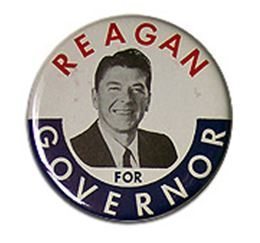
All of this leads us to bemoan the passing of the Reagan republicans, who you could work with and get a few laughs along the way. It also means that the volatility that I promised you will be arriving by the boatload in coming months. Watch this space.
https://www.madhedgefundtrader.com/wp-content/uploads/2013/08/Ronald-Reagan-button.jpg243260Mad Hedge Fund Traderhttps://madhedgefundtrader.com/wp-content/uploads/2019/05/cropped-mad-hedge-logo-transparent-192x192_f9578834168ba24df3eb53916a12c882.pngMad Hedge Fund Trader2013-08-14 01:03:562013-08-14 01:03:56Bring Back the Smoke Filled Rooms
?Bankers will get away with whatever they can get away with?Our banking system is socially useless,? said an oversight body in the United Kingdom.
https://www.madhedgefundtrader.com/wp-content/uploads/2013/08/Man-Money.jpg284269Mad Hedge Fund Traderhttps://madhedgefundtrader.com/wp-content/uploads/2019/05/cropped-mad-hedge-logo-transparent-192x192_f9578834168ba24df3eb53916a12c882.pngMad Hedge Fund Trader2013-08-14 01:02:512013-08-14 01:02:51August 14, 2013 - Quote of the Day
Featured Trade: (THE BOND CRASH HAS ONLY JUST STARTED), ($TNX), (TLT), (TBT), (INDIA VS. CHINA), (FXI), (PIN), (INP), (TTM)
10-Year Treasury Note ($TNX)
iShares Barclays 20+ Year Treas Bond (TLT)
ProShares UltraShort 20+ Year Treasury (TBT)
iShares China Large-Cap (FXI)
PowerShares India (PIN)
iPath MSCI India Index ETN (INP)
Tata Motors Limited (TTM)
https://madhedgefundtrader.com/wp-content/uploads/2019/05/cropped-mad-hedge-logo-transparent-192x192_f9578834168ba24df3eb53916a12c882.png00Mad Hedge Fund Traderhttps://madhedgefundtrader.com/wp-content/uploads/2019/05/cropped-mad-hedge-logo-transparent-192x192_f9578834168ba24df3eb53916a12c882.pngMad Hedge Fund Trader2013-08-13 01:05:472013-08-13 01:05:47August 13, 2013
When I first visited Calcutta in 1976, 800,000 people were sleeping on the sidewalks, I was hauled everywhere by a very lean, barefoot rickshaw driver, and drinking the water out of a tap was tantamount to committing suicide. Some 35 years later, and the subcontinent is poised to overtake China?s white hot growth rate.
My friends at the International Monetary Fund issued a report predicting that India will grow by 6.5% this year. While the country?s total GDP is only a quarter of China?s $6 trillion, its growth could exceed that in the Middle Kingdom as early as 2014.
Many hedge funds believe that India will be the top growing major emerging market for the next 25 years, and are positioning themselves accordingly. Investors are now taking a harder look at the country ETF?s, including India (INP) and China (FXI), which have recently suffered gut churning selloffs.
India certainly has a lot of catching up to do. According to the World Bank, its per capita income is $3,275, compared to $6,800 in China and $46,400 in the US. This is with the two populations close, at 1.3 billion for China and 1.2 billion for India.
But India has a number of advantages that China lacks. To paraphrase hockey great, Wayne Gretzky, you want to aim not where the puck is, but where it?s going to be. The massive infrastructure projects that have powered much of Chinese growth for the past three decades, such as the Three Gorges dam, are missing in India. But financing and construction for huge transportation, power generation, water, and pollution control projects are underway.
A large network of private schools is boosting education levels, enabling the country to capitalize on its English language advantage. When planning the expansion of my own business, I was presented with the choice of hiring a website designer here for $60,000 a year, or in India for $5,000. That?s why booking a ticket on United Airlines or calling technical support at Dell Computer gets you someone in Bangalore.
India is also a huge winner on the demographic front, with one of the lowest ratios of social service demanding retirees in the world. China?s 30-year-old ?one child? policy is going to drive it into a wall in ten years, when the number of retirees starts to outnumber their children.
There is one more issue out there that few are talking about. The reform of the Chinese electoral process at the next People?s Congress could lead to posturing and political instability which the markets could find unsettling. India is the world?s largest democracy, and much of its current prosperity can be traced to wide ranging deregulation and modernization that took place 20 years ago.
I have been a big fan of India for a long time, and not just because they constantly help me fix my computers. In the past, I recommended Tata Motors (TTM), which has since doubled, making it one of my best, all-time single stock picks (click here for ?Take Tata Motors Out for a Spin?). On the next decent dip take a look at the Indian ETF?s (INP), (PIN), and (EPI).
Better to Own This Pyramid
Than This Pyramid
Taxi! Taxi!
https://www.madhedgefundtrader.com/wp-content/uploads/2013/08/Rickshaw.jpg338454Mad Hedge Fund Traderhttps://madhedgefundtrader.com/wp-content/uploads/2019/05/cropped-mad-hedge-logo-transparent-192x192_f9578834168ba24df3eb53916a12c882.pngMad Hedge Fund Trader2013-08-13 01:03:352013-08-13 01:03:35India vs. China
Legal Disclaimer
There is a very high degree of risk involved in trading. Past results are not indicative of future returns. MadHedgeFundTrader.com and all individuals affiliated with this site assume no responsibilities for your trading and investment results. The indicators, strategies, columns, articles and all other features are for educational purposes only and should not be construed as investment advice. Information for futures trading observations are obtained from sources believed to be reliable, but we do not warrant its completeness or accuracy, or warrant any results from the use of the information. Your use of the trading observations is entirely at your own risk and it is your sole responsibility to evaluate the accuracy, completeness and usefulness of the information. You must assess the risk of any trade with your broker and make your own independent decisions regarding any securities mentioned herein. Affiliates of MadHedgeFundTrader.com may have a position or effect transactions in the securities described herein (or options thereon) and/or otherwise employ trading strategies that may be consistent or inconsistent with the provided strategies.