Global Market Comments
February 18, 2025
Fiat Lux
Featured Trade:
(MARKET OUTLOOK FOR THE WEEK AHEAD or THE TALE OF TWO MARKETS)
(GS), (TSLA), (NVDA), (VST)


Global Market Comments
February 18, 2025
Fiat Lux
Featured Trade:
(MARKET OUTLOOK FOR THE WEEK AHEAD or THE TALE OF TWO MARKETS)
(GS), (TSLA), (NVDA), (VST)

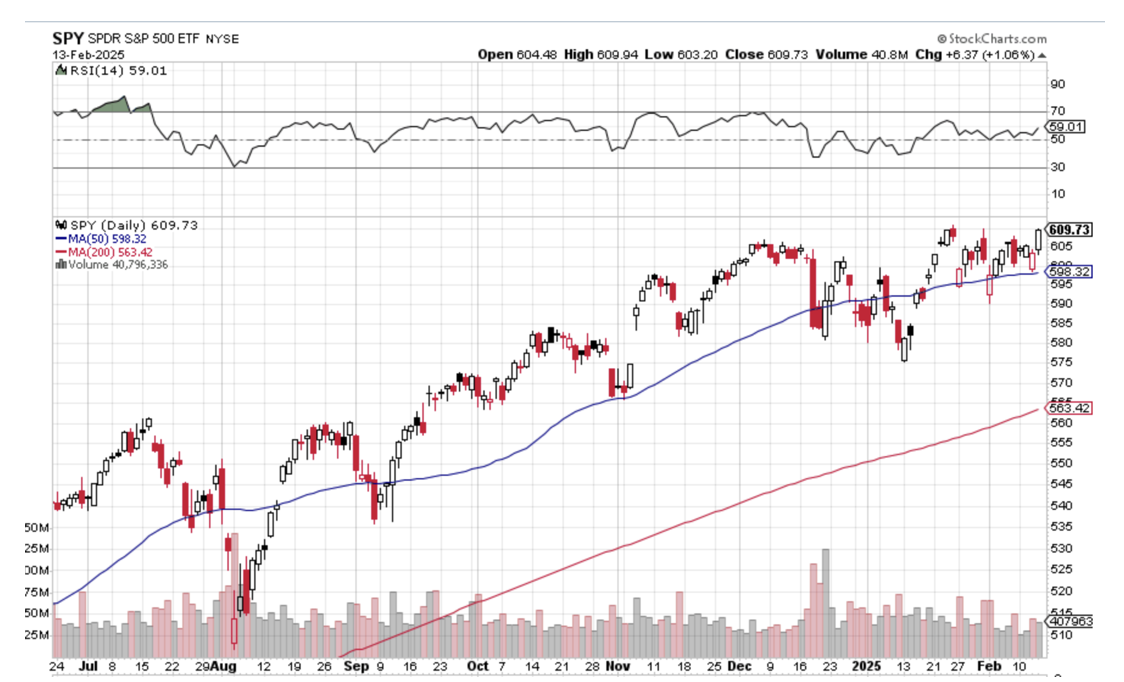
While trading one market is hard enough, two is almost more than one can bear. In fact, we have all been trading two markets since 2025 began.
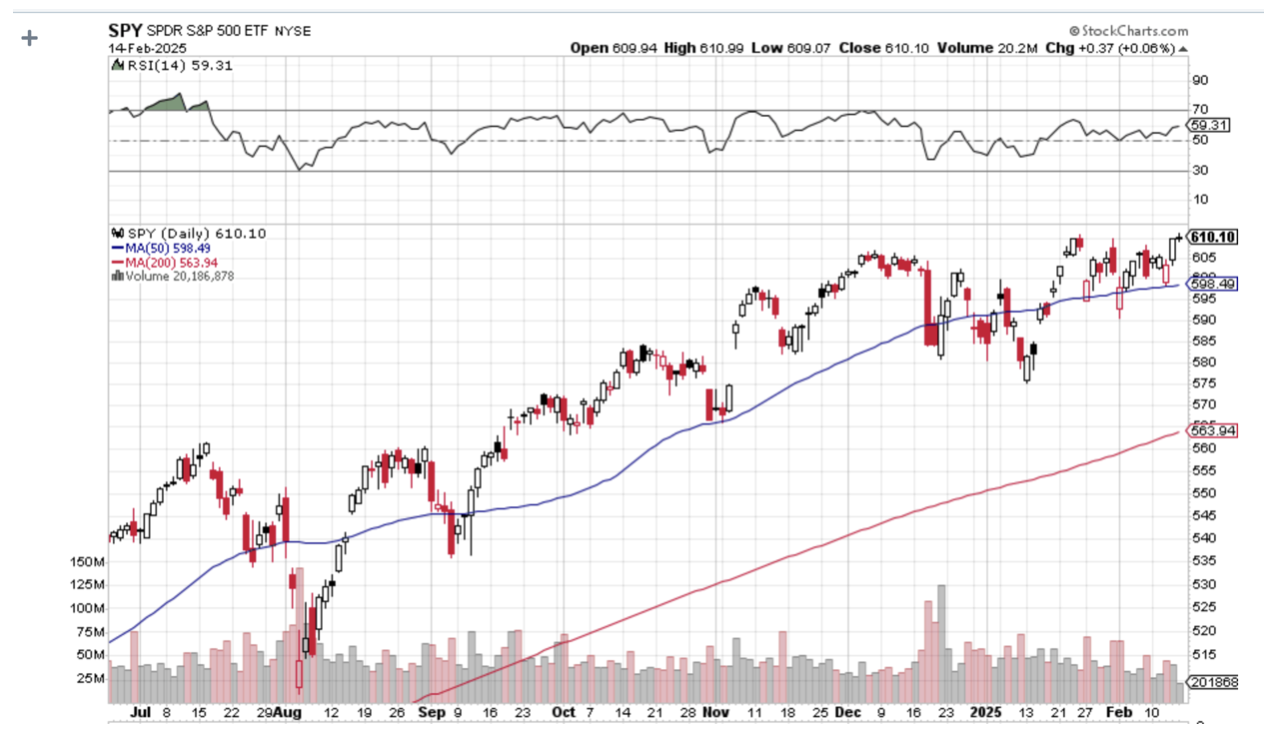
On the up days, it appears that the indexes are about to break out of a tediously narrow trading range. The market’s inability to go down is proof that it has to go up. Thursday was one of those days.
These are followed by down days, it appears that the indexes are about to break down. The market’s inability to stay up is proof that it has to go down. Wednesday was one of those days.
Up….down….up….down. Please excuse me if I get dizzy, which I shouldn’t, as I am a former combat pilot.
The market is calling Trump's bluff, rising in the face of threatened whopping great tariff increases against most of the world. So far, lots of noise, no action. The bark is worse than the bite. As I have been saying all year, ignore the noise and don’t fight the tape.
Which brings me to the price of copper.
Look at the ten-year chart of the red metal below, and you see a pretty positive formation is taking place. You have a similar set up in the chart of Freeport McMoRan, the world’s largest producer of copper.
This is in the face of huge negatives, like the failure of the Chinese economy to recover, the end of all alternative energy subsidies, the government announcing that it will no longer mint pennies, and the ongoing recession in residential real estate.
The seasoned trader in me knows that when you throw bad news on a commodity and it fails to go down, you buy the heck out of it. Is copper discounting the expansion of the grid independent of government assistance? There is more than meets the eye here.
What if the end of the Ukraine War is the big black swan of 2025? The best estimate for the cost of the reconstruction of Ukraine is $1 trillion. That would require a lot of copper, maybe a China’s worth.
It would also present major positives for the global economy. It would give us a peace dividend on the scale of the last one that started in 1991. For a start, energy prices would collapse as restrictions on the export of 10 million barrels a day of Russian oil come off. Ukraine would reclaim its position as one of the world’s largest food exporters, especially wheat and sunflower oil.
I know that Russia is close to running out of weapons. Some two-thirds of Russia’s tanks and planes have been destroyed, and they don’t have the parts to build new ones. That is forcing them to draw on military stockpiles from the 1950s.
I have first-hand knowledge of this. I learned from the Pentagon that the Russian missile fired at me on the eastern front lines failed to explode because it was 55 years old. The best estimate is that Russia will completely run out of some kinds of weapons by this summer.

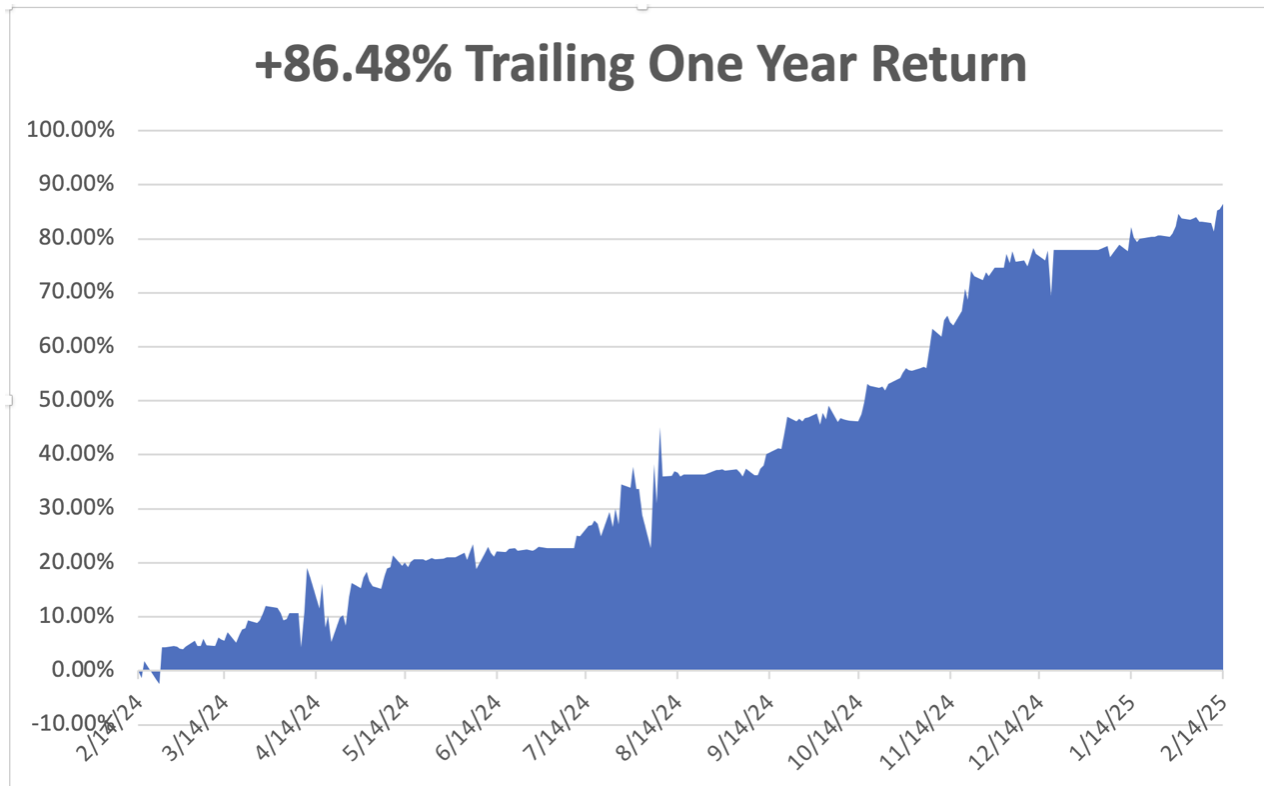
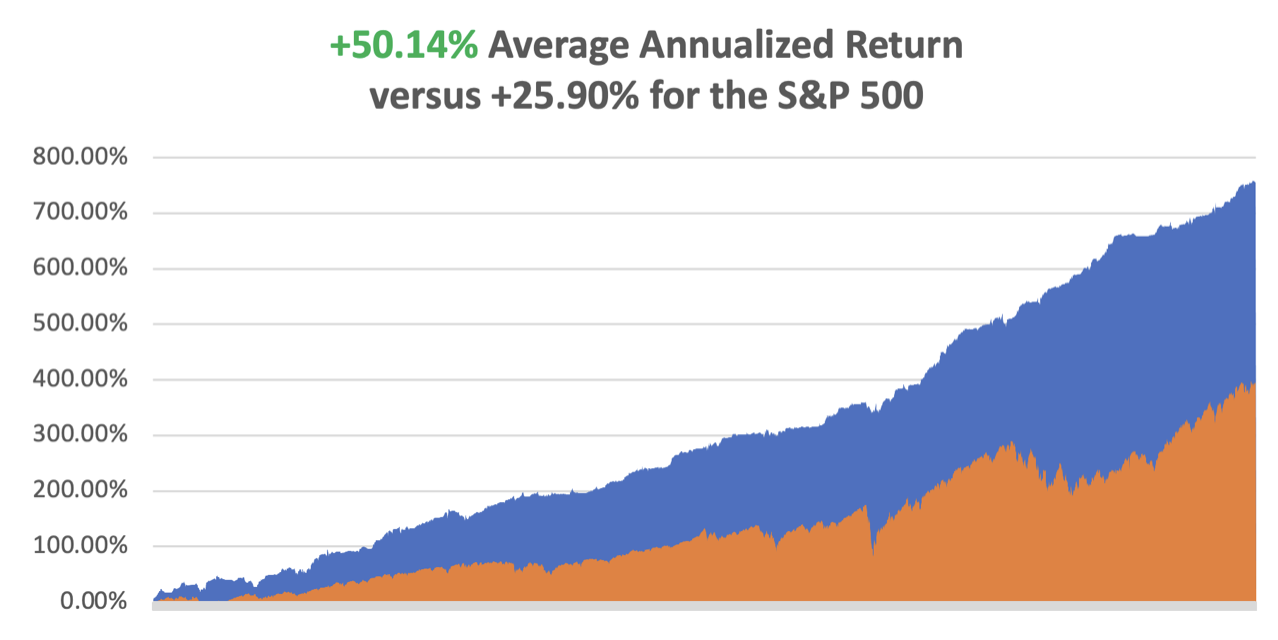
February has started with a respectable +2.73% return so far. That takes us to a year-to-date profit of +8.53% so far in 2025. My trailing one-year return stands at a spectacular +86.48% as a bad trade a year ago fell off the one-year record. That takes my average annualized return to +50.14% and my performance since inception to +759.42%.
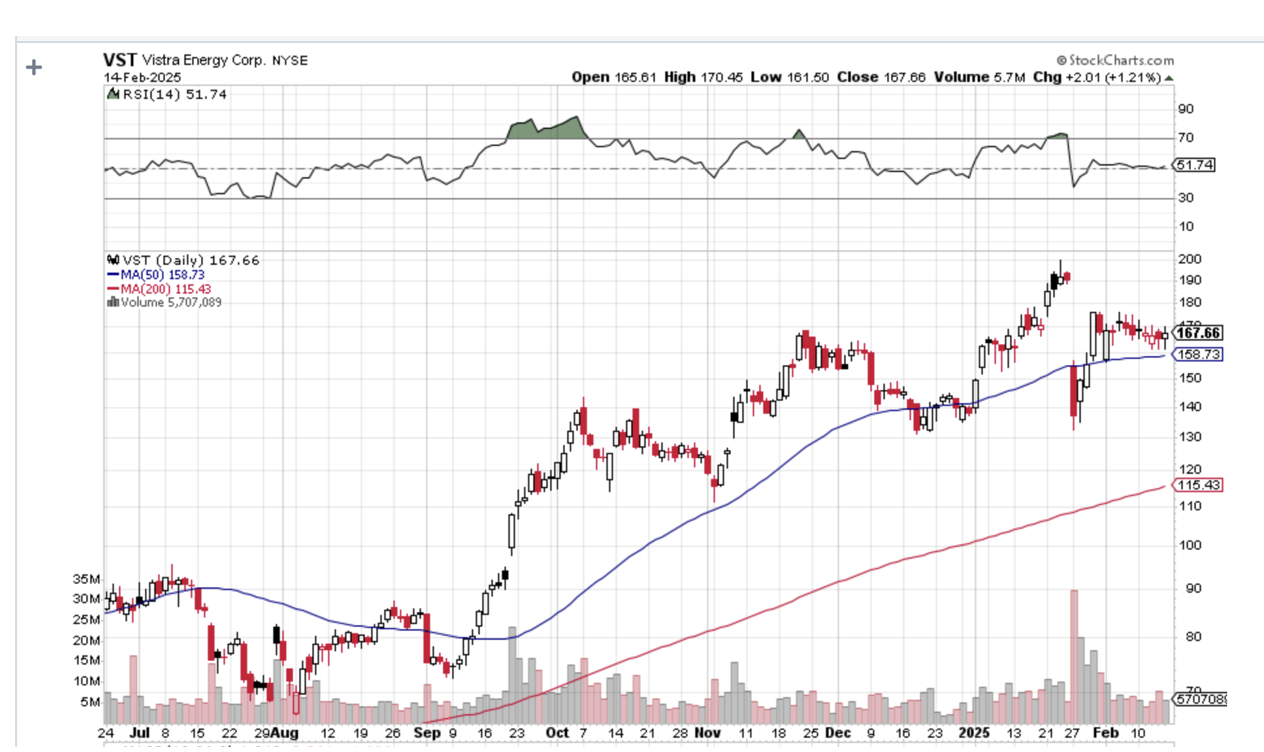
I used the brief weakness in Goldman Sachs (GS) to add a new long. I took profits on my two longs in Tesla on a bounce. That tops up our portfolio with a remaining short in (TSLA) and longs in (NVDA) and (VST). These latter positions expire in three trading days at max profit.
Some 63 of my 70 round trips, or 90%, were profitable in 2023. Some 74 of 94 trades have been profitable in 2024, and several of those losses were really break-even. That is a success rate of +78.72%.
Try beating that anywhere.
US Q4 Profits Hit Three-Year High. With reports in from nearly 70% of the S&P 500 companies as of Wednesday, fourth-quarter earnings are estimated to have risen 15.1% from a year earlier, up from an estimate of 9.6% growth at the start of January. The S&P 500 communication services sector, which includes companies such as Meta Platforms (META), is leading estimated fourth-quarter earnings gains among sectors, with year-over-year growth of 32.2%.
Core Inflation Rate Comes in Red Hot at 0.50%. Overall, advance was broad, led by shelter, food, and medicine. Shelter accounted for nearly 30% of the advance, according to the report from the Bureau of Labor Statistics out Wednesday. The so-called core CPI also climbed by more than forecast. That reflected higher prices for car insurance, airfares, and a record monthly increase in the cost of prescription drugs. It looks like no interest rate cuts for 2025.
PPI comes in Hot, reversing the gains on inflation of the past two years. The Producer Price Index, a measurement of average price changes seen by producers and manufacturers, rose 0.4% on a monthly basis and 3.5% for the 12 months ended in January. That held steady with December, which was upwardly revised to 3.5% according to Bureau of Labor Statistics data released Thursday.
US announced European Tariffs this Week, tanking stocks on Friday. Steel and metals shares are surging this morning. It’s pretty clear that markets hate all things tariff-related. Can we talk more about deregulation, which markets love? The reality is that markets don’t know how to price in Trump, swinging back and forth between euphoria one moment to Armageddon another. Best case, markets flatline. Worst case, they crash.
Gold (GLD) is headed for $3,000, my long-term target, on central bank and flight to safety buying. What’s the next target? $5,000 is the current turmoil in Washington continues. Notice that it’s the physical metal that’s moving, not the miners.
Foreign Investors Continue to Soak Up US Debt, seeking higher interest rates in an appreciating currency. Americans own 55% of the outstanding $36 trillion in US debt, while foreign investors own 24%, and the Federal Reserve 13%.
Wall Street Souring on Magnificent Seven. The market stronghold has diminished slightly, as the cohort struggles to meet ever-loftier expectations, and investors rotate into other parts of the market such as small caps. Tech titans also took a hit in late January after the emergence of Chinese startup DeepSeek raised concerns over how much spending will be needed to implement AI capabilities.
Market is Giving Up on any Interest Rate Cuts this Year, as the prospects of rising inflation from trade wars weigh on the market. Economists have warned that a wide-scale trade war could significantly raise prices, and consumers appear to be worried as well. Respondents to the University of Michigan’s consumer sentiment poll released Friday indicated they expect inflation to run at a 4.3% rate a year from now, up a full percentage point from the January reading.
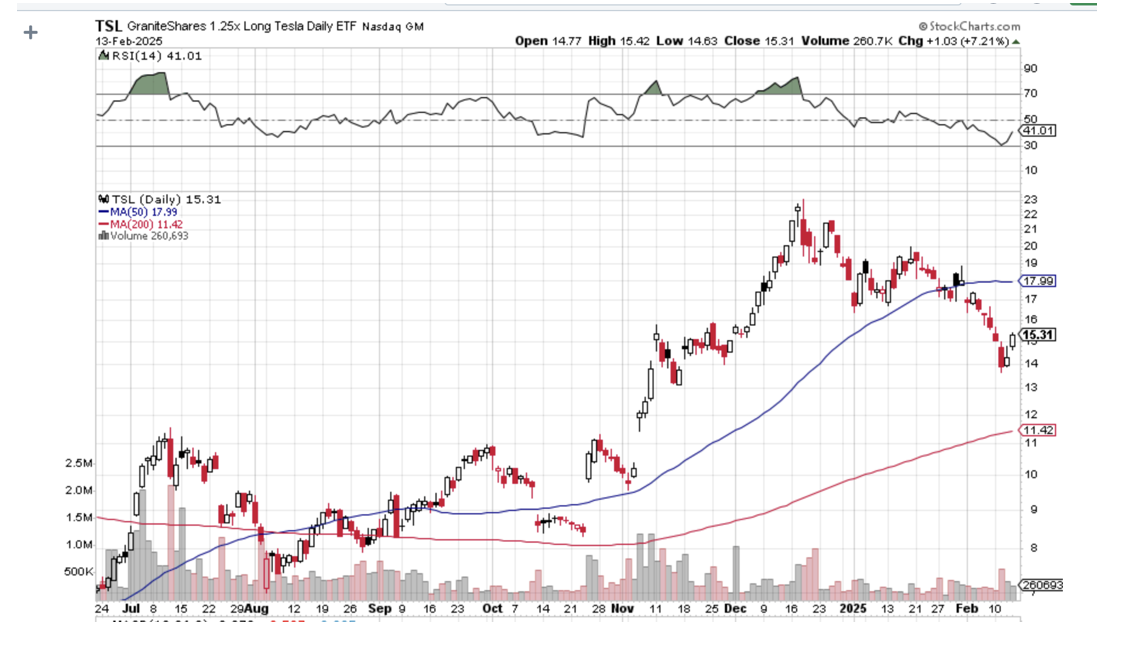
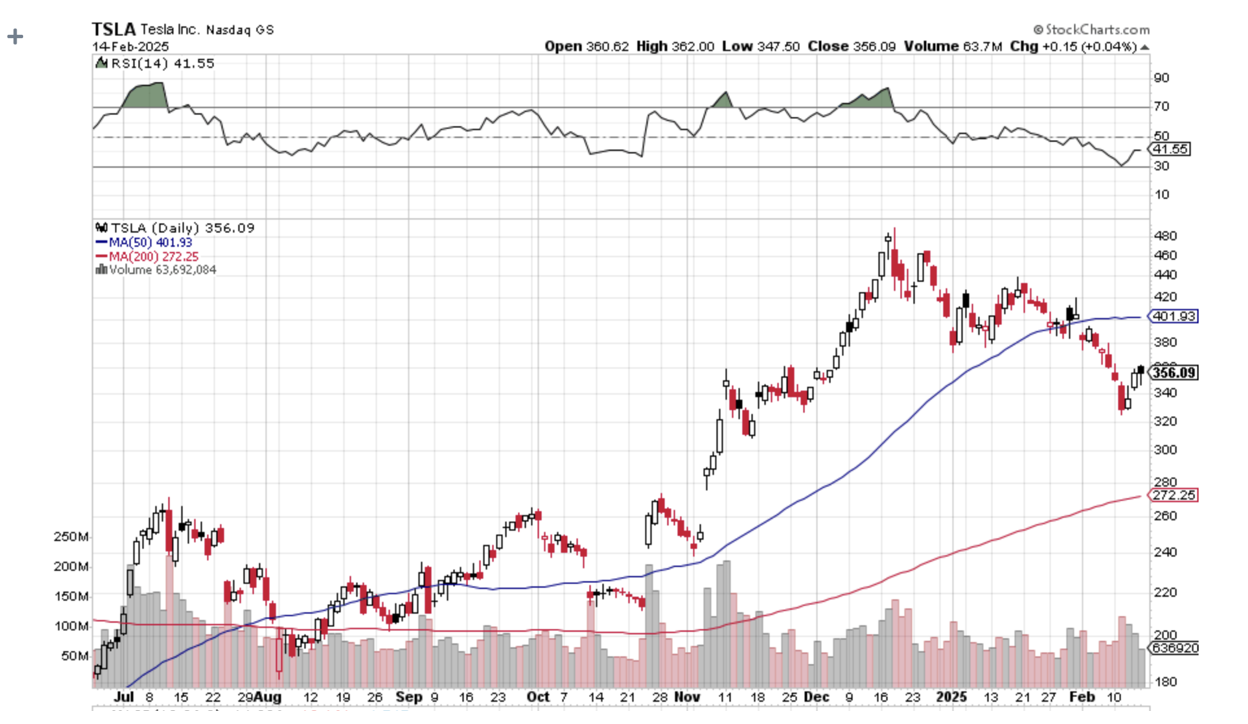
Tesla Tanks 7%, and down 34% since December after Chinese competitor BYD announces a partnership with DeepSeek. The move is expected to accelerate BYD’s move into full self-driving. Tesla sales are falling in all major markets. Call it DeepSeek hit part 2.
Weekly Jobless Claims Fall. Initial claims for state unemployment benefits fell 7,000 to a seasonally adjusted 213,000 for the week ended February 8, the Labor Department said on Thursday. Economists polled by Reuters had forecast 215,000 claims for the latest week.
My Ten-Year View – A Reassessment
We have to substantially downsize our expectations of equity returns in view of the election outcome. My new American Golden Age, or the next Roaring Twenties, is now looking at multiple gale force headwinds. The economy will completely stop decarbonizing. Technological innovation will slow. Trade wars will exact a high price. Inflation will return. The Dow Average will rise by 600% to 240,000 or more in the coming decade. The new America will be far more efficient and profitable than the old.
My Dow 240,000 target has been pushed back to 2035.
On Monday, February 17, markets are closed for President's Day.
On Tuesday, February 18 at 8:30 AM EST, the New York Empire State Manufacturing Index is released.
On Wednesday, February 19 at 8:30 AM EST, the New Housing Starts are printed.
On Thursday, February 20 at 8:30 AM, the Weekly Jobless Claims are disclosed.
On Friday, February 21 at 8:30 AM, the Existing Home Sales are announced. At 2:00 PM the Baker Hughes Rig Count is printed.
As for me, I was having lunch at the Paris France casino in Las Vegas at Mon Ami Gabi, one of the top ten grossing restaurants in the United States. My usual waiter, Pierre from Bordeaux, took care of me in his typical ebullient way, graciously letting me practice my rusty French.
As I finished an excellent but calorie-packed breakfast (eggs Benedict, caramelized bacon, hash browns, and a café au lait), I noticed an elderly couple sitting at the table next to me. Easily in their 80s, they were dressed to the nines and out on the town.
I told them I wanted to be like them when I grew up.
Then I asked when they first went to Paris, expecting a date sometime after WWII. The gentleman responded, “Seven years ago”.
And what brought them to France?
“My father is buried there. He’s at the American Military Cemetery at Colleville-sur-Mer along with 9,386 other Americans. He died on Omaha Beach on D-Day. I went for the D-Day 70th anniversary.” He also mentioned that he never met his dad, as he was killed in action weeks after he was born.
I reeled with the possibilities. First, I mentioned that I participated in the 40-year D-Day anniversary with my uncle, Medal of Honor winner Mitchell Paige, and met with President Ronald Reagan.
We joined the RAF fly-past in my own private plane and flew low over the invasion beaches at 200 feet, spotting the remaining bunkers and the rusted-out remains of the once floating pier. Pont du Hoc is a sight to behold from above, pockmarked with shell craters like the moon. When we landed at a nearby airport, I taxied over railroad tracks that were the launch site for the German V1 “buzz bomb” rockets.
D-Day was a close-run thing and was nearly lost. Only the determination of individual American soldiers saved the day. The US Navy helped too, bringing destroyers right to the shoreline to pummel the German defenses with their five-inch guns. Eventually, battleships working in concert with very lightweight Stinson L5 spotter planes made sure that anything the Germans brought to within 20 miles of the coast was destroyed.
Then the gentleman noticed the gold Marine Corps pin on my lapel and volunteered that he had been with the Third Marine Division in Vietnam. I replied that my father had been with the Third Marine Division during WWII at Bougainville and Guadalcanal and that I had been with the Third Marine Air Wing during Desert Storm.
I also informed him that I had led an expedition to Guadalcanal two years ago looking for some of the 400 Marines still missing in action. We found 30 dog tags and sent them to the Marine Historical Division at Quantico, Virginia, for tracing. I proudly showed them my pictures.
When the stories came back, it turned out that many survivors were children now in their 80s who had never met their fathers because they were killed in action on Guadalcanal.
Small world.
I didn’t want to infringe any further on their fine morning out, so I excused myself. He said Semper Fi, the Marine Corps motto, thanked me for my service, and gave me a fist pump and a smile. I responded in kind and made my way home.
Oh, and say “Hi” when you visit Mon Ami Gabi. Tell Pierre that John Thomas sent you and give him a big tip. It’s not easy for a Frenchman to cater to all these loud Americans.

Third Marine Air Wing
The D-Day Couple

The American Military Cemetery at Colleville-sur-Mer
Stay Healthy,
John Thomas
CEO & Publisher
The Diary of a Mad Hedge Fund Trader
Deepseek, a Chinese artificial intelligence (AI) company, has recently made headlines with its innovative AI model. The company claims that its model is more efficient and less expensive to train than its competitors. This has sent shockwaves through the stock market, with investors reacting to the potential implications of Deepseek's technology.
In this article, we will take a closer look at the effects of Deepseek's emergence on the stock market and its competitors. We will also discuss the potential implications of Deepseek's technology for the future of AI.
Short-Term Effects
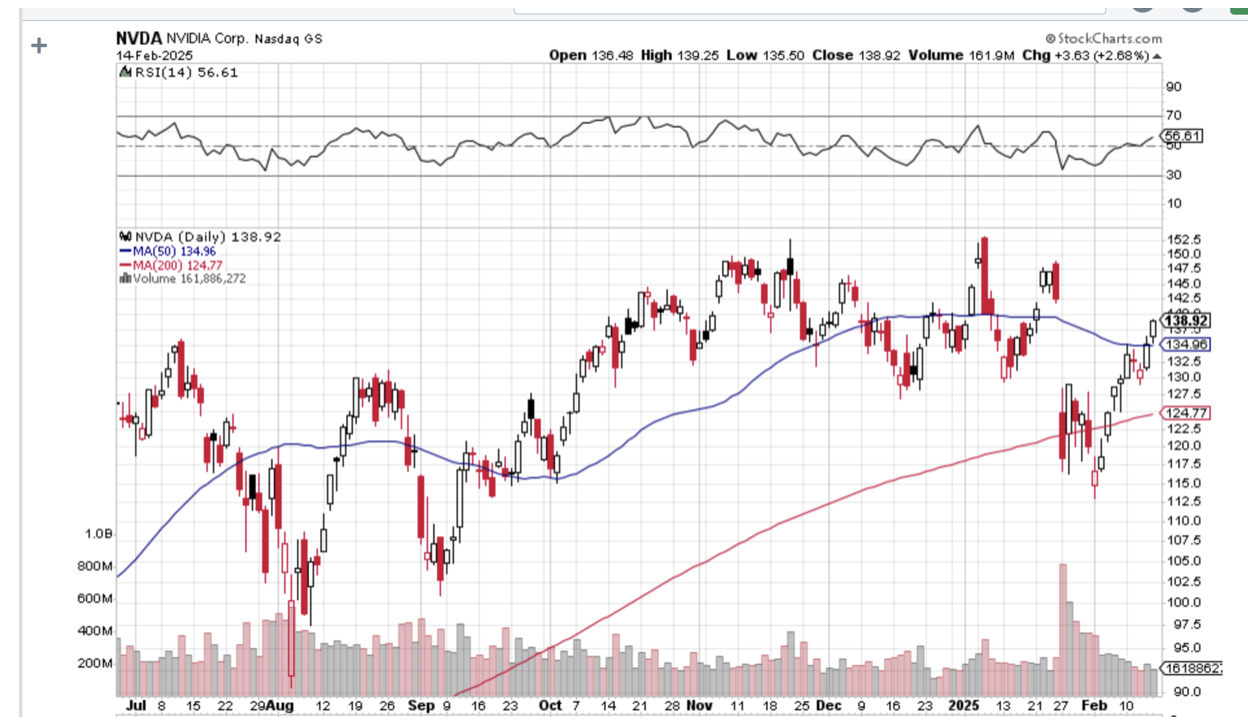
The immediate effect of Deepseek's announcement was a sharp decline in the stock prices of major AI players. Nvidia, the leading provider of chips for AI training, saw its stock price fall by more than 10% in a single day. Other AI companies, such as Google and Microsoft, also saw their stock prices decline.
The market reacted to the possibility that Deepseek's technology could reduce the demand for Nvidia's products. If Deepseek's model is truly more efficient and less expensive to train, then companies may be less likely to purchase Nvidia's chips.
However, it is important to note that the stock market is often volatile in the short term. The decline in stock prices may simply be a reaction to the uncertainty surrounding Deepseek's technology. It is possible that the stock prices of AI companies will recover in the long run.
Long-Term Effects
The long-term effects of Deepseek's emergence are still uncertain. Some analysts believe that Deepseek's technology could lead to a more competitive AI market. This could benefit consumers in the long run, as companies would be forced to lower their prices and improve their products in order to compete.
Others are concerned that Deepseek's technology could give Chinese companies an advantage in the AI race. This could have implications for national security, as AI is becoming increasingly important in areas such as defense and surveillance.
It is also possible that Deepseek's technology could lead to the development of new AI applications. If Deepseek's model is truly more efficient and less expensive to train, then it could be used to develop AI models for a wider range of applications. This could lead to the development of new products and services that are powered by AI.
Deepseek's Competitors
Deepseek's emergence has put pressure on its competitors to innovate. Companies such as Google and Microsoft are now investing heavily in AI research and development in order to compete with Deepseek.
It is possible that Deepseek's competitors will be able to develop their own technologies that are as efficient and inexpensive as Deepseek's. However, it is also possible that Deepseek will be able to maintain its lead in the AI market.
The Future of AI
The emergence of Deepseek is a sign that the AI market is becoming increasingly competitive. This is good news for consumers, as it could lead to lower prices and better products.
However, it is also important to be aware of the potential risks of AI. AI is a powerful technology that could be used for both good and bad purposes. It is important to ensure that AI is developed and used in a responsible manner.
Conclusion
Deepseek's appearance on the scene has sent shockwaves through the stock market. The company's innovative AI model has the potential to disrupt the AI market. However, the long-term effects of Deepseek's emergence are still uncertain.
It is important to keep an eye on Deepseek and its competitors in the years to come. The future of AI is likely to be shaped by the companies that are able to develop the most innovative and efficient AI technologies.
Additional Points
Mad Hedge Technology Letter
February 14, 2025
Fiat Lux
Featured Trade:
(AIRBNB DOES JUST ENOUGH)
(ABNB)

Americans still have money to travel, so ignore all those wacky reports that the consumer is about to go missing.
Granted, I wouldn’t say people are flush with cash, but enough to go on holiday and pay for short-term rentals from the likes of good ‘ol company Airbnb (ABNB).
The big takeaway from Airbnb’s earnings report is that the tech rally will continue albeit it in a choppier form than we are generally used to.
But it will keep chugging along, translating into traders and investors buying the big dips when tech stocks go on discount.
That dip buying is what prevents stocks from real weakness, which is something more like a 10% or 20% drop.
Have you noticed that tech stocks hardly go down anymore?
Well, there is money waiting like a parachute to a paratrooper, and this dynamic will underpin the market even though I admit that tech stocks are expensive and losing steam in their internal business models.
Cross-border travel drove a majority of nights booked in the APAC region.
Its North American business, where there were signs of slowing demand last summer, also saw faster growth with a “mid-single digits” gain in nights booked during the holiday season. That’s “driven by broad strength of underlying travel trends within the region,” the company said, while also citing higher pricing of stays and strength in short-term bookings and entire homes.
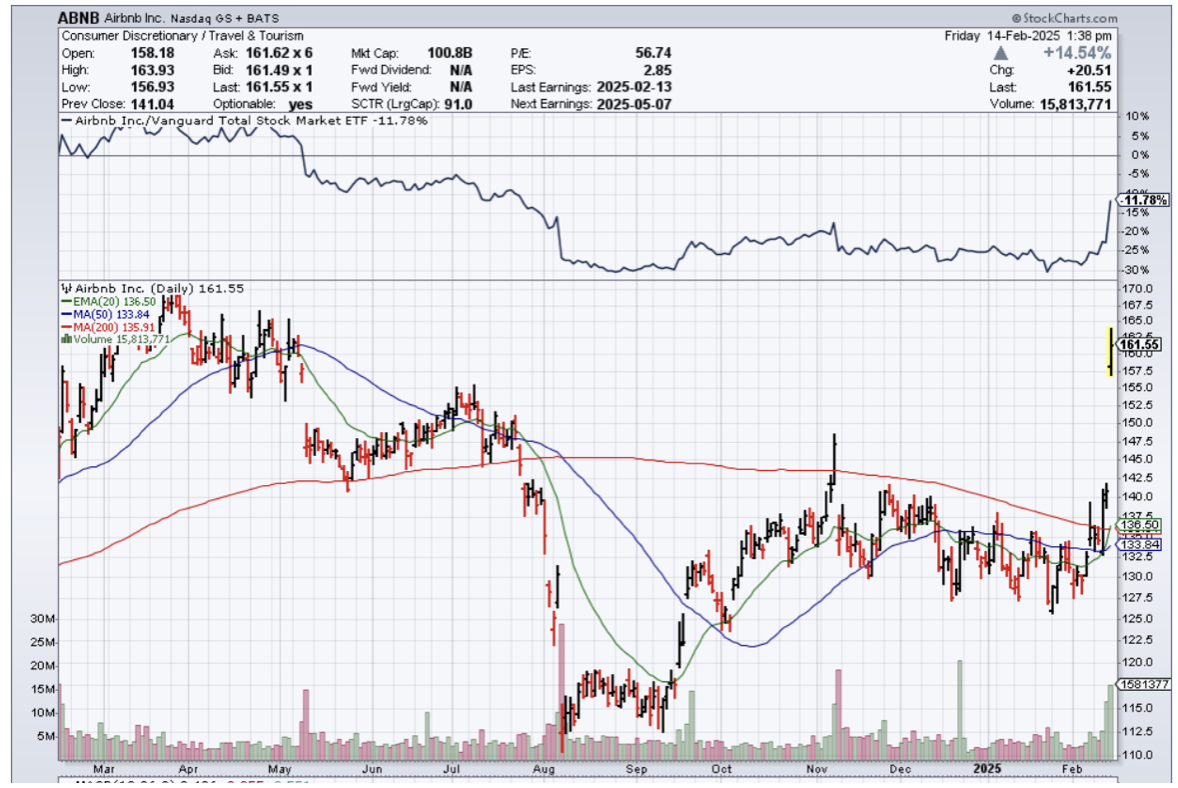
Booking’s growing 8.5% is nothing to throw a parade over, but the market delivered the stock a 14% return at the time of this writing.
I remember for that type of sumptuous pop, we used to need 30% or more in revenue expansion, and tech just isn’t delivering on that, and it is a sign of the times of Silicon Valley running out of great ideas.
We are still living on Steve Jobs’ ideas for better or worse.
Zuckerberg is still doing the Facebook and Instagram thing, and CEO of Airbnb Brian Cheksy is still doing the short-term rental thing.
His other ideas aren’t stupid, but they won’t move the needle.
Chesky is doubling down on “other products.”
Airbnb will invest $200 million to $250 million into launching and scaling those new products starting in May. His plans are to build on the experiences business for tours, classes, and workshops, and offering add-on amenities during stays such as personal chefs, midweek cleaning, and in-home massages.
Airbnb’s co-host marketplace, which allows homeowners to hire fellow hosts to manage their rentals, is really a nothing-burger.
Getting someone more ruthless to squeeze out higher profits from a rental is not some revolutionary idea, nor will it attract new shareholders.
It is basically hiring a property manager for a short-term rental. It also scales very poorly and is not an efficient use of time.
I am also not sold on the “experiences” business and find it overreaching.
Just the other day, I opened Airbnb’s homepage only to be forced and overruled into an “experience” page of the location I was hoping to search for even though I still hadn’t found a rental unit.
I had to click out of it, wasting my precious time.
Luckily, after I reloaded the page, Airbnb didn’t force-opt me again into their marginal experience page, and I was able to search for my rental.
After all these years, call me arrogant, but I think I know enough to plan my trip and don’t need tech companies to hold my hand or put digital sensors up my butt.
In fact, I will call Airbnb out, their service has been getting incrementally crappier the last few years, but they have a monopoly so they get away with it. Life is unfair, isn’t it?
Tech companies risk alienating many customers, but Airbnb is still a great buy-the-dip company and gives us brilliant insight into the health of the North American consumers.
Buy the dip in tech and ABNB until you shouldn’t.
“I say something, and then it usually happens. Maybe not on schedule, but it usually happens.” – Said Tesla CEO Elon Musk

When John identifies a strategic exit point, he will send you an alert with specific trade information as to what security to sell, when to sell it, and at what price. Most often, it will be to TAKE PROFITS, but, on rare occasions, it will be to exercise a STOP LOSS at a predetermined price to adhere to strict risk management discipline. Read more

(SUMMARY OF JOHN’S FEBRUARY 12, 2025 WEBINAR)
February 14, 2025
Hello everyone
TITLE: Trade Wars
PERFORMANCE
MTD: 0.48%
Trailing One Year Return: 83.45%
Average Annualised Return: 49.92%
Since inception: 758.24%
PORTFOLIO
Risk On
(TESLA)2/$300-$310 call spread (closed)
(GS) 3/$580-$590 call spread
(NVDA)2/$90-$95 call spread
(VST)2/$100-$110 call spread
Risk Off
(TSLA) 2/$540-$550 spread
THE METHOD TO MY MADNESS
The market has stalled because of continued uncertainty about everything.
Financials are still leading on deregulation party, but M&A has yet to start.
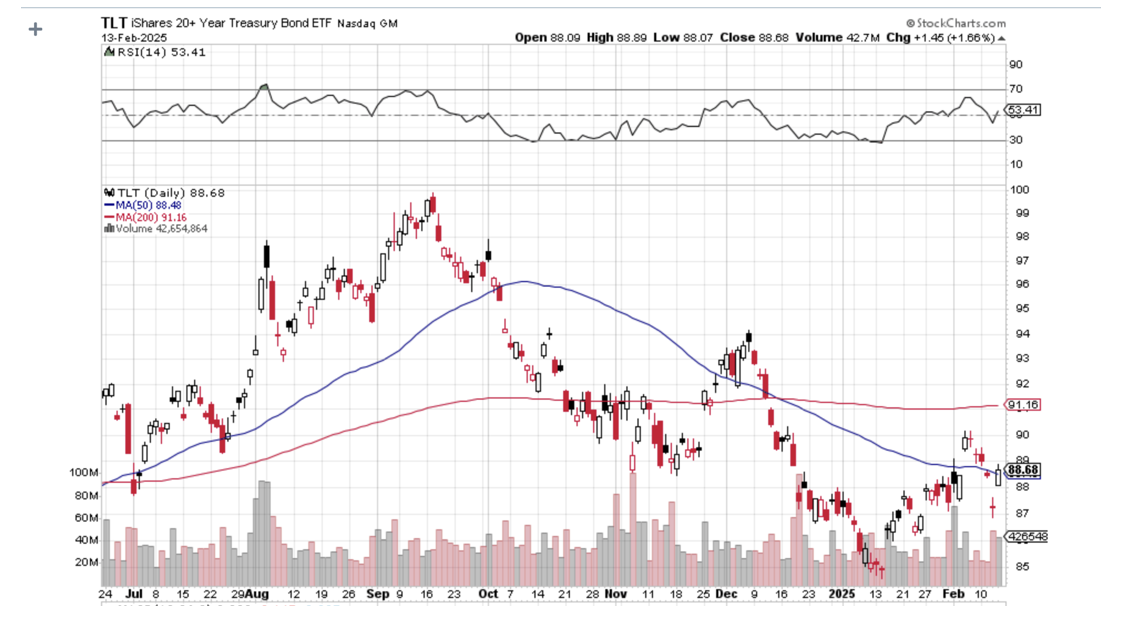
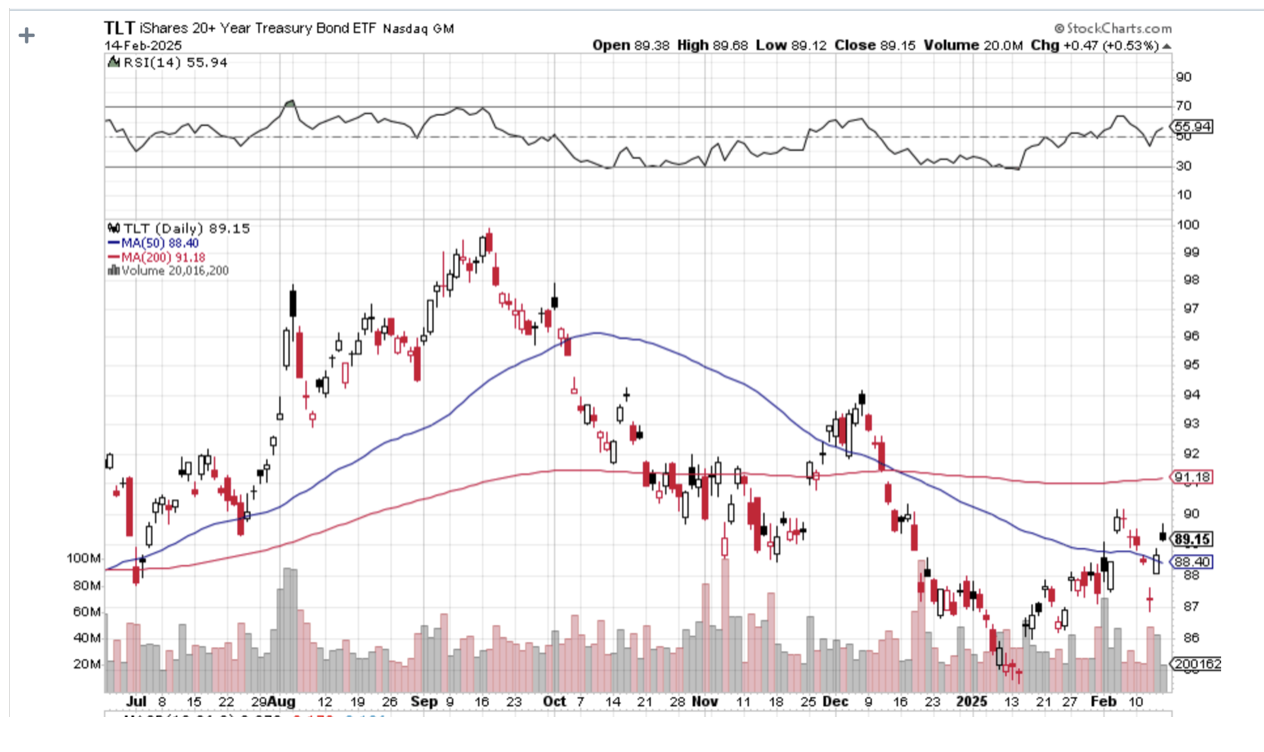
John says all interest rate plays remain dead in the water, including gold, silver, homebuilders, bonds & REITS.
US dollar remains bid on trade war.
Big technology stalling
Energy sells off on trade wars.
John says financials are the only sure thing this year.
Keep your discipline – don’t look for trades that aren’t there.
THE GLOBAL ECONOMY – CONFUSED
Fed leaves interest rates unchanged at 4.25%, and they might remain there for the rest of 2025.
Nonfarm payroll plunges to 145,000 in January.
The headline unemployment rate came in at 4.0%.
US Job Openings hit 14-month low.
Consumer sentiment falls, according to The University of Michigan.
China counters attacks in trade war.
US Factory Orders fall.
Consumer Inflation Expectations come in soft.
STOCKS – DOWNTREND
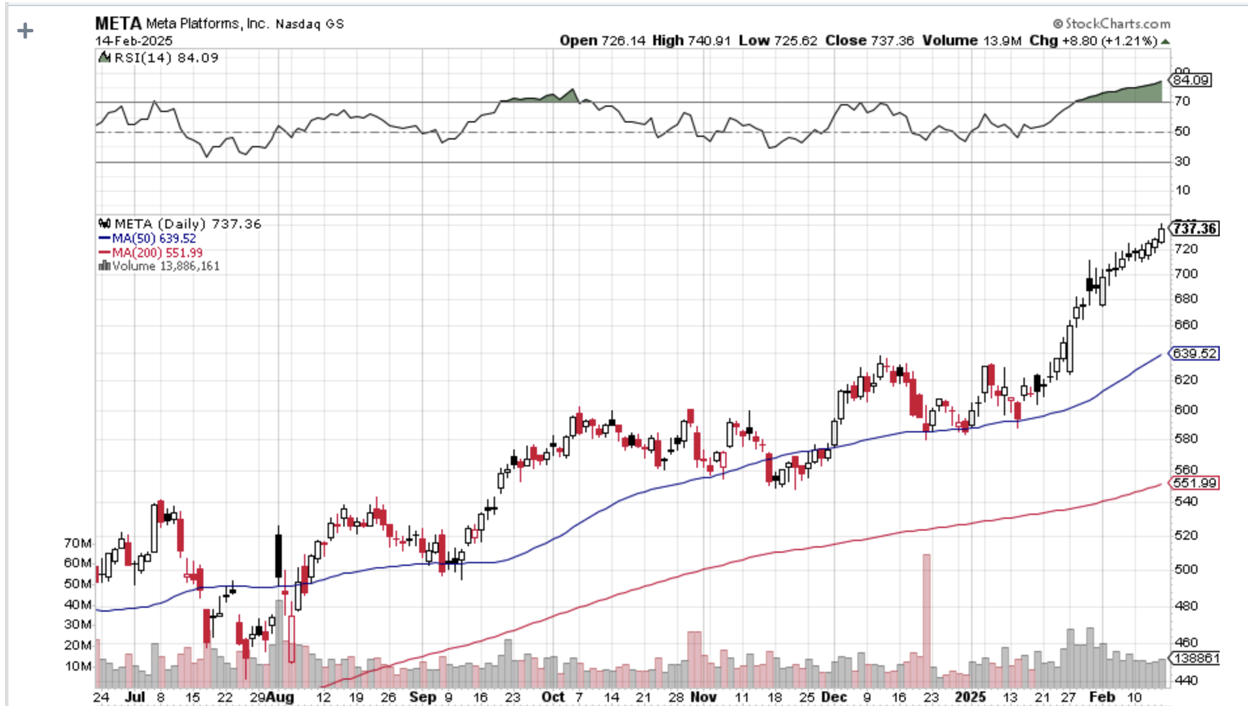
Wall Street is souring on Magnificent 7, except for Meta.
Goldman Sachs sees a correction coming in the face of deteriorating global macro conditions, trade wars, and sky-high valuations.
Technology stocks destroyed on news of China’s Deep Seek.
Tariffs to cut US earnings by 5%.
The exemption race is on with many industries pleading for special treatment in the new trade wars.
Palantir soars 25% on the prospect of a surge in government contracts.
Chevron post first loss in four years.
U.S. business activity slowed to a nine-month low.
BONDS – RALLYING
Foreign investors continue to soak up US debt, seeking higher interest.
Americans own 55% of the outstanding $36 trillion in US debt, while foreign investors own 24%, and the federal reserve 13%.
The market is giving up on any interest rate cuts this year, as the prospect of rising inflation from trade wars weighs on the market.
All fixed-income plays have gone dead.
Higher rates for longer don’t fit in here anywhere.
Possible target for (TLT) = $82
FOREIGN CURRENCIES – TRADE WAR BOOST
Trade wars are pushing up the US dollar, making American exports more expensive.
High import duties will shrink US imports dramatically and impoverish our foreign customers, creating dollar strength.
Ten-year US Treasuries have risen from 4.40% to 4.50%.
The mere fact that rates have stalled has allowed currencies to rally.
Higher for longer interest rates mean higher for longer US dollar.
Avoid (FXA), (FXE), (FXB), (FXC), and (FXY).
ENERGY & COMMODITIES
US global economic disruption sink oil prices.
Oil & Gas dealmaking hits $105 billion in 2024.
Government to stop minting new pennies.
Nuclear plays like (VST) and (CCJ) rebound sharply.
The EIA said it expects Brent Crude oil prices to fall 8% to average $74 a barrel in 2025 and then fall further to $66 in 2026.
PRECIOUS METALS – BID AGAIN
Government may revalue gold holdings from the current 1932 price of $42 an ounce to $2936.
It is just a bookkeeping move, but it has put the yellow metal back in the spotlight.
As of January 2025, the United States government owned 133.45 tons of gold worth $39.9 billion at current market prices. This makes the US the country with the largest gold reserves in the world.
Gold has become the only way the average Chinese can save as they can no longer speculate in real estate or copper, and the population doesn’t trust the Chinese Yuan, so there is support lower down.
Central banks in emerging market countries are continuing to buy gold.
REAL ESTATE – STAY AWAY
Homebuyer Mortgage demand is collapsing, with the 30-year fixed at a buzzkill 7.0%.
Demand is 35% lower YOY, with housing demand at a 30-year low.
Homes are sitting on the market much longer. Avoid all real estate plays.
US Home Sales hit a 30-year low in 2024, the second year in a row of weak sales.
High costs related to homeownership sapped sales again.
The average rate for a 30-year fixed mortgage has hovered between 6% and 8% since late 2022.
Avoid real estate plays.
TRADE SHEET
Stocks – buy the next big dip, sell rallies.
Bonds – sell rallies
Commodities – stand aside.
Currencies – stand aside.
Precious metals – buy dips.
Energy – buy nuclear dips.
Volatility – sell over $30.
Real estate – stand aside.
NEXT STRATEGY WEBINAR
12:00 EST Wednesday, February 26, 2025, from Incline Village, NV.

Cheers
Jacquie
Global Market Comments
February 14, 2025
Fiat Lux
Featured Trade:
(FEBRUARY 12 BIWEEKLY STRATEGY WEBINAR Q&A),
(MCD), (FSLR), (META), (GOOG), (AMZN), (JNK), (HYG), (F), (GM), (NVDA), (PLTR), (INTC)
Below, please find subscribers’ Q&A for the February 12 Mad Hedge Fund Trader Global Strategy Webinar, broadcast from Incline Village, NV.
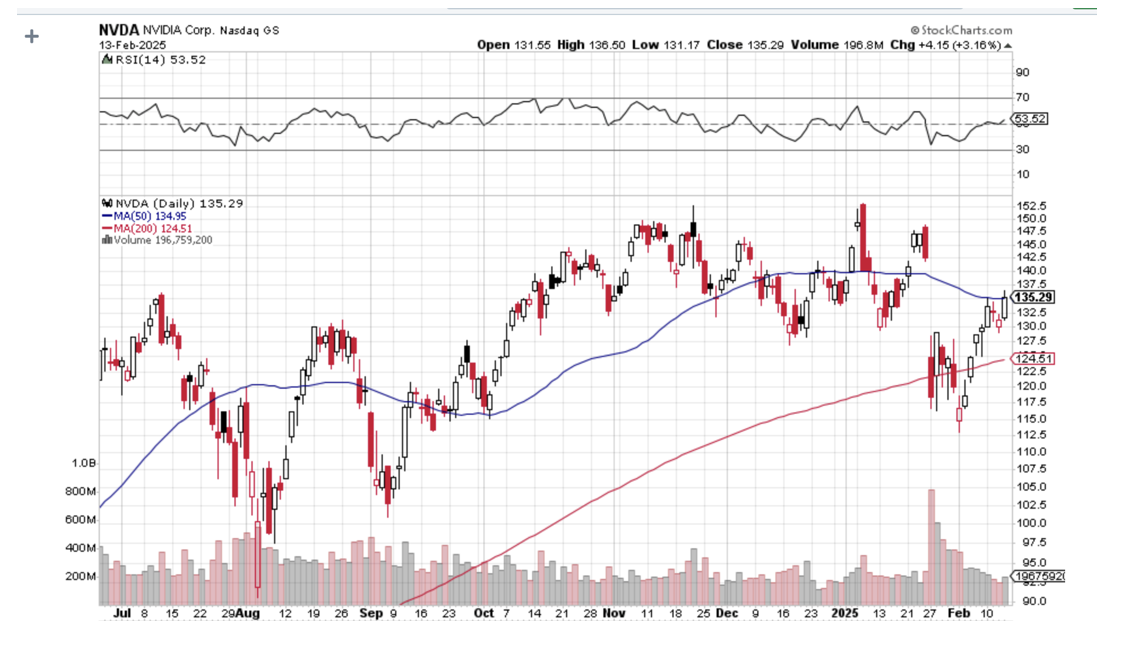
Q: Can Nvidia (NVDA) go to $200 in the next three years?
A: I would imagine probably, yes. They still have a fabulous business—enormous orders and record profits. But it's not going to happen in the next six months. You need to get us out of the current stock market malaise before anything moves dramatically one way or the other, except for META, which is at an all-time high. Their basic business is still great, and the threat posed by DeepSeek is wildly overblown.
Q: Why is McDonald's (MCD) seeing declining sales?
A: Partly, it's because they have been cutting prices. So, of course, that automatically feeds into declining sales. Also, I think the weight loss drugs Mounjaro or Ozempic are having an impact. People just don't go in and eat three Big Macs for lunch anymore. They may not need any Big Macs at all. And forget about the fries and the super-size high fructose corn syrup drink. When these drugs first came out, it was speculated that fast food companies would be the number one victim of these drugs, and that is turning out to be true. Some 15.5 million people in the United States suddenly aren't hungry anymore; they just take one bite of a meal and then push their food around the plate with their fork. That’s better than taking amphetamines, which people like Judy Garland used to take to lose weight. I think that will affect not only McDonald's, but all fast-food companies which I avoid like the plague anyway because my doctor says I shouldn't eat that food.
Q: Should I buy First Solar (FSLR) based on the revised higher sales outlook?
A: I don't want to touch alternative energy anything right now. I think the government will eliminate all subsidies for all alternative energy—be it solar, windmills, hydrogen, nuclear, whatever—and turn us back into an all-oil and coal economy. That is the announced goal of the new administration. So that eliminates the subsidies for sure. It certainly will be a blow to the earnings of all solar-type companies. If you are going to do an energy form, I would do nuclear, which benefits from deregulation, if that ever happens.
Q: Do price caps fix supply problems? Because Europe is thinking about capping energy prices in the short term.
A: Price caps never work, nor does any other attempt to artificially control prices, because all it does is dry up supply. If you cap the prices, and therefore the profits that energy companies can make, they'll quit. They'll abandon the energy business, or they'll pare it down, or they won't expand. One way or the other, you reduce the return on capital. Capital is like water; it will go where it gets the highest return, and price caps certainly are not part of that formula. But what do I know? I only drilled for natural gas for six years.
Q: What's your top AI choice?
A: Well, I would say it's Nvidia (NVDA) still, and the big AI users which include Meta (META), Google (GOOG), and Amazon (AMZN). Nothing has changed here.
Q: Is there any chance that Ford Motors (F) will be bought out anytime soon or never?
A: My view of all of the legacy car companies, including Stellantis, which is the old Chrysler, Ford (F), and General Motors (GM), is that they are basically giant mountains of scrap metal and only have a scrap metal value, which is about 5 cents on the dollar. That's what they fell to in the 2008 financial crisis, and all of them except for Ford went bankrupt. So I am not a big fan of the legacy auto industry now. And now, they have a trade war. They happen to be one of the biggest victims of trade wars because to stay competitive with Tesla, they moved a lot of their production to Canada and Mexico, and now those plans are going up in flames. So it seems like they're damned if they do and they're damned if they don't. I'm happy driving my Tesla, but I'm wondering if my next car is a BYD. Prices are so low, it might even be worth paying 100% duty just to get a cheaper car that has better self-driving capability. But the future is unknown, to say the least.
Q: Is the next big rotation out of Silicon Valley and into Chinese tech stocks?
A: Over the long term, that may happen, but with the current administration and China (the number one target in restraint of trade and trade wars), I don't want to touch anything Chinese. There are too many better things to do in the U.S. Imagine you buy a Chinese stock, and then the administration announces a total cutoff of trade with China the next day. Not good. Chinese stocks are incredibly cheap. Most of the big ones are now single-digit multiples compared to multiples in the 20s, 30s, and 40s for our stocks. But they come with a very high political risk, and that has been true for several years now. There are better fish to fry than in China. I'd rather buy Europe than China right now if you really do want to go international. But I have no idea why they're going up unless they're discounting an end to the Ukraine War.
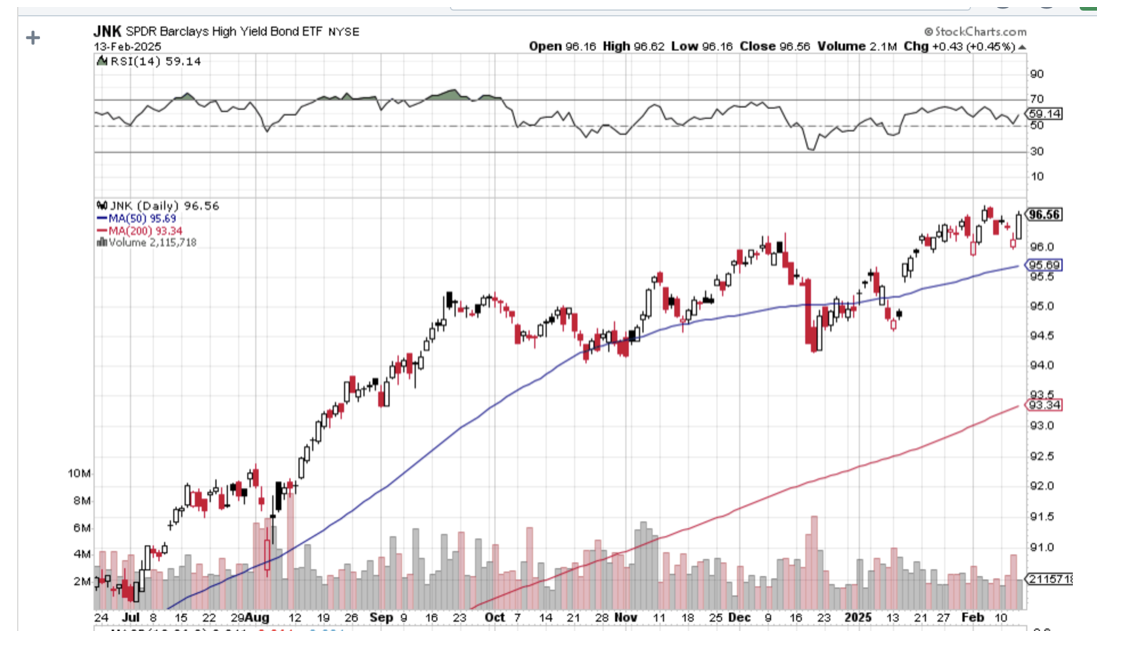
Q: Are junk bonds (JNK) and (HYG) a good play?
A: I would say yes. Their default risk has always been over-exaggerated thanks to their unfortunate name. They're yielding 6.54% and change, but it's a very slow mover. If we do get any improvement, any economy without inflation junk will go to $100. It's currently around $96. And you know, yield is a nice thing to have these days since the capital gain side seems to have dried up and turned into dust on almost any asset class.
Q: How can I decide when to sell the stocks that we bought on your recommendations?
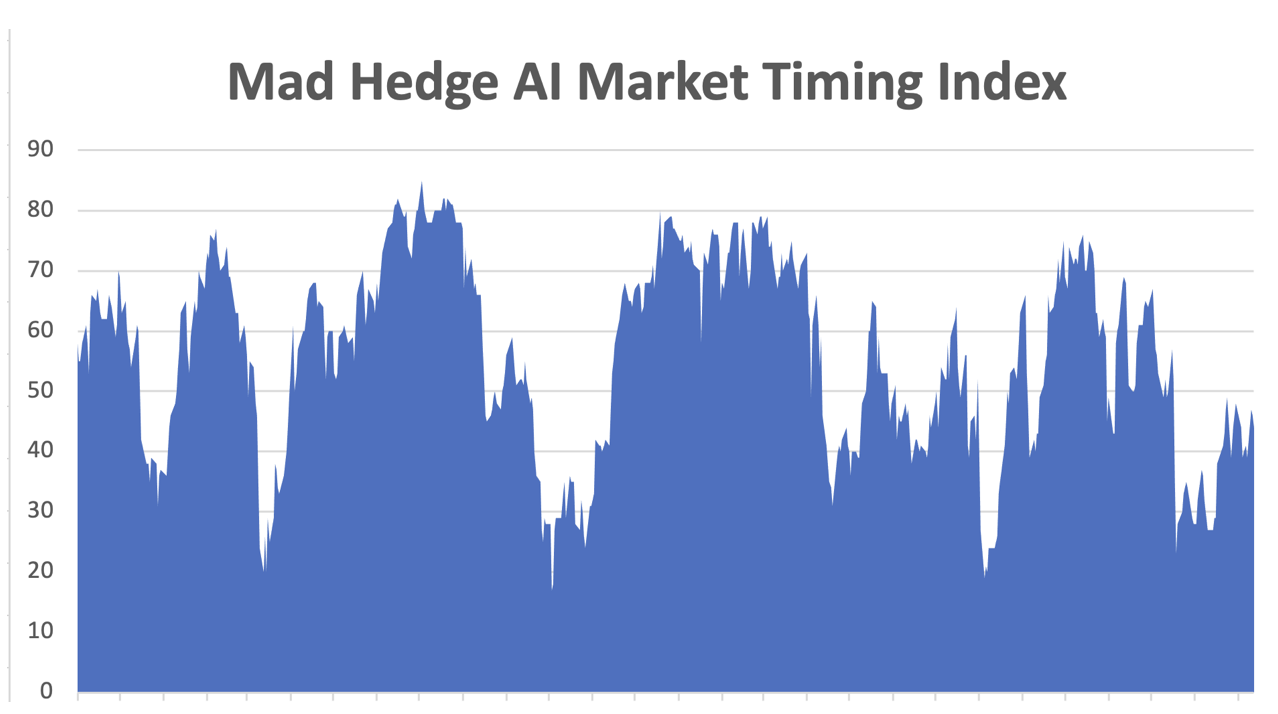
A: Well, our trade alerts always have a buy recommendation and a sell recommendation or an expiration date. If you bought the stocks and kept it, just read Global Trading Dispatch for an updated market view. Watch our Mad Hedge Market Timing Index. When we get up into the 70s and 80s, that is definitely sell territory. It's hard for individuals to have an economic view going out to the rest of the year, but even the people who are economists have no idea what's going to happen right now. As I said, uncertainty is at an 8-year high, and that is being reflected in the market. So nothing beats cash, especially when you can earn 4.2% on 90-day US treasury bills. No one ever got fired for taking a profit.
Q: Can Intel (INTC) make a comeback this year?
A: No. I'm sorry, but they won’t. They had a horrible manager. They dumped him after a couple of disastrous years. I knew he was a horrible manager. I fought off all the pressure to buy Intel. So far, that's working. I mean, the stock has been terrible, so it is very cheap, but there is no guarantee that they will ever recover and, in fact, may get taken over by somebody else. So—too many better things to do. I'd rather be buying more Nvidia right now at these prices than sticking my neck out and praying for a miracle at Intel.
Q: A couple of years ago, I bought a bunch of Palantir (PLTR) on your recommendation for the next 10 bagger. I now have a 10 bagger. What should I do?
A: You know, we did recommend Palantir about 10 years ago, and it did nothing for the longest time. And then last year, it just took off like a rocket—I think it's up 400% last year. Price-earnings multiples are insanely high now. So what I would do is sell half your position. That way, the remaining half is all profit. You're playing with the house's money, and you're reducing your risk in a high-risk environment. Sell half, keep the other half. If it looks like it's starting to roll over and die, then you sell your remaining half.
Q: What's your favorite currency this year, and what should we do about it?
A: My favorite currency is the US dollar. If we're not going to get any interest rate cuts this year, the dollar will remain the highest-yielding currency in the world, and then everybody wants to buy it. It's really that simple. It’s all about interest rate differentials. Everybody else in the world has low interest rates, so stick with the dollar and don't touch the foreign currencies yet.
Q: Inflation expectations have exploded higher in view of today's number. Do you expect it to get worse?
A: If the trade war continues, it will absolutely get worse. 25% price increases are inflationary—period. End of story. A price increase is the definition of inflation, and right now, we are increasing the number of countries subject to high punitive tariffs, not decreasing them. You can expect markets to worry about that. And even if they put a temporary hold on these, people are raising prices now. They are not waiting for the actual tariff to hit; they are front-running that right now. So if you don't believe me, go to the grocery store where prices are through the roof. I actually went to a grocery store the other day, and I couldn't believe what things cost.
Q: I'd like to hedge my Nvidia (NVDA) position with a covered call. Which one should I do?
A: Well, it's not actually a hedge. What a covered call does is reduce your cost price and increase income. Right now, we have NVDA at $135. If you shorted something like the February $145 calls, you might get a dollar for that. That reduces your average price by a dollar. If you shorted the March $145 calls, that'll bring in probably $5, reduce your costs by $5, or bring in an extra $5 in income. And if you keep doing this every month and Nvidia stays stuck in a range, you can end up taking $10, $20, or even $30 in premium income over the next six months. And I have a feeling that will be the winning strategy for the first half of this year, using rallies to sell covered calls. You really could get your average cost down quite a lot; that way, if we have a massive sell-off, a lot of that loss will already be covered. If we get a massive rally, your stock just gets called away, and you buy it back on the next dip. The only negative here is the tax consequences of taking capital gains on the call-aways.
Q: You mentioned that the US has a demographic problem coming up; how will that affect the market in the short term?
A: It doesn't affect the market in the short term. Demographics are a long-term game. You have to think in terms of a generation being the round lot, which is about 20 years. Suffice it to say, when demographics go against you, like they did in Japan for 30 years, markets are horrible. Demographics are going against China now, and you're getting horrible markets. Demographics are good now in the US because we have millennials just entering their peak spending years, and that's when economies boom, and that should continue up to 2030. That is how to play demographics, and we keep updated here, although the government has suddenly ceased making available all demographic data to the public—I don't know why, but it's going to make the science of demographics much more difficult to follow without the government data. I don't know why they did that. I don't know what they hope to gain by clouding the demographic picture. Maybe it has to do with the allocation of congressional seats to the states or something like that.
Q: Do you have information on how to place a LEAPS order?
A: Just go to www.madhedgefundtrader.com, go to the search box, put in LEAPS in all caps, and you will find an encyclopedia of information on how to do LEAPS or Long Term Equity Anticipation Securities.
To watch a replay of this webinar with all the charts, bells, whistles, and classic rock music, just log in to www.madhedgefundtrader.com, go to MY ACCOUNT, click on GLOBAL TRADING DISPATCH, TECHNOLOGY LETTER, or JACQUIE'S POST, then WEBINARS, and all the webinars from the last 12 years are there in all their glory.
Good Luck and Good Trading,
John Thomas
CEO & Publisher
The Diary of a Mad Hedge Fund Trader