Mad Hedge Technology Letter
February 10, 2025
Fiat Lux
Featured Trade:
(SILICON VALLEY GHOST CITY)
(AMZN), (GOOGL), (MSFT), (DEEPSEEK)


Mad Hedge Technology Letter
February 10, 2025
Fiat Lux
Featured Trade:
(SILICON VALLEY GHOST CITY)
(AMZN), (GOOGL), (MSFT), (DEEPSEEK)
This AI infrastructure build-out is starting to smell more and more like the Chinese ghost city phenomenon.
Yeh, I said it.
It is starting to feel more like that type of “growth”, and that is not good for the future of tech stocks.
If the AI build-out becomes something trending closer to a Chinese ghost city, then we can expect a sharp pullback in tech stocks.
When that abrupt pullback will be is the hard question to answer, but each day we inch closer to that scenario.
There are 65 million empty homes in China that were built by developers and registered as “growth.” This type of parallel growth or paper growth can’t be ignored, and the concrete producers and wiring folks made large fortunes off that whole racket.
Sam Altman, head of OpenAI, is starting to seem more like one of these construction contractors selling 65 million appliances and calling it a success while the apartments are unused and investors get fleeced.
Wasteful spending by corporations swept into the dustbin of history. Looks more like it by the day.
When tech managers are asked about the specific numbers about what kind of revenue we can expect from the AI investment, they tell us to “spend now and ask questions later.”
That is a massive red flag, and I am calling out the whole movement now.
That being said, I bought the dip in mid-January on the Deepseek news, and I am riding that technical reversion to profits as it stands.
If there are no short-term pullbacks, we will end the month up over 15% YTD.
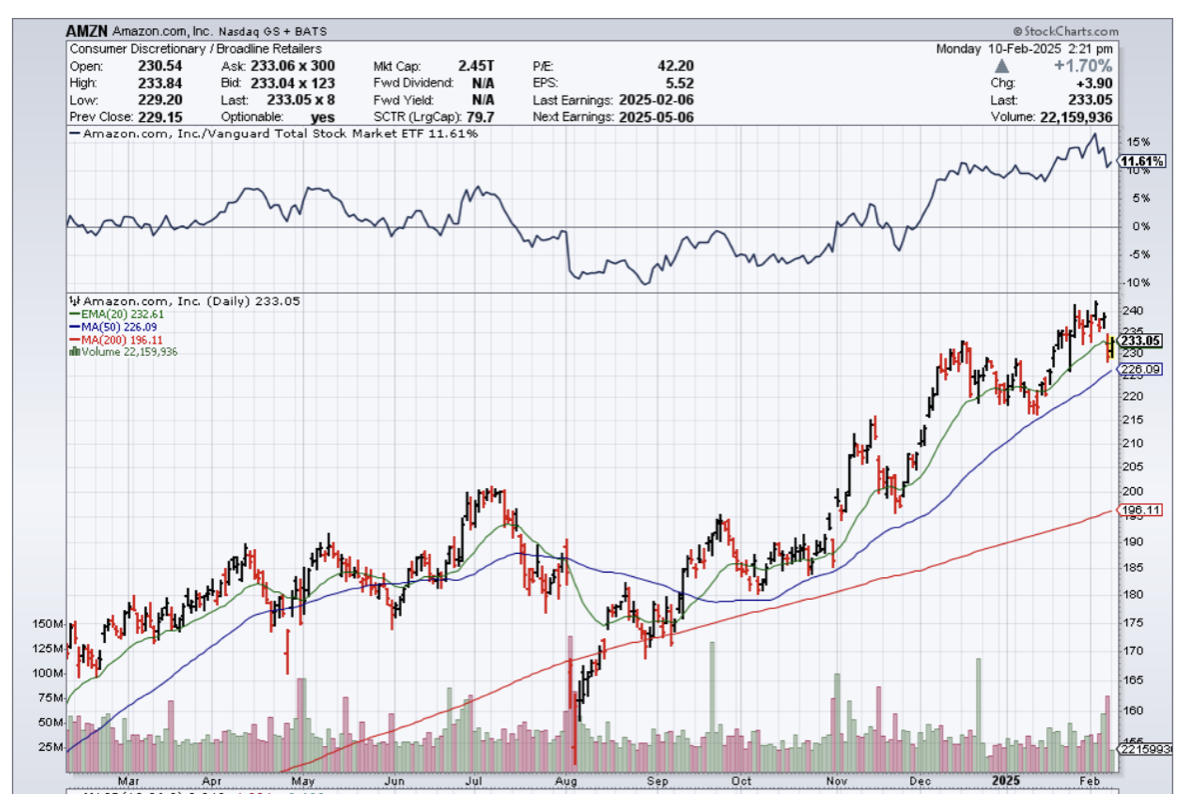
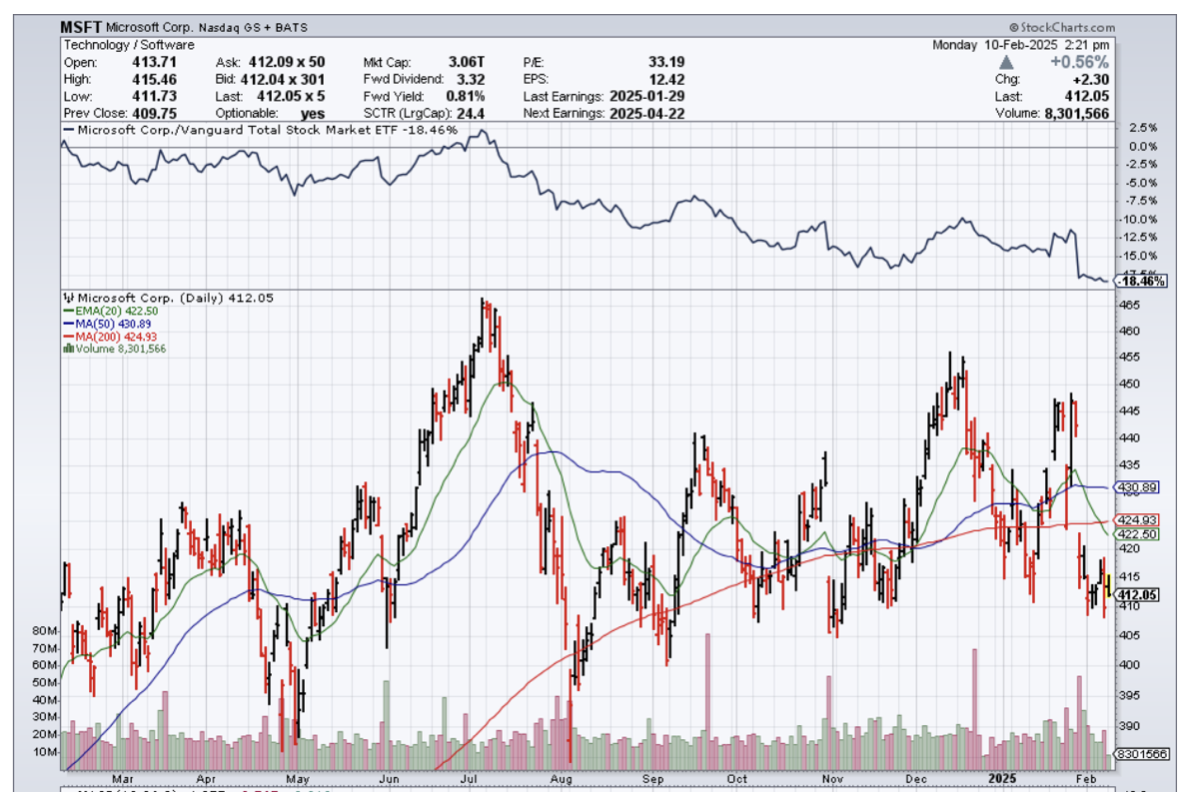
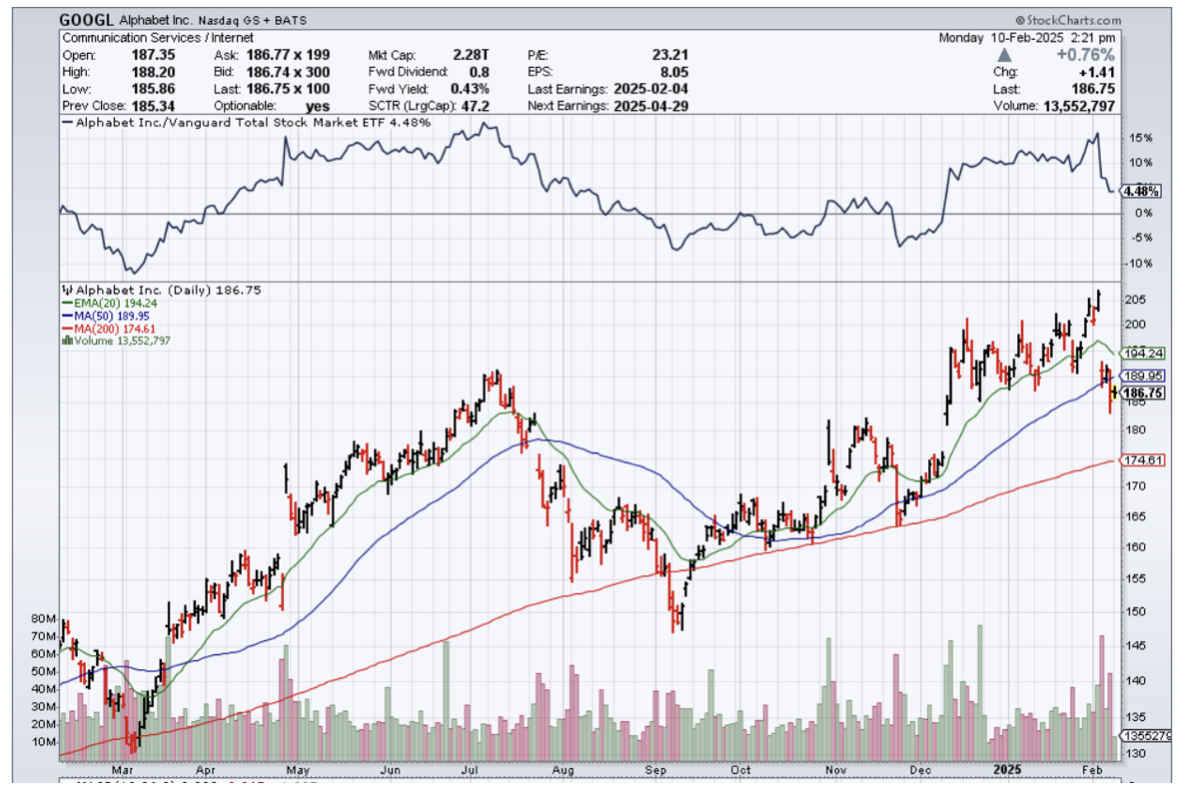
Meta (META), Microsoft (MSFT), Amazon (AMZN), and Google parent Alphabet (GOOGL) are expecting to spend a cumulative $325 billion in capital expenditures and investments in 2025, driven by a continued commitment to building out artificial intelligence infrastructure.
Taken together, this marks a 46% increase from the roughly $223 billion those companies reported spending in 2024.
The Chinese startup Deepseek rattled markets last week after it debuted open-source AI models competitive with OpenAI’s for a fraction of the price. Tech stocks sold off across the board as the model cast doubt on the rationale behind tech giants’ mammoth spending on artificial intelligence infrastructure.
But the DeepSeek surprise didn't seem to impact tech companies' big spending plans.
Amazon is by far the biggest spender on capital investments of the group, with its $78 billion for 2024 far eclipsing Microsoft's $56 billion and Alphabet's $53 billion.
Looking ahead, Amazon said in a post-earnings call Thursday evening that its spending of $26.3 billion in its most recent quarter is "reasonably representative" of its 2025 investment plans, suggesting investments will total roughly $105 billion this year.
Late last month, Meta confirmed that it would spend $60 billion-$65 billion in 2025, a massive bump from its prior guidance to investors of $38 billion-$40 billion in investment for the year.
Google said on Tuesday that it expects to spend $75 billion this year.
In the short-term, I expect earnings reports to be met with a selloff producing optimal buying opportunities.
These dips are bought by traders then take profits – rinse and repeat.
It’s not guaranteed that tech will go up in a straight line, so it’s better to use the volatility in your favor for some profits.

“The goal of auditing the Social Security Administration is to stop the extreme levels of fraud taking place, so that it remains solvent and protects the social security checks of honest Americans! That’s it. That’s the goal. End of story.” – Said Elon Musk

(SCAMMERS ARE MAKING A MINT OUT OF THE REAL ESTATE MARKET)
February 10, 2025
Hello everyone
WEEK AHEAD CALENDAR
MONDAY FEB. 10
9:00 a.m. Euro Area ECB Speech
Earnings: ON Semiconductor, Rockwell Automation, McDonalds.
TUESDAY FEB. 11
6:00 a.m. NFIB Small Business Index (January)
3:30 p.m. New York Federal Reserve Bank President and CEO John Williams gives keynote remarks at Pace University, New York.
Earnings: Gilead Sciences, Coco-Cola, Fidelity National Information Services, Ecolab, Marriott International, Humana.
WEDNESDAY FEB. 12
8:30 a.m. Consumer Price Index (January)
8:30 a.m. Hourly Earnings (January)
8:30 a.m. Average Workweek (January)
2:00 p.m. Treasury Budget (January)
Earnings: Paramount Global, MGM Resorts International, Global Payments, Cisco Systems, Tyler Technologies, Dominion Energy, Albemarle, Kraft Heinz, CME Group, Martin Marietta Materials, Westinghouse Air Brake Technologies, CVS Health, Generac Holdings, Exelon, Biogen.
THURSDAY FEB. 13
2:00 a.m. UK GDP Growth
Previous: 0%
Forecast: -0.1%
8:30 a.m. Continuing Jobless Claims (02/01)
8:30 a.m. Initial Claims (02/08)
12:20 p.m. New York Federal Reserve Bank Director of Research Kartik Athreya speaks at the University of Bridgeport, Ernest C. Trefz School of Business.
1:00 p.m. New York Federal Reserve Bank Interim Head of the Markets Group Anna Nordstrom gives opening remarks in “Women in Fixed Income Conference”, New York Fed.
4:00 p.m. New York Federal Reserve Bank Director of Research Kartik Athreya speaks on “Economic Outlook with a Focus on Regional Business Conditions”, Connecticut
5:15 p.m. New York Federal Reserve Bank Deputy SOMA Manager Julie Remache gives closing remarks in “Women in Fixed Income Conference”, New York Fed.
Earnings: Motorola Solutions, Airbnb, Wynn Resorts, Applied Materials, Ingersoll Rand, GoDaddy, DexCom, PPL, Howmet Aerospace, Duke Energy, Molson Coors Beverage, GE Healthcare Technologies, West Pharmaceutical Services, PG&E, Deere & co.
FRIDAY FEB. 14
8:30 a.m. Export Price Index (January)
8:30 a.m. Import Price Index (January)
9:15 a.m. Capacity Utilization (January)
9:15 a.m. Industrial Production (January)
9:15 a.m. Manufacturing Production (January)
10:00 a.m. Business Inventories (January)
Earnings: Moderna
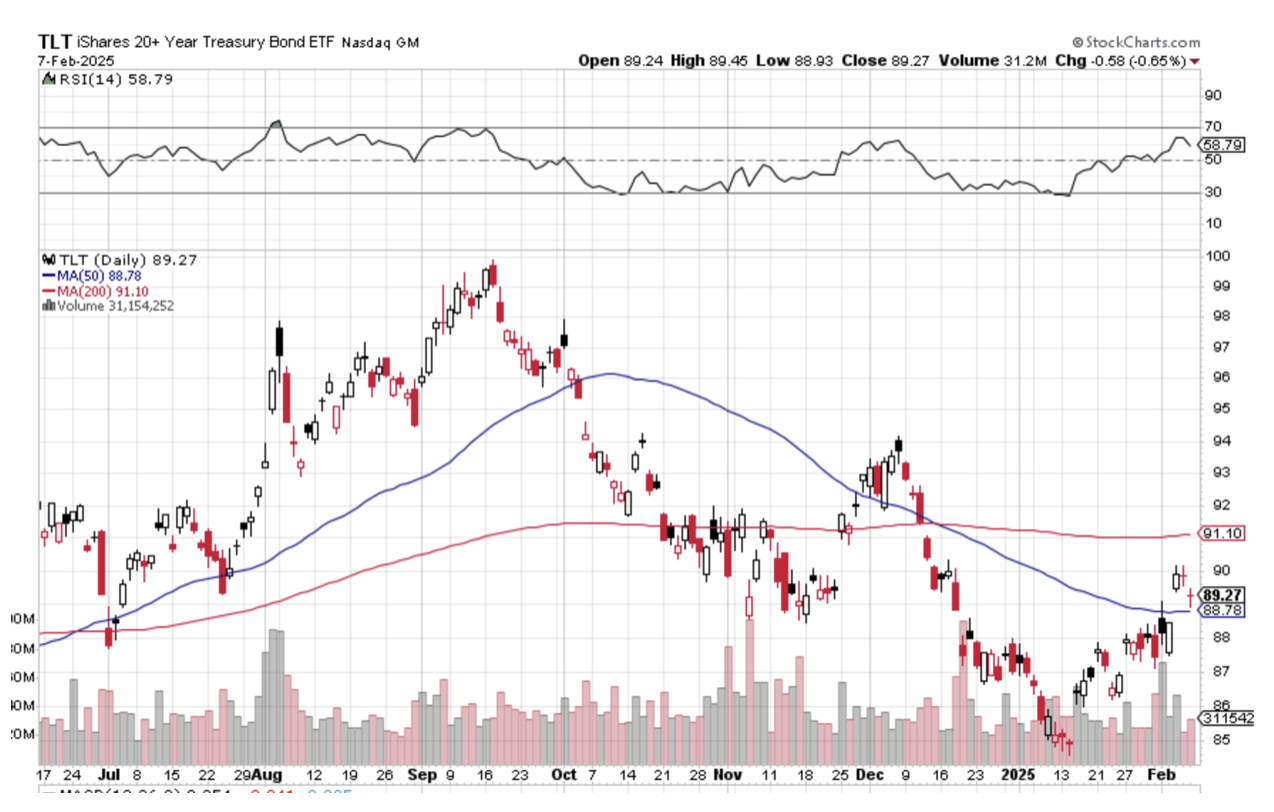
It will be a quieter week on the economic data front, but that doesn’t mean markets will be calm. The CPI and PPI are on deck this week, so investors will be paying close attention to the numbers here after Friday’s economic data revived concerns around inflation. The January jobs report showed strong wage growth, an inflationary signal. But it was the drop in consumer sentiment that represented growing concerns about rising price pressures from tariffs that turned the market off. The angst was felt in the bond markets as we saw yields spike higher. US Retail Sales data will show whether the health of the American consumer is humming along nicely.
Take the long way round when dealing with real estate financial transactions.
I have heard of this tale so many times, it is heartbreaking. Singles or couples who have saved up a deposit to buy a property. They transfer it to the bank account indicated by the real estate agent/and associated bank and then find it has evaporated.
Australians lost more than $318m to scammers last year. When it comes to real estate scams, buyers, sellers, and renters are all at risk.
So, it is wise to keep up with the latest scams and know what to look out for. This will help you minimise the threat and keep your money as safe as possible.
Payment redirection scams are one of the biggest ways consumers are getting fleeced in the property market. This is where a scammer will impersonate a real estate agent to convince the unsuspecting client to deposit funds into a different bank account.
Ray White warns consumers that scammers will create a very similar email address and start emailing the client pretending to be the agent. Furthermore, the real estate company goes on to point out that the scammers provide updated banking details, trying to get the client to deposit funds into the scammer’s account.
The rental market is not safe either. Scammers are imitating offices and trying to redirect rental payments into scam accounts. There are new scams coming out daily – and these messages can be sent via post and not email.
REIA (Real Estate Institute of Australia) President Leanne Pilkington says it is crucial to pick up the phone and speak with the real estate agent before transferring funds if you have received a payment request with new account details.
Buyers are losing their deposits.
Another common scam operating in the market now is when fraudsters use the photos and information from a legitimate rental listing and create a fake private listing on a consumer trading site.
Posing as the landlord of the property, they give excuses about not being able to run inspections while offering deals that seem too good to be true.
They request a deposit and indicate that once that is received, the place will be yours. When it comes time to collect the keys, there are no keys – no owners.
Many people who are feeling vulnerable due to the rental crisis in Australia have found themselves easy targets for such scammers. Depositing money without physically walking through the premises is not safe – better to take the long route and check things out thoroughly. It could save you a mint in the end.
RED FLAGS
A change of account request.
Do not reply to the email. Instead, call the agent directly and ask them for confirmation. Even better, make an appointment and physically visit the branch.
Avoid clicking links.
It is possible that this link could take you to an unsecured website where you are tricked into entering sensitive information.
Choose secure payment platforms.
Many agencies offer BPAY or DEFT for making rental payments or PEXA for buying and selling rather than transferring funds into a bank account.
Private rentals – be careful.
Request documentation from the landlord.
Check if the owner is registered with Bonds Online.
Contact your bank.
If you think you have been scammed, contact your bank straight away and follow the instructions given.
The goal is prevention.
Even better than a phone call, walk into your agency/bank and verify bank details and emails you have received. It is worth the effort and the time.
MARKET UPDATE
S&P500
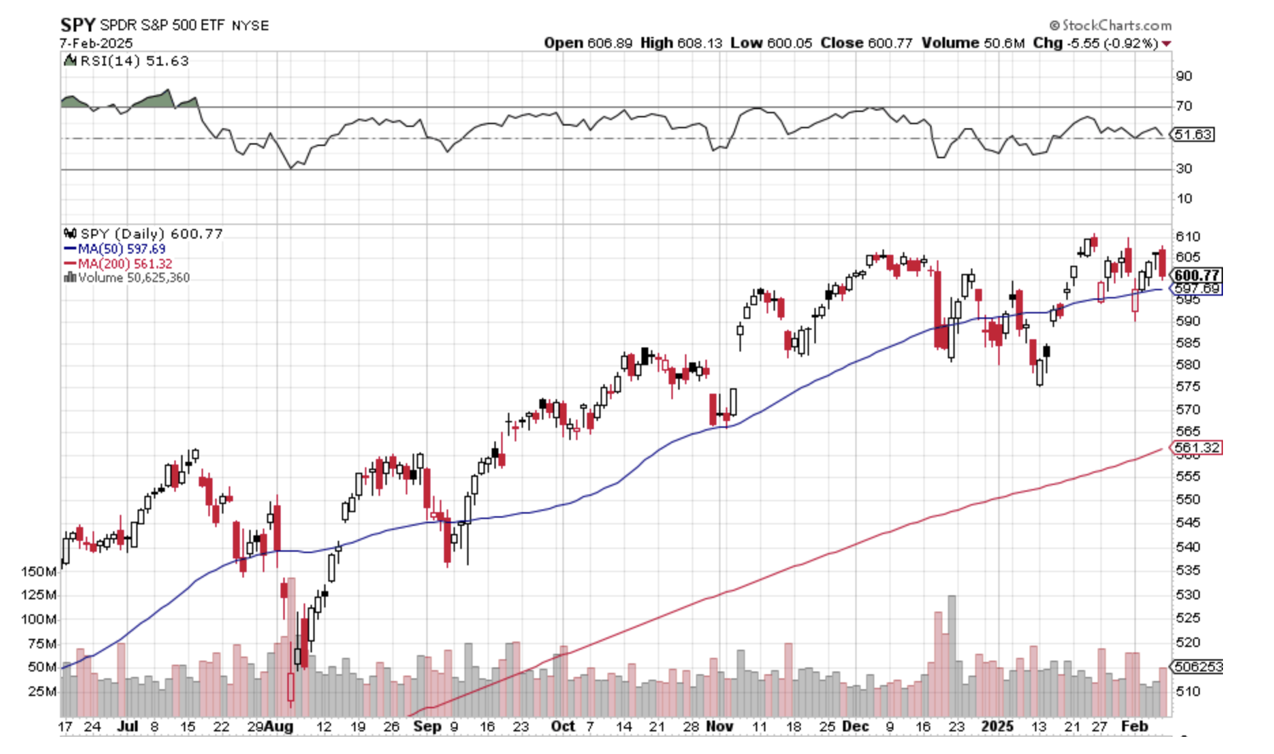
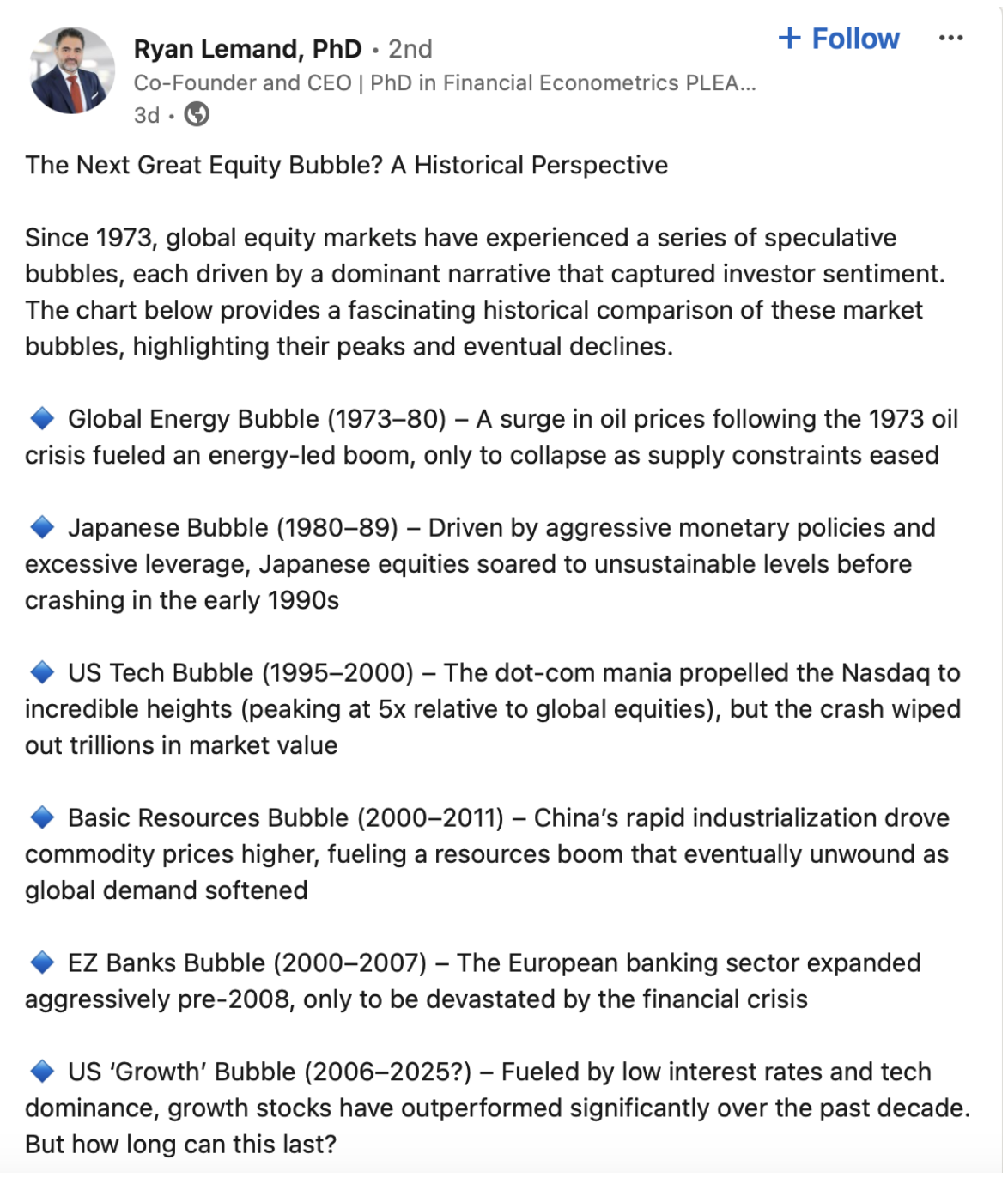
The bull market is looking shaky; the market is showing wide-ranging swings, which can be representative of tops forming. Most are expecting the bull market to continue making new highs in its third year; however, I am being more cautious than the consensus.
Support: $5900/$5775/$5750
Resistance: $6110/$6100.
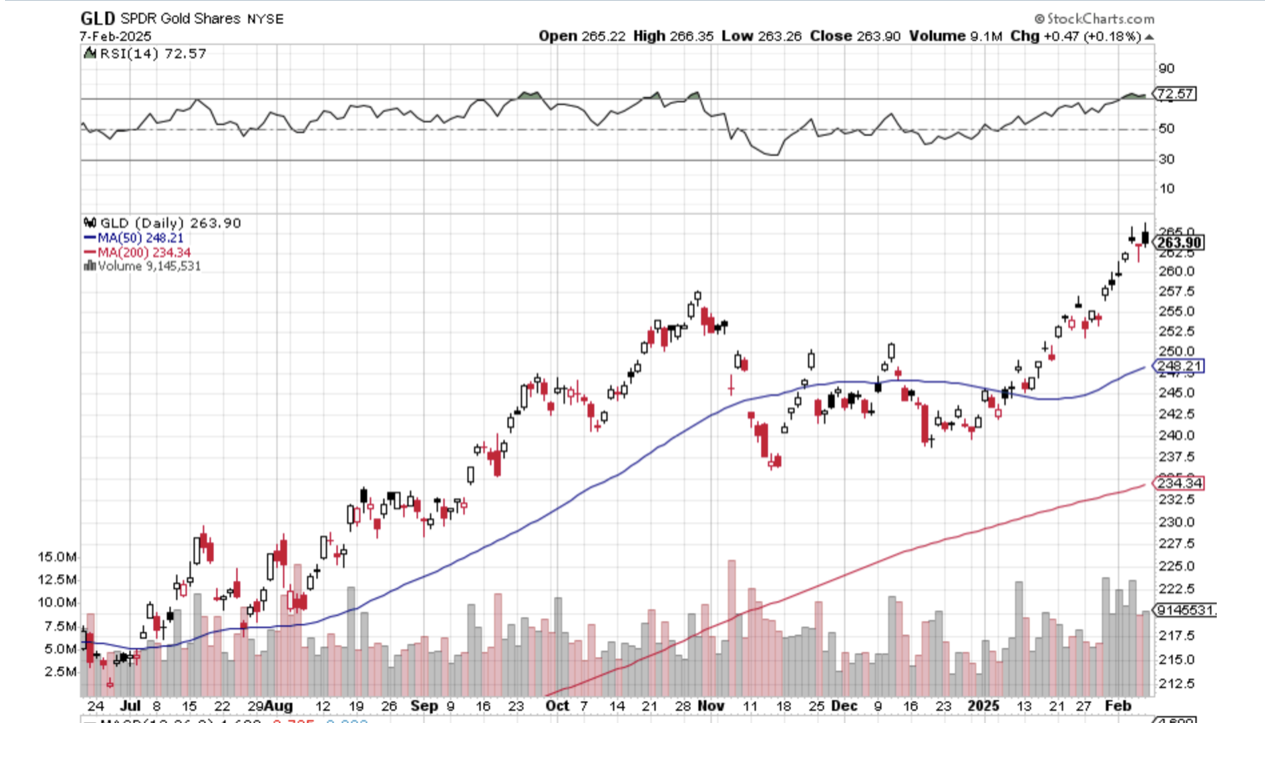
GOLD
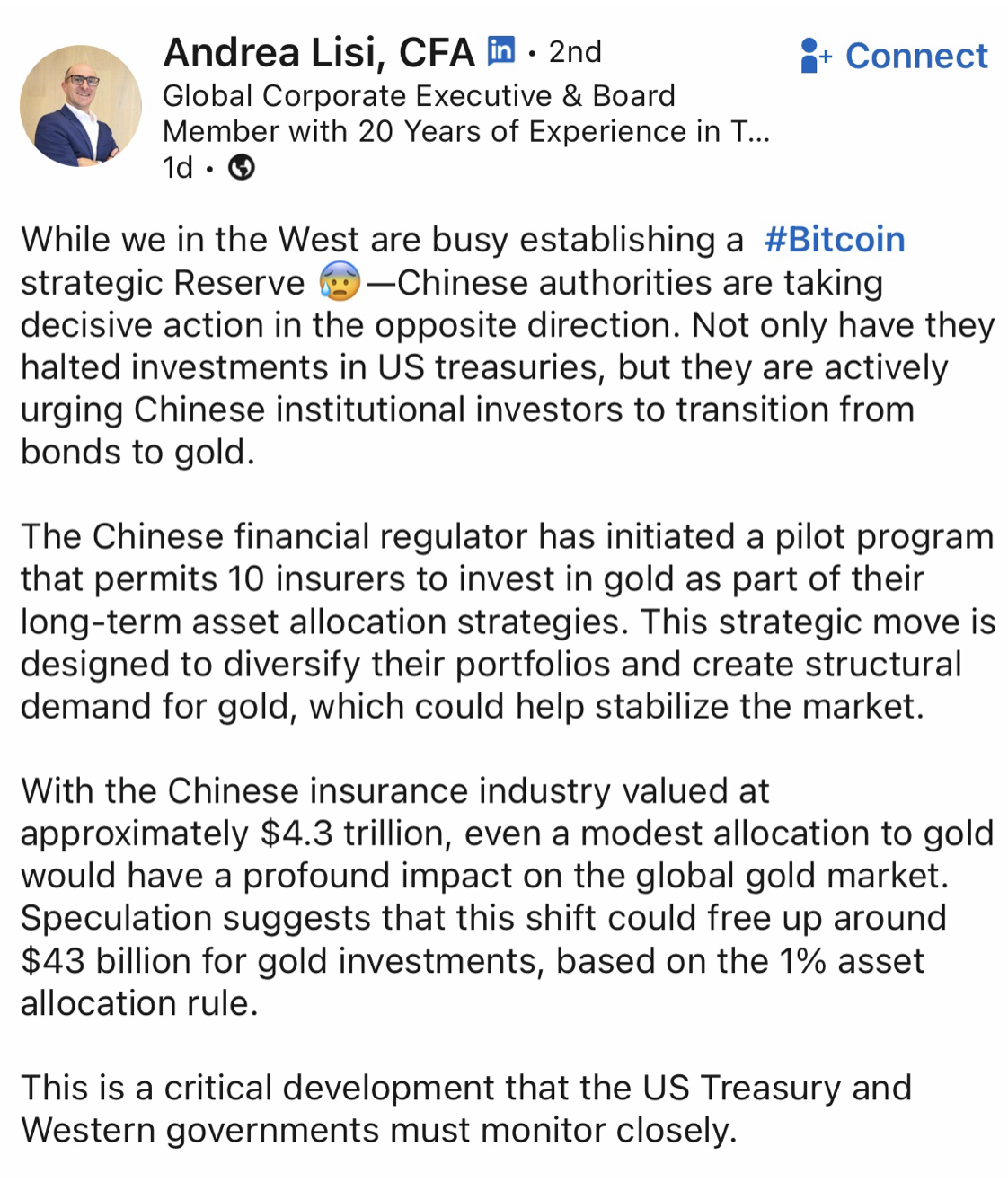
Gold can continue this rally for some time, but I am expecting the metal to eventually sell off in the medium term down to at least the $2,500 area.
Support: $2830/$2732
Resistance: $2900/$3000
BITCOIN
We can expect some more ranging behaviour for Bitcoin this week.
Support = ~ 91,000/89,000/85,000/80,000. Resistance = $108,000/$105,000
QI CORNER

HISTORY CORNER
On February 10



QUIZ CORNER
1/ In what decade was the internet created?
2/ What was the name of the first computer virus?
3/ What company was initially known as “Blue Ribbon Sports”?
4/ Who created the first credit card?
SOMETHING TO THINK ABOUT
“The decline of literature indicates the decline of a nation.”
(Johann Wolfgang von Goethe)

Cheers
Jacquie
Global Market Comments
February 10, 2025
Fiat Lux
Featured Trade:
(MARKET OUTLOOK FOR THE WEEK AHEAD or BACK TO BOOT CAMP)
(SPY), (EWG), (EWU), (TSLA), (NVDA), (VST)

I have a new outlook for the US stock markets.
The current government's economic policy reminds me a lot about the Marine Corps boot camp. Through harsh treatment and rigorous training, the Marines seek to destroy incoming recruits. They then spend 13 weeks rebuilding a new soldier from scratch who is obedient, respectful, follows orders, and is in much better physical condition. He is also a pretty good shot.
Since Trump inherited an almost perfect economy, with 3% real GDP growth, 2.8% inflation, and 4% unemployment, he has to break it first. Then he can spend the next four years rebuilding it and take credit for the recovery.
It looks like we are going to get more on the destruction front this week, with the US announcing European tariffs, which tanked stocks on Friday. We could remain in the destruction phase for the rest of the year. It sets up nicely at least a 20% correction sometime in 2025. Oh, and never buy on a Friday. All of the “shock and awe” announcements are occurring on the weekends. Wait for the Monday morning opening and buy the collapse.
It’s pretty clear that markets hate all things tariff-related. Can we please talk more about deregulation, which markets love? The reality is that markets don’t know how to price in Trump, swinging back and forth between euphoria one moment to Armageddon another. Best case, markets flat line. Worst case, they crash.
Here are some additional causes for concern. Big Tech was the only stock market sector that saw net inflows in 2024. It was also the only down sector in January. It just so happens to be the most overweight sector among almost all individuals and institutions, including yours. Big Tech now accounts for 35% of stock market capitalization. It is a concentration on steroids. So when we finally DO get a correction, it will be a big one, easily more than 10%.
Looking at stock market performance around the world since the 2008-09 financial crisis, it’s easy to see where the idea of American exceptionalism comes from. Since 2010, the German stock market (EWG) is up by 142% and the UK (EWU) by 112%. During the same 15-year period, the S&P 500 (SPY) soared by 1,112%, an outperformance of an eye-popping 8:1.
Since the beginning of 2025, the German stock market (EWG) is up by 12.7% and the UK (EWU) by 9%. In the meantime, the S&P 500 has managed a mere 3.5% gain. What has happened? Has something changed? Is American exceptionalism a thing of the past? If so, it would be terrible news for stocks.
In the rest of the world, 26% of corporate cash flow is reinvested in the company. In the US, it’s 42%, and for the Magnificent Seven, it’s 57%. This is American Exceptionalism distilled by a single driver. If this continues, that’s great. If rampant uncertainty drives US companies into hiding, it won’t. 90-day US Treasury bills yielding a risk-free 4.2% look pretty good in this new chaotic world, especially if you are still sitting on the gigantic profits of the past two years.
This is why Foreigners have been pouring money into the US as fast as possible and has been a major factor in our price appreciation until now. Foreign investors now own $23 trillion worth of American debt, equities, and real estate today versus only $8 trillion in 2017.
As I mentioned last week, when I suggest a European investment idea to a European, they tell me I am out of my mind and beg for more US investment ideas. I know this because about one-third of the Mad Hedge subscribers are aboard in 134 countries.
And this is why markets are so jittery. Some 23% of all the completed cars sold in the US are actually made in Mexico and Canada. For auto parts, the figure is more than 50%. The US sold 3.7 million vehicles made in Mexico and Canada. The new 25% tariff will increase prices by $6,300 per vehicle. Average car prices are now at $50,000 and are already at all-time highs. That works out to a $22.7 billion tax on the buyers of new cars who are mostly middle class.
My bet? That the prices of used cars soar, which aren’t subject to any such taxes.
Turn off the TV. Ignore the noise. Buy the down days and sell the up days. It’s no more complicated than that. If you want to play headline ping pong with the president, be my guest. But you’ll lose your shirt.
February has started with a breakeven +0.57% return so far.
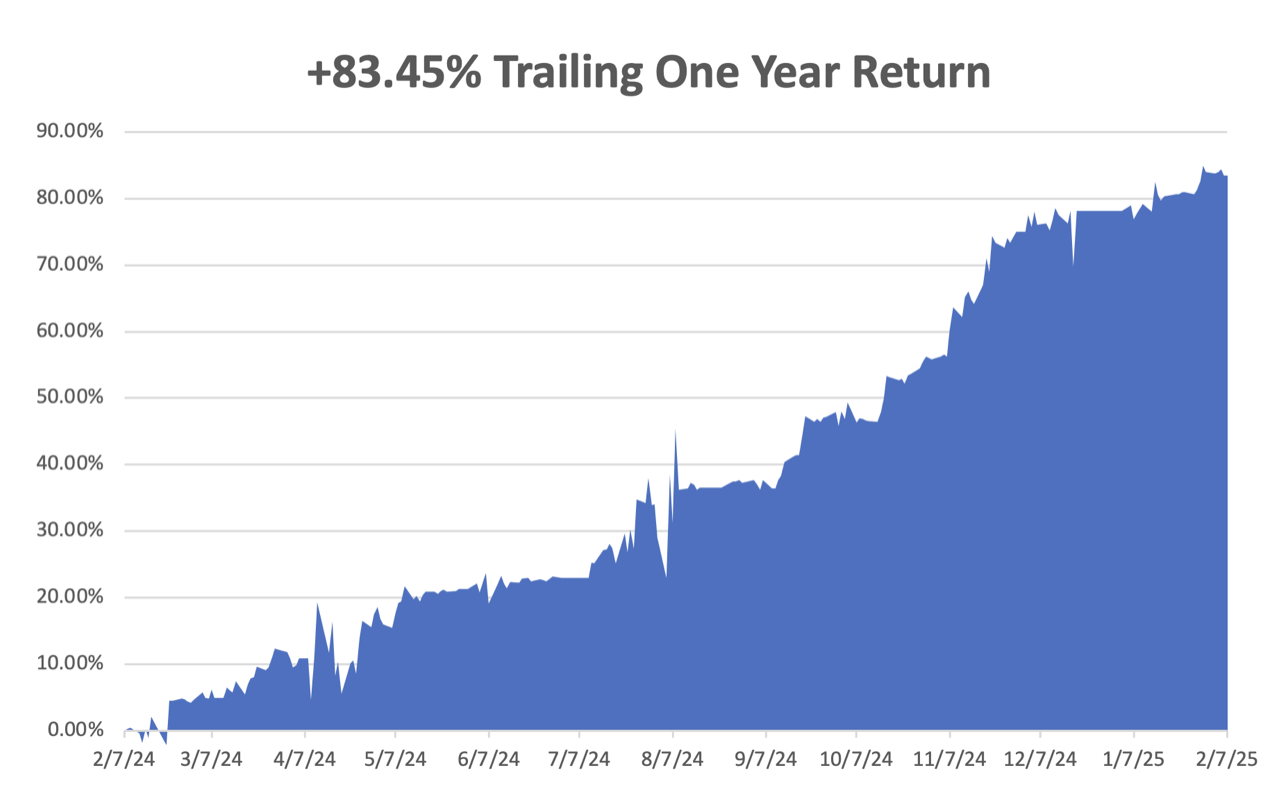
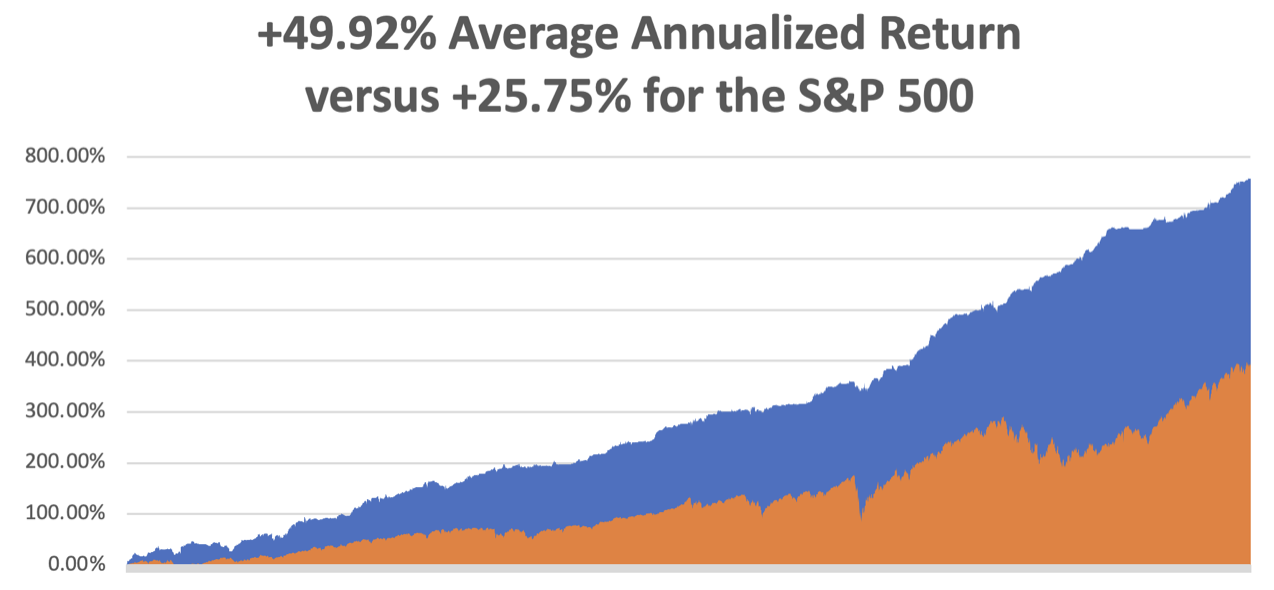
That takes us to a year-to-date profit of +6.25% so far in 2025. My trailing one-year return stands at +83.45% as a bad trade a year ago fell off the one-year record. That takes my average annualized return to +5.23% and my performance since inception to +757.12%.
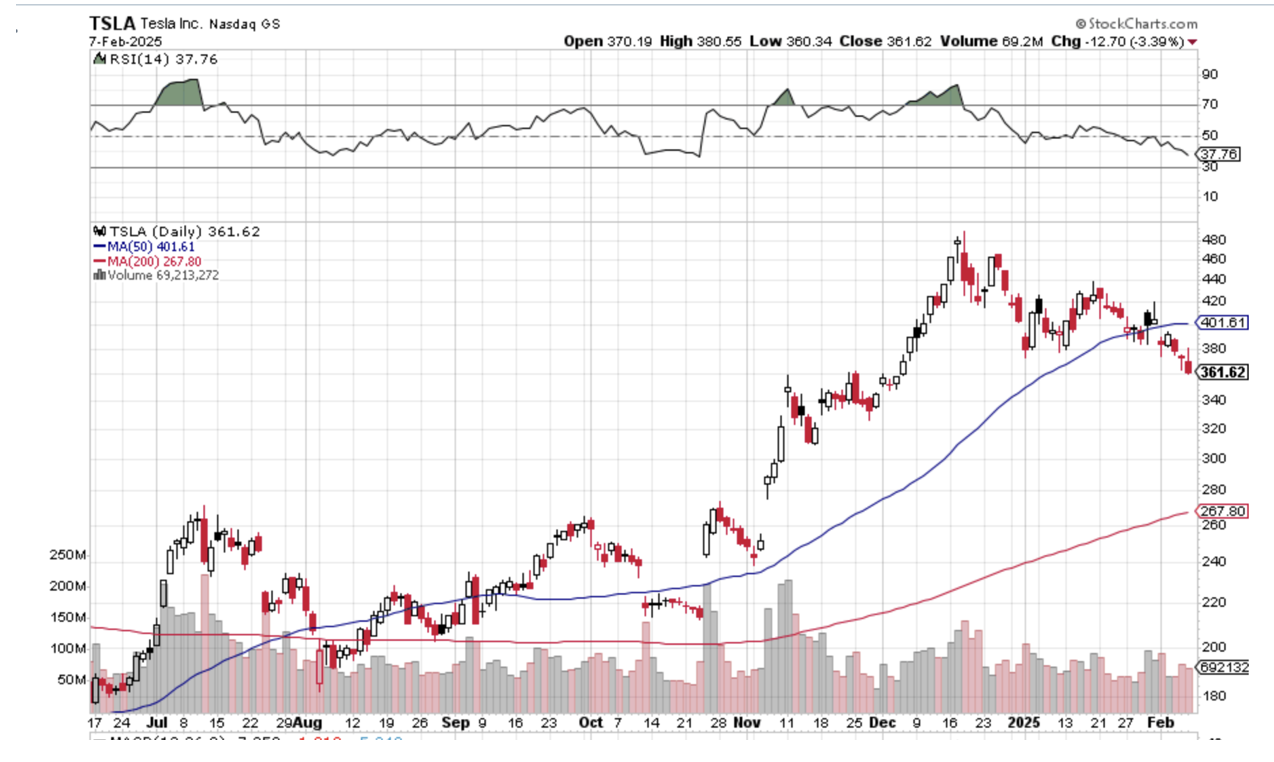
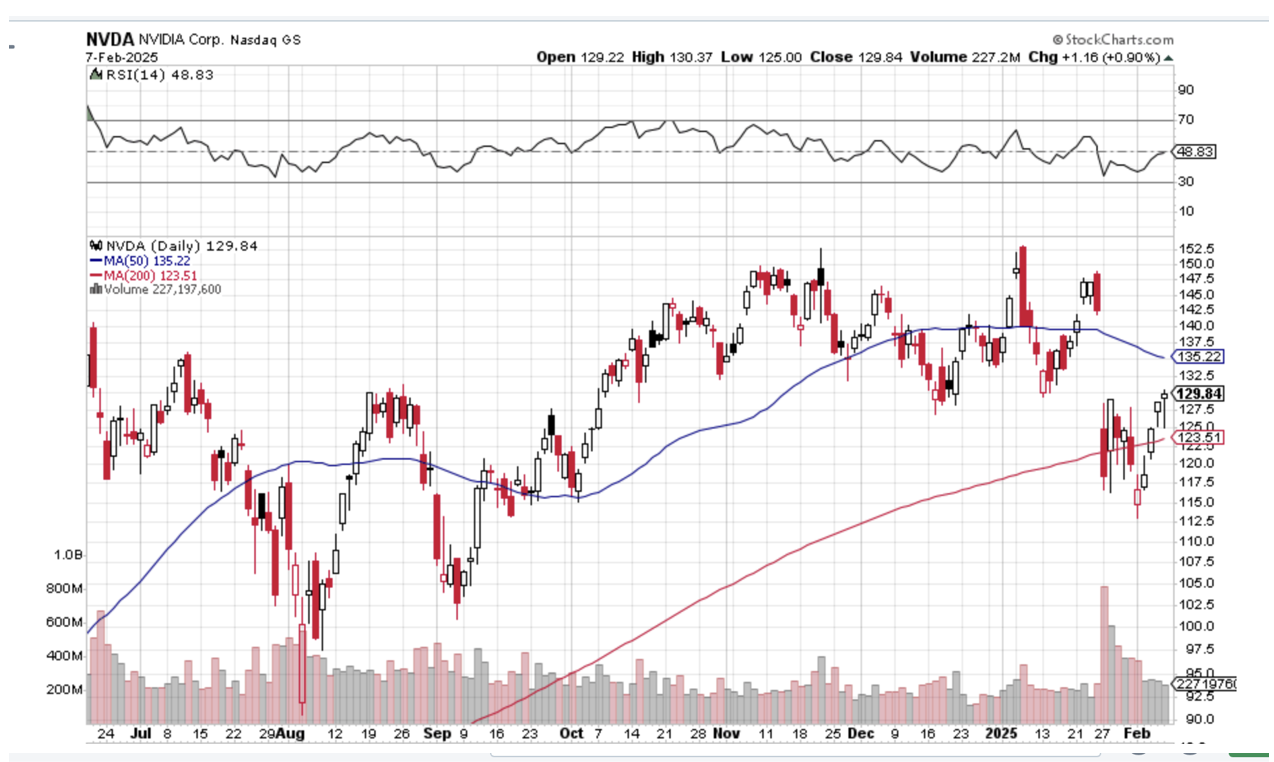
I used the weakness in Tesla to double up my long there. That tops up our portfolio to a long in (TSLA), a short in (TSLA), and longs in (NVDA) and (VST).
Some 63 of my 70 round trips, or 90%, were profitable in 2023. Some 74 of 94 trades have been profitable in 2024, and several of those losses were really break-even. That is a success rate of +78.72%.
Try beating that anywhere.
My Ten-Year View – A Reassessment
We have to substantially downsize our expectations of equity returns in view of the election outcome. My new American Golden Age, or the next Roaring Twenties, is now looking at multiple gale force headwinds. The economy will completely stop decarbonizing. Technology innovation will slow. Trade wars will exact a high price. Inflation will return. The Dow Average will rise by 600% to 240,000 or more in the coming decade. The new America will be far more efficient and profitable than the old.
My Dow 240,000 target has been pushed back to 2035.
On Monday, February 10, nothing of note takes place.
On Tuesday, February 11, at 8:30 AM EST, the NFIB Business Optimism Index is released.
On Wednesday, February 12 at 8:30 AM, the Core Inflation Rate is printed.
On Thursday, February 13 at 8:30 AM, the Weekly Jobless Claims are disclosed.
On Friday, February 14 at 8:30 AM, the Producer Price Index is announced. At 2:00 PM the Baker Hughes Rig Count is printed.
As for me, it was with a heavy heart that I boarded a plane for Los Angeles to attend a funeral for Bob, the former scoutmaster of Boy Scout Troop 108.
The event brought a convocation of ex-scouts from up and down the West coast and said much about our age.
Bob, 85, called me two weeks ago to tell me his CAT scan had just revealed advanced metastatic lung cancer. I said, “Congratulations Bob, you just made your life span.”
It was our last conversation.
He spent only a week in bed and then was gone. As a samurai warrior might have said, it was a good death. Some thought it was the smoking he quit 20 years ago.
Others speculated that it was his close work with uranium during WWII. I chalked it up to a half-century of breathing the air in Los Angeles.
Bob originally hailed from Bloomfield, New Jersey. After WWII, every East Coast college was jammed with returning vets on the GI bill. So he enrolled in a small, well-regarded engineering school in New Mexico in a remote place called Alamogordo.
His first job after graduation was testing V2 rockets newly captured from the Germans at the White Sands Missile Test Range. He graduated to design ignition systems for atomic bombs. A boom in defense spending during the fifties swept him up to the Greater Los Angeles area.
Scouts I last saw at age 13 or 14 were now 60, while the surviving dads were well into their 80s. Everyone was in great shape, those endless miles lugging heavy packs over High Sierra passes obviously yielding lifetime benefits.
Hybrid cars lined both sides of the street. A tag-along guest called out for a cigarette, and a hush came over a crowd numbering over 100.
Apparently, some things stuck. It was a real cycle of life weekend. While the elders spoke about blood pressure and golf handicaps, the next generation of scouts played in the backyard or picked lemons off a ripening tree.
Bob was the guy who taught me how to ski, cast rainbow trout in mountain lakes, transmit Morse code, and survive in the wilderness. He used to scrawl schematic diagrams for simple radios and binary computers on a piece of paper, usually built around a single tube or transistor.
I would run off to Radio Shack to buy WWII surplus parts for pennies on the pound and spend long nights attempting to decode impossibly fast Navy ship-to-ship transmissions. He was also the man who pinned an Eagle Scout badge on my uniform in front of beaming parents when I turned 15.
While in the neighborhood, I thought I would drive by the house in which I grew up, once a modest 1,800 square foot ranch-style home to a happy family of nine. I was horrified to find that it had been torn down, and the majestic maple tree that I planted 40 years ago had been removed.
In its place was a giant, 6,000-square-foot marble and granite monstrosity under construction for a wealthy family from China.
Profits from the enormous China-America trade have been pouring into my hometown from the Middle Kingdom for the last decade, and mine was one of the last houses to go.
When I was class president of the high school here, there were 3,000 white kids and one Chinese. Today, those numbers are reversed. Such is the price of globalization.
I guess you really can’t go home again.
At the request of the family, I assisted in the liquidation of his investment portfolio. Bob had been an avid reader of the Diary of a Mad Hedge Fund Trader since its inception, and he had attended my Los Angeles lunches.
It seems he listened well. There was Apple (AAPL) in all its glory at a cost of $21. I laughed to myself. The master had become the student, and the student had become the master.
Like I said, it was a real circle of life weekend.

Scoutmaster Bob

1965 Scout John Thomas

The Mad Hedge Fund Trader at Age 11 in 1963

Stay Healthy,
John Thomas
CEO & Publisher
The Diary of a Mad Hedge Fund Trader
Mad Hedge Technology Letter
February 7, 2025
Fiat Lux
Featured Trade:
(TESLA IS IN A PICKLE)
(TSLA)

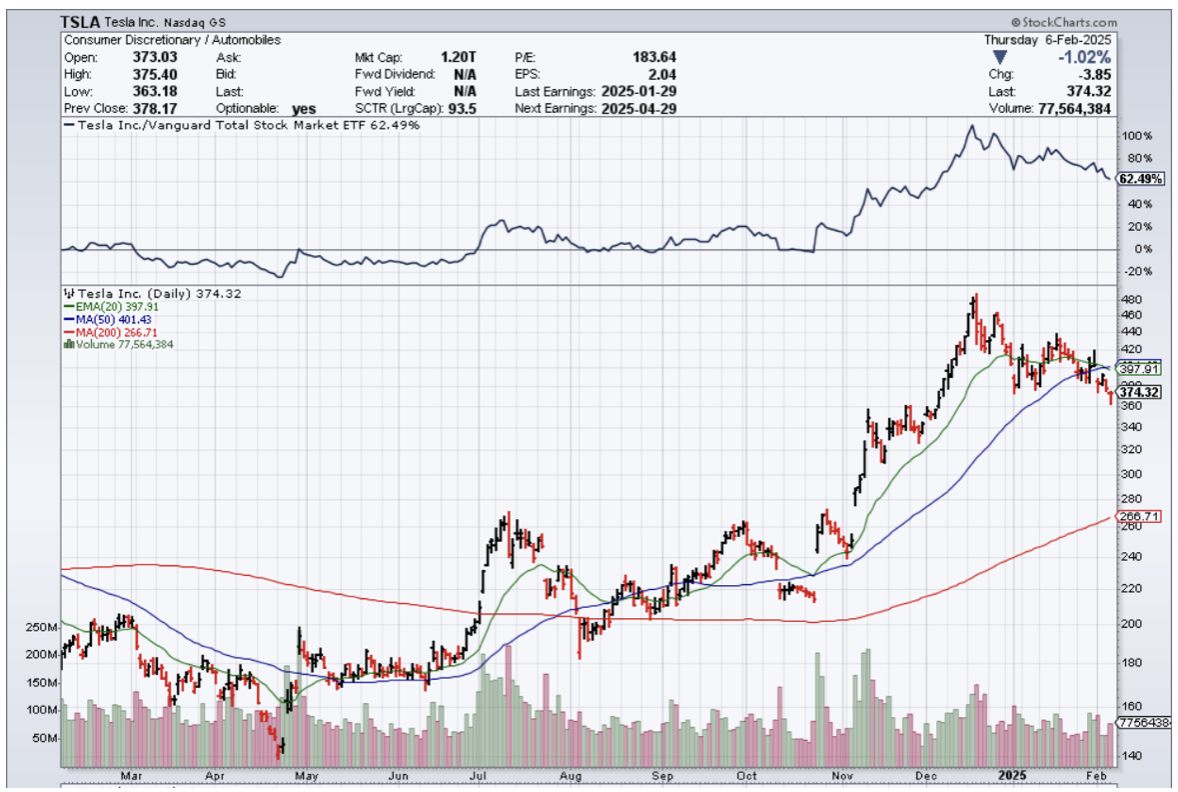
Tesla stock has been falling since the mid of last December, and I expect the short-term trajectory of the stock to be a real slippery slope.
There are a variety of factors causing the stock to struggle.
I won’t ignore the issue that the eccentric and strongly opinionated CEO Elon Musk has aggressively inserted himself into European politics and turning off the political establishment in Europe, which has always been radically left, is just asking for trouble.
It’s my opinion that he has essentially written off doing business in Europe and is throwing his efforts on making political inroads in the old continent.
Long term, I am not sure Musk can compete against the Chinese pricing power, and securing political gains in Western government will help his empire grow.
His sights have shifted away from EVs to rockets, and the stock will likely suffer from this.
Don’t forget that Europeans are facing a stark and grueling cost of living crisis that is degrees of magnitudes worse than what is happening in the United States.
Interesting that Americans complain that rental costs consume half the salary, but in Europe, tenant obligations via leases consume 100% of the average white-color job salary.
The end result is that young Europeans cannot afford to buy cars, whether it be gas powered or electric.
How bad are things for Tesla?
Sales of its EVs dropped 13% in the European Union in 2024.
They are also facing growing pressure as Chinese and Euorpean rivals launch a wave of cheaper electric vehicles.
Tesla saw big drops in sales in major markets dominated by ultra-progressive politics like Germany, France, and Italy.
In Germany, the hub of Europe's auto industry and the home of Tesla's Berlin gigafactory, sales of Tesla vehicles fell by 41% in 2024, outstripping the 27% sales decline in the general battery EV market.
Swedish brand Volvo, which is owned by Chinese conglomerate Geely, saw its sales rise nearly 30% in the EU last year, driven by the popularity of its $40,000 EX30 electric crossover.
Several German companies have announced they will stop buying Tesla vehicles over Musk's political and social comments in recent months.
This trend is likely to grow in 2025.
Musk has also become entangled in UK politics, feuding with British Prime Minister Keir Starmer.
I expect Musk's active political involvements to have a damaging impact on Tesla's European sales for the foreseeable future, and rivals would likely reap the benefit of disgruntled Tesla owners ditching their vehicles.
Tesla makes a great car – I don’t deny that.
Musk has already sold 2 to 3 EVs to every Western progressive that could ever want an EV. Conservatives aren’t interested in EVs. Try selling a Tesla in rural Poland to a Polish milk farmer where it would be almost impossible to find a charging station. EVs are almost entirely reserved for an urban environment where EV infrastructure is beefy and widespread.
Since Musk cannot get that EV sales growth boost in the short-term, he is riding on the coattails of the global populist movement to secure political victories, and it is working to his benefit.
At the end of the day, consumers would ultimately be more concerned about factors such as price and performance, rather than Musk's politics, but with people who can afford buying multiple EVs in Europe, they care about the name on your passport, the university you went to, and especially your political views.
Europe is just like that, and Musk is going ahead and alienating the European market.
In the short-term, I don’t see a lot of individual catalysts that could boost Tesla in the short-term, although after the Deepseek black swan, Tesla could ride a general tech market revision to the mean rally.
Let’s hope the general tech market heals itself from the Deepseek nuclear bomb, but I would stay away from Tesla in the short-term and opt for something more attractive in tech like Meta or Netflix in 2025.

When John identifies a strategic exit point, he will send you an alert with specific trade information as to what security to sell, when to sell it, and at what price. Most often, it will be to TAKE PROFITS, but, on rare occasions, it will be to exercise a STOP LOSS at a predetermined price to adhere to strict risk management discipline. Read more
(IS THE AI WAKE UP CALL FROM CHINA A STORM IN A TEACUP OR SOMETHING BIGGER?)
February 7, 2025
Hello everyone
China and Australia are having a spat, or Is China & the world having a spat?
Australia has moved to ban the Chinese AI company Deep Seek from all its government systems and devices on national security grounds. Australia joins Taiwan and the U.S. state of Texas, which have similar Deep Seek restrictions on government phones. One European country – Italy – has gone even further. It has banned Deep Seek entirely by forcing its removal from app stores.
China has accused Australia of ideological discrimination and following in the footsteps of the U.S., which is also approaching the app with caution.
In the U.S., both NASA and the Pentagon have ordered staff to steer clear of Deep Seek.
I think there could be further shocks to the market from the AI corner.

Palantir has catapulted itself into the clouds
I recommended Palantir on March 20, 2024, when it was $23.00.
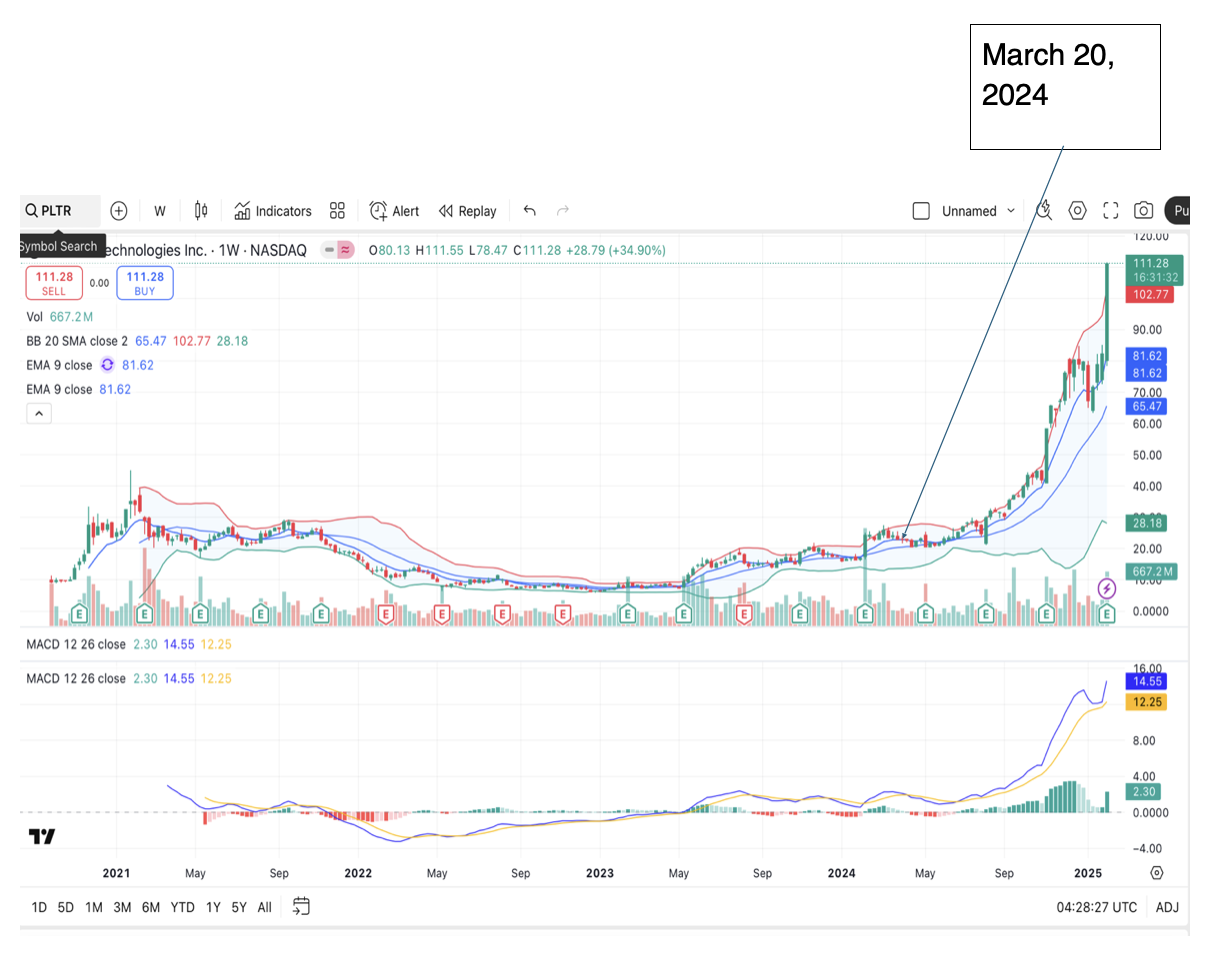
We are still holding this stock. At its closing price on Thursday at $111.28, we have made 383% on this stock. So, you would be wise to take some profits off the table.
Shares of the government contractor and artificial intelligence play are trading at a 62 forward price-to-sales ratio, the highest of any company in the S&P500. The next closest nonfinancial stock in terms of forward price-to-sales is Texas Pacific Land Corp, at 32 times estimates for sales over the next year, according to FactSet data.
Palantir’s valuation comes after a 24% jump in its shares last Tuesday as the company reported a 36% increase in sales for the last quarter and raised its sales forecast for the full year.
Analysts agree that Palantir’s stock price is not sustainable even if it does become a primary contractor for the U.S. government that is looking to modernize processes and increase efficiency.
Jefferies software analyst Brent Thill notes that although the stock’s fundamentals are strong, PLTR would have to raise growth to 50% for 4 years and trade at 13.5x CY28E revenue just to hold its stock price. Thill’s stock price target is $28.00. Palantir closed at $111.28 on Thursday.
Could this rally be typical of retail trader enthusiasm, which often represents late-stage bull markets?
QI CORNER

Cheers
Jacquie