Mad Hedge Technology Letter
March 4, 2024
Fiat Lux
Featured Trade:
(MIDDLE MANAGERS ON THE CHOPPING BLOCK)
(NVDA), (SMCI)


Mad Hedge Technology Letter
March 4, 2024
Fiat Lux
Featured Trade:
(MIDDLE MANAGERS ON THE CHOPPING BLOCK)
(NVDA), (SMCI)
Sure, the narrative out there is that generative AI will transform the technology sector and the companies that coalesce around it.
That doesn’t always mean it will be great for everyone.
Many jobs can be mundane and boring.
AI is supposed to solve all that by unlocking time for these workers to do other tasks.
However, one trend that is picking up speed that could turn into a runaway freight train is the evolution of AI destroying most of the human job market.
It’s happening faster than people think.
If everyone loses their jobs except for a handful of CEOs running a company with AI, who will pay rent to small or corporate landlords?
Who will partake in a trip to a sports bar when these patrons lack salaries that are replaced by AI.
The next battleground of AI job removal is now reaching up to the middle manager echelon.
Confidence among middle-managers dropped to its worst-ever reading in February, pushing a broader index of US employee sentiment down to a record low.
The group’s confidence is now similar to that of entry-level workers, which fell last month to the lowest in seven years.
Decades after automation began taking and transforming manufacturing jobs, artificial intelligence is coming for the corporate management.
The list of white-collar layoffs is growing almost daily and includes jobs cuts at Google, Duolingo and UPS in recent weeks.
While the total number of jobs directly lost to generative AI remains low, some of these companies and others have linked cuts to new productivity-boosting technologies such as machine learning and other AI applications.
Generative AI could soon upend a much bigger share of white-collar jobs, including middle and high-level managers,
Generative AI speeds up routine tasks or make predictions by recognizing data patterns.
It has the power to create content and synthesize ideas—in essence, the kind of knowledge work millions of people now do behind computers.
Across all ranks, employee confidence fell to 45.1%, the lowest in data back to 2016.
Middle managers have to both direct more junior employees and answer to the senior ranks, making the position uniquely prone to burnout in the corporate ladder.
Tech firms like Meta and Google zoned in on those positions for cuts last year.
In announcing the job cuts, the companies cited similar themes around productivity and efficiency.
At some big tech firms, that can be gauged by how many people work under you, providing an incentive to overdo the staffing levels.
Companies that did just that are increasingly reducing staff and driving confidence down with it.
Although highly positive for revenue estimates, human workers will need to adjust to a modern cutthroat working environment where they need to do more and get paid less in technology.
The ironic thing about this is that the very technology they lusted over is the same technology putting the same workers out of a job.
Better be careful what you wish!
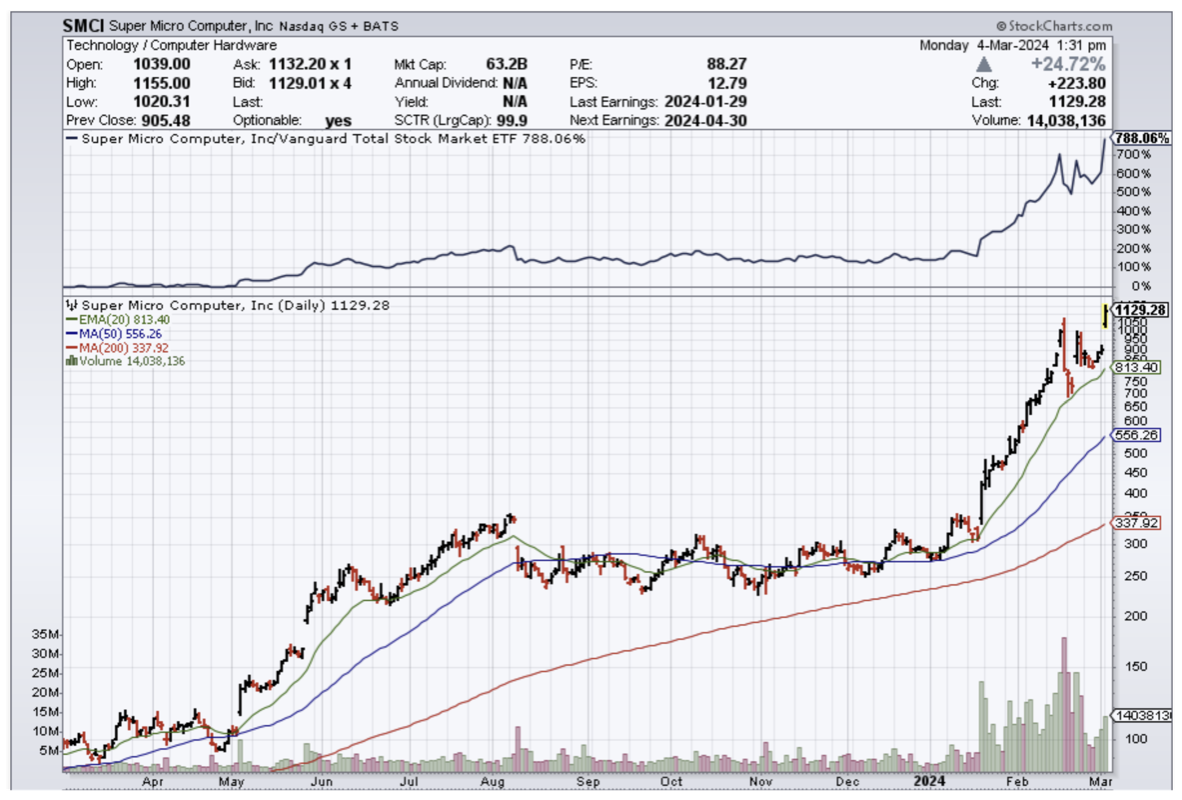
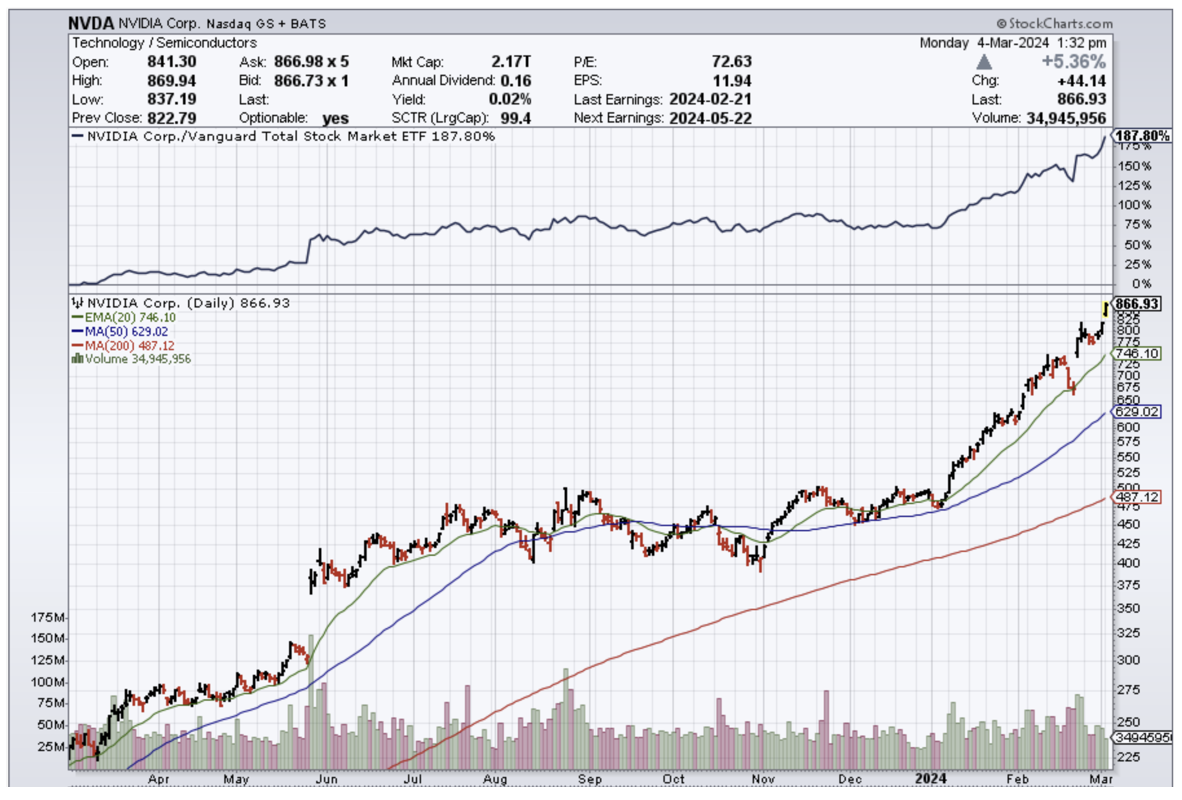
At a stock market level, this is highly positive and will lead to higher shares in tech companies like Nvidia and Super Micro computers.
Remember that wages are usually the highest expense and reducing them will almost always result in higher share prices.
It’s good that low confidence doesn’t affect the execution or existence of AI.
This is significantly bullish tech stocks short and long term and I expect every quarterly earnings transcript to talk about reducing staffing levels and higher efficiency.

“The way to build billion dollar companies is to first build something people love.” – Said CEO of OpenAI Sam Altman


When John identifies a strategic exit point, he will send you an alert with specific trade information as to what security to sell, when to sell it, and at what price. Most often, it will be to TAKE PROFITS, but, on rare occasions, it will be to exercise a STOP LOSS at a predetermined price to adhere to strict risk management discipline. Read more

(COMPOUND INTEREST IS THE SECRET TO GROWING LONG-TERM WEALTH)
March 4, 2024
Hello everyone,
Week ahead calendar
Monday, March 4, 2024
Switzerland Inflation Rate
Previous: 1.3%
Time: 2:30am
Tuesday, March 5, 2024
9:45 a.m. PMI Composite final (February)
9:45 a.m. S&P PMI Services final (February)
10 a.m. Durable Orders final (January)
10 a.m. Factory Orders (January)
10 a.m. ISM Services PMI (February)
Australia GDP Growth Rate
Previous: 2.1%
Time: 7:30pm
Earnings: Ross Stores, Target
Wednesday, March 6, 2024
8:15 a.m. ADP Employment Survey (February)
10 a.m. JOLTS Job Openings (January)
10 a.m. Wholesale Inventories final (January)
10 a.m. FED Beige Book
Canada Interest Rate Decision
Previous: 5.0%
Time: 9:45am
Earnings: Campbell Soup
Thursday, March 7, 2024
8:30 a.m. Continuing Jobless Claims (02/24)
8:30 a.m. Initial Claims (03/02)
8:30 a.m. Unit Labour Costs final (Q4)
8:30 a.m. Productivity SAAR final (Q4)
8:30 a.m. Trade Balance (January)
3 p.m. Consumer Credit (January)
Euro Area Interest Rate Decision
Previous: 4.5%
Time: 8:15 am
Earnings: Broadcom, Costco Wholesale, Kroger
Friday, March 8, 2024
8:30 a.m. Hourly Earnings preliminary (February)
8:30 a.m. Average Workweek preliminary (February)
8:30 a.m. Manufacturing Payrolls (February)
8:30 a.m. Private Nonfarm Payrolls (February)
8:30 a.m. Unemployment Rate (February)
Macroeconomic concerns will take center stage for investors this week. Fed Chair Jerome Powell is set to give his semiannual monetary policy update to the House of Representatives on Wednesday, and the Senate on Thursday, testimonies that will be dissected by traders for any insight into when lower rates are coming.
Rate cuts are now expected to start later in the year and Wall Street forecasts fewer of them.
U.S. debt now stands at nearly $34.4 trillion. It rises by $1 trillion about every 100 days.
Turkish annual inflation soars to 67% in February. And we think we have problems!
Next Bitcoin target: $68,550.
Albert Einstein called compound interest the eighth wonder of the world. “He who understands it, earns it. He who doesn’t, pays it.” Obviously, without it, we would all be poorer. Compound interest describes the ability to earn not only interest on the principle but also reinvested interest on the interest.
Warren Buffett believes successful investing is like rolling a little snowball down a very long hill – the longer the hill, the bigger the snowball.
Buffett advises that even with a small sum to start, one can accumulate wealth significantly throughout one’s life. For example, $10,000 with compound interest of 10% annually is worth almost $175,000 in 30 years, more than $450,000 in 40 years and $1.17 million in 50 years.
Buffett bought his first stock, Cities Service Preferred for $38 a share at the age of 11. By 16, he had amassed the equivalent of $53,000 in today’s dollars.
In 1965, Buffett took control of the troubled textile manufacturing company Berkshire Hathaway and began using it as a holding company for the many businesses and stocks he purchased over the following decades.
Today, his conglomerate owns everything from BNSF Railway (the old Burlington Northern Santa Fe) to ice cream shop chain Dairy Queen, from auto insurer Geico to 6% of Apple, boasting a total market value above $900 billion.
“The elementary mathematics of compound interest is one of the most important models there is on earth.”
REITS: I wrote recently about some REITS. For those who wanted a recap on the names I mentioned, they are listed here: Realty Income, data centers, Prologis and Equinix, senior housing facilities, Ventas and Welltower.



Cheers,
Jacquie
Global Market Comments
March 4, 2024
Fiat Lux
(MARKET OUTLOOK FOR THE WEEK AHEAD, or WHO NEEDS THE FED?
(AAPL), (TSLA), (AAPL), (GOOGL), (MSFT), (MSFT), (BRK/B), (BA), (JPM), (BA), (C), (SNOW), (NVDA)

I have to tell you that this has been a really good week to be John Thomas.
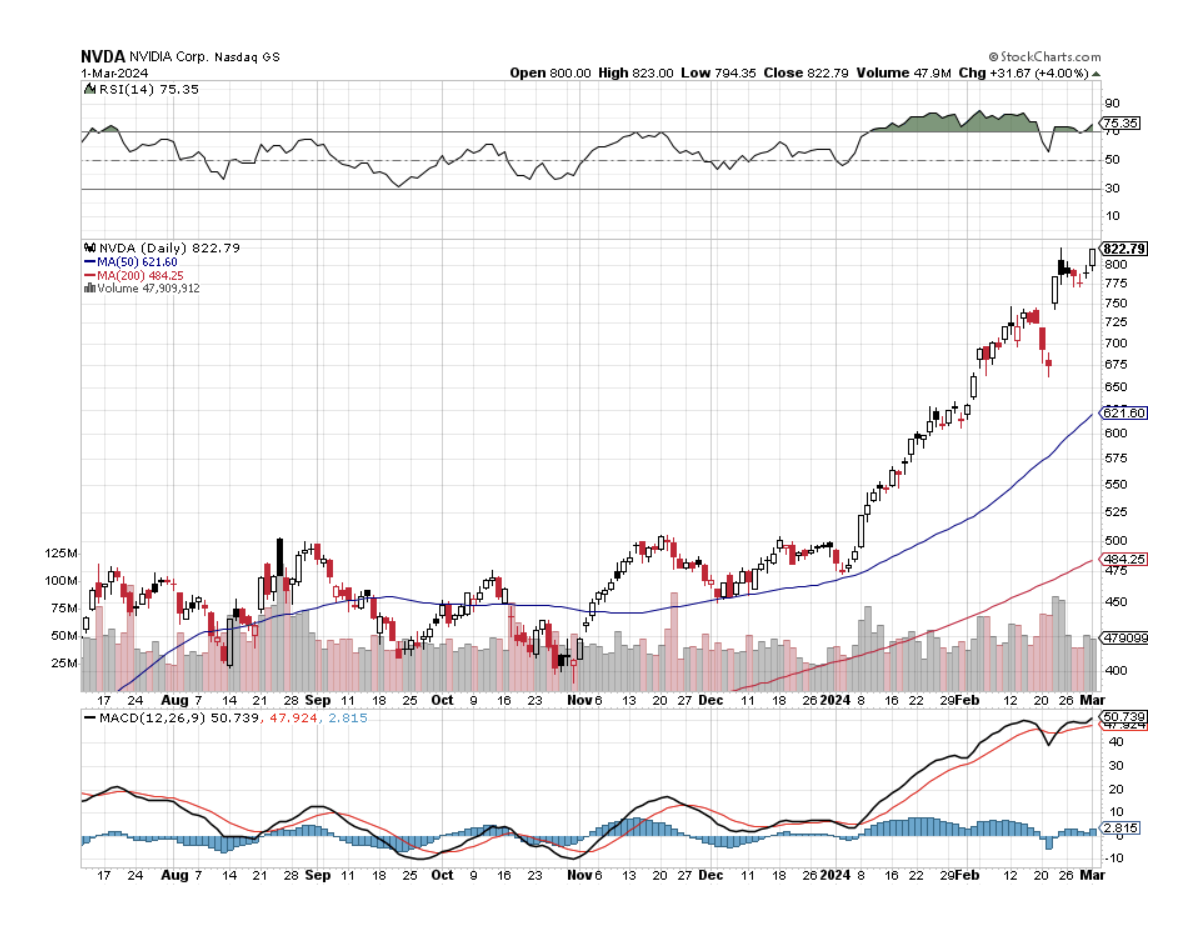
The accolades have been pouring in. During February, my followers have made the most money in their lives, including myself. NVIDIA (NVDA), up 110% in four months, is now the largest position in everyone’s portfolios, if not because of my prodding, then through capital appreciation alone.
Institutions limited to keeping single holdings to 5% or 10% got away with delaying their rebalancing as long as possible.
Is it 1995 for 2,000? I vote for the former, meaning that the current melt-up could have five more years to run with occasional breaks.
Exploding corporate profits and rocketing share capitalizations have replaced the Federal Reserve as a new endless source of liquidity, as I knew it would.
Who needs the Fed? Who needs interest rate cuts?
Best of all, this new source of super liquidity isn’t at the whim of a single man, nor subject to politics of any kind. It has in fact become its own self-fulfilling prophecy.
Dow 240,000 here we come, as I have been endlessly repeating for years!
It says a lot that hedge funds, the “smart money,” are heavily overweight the Magnificent Seven, while retail mutual funds, the “dumb money” are underweight. The technology they are overweight is mostly in Apple, that great backward-looking company. This implies that to catch up mutual funds are going to have to buy hundreds of billions of Mag Seven stocks and sell their Apple to pay for the move.
The largest single source of demand for stocks will be the $1.25 trillion in corporate buybacks. What will they buy? Apple (AAPL), Alphabet (GOOGL), and Microsoft (MSFT), the three largest purchasers of their own stocks.
When the leader of the fastest-growing, best-performing company with the top-performing stock speaks, you have to pay attention. The next $1 trillion build-out in AI infrastructure is here, says NVIDIA CEO Jensen Huang, now one of the richest men in the world.
Have a good week! I’ll be spending my time shoveling snow.

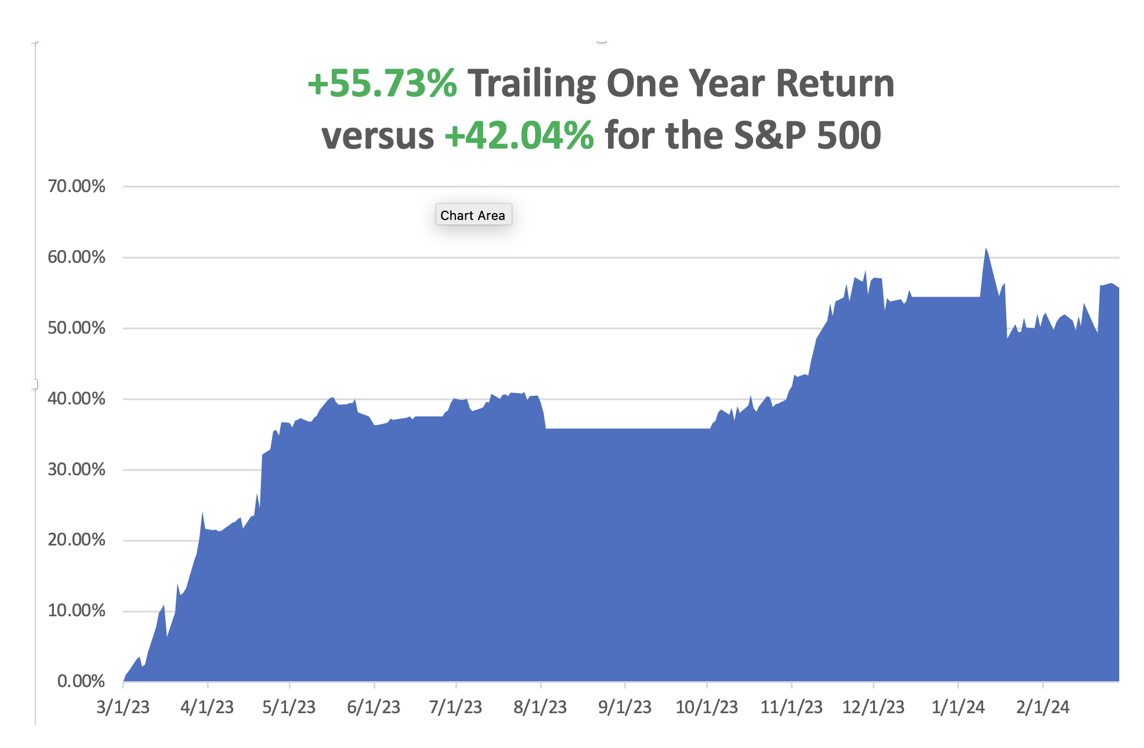
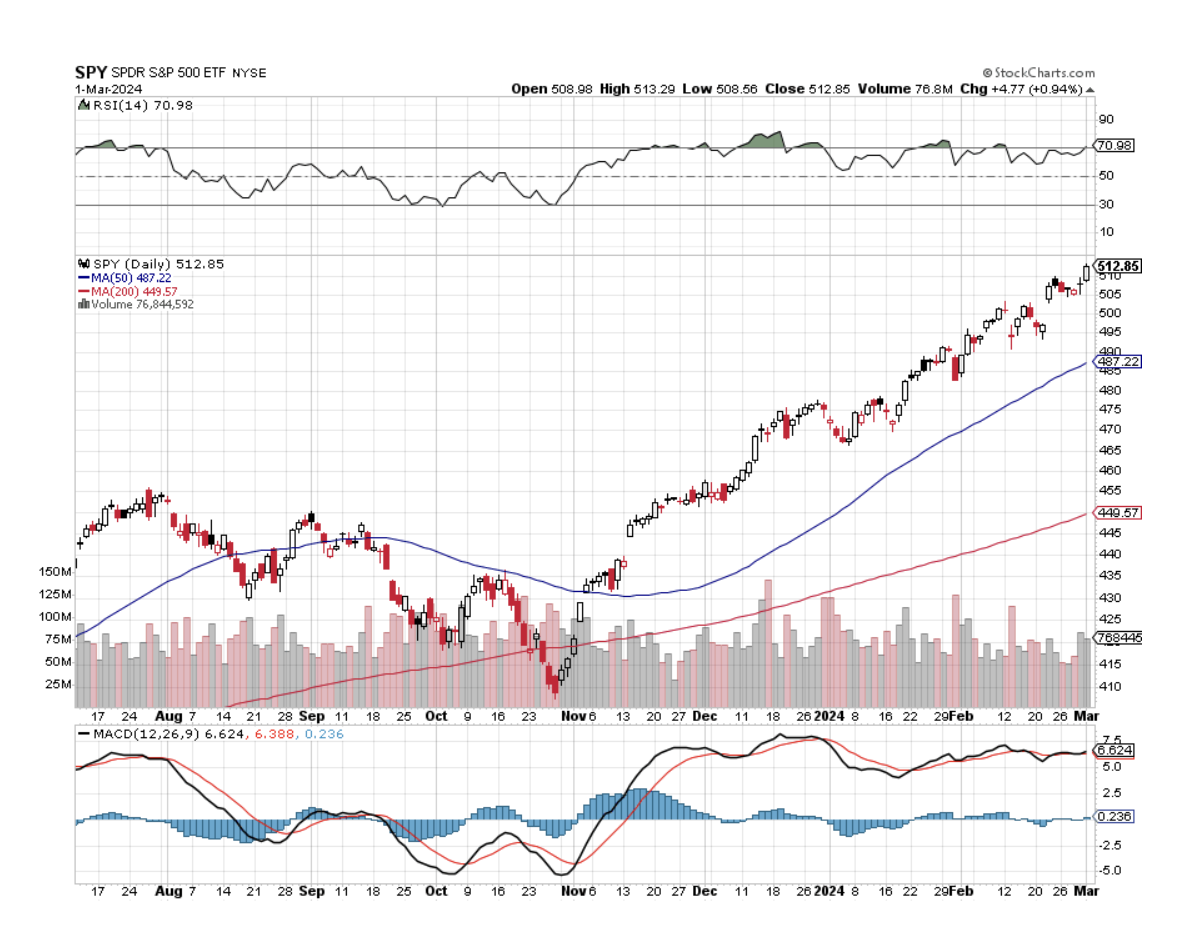
In February, we closed up +7.42%. My 2024 year-to-date performance is at +3.14%. The S&P 500 (SPY) is up +7.33% so far in 2024. My trailing one-year return reached +55.73% versus +42.04% for the S&P 500.
That brings my 15-year total return to +679.77%. My average annualized return has recovered to +51.30%.
Some 63 of my 70 trades last year were profitable in 2023. Some 9 of 13 trades have been profitable so far in 2024.
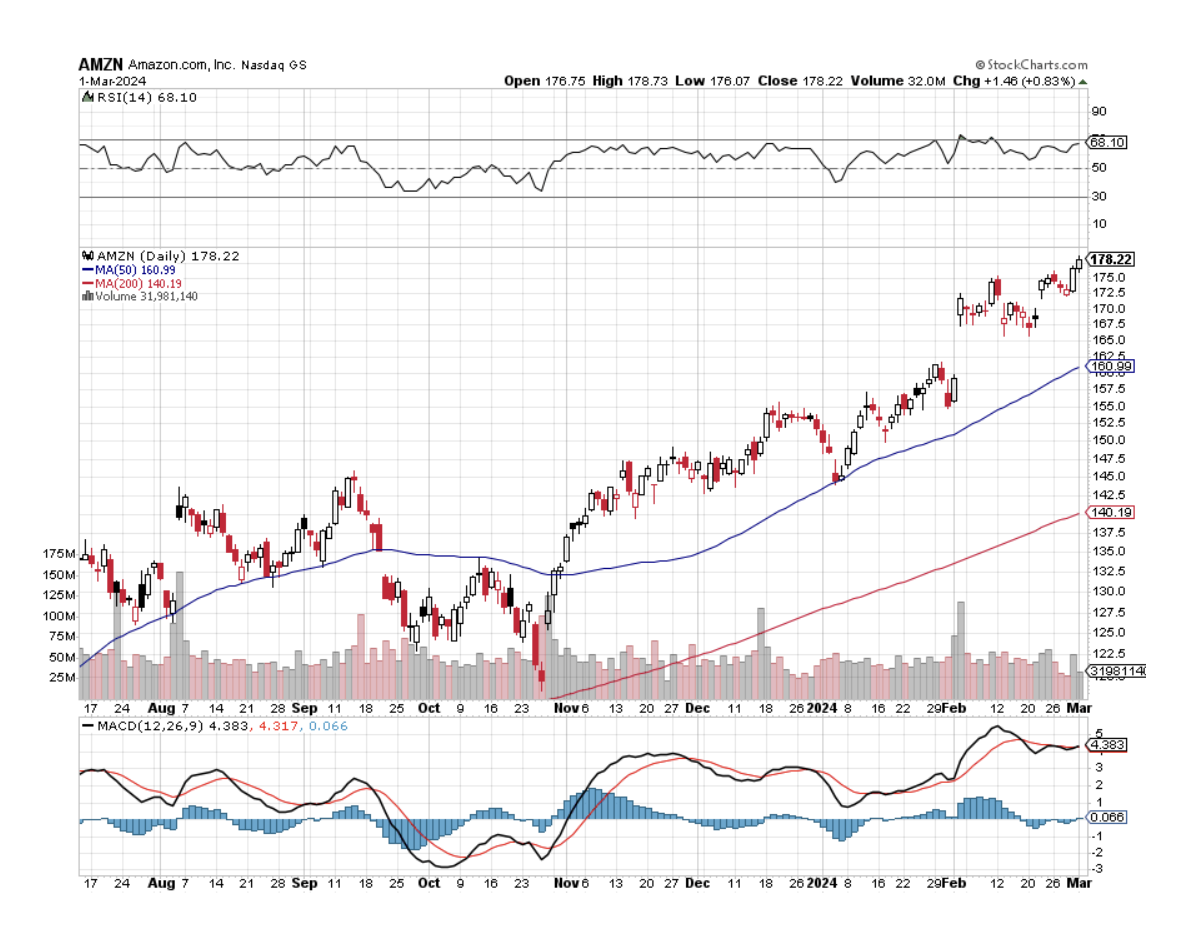
I used the ballistic move-in (NVDA) to take profits in my double long there. I am maintaining a single long in (AMZN) and Snowflake (SNOW) and am 80% in cash given the elevated level of the markets.
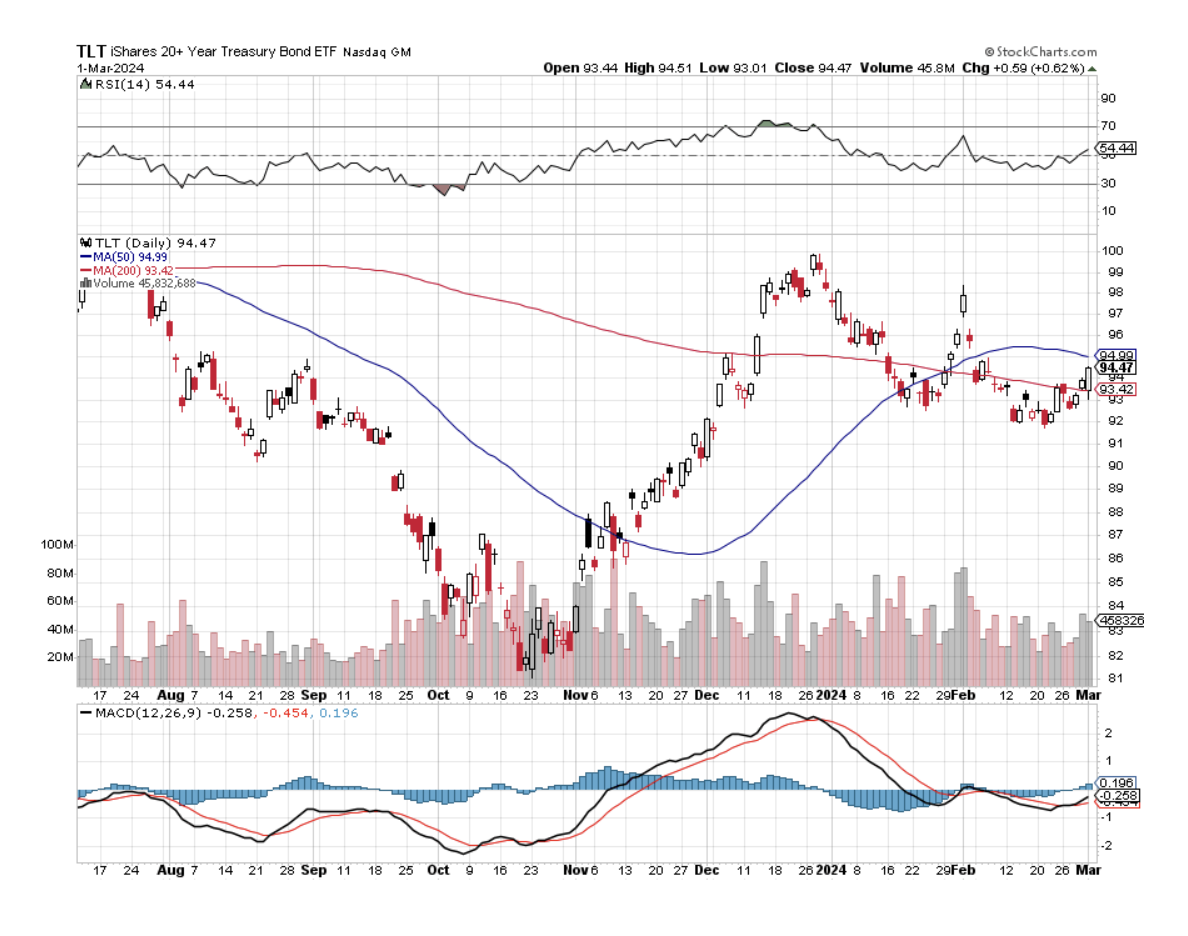
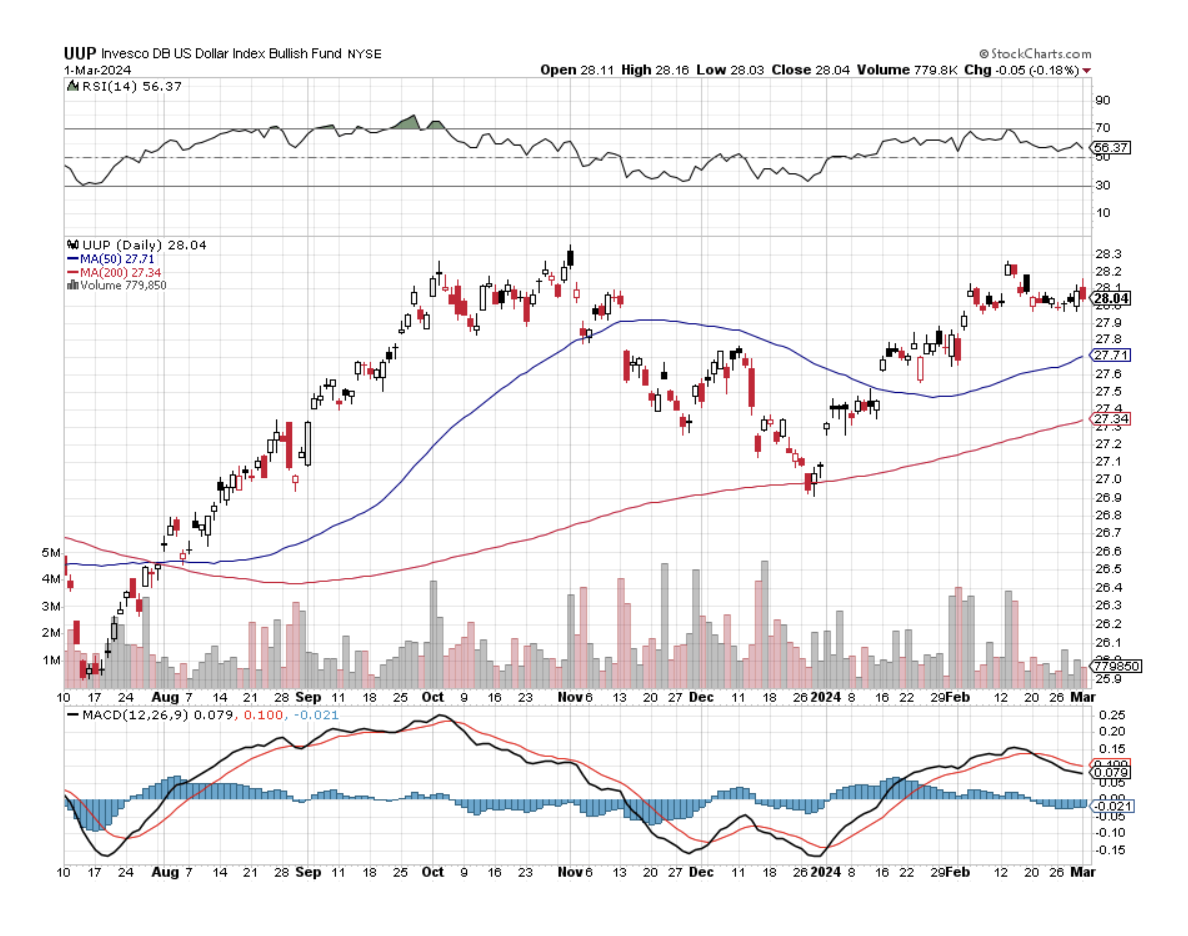
Core PCE Comes in Cool, at 2.8%, as expected. The personal consumption expenditures price index excluding food and energy costs increased 0.4% for the month and 2.8% from a year ago, as expected. Stocks and bonds liked it, but the US dollar hated it.
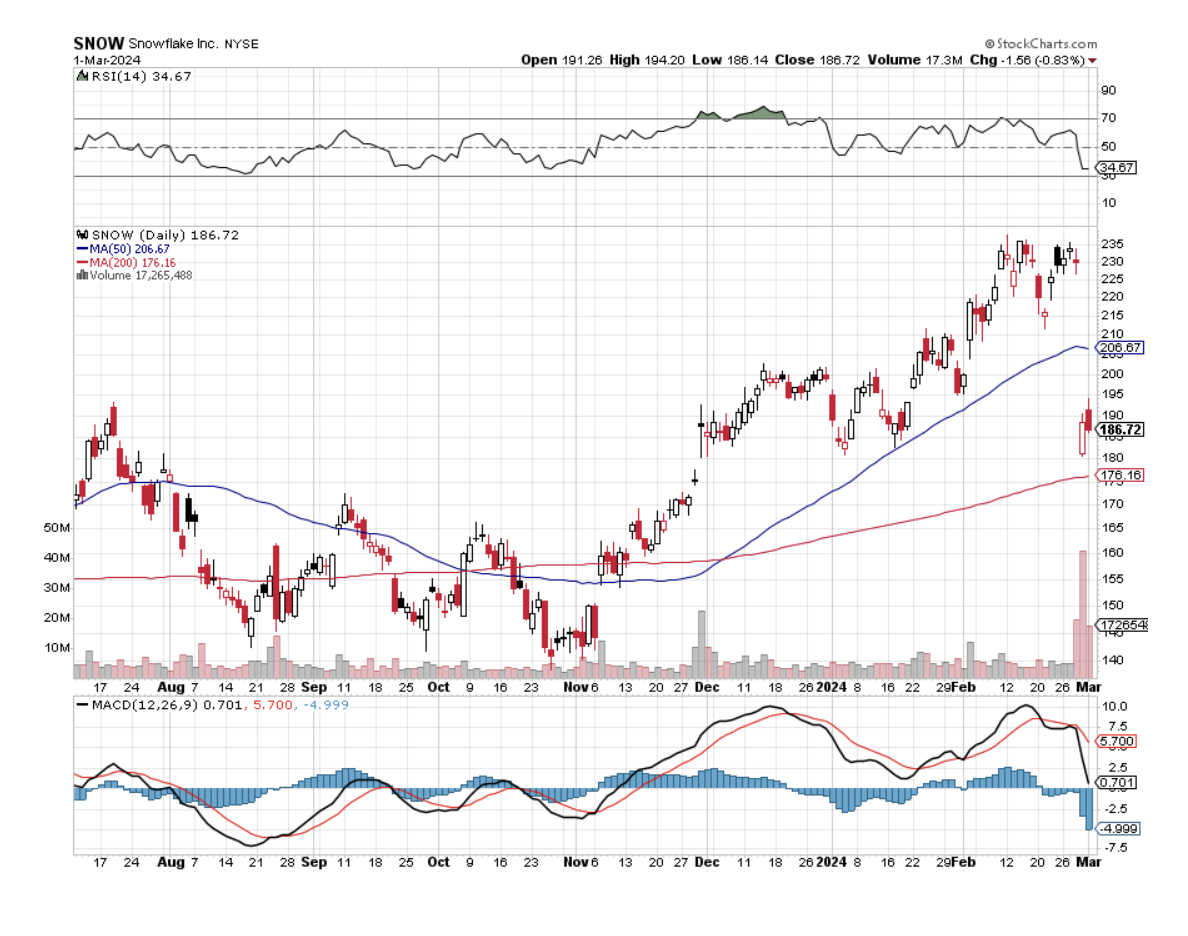
Snowflake Crashes, down 20%, on weak guidance. CEO Frank Slootman is retiring. This is the third company he has taken public and it’s time to retire. He will stay on as chairman. This is one of the best cloud plays out there, and now you have a chance to buy it close to the October bottom. Buy (SNOW) on dips.
Weekly Jobless Claims Pop, up 13,000 to 215,000. However, continuing claims, which run a week behind, rose to just above 1.9 million, a gain of 45,000 and higher than the FactSet estimate of 1.88 million.
Apple Pulls the Plug on EV Project, wrong product at the wrong time. AI is where the action is. We may have to wait until the summer for this company when it starts to discount the next-generation iPhone release in the fall. Tesla can now sleep easy. Avoid (AAPL) and buy (TSLA) on dips.
Berkshire Hathaway to Top $1 Trillion in a Year, up from the current $900 billion, according to UBS analyst Brian Meredith. I think that’s a low target. Buy (BRK/B) on dips.
Boeing Hit by Damning Report, faulting the company for ineffective procedures and a breakdown in communications between senior management and other members of staff, according to an FAA report. The report is the latest to find fault with safety at Boeing, which suffered its latest blow when a panel covering an unused door flew off during an Alaska Airlines flight on Jan. 5. Buy (BA) on dips.
Warren Buffet Says Their Nothing to Buy, in his annual letter to shareholders. The few targets left are few and far between and heavily picked over. (BRK/B) has also lost the advice of its principal mentor, Charlie Munger at the age of 99. Last year Berkshire acquired Dairy Queen and Berkshire Energy. But with $905 billion in assets, those will hardly move the needle on his incredible track record. The 93-year-old Buffet has outperformed the S&P 500 by 141:1 since 1964.
CEO Jamie Diamond Sell $150 Million in (JPM) Shares, cashing in on the historic “BUY” he had at the 2009 market bottom. He earned a 36X gain on that trade. (JPM) remains the “must-own” bank for most institutional investors.
New Home Sales Weaken, curbed by frigid weather, but demand for new construction remains underpinned by a persistent shortage of previously owned homes. New home sales increased 1.5% to a seasonally adjusted annual rate of 661,000 units in January. Economists had forecast new home sales rising to a rate of 680,000 units.
Another Regional Bank is in Trouble. Commercial real estate lender New York Community Bancorp said it discovered “material weaknesses” in how it tracks loan risks, wrote down the value of companies acquired years ago, and replaced its leadership to grapple with the turmoil. The stock plunged. Expect this to be a recurring problem. The US banking system is in the process of consolidating from 4,236 banks to six. Buy (JPM), (BA), and (C) on dips.
Millennials are Becoming the Richest Generation in History. The so-called greatest generation — those typically born from 1928 to 1945 — and baby boomers — born between 1946 and 1964 — will hand over the reins to those born from 1981 to 1996 when they pass on their property- and equity-rich assets. In the U.S. alone, the shift would see $90 trillion of assets move between generations.
My Ten-Year View
When we come out the other side of the recession, we will be perfectly poised to launch into my new American Golden Age or the next Roaring Twenties. The economy decarbonizing and technology hyper accelerating, creating enormous investment opportunities. The Dow Average will rise by 800% to 240,000 or more in the coming decade. The new America will be far more efficient and profitable than the old.
Dow 240,000 here we come!
On Monday, March 4, nothing of note is announced.
On Tuesday, March 5 at 8:30 AM EST, ISM Services are released.
On Wednesday, March 6 at 2:00 PM, the Jolts Job Openings Report is published
On Thursday, March 7 at 8:30 AM, the Weekly Jobless Claims are announced.
On Friday, March 8 at 2:30 PM, the Nonfarm Payroll Report for February is published. At 2:00 PM the Baker Hughes Rig Count is printed.
As for me, I’ve found a new series on Amazon Prime called 1883. It is definitely NOT PG rated, nor is it for the faint of heart. But it does remind me of my own cowboy days.
When General Custer was slaughtered during his last stand at the Little Big Horn in 1876 in Montana, my ancestors spotted a great buying opportunity. They used the ensuing panic to pick up 50,000 acres near the Wyoming border for ten cents an acre.
Growing up as the oldest of seven kids, my parents never missed an opportunity to farm me out with relatives. That’s how I ended up with my cousins near Broadus, Montana for the summer of 1966.
When I got off the Greyhound bus in nearby Sheridan, I went into a bar to call my uncle. The bartender asked his name and when I told him “Carlat” he gave me a strange look.
It turned out that my uncle had killed someone in a gunfight in the street out front a few months earlier, which was later ruled self-defense. It was the last public gunfight seen in the state, and my uncle hasn’t been seen in town since.
I was later picked up in a beat-up Ford truck and driven for two hours down a dirt road to a log cabin. There was no electricity, just kerosene lanterns, and a propane-powered refrigerator.
Welcome to the 19th century!
I was hired as a cowboy, lived in a bunk house with the rest of the ranch hands, and was paid the pricely sum of a dollar an hour. I became popular by reading the other cowboys' newspapers and their mail since they were all illiterate. Every three days we slaughtered a cow to feed everyone on the ranch. I ate steak for breakfast, lunch, and dinner.
On weekends, my cousins and I searched for Indian arrowheads on horseback, which we found by the shoe box full. Occasionally we got lucky finding an old rusted Winchester or Colt revolver just lying out on the range, a remnant of the famous battle 90 years before. I carried my own six-shooter to help reduce the local rattlesnake population.
I really learned the meaning of work and developed callouses on my hands in no time. I had to rescue cows trapped in the mud (stick a burr under their tail and make them mad), round up lost ones, and sawed miles of fence posts. When it came time to artificially inseminate the cows with superior semen imported from Scotland, it was my job to hold them still. It was all heady stuff for a 15-year-old.
The highlight of the summer was participating in the Sheridan Rodeo. With my uncle being one of the largest cattle owners in the area, I had my pick of events. So, I ended up racing a chariot made from an old oil drum, team roping (I had to pull the cow down to the ground), and riding a Brahman bull. I still have a scar on my left elbow from where a bull slashed me, the horn pigment clearly visible.
I hated to leave when I had to go home and back to school. But I did hear that the winters in Montana are pretty tough.
It was later discovered that the entire 50,000 acres was sitting on a giant coal seam 50 feet thick. You just knocked off the topsoil and backed up the truck. My cousins became millionaires. They built a modern four-bedroom house closer to town with every amenity, even a big-screen TV. My cousin also built a massive vintage car collection.
During the 2000s, their well water was poisoned by a neighbor’s fracking for natural gas, and water had to be hauled in by truck at great expense. In the end, my cousin was killed when the engine of the classic car he was restoring fell on top of him when the rafter above him snapped.
It all gave me a window into a lifestyle that was then fading fast. It’s an experience I’ll never forget.

Good Luck and Good Trading,
John Thomas
CEO & Publisher
The Diary of a Mad Hedge Fund Trader


Shares of Dell Technologies (DELL) are experiencing a significant upswing today, fueled by growing investor enthusiasm surrounding the company's potential role in the burgeoning artificial intelligence (AI) landscape. AI's transformative power across industries has made it a hotbed of investment, and Dell's strategic positioning is placing it squarely in the spotlight.
Understanding the AI Boom
Artificial intelligence is rapidly moving from science fiction to real-world applications. AI technologies like machine learning, natural language processing, and computer vision are revolutionizing sectors from healthcare and finance to manufacturing and customer service. The ability of AI systems to process vast amounts of data, identify patterns, and make predictions is driving unprecedented efficiencies and innovation.
Dell's AI Advantage
Dell Technologies boasts a robust portfolio of products and services that position it as a key player in the AI revolution. These advantages include:
The Investment Case for Dell
The surging interest in Dell stock reflects a growing recognition of the company's potential to capitalize on the AI boom. Here's why investors are bullish on Dell:
Risks and Considerations
While the outlook for Dell's AI-driven growth is positive, investors should also be aware of potential risks and challenges:
The Bottom Line
Dell's strategic investments in AI are paying off as investor sentiment shifts toward companies with strong AI exposure. While not without risks, Dell's comprehensive approach to AI solutions positions it well to ride the AI wave and deliver long-term value to shareholders. Investors interested in AI's transformative potential should keep a close eye on Dell's developments in this space.
Disclaimer: This article is for informational purposes only and should not be construed as investment advice. Please conduct your own thorough research before making any investment decisions.
Mad Hedge Technology Letter
March 1, 2024
Fiat Lux
Featured Trade:
(ROBOT-AS-A-SERVICE)
(ROK), (TER), (ZBRA), (NVDA)

We need to look to the future to better understand what is next after software-as-a-service (SaaS).
Technology never keeps still and evolves.
Even giant Google who invest countless numbers of dollars and man-hours into AI are facing short-term pressure on their AI trajectory.
I do believe the next iteration and extension of technology services will be accretive to the tech ecosystem and help boost stock shares and that piece of technology will come in the form of Robotics-as-a-Service (RaaS).
The RaaS market size is expected to grow by US$8.23 billion from 2024 to 2030 at 34.12%.
Like a number of other shared services, RaaS is becoming increasingly popular due to its convenience and flexibility, as well as being cost-effective and easy to implement.
Remember that human workers get sick, like to take days off, shout to the rafters about promotions, better pay, and more benefits.
Robots don’t do that.
RaaS also allows a company to have the benefits of robotic process automation by leasing robotic devices and accessing a cloud-based subscription service.
You will own nothing and be happy.
By not having to purchase the equipment outright, organizations can avoid the downsides of ownership and maintain their bottom line.
Cloud computing solutions are already in place for many organizations, so the foundation for RaaS has been perfectly set for the model’s increased use.
As adopting smart robotic technologies requires companies to part with a significant chunk of their financial resources, a RaaS solution also means companies have no need to invest in costly infrastructure.
Remote services and IoT are major growth, but lack of awareness and acceptance pose challenges
A major driver of the market is going to be the increased remote services provided by vendors in the market.
Companies are moving away from the physical approach of providing break-and-fix services to incorporate services that are predictive and proactive by combining the remote service platform with the Internet of Things.
The reason why uptake won’t be higher is because in some settings that require a personal touch like healthcare, companies will be hesitant to adopt robots because customers could feel alienated.
We are still in the early innings.
As the tech ecosystem advances, the integration of robots into this industry is inevitable.
Yes, they will be relied on to perform mundane tasks at first like Amazon’s warehouse robots who move around large amounts of packages.
We need to start somewhere.
In the future, robots will increasingly start to reach further up the value-added chain to offer some quite impressive set of skills to contribute to the labor force.
Rome wasn’t built in one day.
Some stocks to be on the lookout in the RaaS space are:
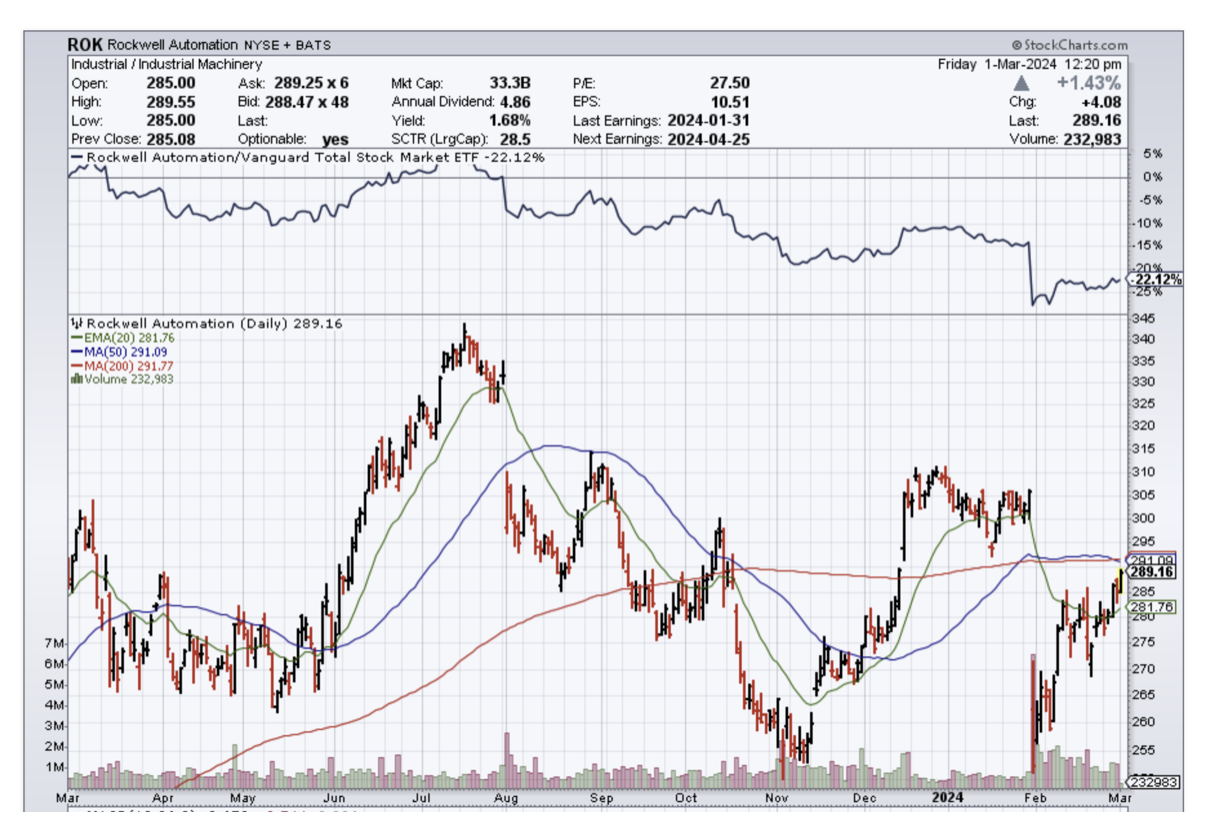
Rockwell Automation (ROK) is a leader in industrial-grade technology. Its systems, components, and software help manufacturers develop smarter and more efficient machines.
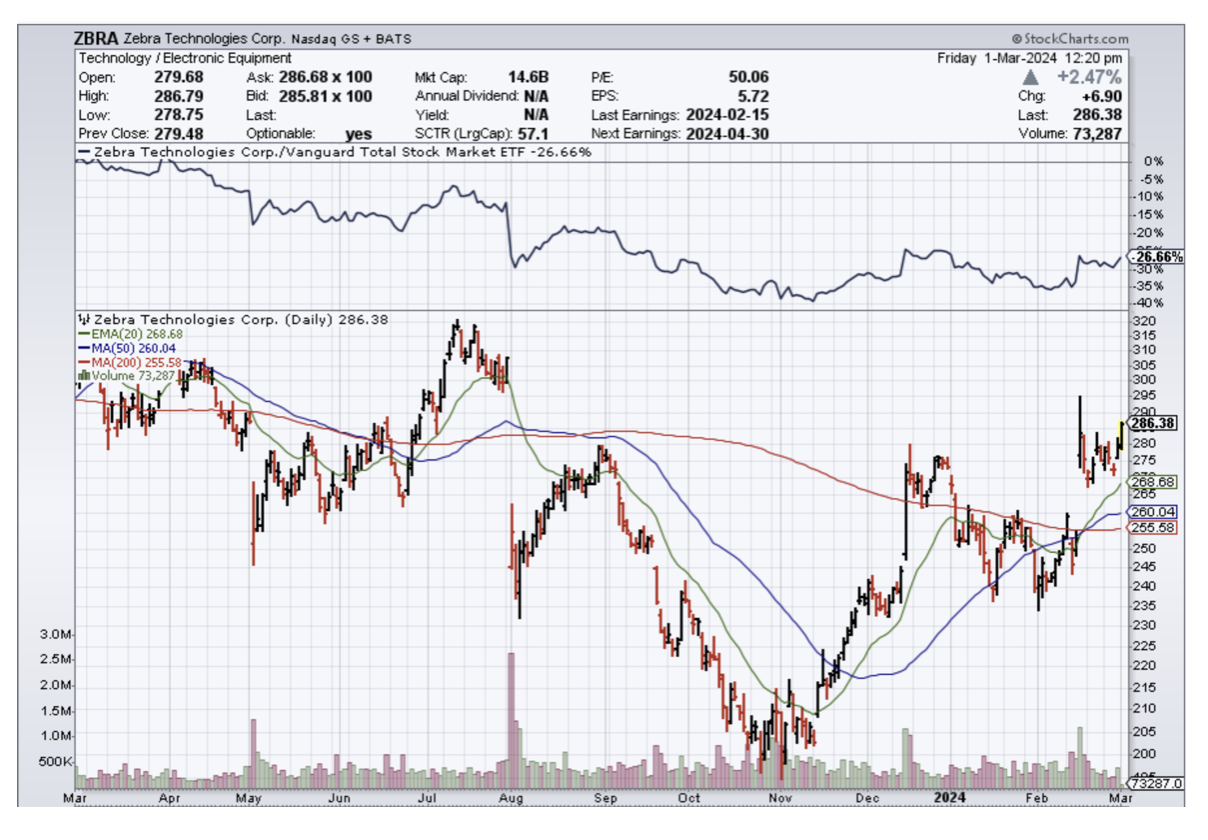
Zebra Technologies (ZBRA) is a longtime player in the automation space. The firm develops mobile computing devices to help employees of a company work more efficiently.
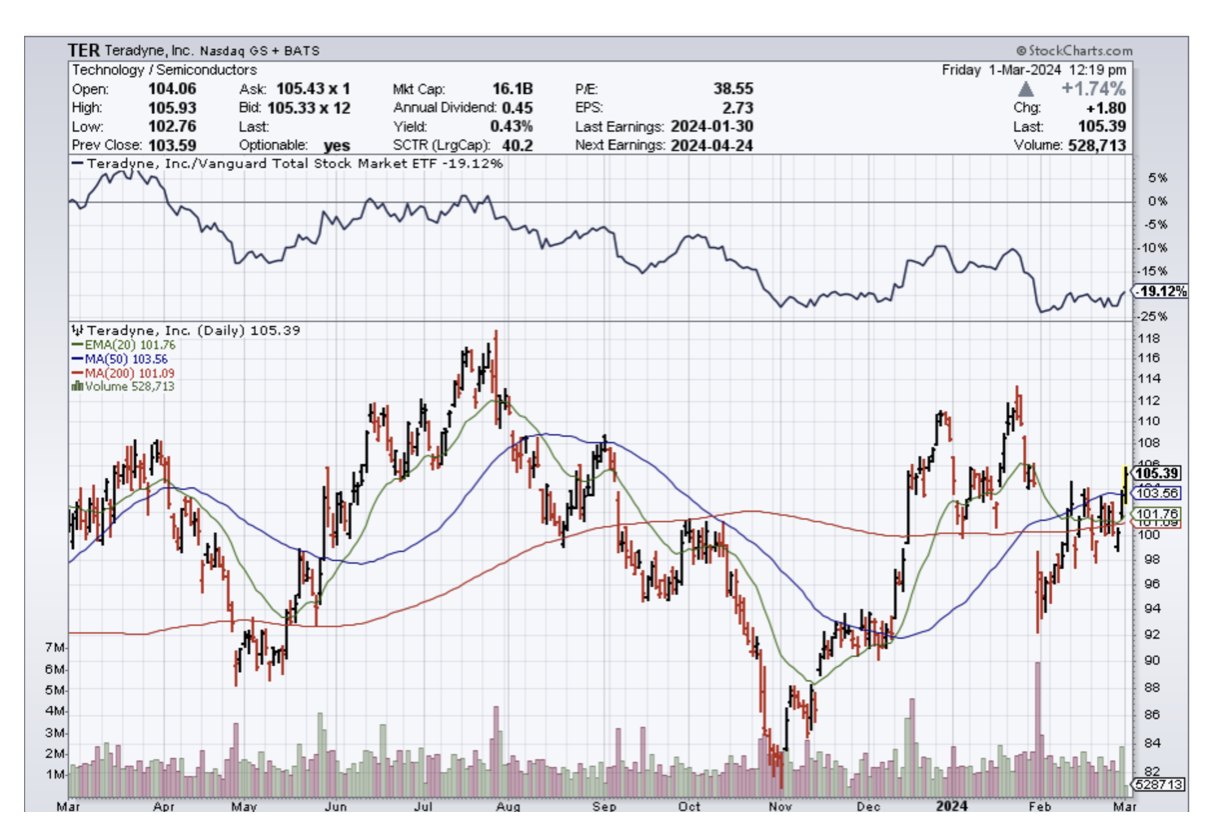
Teradyne (TER) is a developer of industrial equipment that helps automate repetitive tasks.
Intuitive Surgical (ISRG) is a pioneer of robotic-assisted surgery. Its da Vinci system made its commercial debut in 2000 and has since expanded across the globe.
Lastly, a second derivative play powering these robots will be Nvidia (NVDA) chips.