• support@madhedgefundtrader.com
  • Member Login
Mad Hedge Fund Trader
  • Home
  • About
  • Store
  • Luncheons
  • Testimonials
  • Contact Us
  • Click to open the search input field Click to open the search input field Search
  • Menu Menu
Douglas Davenport

Navigating the US Copyright Office's AI NOI: Balancing Innovation and Intellectual Property Rights

Mad Hedge AI

Introduction

In recent years, the rapid advancements in artificial intelligence (AI) have transformed various industries, from healthcare to entertainment. However, these technological leaps have also raised complex questions about intellectual property rights and copyright issues. In response to this ever-evolving landscape, the United States Copyright Office (USCO) issued a Notice of Inquiry (NOI) on AI and copyright in 2022. In this 1200-word article, we will explore the USCO's AI NOI, the issues it addresses, and the implications it holds for creators, innovators, and the broader AI ecosystem.

I. The USCO's AI NOI: An Overview

The USCO's Notice of Inquiry (NOI) on AI and copyright, issued in February 2022, marks a significant step towards understanding and addressing the challenges and opportunities posed by AI in the realm of copyright. The NOI sought public input and comments on several key aspects, including the following:

  1. The implications of AI on copyright law.
  2. The role of human involvement in AI-generated works.
  3. Copyright registration of AI-generated works.
  4. Ownership and authorship of AI-created content.
  5. The application of fair use to AI-generated content.
  6. Potential changes to the Copyright Act to accommodate AI.

II. AI and Copyright: A Complex Relationship

A. AI as a Tool

One of the primary questions addressed in the AI NOI is whether AI should be considered a tool that assists human creators or an autonomous entity that can generate its own creative works. Many argue that AI is merely a tool that extends the capabilities of human creators, akin to a paintbrush or a musical instrument. However, this notion is challenged by AI systems that can autonomously generate text, music, art, and more.

B. Human Involvement

The extent of human involvement in AI-generated works is a central issue. The Copyright Act typically requires human authorship for copyright protection. However, AI can generate content independently, blurring the lines of authorship. The AI NOI sought input on defining the threshold of human involvement necessary to claim authorship.

III. Copyright Registration and AI-Generated Works

The AI NOI also examined the copyright registration process and how it applies to AI-generated works. Copyright registration provides creators with legal protection and enforcement rights. The challenge with AI-generated content lies in determining who should be eligible for copyright registration – the human operator, the AI developer, or the AI itself.

The NOI raised questions about whether modifications or adaptations made by a human operator to AI-generated content should be eligible for copyright protection and how registration procedures should accommodate these scenarios.

IV. Ownership and Authorship

Ownership and authorship are critical components of copyright law. The AI NOI sought to address whether AI-generated works should be subject to the same rules as human-authored works when determining copyright ownership. This consideration is vital for establishing clear rights and responsibilities in cases where AI-generated content becomes commercially valuable.

V. Fair Use and AI-Generated Content

Fair use, a fundamental doctrine in copyright law, allows for limited use of copyrighted material without permission from or payment to the copyright holder. The AI NOI explored whether fair use principles should apply to AI-generated content and whether AI systems should be designed to consider potential fair use defenses when generating content.

VI. Potential Changes to the Copyright Act

The AI NOI also raised the possibility of revising the Copyright Act to address the unique challenges posed by AI-generated content. This could include updating definitions, establishing clearer guidelines for registration, and addressing questions of ownership and authorship in AI-generated works.

VII. Implications for Creators and Innovators

A. Creativity and Innovation

The AI NOI has significant implications for creators and innovators in the AI industry. On one hand, it recognizes the importance of fostering creativity and innovation in AI development. However, it also seeks to strike a balance by addressing the potential impact on traditional creative industries, where human authors and artists may face competition from AI-generated content.

B. Legal Clarity

The AI NOI aims to provide legal clarity in an increasingly complex landscape. Determining ownership and authorship, setting guidelines for copyright registration, and defining the role of fair use in AI-generated content are crucial for establishing a framework that encourages responsible AI development.

C. Protecting Intellectual Property

Ensuring that creators and innovators can protect their intellectual property rights is essential. The AI NOI seeks to establish a foundation for copyright protection in the AI era while avoiding stifling innovation.

VIII. The Road Ahead

As of the publication of this article, the USCO continues to review the comments and feedback received in response to the AI NOI. The results of this inquiry will play a pivotal role in shaping the future of copyright law in the context of AI. It is expected that the USCO will release guidelines or recommendations that provide clarity on issues such as authorship, registration, and fair use in AI-generated works.

Conclusion

The USCO's Notice of Inquiry on AI and copyright reflects the growing importance of addressing the complex challenges posed by AI in the realm of intellectual property rights. While AI has the potential to revolutionize creativity and innovation, it also raises fundamental questions about authorship, ownership, and the application of copyright law.

Navigating this evolving landscape requires a delicate balance between fostering innovation and protecting the rights of creators. The results of the AI NOI will serve as a crucial foundation for developing a legal framework that can adapt to the ever-changing landscape of AI-generated content. As AI continues to advance, it is imperative that policymakers, legal experts, and the broader public work together to ensure that intellectual property rights are upheld, innovation is encouraged, and the creative potential of AI is harnessed responsibly.


https://madhedgefundtrader.com/wp-content/uploads/2019/05/cropped-mad-hedge-logo-transparent-192x192_f9578834168ba24df3eb53916a12c882.png 0 0 Douglas Davenport https://madhedgefundtrader.com/wp-content/uploads/2019/05/cropped-mad-hedge-logo-transparent-192x192_f9578834168ba24df3eb53916a12c882.png Douglas Davenport2023-09-20 20:08:172023-09-20 20:09:48Navigating the US Copyright Office's AI NOI: Balancing Innovation and Intellectual Property Rights
april@madhedgefundtrader.com

September 20, 2023

Jacque's Post


(JOHN’S HUMANITARIAN AID MISSION)

September 20, 2023


Hello everyone,

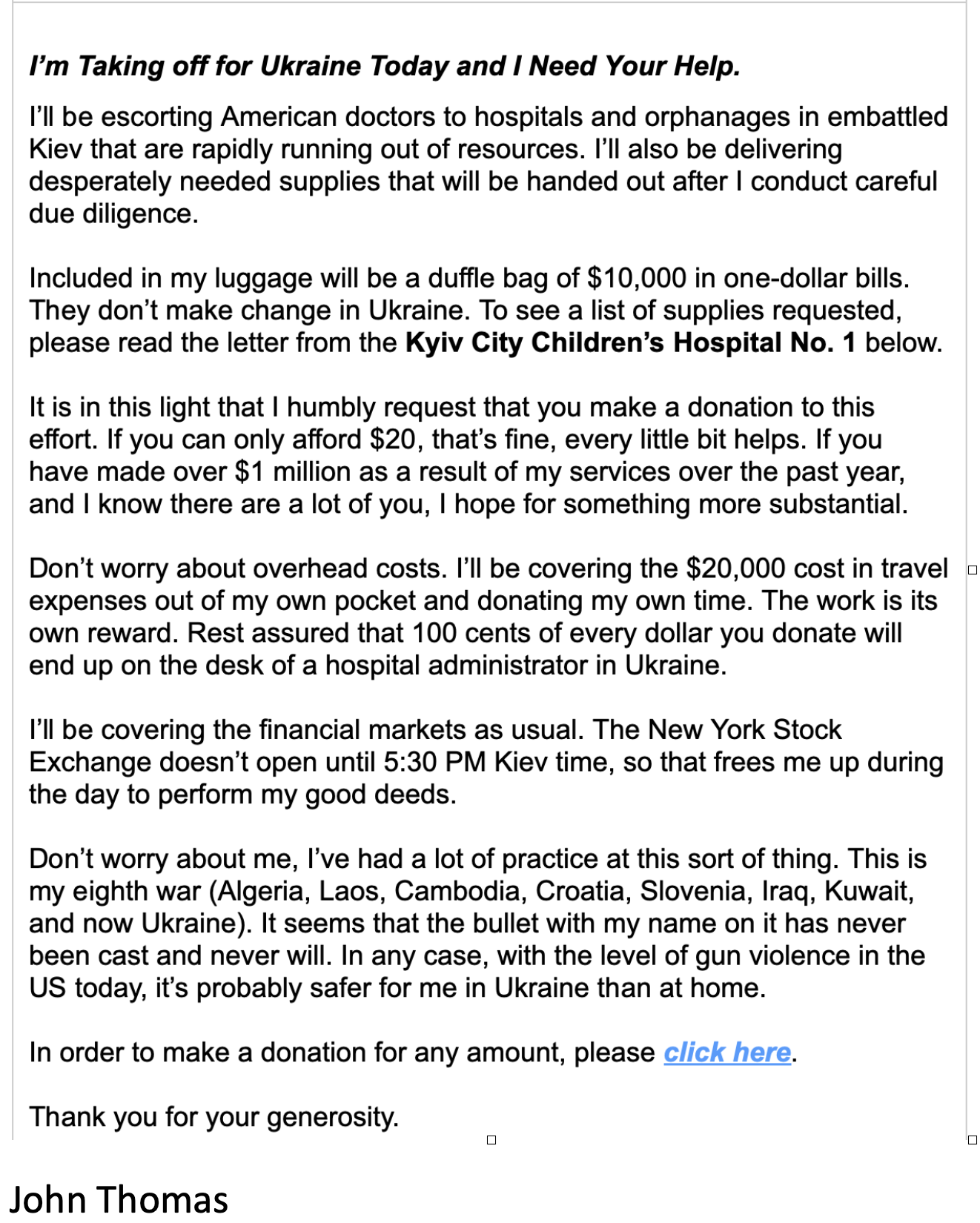
John is leaving for Ukraine this week. 

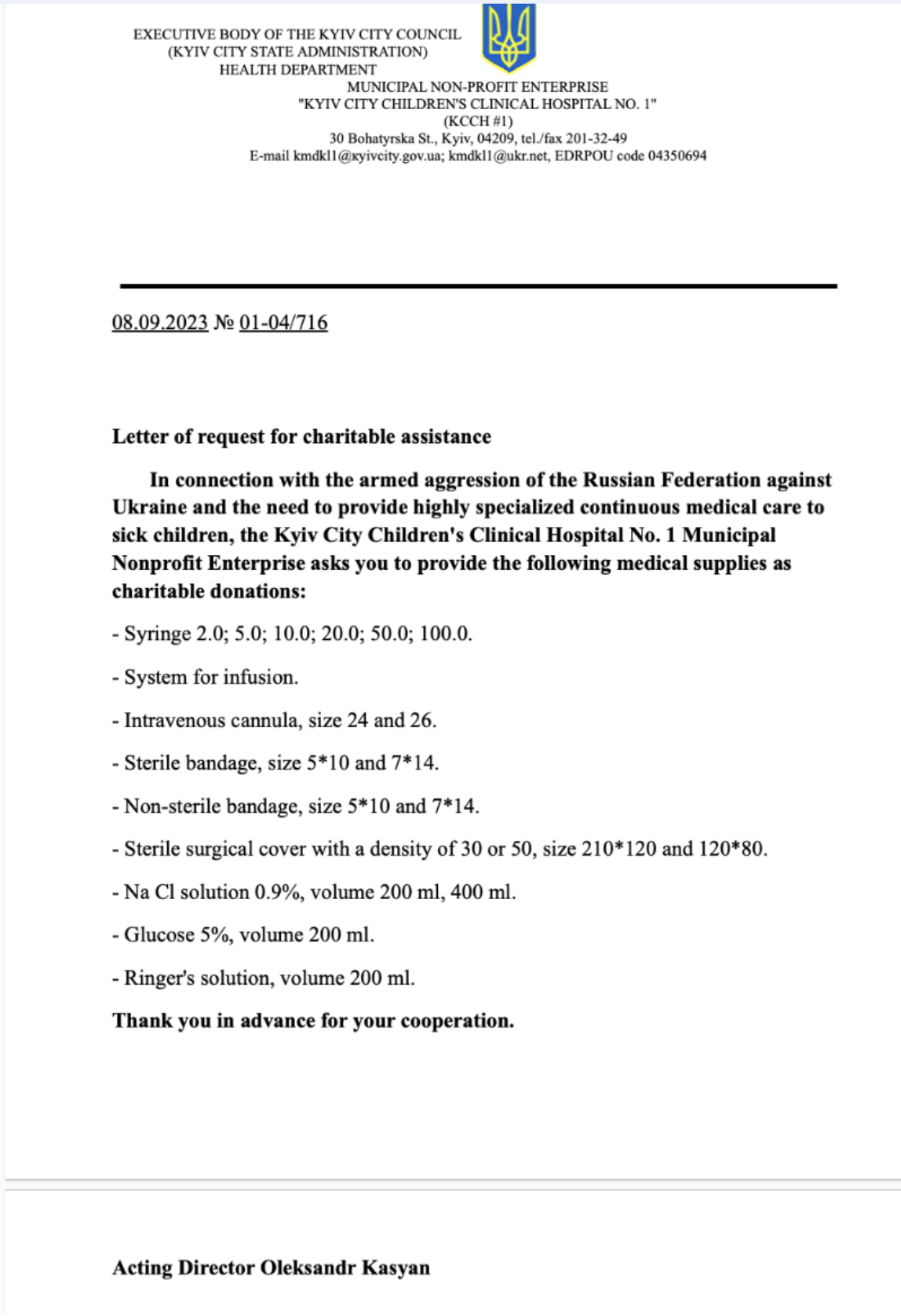
I include below his request for your assistance, no matter how small, to aid hospitals and orphanages in Ukraine.

To contribute toward the humanitarian aid that he will be delivering to Ukraine, please click here.

Thank you so much for your help.

Cheers,

Jacquie


Ukraine’s Children’s Hospitals are stretched.


A mother with her newborn baby.

https://madhedgefundtrader.com/wp-content/uploads/2019/05/cropped-mad-hedge-logo-transparent-192x192_f9578834168ba24df3eb53916a12c882.png 0 0 april@madhedgefundtrader.com https://madhedgefundtrader.com/wp-content/uploads/2019/05/cropped-mad-hedge-logo-transparent-192x192_f9578834168ba24df3eb53916a12c882.png april@madhedgefundtrader.com2023-09-20 17:00:152023-09-20 17:37:44September 20, 2023
april@madhedgefundtrader.com

September 20, 2023

Tech Letter

Mad Hedge Technology Letter
September 20, 2023
Fiat Lux

Featured Trade:

(THE BOND KING IS WRONG ABOUT TECH STOCKS)
($COMPQ), (UUP), (MSFT)

https://madhedgefundtrader.com/wp-content/uploads/2019/05/cropped-mad-hedge-logo-transparent-192x192_f9578834168ba24df3eb53916a12c882.png 0 0 april@madhedgefundtrader.com https://madhedgefundtrader.com/wp-content/uploads/2019/05/cropped-mad-hedge-logo-transparent-192x192_f9578834168ba24df3eb53916a12c882.png april@madhedgefundtrader.com2023-09-20 14:04:412023-09-21 10:06:12September 20, 2023
april@madhedgefundtrader.com

The Bond King is Wrong About Tech Stocks

Tech Letter

At the Future Proof conference last week, Bond King Jeffrey Gundlach gave his expert take on some of the variables in the markets today.

It’s hard for to understand how Gundlach made his money with the amount of fear mongering he is promoting.

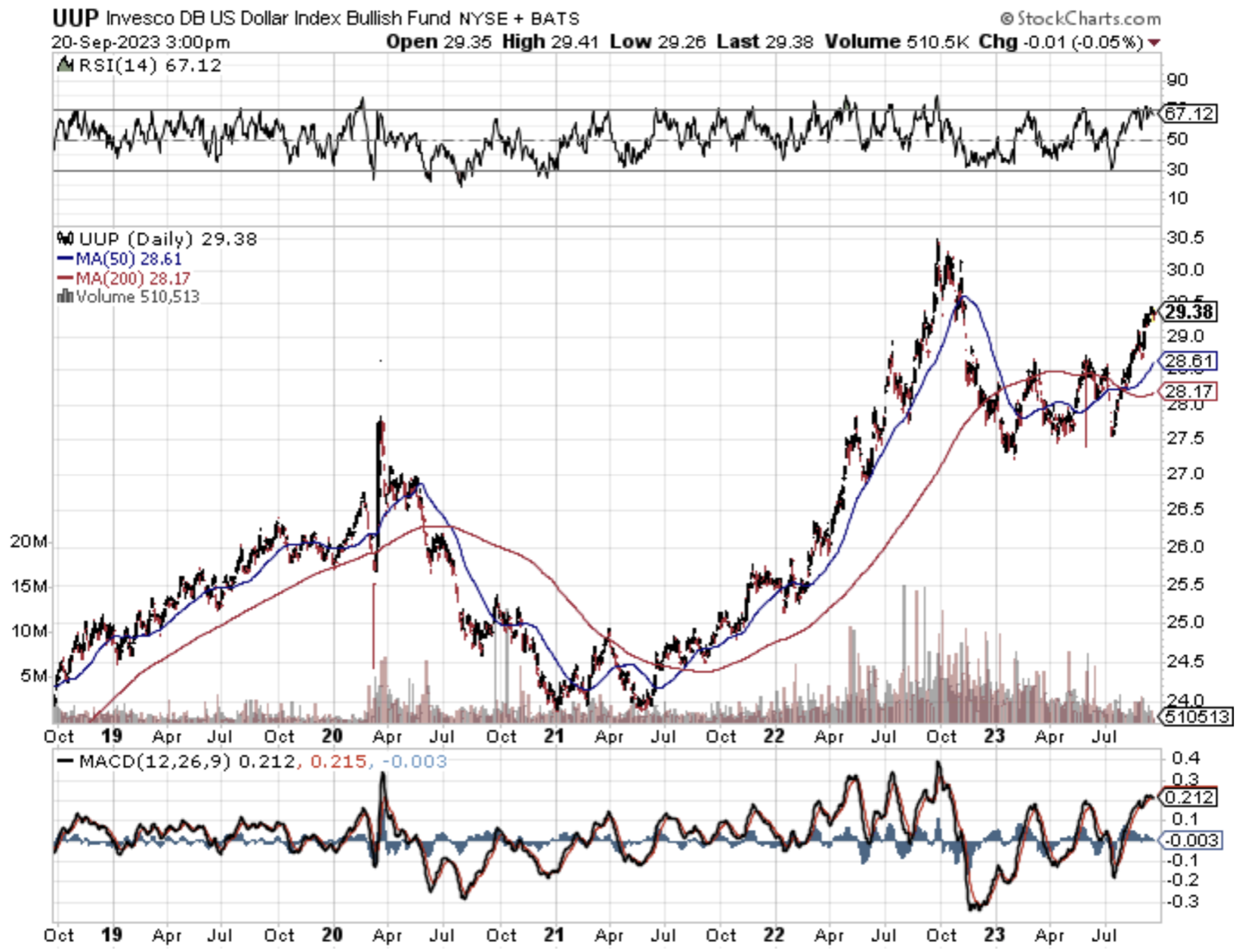
He is basically scared of everything in todays market including the stock market, the US dollar (UUP), the upcoming recession that still hasn’t hit, high housing prices, and layoffs just the name the start.

First, the unemployment rate is at 3.8% in the US so to say that this is a canary in the coalmine is quite hilarious.

Tech, even drastically over hired, and they had to take a machete to staff numbers just to get back to the 2020 employment levels.

I would even say that they need to go back to 2015 staff levels with artificial intelligence contributing more efficiency.

I hardly believe it’s time to ring to alarm on tech unemployment.

Look across the Atlantic where Spanish youth unemployment is 30% and Italians, on average, live with their parents until 45 years old because they can’t afford to move out of the house.

The United States is not that and will not become like that.

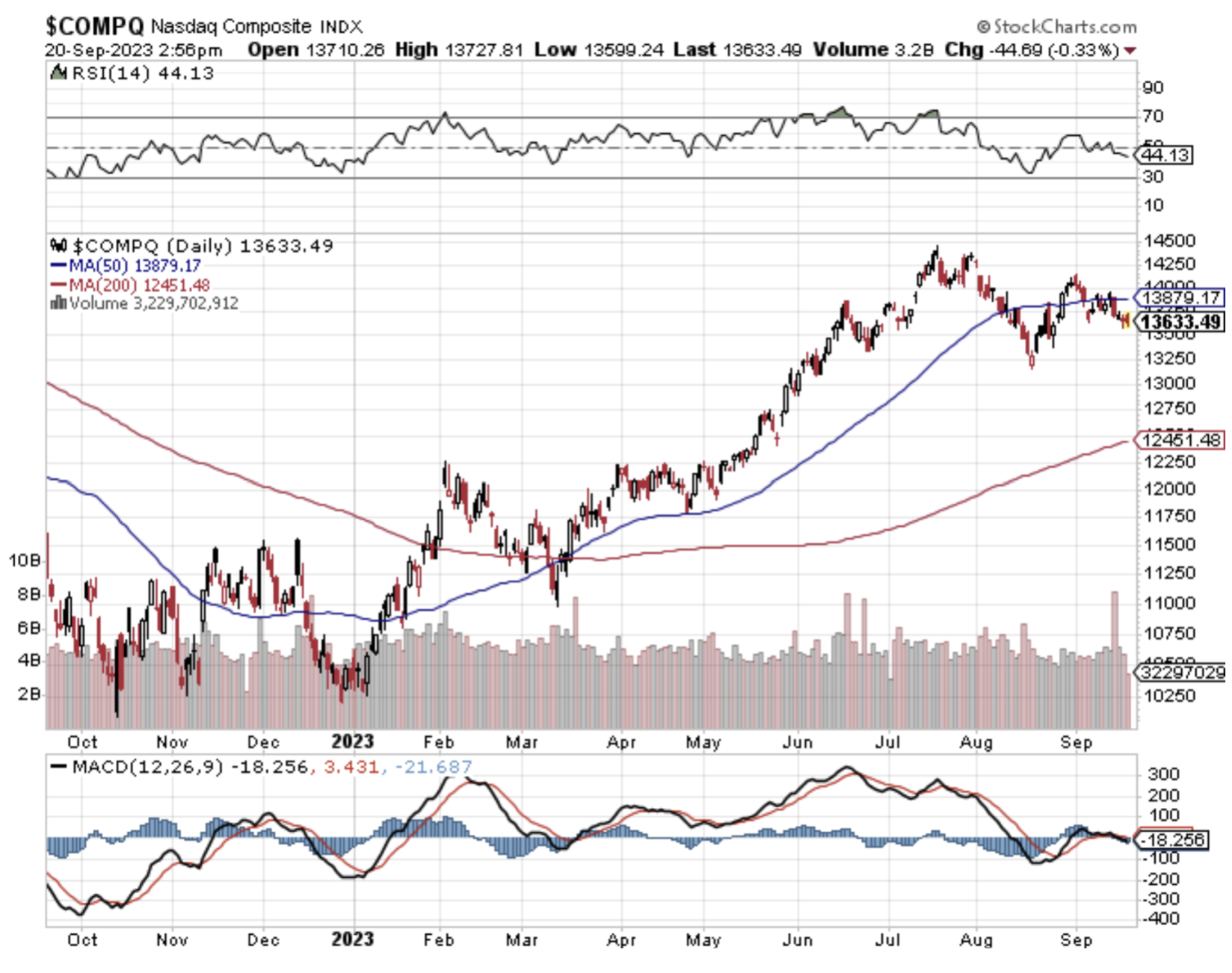
The Nasdaq Composite ($COMPQ) has surged 31% respectively this year, as investors price in the potential boost to companies from artificial intelligence and future cuts to interest rates.

However, they're overlooking "demons on the horizon," Gundlach cautioned.

We are nearing the top of the interest rate cycle and no other OECD economy has been able to push rates to 5.25% while keeping the economy churning.

Therefore, it might be plausible to say that the demons aren’t on the horizon, but in the rearview mirror.

Japan is still at 0% which has resulted in a massive invisible tax to the Japanese middle class which is basically the whole country.

He also noted the chilling effect of higher mortgage rates on the housing market, and the challenge for small businesses of having to refinance their debts at much higher interest rates.

It’s true that 7% mortgage rates has extraordinarily hit left wing coastal cities.

Combine high mortgage rates with work from home, and Silicon Valley has now moved everywhere with everyone becoming a digital nomad.

This has actually transferred new tech wealth to many other new areas such as Nashville, Austin, and of all places Boise, Idaho.

This trend can’t be understated and is now a growing contributor to the overall economy.

"The economy is definitely weakening" is something I definitely agree with Gundlach, but that doesn’t reveal the whole story.

The internals are slowing down from a very high peak which he failed to mention.

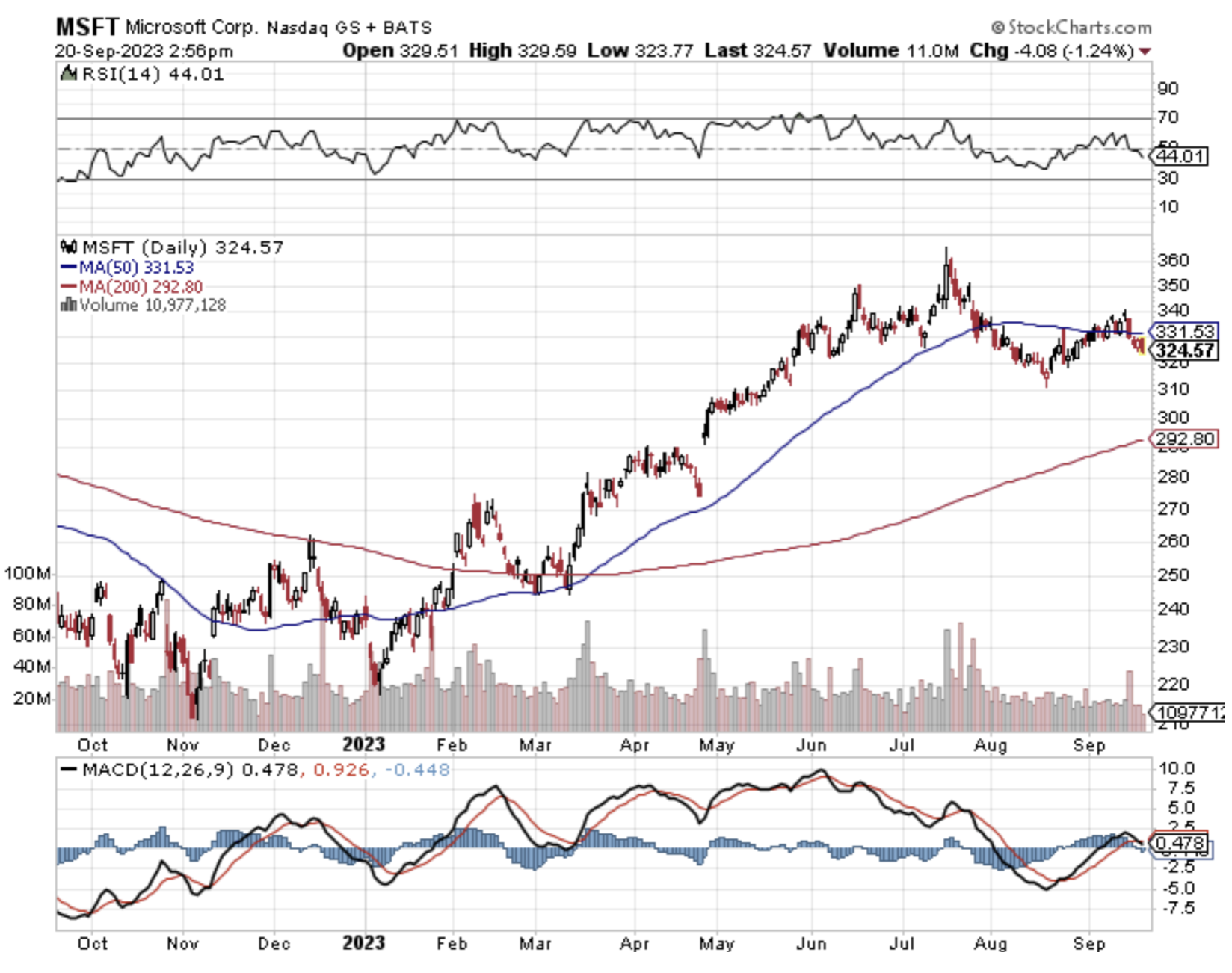
Instead of Microsoft (MSFT) cloud division Azure growing at 40% year over year, we are only getting about 18% these days.

Coming off of Himalayan highs is a tough pill to swallow when many tech investors often expect growth metrics of over 30% year over year, but that’s hard to achieve in 2023. 

The strong dollar has also exerted a fierce deflation affect across many tech products making computers and so on cheap. Tech products in Europe and abroad are higher priced even though these places have incomes that a many times lower.

Relatively speaking, US tech companies and US consumers are better placed than any other comparable city or country in the world in the post-covid world.

Fear mongering never got anybody rich. US tech will continue to be the best of breed and in no plausible scenario will a foreign company or country knock any of the top 7 Silicon Valley tech firms off their perch in the next 30 years. I would even argue that as rates peak and interest rates expectation ratchet lower, tech stocks will become the safety trade again like it did in March.


https://madhedgefundtrader.com/wp-content/uploads/2019/05/cropped-mad-hedge-logo-transparent-192x192_f9578834168ba24df3eb53916a12c882.png 0 0 april@madhedgefundtrader.com https://madhedgefundtrader.com/wp-content/uploads/2019/05/cropped-mad-hedge-logo-transparent-192x192_f9578834168ba24df3eb53916a12c882.png april@madhedgefundtrader.com2023-09-20 14:02:072023-09-21 10:05:37The Bond King is Wrong About Tech Stocks
april@madhedgefundtrader.com

September 20, 2023

Diary, Newsletter, Summary

Global Market Comments
September 20, 2023
Fiat Lux

Featured Trade:

(FRIDAY, OCTOBER 31 MIAMI, FLORIDA GLOBAL STRATEGY LUNCHEON)
(WHY I HAVE BECOME SO BORING),
(SPY), (QQQ), (IWM), (AAPL), (TSLA),
(TACKLING THE INFLATION MYTH),
(AAPL), (GOOG), (FB)

https://madhedgefundtrader.com/wp-content/uploads/2019/05/cropped-mad-hedge-logo-transparent-192x192_f9578834168ba24df3eb53916a12c882.png 0 0 april@madhedgefundtrader.com https://madhedgefundtrader.com/wp-content/uploads/2019/05/cropped-mad-hedge-logo-transparent-192x192_f9578834168ba24df3eb53916a12c882.png april@madhedgefundtrader.com2023-09-20 09:08:562023-09-20 16:20:34September 20, 2023
Mad Hedge Fund Trader

Why I Have Become So Boring

Diary, Newsletter

I have recently received a few complaints from readers that I have become boring. I have to confess that they are right.

I am not a person who boredom comes to easily. I’m the guy who climbed the Matterhorn, crossed the Sahara Desert on the back of a camel, and went to surfing school.

And that’s just what I did last year! Oh, and I’m also headed for the world’s hottest combat zone.

However, I do admit that I have become boring on the trading front.

If I get a request for one thing more than any other, it is for recommendations of stocks that will rise by at least ten times over the next ten years.

Readers want to know the names of shares of companies that they can just buy and forget about, and then retire rich as Croesus a decade down the road.

What could be more reasonable?

I happen to have sent out quite a few of these over the years.

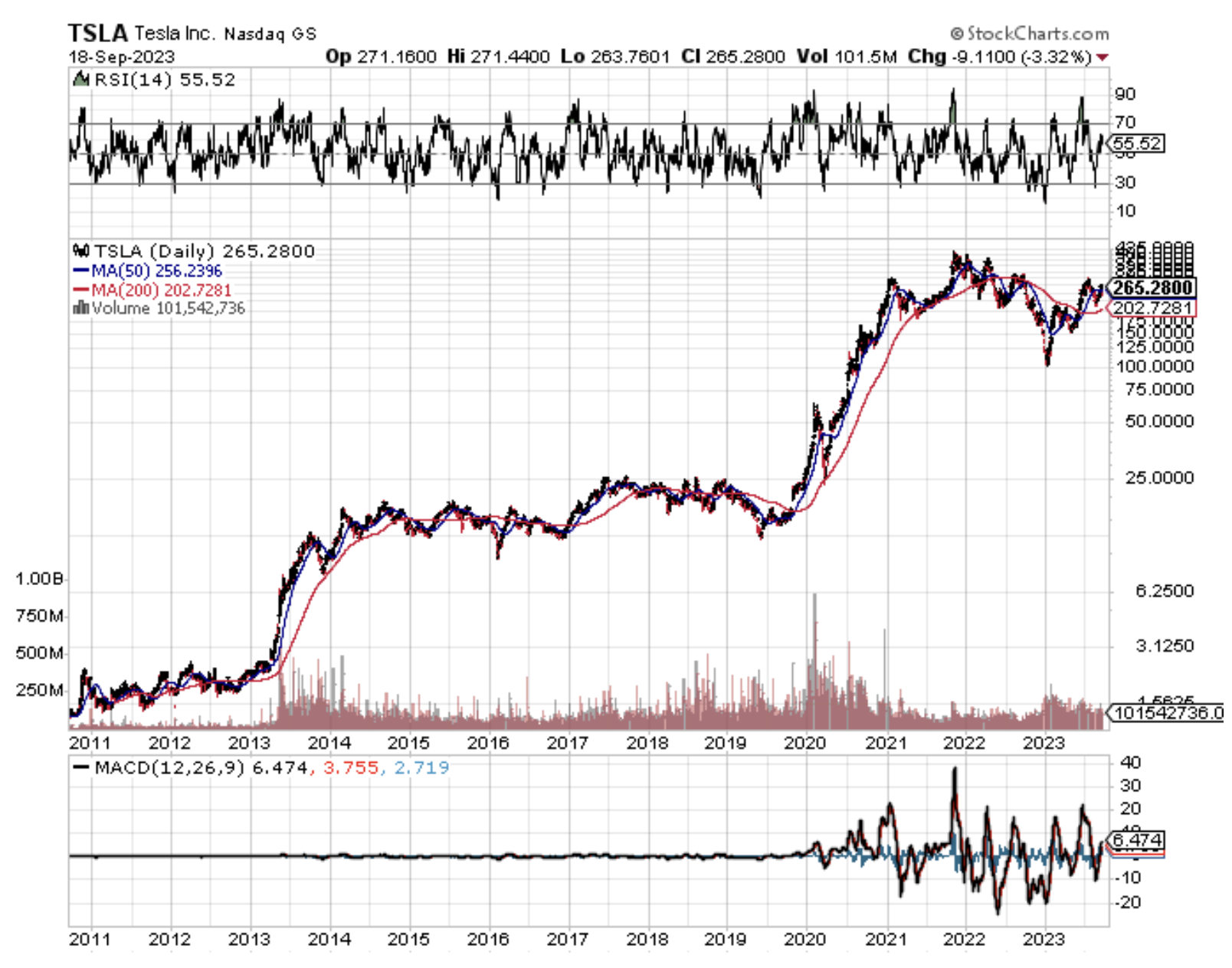
Whenever I attend my global strategy luncheons around the world, someone inevitably thanks me for my effort to cajole them into buying Tesla (TSLA) at a split-adjusted $2.50. Nothing seemed more questionable at the time (2010) in the wake of the Great Recession and financial crisis.

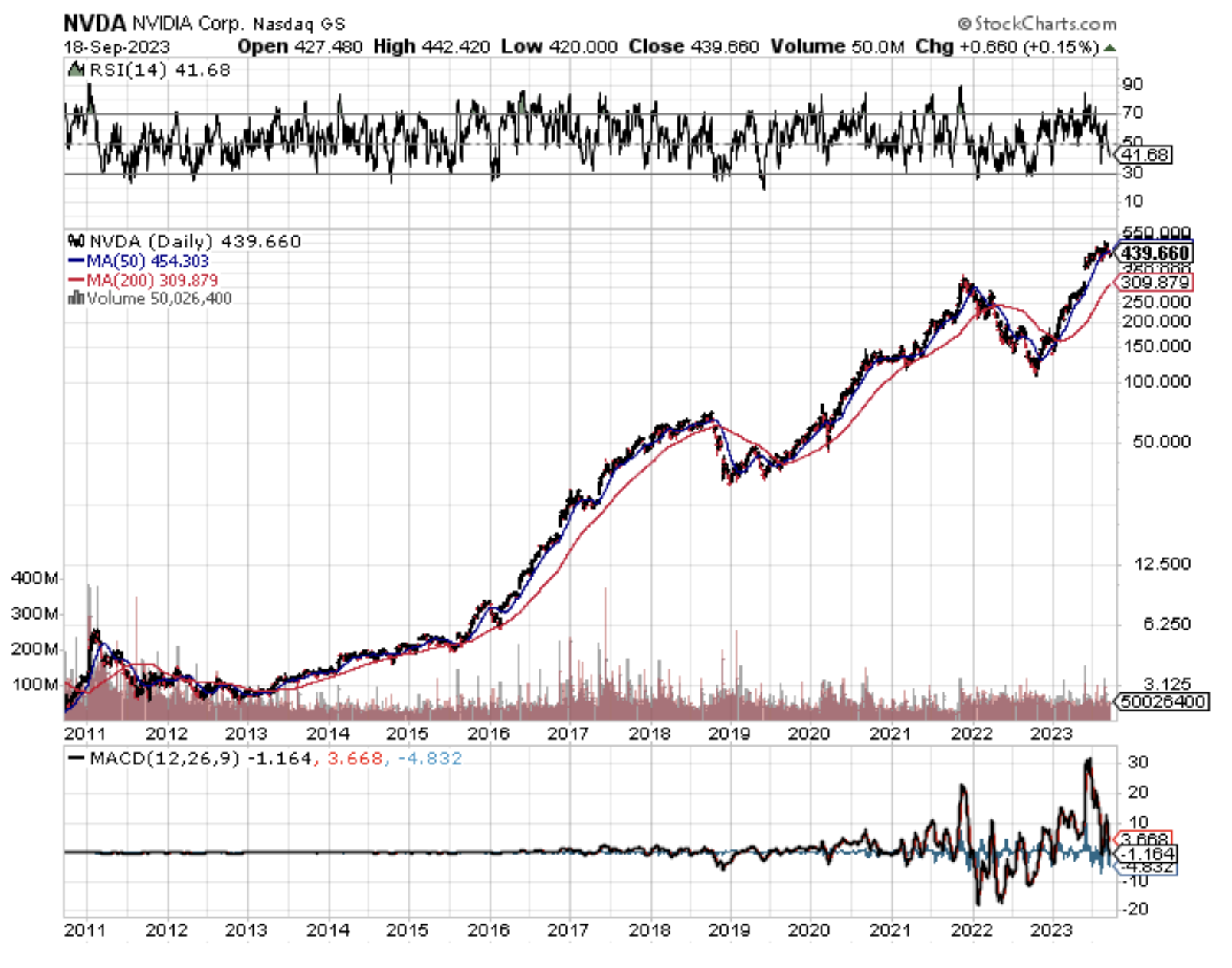
At my New York luncheon in June, a guest pressed a one-ounce American Gold Eagle into my hand and said thanks for NVIDIA (NVDA). He bought it at $15 and rode it all the way up to $450.

He then doubled his money by jumping into Apple (AAPL) at $56 (on a split-adjusted basis) and rode the express train to $200, again after my pleading.

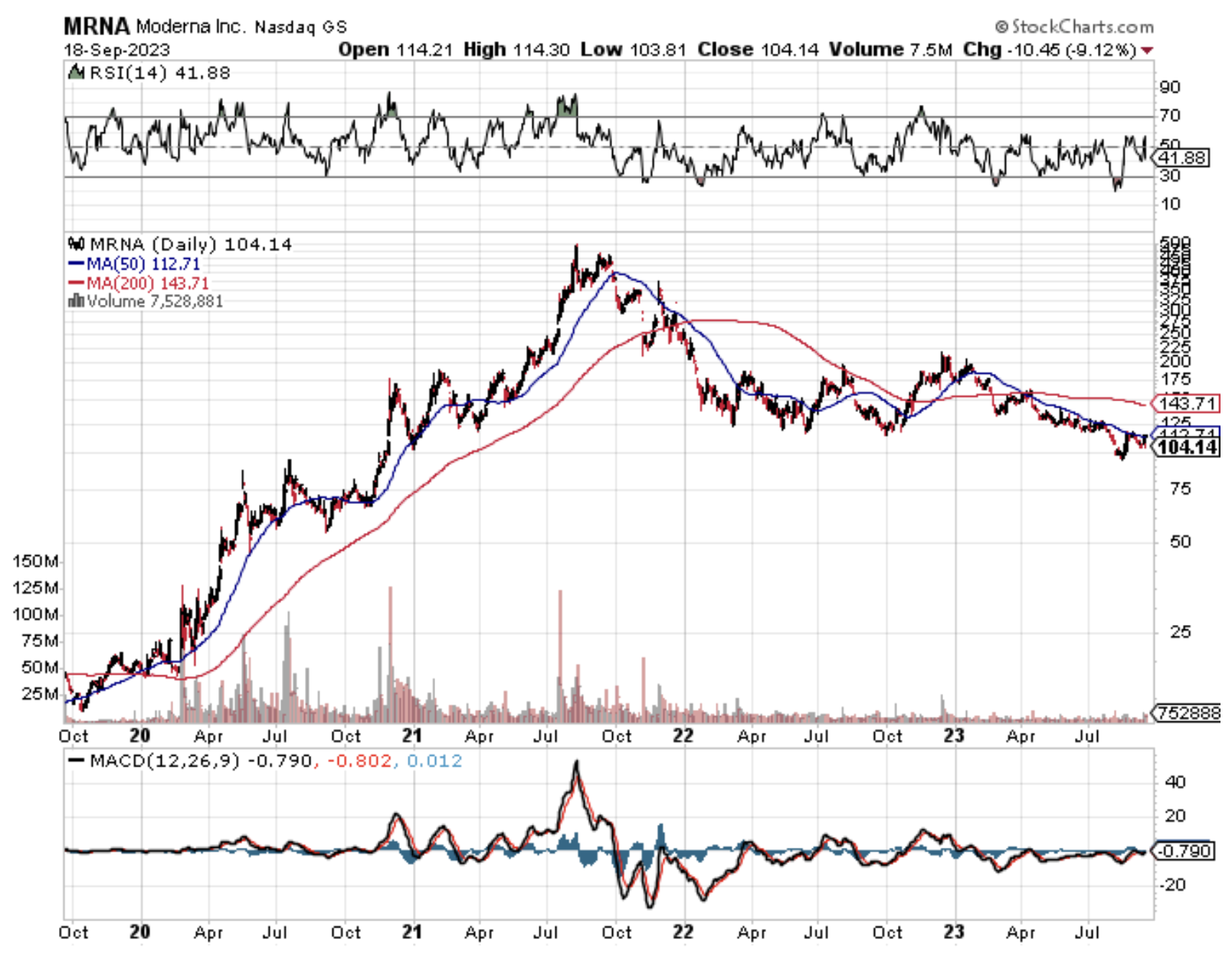
Then there was the reader who offered me his mega yacht in the Mediterranean for a week for free because I virtually forced him to buy Moderna (MRNA) just before the pandemic before it rocketed 50X. It was nice cruising the Mediterranean last summer on his advice.

It’s not that I have suddenly become averse to dishing out ten-baggers. I have not grown weary in my old age either, although I confess to finding those erectile dysfunction and baldness ads on TV more fascinating by the month.

No, the real problem is that the stock markets are just not offering anything right now. And here is where I give you some great trading tips.

When stock markets are rising and financial assets are generally in “RISK ON” mode, you want to own single stocks.

Individual shares have “betas”, or a propensity to move, that is far greater than indexes. If an index rises 10%, some of its individual components can move anywhere from 15%-100%.

When stock markets are in correction (down) or consolidation (sideways) mode, as we are now, the higher betas of stocks work against you. They fall faster than the index.

Therefore, in flat and falling markets you want to trade indexes, like the S&P 500 big cap index (SPY), the NASDAQ technology index (QQQ), and the Russell 2000 small cap index (IWM). Better yet, don’t execute any trades at all, especially if you are already up 60% on the year.

Keep your powder dry. A dollar at a market bottom is worth $10 at a market top.

Your mistakes trading these relatively nonvolatile (read boring) instruments earn you less money. The risk/reward for short-term trading right now is terrible.

Therefore, by trading stocks in up markets and indexes only in down markets, you create an inbuilt bias in your portfolio that works in your favor.

A classic example of how this works was to see the market reactions to corporate earnings announcements in July. In these risk-averse times, winners were rewarded modestly, but losers were taken out to the woodshed and beaten senseless.

Look at the recent charts for Apple (AAPL), Tesla (TSLA), and Disney (DIS) and you’ll see what I mean. I bet the owners of these companies wish they had been trading indexes in August, which barely moved. Is 3% the new 10% correction?

These are all fundamentally great companies for the long term. But when people run for cash, they will often sell whatever has the most profit, and all three of these names met that standard. Investors were, in effect, raiding the piggy bank.

Of course, you can try and be clever and go long stocks in rising markets, and then sell them short in falling ones.

My half-century of experience tells me that this is easier said than done.

While many managers will promise you this bit of investing in gymnastics, very few can actually deliver. Most professionals are unable to time markets with this precision, let alone individuals.

Needless to say, don’t try this at home.


John Thomas

What? Me Boring?

https://www.madhedgefundtrader.com/wp-content/uploads/2015/07/John-Thomas1-e1436361891975.jpg 389 400 Mad Hedge Fund Trader https://madhedgefundtrader.com/wp-content/uploads/2019/05/cropped-mad-hedge-logo-transparent-192x192_f9578834168ba24df3eb53916a12c882.png Mad Hedge Fund Trader2023-09-20 09:04:372023-09-20 16:18:39Why I Have Become So Boring
Mad Hedge Fund Trader

Tackling the Low Inflation Myth

Diary, Newsletter, Research

I have long told my listeners at conferences, webinars, and strategy luncheons my definition of the “new inflation”: the price for whatever you have to buy is rising, as with your home, health care, and a college education.

The price of the things you need to sell, such as your labor and services, is falling.

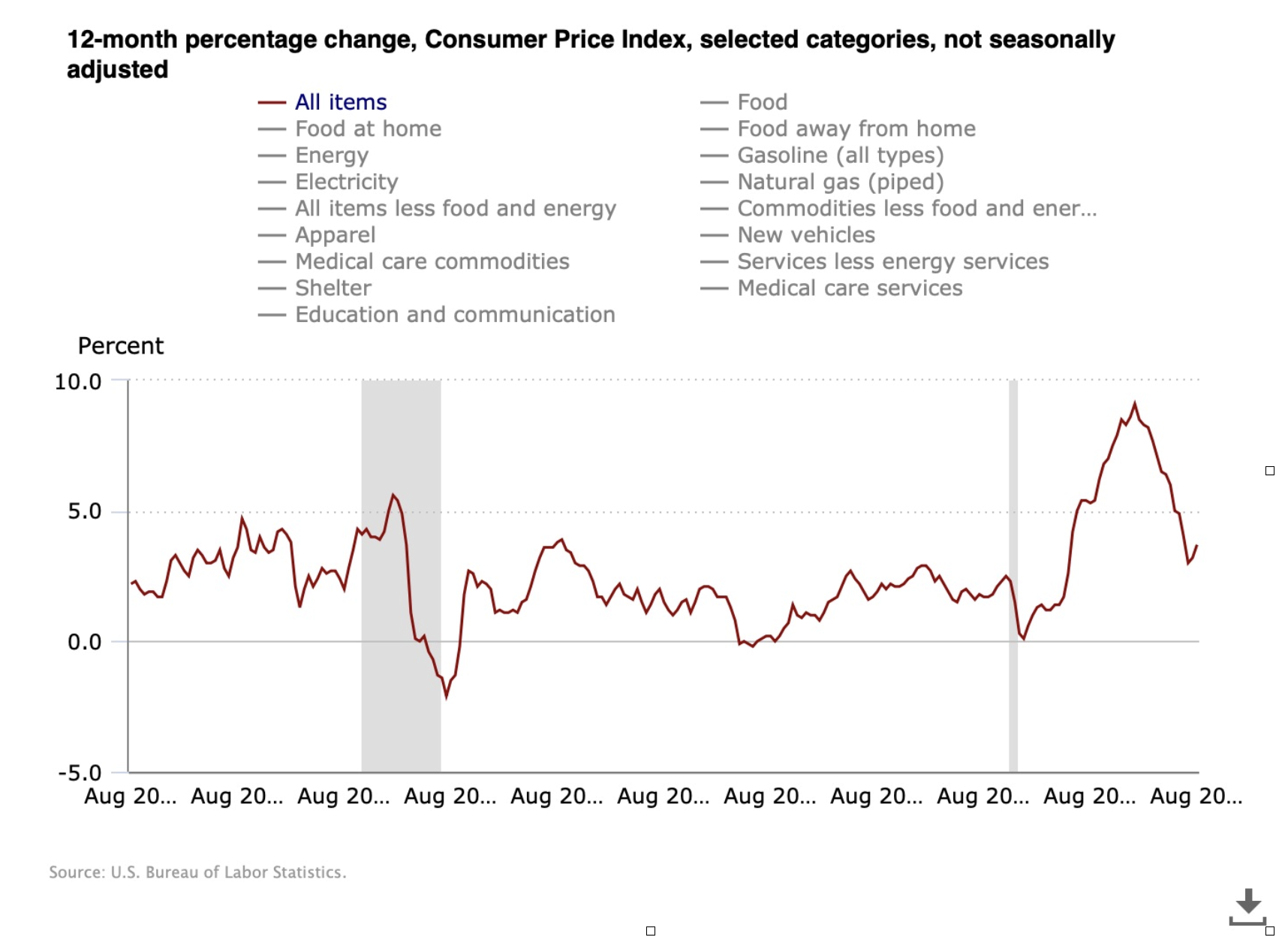
So while official government numbers show that the overall rate of inflation is muted at multigenerational highs, the reality is that the standard of living of most Americans is being squeezed at an alarming rate by both startling price increases and real wage cuts.

I finally found someone who agrees with me.

David Stockman was president Ronald Reagan’s director of the Office of Management and Budget from 1981-1985. I regularly jousted with David at White House press conferences, pointing out that the budgets he was proposing would not produce a balanced budget, as he claimed.

Instead, I argued that they would lead to an enormous expansion of the federal deficit. In the end, I was right, with the national debt growing 400% during the Reagan years.

To his credit, David later admitted to running two sets of books for the national accounts, one for external consumption for people like me, and a second internal one for the president with much more dire consequences.

When David finally made the second set of books public, there was hell to pay. It was a fiery departure. I knew Ronald Reagan really well, and when the cameras weren’t rolling, he could get really angry.

After a falling out with Reagan over exactly the issues I brought up, Stockman disappeared for three decades.

He is now back with a vengeance.

He is running a blog named David Stockman’s Contra Corner (click here for the link at http://davidstockmanscontracorner.com ), a site he says “where mainstream delusions and cant about the Welfare State, the Bailout State, Bubble Finance, and Beltway Banditry are ripped, refuted and rebuked.” (Good writing was never his thing).

Despite this rant, there is no place I won’t go to discover some valid arguments and useful statistics, and Stockman is no exception.

For a start, home utility prices have been skyrocketing for the past decade, nearly doubling. Over the last 12 months alone, it has jumped by 5.3%, while natural gas is up more than 10%, compared to an annual Consumer Price Index rise of only 3.3%.

But utilities have such a low 5% weighting in the Fed’s inflation calculation it barely moves the needle.

Wait, it gets better.

Gasoline costs have also been on a relentless uptrend since the nineties. Crude oil is up from a $10 low to today’s print of $95. Retail gasoline has popped from $1 a gallon to $5.50 in California, and that’s off from the year’s high at $3.50.

That works out to an annualized increase of 57%, or more than triple the official inflation rate.

The nation’s 40 million renting households have been similarly punished with price increases. They have averaged a 5.0% annual rate, nearly double the inflation rate.

The country’s 75 million homeowners are getting hit in the pocketbook as well. They have seen the cost of water, sewer, and trash collection balloon at a 4.8% annualized rate. And this has been an almost entirely straight-line move, with no pullbacks. And home insurance? It is absolutely through the roof.

David recites a dirty laundry list of Fed omissions and understatements on the inflation front, including gold, silver, and commodities prices.

All of these nickels and dimes add up to quite a lot for a family of four who is trying to scrape by on a median household income of $69,000 a year. And Heaven help you if you try to live on that in California.

The cost of a few items has declined, but not by much. They are largely composed of cheap import substitutes from Asia, including apparel, shoes, household furniture, consumer electronics, toys, and appliances.

One area the Fed data doesn’t remotely come close to measuring is the plunging cost of technology. How do you measure the savings from products that didn’t exist 20 years ago, like smart phones, iPods, iPads, and solid-state hard drives? How do you measure the cost of services that are handed out for free as Google, Facebook, and X do?

I can personally tell the cost of my own business is probably 90% cheaper to run than it would have three decades ago. I remember shelling out $5,000 for a COMPAQ PC that costs $300 today but has 1,000 times the performance.

David finishes with  his usual tirade against the Fed, accusing them of obsessing over the noise of the daily data releases and missing the long-term trend.

Anyone like myself who watched in horror how long it took our central bank to recognize the seriousness of the 2008 financial crisis pr the pandemic would agree.

This all reminds me of what a college Economics professor once told me during the late 1960’s. “Statistics are like a bikini bathing suit. What they reveal is fascinating, but what they conceal is essential.”


Woman in Bikini

What They Reveal is Fascinating....


https://www.madhedgefundtrader.com/wp-content/uploads/2015/08/Bikini-Clad-Girl.jpg 410 316 Mad Hedge Fund Trader https://madhedgefundtrader.com/wp-content/uploads/2019/05/cropped-mad-hedge-logo-transparent-192x192_f9578834168ba24df3eb53916a12c882.png Mad Hedge Fund Trader2023-09-20 09:02:032023-09-20 16:22:14Tackling the Low Inflation Myth
april@madhedgefundtrader.com

September 19, 2023

Biotech Letter

Mad Hedge Biotech and Healthcare Letter
September 19, 2023
Fiat Lux

Featured Trade:

(A SHOT AT HOPE)

(MRNA), (IMTX), (MRK), (PFE), (BMY), (GH), (ILMN), (NVS), (RHHBY), (BGNE), (AZN)

https://madhedgefundtrader.com/wp-content/uploads/2019/05/cropped-mad-hedge-logo-transparent-192x192_f9578834168ba24df3eb53916a12c882.png 0 0 april@madhedgefundtrader.com https://madhedgefundtrader.com/wp-content/uploads/2019/05/cropped-mad-hedge-logo-transparent-192x192_f9578834168ba24df3eb53916a12c882.png april@madhedgefundtrader.com2023-09-19 14:02:442023-09-19 15:57:28September 19, 2023
april@madhedgefundtrader.com

A Shot at Hope

Biotech Letter

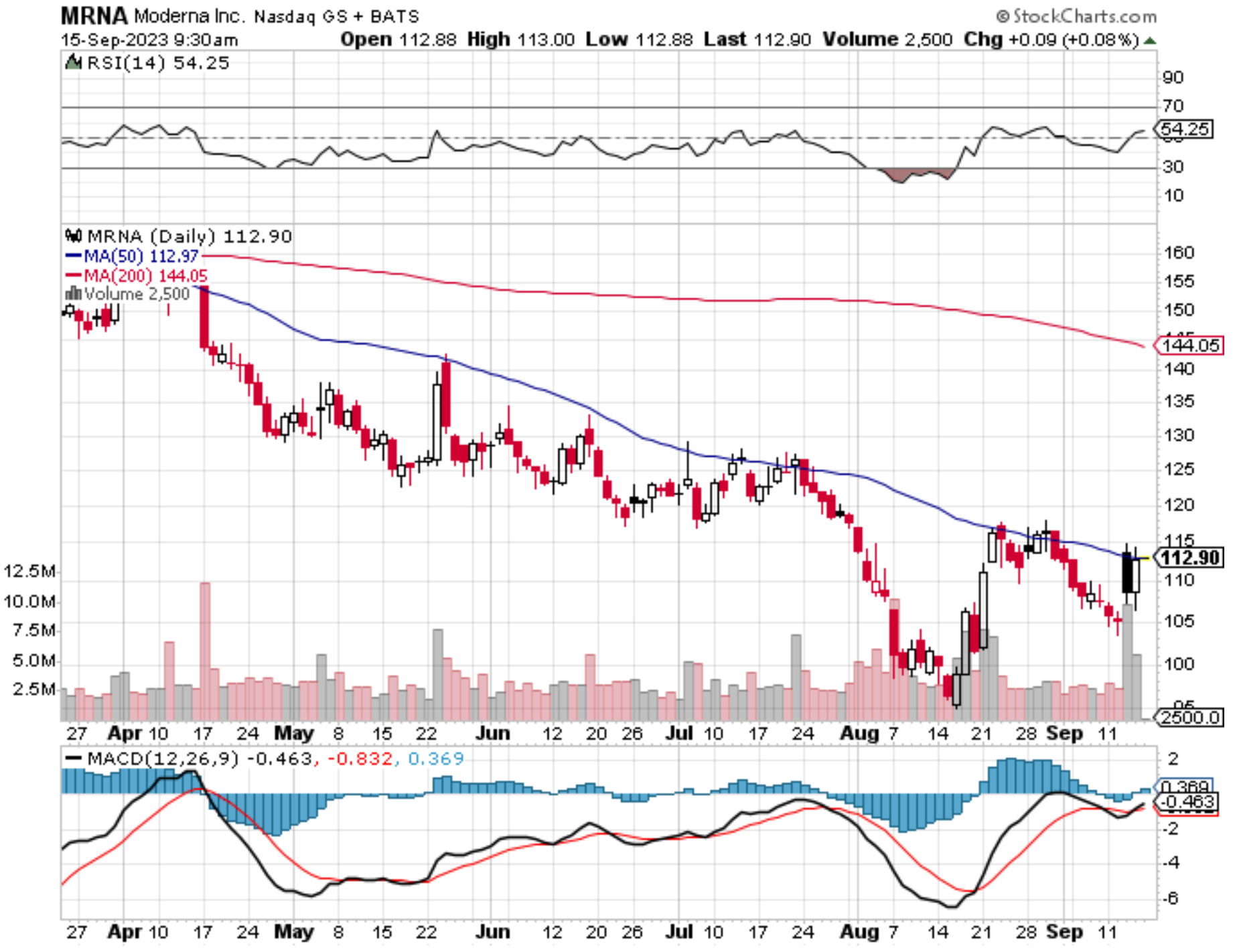
In a quaint Boston lab, as the first rays of dawn broke, a team of scientists, led by Moderna (MRNA), embarked on a mission. Their goal? To craft a solution to one of humanity's most persistent adversaries: cancer.

The grim reality remains that cancer is a leading cause of death in the United States. The statistics are daunting, with over 1.9 million new cases anticipated in 2023 and a projected death toll exceeding 600,000. The financial implications mirror this gravity, with costs expected to soar from $156 billion in 2018 to a staggering $246 billion by 2030.

As the world watched with bated breath, Moderna, already a household name for its COVID-19 vaccine, was silently weaving a narrative that could redefine the future of oncology.

Needless to say, the biotechnology sector, a realm of ceaseless innovation, has been abuzz with Moderna's latest venture. Earlier this month, the biotech announced its agreement with the German drug developer Immatics (IMTX) to develop cancer vaccines and therapies. As part of the deal, Moderna will pay $120 million in cash and will also make additional milestone payments.

This collaboration is not just about the financials; it's a beacon of hope for millions.

The partnership is set to merge Moderna's mRNA technology with Immatics’s T-cell receptor platform, focusing on various therapeutic modalities such as bispecifics, cell therapies, and cancer vaccines. Their combined research aims to leverage mRNA technology for in vivo expression of Immatics's half-life extended TCR bispecifics targeting cancer-specific HLA-presented peptides, among other innovative approaches.

With an upfront investment of $120 million, Moderna has made it clear: they're in it to win it. And the stakes? Potentially life-changing cancer vaccines.

However, this isn’t Moderna’s first foray into the realm of cancer treatments.

Building on the momentum of the technology of its highly potent COVID-19 shots, Moderna announced a partnership with Merck (MRK) earlier this year, combining their efforts to come up with treatments that can drastically reduce the spread of skin cancer. By leveraging Merck's Keytruda with its own innovative vaccine, Moderna has showcased the potential of such collaborations in advancing cancer treatment.

After all, the global community oncology services market is not just growing; it's clearly thriving.

From $47.95 billion in 2022 to a projected $53.79 billion in 2023, the numbers speak for themselves. By 2027, this figure is set to skyrocket to $81.33 billion. Such exponential growth underscores the immense potential and critical importance of advancements in oncology.

Yet, as expected, Moderna isn't the only player on the field.

Giants like Novartis (NVS) and Roche (RHHBY) have also thrown their hats in the ring, collaborating with known international cancer organizations to democratize access to cancer medicines. Among the myriad of promising stocks these days, though, Moderna, China’s BeiGene, Ltd. (BGNE), and the UK’s AstraZeneca PLC (AZN) shine the brightest.

Other notable contributors to the fight against cancer include Bristol Myers Squibb (BMY), Guardant Health (GH), Illumina (ILMN), and Pfizer (PFE). Their diverse portfolios and relentless pursuit of innovation are set to shape the future of oncology.

But as the curtains draw on this narrative, the spotlight remains firmly on Moderna. Their success with the COVID-19 vaccine has already etched their name in the annals of medical history. With their sights now set on cancer vaccines, the world waits with eager anticipation.

In the grand tapestry of medical advancements, Moderna's endeavors in the cancer vaccine domain promise to be a golden thread. Their journey, fraught with challenges and uncertainties, is proof of human resilience and ingenuity. As investors, we're not left standing on the sidelines watching history unfold; we're granted an active role in it.

The potential of Moderna's innovations in oncology beckons a promising horizon. For those looking to make a mark in the annals of medical investments, this biotech offers a gateway to the future of oncology. Act now, and be part of this groundbreaking narrative.


https://madhedgefundtrader.com/wp-content/uploads/2019/05/cropped-mad-hedge-logo-transparent-192x192_f9578834168ba24df3eb53916a12c882.png 0 0 april@madhedgefundtrader.com https://madhedgefundtrader.com/wp-content/uploads/2019/05/cropped-mad-hedge-logo-transparent-192x192_f9578834168ba24df3eb53916a12c882.png april@madhedgefundtrader.com2023-09-19 14:00:432023-09-19 15:57:46A Shot at Hope
Mad Hedge Fund Trader

Tech Alert - (AMZN) September 19, 2023 - BUY

Tech Alert

When John identifies a strategic exit point, he will send you an alert with specific trade information as to what security to sell, when to sell it, and at what price. Most often, it will be to TAKE PROFITS, but, on rare occasions, it will be to exercise a STOP LOSS at a predetermined price to adhere to strict risk management discipline. Read more

https://www.madhedgefundtrader.com/wp-content/uploads/2016/02/Alert-e1457452190575.jpg 135 150 Mad Hedge Fund Trader https://madhedgefundtrader.com/wp-content/uploads/2019/05/cropped-mad-hedge-logo-transparent-192x192_f9578834168ba24df3eb53916a12c882.png Mad Hedge Fund Trader2023-09-19 10:49:412023-09-19 10:49:41Tech Alert - (AMZN) September 19, 2023 - BUY
Page 446 of 2249«‹444445446447448›»

Legal Disclaimer

There is a very high degree of risk involved in trading. Past results are not indicative of future returns. MadHedgeFundTrader.com and all individuals affiliated with this site assume no responsibilities for your trading and investment results. The indicators, strategies, columns, articles and all other features are for educational purposes only and should not be construed as investment advice. Information for futures trading observations are obtained from sources believed to be reliable, but we do not warrant its completeness or accuracy, or warrant any results from the use of the information. Your use of the trading observations is entirely at your own risk and it is your sole responsibility to evaluate the accuracy, completeness and usefulness of the information. You must assess the risk of any trade with your broker and make your own independent decisions regarding any securities mentioned herein. Affiliates of MadHedgeFundTrader.com may have a position or effect transactions in the securities described herein (or options thereon) and/or otherwise employ trading strategies that may be consistent or inconsistent with the provided strategies.

Copyright © 2026. Mad Hedge Fund Trader. All Rights Reserved. support@madhedgefundtrader.com
Scroll to top