Global Market Comments
April 20, 2022
Fiat Lux
Featured Trade:
(TESTIMONIAL),
(TEN MORE TRENDS TO BET THE RANCH ON),
(AAPL), (AMZN), (GOOGL), (TSLA), (CRSP), (EDIT), (NTLA)
Global Market Comments
April 20, 2022
Fiat Lux
Featured Trade:
(TESTIMONIAL),
(TEN MORE TRENDS TO BET THE RANCH ON),
(AAPL), (AMZN), (GOOGL), (TSLA), (CRSP), (EDIT), (NTLA)
Global Market Comments
March 24, 2022
Fiat Lux
Featured Trade:
(TEN TECH TRENDS DEFINING YOUR FUTURE, or THE BEST TECH PIECE I HAVE EVER WRITTEN)
(TSLA), (GOOG), (AMZN), (AAPL), (CRSP)
Not a day goes by without a reader asking me what is the next stock ten, hundred, or thousand bagger. After all, I nailed the 295X move in Tesla (TSLA) starting in 2010.
Can’t I do better?
Well actually, I can, which is the purpose of the Diary of a Mad Hedge Fund Trader. There are many potentially Google (GOOG), Amazon (AMZN) and Apple (AAPL) sized opportunities out there today. It’s just a matter of time they become public and investable.
One thing I will tell you today is that they will have some or all of the following gale force tailwinds below. These will turbocharge the value of everything you own now, as well as anything new you might pick up going forward.
The future is happening fast!
1) People are Getting Richer, as the middle-income population continues to rise worldwide. That means more customers for everything, and astronomically greater earnings for the companies inventing and selling them. Every day goods and services (finance, insurance, education, and entertainment) are being digitized and becoming fully demonetized, available to the rising billion on mobile devices. Thank the convergence of high-bandwidth and low-cost communication, ubiquitous AI on the cloud, growing access to AI-aided education, and AI-driven healthcare.
2) And they are Communicating with Each Other More. The deployment of both licensed and unlicensed 5G, plus the launch of a multitude of global satellite networks (Starlink, OneWeb, Viasat, etc.), allow for ubiquitous, low-cost communications for everyone, everywhere, all the time––not to mention the connection of trillions of devices. And today’s skyrocketing connectivity is bringing online an additional 3 billion individuals, driving tens of trillions of dollars into the global economy and into the pockets of shareholders. Thank the convergence of low-cost space launches (Space-X), hardware advancements, 5G networks, artificial intelligence, a new generation of materials science, and exponentially surging computing power.
3) Your Lifespan Will Increase by at Least Ten Years. A dozen game-changing biotech and pharmaceutical solutions (currently in Phase 1, 2, or 3 clinical trials) will reach consumers this decade as covered by the Mad Hedge Biotech & Healthcare Letter (click here for the link). Technologies include stem cell supply restoration, senolytic or age-related medicines, a new generation of Endo-Vaccines, GDF-11, and supplementation of NMD/NAD+, among several others. And as machine learning continues to mature, AI is set to unleash countless new drug candidates, ready for clinical trials. Thank the convergence of genome sequencing, CRISPR technologies (CRSP), AI, quantum computing, and cellular medicine.
4) More Capital for Everything Will Become Abundant. Over the past few years, humanity hit all-time highs in the global flow of seed capital, venture capital, and sovereign wealth fund investments. It is expected to continue its overall upward trajectory. Capital abundance leads to the funding and testing of "crazy" entrepreneurial ideas, which in turn accelerate innovation. Already, $300B in crowdfunding is anticipated by 2025, democratizing capital access for entrepreneurs worldwide. And even during a pandemic (2020), the world deployed more venture capital than ever before, handily beating out the last high-water mark in 2019. Thank global connectivity, dematerialization, demonetization, and democratization.
5) Distribution is Becoming Vastly Easier. The combination of Augmented Reality (yielding Web 3.0, or the Spatial Web) and 5G networks (offering lighting fast 100Mb/s - 10Gb/s connection speeds) will transform how we live our everyday lives, impacting every industry from retail and advertising, to education and entertainment. Consumers will play, learn and shop throughout the day in a newly intelligent, virtually overlaid world. This is where technologies like SpatialWeb.net, Vatoms (new digital connections between products and customers), and Apple’s (AAPL) next-generation AR & VR headsets will shine. Thank hardware advancements, 5G networks, AI, materials science, and surging computing power.
(6) Everything is Getting Smarter: The price of specialized machine learning chips is dropping rapidly with a rise in global demand. Imagine a specialized $5 chip that enables AI for a toy, a shoe, a kitchen cabinet? Combined with the explosion of low-cost microscopic sensors and the deployment of high-bandwidth networks, we’re heading into a decade wherein every device becomes intelligent. Your child’s toy remembers her face and name. Your kid's drone safely and diligently follows and videos all the children at the birthday party. Appliances respond to voice commands and anticipate your needs. Thank AI, 5G networks, and more advanced sensors.
(7) Artificial Intelligence is Getting Smarter than We are. Artificial intelligence will reach human-level performance this decade (by 2030). Through the 2020s, AI algorithms and machine learning tools will be increasingly made open source, available on the cloud, allowing any individual with an internet connection to supplement their cognitive ability, augment their problem-solving capacity, and build new ventures at a fraction of the current cost. Thank global high-bandwidth connectivity, neural networks, and cloud computing. Every industry, spanning industrial design, healthcare, education, and entertainment, will be impacted.
(8) AI is Becoming a Service: The rise of “AI as a Service” (AIaaS) platforms will enable humans to partner with AI in every aspect of their work, at every level, in every industry. AI’s will become entrenched in everyday business operations, serving as cognitive collaborators to employees—supporting creative tasks, generating new ideas, and tackling previously unattainable innovations. In some fields, partnership with AI will even become a requirement. For example: in the future, making certain diagnoses without the consultation of AI may be deemed malpractice. And try trading stocks today without AI behind you. Thank increasingly intelligent AI, global high-bandwidth connectivity, neural networks, and cloud computing.
(9) Software Will Become an Integrated Part of Our Lives. As services like Alexa, Google Home, and Apple Homepod expand in functionality, such services will eventually travel beyond the home and become your cognitive prosthetic 24/7. Imagine a secure software shell that you give permission to listen to all your conversations, read your email, monitor your blood chemistry, etc. With access to such data, these AI-enabled software shells will learn your preferences, anticipate your needs and behavior, shop for you, monitor your health, and help you problem-solve in support of your mid- and long-term goals. Thank increasingly intelligent AI, neural networks, and cloud computing.
(10) Energy Will Become Effectively Free when compared to today’s all-in costs. Continued advancements in solar, wind, geothermal, hydroelectric, small nuclear, and localized grids will drive humanity towards cheap, abundant, and ubiquitous renewable energy. The price per kilowatt-hour will drop below 1 cent per kilowatt-hour for renewables, just as storage drops below a mere 3 cents per kilowatt-hour, resulting in the elimination of fossil fuels globally. And as the world’s poorest countries are also the world’s sunniest, the democratization of both new and traditional storage technologies will grant energy abundance to those already bathed in sunlight. We are also on the cusp of many breakthroughs in fusion power at nearby Lawrence Livermore Labs as capital, new materials, and entrepreneurs pour in this arena. Thank materials science, hardware advancements, AI/algorithms, and improved battery technologies.
I just thought you’d like to know.
Mad Hedge Technology Letter
March 21, 2022
Fiat Lux
Featured Trade:
(TRUST THE CLOUD)
(AMZN), (ZS), (CRM), (GOOGL)
Dealing with the Cloud works, and for every relevant tech company, this division serves as the pipeline to the CEO position.
If this isn’t the case for a tech company, then there’s something egregiously wrong with them!
Take Andy Jassy, the mastermind behind Amazon’s (AMZN) lucrative cloud computing division and the man who succeeded company founder, Jeff Bezos.
He’s been rewarded this important position based on his performance in the cloud, and he faces a daunting proposition of following Bezos as CEO.
Bezos incorporated Amazon almost 30 years ago.
Jassy developed a highly profitable and market-leading business, Amazon Web Services, that runs data centers serving a wide range of corporate computing needs.
Cloud 101
If you've been living under a rock the past few years, the cloud phenomenon hasn't passed you by--you still have time to cash in.
You want to hitch your wagon to cloud-based investments in any way, shape, or form.
Amazon leads the cloud industry it created.
It still maintains more than 30% of the cloud market. Microsoft would need to gain a lot of ground to even come close to this jewel of a business.
Amazon relies on AWS to underpin the rest of its businesses and that is why AWS contributes most of Amazon's total operating income.
Total revenue for just the AWS division would operate as a healthy stand-alone tech company if need be.
The future is about the cloud.
These days, the average investor probably hears about the cloud a dozen times a day.
If you work in Silicon Valley, you can quadruple that figure.
So, before we get deep into the weeds with this letter on cloud services, cloud fundamentals, cloud plays, and cloud Trade Alerts, let's get into the basics of what the cloud actually is.
Think of this as a cloud primer.
It's important to understand the cloud, both its strengths and limitations.
Giant companies that have it figured out, such as Salesforce (CRM) and Zscaler (ZS), are some of the fastest-growing companies in the world.
Understand the cloud and you will readily identify its bottlenecks and bulges that can lead to extreme investment opportunities. And that is where I come in.
Cloud storage refers to the online space where you can store data. It resides across multiple remote servers housed inside massive data centers all over the country, some as large as football fields, often in rural areas where land, labor, and electricity are cheap.
They are built using virtualization technology, which means that storage space spans across many different servers and multiple locations. If this sounds crazy, remember that the original Department of Defense packet-switching design was intended to make the system atomic bomb-proof.
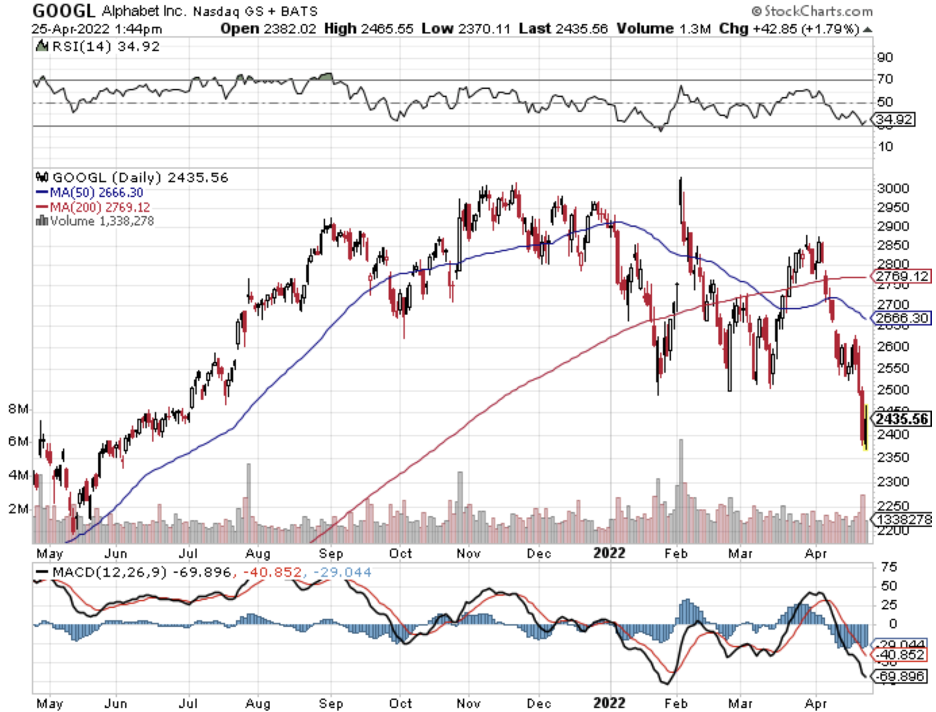
As a user, you can access any single server at any one time anywhere in the world. These servers are owned, maintained, and operated by giant third-party companies such as Amazon, Microsoft, and Alphabet (GOOGL), which may or may not charge a fee for using them.
The most important features of cloud storage are:
1) It is a service provided by an external provider.
2) All data is stored outside your computer residing inside an in-house network.
3) A simple Internet connection will allow you to access your data at any time from anywhere.
4) Because of all these features, sharing data with others is vastly easier, and you can even work with multiple people online at the same time, making it the perfect, collaborative vehicle for our globalized world.
Once you start using the cloud to store a company's data, the benefits are many.
No Maintenance
Many companies, regardless of their size, prefer to store data inside in-house servers and data centers.
However, these require constant 24-hour-a-day maintenance, so the company has to employ a large in-house IT staff to manage them - a costly proposition.
Thanks to cloud storage, businesses can save costs on maintenance since their servers are now the headache of third-party providers.
Instead, they can focus resources on the core aspects of their business where they can add the most value, without worrying about managing IT staff of prima donnas.
Greater Flexibility
Today's employees want to have a better work/life balance and this goal can be best achieved by letting them working remotely, which effectively happened because of the public health situation. Increasingly, workers are bending their jobs to fit their lifestyles, and that is certainly the case here at Mad Hedge Fund Trader.
How else can I send off a Trade Alert while hanging from the face of a Swiss Alp?
Cloud storage services, such as Google Drive, offer exactly this kind of flexibility for employees.
With data stored online, it's easy for employees to log into a cloud portal, work on the data they need to, and then log off when they're done. This way a single project can be worked on by a global team, the work handed off from time zone to time zone until it's done.
It also makes them work more efficiently, saving money for penny-pinching entrepreneurs.
Better Collaboration and Communication
In today's business environment, it's common practice for employees to collaborate and communicate with co-workers located around the world.
For example, they may have to work on the same client proposal together or provide feedback on training documents. Cloud-based tools from DocuSign, Dropbox, and Google Drive make collaboration and document management a piece of cake.
These products, which all offer free entry-level versions, allow users to access the latest versions of any document so they can stay on top of real-time changes which can help businesses to better manage workflow, regardless of geographical location.
Data Protection
Another important reason to move to the cloud is for better protection of your data, especially in the event of a natural disaster. Hurricane Sandy wreaked havoc on local data centers in New York City, forcing many websites to shut down their operations for days.
And we haven’t talked about the recent ransomware attacks by Eastern Europeans on energy company Colonial Pipeline and meat producer JBS Foods.
The cloud simply routes traffic around problem areas as if, yes, they have just been destroyed by a nuclear attack.
It's best to move data to the cloud, to avoid such disruptions because there your data will be stored in multiple locations.
This redundancy makes it so that even if one area is affected, your operations don't have to capitulate, and data remains accessible no matter what happens. It's a system called deduplication.
Lower Overhead
The cloud can save businesses a lot of money.
By outsourcing data storage to cloud providers, businesses save on capital and maintenance costs, money that in turn can be used to expand the business. Setting up an in-house data center requires tens of thousands of dollars in investment, and that's not to mention the maintenance costs it carries.
Plus, considering the security, reduced lag, up-time and controlled environments that providers such as Amazon's AWS have, creating an in-house data center seems about as contemporary as a buggy whip, a corset, or a Model T.
The cloud is where you want to be.
Mad Hedge Technology Letter
March 11, 2022
Fiat Lux
Featured Trade:
(AMAZON MEANS BUSINESS)
(AMZN), (AAPL), (TSLA), (GOOGL)
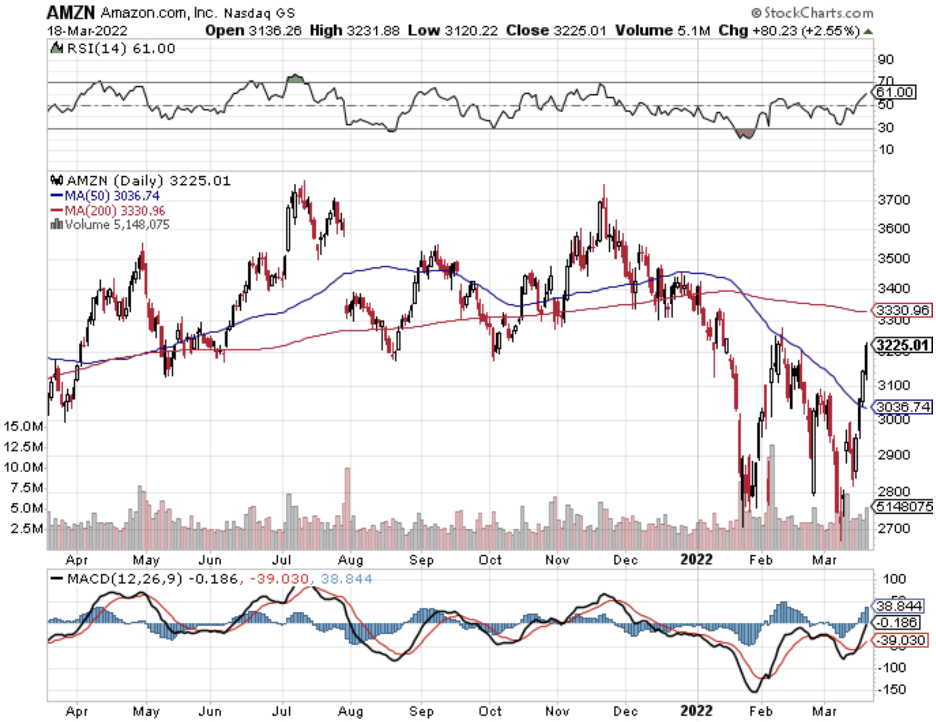
The blockbuster announcement from Amazon (AMZN) regarding their 20:1 stock split is a big deal, and don’t listen to the charlatans who say otherwise.
Sure, on paper, the business model will be thriving just like it has been since its inception, but this piece of financial manipulation is genius.
Just think about it.
The reason for Amazon to need a stock split in the first place is because the stock has gone from the bottom left to the top right over time.
The best and most successful companies frequently execute stock splits and so even if one wants to spin it as a problem, it’s a problem that I wouldn’t mind having myself.
Splits are often a bullish sign since valuations get so high that the stock may be out of reach for smaller investors trying to stay diversified. Investors who own a stock that splits may not make a lot of money immediately, but they shouldn't sell the stock since the split is likely a positive sign.
Nominally cheap stocks have a massive psychological effect on the average investor.
I also don’t buy the BS about fractional shares, it’s like owning half a car.
Nobody wants that.
Investors also clamor for round numbers.
Would you rather own 5 shares of AMZN or 100 after the stock split?
Human psychology can’t be discounted here and, true to form, stock splits have been the precursor to even higher share prices.
Many companies decide to rinse and repeat and AMZN also unearthed a tidy $10 billion stock buyback plan.
So it’s no shock that this will be Amazon's 4th stock split in its history. The last split came in September 1999.
If shareholders approve of the split, it will begin trading on the new basis on June 6.
Big tech behemoths made hay when the sun was shining during the pandemic, and now they want to make it easy for the simple investors to get back into shares.
Bravo to them.
Other companies of its ilk have also partaken in stock splits like Tesla and Alphabet.
So this isn’t out of left field.
It just so happens that at the time of the stock split announcement, big tech has been the most oversold in the past 5 years.
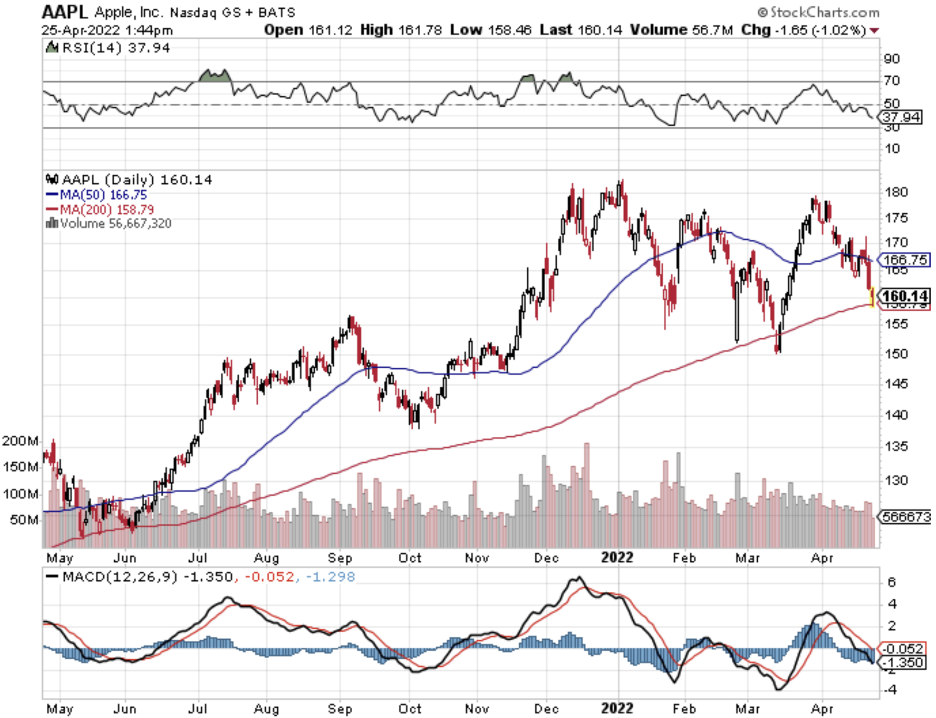
Apple (AAPL) split its stock 4-for-1 in 2020s. Tesla's (TSLA) 5-for-1 stock split also occurred in 2020. Alphabet's (GOOGL) 20-for-1 stock split was announced in February.
Granted, at a fundamental level, things won’t be different at Amazon.
This doesn’t change the innards of the machine that was built for financial engineering from share buybacks to stock splits and the timing of it is also an important lever as every company tries to max out its genetic makeup.
Amazon shares are down about 9% in the past year, but I would attribute that more to too fast too soon.
Then we were hit by the onslaught of higher interest rate expectations and then the Ukrainian war.
Let’s be honest, the first 3 months of this year have been an absolute blood bath for equities, and AMZN doesn’t trade in a vacuum.
The extra kick in the teeth was the supply chain problem for the ecommerce juggernaut.
AMZN will come back as market sentiment starts to heal itself.
War won’t be a ubiquitous event around the Western world and I view the military escalation as an anomaly.
It’s not like AMZN is operating in Russia as well, or China for that matter.
It’s true that the events of the last few weeks have shined a spotlight on non-Democratic countries as a poor environment for business and in absolute disregard of the rule of law.
AMZN needs to operate in places where the law has teeth, otherwise, delivery packages would get stolen half the time with no recourse.
I feel the timing of the stock split is also indicative of a near short-term bottom in tech stocks.
Mad Hedge Biotech and Healthcare Letter
March 3, 2022
Fiat Lux
Featured Trade:
CHEATING DEATH: ARE WE GETTING CLOSER TO IMMORTALITY?)
(AMZN), (FB), (GSK), (RHHBY), (GOOGL)
“Staving off death is a thing that you have to work at…If living things don’t actively work to prevent it, they would eventually merge with their surroundings and cease to exist as autonomous beings. That is what happens when they die.”
This is a quote from Richard Dawkins, which Jeff Bezos wrote to Amazon (AMZN) shareholders in his farewell letter. Needless to say, death and decay seem to be at the forefront of his mind these days.
That’s why it comes as no surprise that the founder of Blue Origin and, of course, Amazon (as well as Elon Musk’s favorite punching bag) has launched a company comprising renowned scientists and globally respected executives to realize his dream of developing immortality technology.
The company, called Altos Labs, is basically an anti-aging venture. While many people would probably mock the idea, this seemingly impossible wild concept has notable names backing it.
Bezos is not the only investor putting his money on this project.
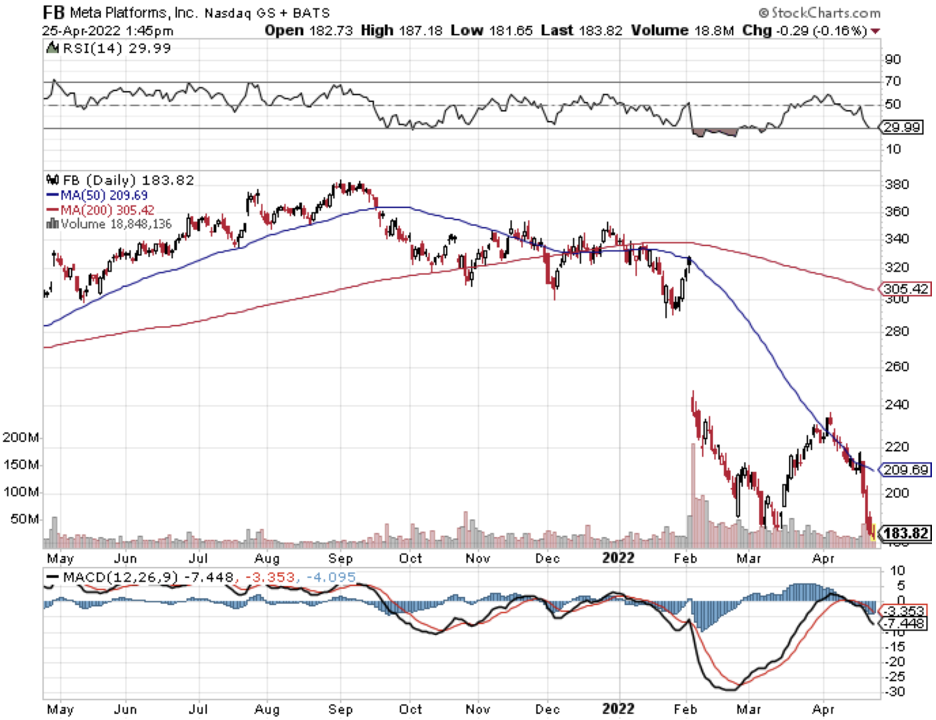
Russian billionaire Yuri Milner, whose wealth expanded thanks to his strategic funding of Facebook (FB), along with Russian email service Mail.ru (MLRYY) and Russian social networking site VK, is also part of the mission.
In fact, the company was officially conceived in Yuri’s house in Palo Alto in the Los Altos hills, leading to the name Altos Labs. (Given that “Los Altos” means “the heights” in Spanish, they probably used it as a double entendre for Altos Labs’ goals.)
In addition to Yuri and Bezos, there are several other backers of Altos Labs.
While they aren’t specifically named, the mere fact that the startup has generated the most funding of virtually any biotechnology business at $3 billion is quite telling of how much faith investors have on this project.
And they wouldn’t be wrong.
Its remarkable roster of executives includes experts from GlaxoSmithKline (GSK), Roche’s (RHHBY) Genentech, and the National Cancer Institute.
Altos Labs not only has wealthy backers and esteemed executives on its board, it also has Nobel Prize-winning scientists working on its goals.
The highest-profile scientist they have is Shinya Yamanaka, who received the Nobel Prize in 2012 for his stem cell research.
His work, which focuses on cell “reprogramming,” can reverse the development of cells towards that of stem cells. In a nutshell, Yamanaka is working on a “backward aging” technology.
Part of the board is Juan Carlos Izpisúa Belmonte, who specializes in developing techniques to switch cells from one type to another.
He gained notoriety when he experimented on creating hybridized human and monkey embryos using Yamanaka’s technology.
Another member of Altos’ board is Jennifer Doudna, who shared the 2015 Breakthrough Prize with Yamanaka and later won the 2020 Nobel Prize for her co-discovery of CRISPR genome editing.
Although it’s a startup, the company will have offices in the San Francisco Bay Area, San Diego, Cambridge in the UK, and even Japan.
However, Altos Labs insists that it’s not chasing some impossible vision worthy of sci-fi movies.
Admittedly, most of the details about the project are still under wraps. But insiders say that Bezos and his crew seek to become the “Bell Labs” of biology.
The oversimplified explanation of its goal is that Altos Labs plans to reverse diseases, effectively regenerating new cells to help the body perform optimally.
Basically, they seek to come up with a biological reprogramming technology that can rejuvenate the cells and eventually revitalize human beings.
They target cells under pressure, including those with genetic abnormalities, suffering from injuries, or aging.
Using their reprogramming technology, they aim to create medications that can deliver one-time treatments for these conditions. Ultimately, these efforts will lead to a prolonged human life.
Further clarifying their mission, Altos explained that their goal is to extend “health span” and that boosting any longevity initiative would simply be considered an “accidental consequence.”
Inasmuch as Alto Labs is an exciting venture, it isn’t the first in the field. This startup joins the ranks of Calico Labs, which was launched in 2013 and funded by one of Google’s (GOOGL) co-founders, Larry Page.
Other startups working on reprogramming technology are Life Biosciences, Turn Biotechnologies, AgeX Therapeutics, and Shift Bioscience.
The quest to defeat death is a mission as old as time.
In response to this challenge, Alto Labs has put together an impressively pedigreed bunch.
Moreover, a solid and established connection is seen between aging clocks and reprogramming technology—all of which Alto Labs already have access to due to its roster of executives and scientists.
While the technology feels so farfetched, industry experts believe it holds indisputable and repeatable results.
These were already seen in laboratory experiments. However, these have only succeeded so far when applied to individual cells.
The technology can gather a cell from an 80-year-old and, via in vitro, reverse this age by as much as 40 years.
If this succeeds, Altos is poised to lead and dominate the “immortality” industry — a sector projected to be worth $600 billion by 2025 — soon.
Global Market Comments
February 25, 2022
Fiat Lux
SPECIAL AMAZON ISSUE
Featured Trade:
(WHY AMAZON IS BEATING ALL), (AMZN)
Legal Disclaimer
There is a very high degree of risk involved in trading. Past results are not indicative of future returns. MadHedgeFundTrader.com and all individuals affiliated with this site assume no responsibilities for your trading and investment results. The indicators, strategies, columns, articles and all other features are for educational purposes only and should not be construed as investment advice. Information for futures trading observations are obtained from sources believed to be reliable, but we do not warrant its completeness or accuracy, or warrant any results from the use of the information. Your use of the trading observations is entirely at your own risk and it is your sole responsibility to evaluate the accuracy, completeness and usefulness of the information. You must assess the risk of any trade with your broker and make your own independent decisions regarding any securities mentioned herein. Affiliates of MadHedgeFundTrader.com may have a position or effect transactions in the securities described herein (or options thereon) and/or otherwise employ trading strategies that may be consistent or inconsistent with the provided strategies.